Inspiration
Everyone tells teenagers to follow their dreams. Far fewer conversations explain what those dreams require. A flat in Bandra. A car. Holidays abroad. Being able to support your parents. We picture the lifestyle, but rarely consider the education, working hours, financial responsibilities, and opportunities behind it. We also judge careers by their most visible features: a salary, a uniform, an office, or a social-media profile. We wanted to let players look beyond that first impression. That became HowToLife: a game where you build the life you want, then step into the lives of people trying to build theirs.
What it does
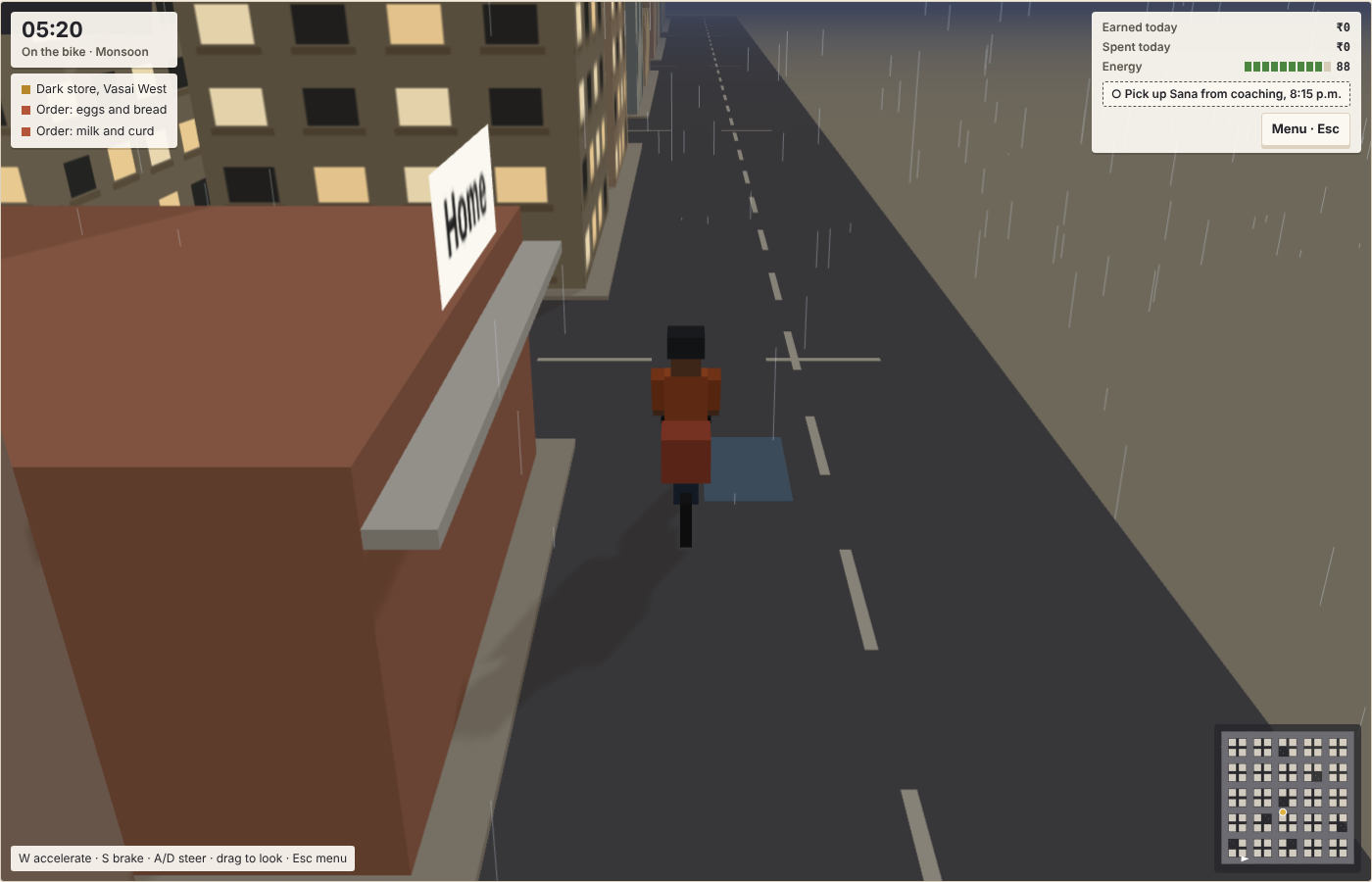
HowToLife is an interactive, story-driven experience set in a stylised, block-built Mumbai.
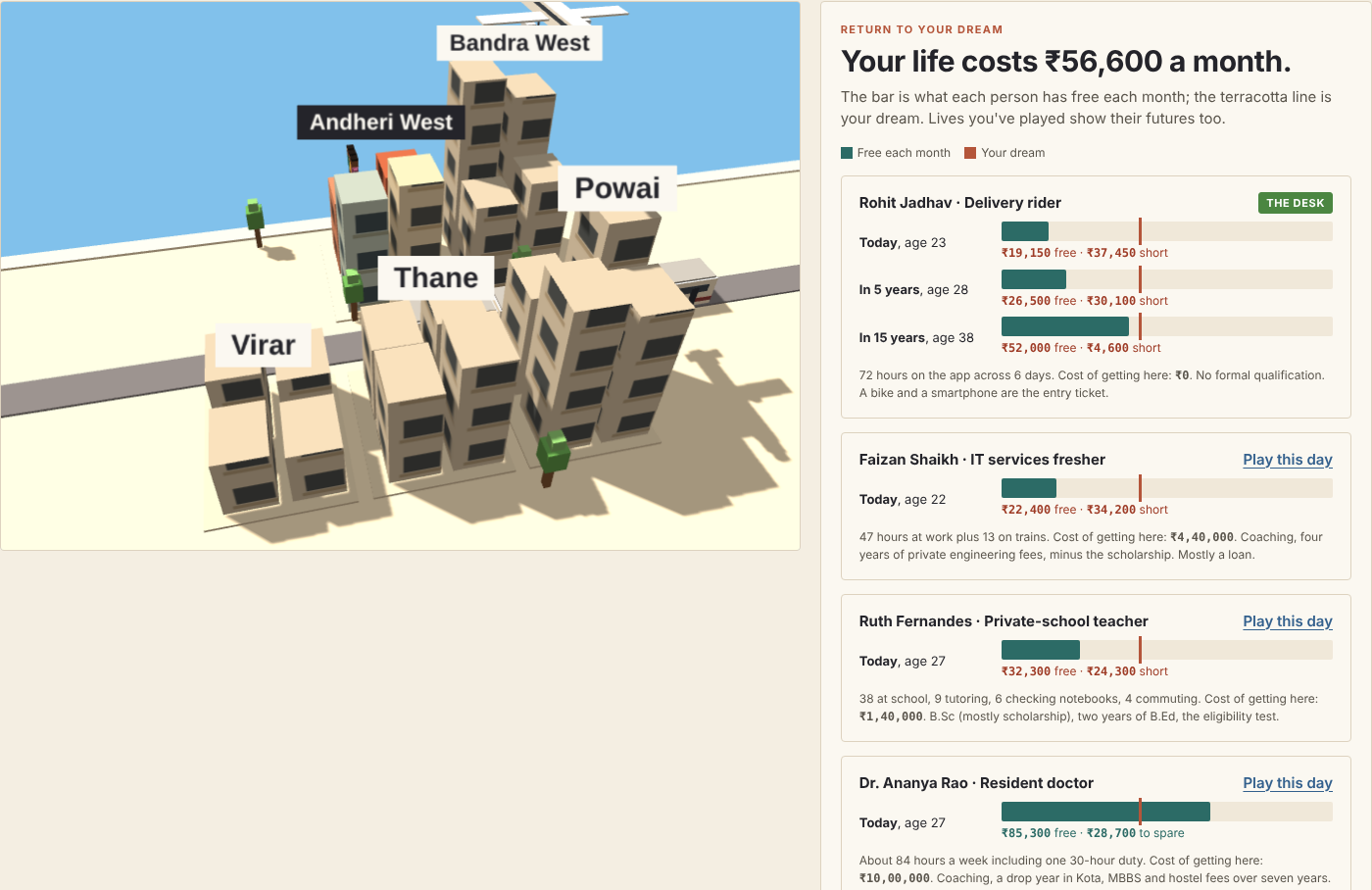
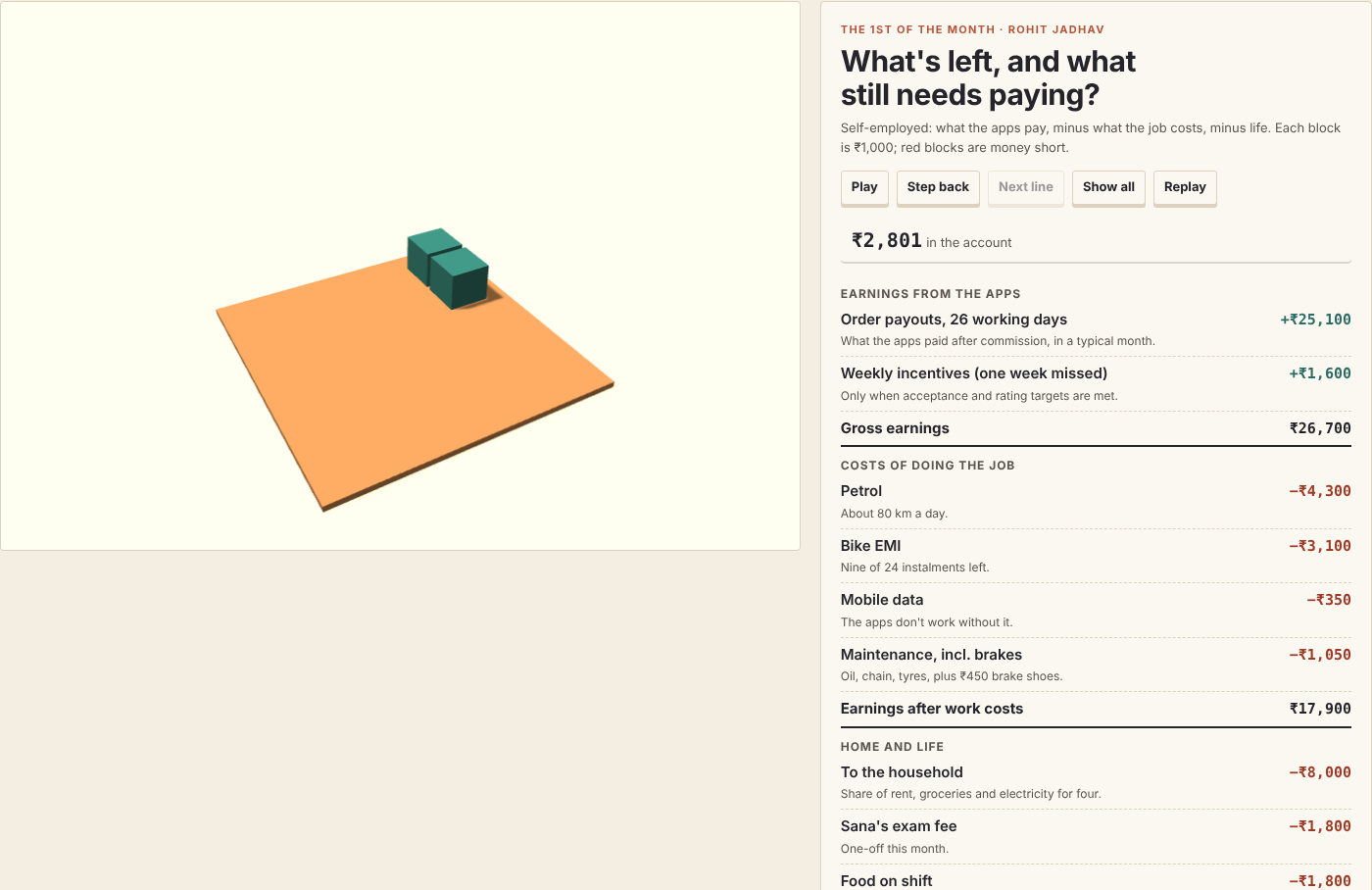
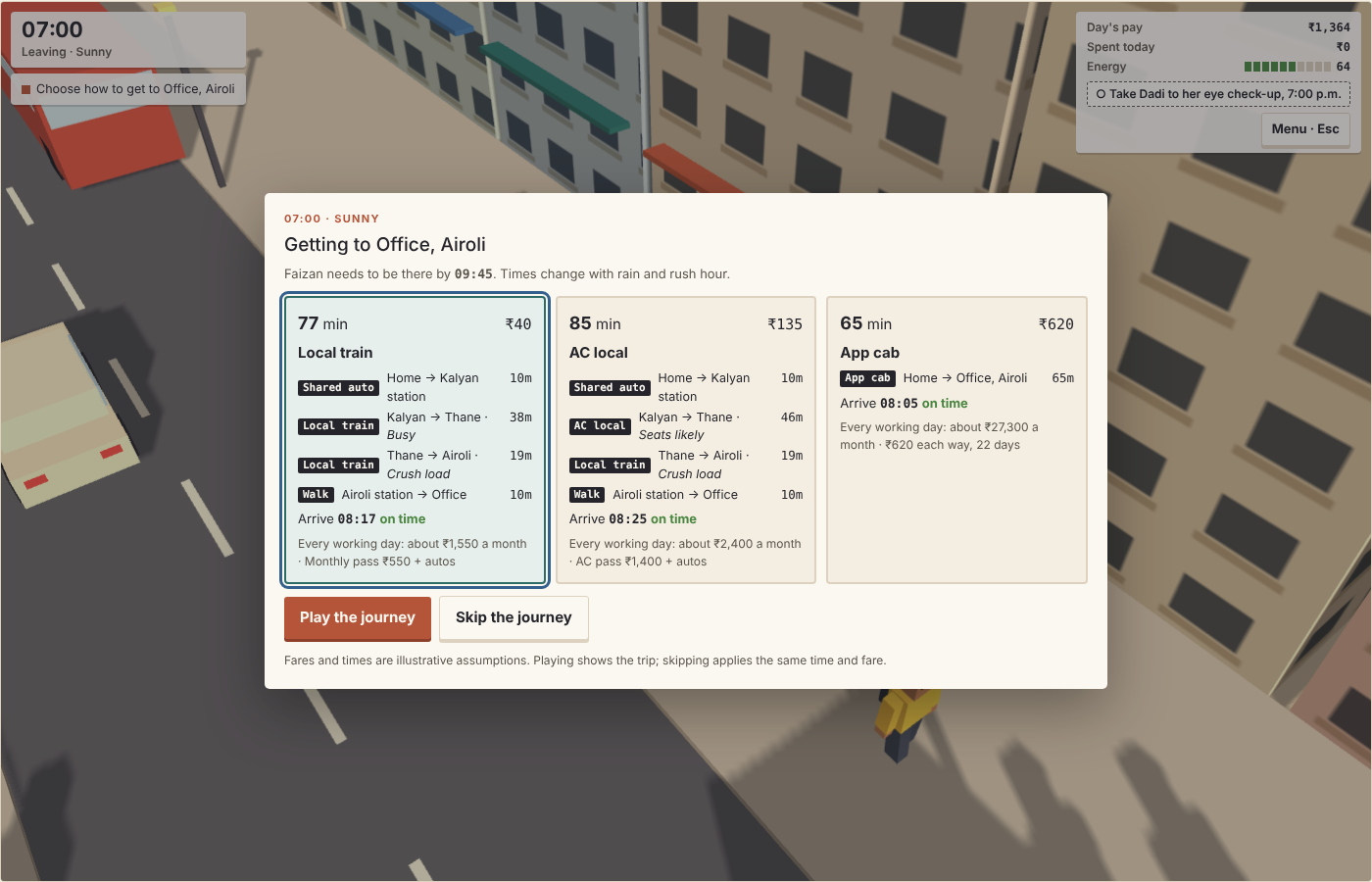
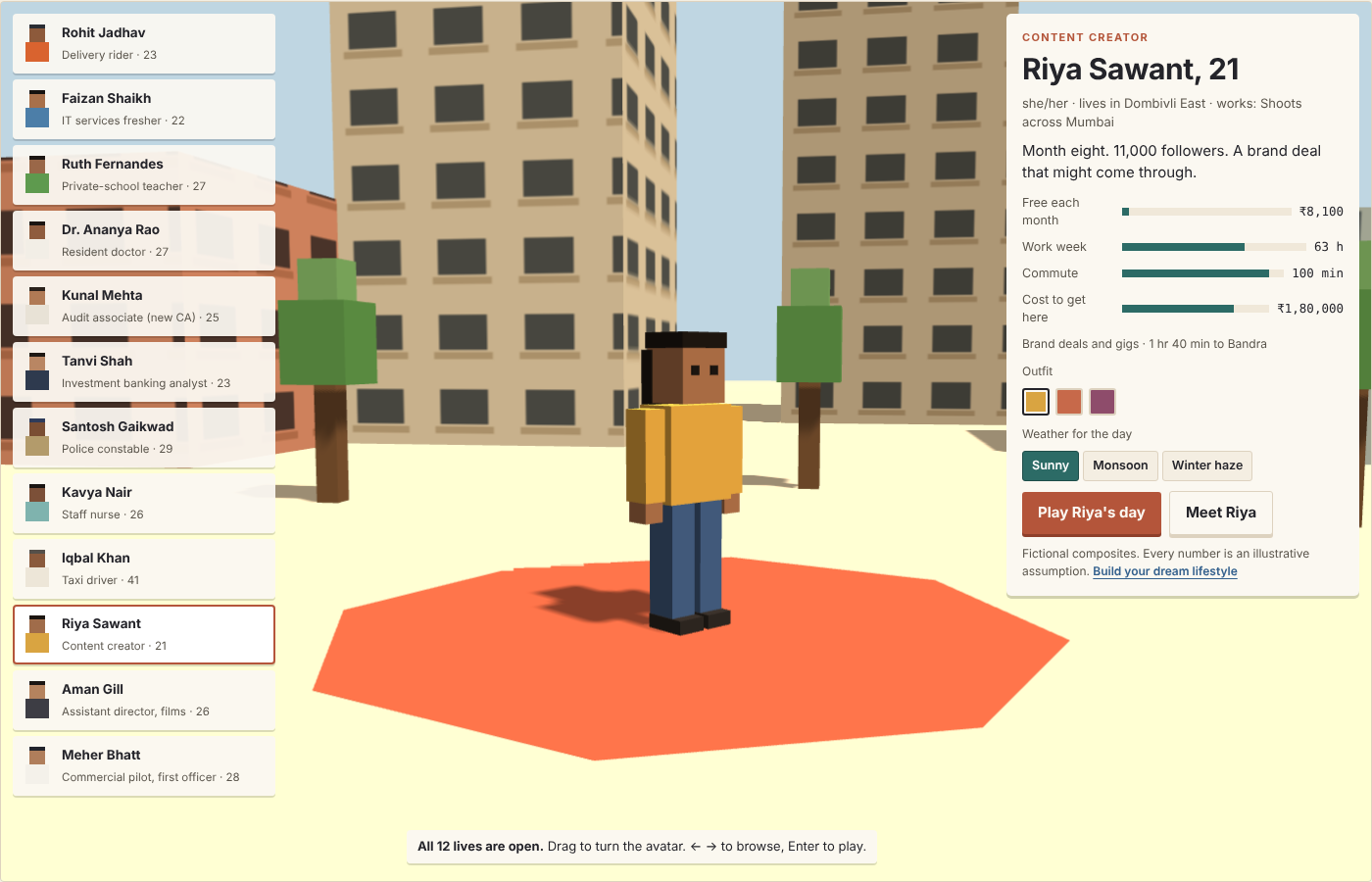
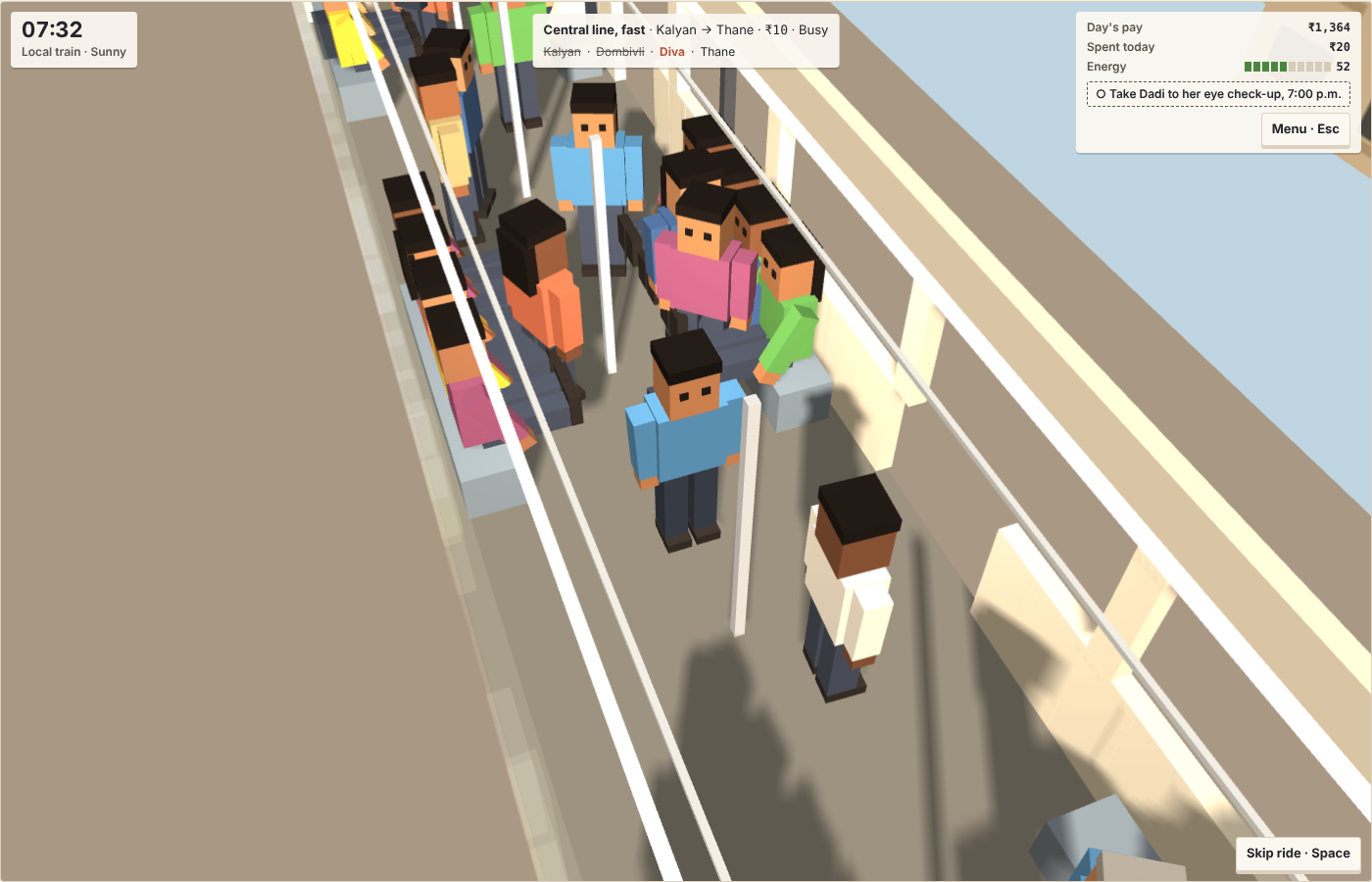
Players begin by choosing their dream lifestyle: where they want to live, how they want to travel, what they enjoy, and how much they want to contribute to their family. Those choices become an itemised budget. They then explore fictional characters with different careers and circumstances. Each character has a detailed history: education, college, previous jobs, family responsibilities, financial support, setbacks, and turning points. Through everyday decisions, players encounter tradeoffs between money, time, energy, and relationships. One of the central moments is the first of the month: income arrives, expenses are deducted, and the player sees what remains. The experience connects those decisions to possible future paths and brings players back to their original dream with a better question: What would it take to make this life work for me?
How we built it
We organised the experience around a connected journey: build a dream, meet a character, experience their choices, and reflect on the outcome. Character histories and financial assumptions form the foundation of the scenarios. Choices connect to changes in the player’s circumstances, while the budget breakdown makes those consequences visible. Visually, we chose a minimal, geometric Mumbai with chunky buildings, local transport, warm colours, and a changing atmosphere. The approachable style supports a subject that can otherwise feel intimidating. We designed character profiles to remain connected to gameplay. Understanding someone’s earlier opportunities and responsibilities helps explain why a seemingly simple decision may be difficult for them.
Challenges we ran into
The hardest design challenge was making the experience engaging without turning someone’s hardship into entertainment. We also had to avoid suggesting that a career has one fixed salary or one guaranteed future. Circumstances differ, and effort alone does not explain every outcome. Our scenarios therefore need clear assumptions and room for uncertainty. Another challenge was balancing detail with momentum. Education, family, debt, and work history all matter, but players should discover them through a person’s story rather than face a wall of information. Finally, we had to focus an ambitious concept into a prototype that could communicate its central idea clearly.
Accomplishments that we're proud of
We’re proud of connecting lifestyle aspirations with the human stories behind them. The character profiles make people more than job titles. The monthly expense sequence makes a salary more than an impressive number. Together, they encourage players to consider both financial costs and costs in time, effort, and missed opportunities. We also developed a visual identity that feels rooted in Mumbai while keeping the experience accessible and playful.
What we learned
We learned that the story becomes more meaningful when players understand how a person arrived at a decision.
A salary means little without context. Family support, education costs, commute time, responsibilities, and access to opportunities can change what that income makes possible.
We also learned that useful financial education should leave room for different definitions of a good life. The goal is to help players ask better questions and make informed plans.
What's next for HowToLife
We want to deepen the playable stories and validate their assumptions through research and conversations with people in the professions represented. Next steps include:
- More career paths and richer character histories.
- Better-sourced, dated estimates for earnings, education, and living costs.
- More branching scenarios that reflect uncertainty and different starting circumstances.
- Additional cities, languages, and accessibility options.
- Classroom use with guided reflection and discussion.
- User testing with teenagers to understand what they learn and where the experience needs improvement.
Our ambition is simple: help young people approach their dreams with curiosity, empathy, and a clearer understanding of the path ahead.
Built With
- claude
- claudecode
- codex
- css
- html
- javascript
- three.js
