-
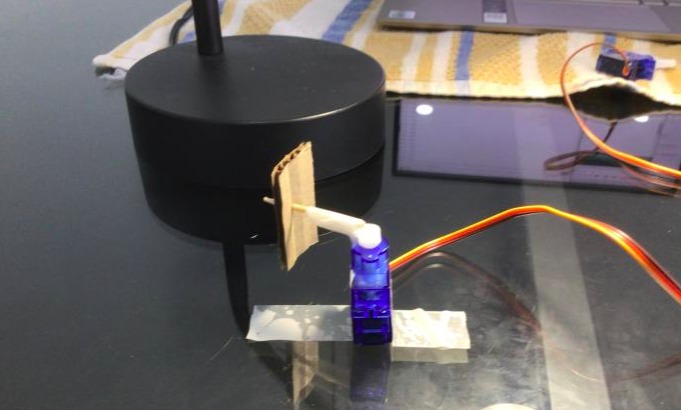
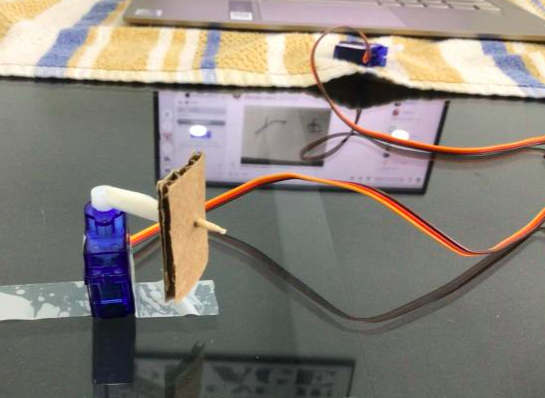
prototype
-
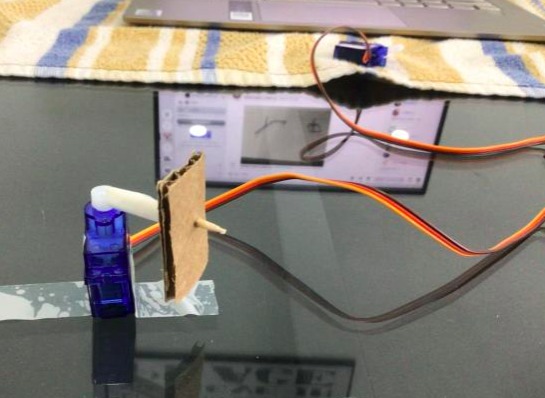
prototype
-
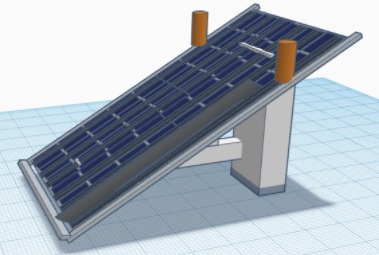
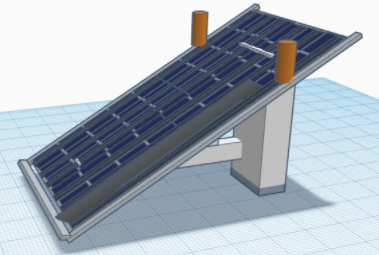
3d model
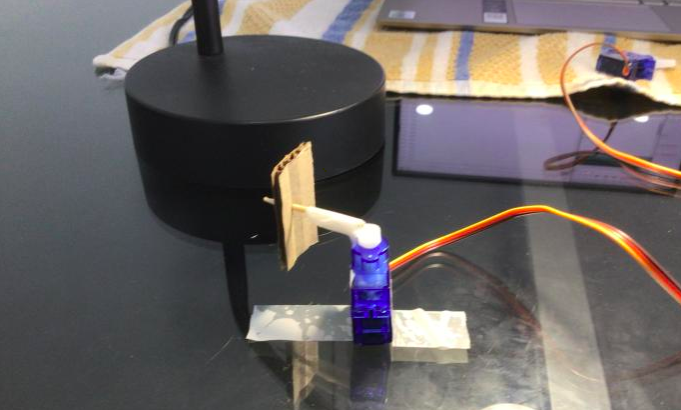
Inspiration
Since the photoperiods on Howler were so long, we were inspired to take advantage of the sunlight and make solar panels to generate electricity for the astronaut base. Energy production was one of the main issues of enhabiting other planets so in order to sustainably produce the energy we decided to
What it does
Our solar panels will generate electricity using the UV rays from the sun. They will also tilt 180 degrees throughout the day to match the sun's position and maximize the sunlight they can get. They have photoresistors to collect the data on how much sunlight they are receiving to send signals to tilt the solar panels. To combat the harsh weather conditions in Howler such as the heavy winds and high precipitation rates we added a wiper to maintain the solar panels.
How we built it
We used 1 Arduino Mega 2560, 2 photo resistors, 2 10K resistors, breadboard jumper wires, 1 breadboard, 1 push button, 2 servo motors, cardboard, tape, and a toothpick. We created a circuit and connected the circuit to our solar panel demo contraption.
#include <Servo.h>
int buttonPin = 3;
int buttonRead;
int rSensor = A0; //right photoresistor
int rVal; //measures
int lSensor = A1; //left photoresistor
int lVal;
int servoPin1 = 7;
int servoPin2 = 8;
Servo servo1; //moves the solar panel
Servo servo2; //moves the wiper

void setup() {
  Serial.begin(9600);
  pinMode(rSensor, INPUT);
  pinMode(lSensor, INPUT);
  pinMode(servoPin1, INPUT);
  pinMode(servoPin2, INPUT);
  pinMode(buttonPin, INPUT);
  servo1.attach(servoPin1);
  servo2.attach(servoPin2);

}

void loop() {
  buttonRead = digitalRead(buttonPin);
  rVal = analogRead(rSensor) + 600;
  lVal = analogRead(lSensor);
  Serial.print("Light on the right is ");
  Serial.print(rVal);
  Serial.print(", ");
  Serial.print("Light on the left is ");
  Serial.print(lVal);
  Serial.print(", ");
  Serial.print("The button state is ");
  Serial.print(", ");
  Serial.println(buttonRead);
  delay(250);

  if(rVal>lVal){
    servo1.write(0); //if the Sun is facing towards the right photoresistor
  }

  if(rVal<lVal){
    servo1.write(180);  //if the Sun is facing towards the left photoresistor
  }

  if(buttonRead==0){
    servo2.write(0); //if the button is pressed the wiper will start wiping
    delay(1000);
    servo2.write(120);
    delay(1000);

    servo2.write(0);
    delay(1000);
    servo2.write(120);
    delay(1000);

    servo2.write(0);
    delay(1000);
    servo2.write(120);
    delay(1000);

    servo2.write(0);
    delay(1000);
    servo2.write(120);
    delay(1000);

    servo2.write(0);
    delay(1000);
    servo2.write(120);
    delay(1000);
  }

}
Challenges we ran into
Throughout the process of coming up with this idea and executing it, we came across many problems. One of the main ones was creating a plan for the model. We were not sure how to plan out a system that would be efficient, well designed and compact. Eventually, we came up with a good solution that we were satisfied with. Another big problem was finalizing an idea since we had so many ideas and thoughts all over the place but finalizing an idea that we all liked took quite a while.
Accomplishments that we're proud of
Accomplishments we are proud of are our panel wiper, our mechanism which tilts the panels, virtual 3D model, our final product, and our learning.
What we learned
We learned about how solar panels can be maximized, as well as how we could clean them, and make them tilt. We also learned how to design a product so that it can work on another planet and help humans on that planet.
What's next for Howler Smart Solar Panels
The next thing for Howler Smart Solar Panels is to try making them even better than they are. We could do this by making them more compact, using superior solar panels, and making them more efficient.

Log in or sign up for Devpost to join the conversation.