-
Socioeconomic Factors and Academic Performance
-
Peer Influence and Bullying Impact
Key Insights
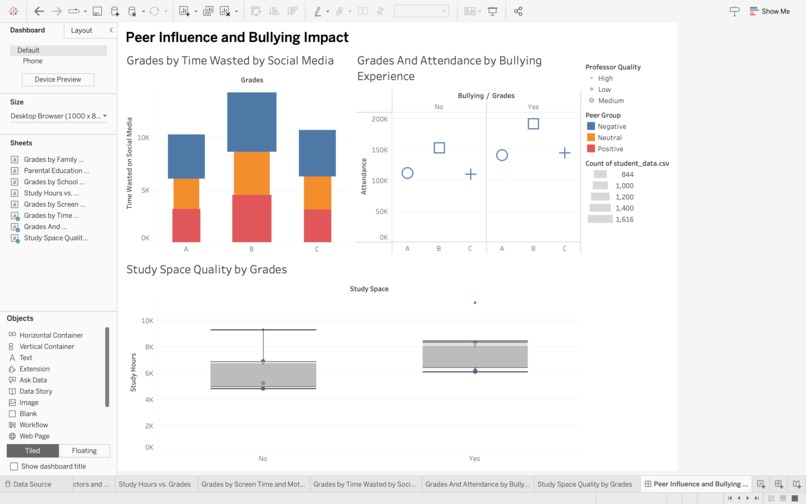
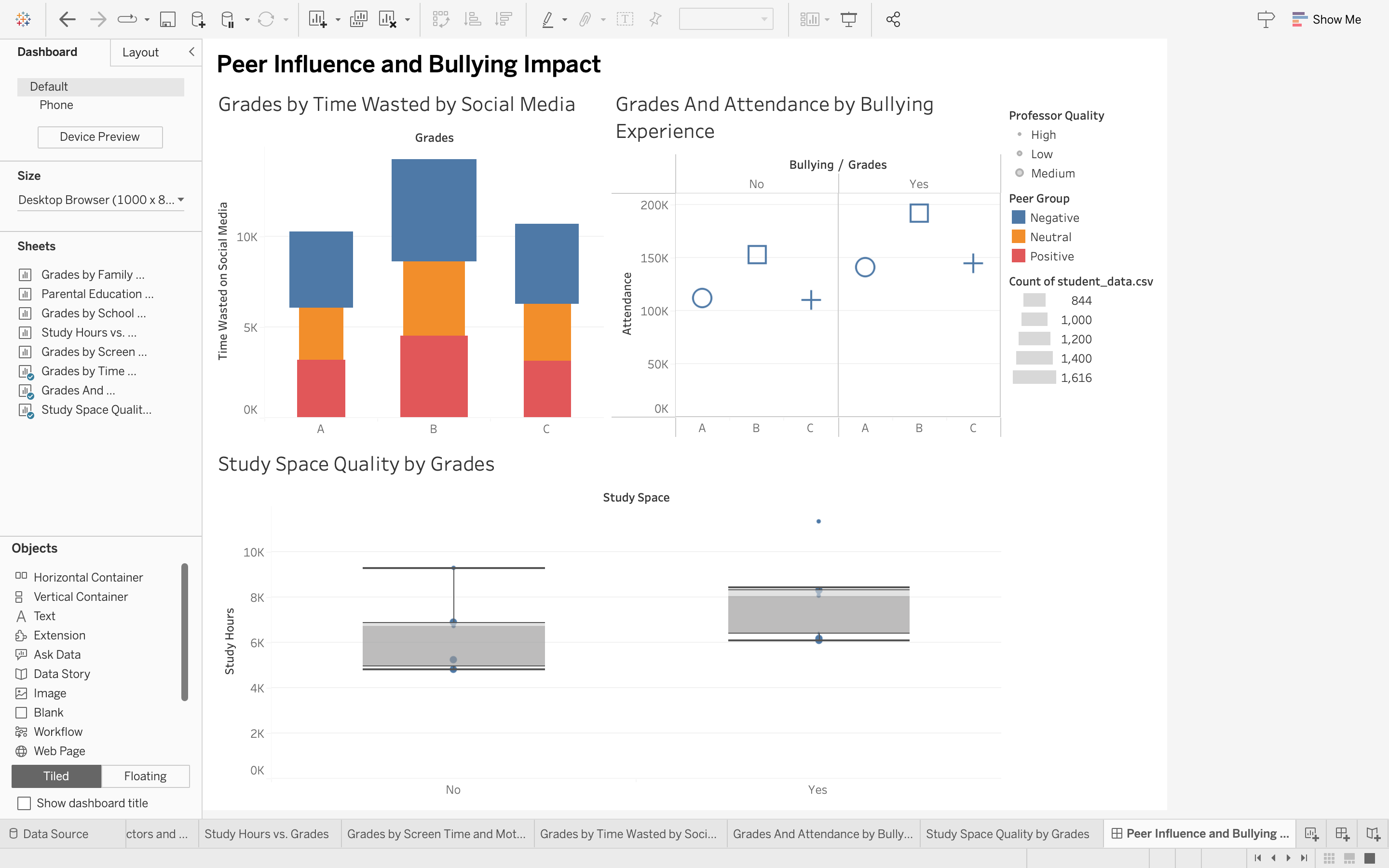
Grades by Time Wasted on Social Media
- Observation: Students with 'A' grades spend less time on social media compared to 'B' grade students, who show the highest social media usage. Interestingly, students with 'C' grades also have lower social media time.
- Interpretation: High academic achievers likely prioritize study time over social media, which could contribute to better grades. Reduced social media time for 'C' students might suggest that other factors, such as study habits or external challenges, play a role in their performance.
- Implication: Limiting social media usage may help students focus more on academics, potentially leading to higher grades.
Grades and Attendance by Bullying Experience
- Observation: Bullying seems to negatively impact attendance, particularly for high-performing students with 'A' grades. Students with 'C' grades are less affected in terms of attendance, regardless of bullying experience.
- Interpretation: Bullying could discourage high-achieving students from attending school, potentially affecting their academic outcomes. Students experiencing bullying but with lower grades may already face academic challenges that overshadow the impact of attendance.
- Implication: Interventions to reduce bullying could improve attendance and academic performance, especially for top-performing students who are more affected.
Study Space Quality by Grades
- Observation: Students with access to a dedicated study space generally have higher study hours, while those without a study space exhibit more variability in their study hours.
- Interpretation: A dedicated study space fosters better study habits, which likely contributes to consistent academic performance.
- Implication: Schools and families could support students by providing or facilitating quiet, organized study environments to enhance academic success.
Conclusion
The dashboard analysis indicates that:
- Reduced time on social media is associated with higher academic performance.
- Bullying experiences affect attendance, particularly for high-achieving students.
- Access to a quality study space positively influences study hours and academic outcomes.
Recommendations
Based on these insights, the following recommendations can be made:
- Social Media Awareness Programs: Educate students on managing social media usage to balance academic responsibilities.
- Anti-Bullying Initiatives: Implement supportive programs to address bullying, helping to maintain attendance and reduce its impact on high-achieving students.
- Study Environment Support: Encourage families and schools to create conducive study spaces to improve students’ study habits and performance.
