-
-
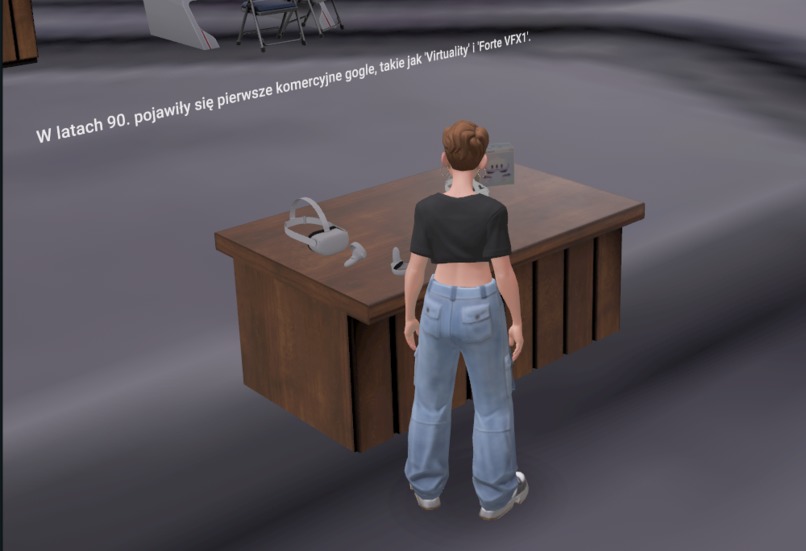
VR exposition
-
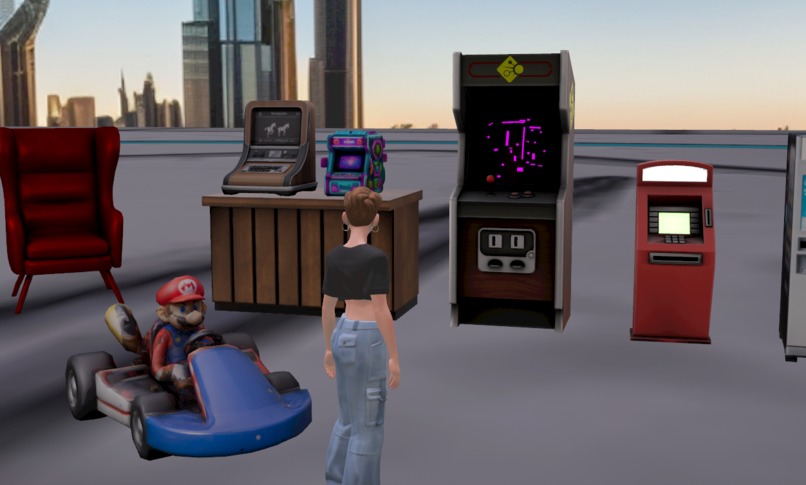
Automates
-
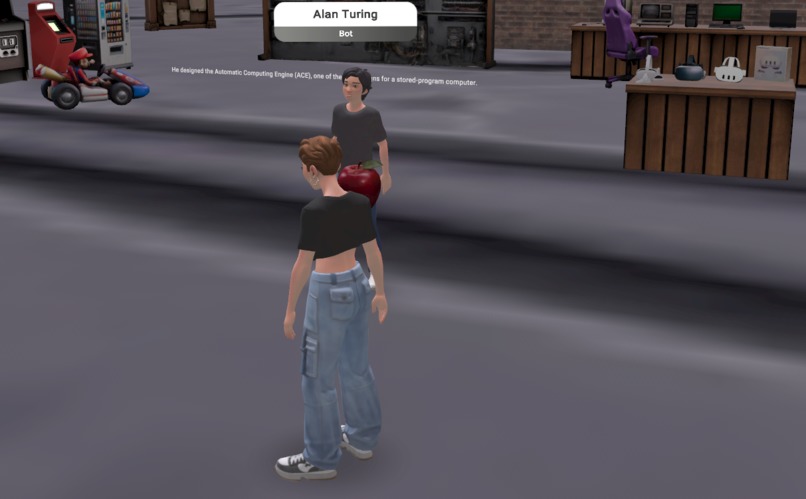
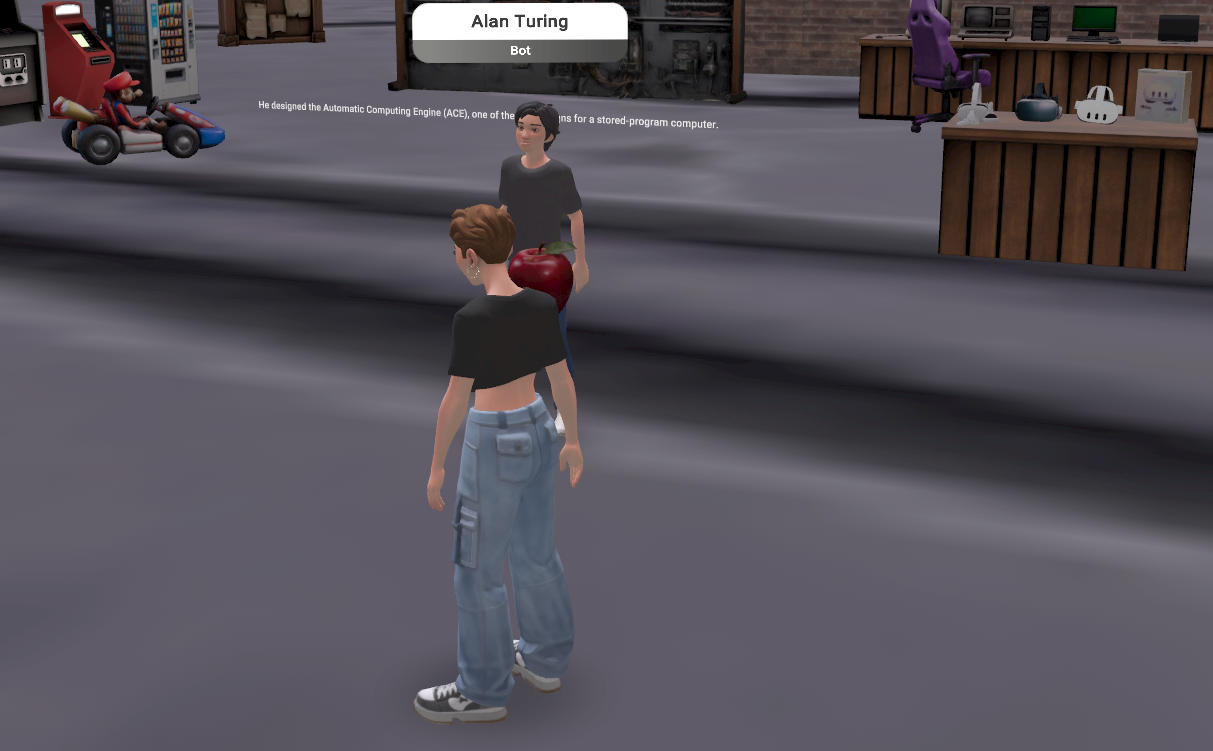
Alan Turing small talk
-
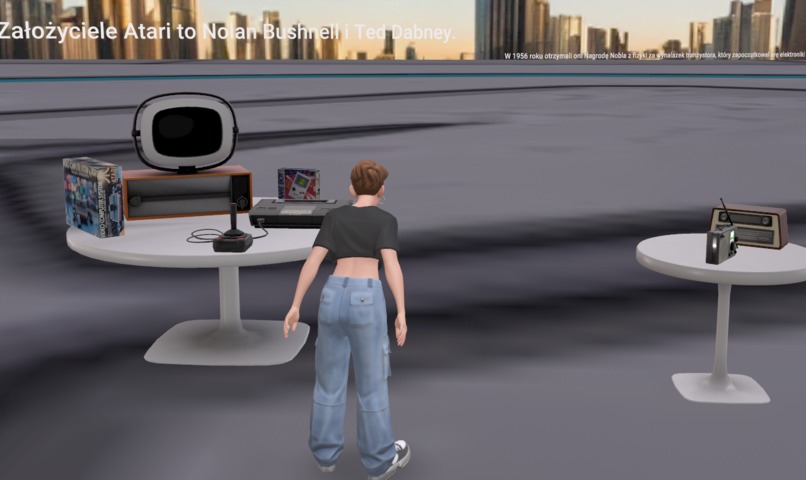
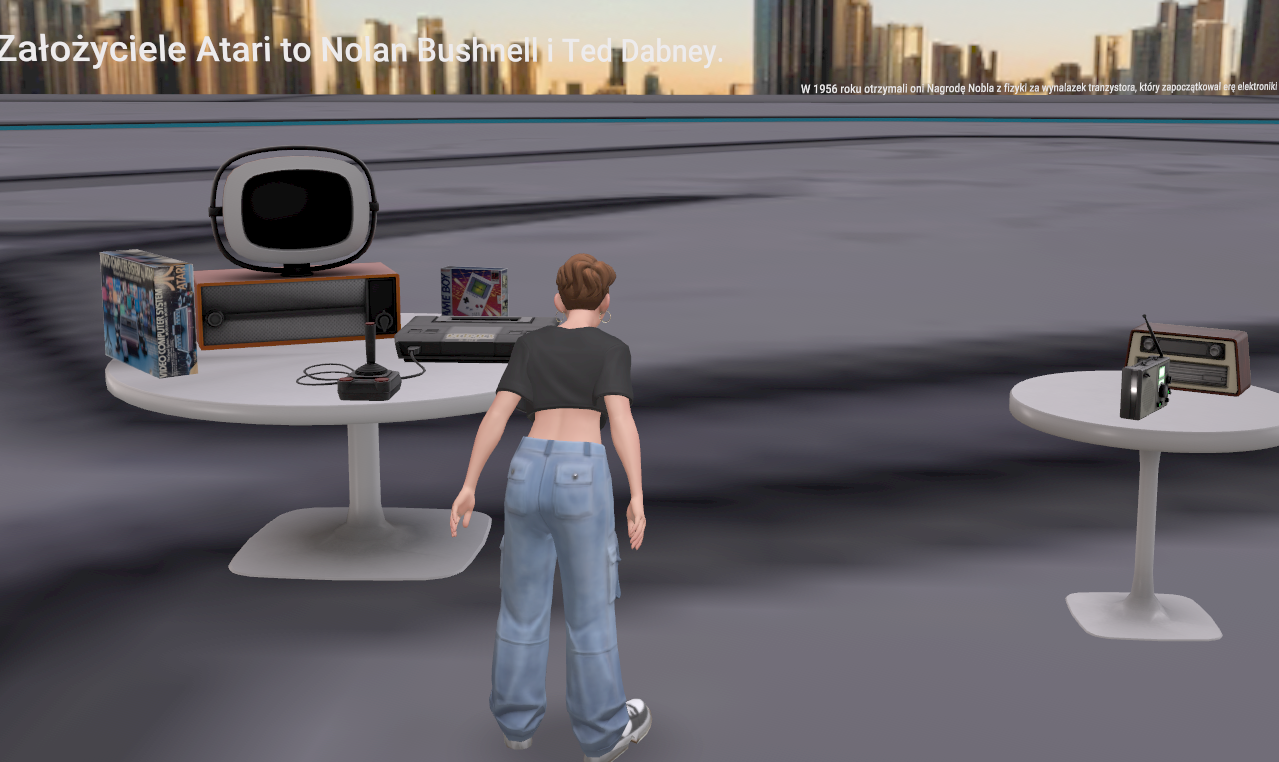
Old good PC
-
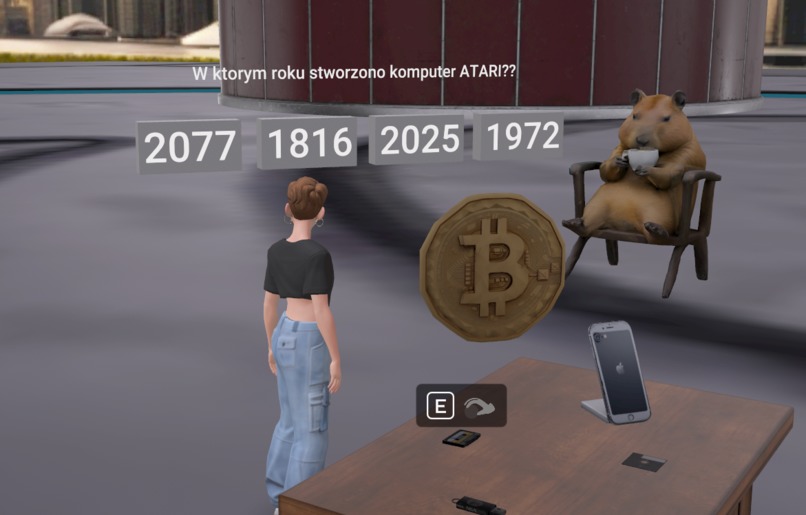
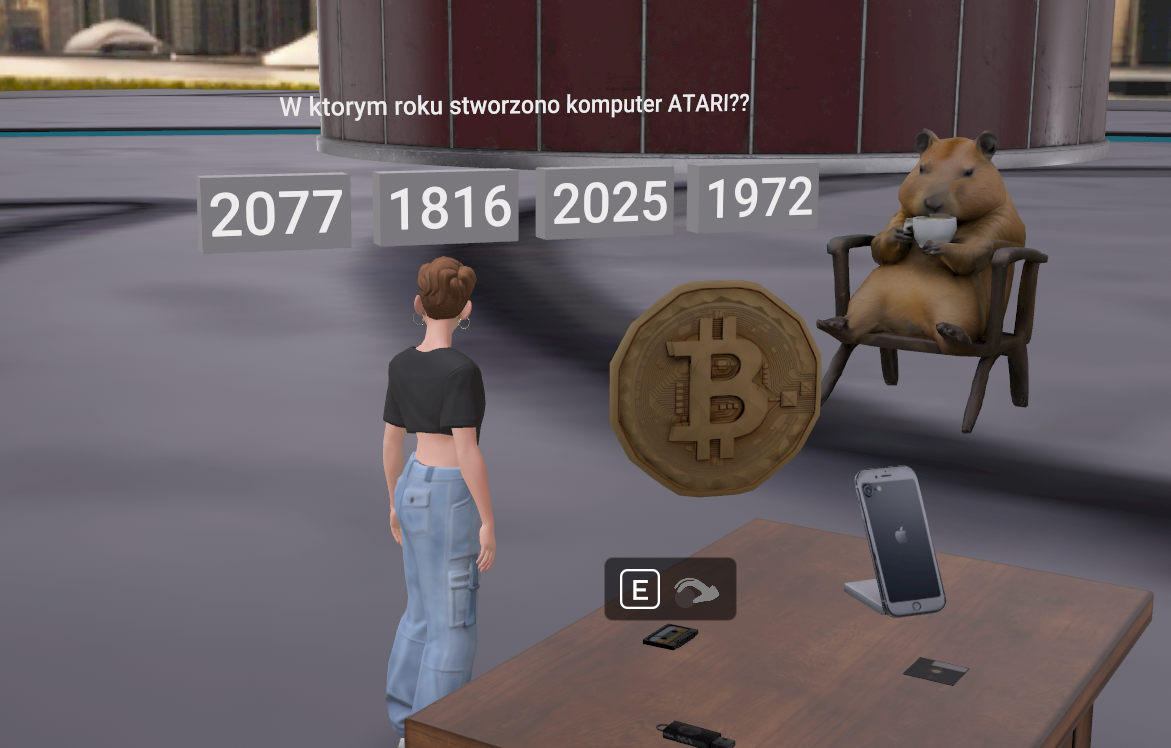
Capibara quiz
-
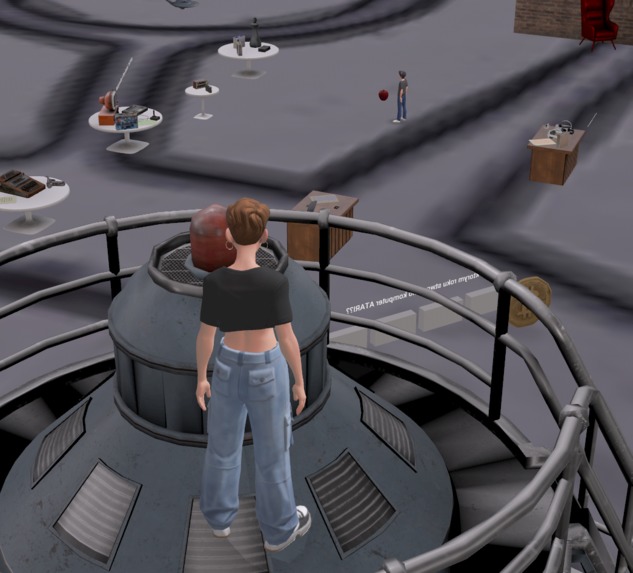
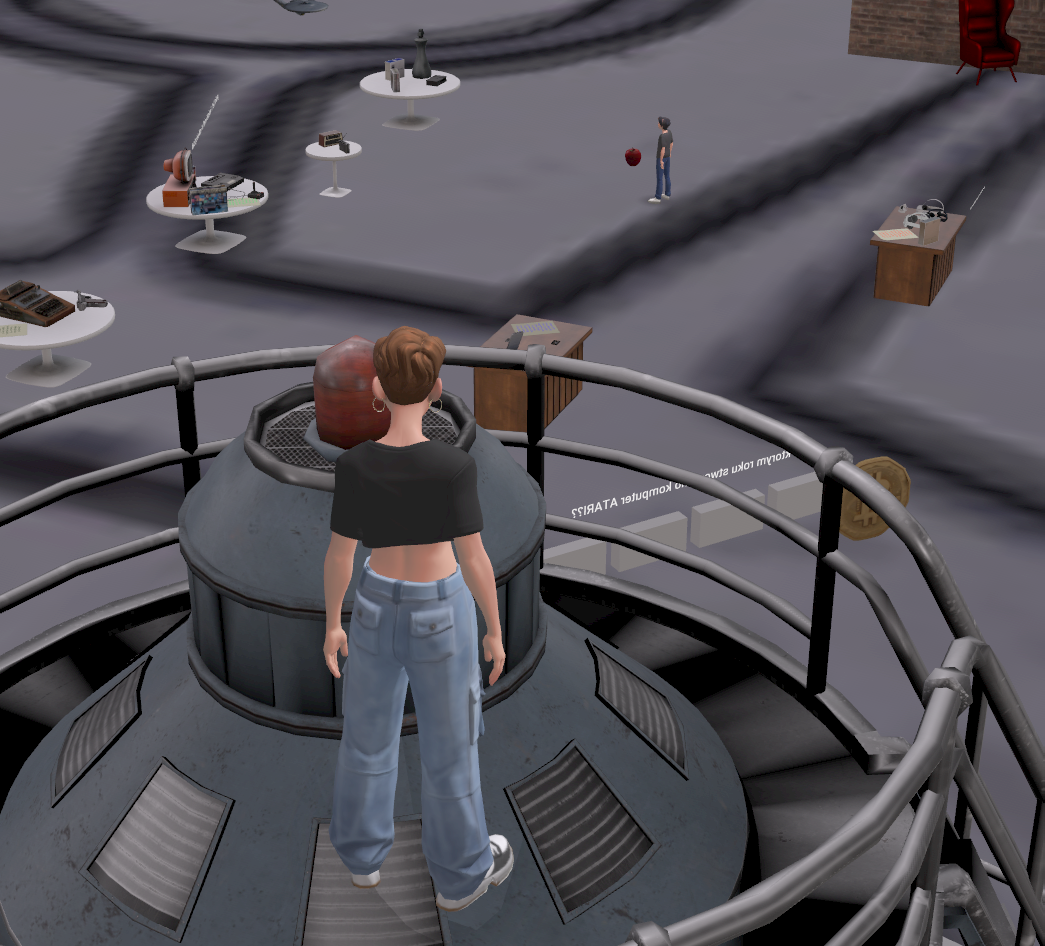
Look from above
About the Project
"Computer History 101" is an immersive educational VR experience built in Meta Horizon Worlds, designed to teach computer science fundamentals and history through a dynamic "Memory Palace" concept. This project materializes as an MVP for the innovative idea of a virtual learning space, blending elements of a digital museum and an interactive lab. The concept will be expanded with escape room mechanics to engage users through interactive exhibits, AI-driven narratives, and educational games. The project serves as a proposal for an innovative educational activity tailored for computer science students, fostering technical and teamwork skills.
Inspiration
The project was inspired by the limitations of traditional education, which often fails to engage modern students. To address this, we sought to leverage VR's immersive potential to transform learning into an immersive VR adventure. By harnessing modern VR and AI technologies, the project aims to boost student engagement in learning, fostering curiosity and a desire for deeper knowledge exploration. Modern technology enables the unique application of visual mnemonics and multisensory learning approaches. The "Memory Palace" mnemonic technique, rooted in ancient Greece, sparked the idea of a 3D space where users associate vivid virtual exhibits with computer science concepts and core informations. Research on constructivism, experiential learning, and gamification motivated the creation of this multisensory, narrative-driven environment that makes learning intuitive and memorable.
What it does
The "Computer History 101" in Meta Horizon Worlds offers users an immersive educational experience, blending VR with interactive elements to explore computer science fundamentals and history. Upon entering the room, users encounter a variety of 3D assets connected to computer science, sourced from the library or generated by AI. Approaching these objects triggers the display of relevant information about the exhibit, such as historical details, technical specifications, or fun facts.
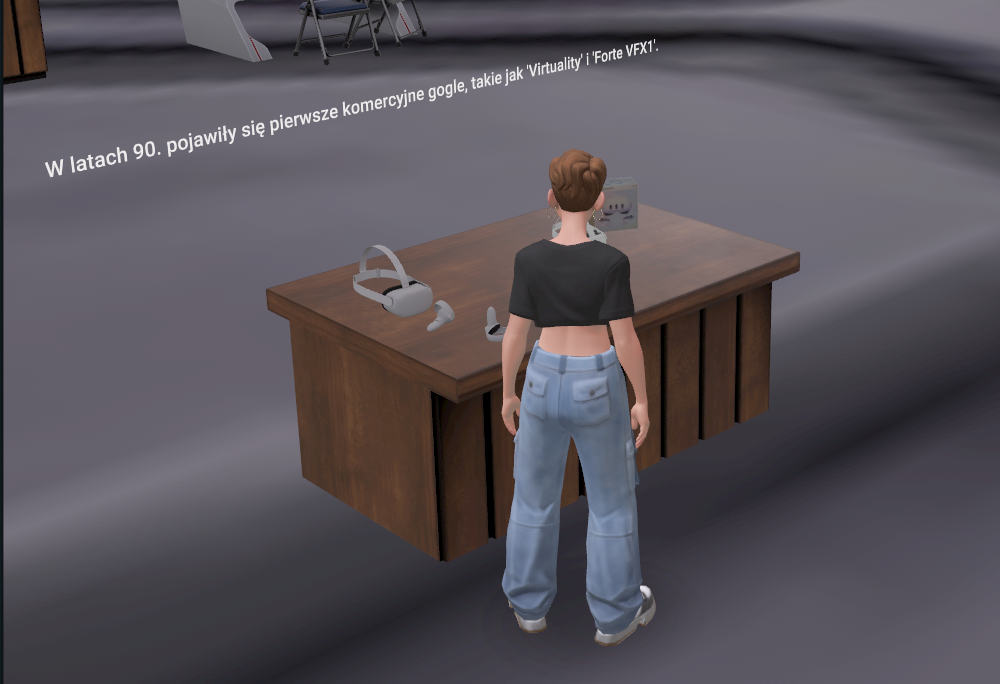
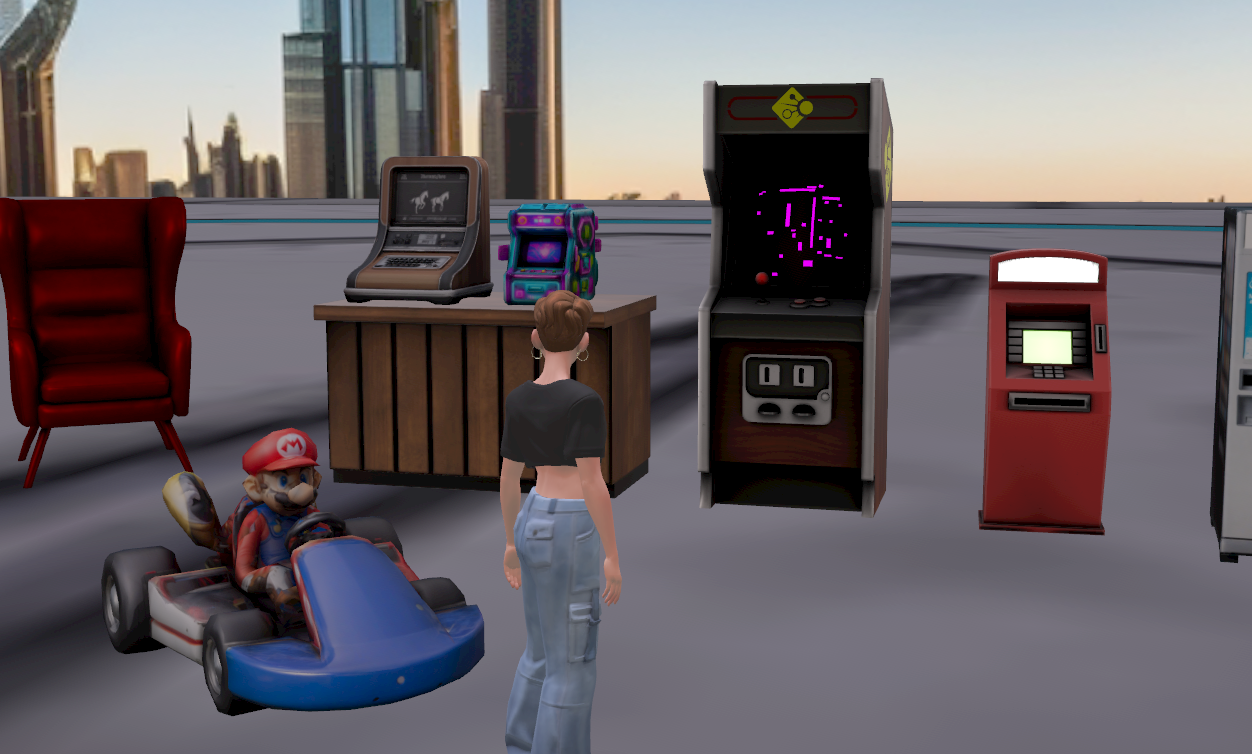
Users can explore the environment freely or follow a guided learning path by collecting assets like strawberries, which serve as interactive clues. Each collected strawberry reveals a puzzle or hint indicating where to find the next one, creating a narrative-driven journey inspired by scavenger hunt mechanics. The implemented learning path includes key exhibits: the ENIAC computer (an early electronic pioneer), the Enigma machine (a WWII encryption device), an arcade game automaton, the Atari (one of the first personal computers), a smartphone, a VR headset, and an avatar of Alan Turing discussing the Turing Test. This structure encourages structured discovery, fostering engagement and retention while allowing future expansions by IT students to add more elements and narratives.
How it was built
The concept of an interactive "Memory Palace" in Meta Horizon Worlds offers students unique educational experiences, blending immersive VR with interactive learning. This concept can be expanded to different subjects—such as history, physics, or biology—to teach fundamentals in an accessible and engaging way. The concept presented in this project includes an MVP of the educational idea, aligned with the current level of technological development. However, advancements in AI will help refine the concept, supporting the development of knowledge and intellect among youth. These features will be further developed in the future by IT students, who, by expanding the "Computer History 101" project and adding new elements, will deepen their own knowledge while leaving a lasting legacy of contributions and narratives for future generations. In the following list, implemented elements are bolded, while the rest of the ideas can be expanded by future creators:
Interactive Timeline: Users will be able to explore the evolution of computing, from Charles Babbage's 1837 Analytical Engine—the pioneering mechanical computer—to the 2019 IBM Q System One, the first commercial quantum computer. This timeline will illustrate how computers have transformed over time, highlighting changes in computational power, applications, accessibility, and design, allowing users to visualize technological progress in an intuitive, chronological format.
CAD Models: Users will inspect 3D models of historical machines, such as the ENIAC (the early electronic computer from 1946) or the Intel 4004 (the first microprocessor from 1971). These CAD models will be rendered in real or zoomed scale, providing a lifelike view of vintage computers and IT hardware, enabling users to rotate, and dissect components to understand their physical structure and engineering.
AI Narratives: Key information about the IT industry and its history will be conveyed through responsive informational panels that activate based on the user's avatar movements, supplemented by AI bots representing historical figures like Ada Lovelace (the first computer programmer) or Alan Turing (the father of theoretical computer science). These avatars will deliver scientific narratives and fun facts; in the future, they could engage in dialogues with users, answering questions and adapting explanations to individual learning styles.
Educational Games: Users will solve hands-on puzzles like the Towers of Hanoi to grasp recursion, or simulate logic gates to understand algorithmic thinking. These mini-games will involve manipulating 3D CAD models, teaching core IT concepts through interactive challenges—such as sorting algorithms (e.g., bubble sort), balancing red-black trees, or arranging logic gates and observing how their configurations affect output signals, fostering problem-solving skills in a gamified environment.
Storage & Language Exhibits: Users will compare various memory storage types, from magnetic tapes of the 1950s, by floppy discs to modern SSDs, or delve into programming languages like Python (versatile for data science) and Scratch (block-based for beginners). Users will navigate at their own pace, with a planned narrative-driven path inspired by escape room mechanics to guide structured learning, unlocking exhibits through clues and puzzles for a more directed and motivational experience.
Challenges
Developing "Computer History 101" in Meta Horizon Worlds presented several challenges, particularly in leveraging new tools and implementing complex features for an innovative VR educational experience. The basic functionality of the Horizon Worlds Desktop Editor was fairly intuitive, allowing straightforward asset imports and initial setup of interactions. However, mastering its full capabilities, such as optimizing performance for Meta Quest devices, required extensive trial-and-error, which extended the development timeline.
Additionally, working with an AI editor tool to support world-building and script implementation. Similarly, using the AI editor tool for world-building and script creation was generally pleasant, offering efficient support for generating basic elements. However, challenges arose with more complex tasks. Developing an interactive Alan Turing avatar to lead a narrative-driven path through the history of computing—guiding users by appearing at specific locations tied to assets (e.g., strawberries to find)—proved difficult, as the AI struggled to handle contextual scripting and precise placement logic. Additionally, integrating a simple image into the room, such as a 2D picture for educational context, was problematic due to limitations in the editor's asset-handling capabilities and unclear documentation for such tasks. Platform constraints, including restricted file formats (e.g., FBX-only models), and unintuitive TrueScript scripting, further complicated advanced interactions.
There is optimism that these functionalities, particularly the narrative avatar and asset integration, will be refined in the future, significantly enhancing the project's engagement and educational value. These challenges highlighted the iterative nature of VR development and the complexities of integrating AI-driven features.
Accomplishments That I'm Proud Of
The successful creation and submission of the "Computer History 101" prototype to a contest represents a significant achievement, demonstrating perseverance in overcoming personal barriers such as anxiety, procrastination, and fear of criticism. This milestone marks a major step in transforming an innovative VR educational concept into a tangible MVP, built entirely within Meta Horizon Worlds. The project showcases the effective integration of intuitive tools like the Desktop Editor and AI support, resulting in an immersive "Memory Room" that blends historical exhibits with interactive elements. Ultimately, this accomplishment highlights the potential of VR to make computer science education engaging and accessible, paving the way for broader impact in educational innovation.
What I Learned
Throughout the development process, valuable insights were gained into the practical use of the Horizon Worlds Desktop Editor, including its intuitive basics for asset integration and interaction setup, despite challenges in more complex scripting. The capabilities of AI tools for supporting world-building—such as generating scripts and refining elements—were explored, revealing their efficiency for simple tasks while requiring iterative prompting for advanced features. Reviewing the asset library sparked new ideas for future enhancements, such as additional historical models and interactive puzzles. Overall, the experience underscored the iterative nature of VR design, the balance between creativity and technical constraints, and the transformative role of emerging technologies in educational content creation.
What's Next for Computer History 101
The next phase involves presenting the virtual world to children to gather feedback on user reception and verify the effectiveness of interactive learning methods, with knowledge growth measured through pre- and post-experience quizzes. This user testing will help refine the immersive elements, ensuring they foster engagement and retention. Efforts will also focus on engaging my University to expand the project collaboratively with IT students, allowing them to contribute new features, deepen their skills, and leave a lasting educational legacy. With ongoing advancements in AI and VR, the goal is to evolve "Computer History 101" into a scalable, multiplayer platform that inspires curiosity and supports diverse learning styles across generations.
Built With
- horizon
- worlds


Log in or sign up for Devpost to join the conversation.