-
-
-
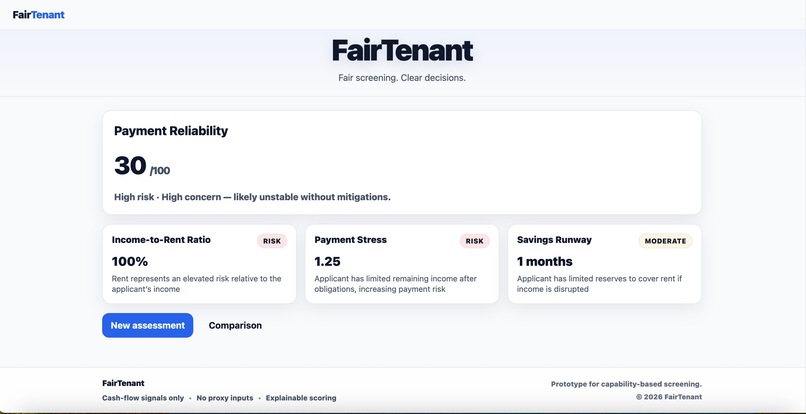
Tenants reliability stats
-
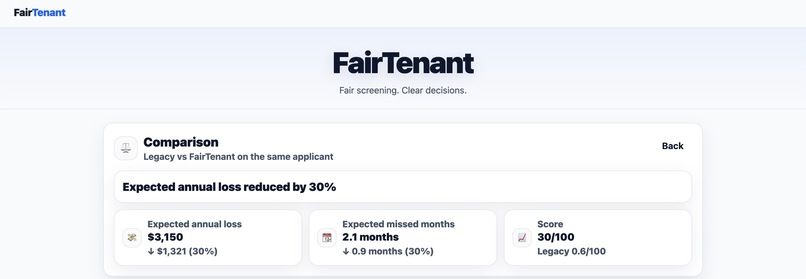
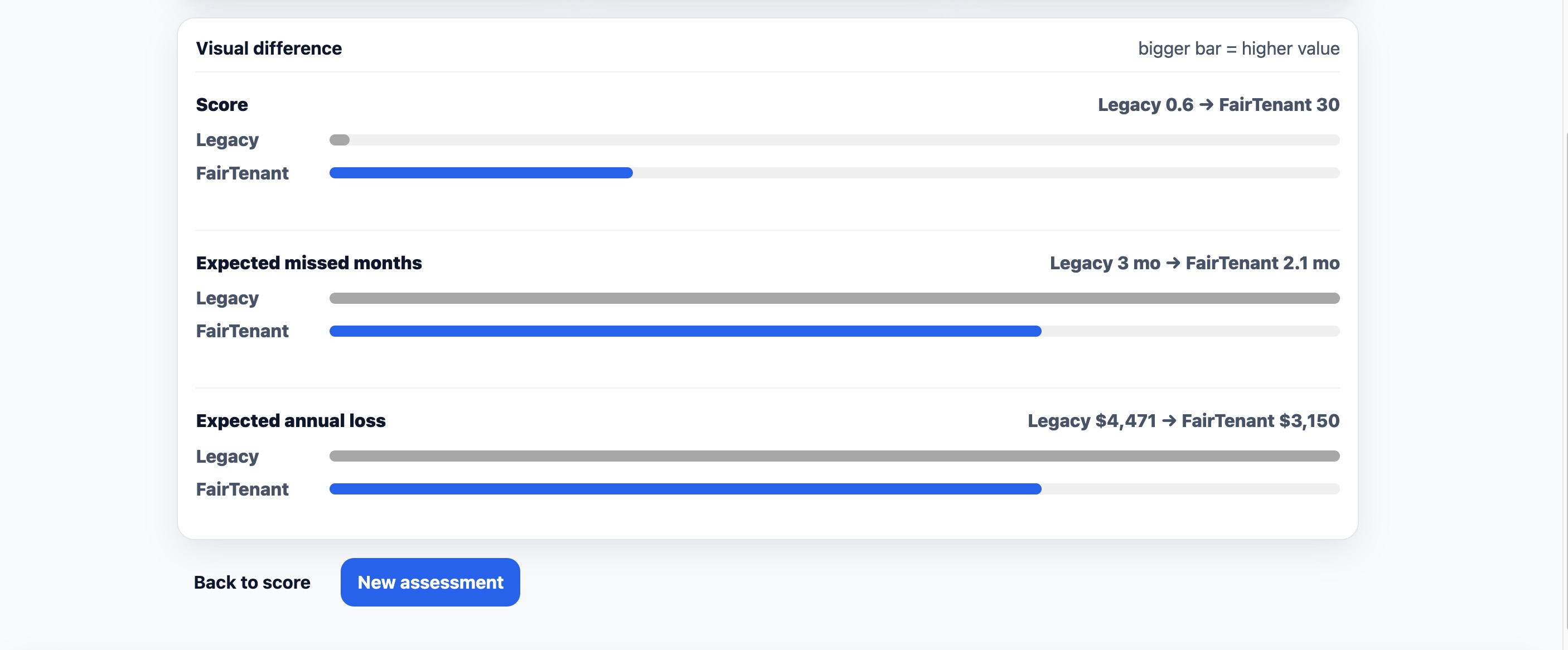
Comparison between legacy and new model
-
-
Inspiration
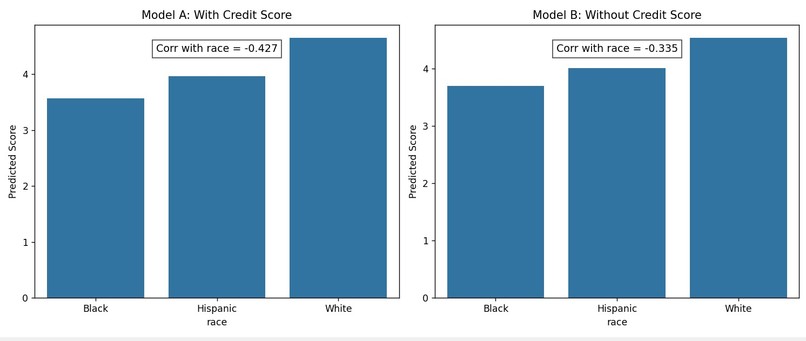
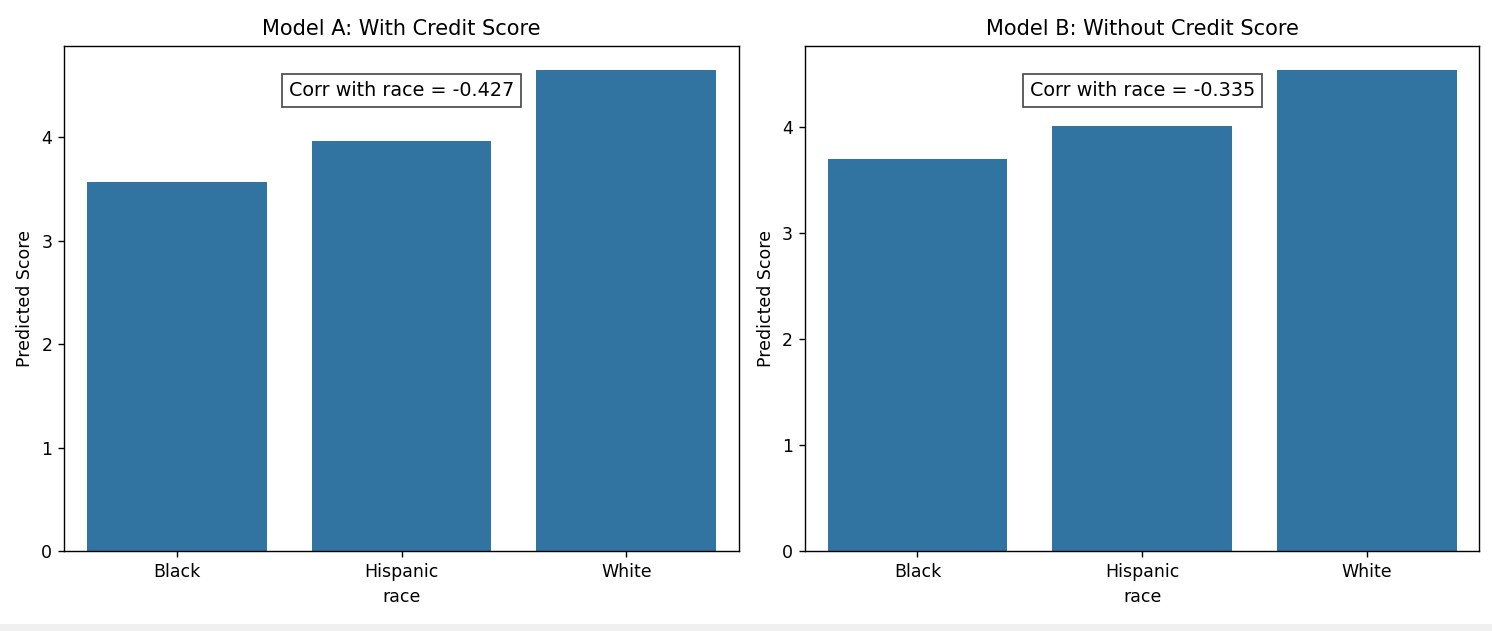
Tenant screening tools are meant to protect landlords from financial risk, but many rely on signals like credit history, employment length, or past evictions. These signals are easy to use, but they often reflect social and historical bias rather than whether someone can actually pay rent.
Landlords may not intentionally care about bias, they care about missed payments and vacancies. We were inspired by the idea that bias persists not because it’s fair, but because it’s assumed to be profitable. Our question became: what if reducing bias actually makes landlords more money?
What It Does
Our project compares two ways of evaluating the same tenant:
- A legacy screening model that relies on traditional proxy signals commonly used today
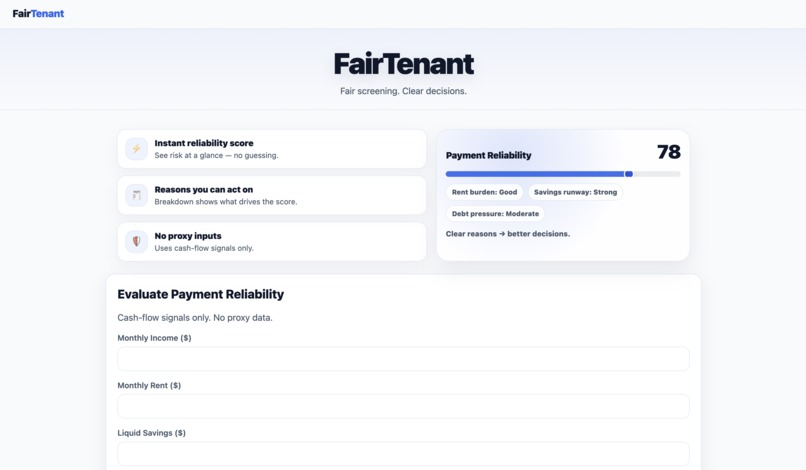
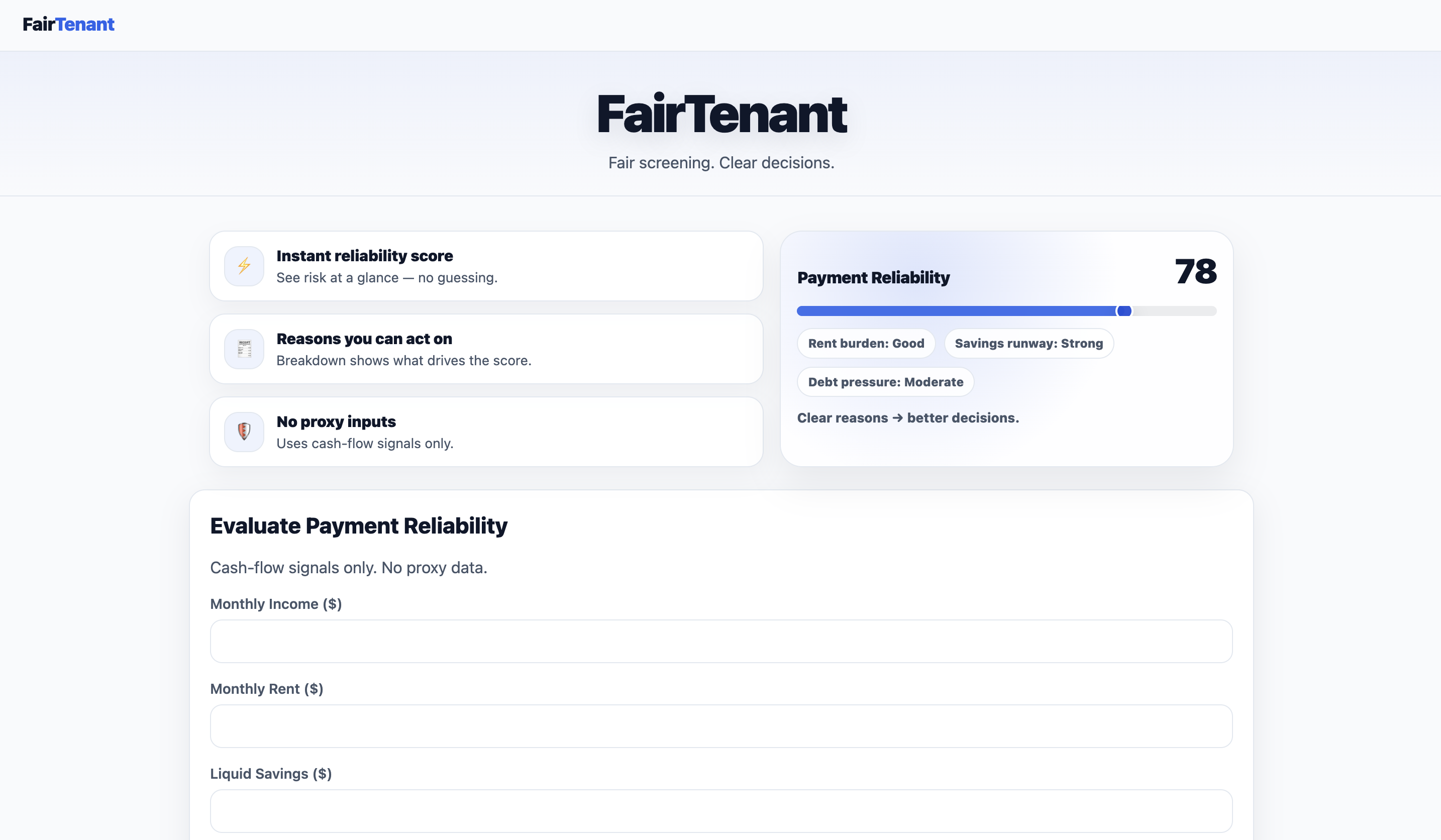
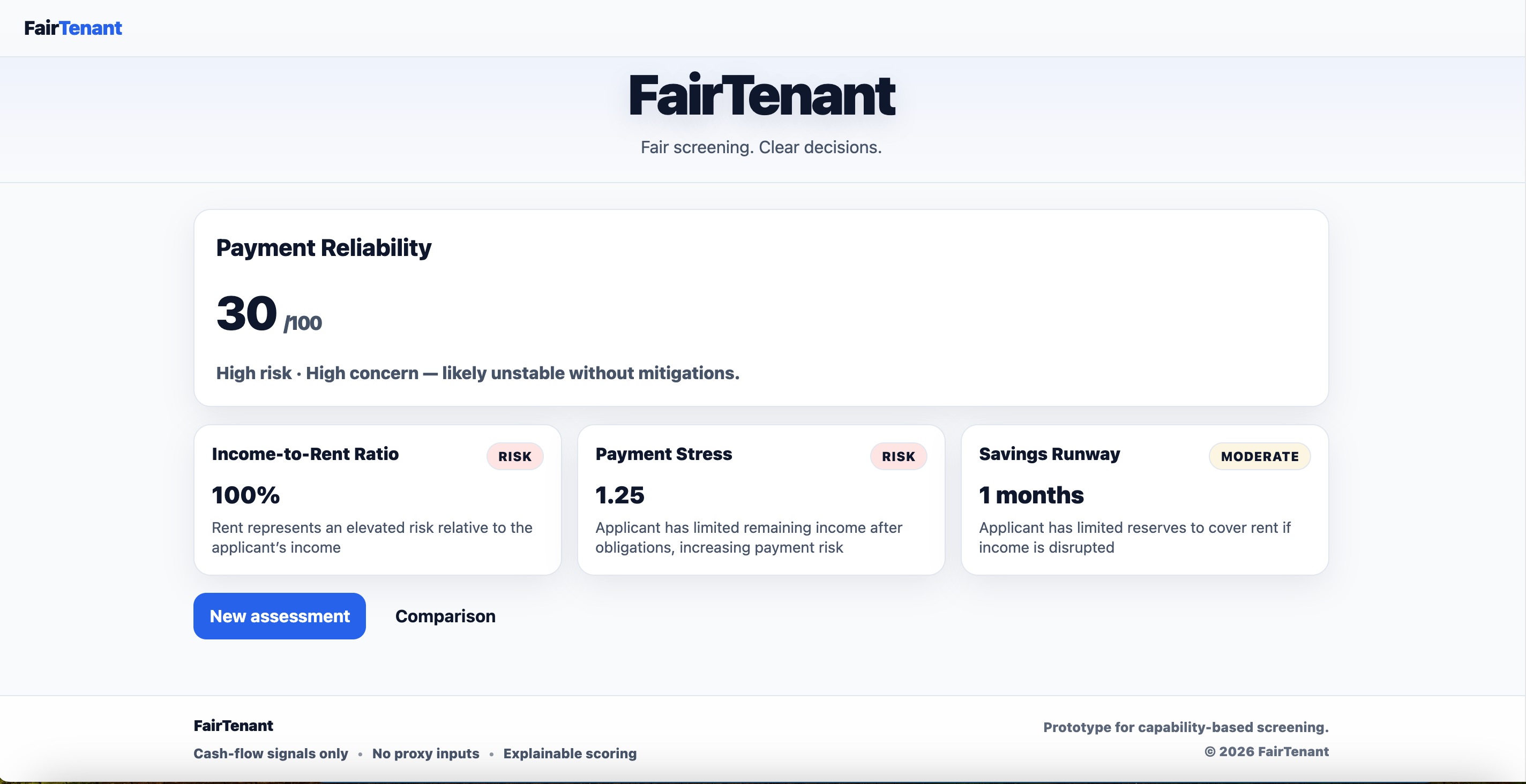
- A cash-flow–based model that focuses on affordability, savings, and income stability
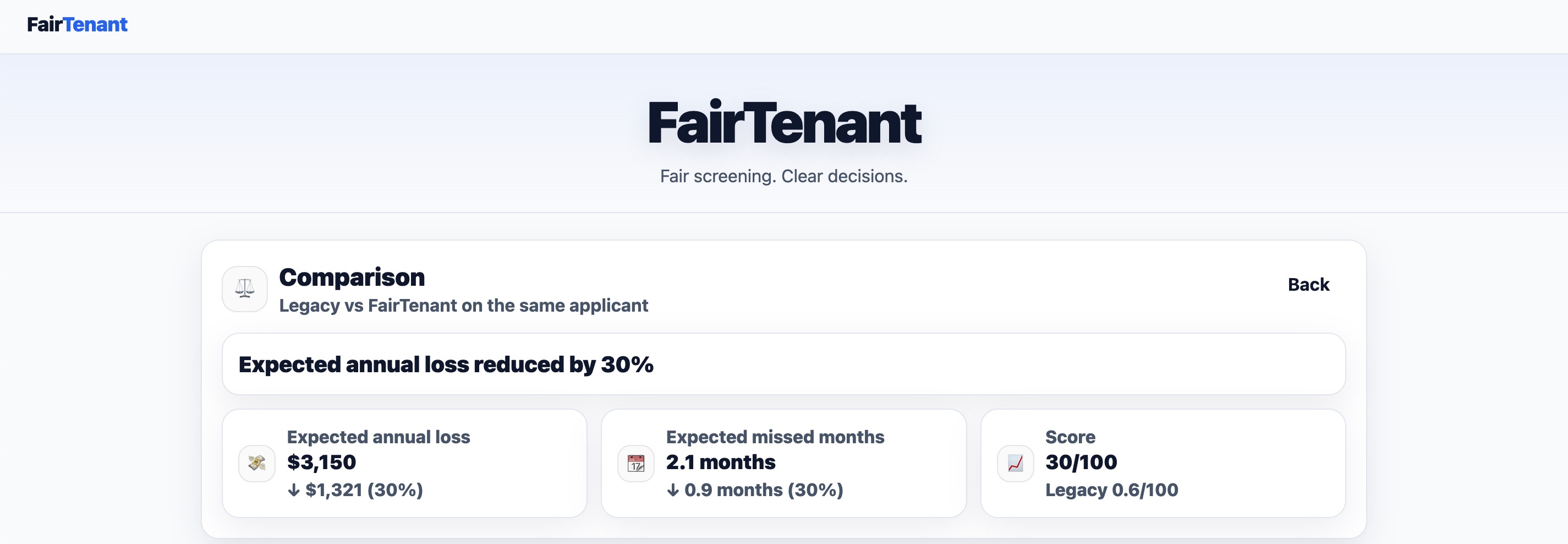
For the same tenant, we show:
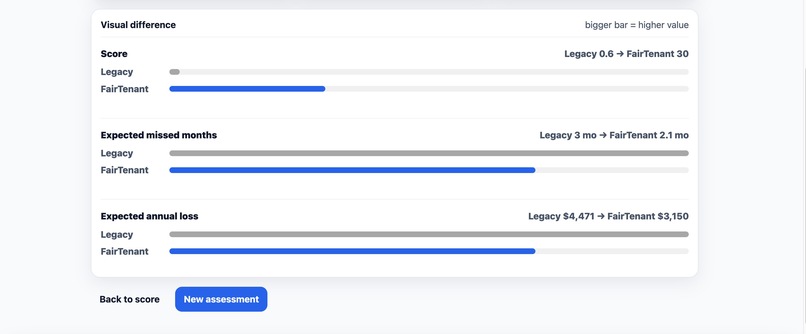
- How each system scores them
- The expected number of missed rent payments
- The estimated financial loss
By putting these results side-by-side, we show how proxy-based screening can quietly reject or undervalue reliable tenants, while a cash-flow approach often leads to better financial outcomes.
How We Built It
We built a working backend that runs both models in real time.
The legacy model represents how traditional systems behave, while our new model intentionally ignores social proxies and looks only at financial reality.
To make the comparison fair, we clearly document assumptions and translate both scores into dollars lost, making the impact easy to understand.
Challenges We Faced
A major challenge was that legacy systems depend on information we intentionally don’t collect. Instead of hiding this, we modeled how those systems infer risk when data is missing. This helped us highlight how silence in data often gets filled with biased assumptions.
What We’re Proud Of
- Showing that reducing bias doesn’t require moral arguments, it can improve profits
- Turning abstract fairness concerns into clear financial consequences
- Building a live demo that clearly shows how different assumptions change outcomes
Noise and Silence Connection
Bias often hides in what systems choose to listen to and what they ignore.
Proxy variables are noisy signals that obscure what actually matters, while genuine financial stability is often silent or overlooked.
Our project examines how eliminating noise and focusing on the right signals leads to more informed decisions.
What’s Next
We’d like to test this approach with real rental data and expand it to other screening systems where biased assumptions quietly influence decisions.

Log in or sign up for Devpost to join the conversation.