Inspiration
Life does not arrive one category at a time. A client deadline can collide with an exhausted body, an untidy home, a relationship that needs attention, a community commitment, a style decision, and an idea that refuses to wait.
Most tools optimize one slice. StaarWardd coordinates the person.
The name is intentionally distinctive: two a's and two d's turn “starward” into a memorable direction of its own.
The impossible. Beautifully handled.
What it does
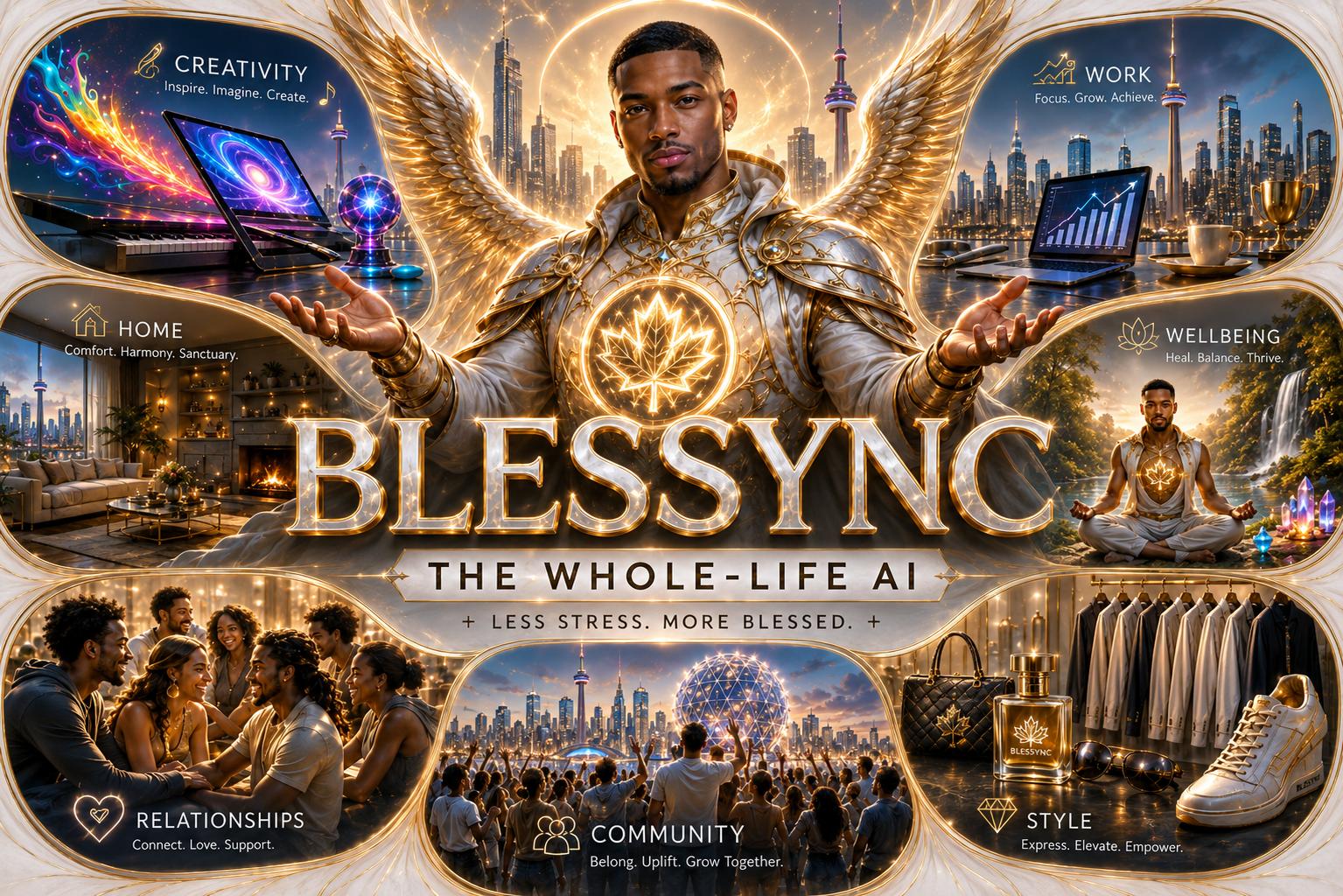
StaarWardd is a working whole-life AI with seven connected specialist portals:
Creativity Work Home Wellbeing Relationships Community Style
The user speaks or types one natural-language request. StaarWardd activates the relevant portals and produces one coordinated plan across Now, Today, and This Week.
All seven portals now have functional specialist playbooks. Relationships includes a connection compass, boundary rehearsal, and approval-aware message studio. Community includes a local impact map, energy budget, and outreach planner. Style includes an outfit studio, wardrobe edit, and event-ready planner.
Routine steps remain fast. Sensitive steps—communication, purchasing, booking, publishing, sharing, deleting, registering, or changing external information—stop for explicit human approval. Every decision appears in a visible local action log.
The experience
The product opens with a Toronto cinematic awakening. A guardian arrives through the skyline, summons seven portals one by one, and completes the sequence with a maple-shield finale. Each portal has a distinct visual position and audio signature.
The guardian sequence uses purpose-built high-resolution cinematic frames: a coherent forward-flight shot over Toronto, a full-body hover tableau, and a second wing pose that crossfades into living motion. The sequence avoids duplicated body parts and performance-heavy 3D effects, while reduced-motion fallbacks remain available.
The spectacle leads directly into the working command center.
How we built it
StaarWardd deliberately keeps its runtime small:
A Node.js server serves the application and planning API. A deterministic orchestration engine makes the entire demo repeatable with no API key. Optional GPT-5.6 Responses API mode adds flexible language understanding. Strict JSON Schema keeps plans structured and testable. Built-in web search is available when current facts require verification, with clickable source links. Browser speech recognition accepts spoken requests. Browser speech synthesis reads concise replies aloud. HTML, CSS, high-resolution raster assets, and Web Audio drive the cinematic choreography. Five automated tests cover determinism, approval boundaries, fallback behavior, specialist portal behavior, and HTTP/static serving.
Codex with GPT-5.6 was used to translate the vision into architecture, build and debug the experience, inspect screenshots, implement safety boundaries, create the WebGL guardian, write tests, research Build Week requirements, and package the project.
Human agency is architecture
StaarWardd never claims that a simulated action happened. The prototype does not contact anyone, spend money, book, publish, share, delete, register, or change an external account.
Its core rule is:
Powerful enough to coordinate. Humble enough to ask.
This boundary is visible in the plan, approval dialog, and action log.
Challenges
The largest challenge was balancing a cinematic, emotionally memorable opening with a stable and judge-testable product. We separated visual choreography from deterministic planning, replaced the performance-heavy realtime renderer with coherent cinematic keyframes, added motion and sound controls, respected reduced-motion preferences, and kept a no-key fallback.
The second challenge was making seven domains feel genuinely different without fragmenting the product into seven unrelated assistants. Each portal now has its own specialist tools and deterministic playbook while one orchestration surface coordinates the whole request.
Accomplishments
One command activates multiple life domains. All seven portals have distinct working specialist behavior. Results are structured into Now, Today, and This Week. Sensitive actions always require explicit approval. Every portal and action is logged visibly. The demo works deterministically without an API key. GPT-5.6, web search, citations, speech input, and spoken output are optional enhancements. The guardian uses a coherent Toronto flight frame, full-body hover frame, living-wing crossfade, and an original maple medallion finale. The design is responsive, keyboard-accessible, and distinctly Toronto. The repository includes Windows startup, tests, troubleshooting, competition guidance, and demo scenarios.
What we learned
Trust is not a disclaimer added after intelligence. It is product behavior.
A whole-life assistant becomes useful when it reduces coordination burden without taking ownership away from the person it serves.
What is next
After judging, the production app will keep one OpenAI Agents SDK orchestrator and add Realtime voice, secure accounts, encrypted user-controlled memory, permission-scoped connectors, evaluations, observability, and connector-specific audit trails.
External actions will remain opt-in and approval-gated.
StaarWardd
The impossible. Beautifully handled.
Built With
- css
- gpt-5.6
- html
- javascript
- node.js
- openai-codex
- openai-responses-api