-
Slide Deck 1
-
Slide Deck 2
-
Slide Deck 3
-
Slide Deck 4
-
Slide Deck 5
Inspiration
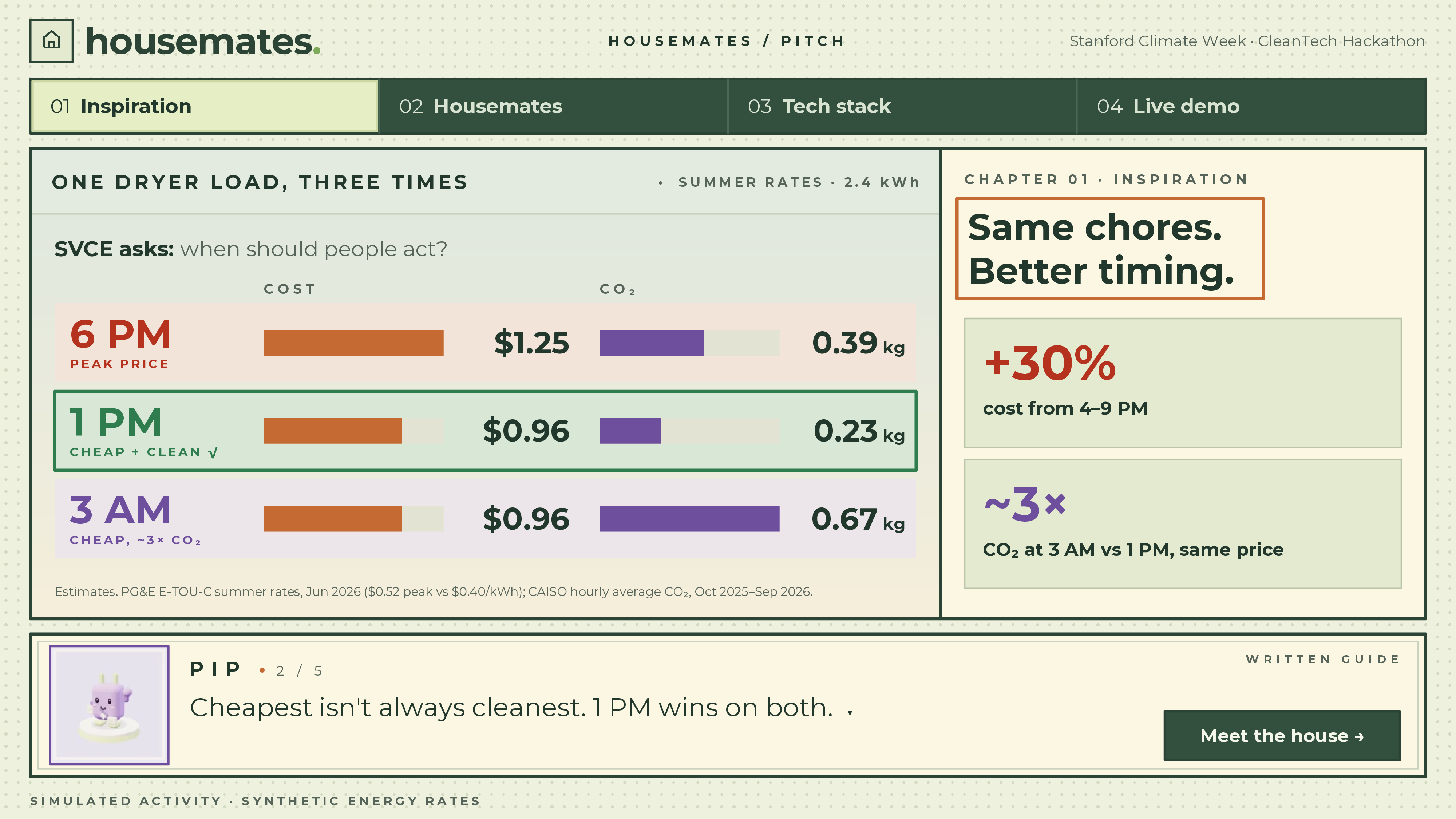
We both come from energy backgrounds. We understand how the electrical grid works, why the duck curve matters, and how electricity prices and carbon intensity change throughout the day. Yet most households rarely think about any of this when using their appliances.
We wanted to bridge that gap by making energy management fun, intuitive, and accessible. Instead of overwhelming people with graphs and numbers, why not turn their appliances into little companions that help them save money while learning how to use energy more efficiently?
What it does
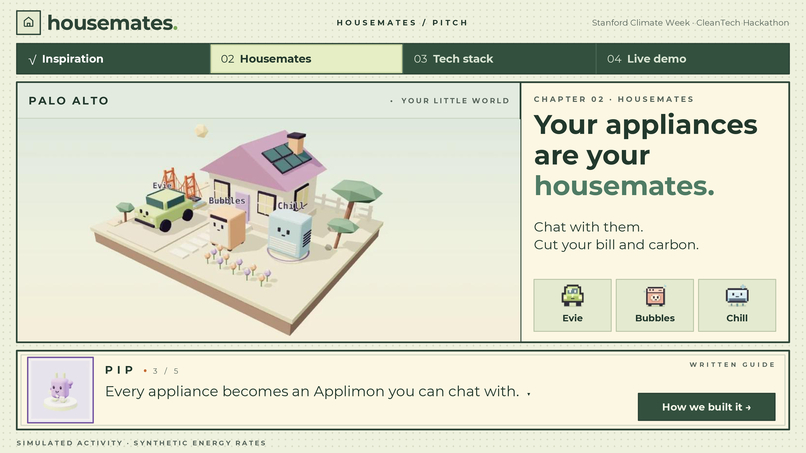
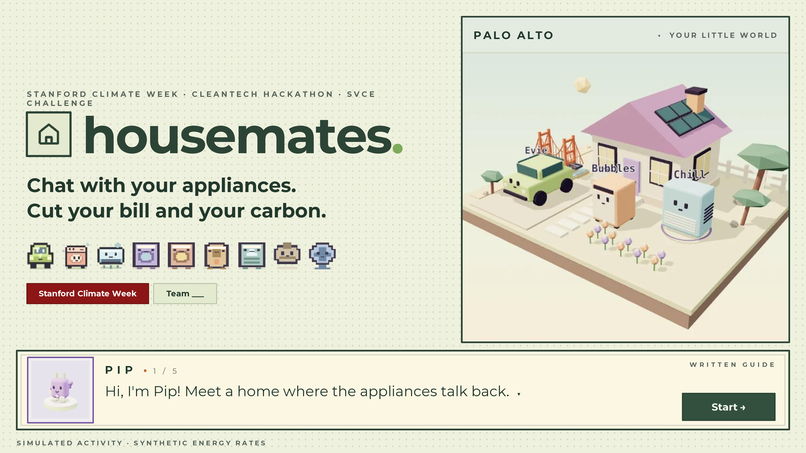
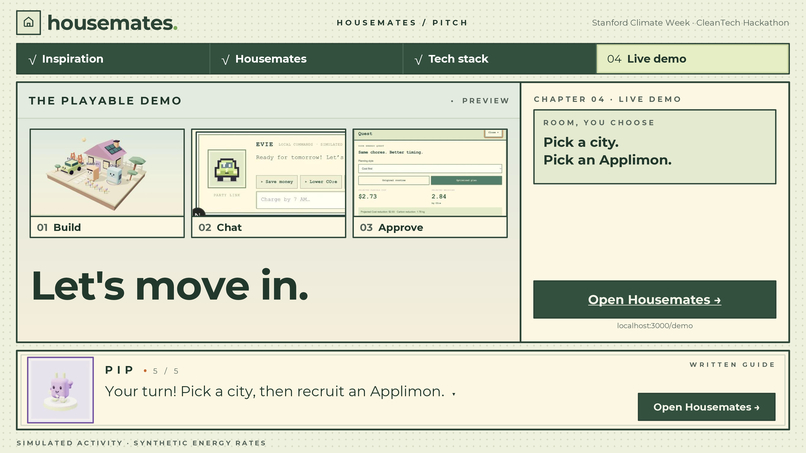
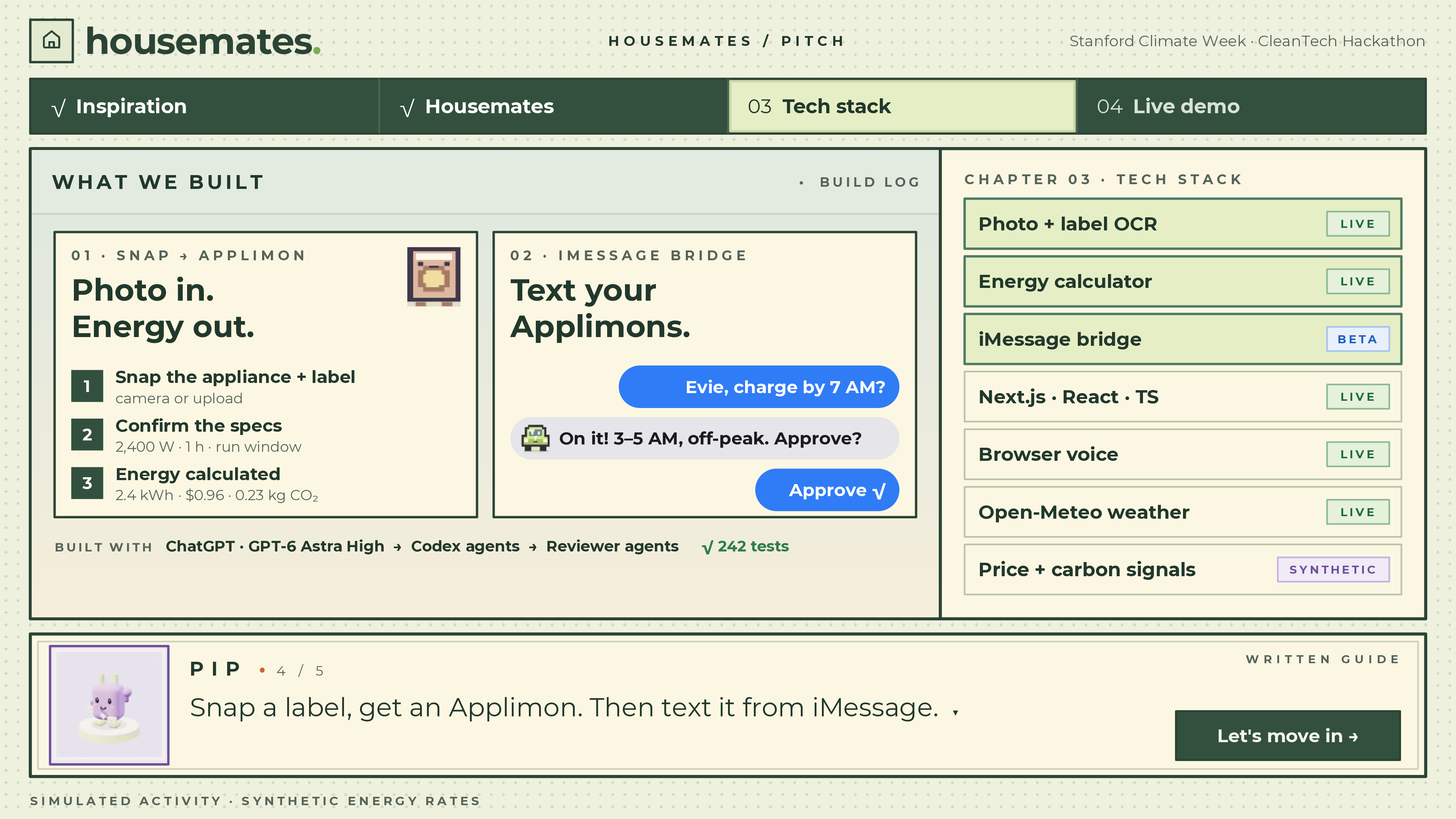
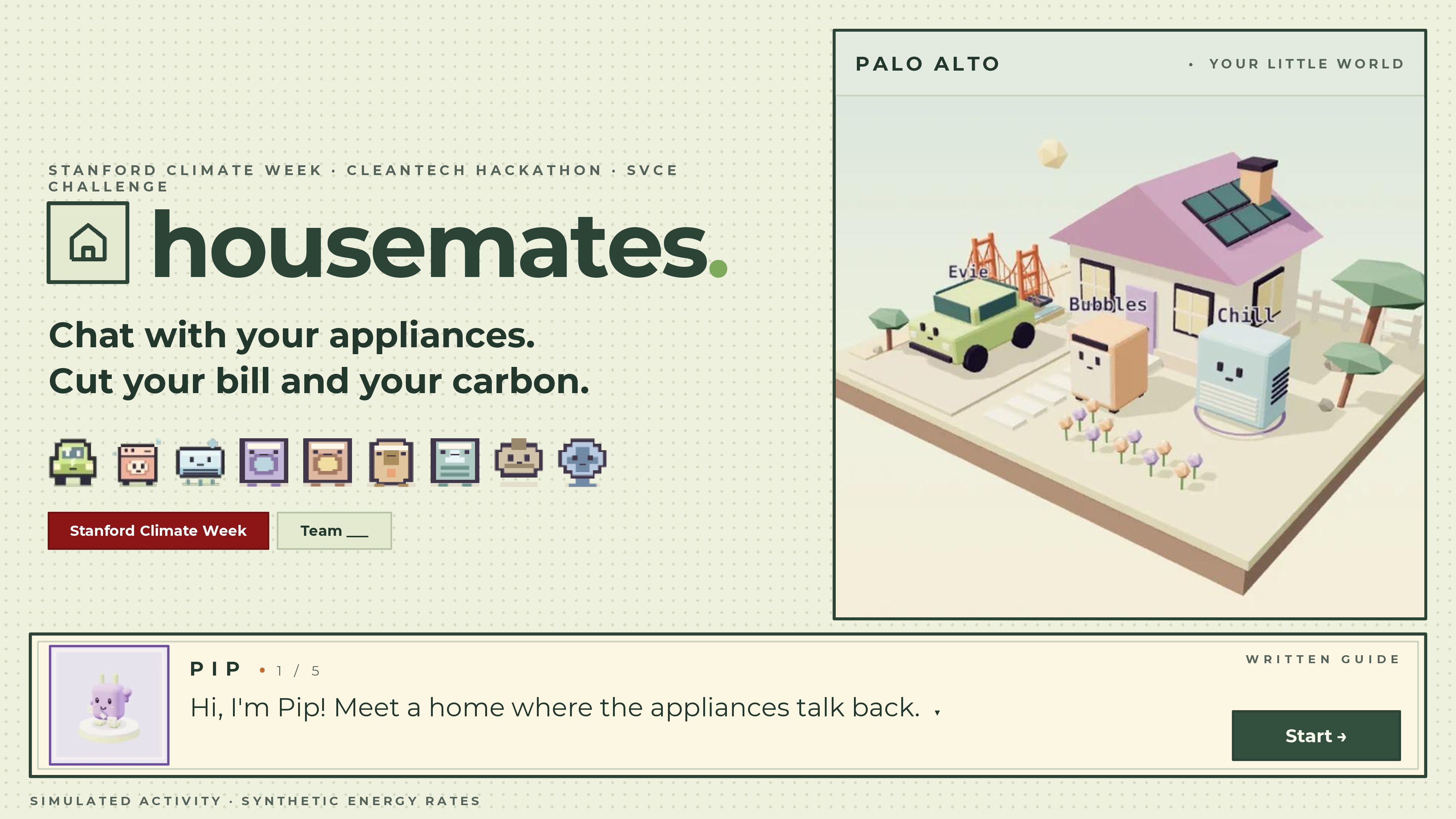
Housemates turns everyday appliances into playful, interactive companions called Applimons.
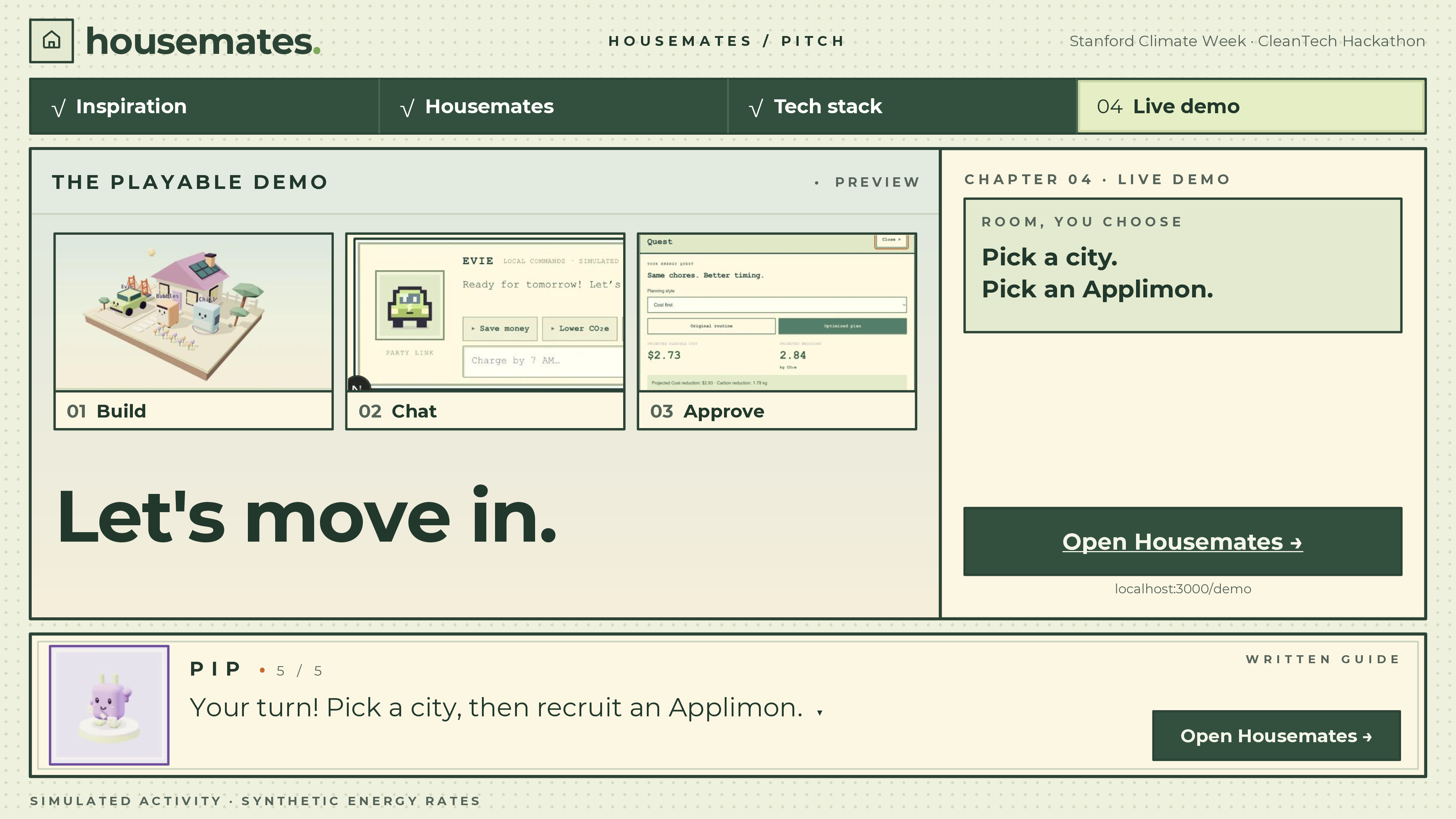
Users can snap a photo of an appliance and its energy label to create a personalized character. They can then chat with their Applimons, including through an experimental iMessage integration, to find the best times to use electricity.
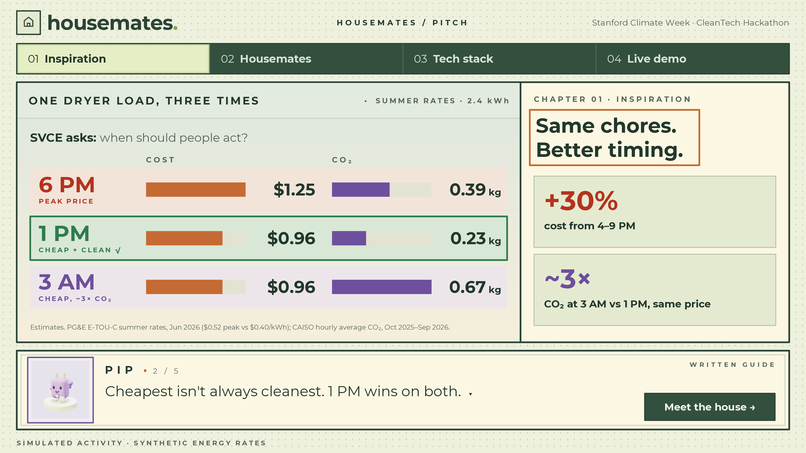
Housemates compares electricity costs and carbon emissions throughout the day, recommending when to run appliances based on the user's priorities. Our demo shows why the cheapest hour isn't necessarily the cleanest, helping users make informed decisions without sacrificing convenience.
How we built it
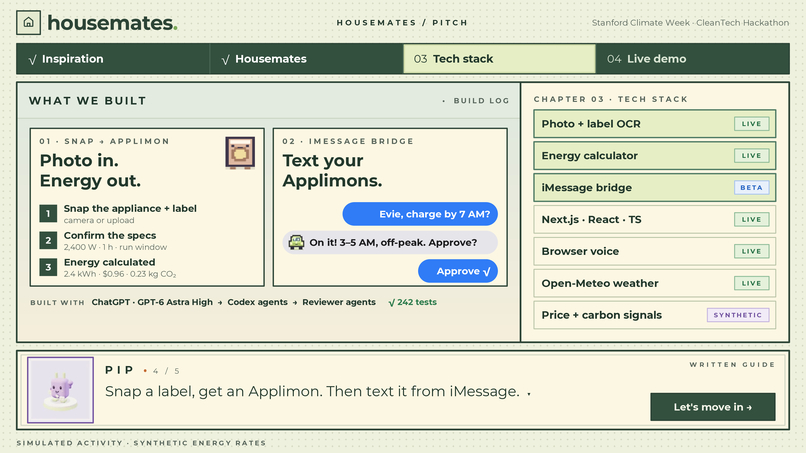
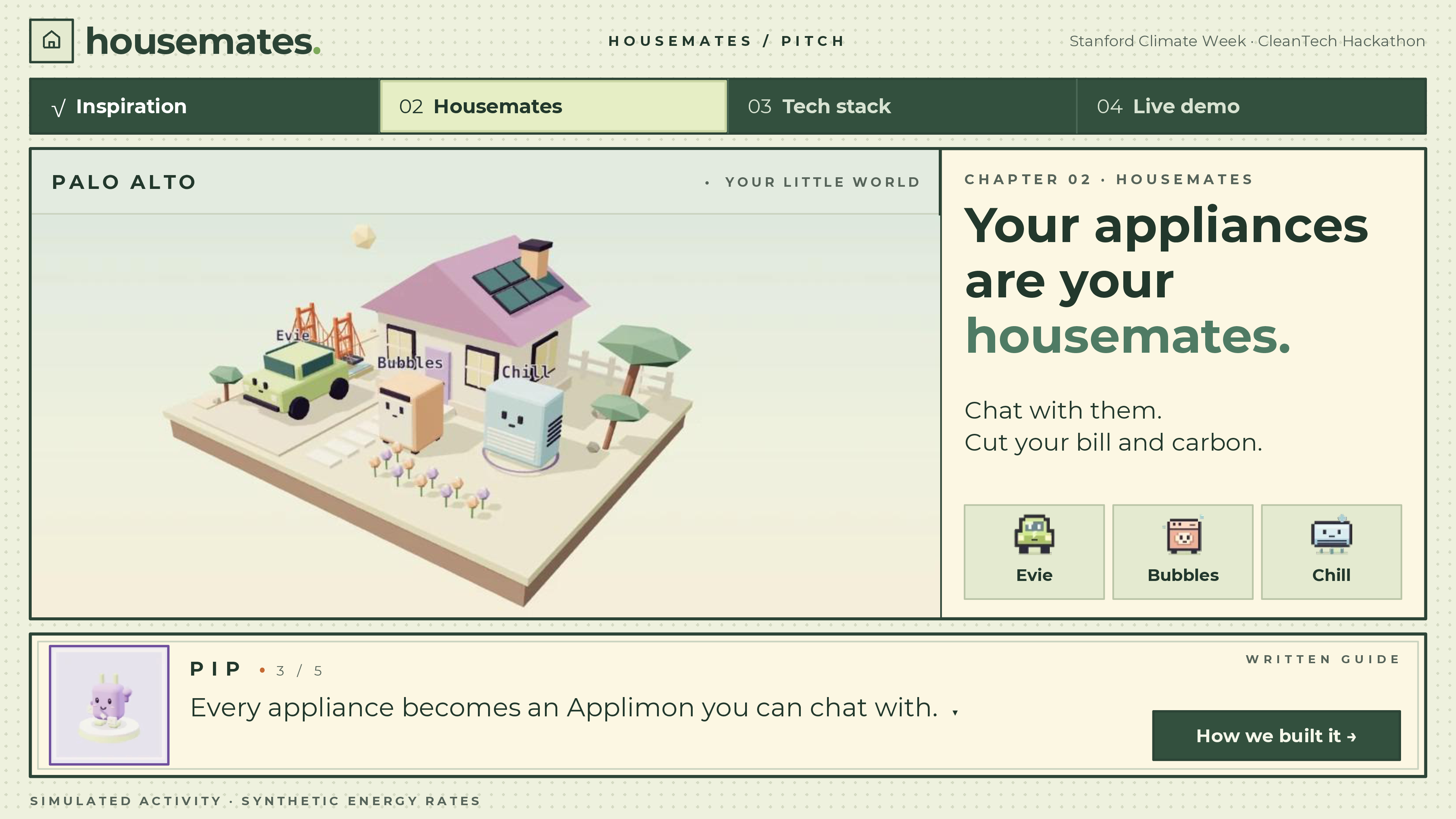
We built Housemates using Next.js, React, and TypeScript, combining several components into an interactive experience:
- Photo recognition and OCR extract appliance specifications from energy labels.
- Energy calculator estimates consumption, electricity costs, and carbon emissions for different operating times.
- Conversational interface lets users interact with their Applimons through browser chat, voice, and a beta iMessage bridge.
- Weather integration uses Open-Meteo to incorporate local conditions.
We used ChatGPT, Codex agents, and reviewer agents to accelerate development and testing. Our current prototype uses simulated electricity price and carbon-intensity signals to demonstrate the scheduling experience.
Challenges we ran into
Our biggest challenge was translating complex energy data into something ordinary households could actually use. Electricity prices and carbon intensity don't always move together, so optimizing for cost doesn't necessarily minimize emissions.
We also had to connect appliance recognition, energy calculations, and conversational interactions into one seamless experience within the hackathon timeframe, while keeping the interface simple enough for users without an energy background.
Accomplishments that we're proud of
We're proud of building an end-to-end prototype that transforms a simple appliance photo into an interactive character with actionable energy recommendations.
We implemented appliance-label recognition, energy calculations, and a conversational experience, including a beta iMessage bridge, while passing 242 tests.
Most importantly, we made energy management feel less like homework and more like a game.
What we learned
We learned that making energy information useful is as much a design challenge as a technical one. Even an accurate optimization model has limited impact if people don't understand or enjoy using it.
We also saw how AI-assisted development can help turn an ambitious concept into a working prototype in a short time, allowing us to spend more time refining the user experience.
What's next for Housemates
We want to turn Housemates into a social, gamified energy-saving experience, introducing leaderboards, friendly competitions, rewards, and challenges that encourage households to save money and reduce their carbon footprints together.
We also plan to integrate real-time electricity rates, grid carbon-intensity data, and smart-home devices to move from recommendations toward actual appliance scheduling.
Our vision is simple: make saving energy something people genuinely enjoy doing.
Built With
- chatgpt
- claude
- codex

Log in or sign up for Devpost to join the conversation.