Inspiration
As a first-time homebuyer, I grew frustrated with vague listing language ("cozy" = tiny!) and endless manual filtering. I wanted a tool that spoke my language—literally—and turned guesswork into data-driven decisions. That’s how HouseHunter AI was born: to make home search less stressful, more efficient, and rooted in real insights.
What it does
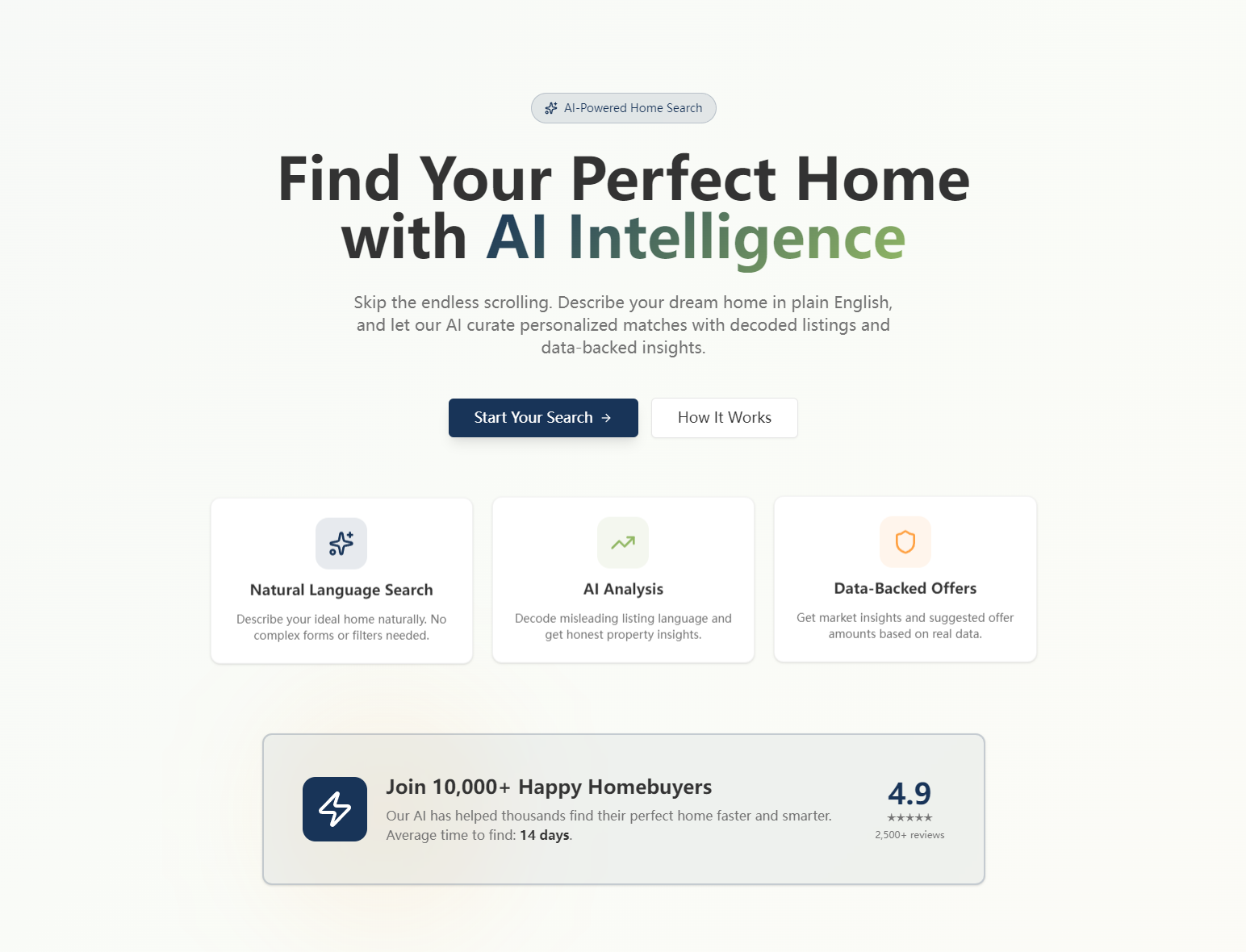
HouseHunter AI lets users describe their dream home in plain text (no dropdowns!). It filters listings daily, decodes misleading real estate terms, shares neighborhood data (schools, crime, commute), and offers price guidance—with advanced offer strategies for premium users ($29/month).
How we built it
We started by mapping core user pain points (time scarcity, confusing jargon, limited data access). We built the NLP layer to parse unstructured text into search criteria, integrated real estate data aggregators for daily listing scans, and designed a clean card-based UI for easy browsing. We split features into free/premium tiers to balance accessibility and sustainability.
Challenges we ran into
The biggest hurdle was training the NLP model to parse ambiguous home preferences (e.g., "quiet area near downtown") into actionable filters. We also struggled with inconsistent listing data quality—some properties lacked key details, forcing us to build graceful fallback logic for missing info.
Accomplishments that we're proud of
We created a tool that truly puts users first: no login required, intuitive natural language input, and clear translation of tricky real estate jargon. The daily alert system has already helped beta users find new listings faster, and the premium offer strategy tool has reduced guesswork for move-up buyers.
What we learned
We learned the value of iterative testing with real homebuyers—their feedback reshaped how we prioritized neighborhood data (school ratings mattered more than we thought!). We also mastered balancing free/premium features to keep the tool accessible while funding ongoing development.
What's next for this project
Next, we’ll expand the neighborhood dataset to include more hyper-local insights (grocery access, park proximity) and refine the offer strategy algorithm with more local market data. We’re also exploring a lightweight mobile web app to make alerts and browsing even more convenient.

Log in or sign up for Devpost to join the conversation.