-
-
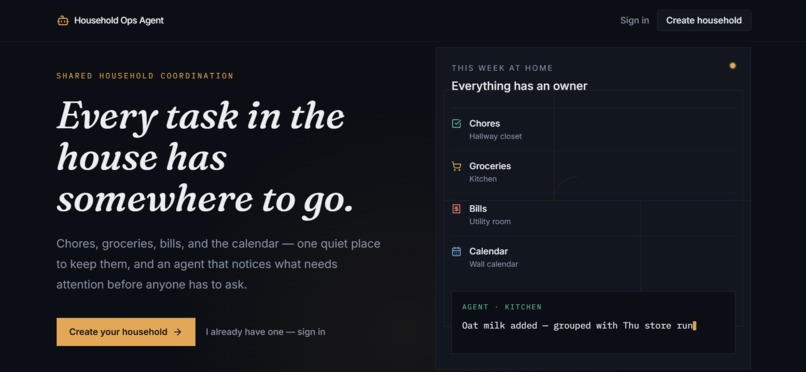
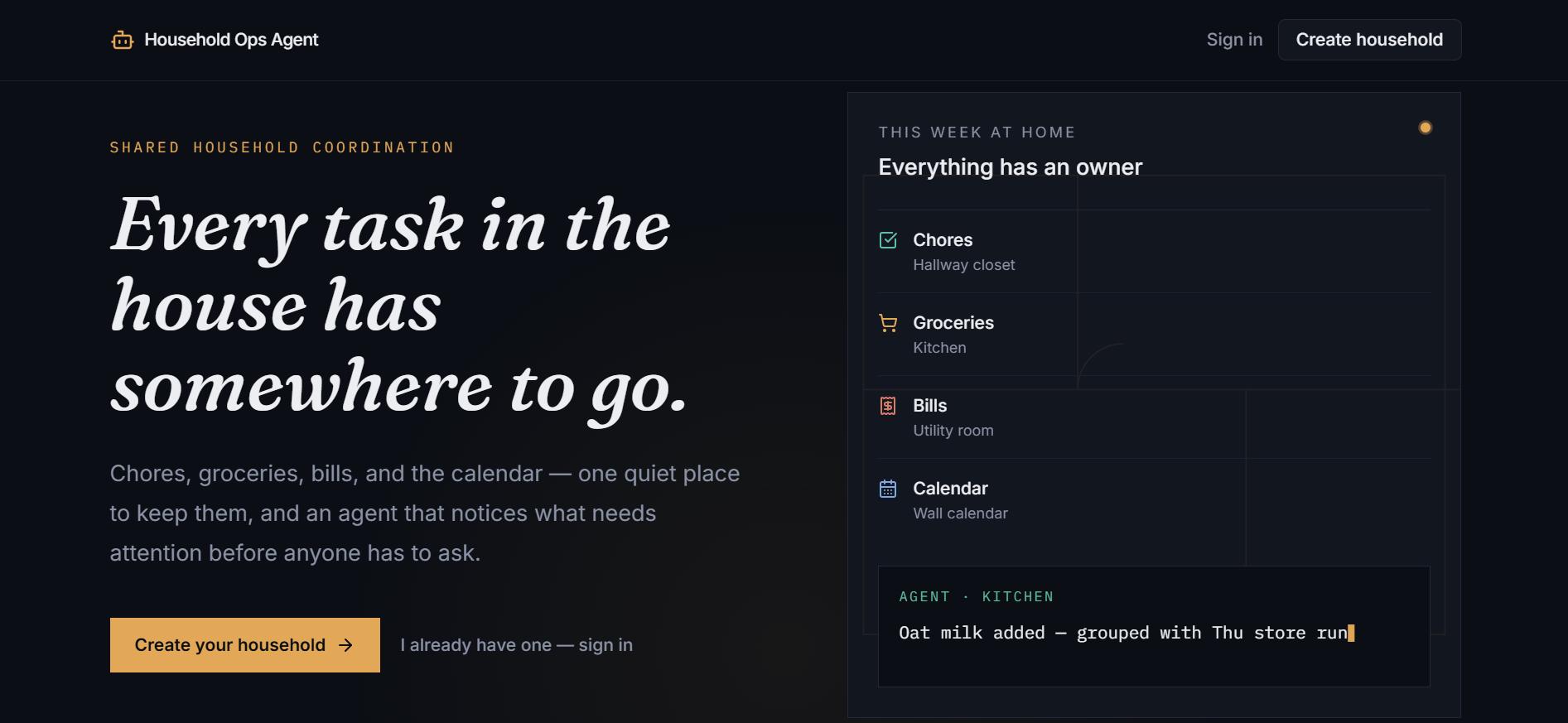
Landing page UI
-
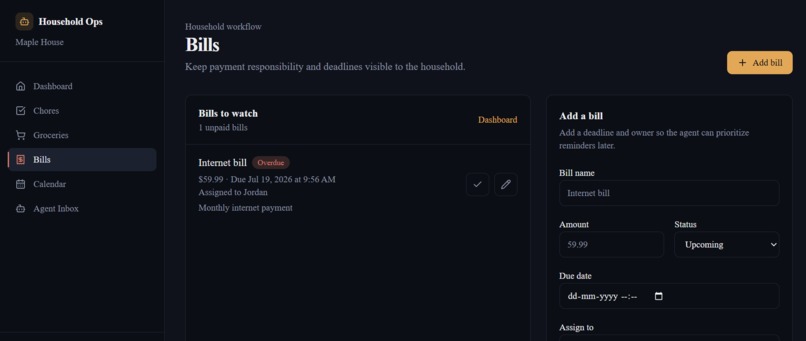
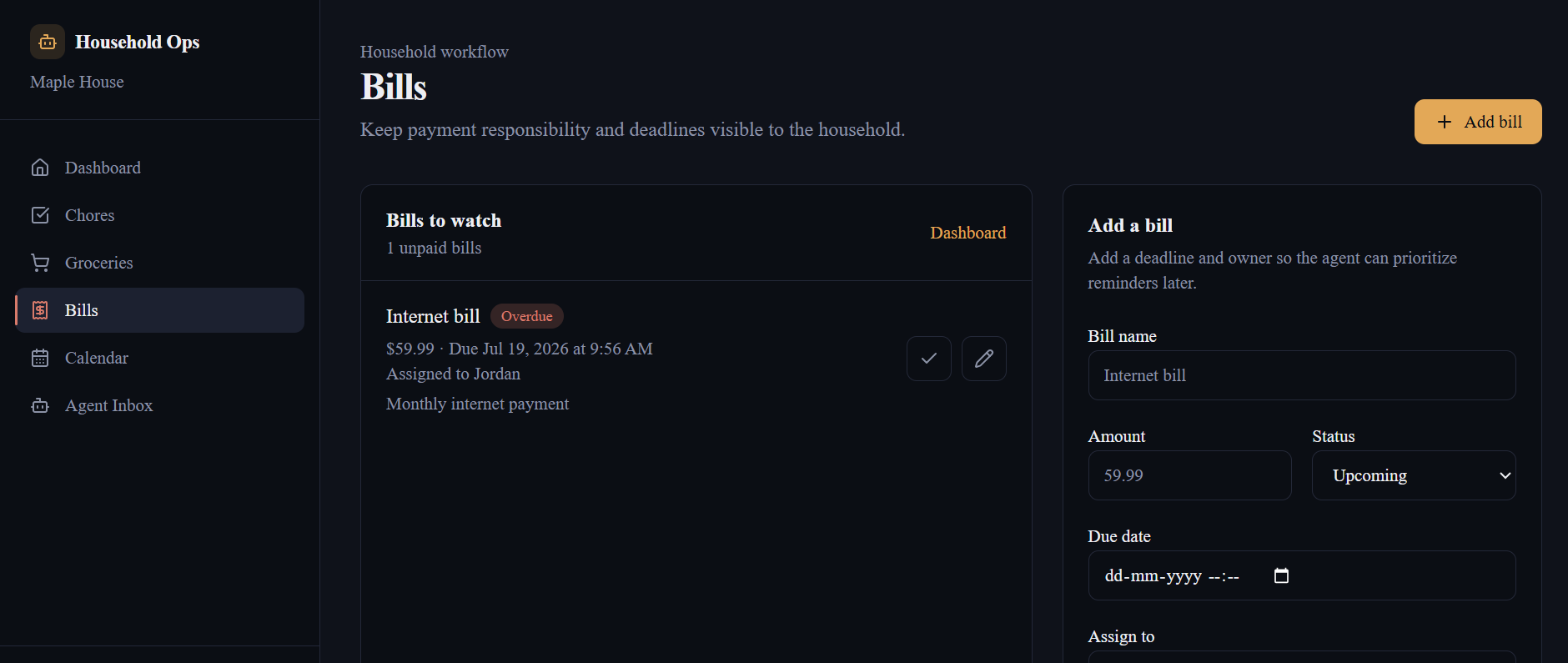
Bills page, user can assign it to a member to get it paid before the due date
-
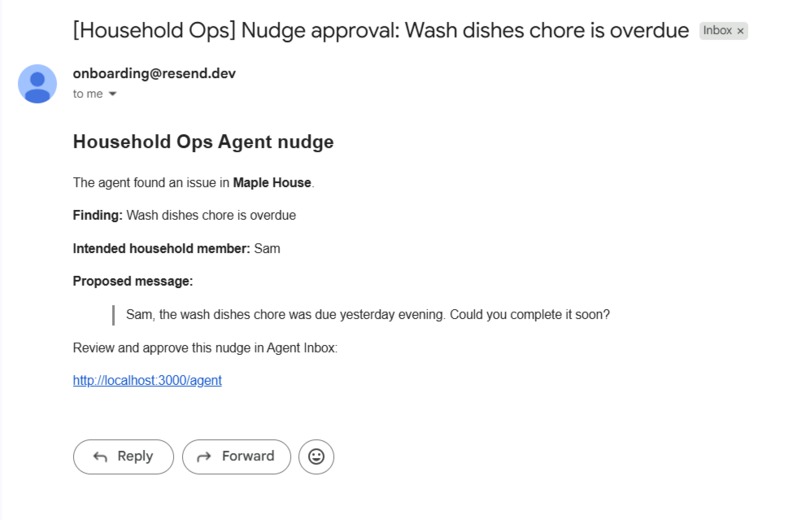
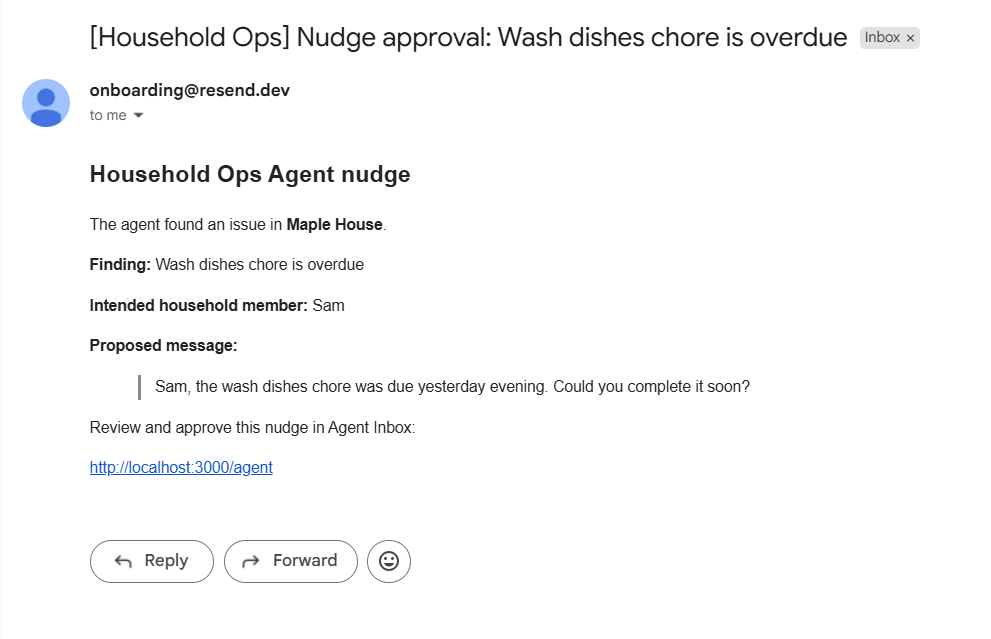
Email template sent to a family member who had been assigned a chore.
-
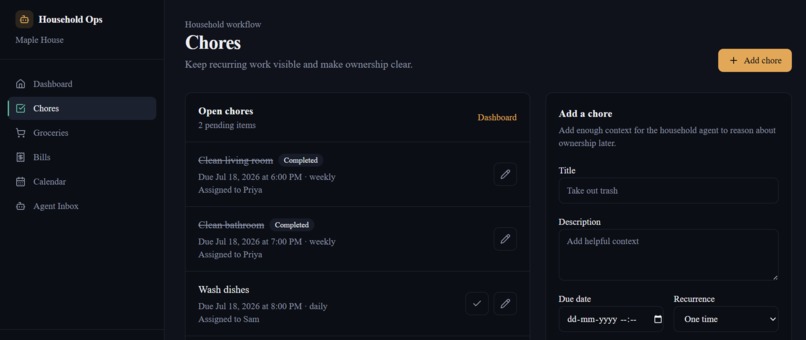
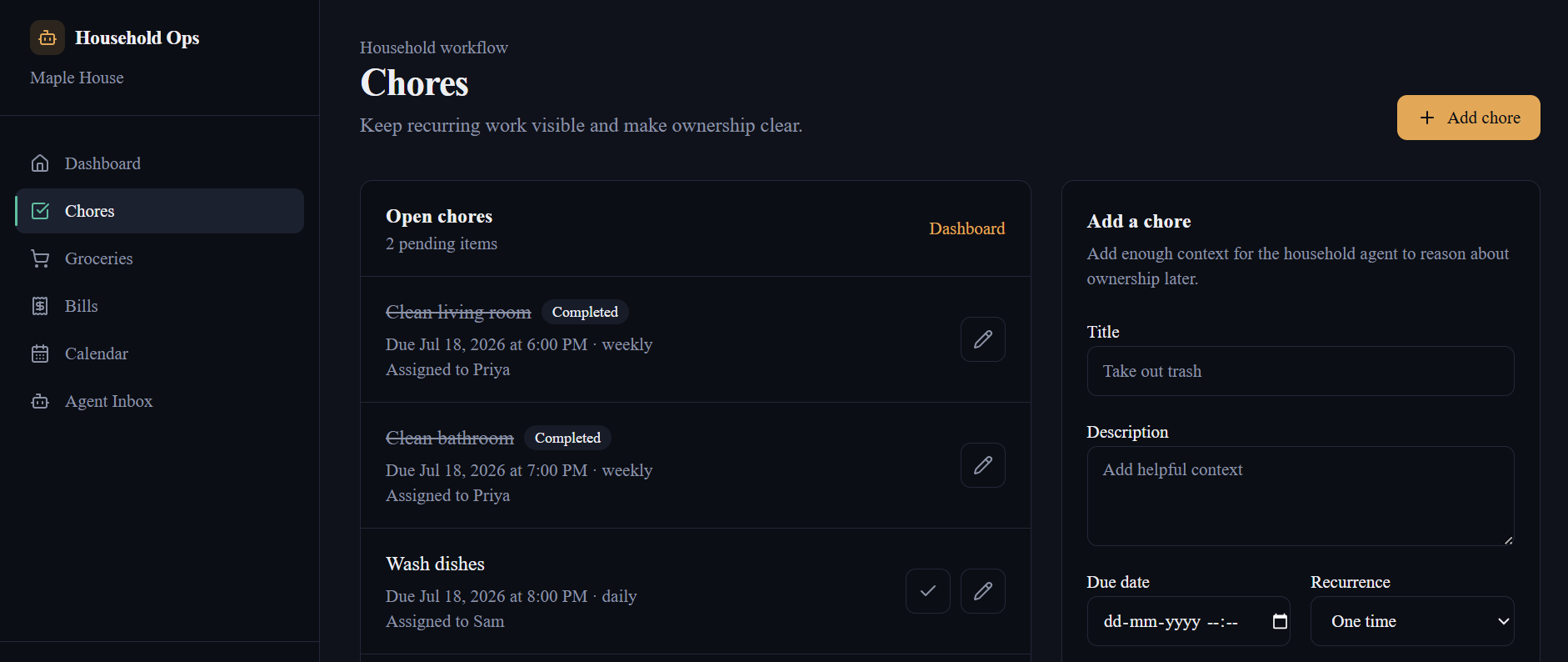
Chores page, user can create, update and delete chores, additionally they can even assign chores.
-
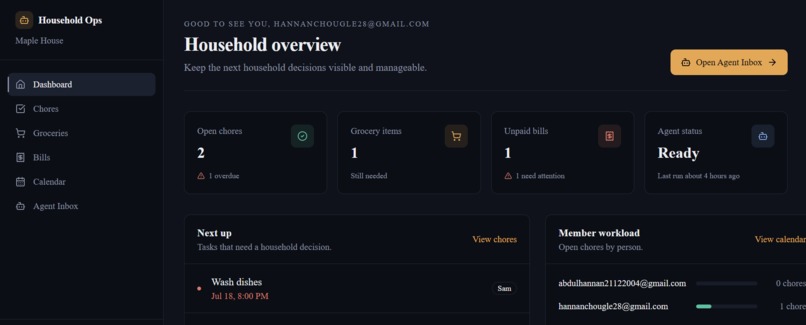
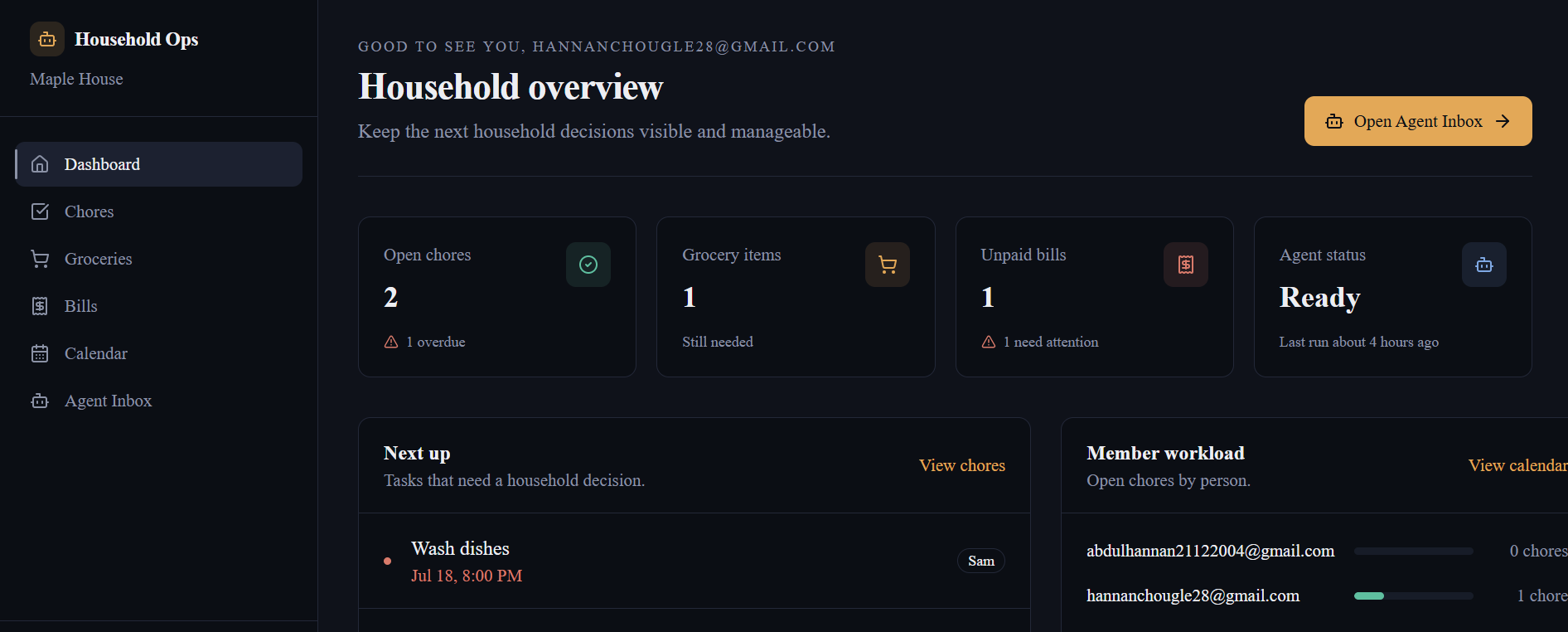
Main user dashboard
-
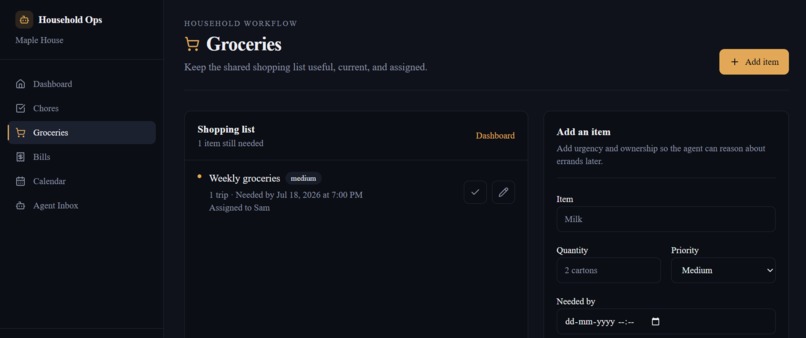
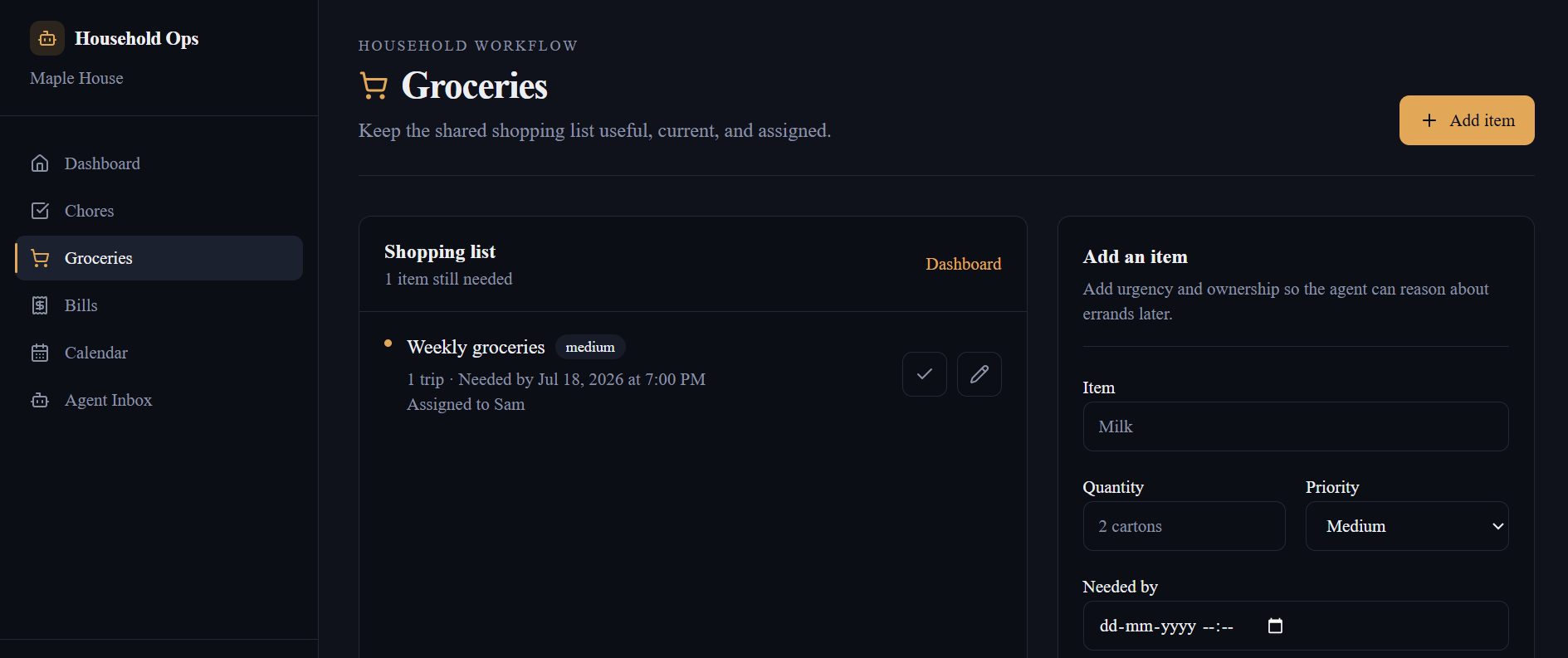
Groceries page, user can assign/unassign/reassing grocery task to a family member.
-
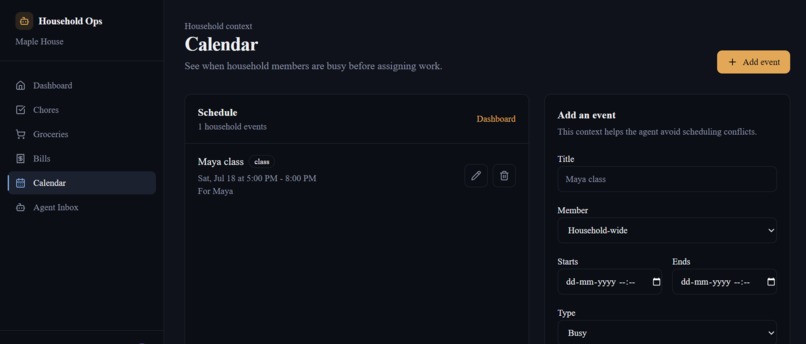
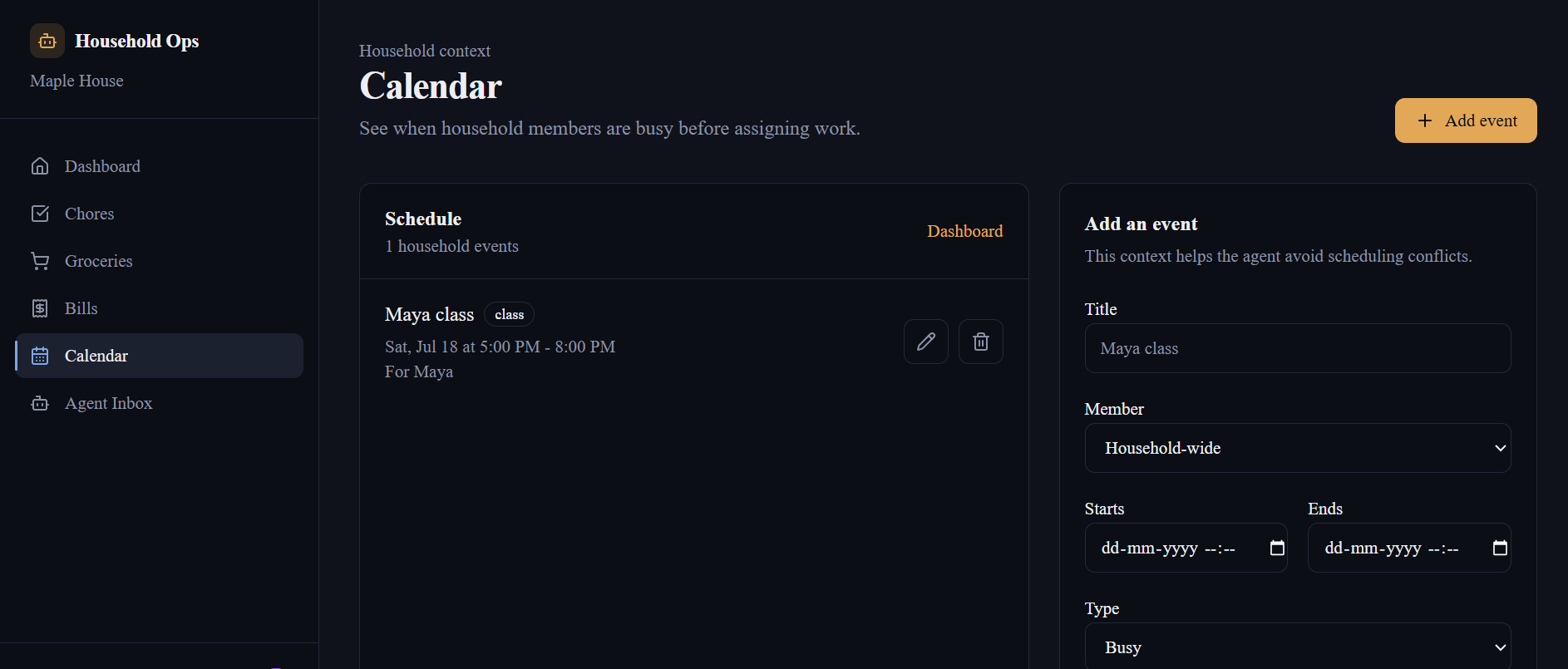
Calendar page, user can see the schedule of other family members.
-
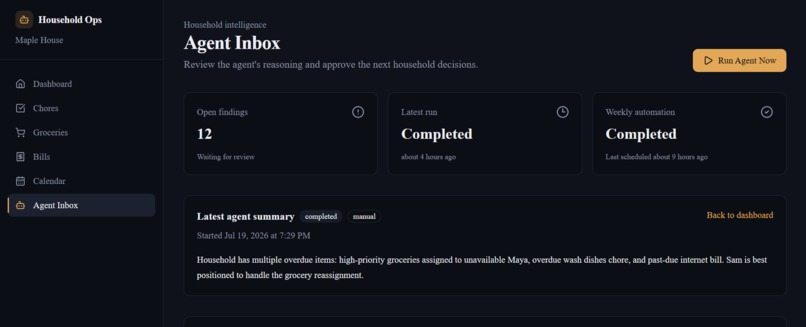
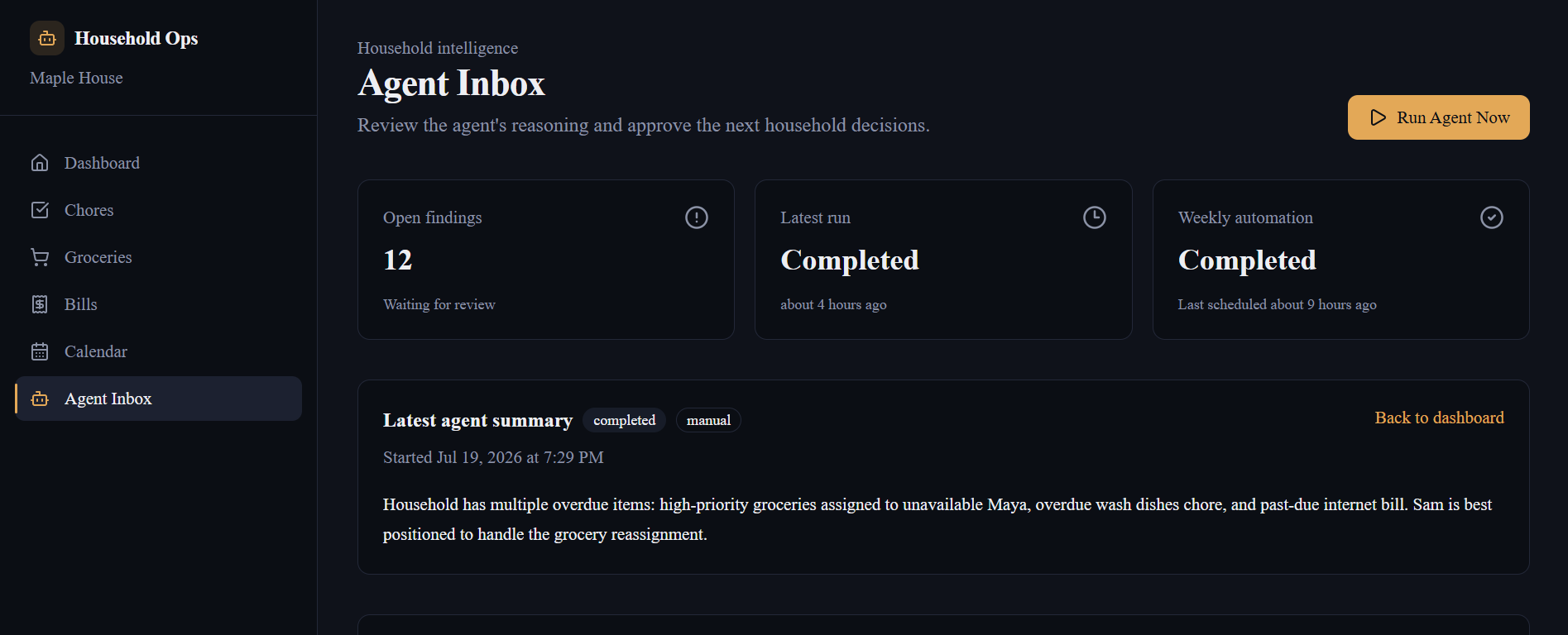
Agent Inbox, complete history about agentic pipeline is available on this page.
-
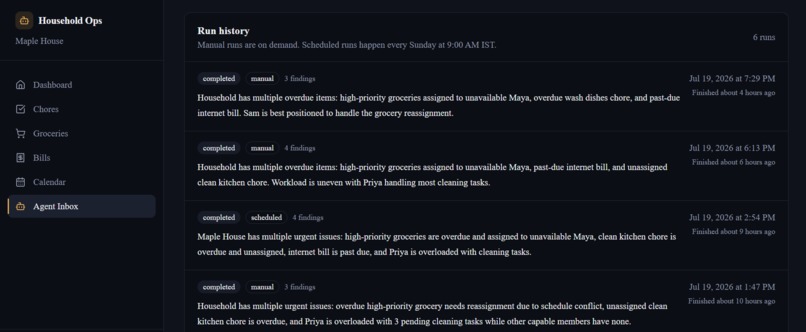
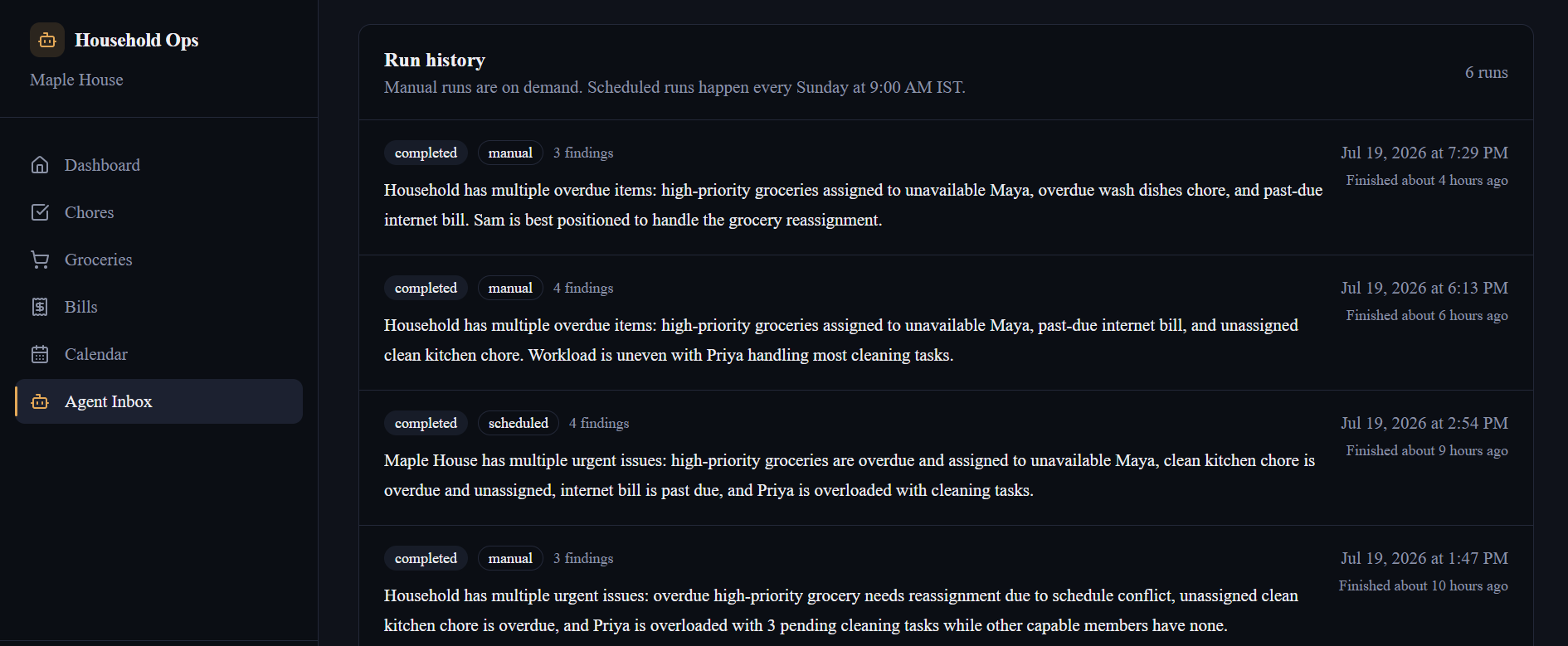
The image shows the previous run history of the agent
-
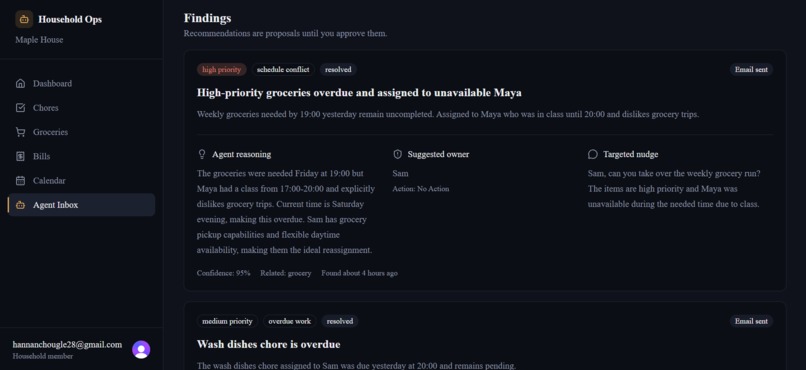
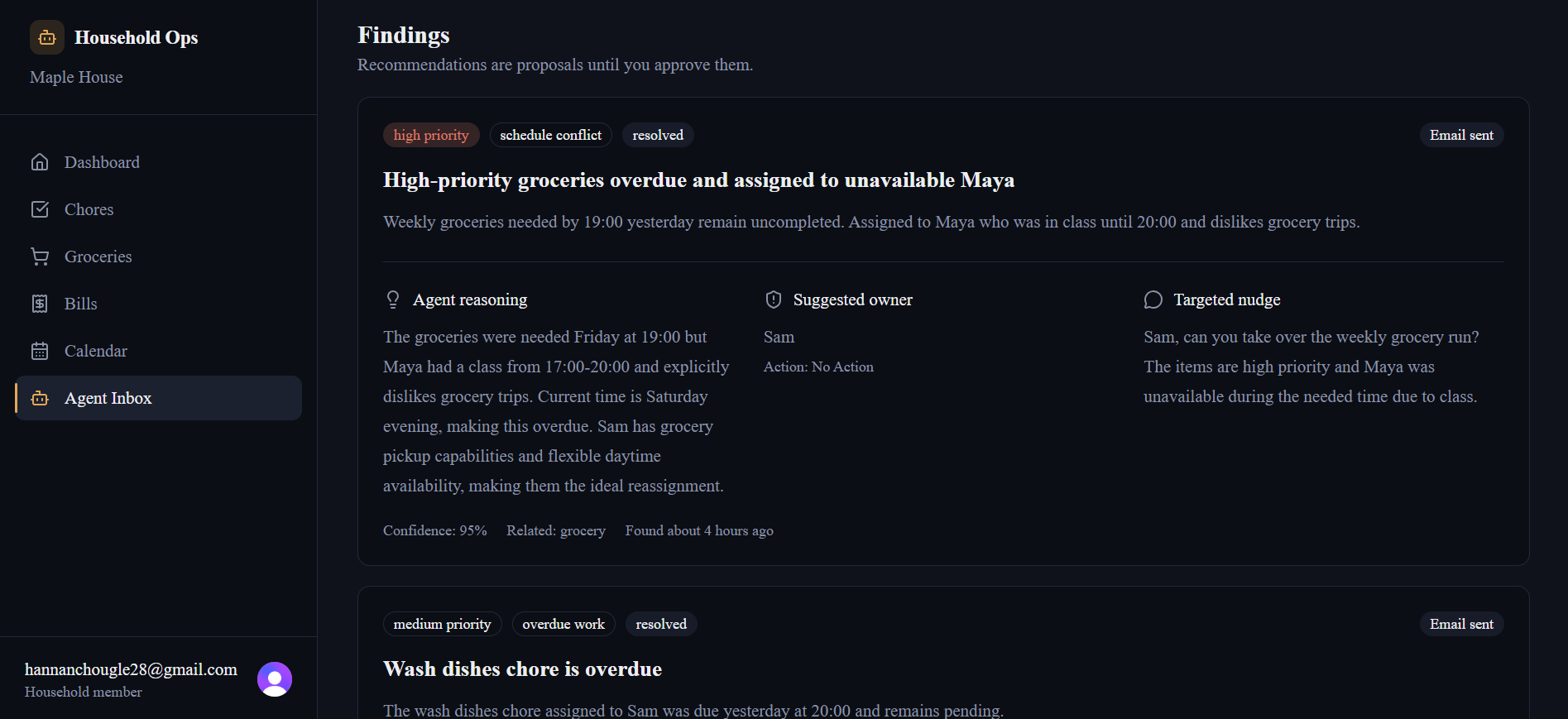
The image shows the recent findings by the agent
Inspiration
Shared household coordination is usually scattered across group chats, reminders, memory, and whoever notices a problem first. That creates missed chores, late bills, duplicated grocery trips, and reminders sent to everyone instead of the person who can actually act.
We wanted to build something more useful than a shared to-do list. Household Ops Agent treats chores, groceries, bills, schedules, preferences, and workload as connected context. It helps a household see what needs attention before small issues become household-wide stress.
What it does
Household Ops Agent is an AI-powered shared household workspace for:
- Chores and recurring household responsibilities
- Grocery planning and errand ownership
- Bills, due dates, and payment reminders
- Shared household calendar events
- Agent-generated findings and recommendations
The agent reviews the household's live context and identifies issues such as overdue tasks, unassigned work, uneven workload, urgent bills, grocery suitability, and scheduling conflicts.
Instead of silently changing data, it creates explainable findings with severity, confidence, reasoning, a suggested household member, and a proposed action. The user can approve, dismiss, or apply each recommendation.
The app also creates targeted nudges. Rather than sending another group reminder, the agent proposes a message for the relevant person. The user reviews it first, then can manually send an approval email through Resend.
How we built it
We built Household Ops Agent with:
- Next.js, React, and TypeScript for the full-stack application
- Tailwind CSS and shadcn/ui for the interface
- Clerk for authentication
- Supabase Postgres for household records, agent runs, findings, and nudges
- OpenRouter with a configurable free model for runtime LLM reasoning
- Zod to validate structured agent output
- Resend for reviewed nudge emails
- Vercel Cron for weekly automated agent reviews
- Vercel for deployment
The agent receives structured context about members, preferences, chores, groceries, bills, events, and recent findings. It returns structured JSON that is validated before findings are stored.
Manual and scheduled runs use the same agent pipeline. The weekly Vercel Cron job runs every Sunday at 9:00 AM IST and creates a visible scheduled run in Agent Inbox history.
Codex accelerated the development of the schema, CRUD workflows, agent pipeline, approval flows, nudge workflow, cron integration, testing, loading states, landing page, and final dark-theme product polish.
For transparency, Codex accelerated development, while the deployed runtime household agent uses a configurable free OpenRouter model rather than GPT-5.6.
Challenges we ran into
The main challenge was making the agent genuinely useful without giving it uncontrolled authority.
We wanted LLM-driven reasoning instead of a fixed deterministic checklist, but we also needed to prevent hallucinated IDs, duplicate runs, unsafe recommendations, and automatic changes that users did not approve.
We addressed this by:
- Providing structured, household-scoped context to the agent
- Validating every model response with Zod
- Checking suggested member and entity IDs against real database records
- Recording agent runs and findings for visibility
- Preventing duplicate concurrent runs
- Keeping every recommendation human-approved before applying changes
- Making nudge emails manual and reviewable
Another challenge was enabling Vercel Cron to run without a Clerk user session. We refactored the agent so manual runs resolve a household through Clerk, while scheduled runs securely use a configured household ID through a protected cron route.
Accomplishments that we're proud of
- Building a complete, deployed product rather than a chat-only proof of concept
- Creating an agent that reasons over real household context and produces explainable recommendations
- Preserving human control through approval, dismissal, and application workflows
- Implementing targeted nudges instead of broad household notifications
- Connecting manual and weekly scheduled runs to the same agent pipeline
- Adding real email delivery through Resend
- Creating a coherent landing page, dark workspace, loading states, responsive navigation, and agent run history
- Documenting the project with setup instructions, sample data, migrations, cron testing, and an MIT license
What we learned
We learned that the value of an AI agent is not just generating text. It comes from connecting reasoning to real data, validating outputs, preserving human control, and making recommendations easy to act on.
We also learned that proactive AI should not mean intrusive AI. The best household assistant does not notify everyone about everything. It identifies the right person, explains why, and lets a human decide what happens next.
What's next for Household Ops Agent
Next, we would like to:
- Support multiple independent households for production use
- Let household members receive nudges through their own email, SMS, or push notifications
- Add richer recurring-chore rotation and completion history
- Add household-specific preferences, quiet hours, and communication settings
- Support multiple scheduled agent reviews based on household needs
- Add a conversation interface for asking questions such as “Who is free to buy groceries today?”
- Build stronger analytics for workload balance and recurring household friction
- Add calendar integrations for real external availability data
Built With
- clerk
- nextjs
- openrouter
- resend
- supabase
- typescript
- vercel
- zod

Log in or sign up for Devpost to join the conversation.