-
-
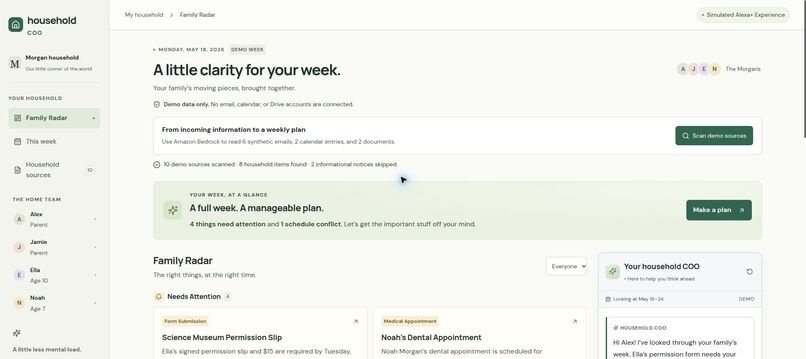
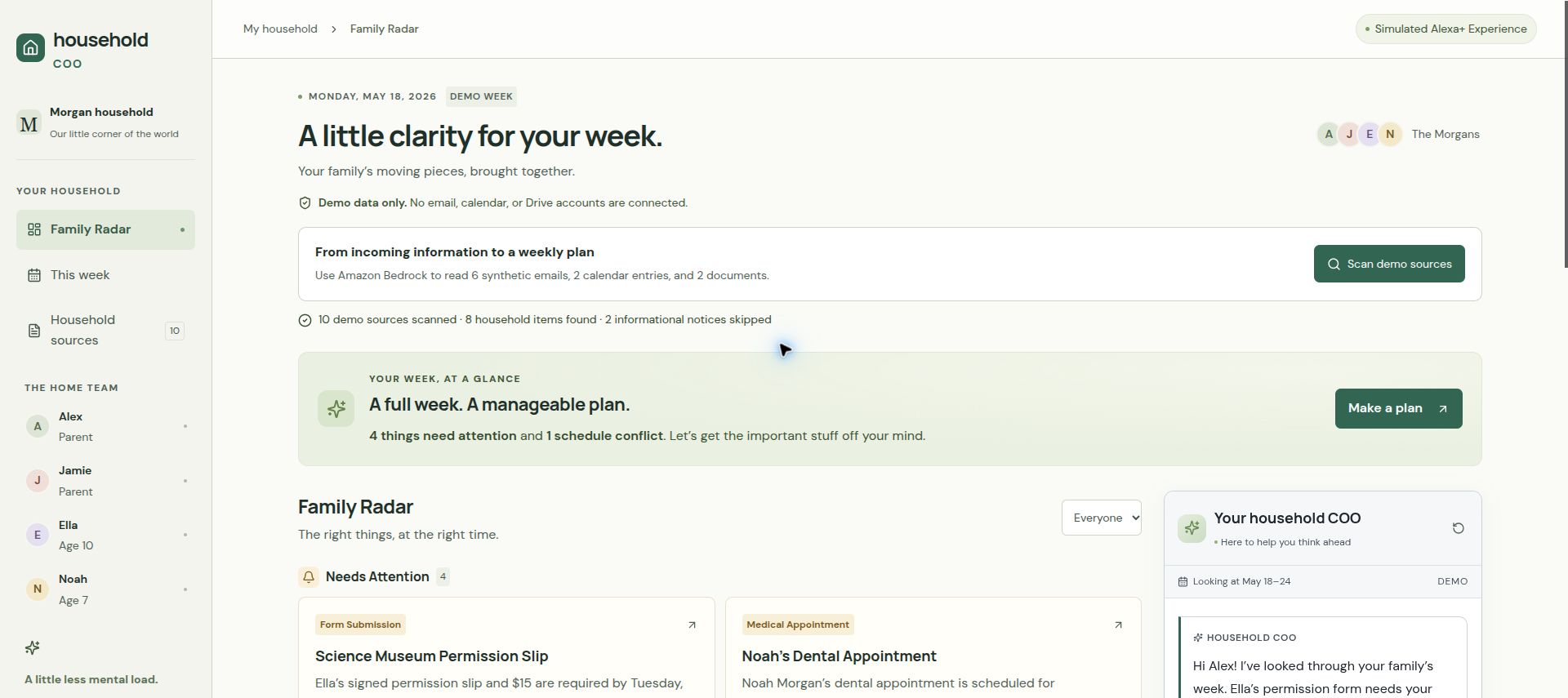
Family Radar turns ten synthetic household notices into deadlines, upcoming events, and a weekly action plan.
-
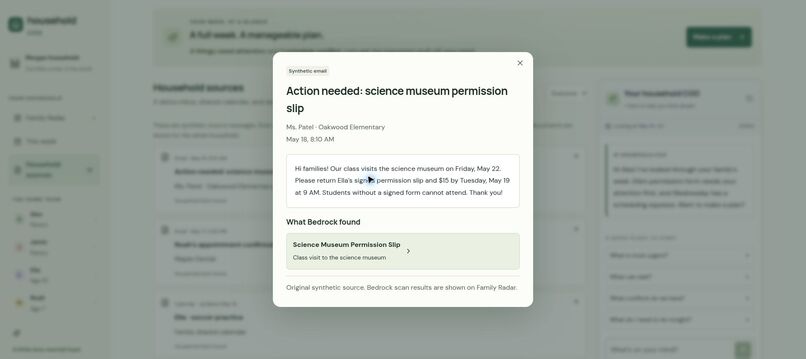
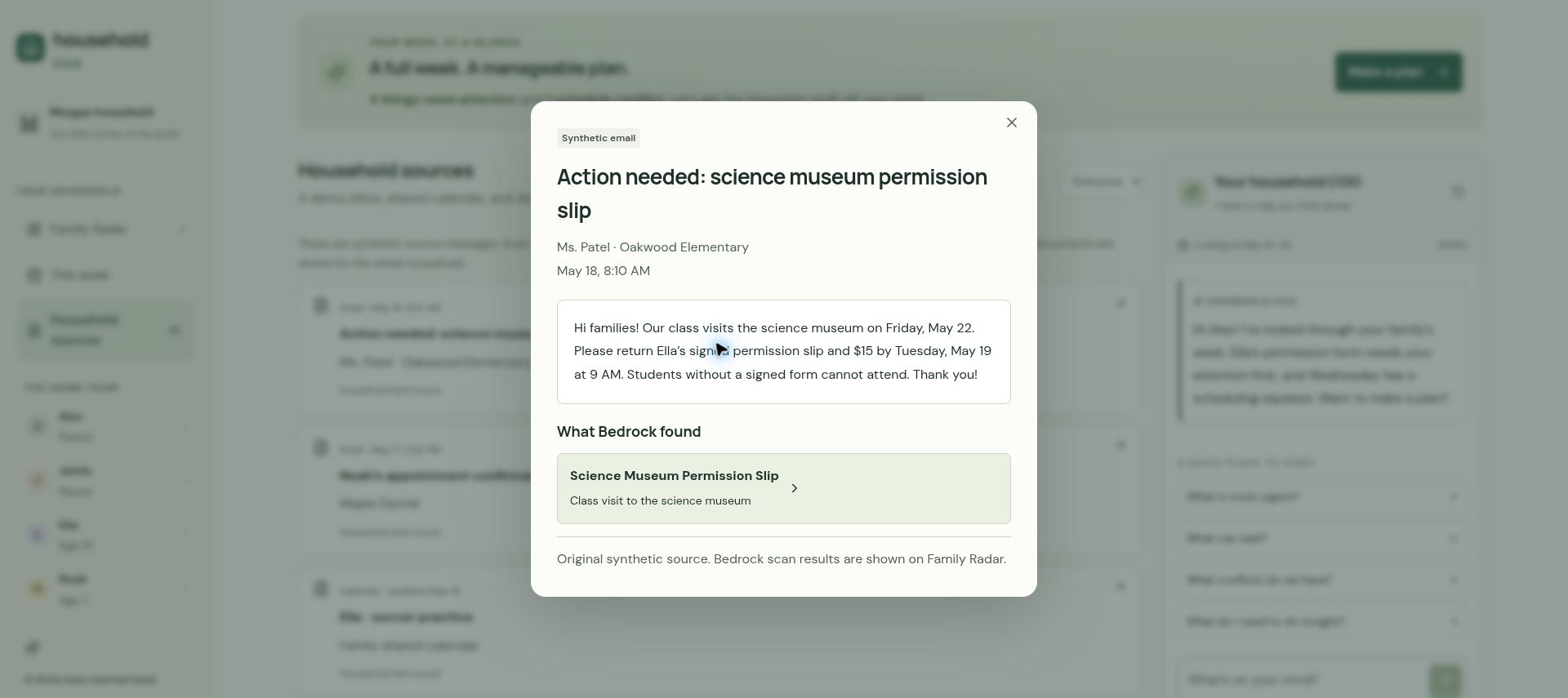
Inspect the original school notice and the linked obligation extracted with Amazon Bedrock Nova Micro.
-
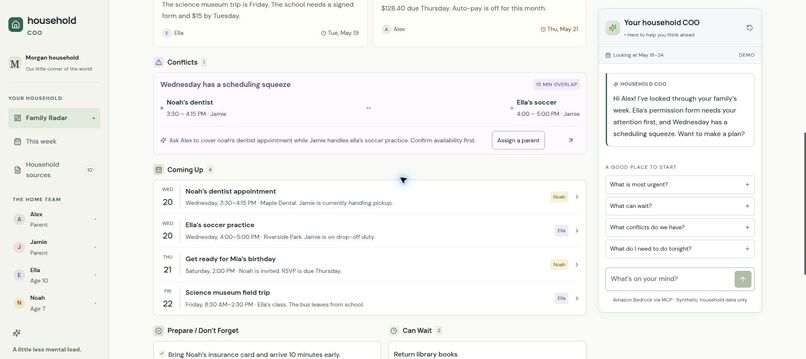
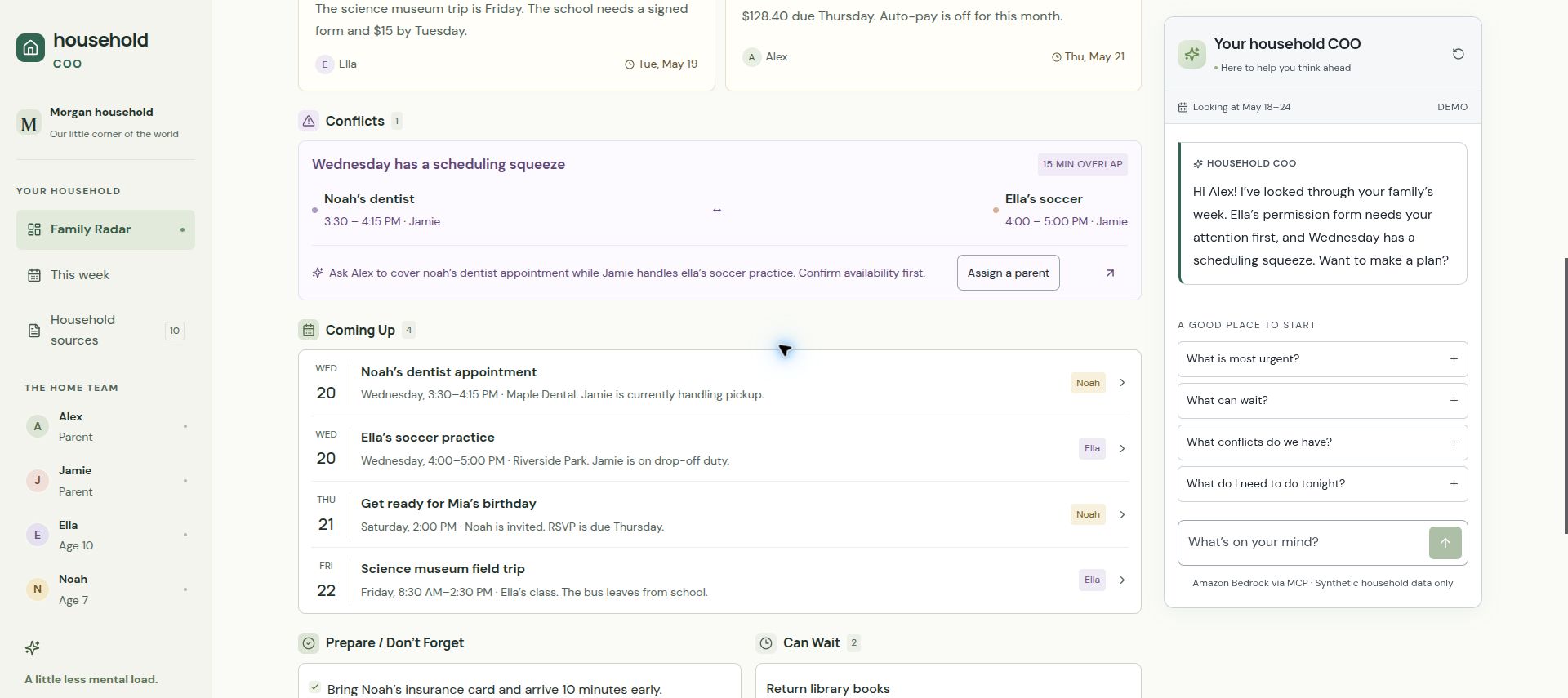
Conflict detected: Jamie is assigned to overlapping dentist and soccer events, creating a 15-minute scheduling squeeze.
-
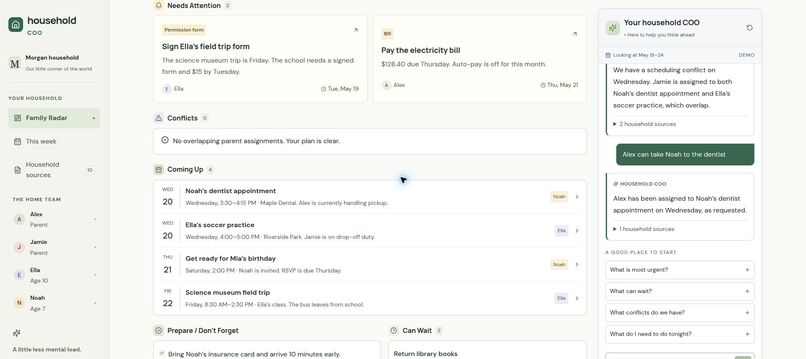
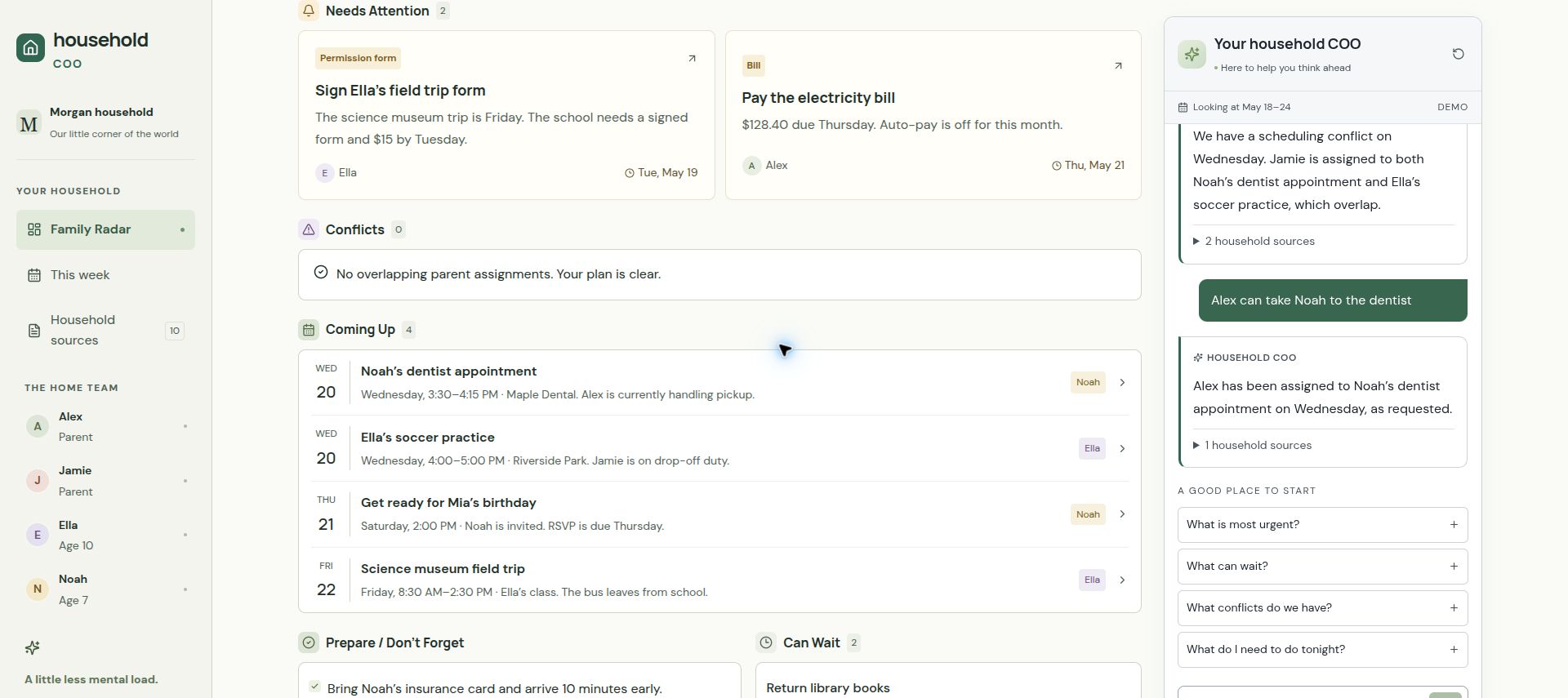
Assigning Alex to the dentist resolves the parent conflict and updates the local plan and assistant response.
Inspiration
Families receive school emails, appointment notices, bills, and activity schedules in different places. Someone still has to work out what matters, what overlaps, and what needs action tonight. Household COO brings that work into one weekly plan.
What it does
Household COO answers: What does our family need to deal with this week?
The browser demo presents a simulated Alexa+ experience for the synthetic Morgan household. It scans six synthetic emails, two calendar entries, and two documents. Amazon Bedrock Nova Micro extracts structured obligations with source provenance, while deterministic logic groups deadlines and detects overlapping parent assignments.
Users can inspect original notices, ask source-cited follow-up questions, assign a parent, and mark tasks complete. An example: Jamie is assigned to both Noah’s dentist appointment and Ella’s soccer practice, which overlap by 15 minutes. Saying Alex can take Noah to the dentist updates the local plan and resolves that parent conflict. Later answers reflect the saved assignment and completed tasks.
Scope: This is a browser simulation using synthetic data. It does not connect to personal email or calendars, send messages, make payments, or book appointments. Decisions are saved in the same browser.
How we built it
The app uses Next.js, React, TypeScript, and server-side API routes, deployed on Vercel from GitHub. The official MCP TypeScript SDK provides a self-hosted Streamable HTTP server at /api/mcp and a browser MCP client using protocol version 2025-11-25.
Amazon Bedrock powers live source extraction and conversation through the AWS SDK for JavaScript and the Converse API, using amazon.nova-micro-v1:0 in us-east-1. Model output is validated before use. Scheduling conflicts and permitted local decisions are calculated in application code. A separate deterministic mock mode lets developers run the project without AWS credentials.
Challenges we ran into
The main challenge was making recommendations follow the current family plan rather than repeat earlier conversation. Live testing also showed that missing appointment intervals could hide conflicts. We strengthened extraction instructions and validation, corrected API-key authentication configuration, and made resolved-conflict answers respect the computed assignments.
Accomplishments
We verified the production workflow with live Bedrock: ten notices produced eight obligations and two informational notices were skipped. Reassignment resolved the scheduling conflict. After the permission form was marked complete, the assistant recommended the electricity bill as the next urgent task. All 21 automated tests pass, including MCP interoperability and provider validation; the production build succeeds.
What we learned
Useful household assistance depends on connecting information to decisions. Source citations, explicit state, and deterministic checks help keep a small language model grounded. Live extraction can vary in wording and priority; preparation details may appear in descriptions rather than dedicated reminder cards.
What’s next
Future versions could add permission-based calendar and email connections, shared shopping lists, and cross-device household decisions. These are future capabilities. The current prototype demonstrates the core source-to-plan-to-action loop with synthetic data.
Built With
- alexa+
- amazon-bedrock
- amazon-nova
- mcp
- next.js
- react
- typescript

Log in or sign up for Devpost to join the conversation.