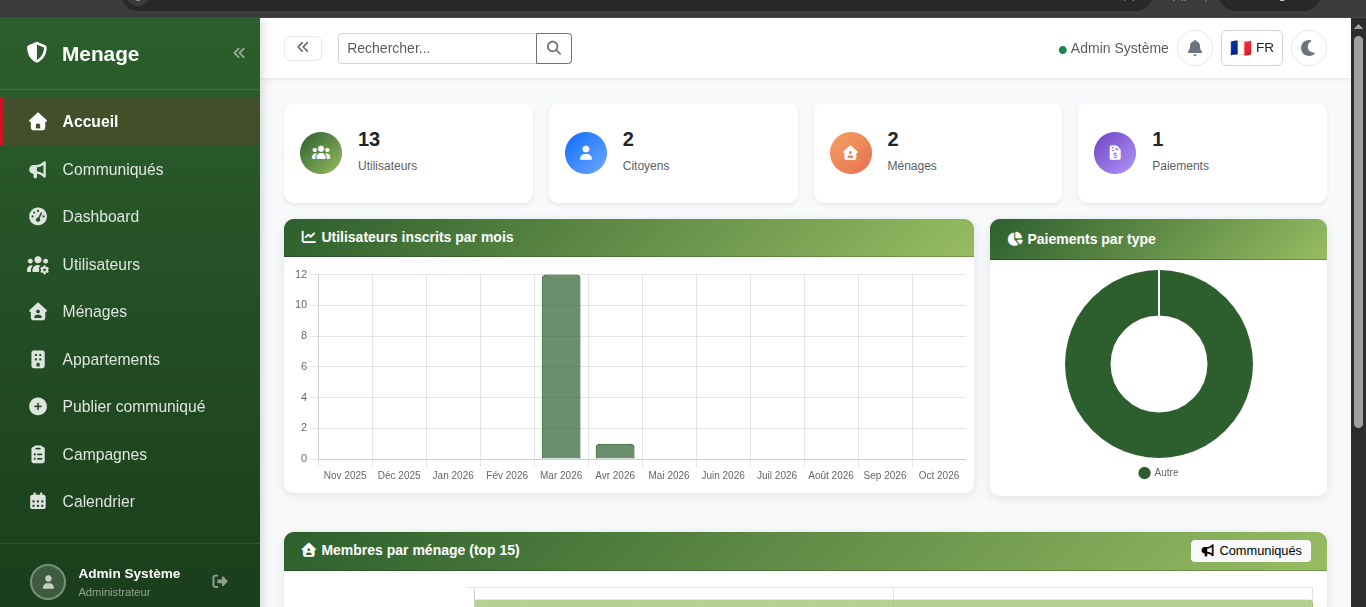
Inspiration Our project was inspired by the real-world administrative hurdles citizens face daily in community management. In many areas, tracking local residents and visitors still relies heavily on a physical "Carnet de Ménage" (Household Register). We noticed that this outdated system creates massive administrative delays, lacks transparency, and forces citizens to physically travel just to get a neighborhood chief's signature—which is nearly impossible if a guest arrives late at night. We wanted to build a modern, digital alternative that eliminates paperwork and bridges the communication gap between households and local authorities. What it does Household Management is a secure digital ecosystem that modernizes community administration and reporting. • Digital Guest Registration: Replaces the physical Carnet de Ménage with a mobile and web interface where households can instantly register visitors. • Instant Approvals: Allows neighborhood chiefs (chefs de quartier) to securely review, digitally sign, and approve resident updates remotely, removing the need for physical travel. • Direct Reporting Channel: Provides citizens with a transparent, digital reporting system to flag community issues, moving away from unreliable verbal communication. • Real-time Analytics: Gives local authorities a clean dashboard to monitor community data efficiently without administrative overload or paperwork errors. How we built it We developed the platform with a mobile-first approach to ensure accessibility for all citizens: • Frontend: Built using React Native / Flutter for the mobile app to give users a smooth experience, and React.js for the administrative dashboard. • Backend: Powered by Node.js with Express (or Python/Django) to handle the business logic, secure user authentication, and digital signature workflows. • Database: Utilized PostgreSQL (or MongoDB) to securely store household records, visitor logs, and timestamped administrative approvals. • Communication: Integrated SMS/Push notification APIs to instantly alert neighborhood chiefs of pending approvals and notify citizens when their requests are processed. Challenges we ran into • Simulating Secure Approvals: Designing a remote digital signature system that mimics the legal authority of a neighborhood chief's physical stamp while keeping it fast and user-friendly. • Accessibility Hurdles: Solving the "limited communication" issue meant designing an interface that is highly intuitive for users who might not be tech-savvy or who previously relied solely on verbal reporting. • Data Flow Syncing: Structuring the database to ensure that urgent visitor logs are updated in real-time on the authority dashboard without causing system lags or data conflicts. Accomplishments that we're proud of • Eliminating the Travel Barrier: Successfully creating a workflow that allows a visitor arriving late at night to be legally registered and approved in under two minutes without anyone leaving their home. • Bridging the Civic Gap: Building a reliable, digital reporting mechanism that finally includes working citizens who are normally away from home during standard administrative office hours. • Clean Architecture: Designing an end-to-end prototype that transitions a completely paper-based, slow process into a fast, transparent digital workflow. What we learned • User-Centric Civic Tech: We learned that digitizing bureaucracy isn't just about writing code; it’s about deeply understanding the exact constraints of local communities, such as working hours and traditional hierarchies. • Data Security Importance: Handling household data taught us the critical importance of implementing strict data privacy and secure access controls for different administrative levels. • Agile Scope Management: We realized how vast administrative systems are, which taught us to strictly scope down our features to build a hard-hitting MVP (Minimum Viable Product) within the hackathon timeframe. What's next for Household Management • Offline Functionality: Developing an offline-first sync feature using local storage so citizens can still log visitor data even in areas with poor internet connectivity. • AI-Powered Analytics: Implementing basic AI tools for administrative centers to automatically categorize and prioritize community reports based on urgency. • Official Pilot Program: Partnering with a local neighborhood or municipality to run a live test, gather real user feedback, and refine the platform for wider public adoption.
Built With
- ai
- javascript
- mysql
- php
- vuejs

Log in or sign up for Devpost to join the conversation.