-
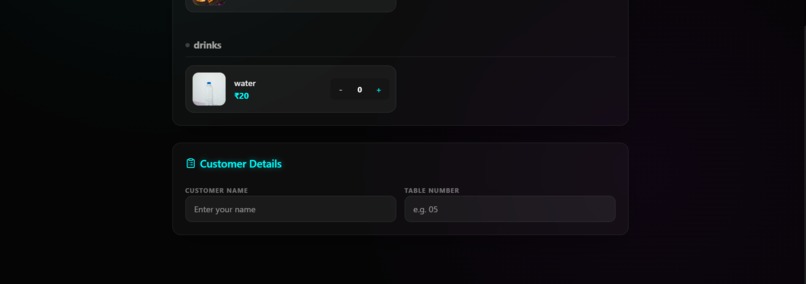
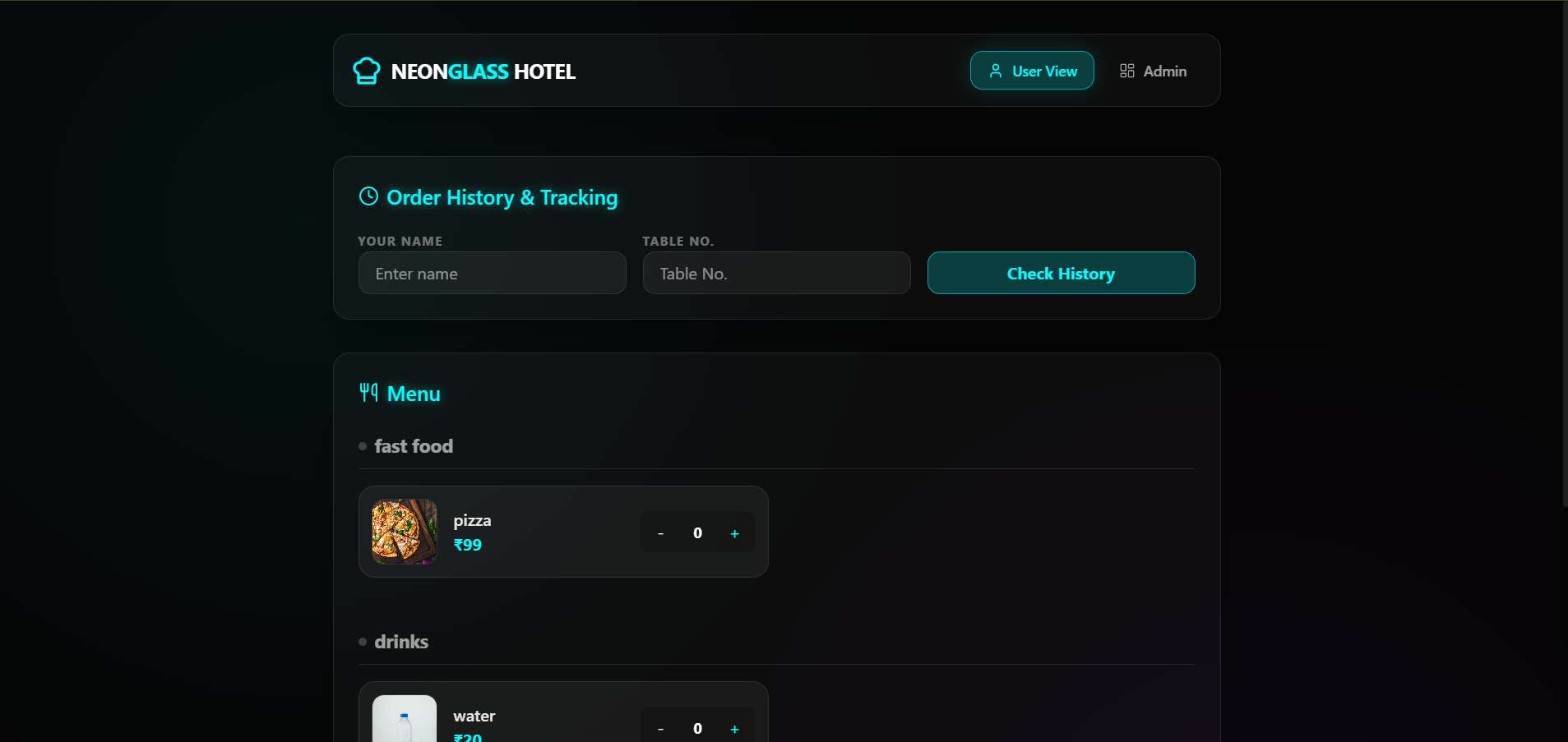
home page interface image 2
-
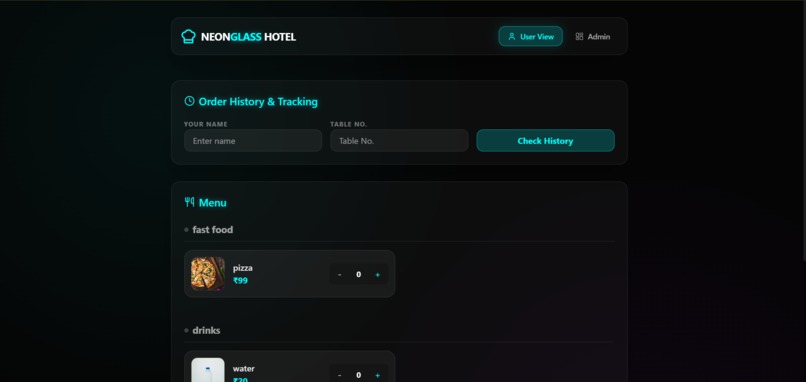
home page interface image 1
-
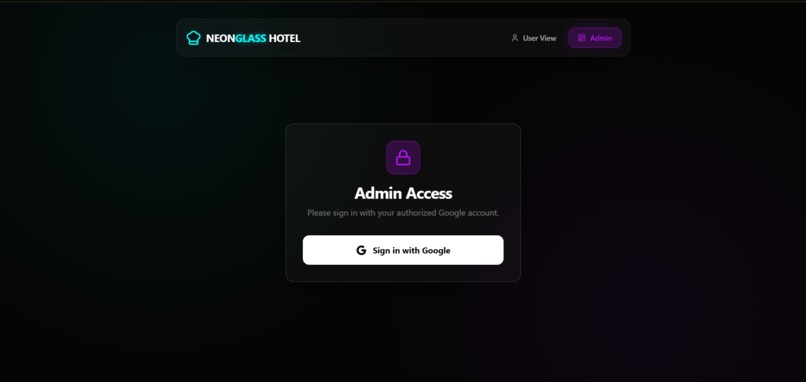
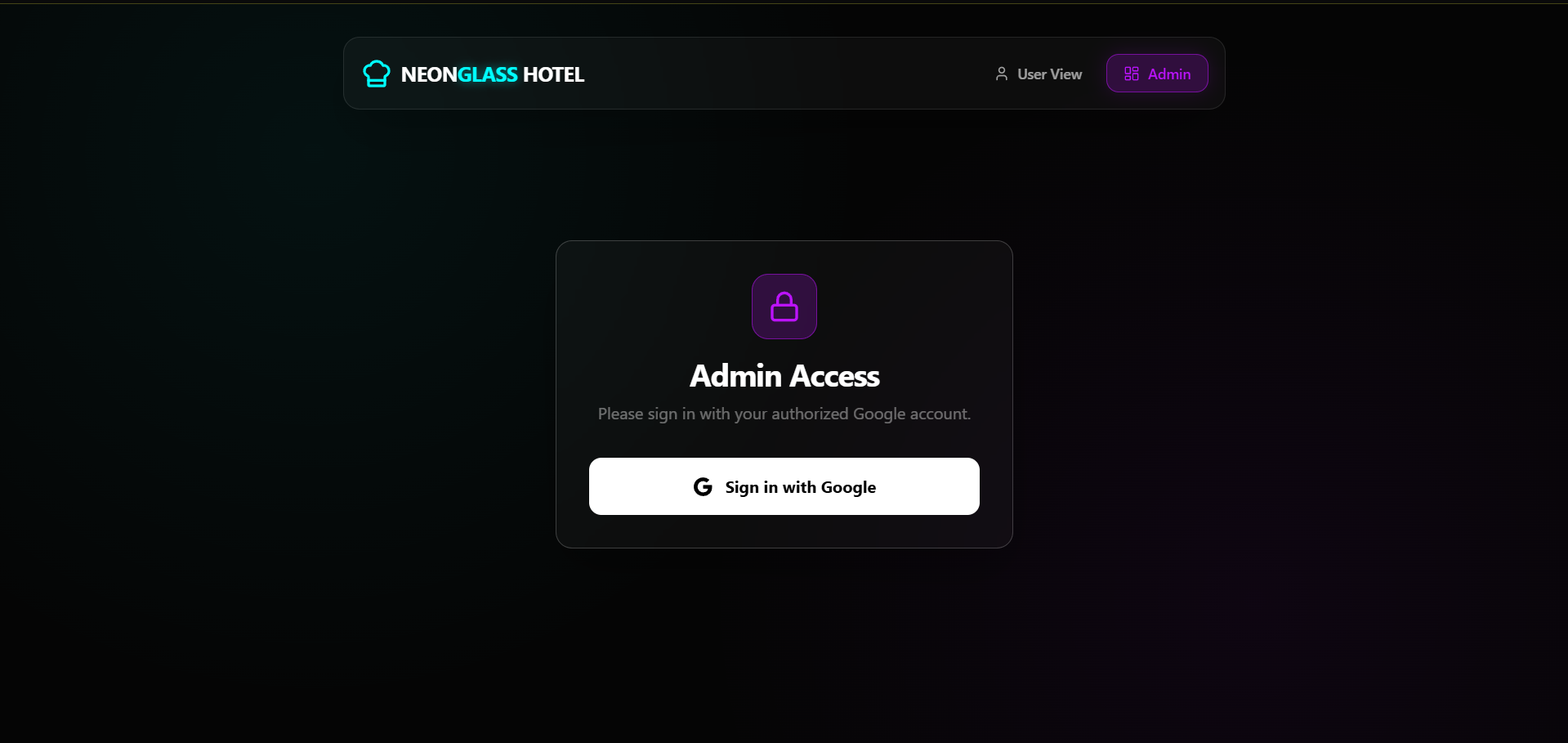
admin dasebord interface
-
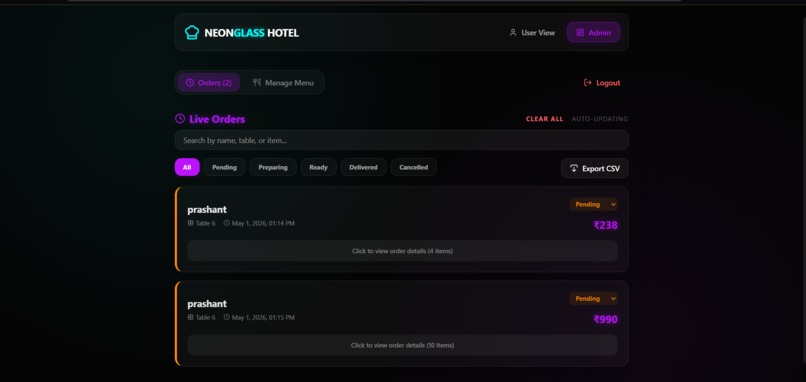
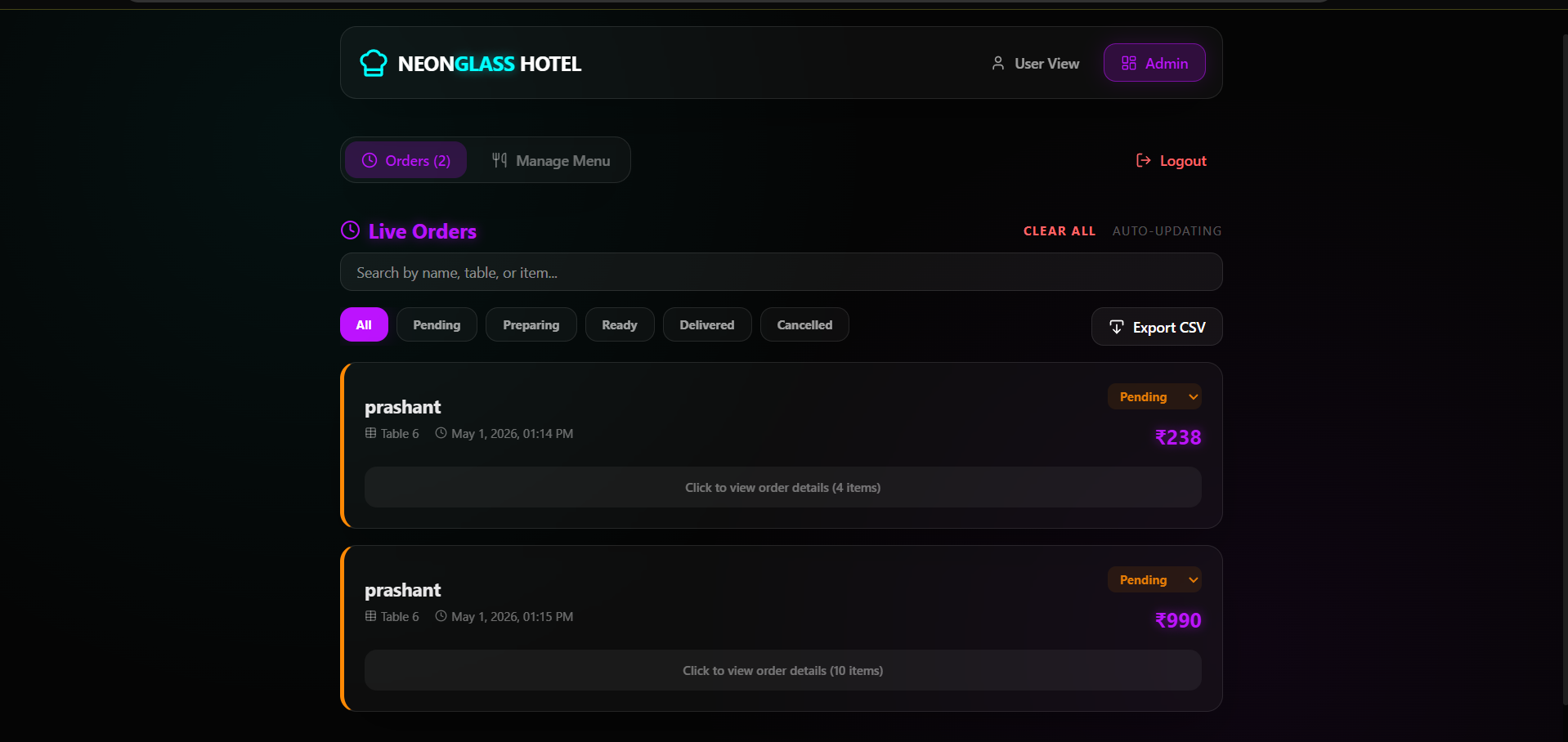
order list interface
-
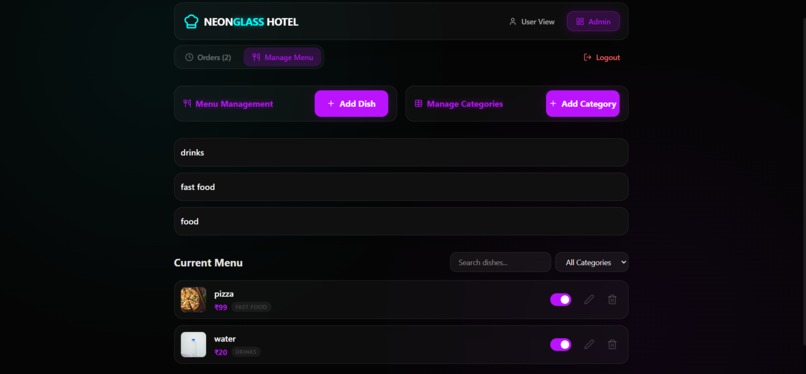
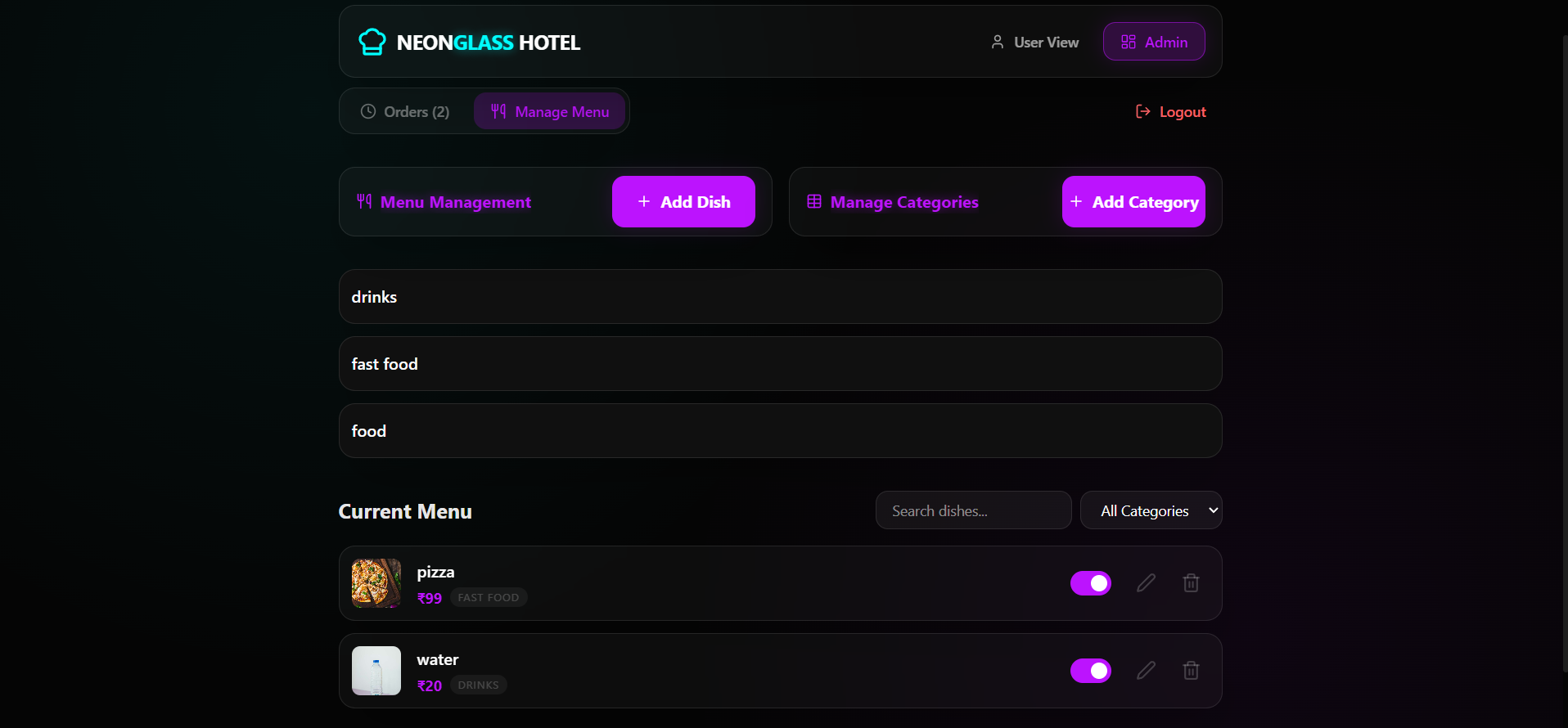
manage menu interface
-
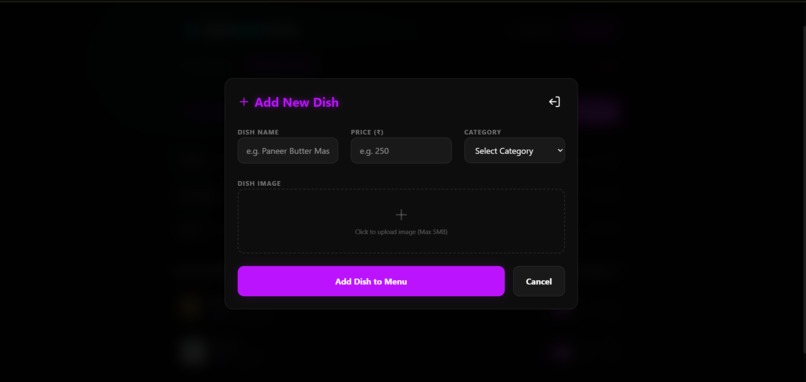
Menu Management (add dish) interface
-
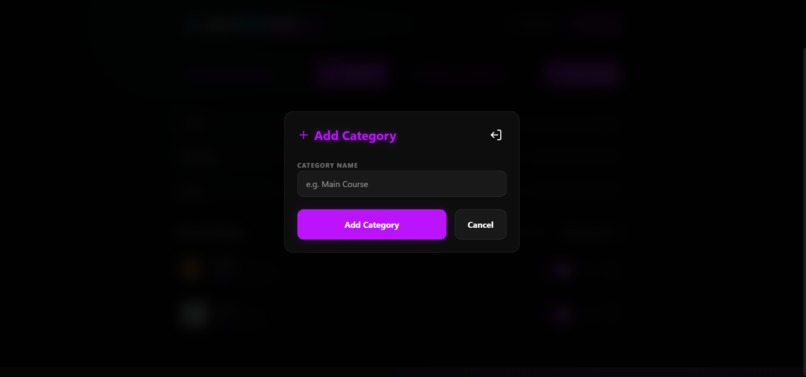
Manage Categories (add category) interface
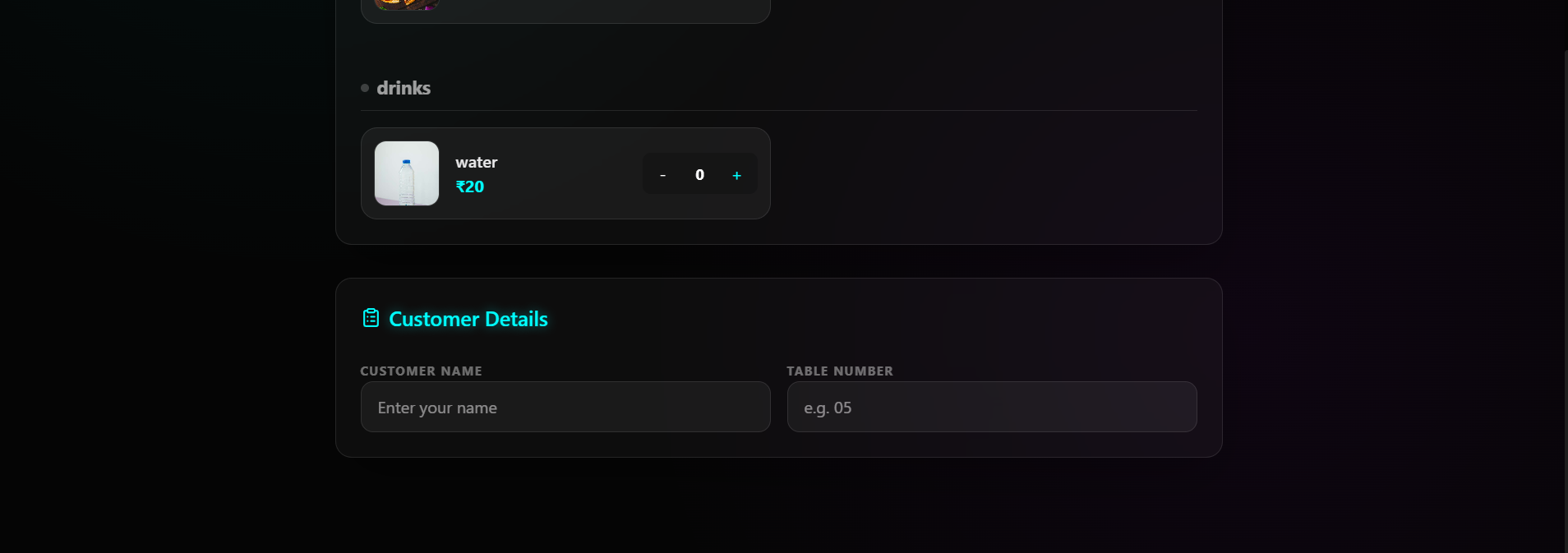
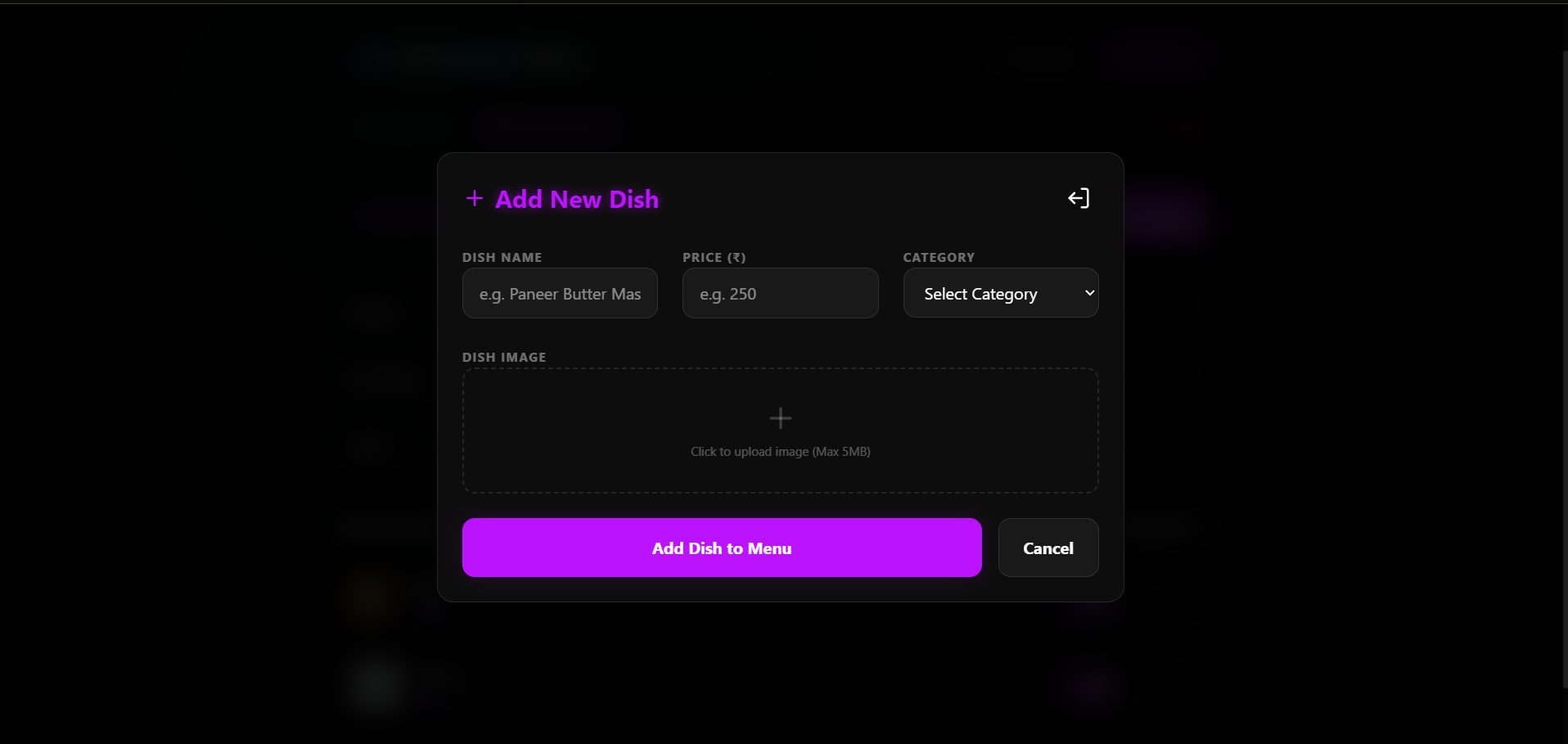
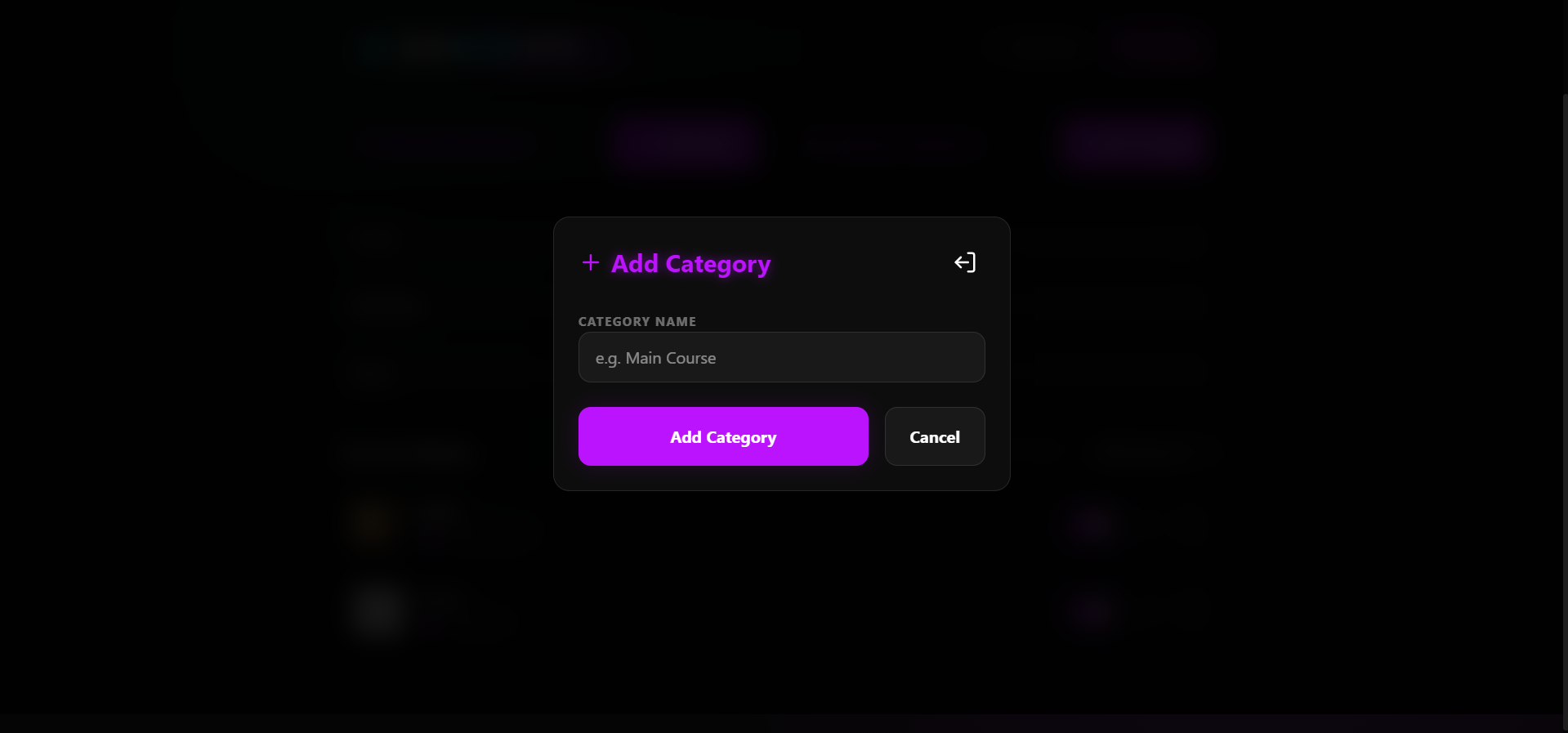
Project: Real-Time Restaurant POS & KDS System What Inspired Me The inspiration for this project stemmed from observing the sheer chaos of bustling restaurant kitchens. Often, the disconnect between front-of-house staff taking orders and the back-of-house fulfilling them leads to communication errors, delays, and wasted resources. I wanted to build a combined Point of Sale (POS), KDS (Kitchen Display System), and Menu Manager that wasn't just functional, but visually striking. The goal was to create a dark, modern, "neon-glass" aesthetic that reduces eye strain in dimly lit restaurant environments while keeping critical information—like impending orders and low stock alerts—highly visible. How I Built It I built the application using a modern web stack designed for speed, reactivity, and real-time syncing: Frontend: Built with React and Vite for a fast, component-driven SPA experience. I utilized Tailwind CSS to craft the detailed glassmorphism effects, custom gradients, and neon-purple accents. Animations: I integrated Framer Motion to provide fluid, staggered transitions when navigating between the menu, orders, and settings, resulting in a premium, app-like feel. Backend & Infrastructure: The backbone of the system is Firebase. I used Firestore as the real-time NoSQL database, allowing orders placed on the floor to appear instantly on the kitchen display dashboard. Firebase Authentication was implemented to secure the managerial settings and KDS screens from unauthorized access. Challenges I Faced Distributed State & Concurrency: Ensuring that inventory (stockCount) decrements accurately in real-time when multiple orders are placed simultaneously. I faced specific bugs with Firestore's strict data validation when mixing creation (addDoc) and updates (updateDoc)—particularly dealing with clearing fields via deleteField() which caused the application build to fail initially. Search & Filtering Logic: Implementing a robust, real-time search engine that could instantly filter through complex arrays of orders (searching by customer name, table number, and order status) without sacrificing the UI's 60fps performance rate. UI/UX Density: Balancing the sheer amount of KDS information (order items, individual meal notes, table numbers, timestamps, and order statuses) on a single screen without creating overwhelming visual clutter. Strict Security Rules: Designing watertight Attribute-Based Access Control (ABAC) in Firestore. Preventing unauthorized structural modifications while allowing live real-time reads required multiple iterations of testing and validation. What I Learned Real-time NoSQL Patterns: Deepened my understanding of document-based databases, specifically managing nested collections and executing atomic, server-side inventory decrements safely. Firestore Validation: Learned the importance of integrating complete security invariants directly into Firestore Security Rules, ensuring the database layer protects itself against malformed client data. React Optimization: Improved my skills in safely juggling complex, heavily nested React state (like cart items with corresponding individual notes) alongside asynchronous Firebase listeners. The Math Behind Inventory & Pricing To manage stock levels securely and prevent negative inventory when concurrent orders arrive, the system handles the concept of inventory decrementing atomically. Conceptually, the system applies the following mathematical function to track available stock over time : Where: is the current stock count. represents the quantity of the item required for the -th order in the current transactional batch. This invariant ensures that our inventory never drops below zero ( ), inherently maintaining database integrity and accurately triggering our low-stock threshold alerts! Furthermore, calculating the final payable amount for any custom order follows: Where is the base price of the item and is the quantity ordered. Real-time reactivity ensures that as increases in the cart, the total dynamically re-renders before being finalized in the database.
Built With
- and
- and-bug-free-code.-vite:-a-blazing-fast-build-tool-and-development-server-that-provides-a-highly-optimized-frontend-experience.-tailwind-css:-a-utility-first-css-framework-used-for-rapid-ui-styling
- and-interactive-micro-animations-(like-the-modal-pop-ups-and-list-updates).-lucide-react:-a-clean
- and-responsive-design.-framer-motion:-a-powerful-animation-library-for-react-used-to-create-the-smooth-enter/exit-animations
- cloud
- containerized
- custom-theming
- deployed
- ensuring-that-only-authorized-restaurant-staff-can-access-the-admin-dashboard-and-manage-orders-or-the-menu.-platform-infrastructure-google-ai-studio-/-cloud-run:-the-application-was-built
- frontend-react:-the-core-javascript-library-for-building-the-dynamic-user-interface.-typescript:-used-for-static-typing-to-ensure-robust
- google's
- it-instantly-appears-on-the-admin's-dashboard-without-needing-to-refresh-the-page.-firebase-authentication:-handles-secure-user-identity-and-login
- maintainable
- on
- open-source-icon-set-used-throughout-the-dashboard.-backend-&-cloud-services-firebase-/-cloud-firestore:-a-scalable-nosql-cloud-database.-it-powers-the-real-time-syncing-of-data?ensuring-that-as-soon-as-a-customer-places-an-order
- page-transitions
- scalable

Log in or sign up for Devpost to join the conversation.