-
-
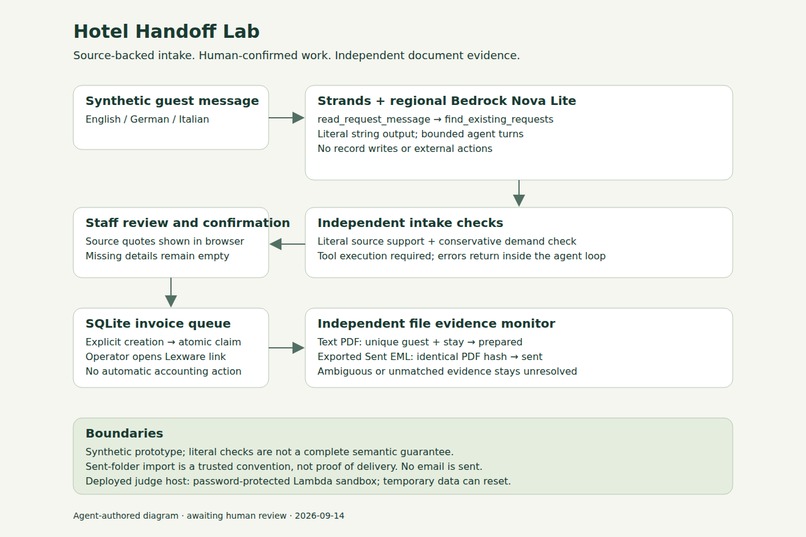
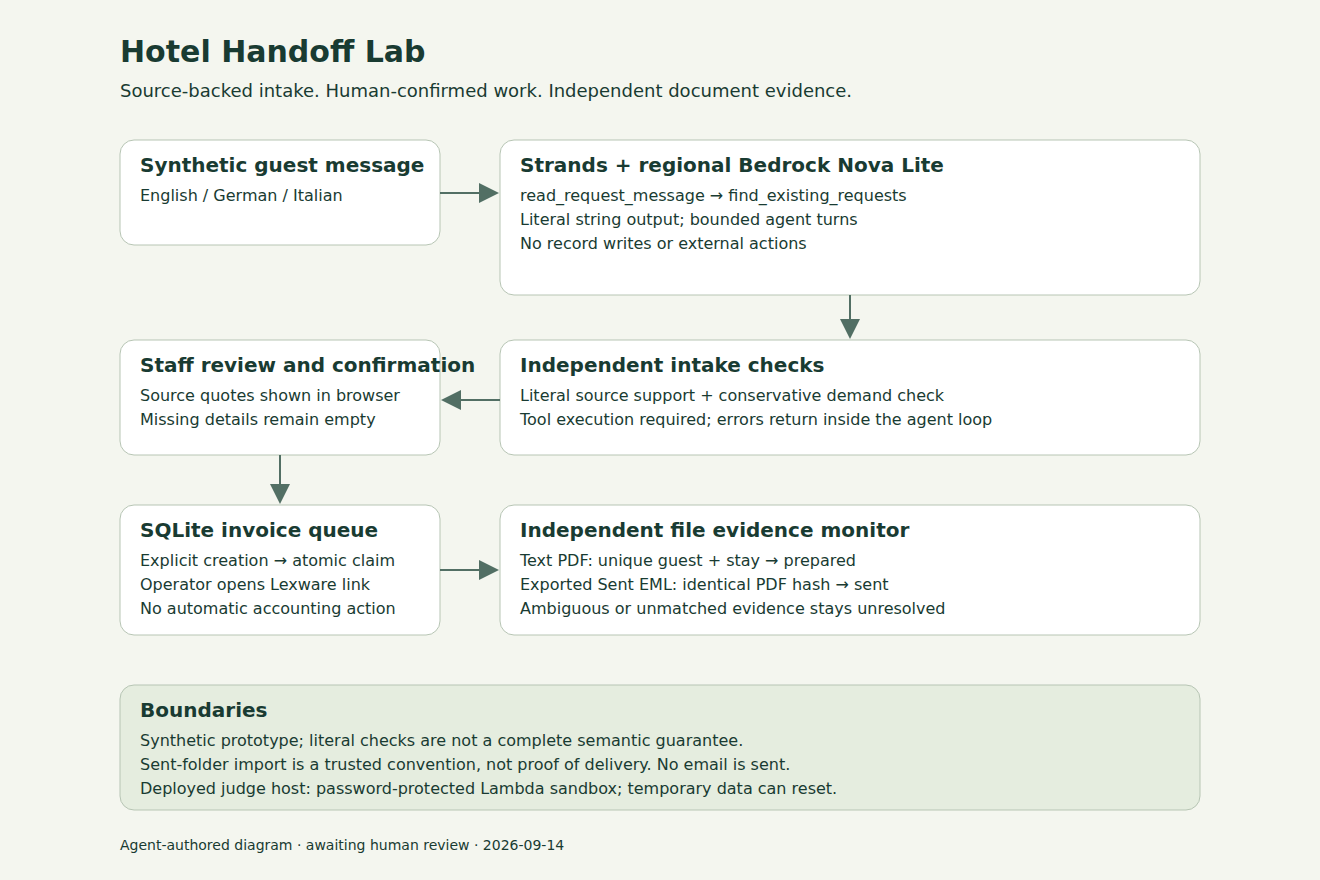
Architecture: message in, source-backed extraction, independent evidence checks, staff confirmation.
-
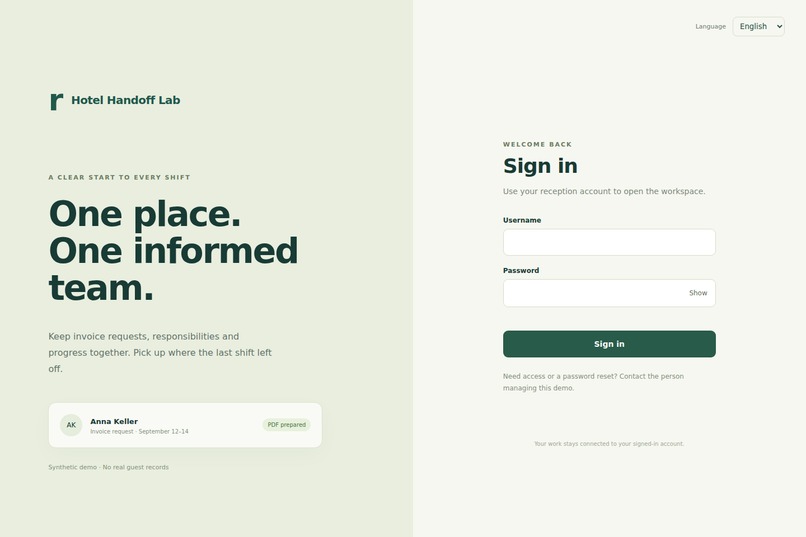
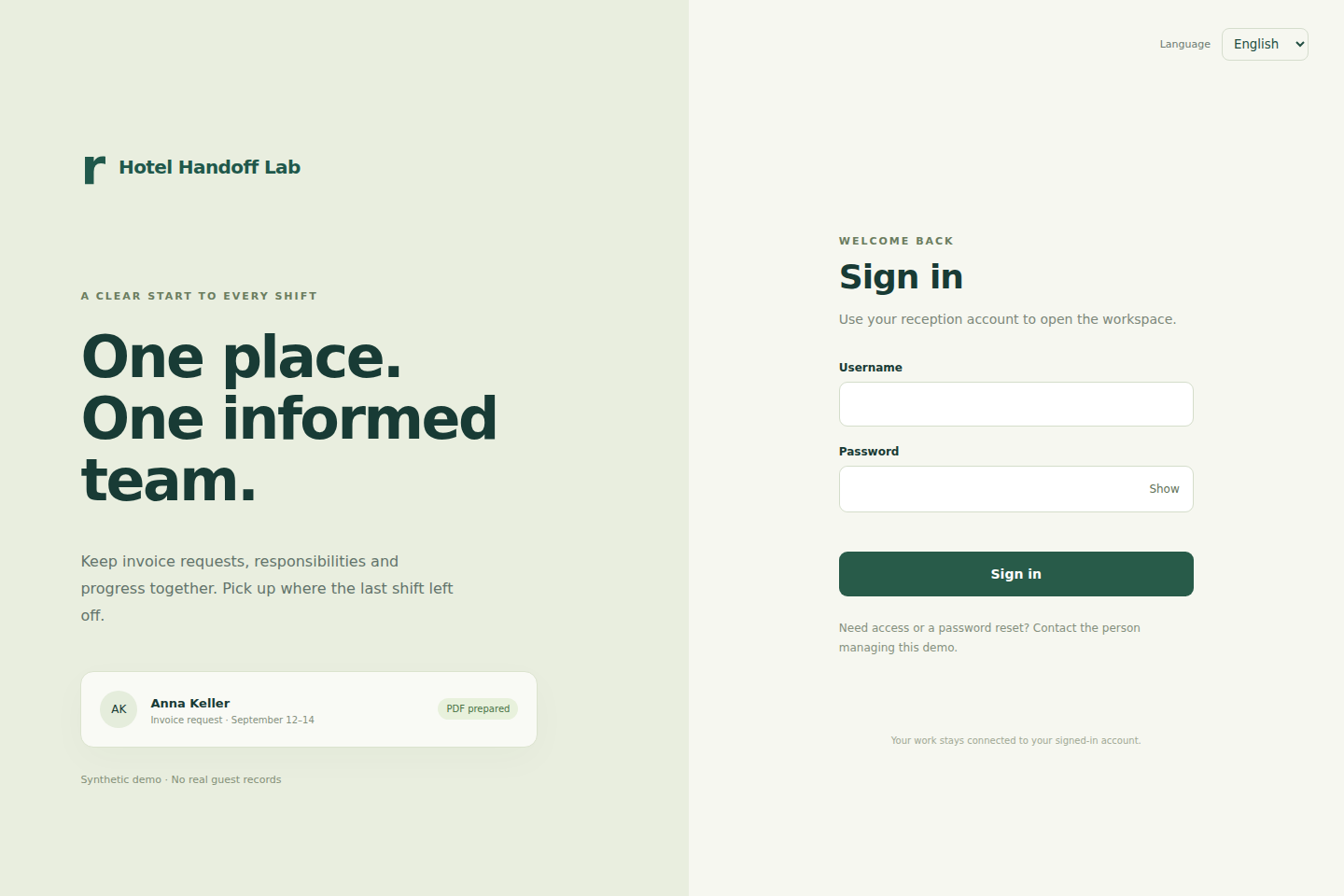
Every request and every API call requires a signed-in account - no anonymous access.
-
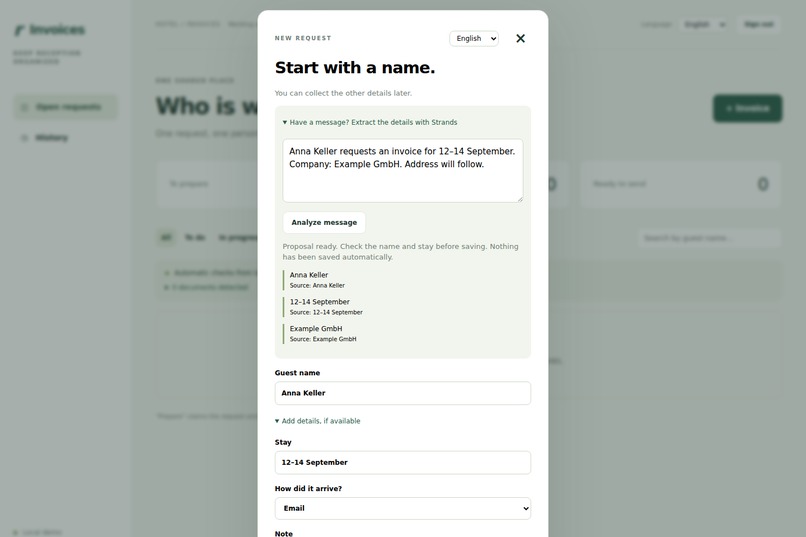
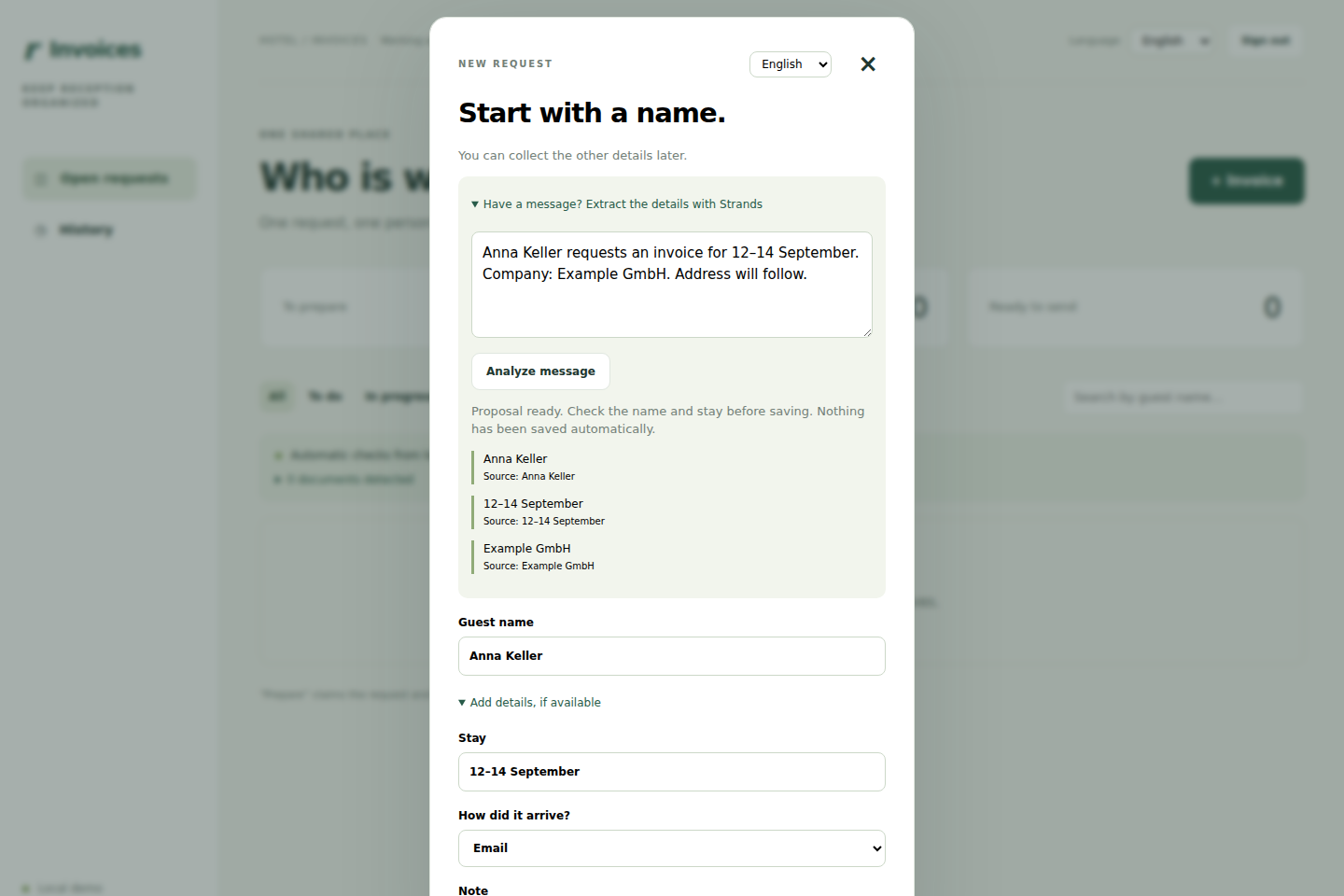
A live Strands extraction: every field is shown next to its exact source quote.
-
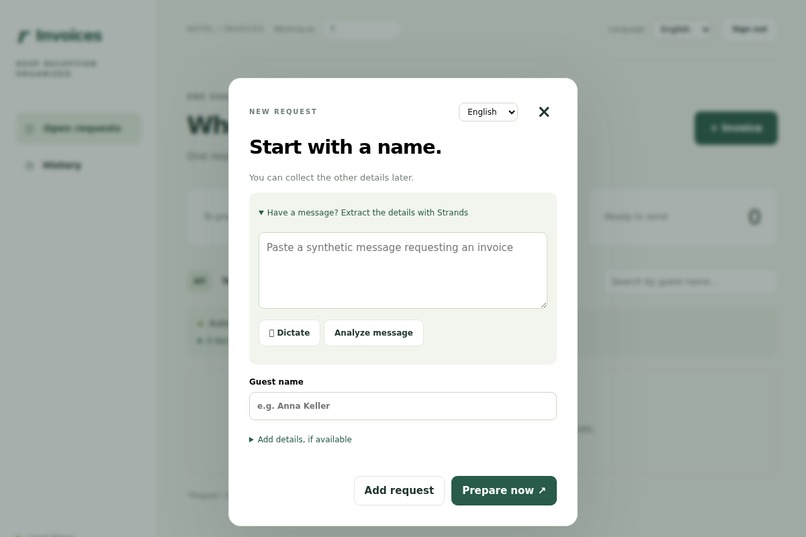
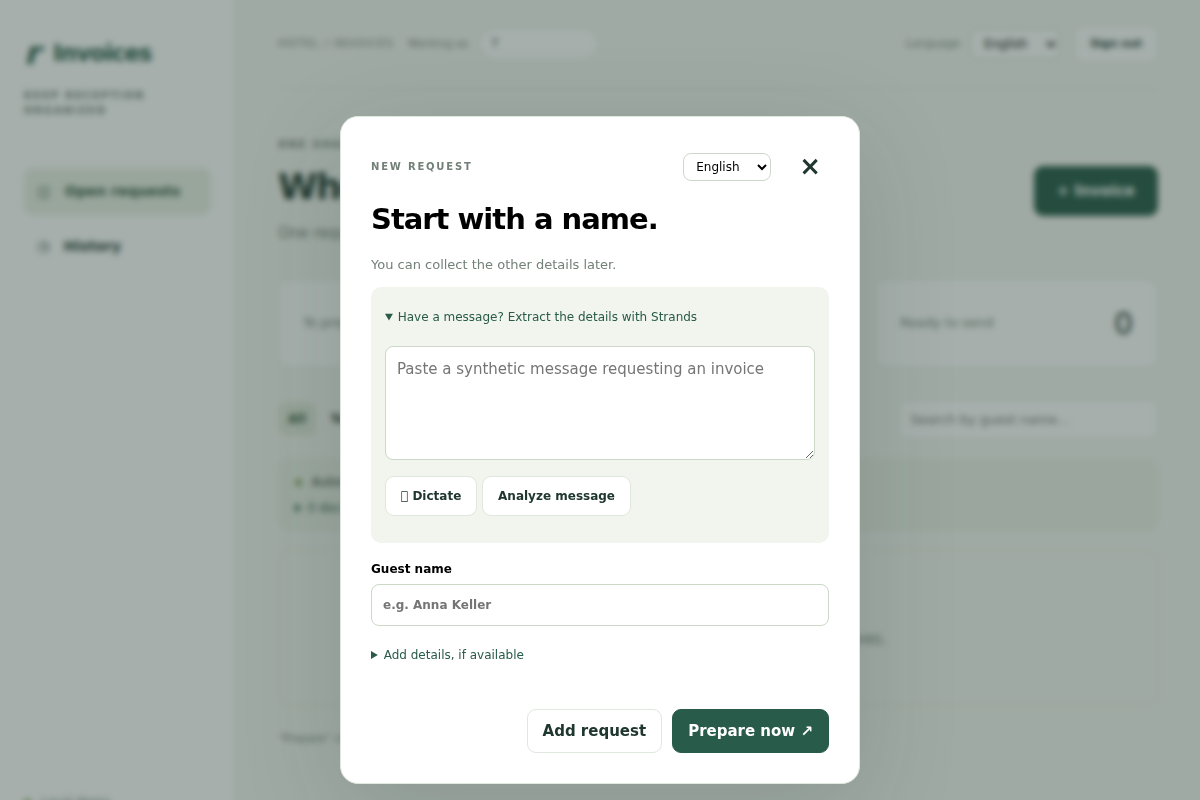
The message can also be dictated, using the browser's own speech recognition.
-
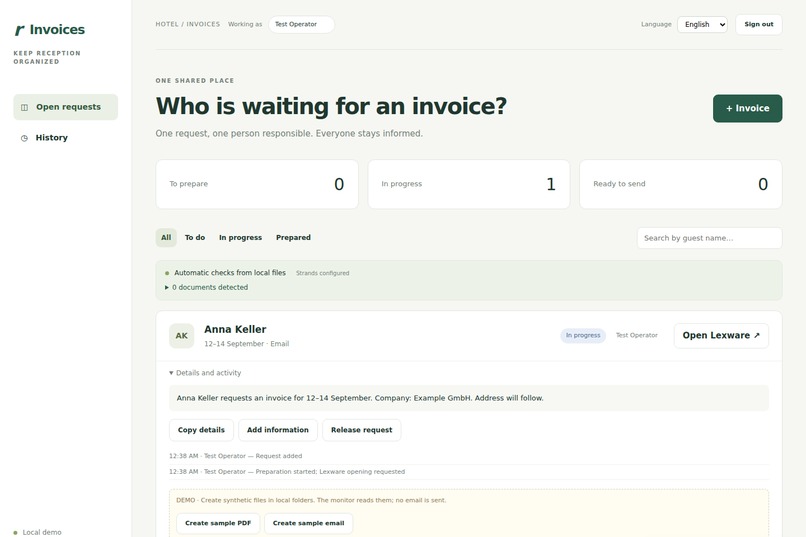
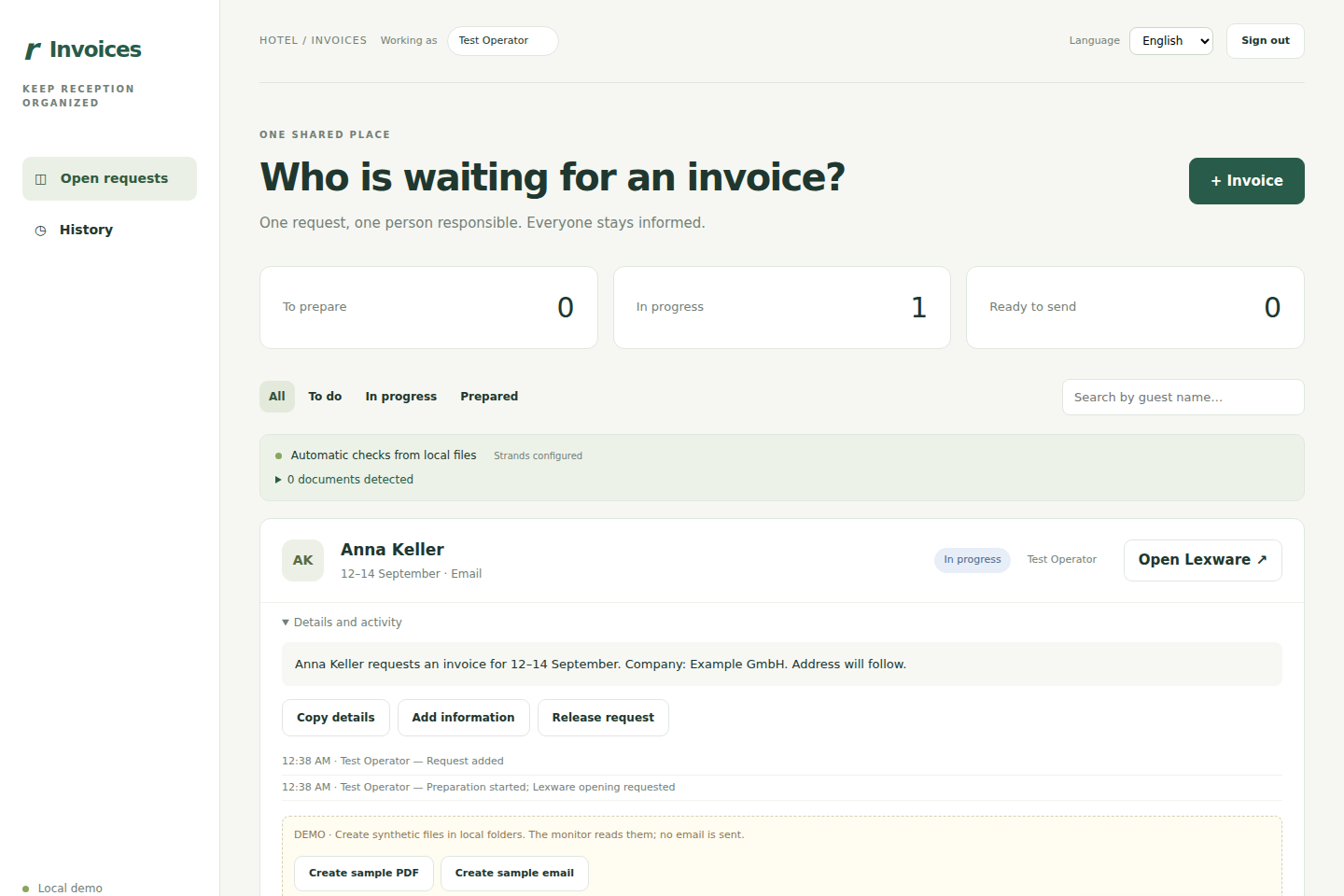
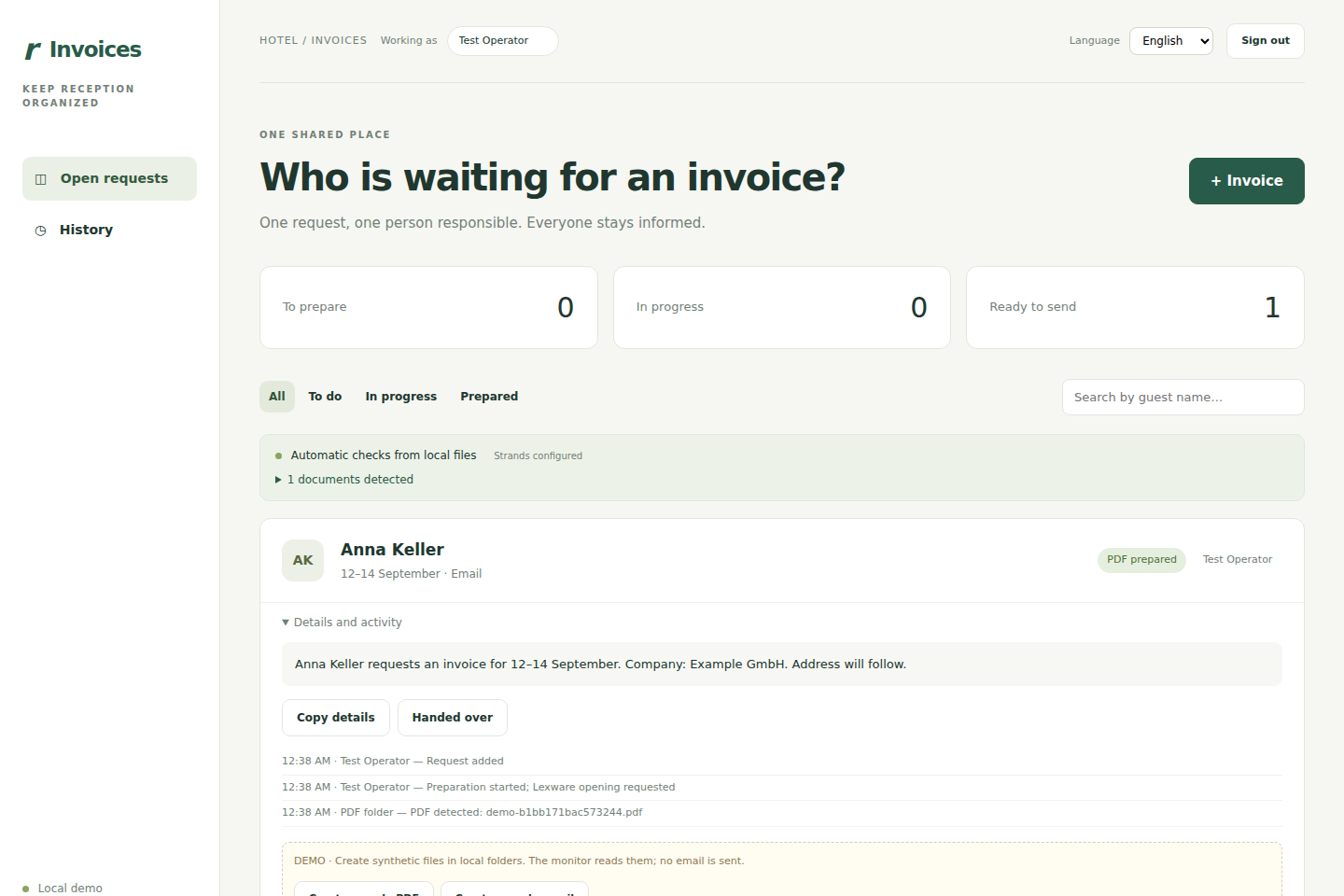
Preparing a request atomically assigns one operator - no duplicate work.
-
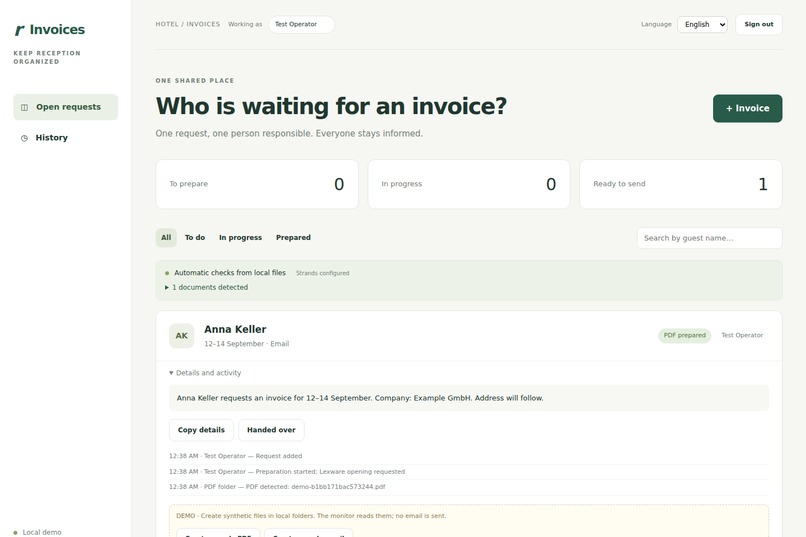
An independent file monitor detects a matching PDF automatically.
-
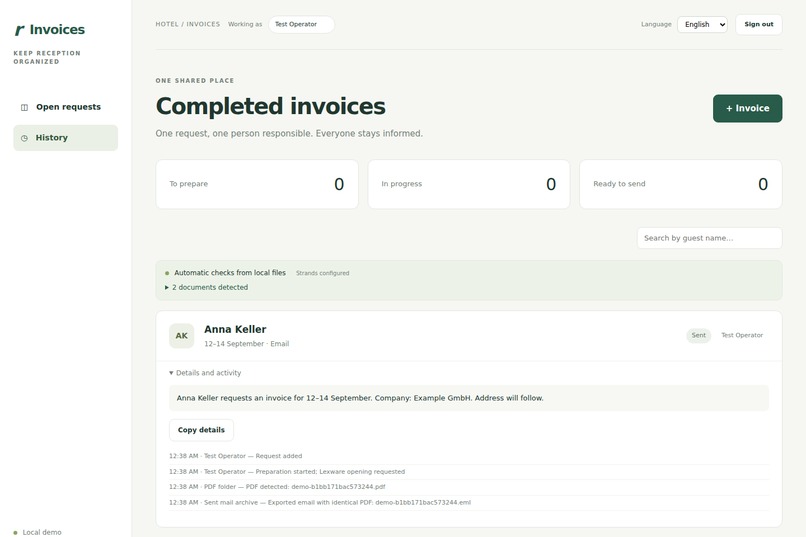
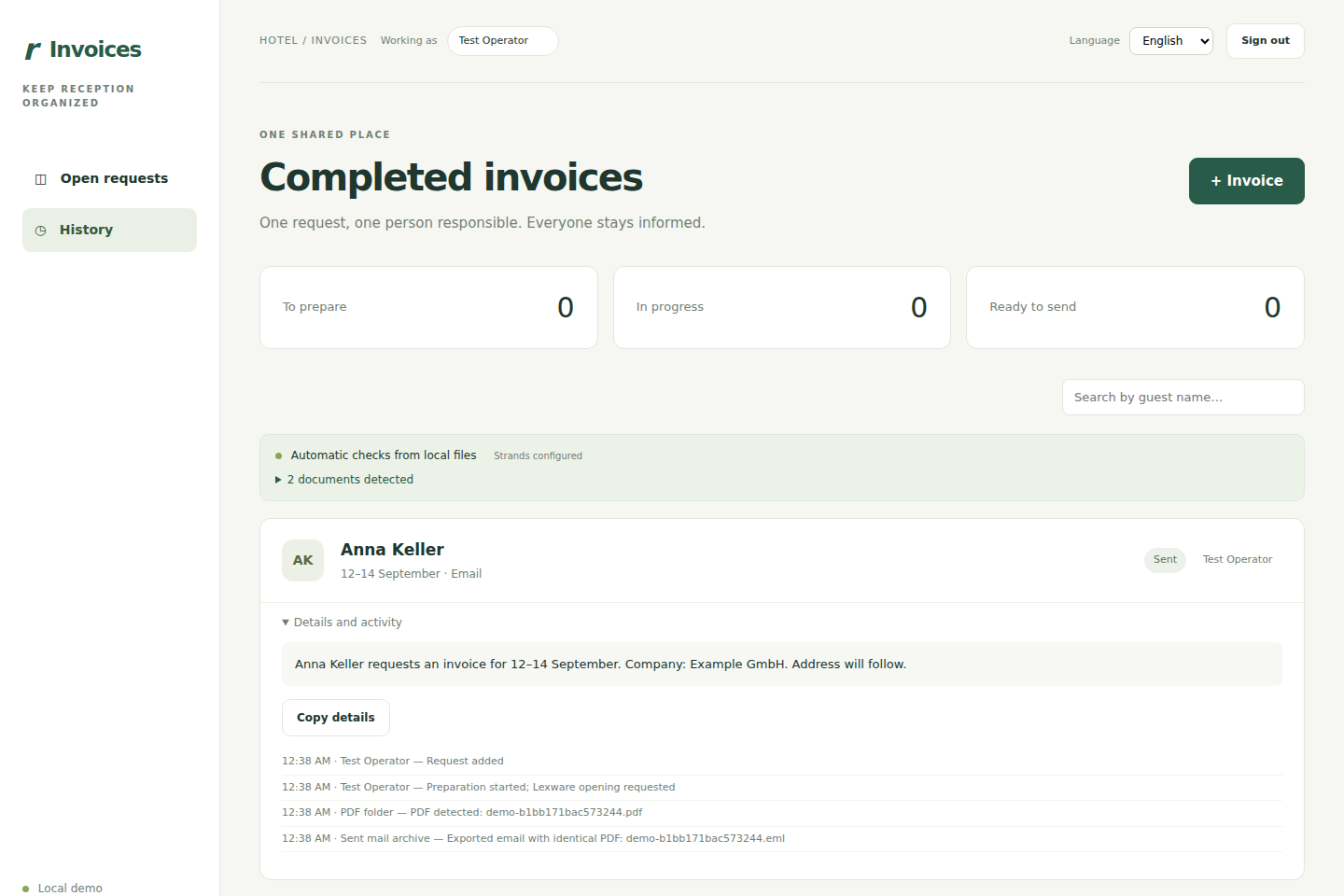
Marked "Sent" only once a matching exported email is found — done is checkable, not claimed.
Inspiration
This comes from lived experience, not a hypothetical. I worked front-of-house at a small, independently-run hospitality business with high staff turnover and no dedicated manager to catch what falls between shifts. Guests ask for invoices in person, by phone, or in passing - whoever hears it scribbles a note, and the next shift often has no idea it happened. The demo video's opening exchange ("Did you take care of that?" / "Wait, I thought you did.") is a composite of that exact situation. The accounting software doesn't help either: it produces invoices, it doesn't track who still needs one. That gap is where requests get lost, and the guest is the one who pays for it.
What it does
A Strands agent reads a guest message - typed, dictated, or pasted from an email - and extracts the invoice request with literal, source-quoted details. It checks for existing requests first, so nobody duplicates work. Nothing is created without explicit staff confirmation. Once confirmed, preparing a request atomically assigns one owner and opens Lexware. A separate, deterministic file monitor (not AI) verifies a matching PDF and, later, a sent-email with the same attachment, before marking anything as sent - so "done" is checkable, not just claimed. Works in English, German and Italian, on phone or computer.
How I built it
Python, Strands Agents SDK, Amazon Bedrock (Nova Lite), Pydantic, SQLite, pypdf, Werkzeug for auth, i18next for translations. The agent has two read-only tools and can't write anything itself - only a person confirms creation. Structured-output validation runs in the agent loop, and the same checks run again server-side before anything reaches the UI. The submission video is a real screen recording of the live app (genuine Bedrock calls), narrated with free neural TTS voices, timed against each clip's measured audio duration so nothing overlaps.
Challenges
Nova Lite struggled with nested optional fields, so I flattened its output to literal strings and validated afterward. The agent must prove it actually read the message and checked for duplicates - no tool call, no result. A conservative request-detection gate can reject unusual phrasing; I chose that trade-off deliberately, since a false rejection is safer than fabricating a request nobody made. The bigger challenge was restraint: no Lexware/Thunderbird/booking-system integration, no email sending, no claim beyond what's actually verified.
What I learned
The small, literal constraints - exact source quotes, forced tool use, evidence checks kept separate from the model - are the actual product design, not limitations bolted on after. For a low-trust, high-turnover team, the real design problem is the two-tap, no-training constraint; what the agent is allowed to touch comes second.
What's next
Durable shared storage, managed account recovery, broader extraction testing - and eventually a direct integration with Thunderbird and Booking.com guest messages, so a "Rechnung" request creates itself automatically, with the same source citation and human confirmation step already in place.
Built With
- agents
- amazon
- bedrock;
- javascript;
- lite;
- nova
- pydantic;
- pypdf;
- python;
- sdk;
- sqlite;
- strands

Log in or sign up for Devpost to join the conversation.