-
-
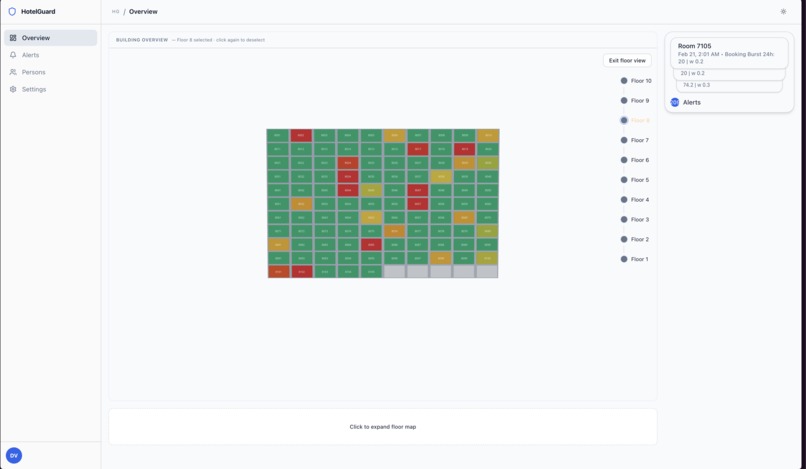
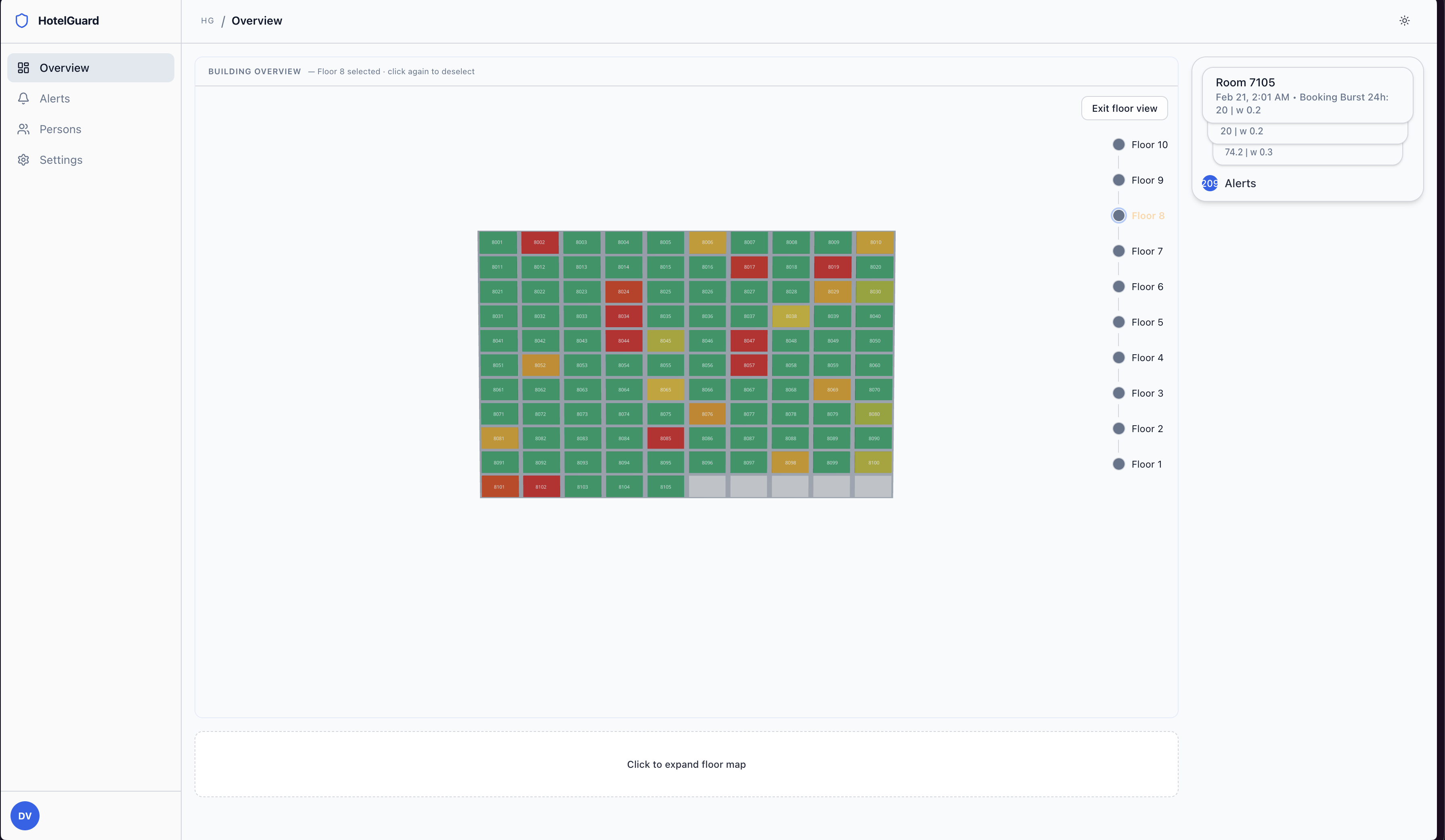
This displays a heat map highlighting which rooms are flagged for odd behavior.
-
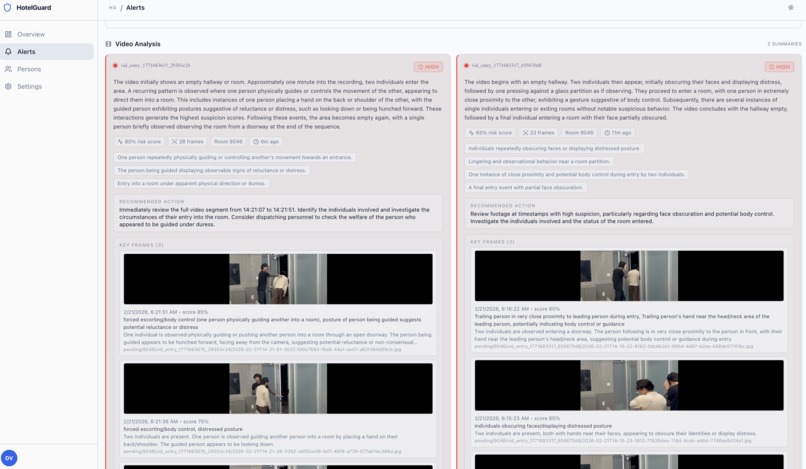
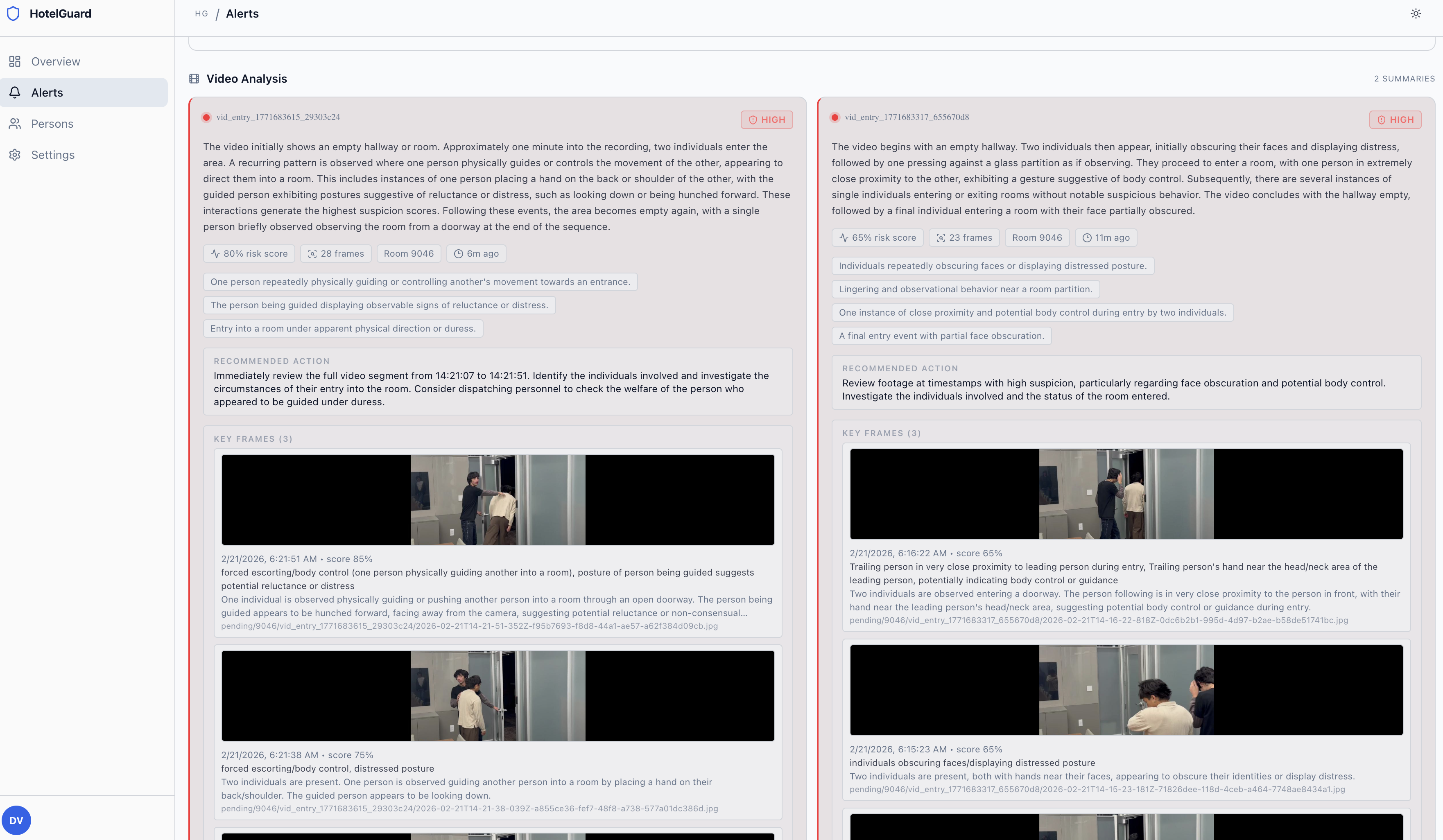
Our AI detection system that reviews video marked by odd behavior
-
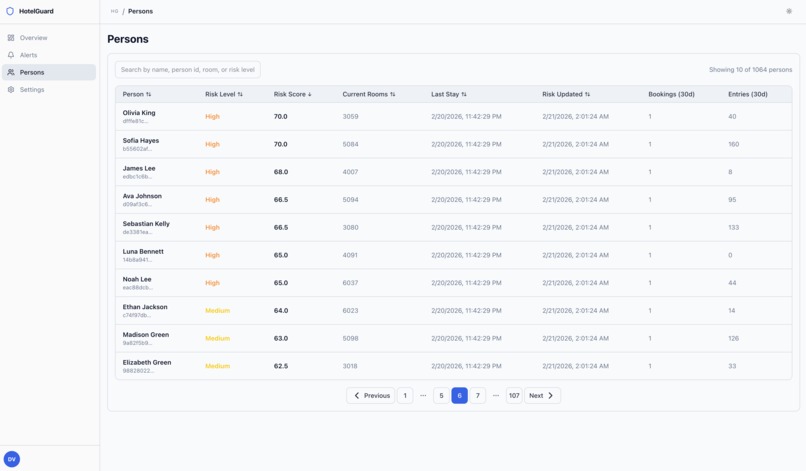
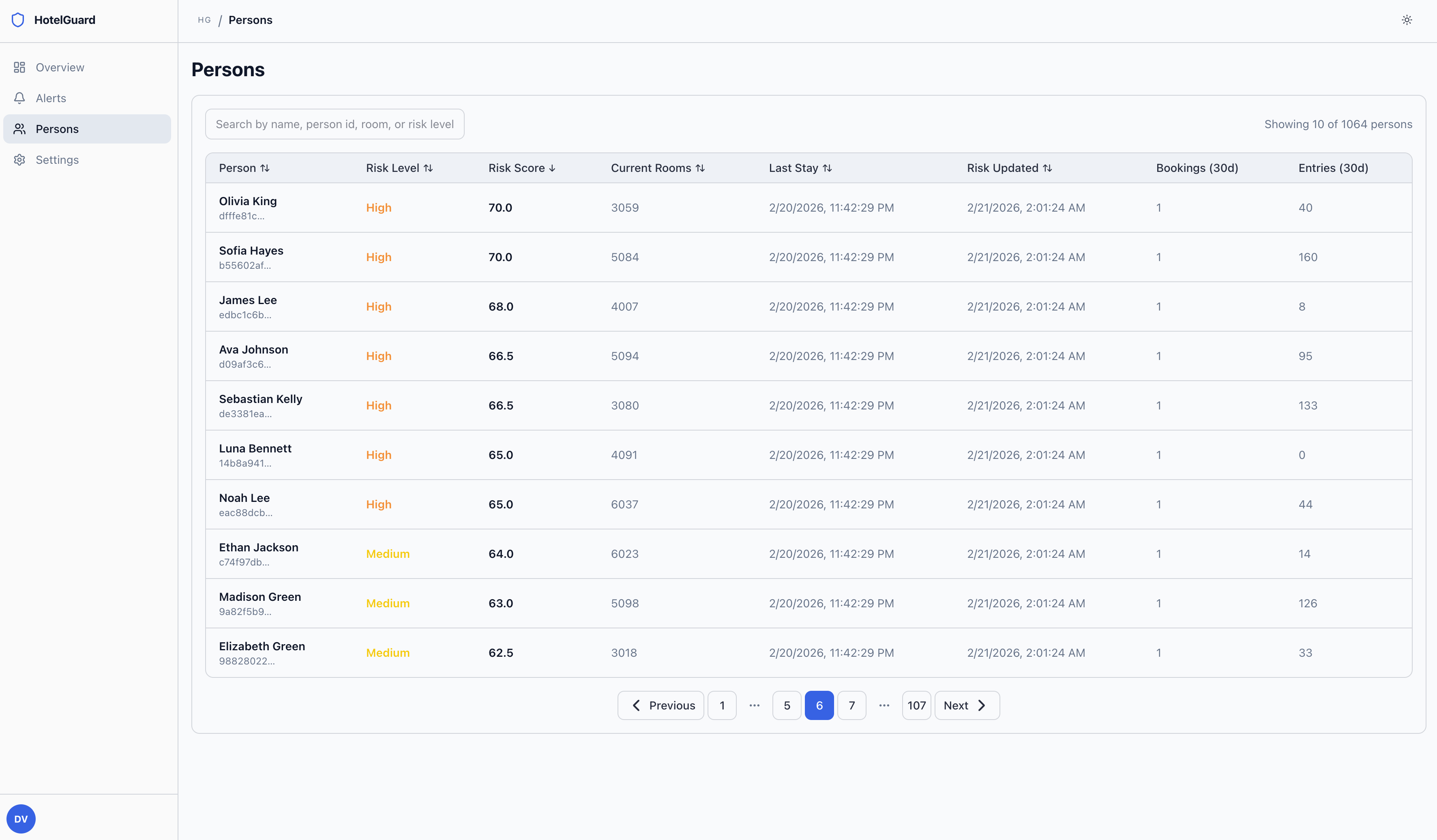
A list style view of potential high risk individuals.
-
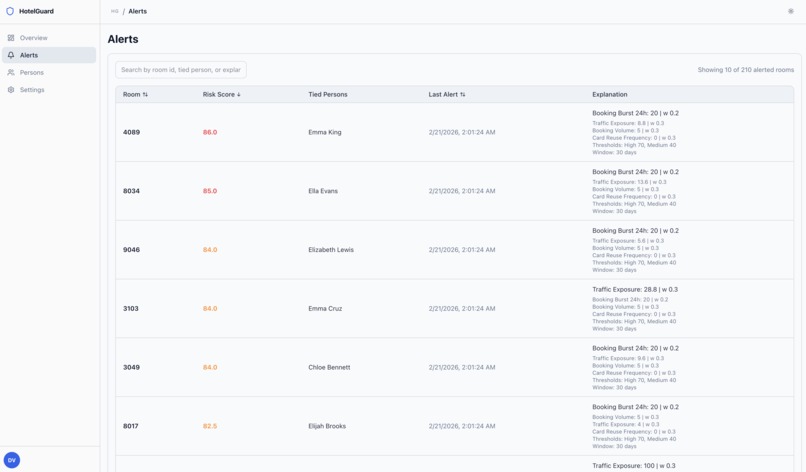
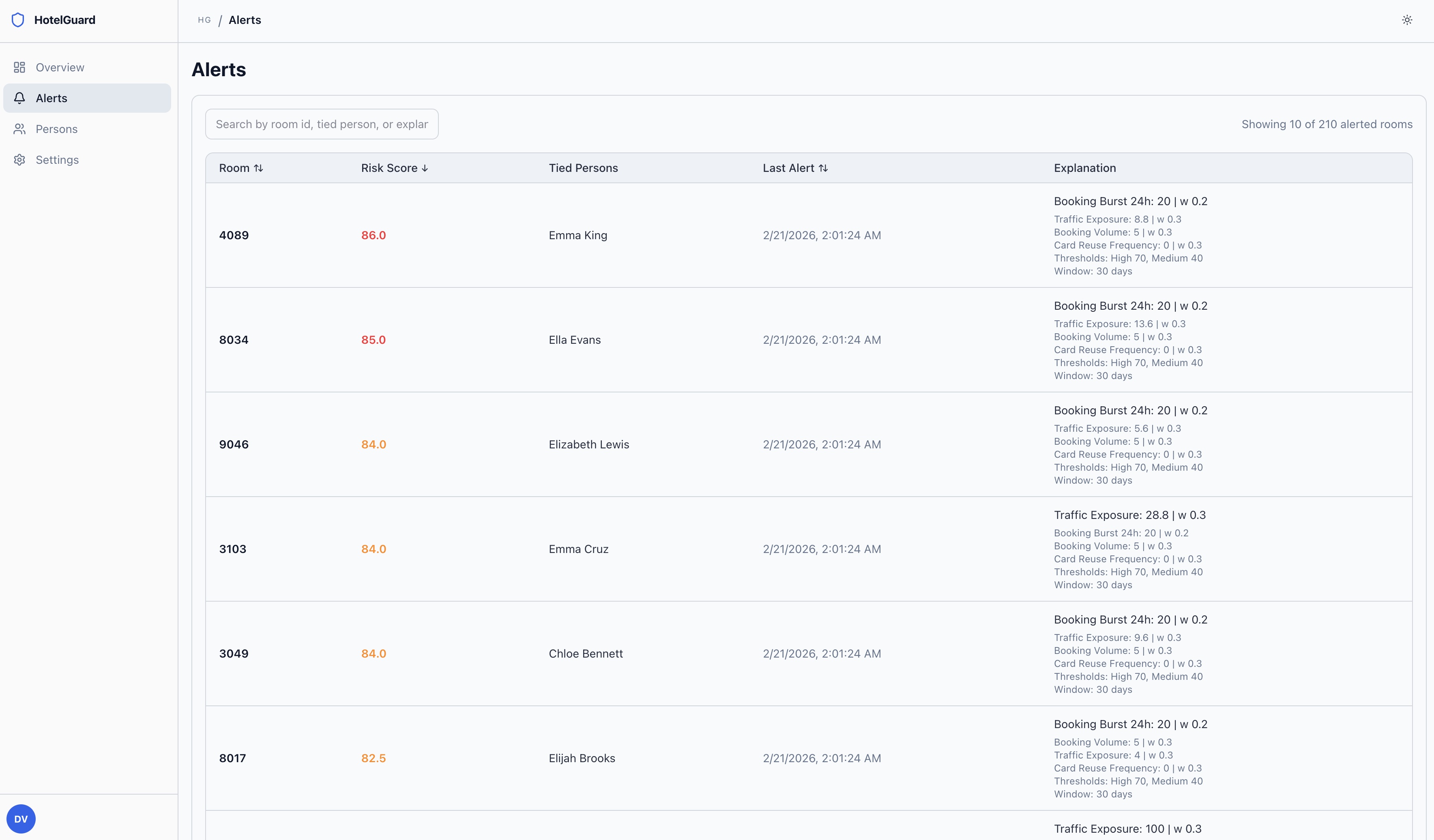
A list style view of the most recent alerts for odd behavior.
Inspiration
Las Vegas leads the hospitality industry, which is a common hub for sex trafficking victims. Hotel staff are trained to have an eye for odd behavior amongst guests, however, the vast majority of sex trafficking incidents go completely unnoticed. We created HotelGuard as an attempt to analyze highly specific scenarios in a hotel setting by utilizing multilevel processing layers, consisting of, data ingestion, computer vision, video processing, and NLP. Our product assists to bridge the gap between abstract data and digestible information.
What it does
HotelGuard acts as a friendly web interface for hotel staff to view high-risk guests and rooms. The interface provides real-time hot spots in the hotel. High-risk individuals are cross-referenced via video footage flagged as odd incidents. A live alert feed is provided to alarm staff of incident reports.
How we built it
Our web interface includes a 3D heat model that mimics hotel floor plans. The heat model is populated by a real-time alert system that captures anomalies related to sex trafficking. Our risk-level system employs a weight-based algorithm to determine how likely an individual or room may be linked to sex trafficking. If our cameras detect odd behavior around high risk rooms, our system uses AI to analyze the video footage for any potential threats or victims. Any important information gathered from the AI video analysis is then routed to the user dashboard.
Challenges we ran into
One of the biggest challenges we faced early on was figuring out how to get the video detection system to track of the number of individuals leaving and entering a room, along with a running count of the amount of people in the room. To solve this we used an object detection model to detect humans and graph them in a 2D space. We then used their positions on the plane to decide whether or not their bodies have crossed a certain boundary to consider them in or outside of a room.
Accomplishments that we're proud of
We are most proud of connecting several different processes to achieve one goal. Additionally, we are proud of our optimized 3D rendering interface and video processing analysis.
What we learned
Our entire team was fairly new to working with object detection software. So, throughout the day a lot of our work was heavily focused on understanding how object detection models. learning about these models even helped us plan an implementation to review selective footage with AI.
What's next for HotelGuard
In the future, HotelGuard could be directly implemented into hotel staff services, utilizing their existing guest data for introducing risk factor. We would also advance our AI video analysis technique to accommodate for further edge case scenarios in a real hotel setting. With implementation, HotelGuard could act as a reliable tool to combat sex trafficking.
Built With
- gemini2.5
- next.js
- react3fiber
- shadcn
- supabase
- tailwind
- typescript
- vercel
- yolov8

Log in or sign up for Devpost to join the conversation.