-
-
HotBot
-
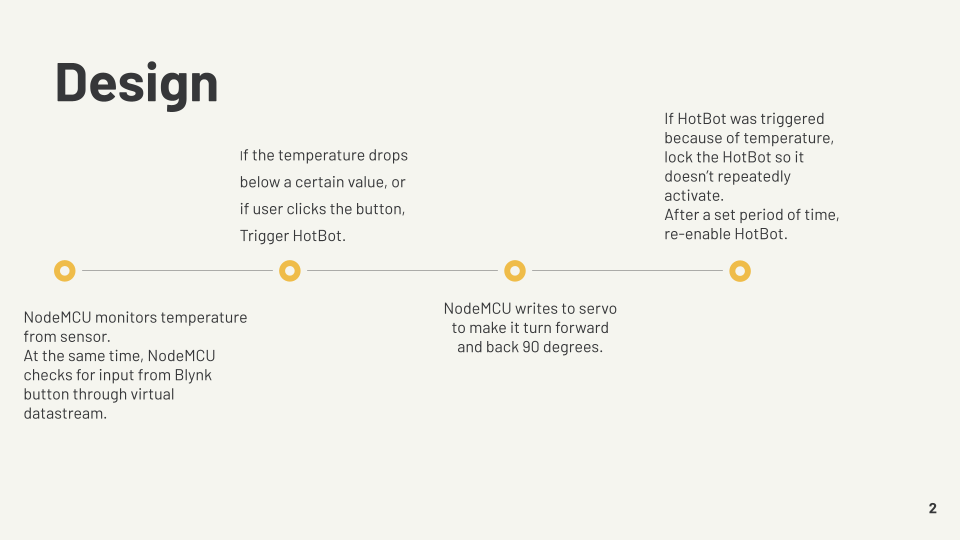
Design
-
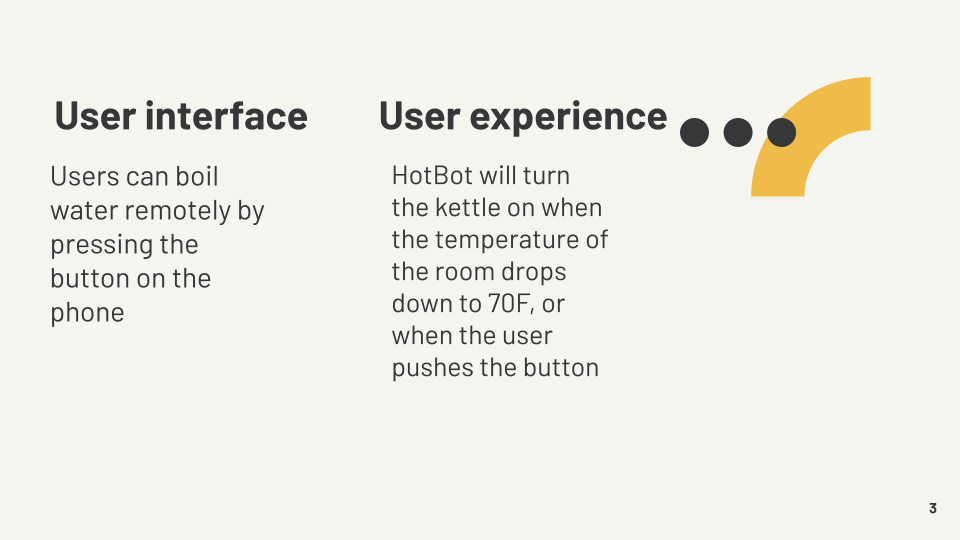
User interface and experience
-
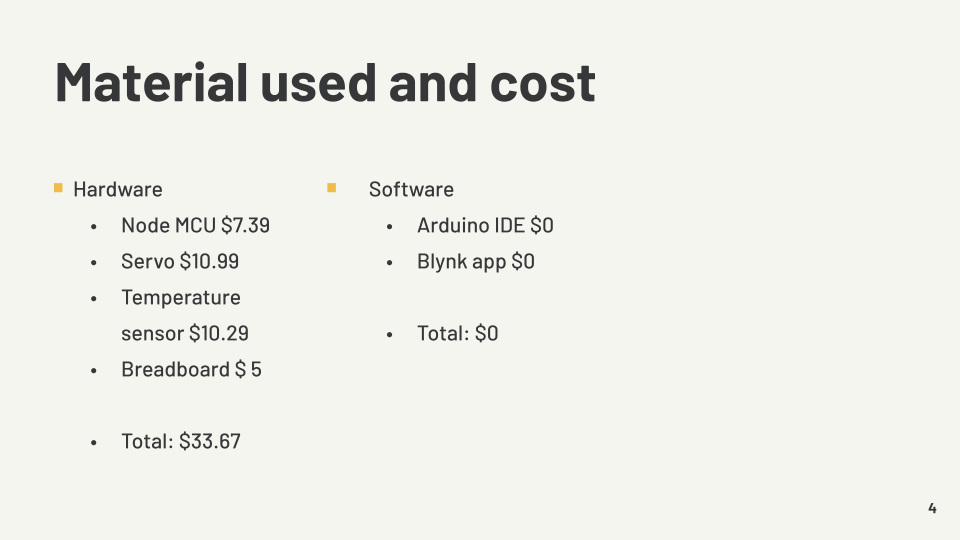
material used and cost
Inspiration
We were inspired to create HotBot because our dorms are too cold and we always need something hot to warm us up.
What it does
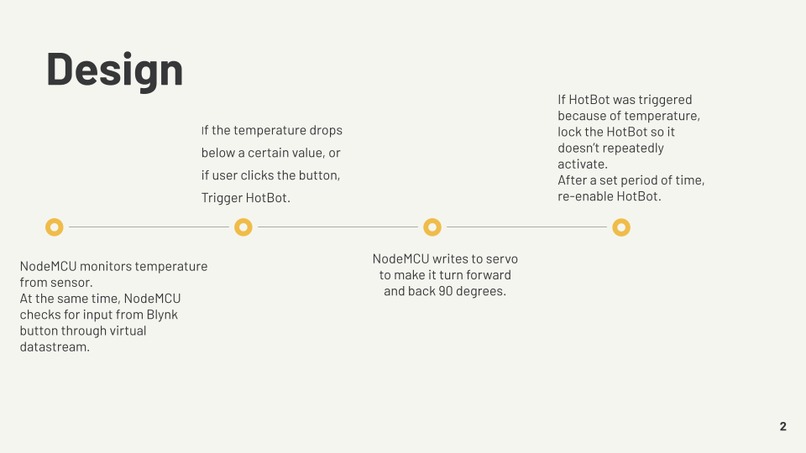
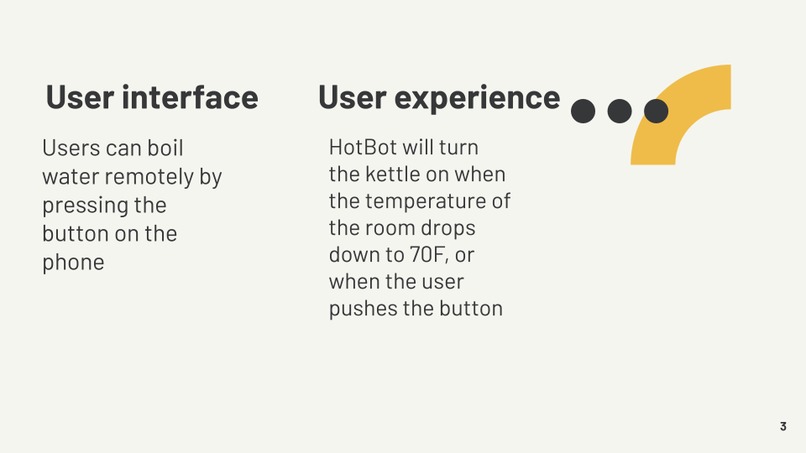
Users can activate HotBot by pressing a button on the Blynk app, or HotBot will sense if the room is below a certain degree and turn the kettle on itself.
How we built it
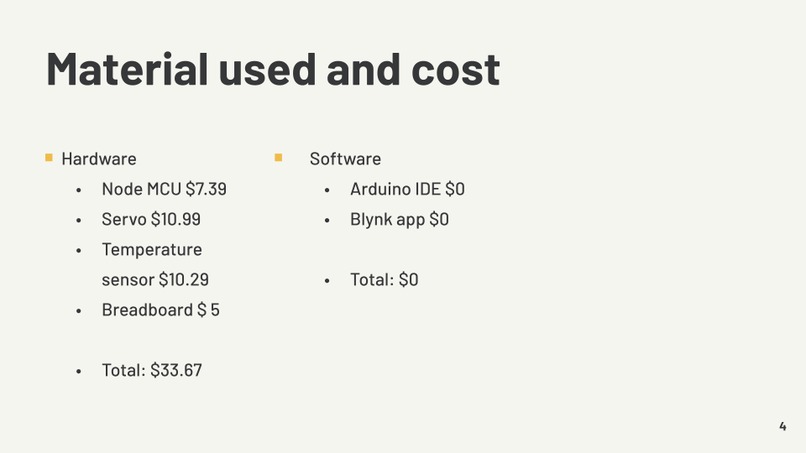
We used a servo that will push down the lever on the kettle when HotBot is activated, a temperature sensor that senses the temperature of the room, and Node MCU to connect to the Blynk app.
Challenges we ran into
We encountered some issues when we try to connect to the Node MCU and the Blynk app. Other challenges were figuring out how to actually attach the device to the kettle in such a way that it'd actually work properly.
Accomplishments we're proud of
our product actually solved a problem we have in real life and having the product could actually make our lives easier.
What we learned
How to work with Blynk, and how to activate an actuator in different ways, including sensors and the Blynk app.
What's next for HotBot
instead of connecting it to a servo that pushes down the lever on the kettle, we could just connect to the kettle itself, so it could turn on and off without an extra device.
Built With
- arduino
- blynk

Log in or sign up for Devpost to join the conversation.