-
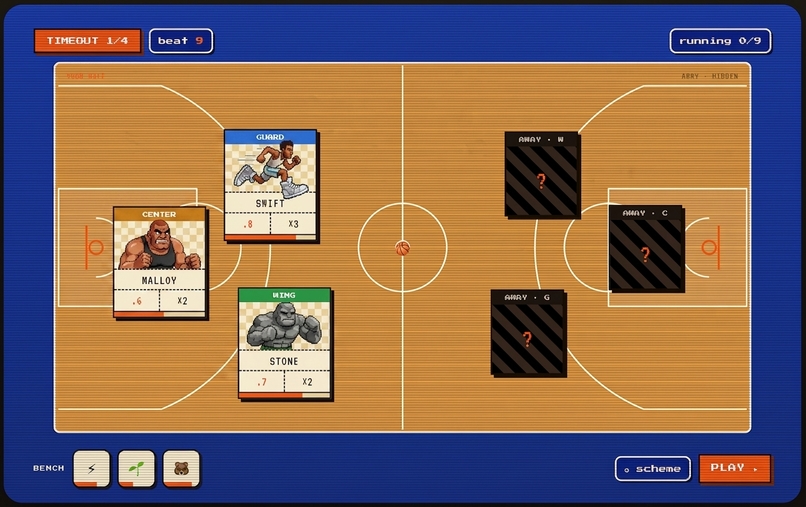
Game HUD (AI-assisted mockup)
-
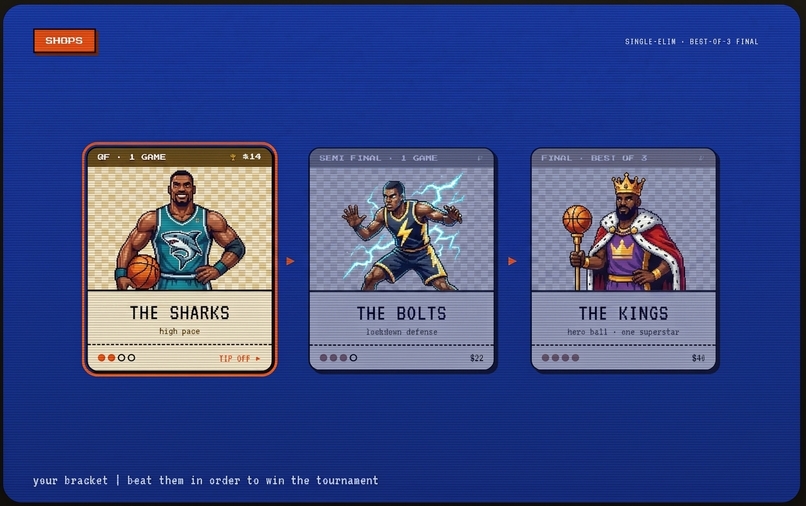
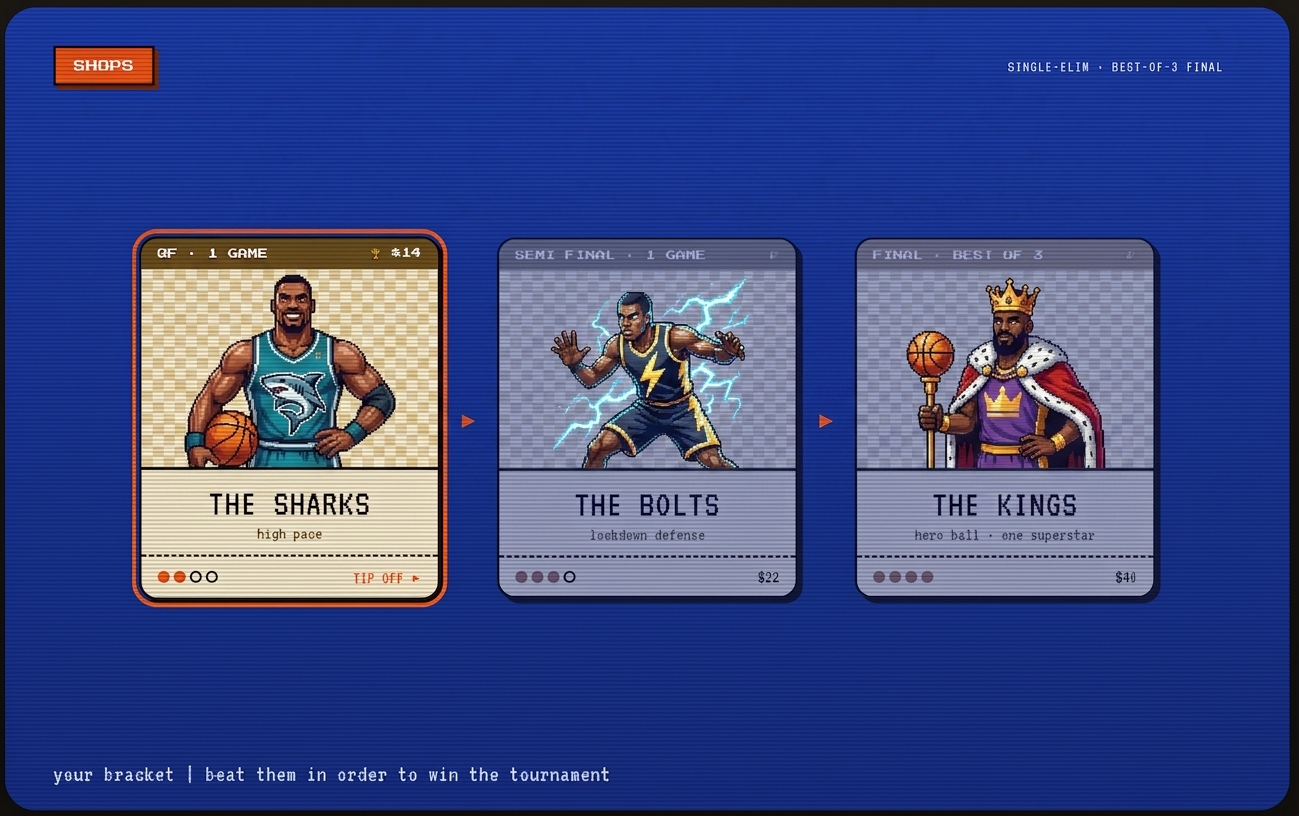
The OPPONENTS BRACKET (AI-assisted mockup)
-
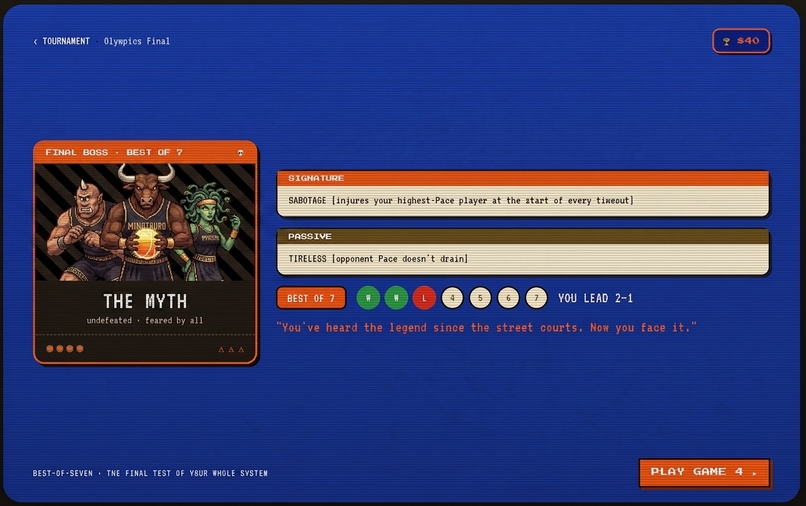
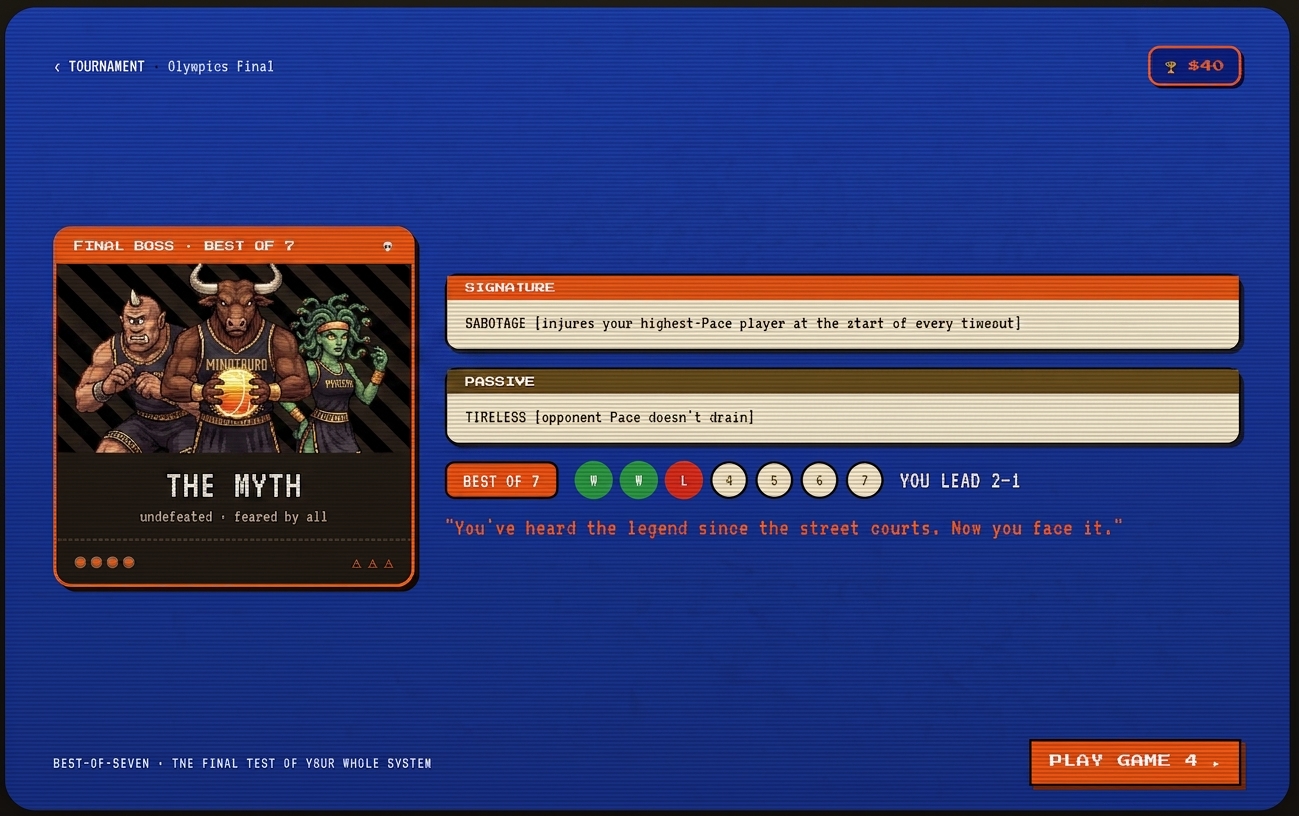
FINAL BOSS (AI-assisted mockup)
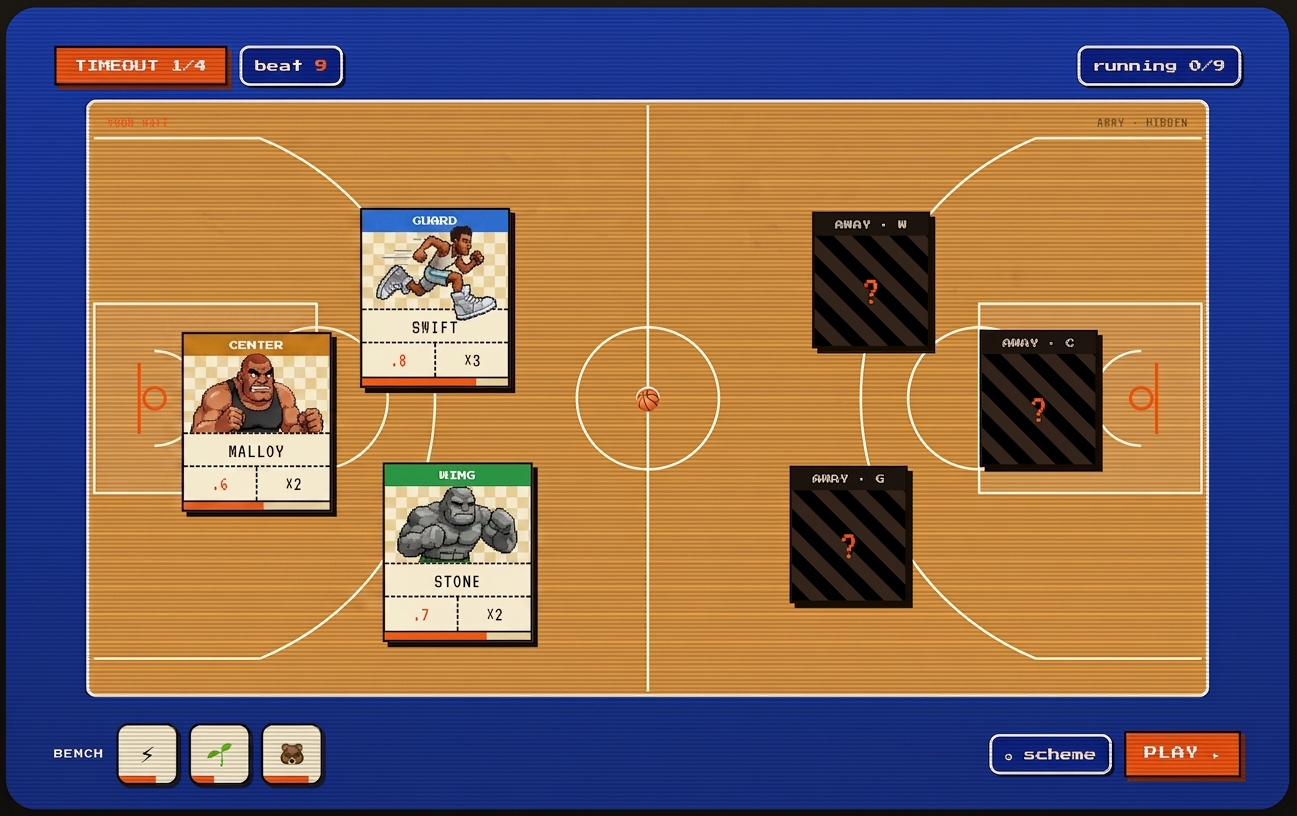
Hot Hand
Inspiration
I fell in love with the "watch a planned system suddenly explode" feeling of roguelikes like Balatro and Gambonanza, and asked what that engine would feel like reframed as basketball team management. The world clicked when I gave it a premise: what if basketball had been taken over by mythological creatures, and humans were the underdogs? Aesthetically I chased golden-age arcade hoops like NBA Jam, chunky NES HUDs, the big-character roster of Punch-Out!!
What it does
Hot Hand is a card-based 3v3 basketball management roguelike set in a world where the greatest tournaments are dominated by mythological creatures. You play the only human team: a prodigy GM who can't match them physically but understands the game better than anyone, out to prove that system design beats supernatural talent. A match is four timeouts. Each one you pick a lineup (Guard, Forward, Center), optionally play a scheme that bends the rules, and resolve scoring through one readable formula ( PACE × ATTACK = POINTS ) where Pace is both your multiplier and your stamina, making every decision a trade-off between scoring now and surviving later. Between matches you spend your winnings in the shop and climb a World Tour bracket from a local street court to the top, facing rival creatures with distinct identities and a mythical final boss played best-of-seven.
How we built it
I produced the documentation with Claude Design for UI mockups, Nano Banana for pixel-art illustrations, and quick Claude Code prototypes to test and validate core mechanics before committing to them.
Challenges I ran into
The hardest design problem was finding a core mechanic that is simple to read, scales with the player's system, and never collapses into a single obvious answer. Flat additive scoring is immediately solved — you just stack your highest-Run players. I needed a formula that keeps producing real trade-offs. PACE × ATTACK does this because Pace is both the multiplier and the stamina budget: spending it aggressively rewards you now and punishes you by the fourth timeout, and a well-built roster doesn't just score more, it scores exponentially more.
What we learned
Proving the single match loop first saved us from building complex systems on a foundation that hadn't held up yet. We learned to treat "the player can't explain their score" as a design failure, and to make Pace serve double duty as both multiplier and stamina, so the lineup screen becomes a genuine trade-off.
What's next for Hot Hand
Build the real thing.
Built With
- claude
- figma
- gemini
- google-docs


Log in or sign up for Devpost to join the conversation.