💡 Inspiration
Managing a PG or hostel involves much more than managing rooms. Hostel owners continuously deal with tenant complaints, maintenance requests, vendor coordination, quote comparison, approvals, rent follow-ups, and keeping track of completed work.
We noticed that many of these tasks are repetitive but still require several manual steps.
For example, a simple message like “Room 12 ka tap leak ho raha hai” can require the owner to identify the tenant, understand the issue, find a plumber, compare options, get approval, schedule the work, notify the tenant, and record what happened.
We wanted to build an AI system that could do more than answer questions.
That led to HostelOps — an AI-powered operations manager for PG and hostel owners.
Our inspiration was to make AI useful in the real world by allowing it to coordinate and execute operational tasks while keeping the owner in control of important decisions.
🚀 What it does
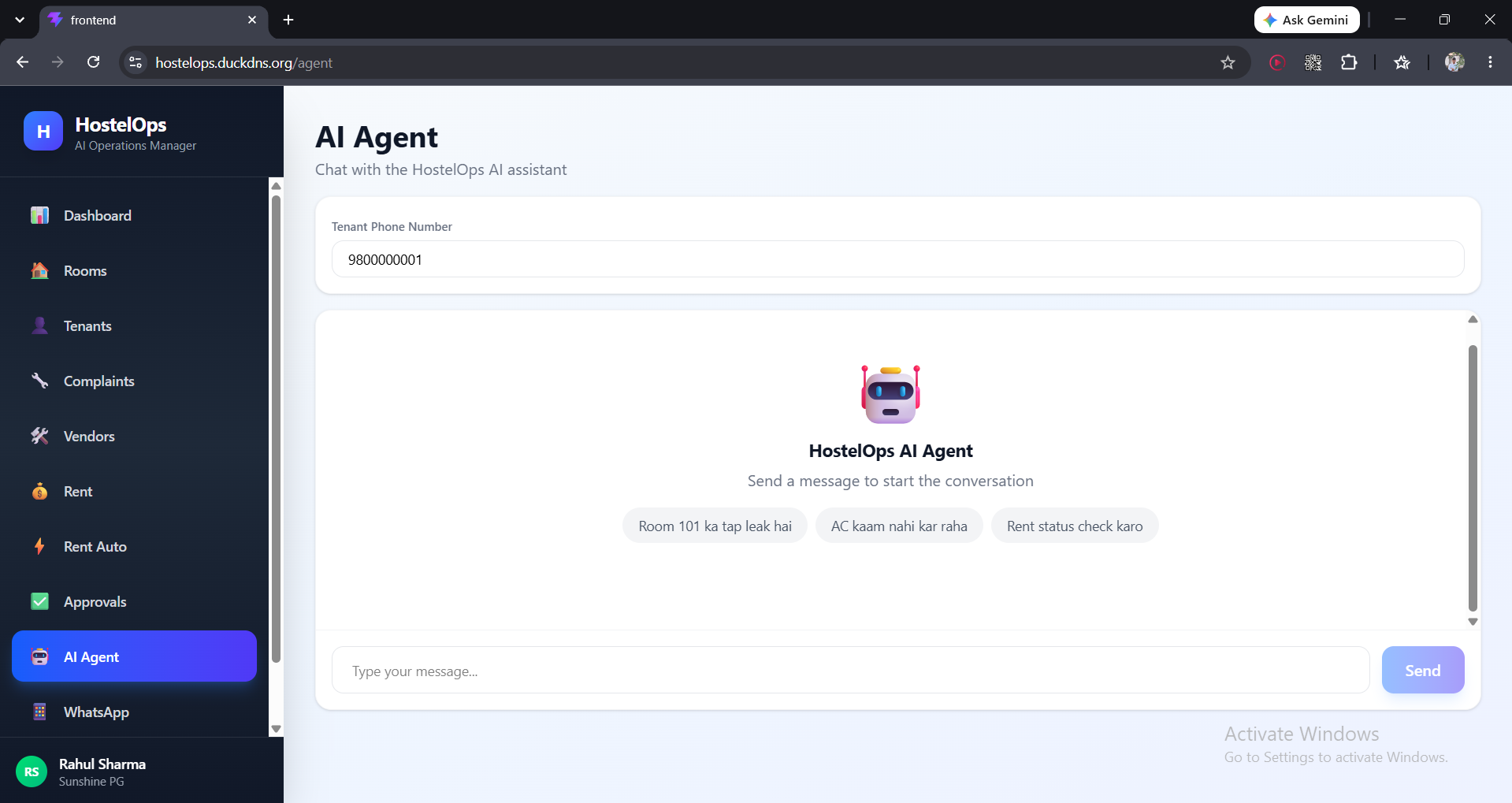
HostelOps turns natural-language requests into actionable operational workflows.
An owner can simply provide a request such as:
“Room 12 ka tap leak ho raha hai. Rahul tenant hai.”
The HostelOps agent can:
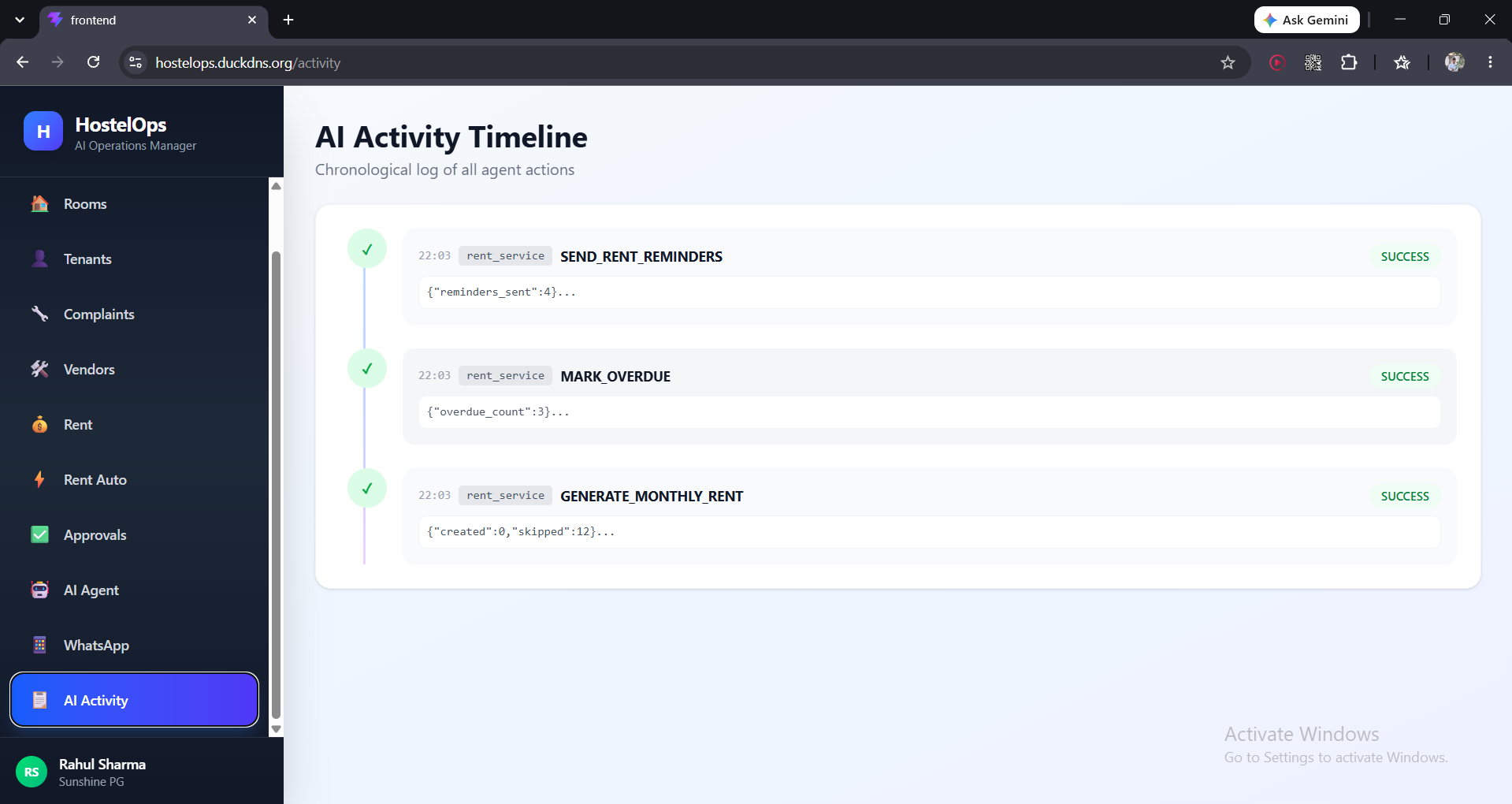
Understand the request and identify its intent. Identify the relevant tenant and room. Create a structured maintenance complaint. Classify the issue. Search available vendors. Compare vendor options and quotes. Recommend an appropriate option. Request human approval when required. Create the maintenance job after approval. Assign the vendor. Notify the tenant. Log the actions performed by the agent.
The core workflow is:
Natural Language Request → Complaint → Vendor Discovery → Comparison → Human Approval → Maintenance Job → Notification → Activity Log
The key idea is that HostelOps doesn't stop at generating a response. It uses tools to perform actual operational work.
🛠️ How we built it
HostelOps is built around an agentic architecture using the Strands Agents SDK and Amazon Bedrock.
The application consists of:
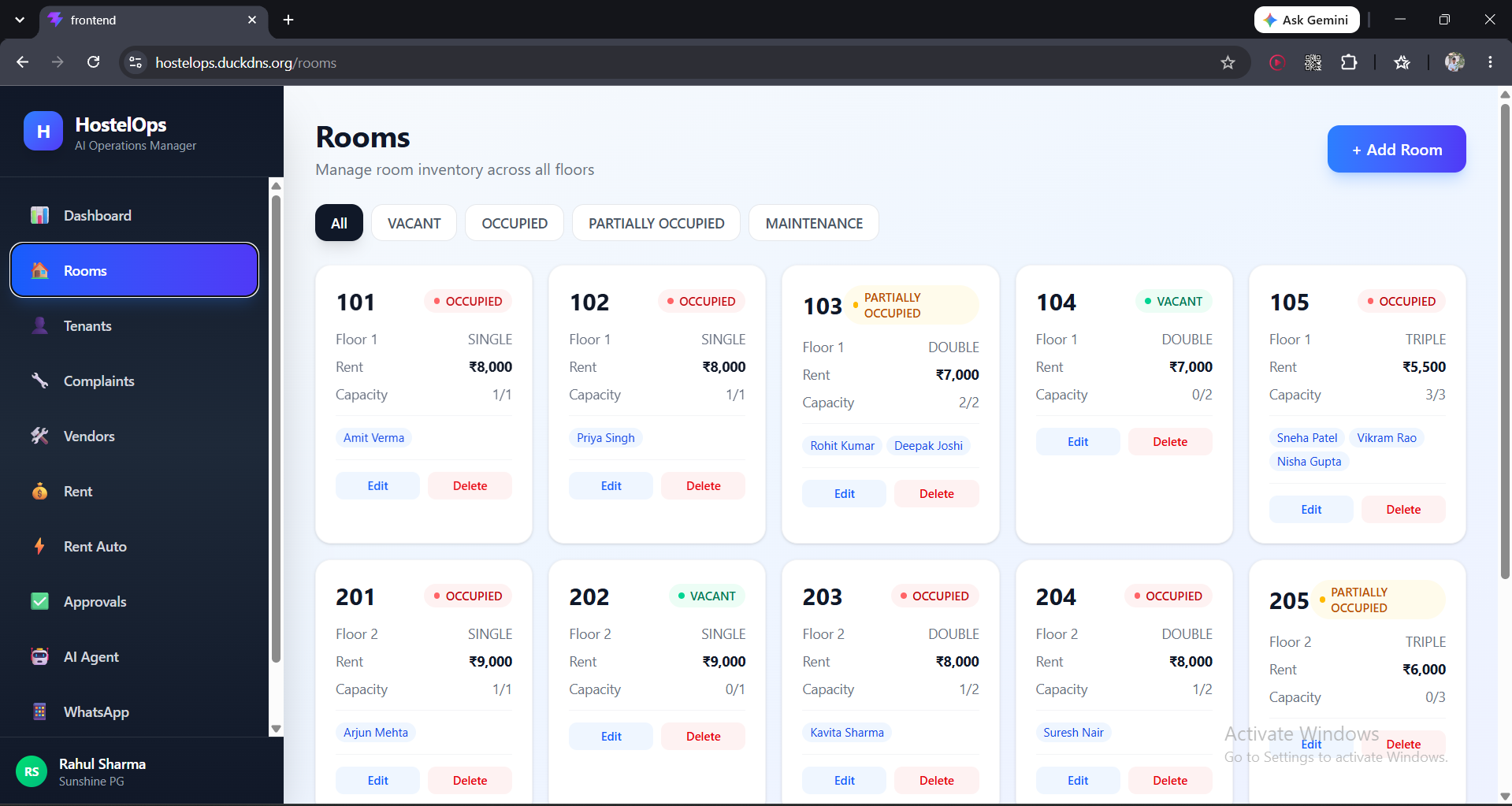
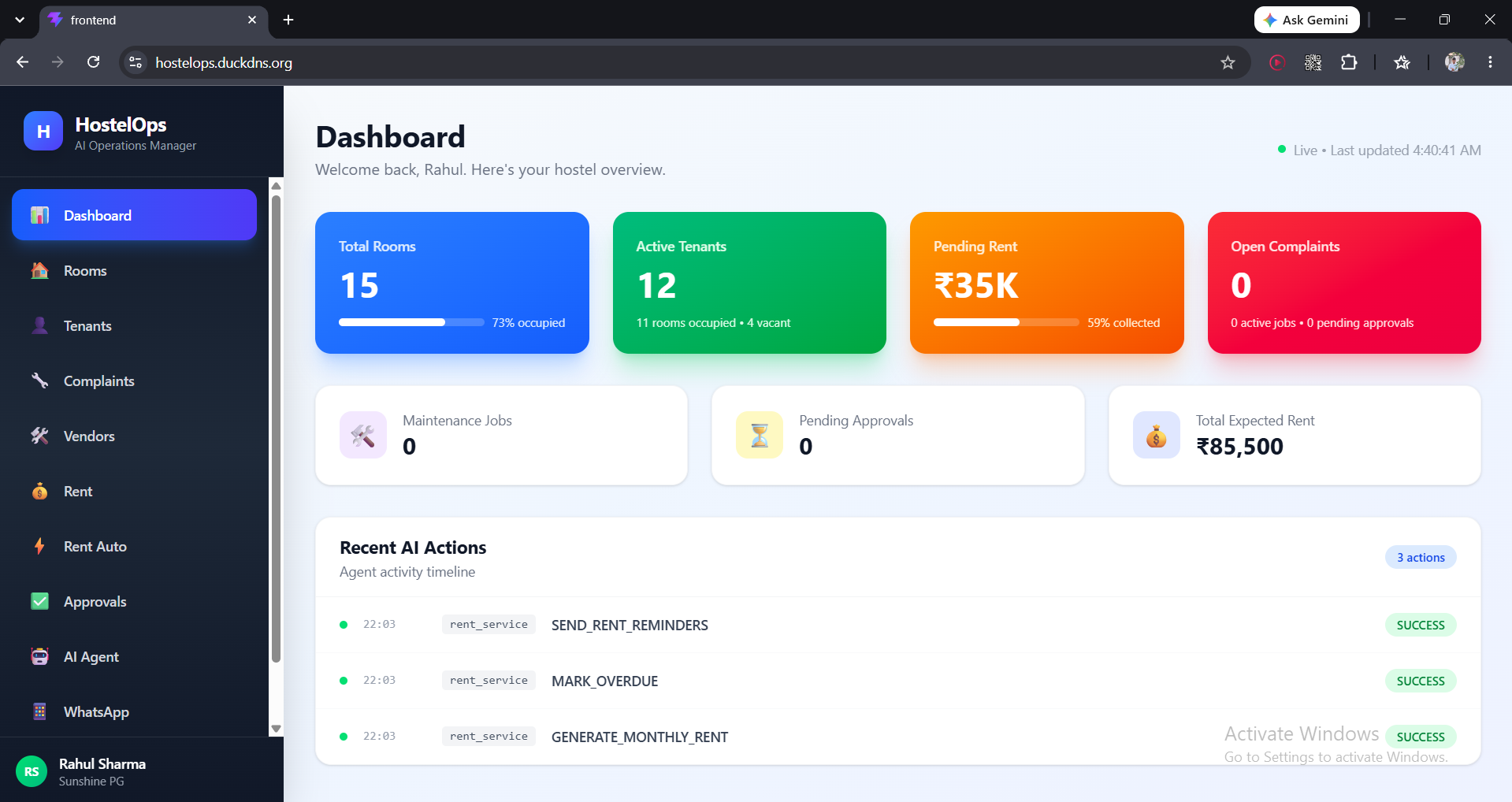
React + TypeScript — frontend dashboard Python + FastAPI — backend and REST APIs Strands Agents SDK — agent orchestration Amazon Bedrock — foundation model powering the agent MySQL — operational data storage
The architecture follows:
React → FastAPI → Strands Agent → Amazon Bedrock → Tools → MySQL
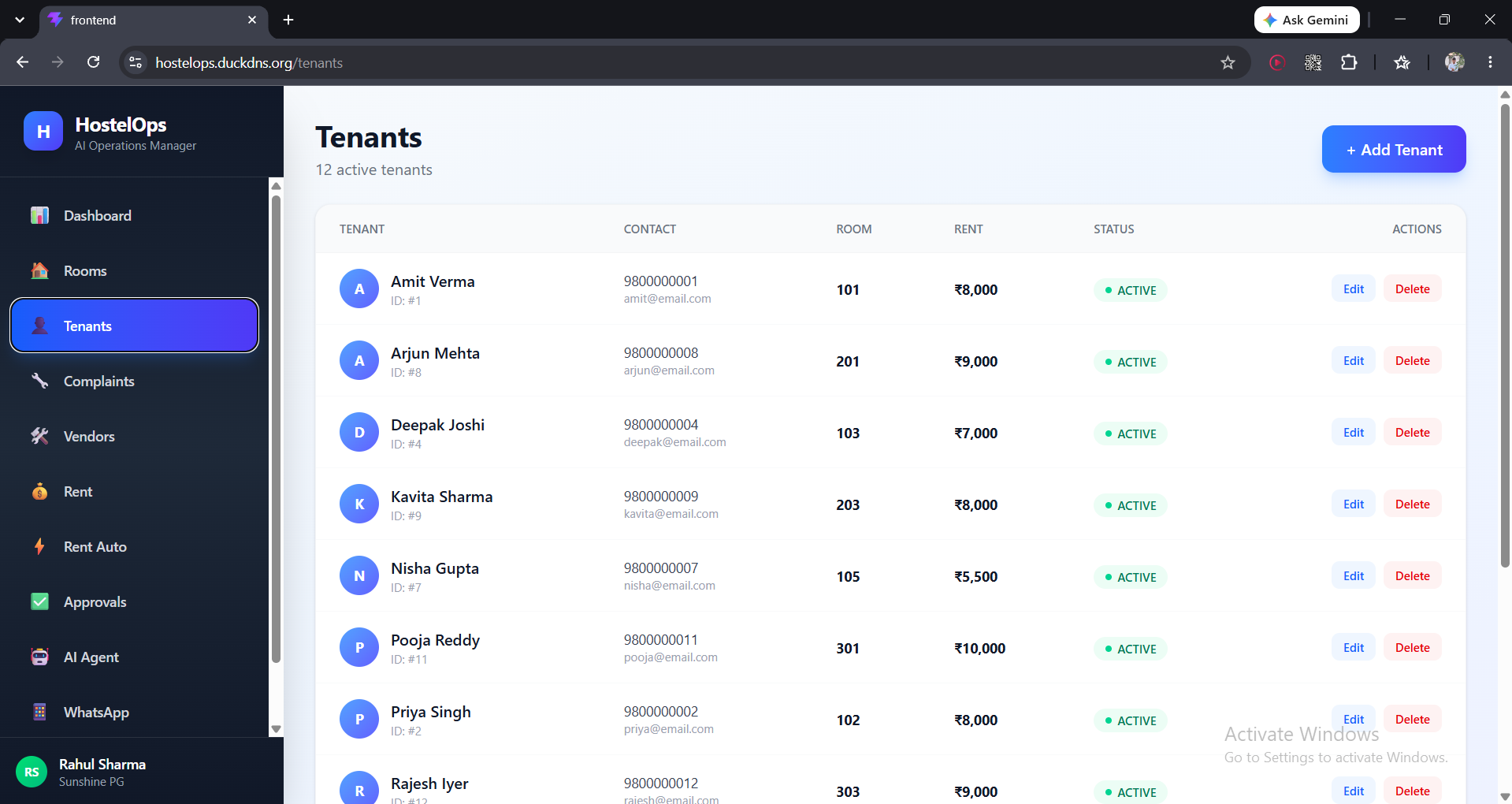
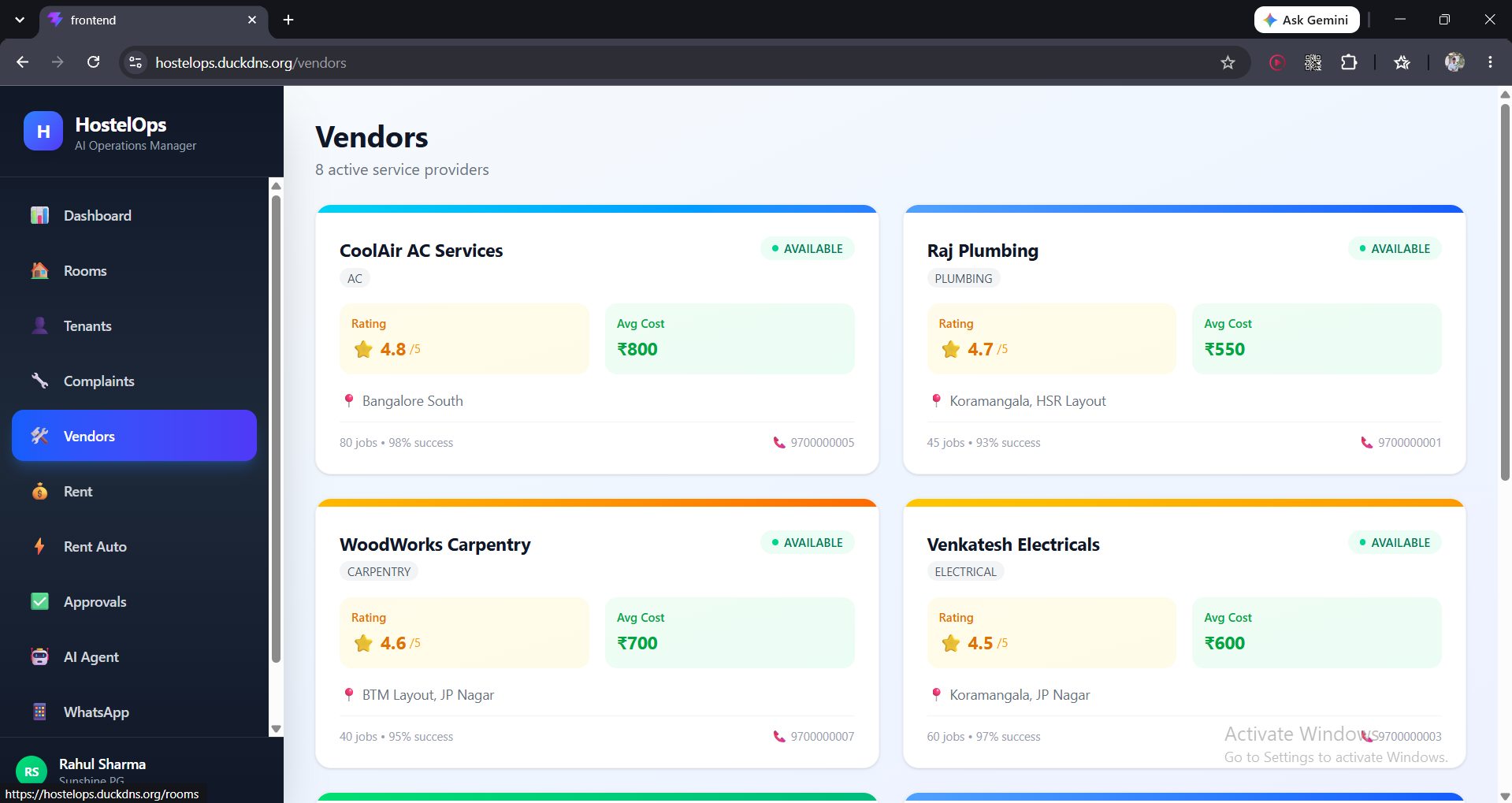
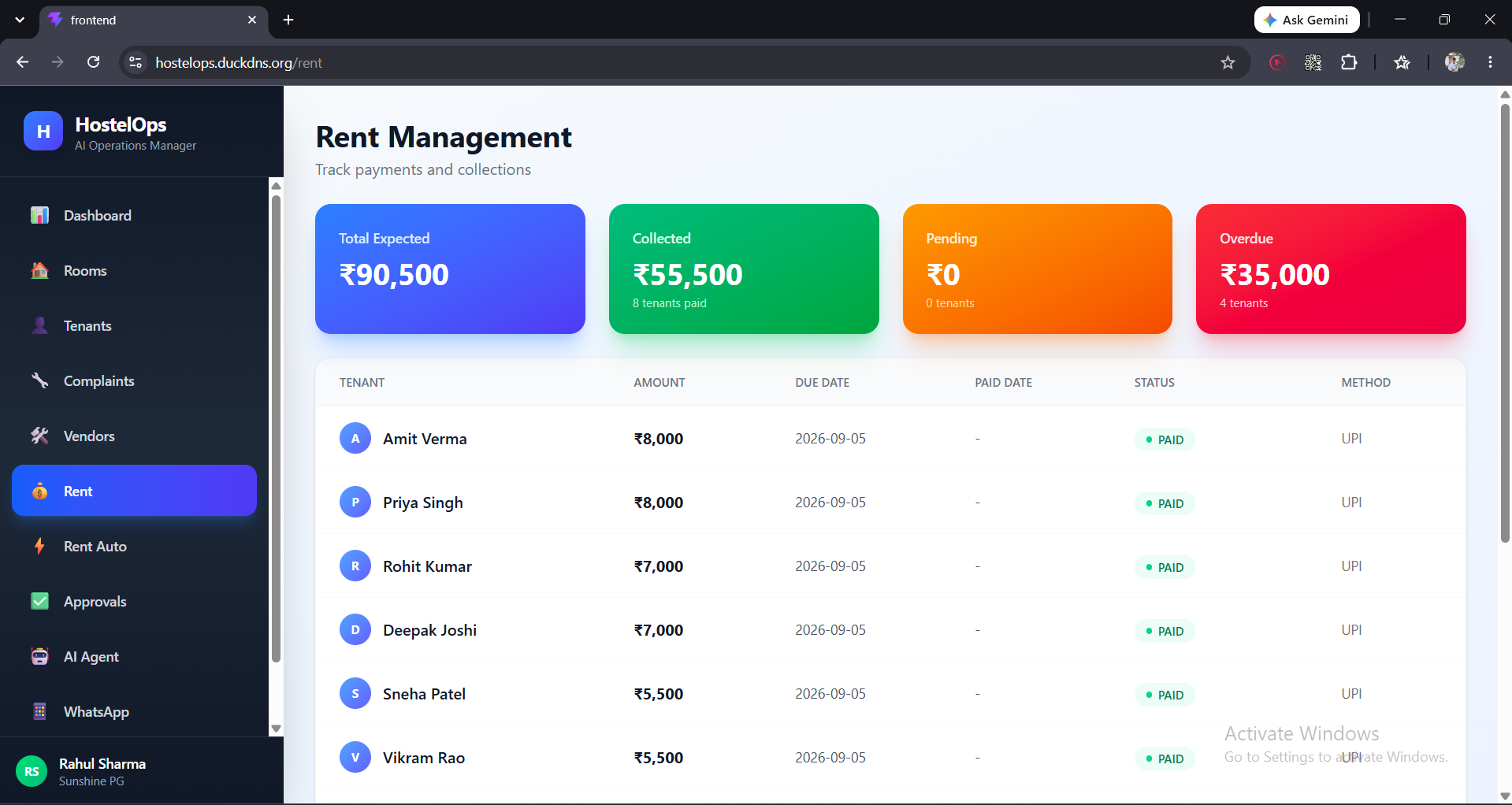
We created modular tools that allow the agent to interact with different parts of the hostel management system, including tenant, room, complaint, vendor, maintenance, notification, finance, and approval operations.
The agent follows a multi-step workflow rather than a fixed response script. It can determine what information is needed, select appropriate tools, evaluate their results, and continue the workflow.
We also implemented a human-in-the-loop approach. When an action requires owner approval, the agent pauses and presents the recommendation to the owner before continuing.
🧩 Challenges we ran into
One of the biggest challenges was moving from a traditional application mindset to an agentic workflow.
Building a chatbot that generates a response is relatively straightforward. Building an agent that can safely perform a sequence of real actions is much more challenging.
We had to think about:
How the agent should decide which tool to use. How multiple tool calls should be coordinated. How the agent should use the results of previous actions. How to maintain consistent operational data. When the AI should stop and ask a human for approval. How to make the workflow reliable instead of just producing plausible text. How to keep the system understandable and auditable.
Another challenge was designing the application so that AI reasoning and traditional backend operations work together cleanly.
We learned that a useful AI agent needs clear tools, structured data, controlled actions, and well-defined boundaries, not just a powerful language model.
🏆 Accomplishments that we're proud of
We are proud that HostelOps demonstrates an AI agent performing an end-to-end operational workflow rather than simply acting as a conversational assistant.
A single natural-language request can be transformed into:
Request → Tenant/Room Identification → Complaint → Vendor Search → Comparison → Approval → Maintenance Job → Notification → Activity Log
We are particularly proud of the human-in-the-loop approval system, because it allows automation while keeping the hostel owner in control of consequential decisions.
We also built the application around modular tools and a clear agent architecture, making it possible to extend the system with additional operational capabilities in the future.
Most importantly, HostelOps demonstrates our vision of using AI to handle the repetitive operational work that small businesses deal with every day.
📚 What we learned
Building HostelOps taught us that creating an AI agent is very different from simply integrating an LLM into an application.
We learned how important it is to:
Design AI around real workflows and real actions. Give agents well-defined tools instead of expecting the model to do everything. Use structured application data to ground agent decisions. Build human approval into workflows where appropriate. Treat reliability and observability as important parts of agent design. Separate the AI reasoning layer from the application's business logic. Think about AI as an operator that can take action, rather than just an assistant that can generate text.
Most importantly, we learned that the best agent experiences are not necessarily the ones with the most complicated AI. They are the ones that take a real problem, understand what needs to happen, and help complete the work from beginning to end.
Built With
- amazon-ec2
- amazon-web-services
- bedrock
- fastapi
- github
- mysql
- python
- react
- strands
- typescript


Log in or sign up for Devpost to join the conversation.