-
-
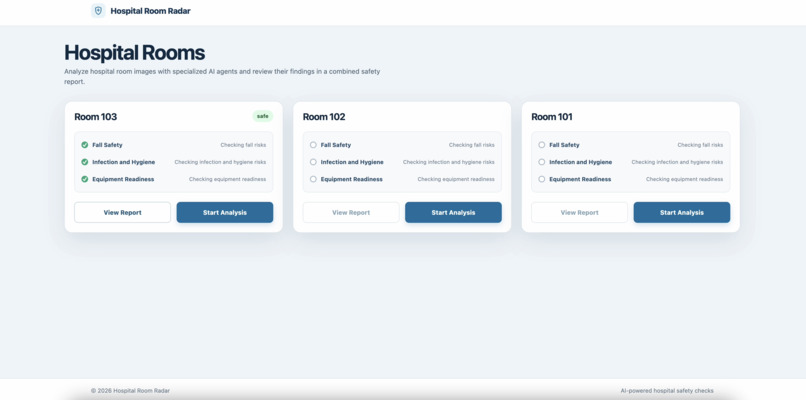
Dashboard
-
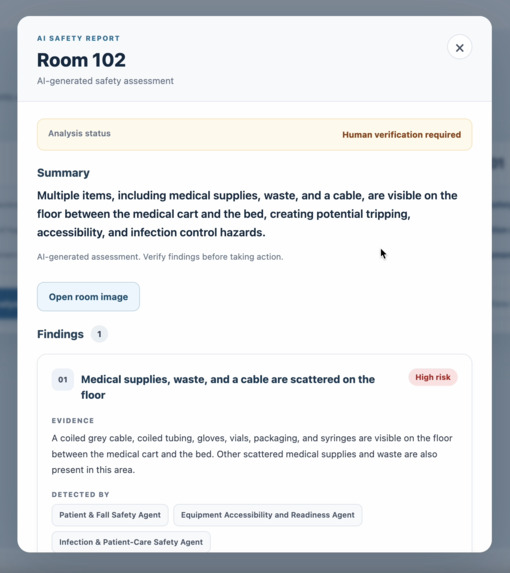
Report
-
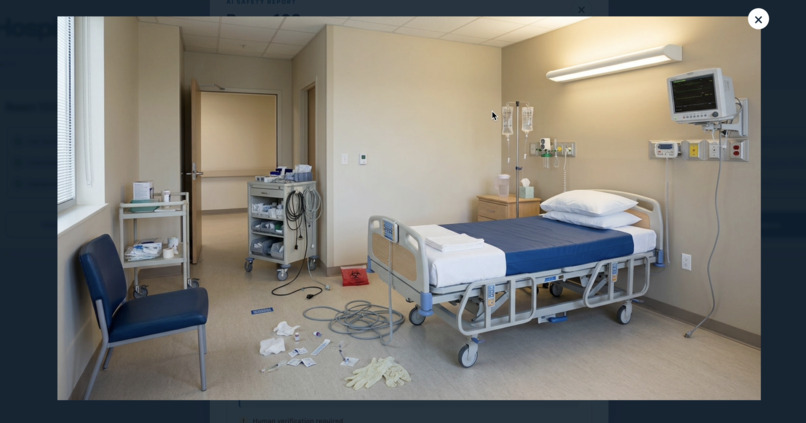
Mock Image Popup
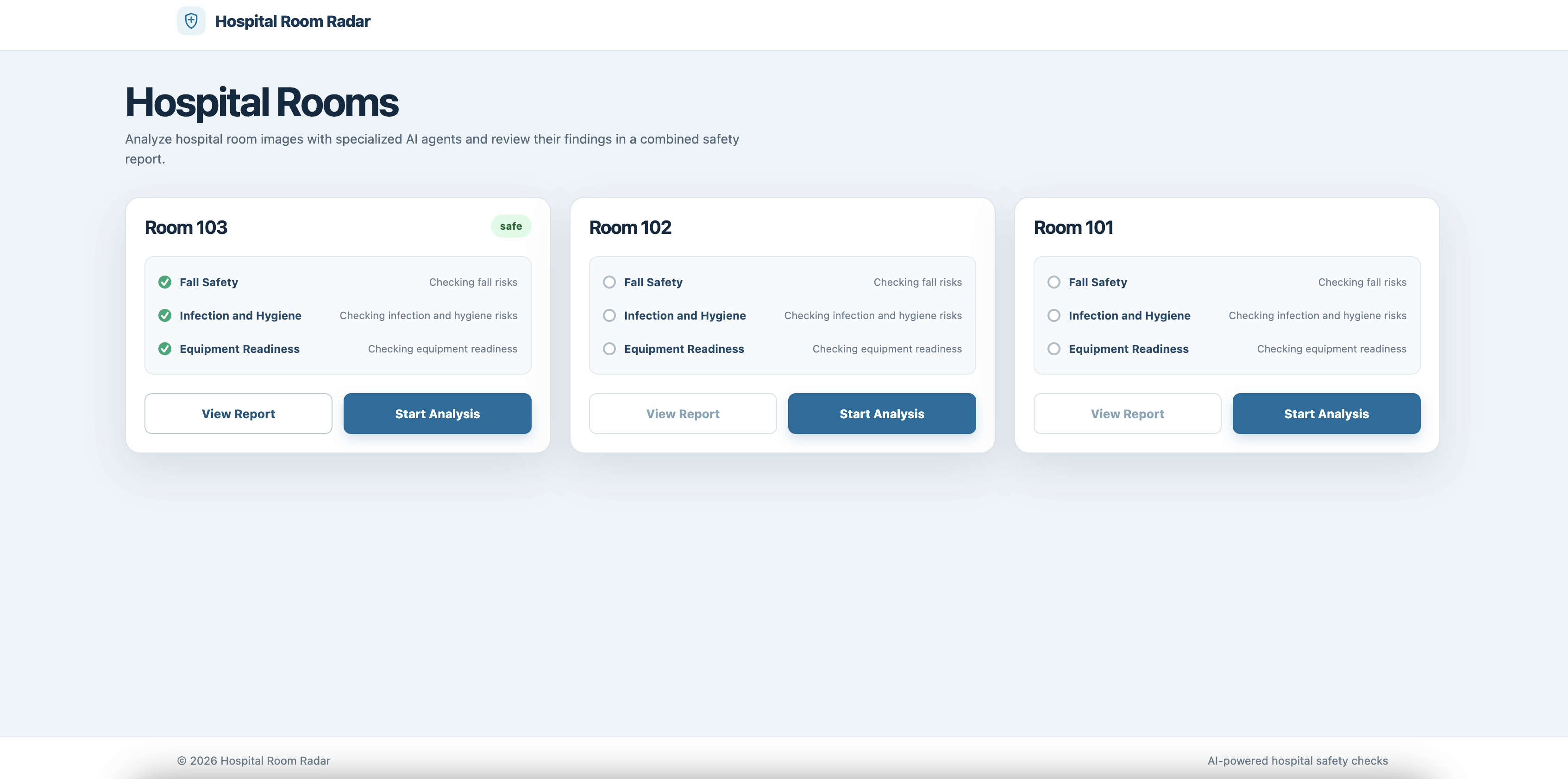
Inspiration
Our inspiration came from one team member's experience as a hospital escort volunteer. Part of her role involved checking patient rooms for safety concerns, such as making sure patients could reach their nurse call remote and that the room was clean. Since hospitals have many rooms to monitor, we wanted to explore how AI could help staff identify potential hazards more efficiently.
What it does
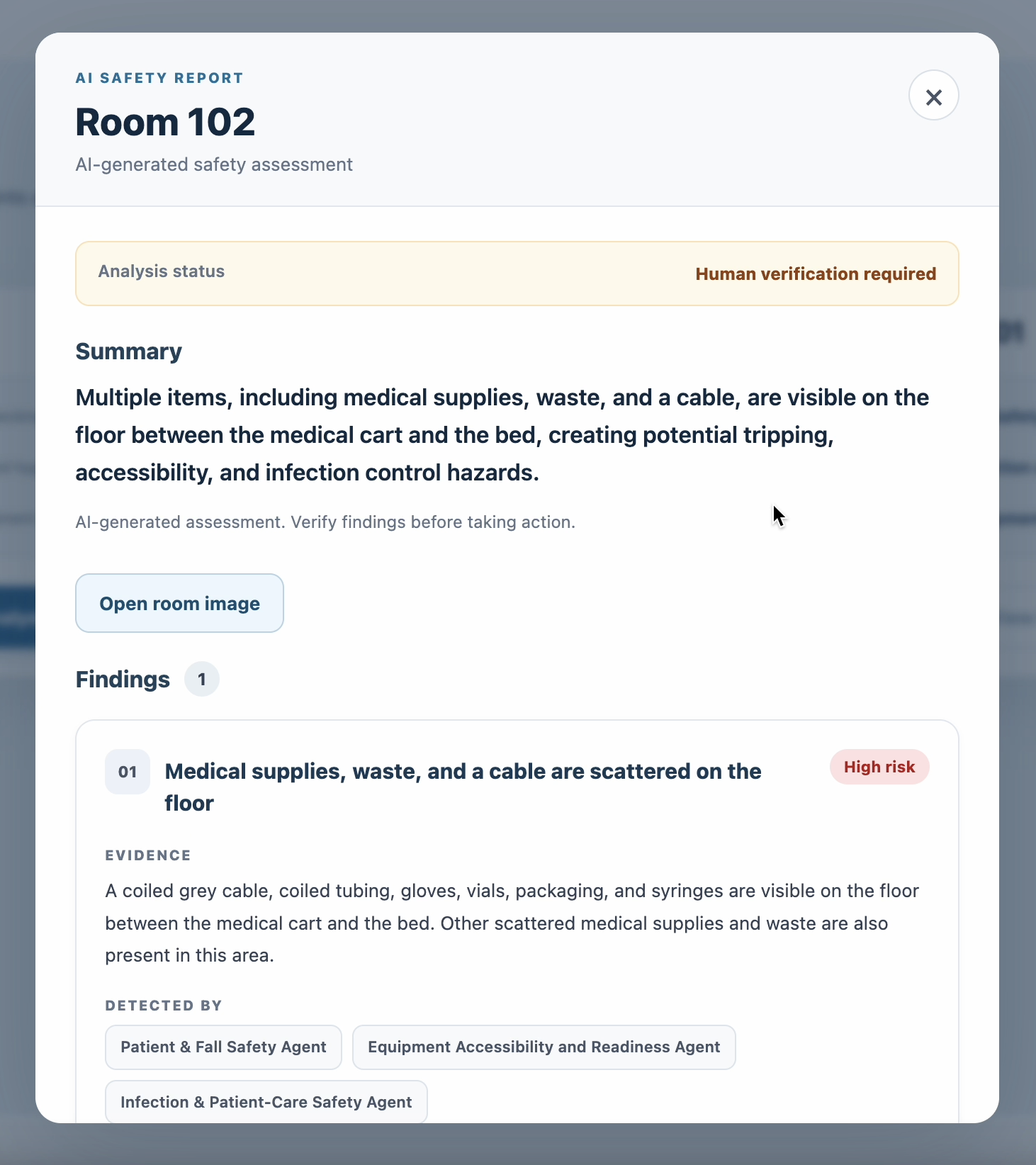
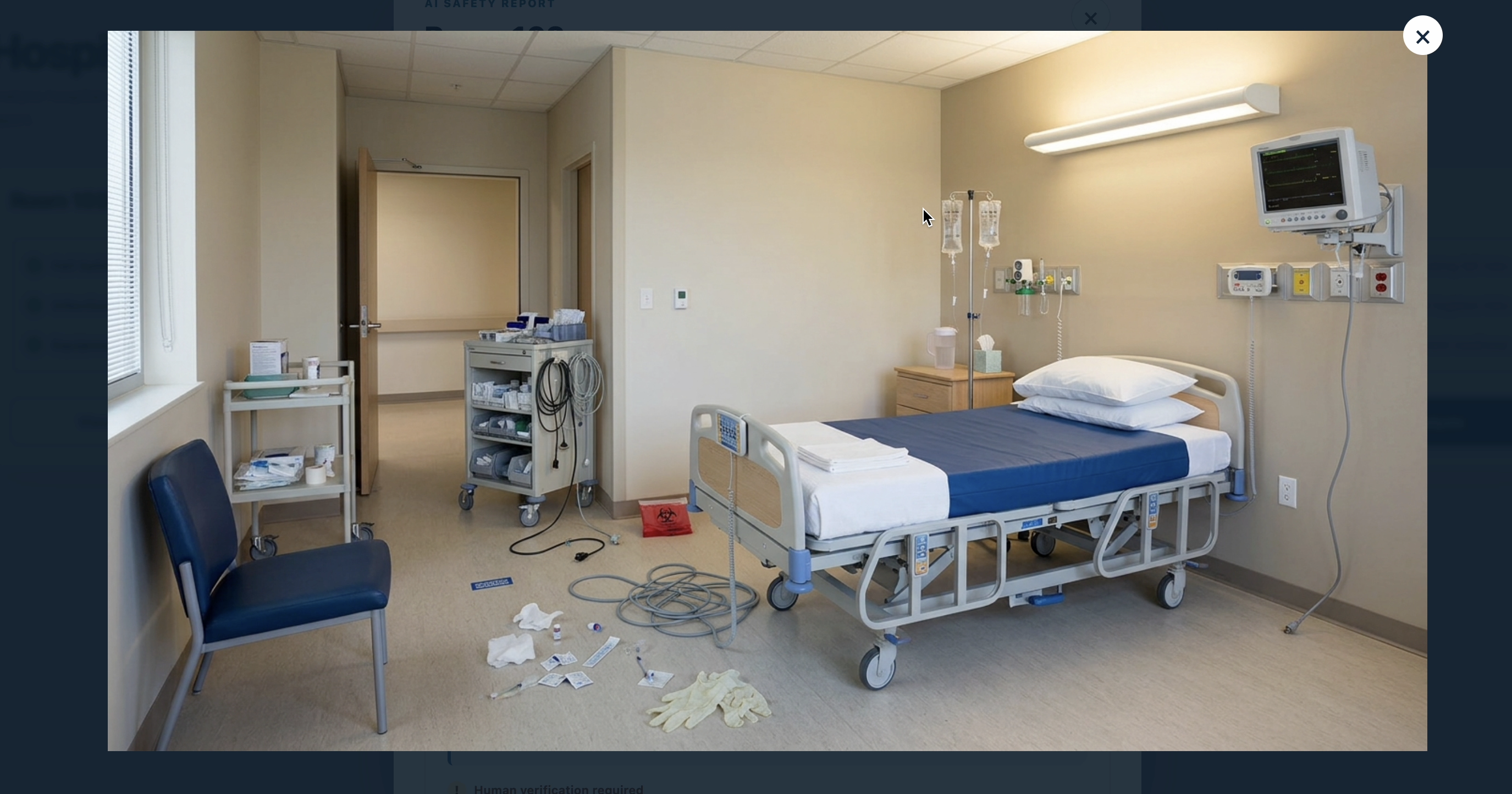
Hospital Room Radar analyzes hospital room images using three specialized AI agents to identify potential fall hazards, equipment accessibility issues, and hygiene concerns. The agents' findings are combined into a single report using Gemini, helping staff identify rooms that may need further inspection.
How we built it
We built the frontend using React and Vite, with a Python FastAPI backend. We used vision models through Groq to power our three specialized agents and Gemini to consolidate their findings into one report. Our MVP uses sample hospital room images with different hazards to demonstrate the analysis and reporting workflow.
Challenges we ran into
One challenge was making sure each agent focused on its own category of hazards instead of producing overlapping findings. We also had to combine the agents' results into a clear report without repeating issues or making unsupported assumptions about what appeared in an image.
Accomplishments that we're proud of
We're proud to have built a working, deployed MVP that brings multiple AI agents together in one application. We created specialized agents with distinct responsibilities and a reporting system that organizes their findings into a single, easy-to-understand result.
What we learned
We learned how to build and deploy a full-stack AI application, integrate different AI models, and coordinate multiple agents with different responsibilities. We also learned that getting useful AI results requires careful prompt design and handling uncertainty, not just connecting models together.
What's next for Hospital Room Radar
We envision a hospital-wide dashboard where staff can view room statuses and access reports for rooms that need attention. In the future, the system could analyze periodic room snapshots automatically and update room statuses as new potential hazards are detected. We would also want to test its accuracy with human-reviewed assessments and work with hospital staff to understand how it could fit into existing safety workflows.
Built With
- amazon-web-services
- amazondynamodb
- artificialintelligence
- automation
- computervision
- fastapi
- full-stackdevelopment
- gemini
- generativeai
- groq
- healthcare
- healthtech
- html/css
- javascript
- multi-agentsystems
- python
- react
- vite

Log in or sign up for Devpost to join the conversation.