Inspiration
Our inspiration for developing the Hospital Inventory Manager stemmed from the pressing need for efficient healthcare resource management and improved patient outcomes, particularly in the context of organ donation and allocation.
What it does
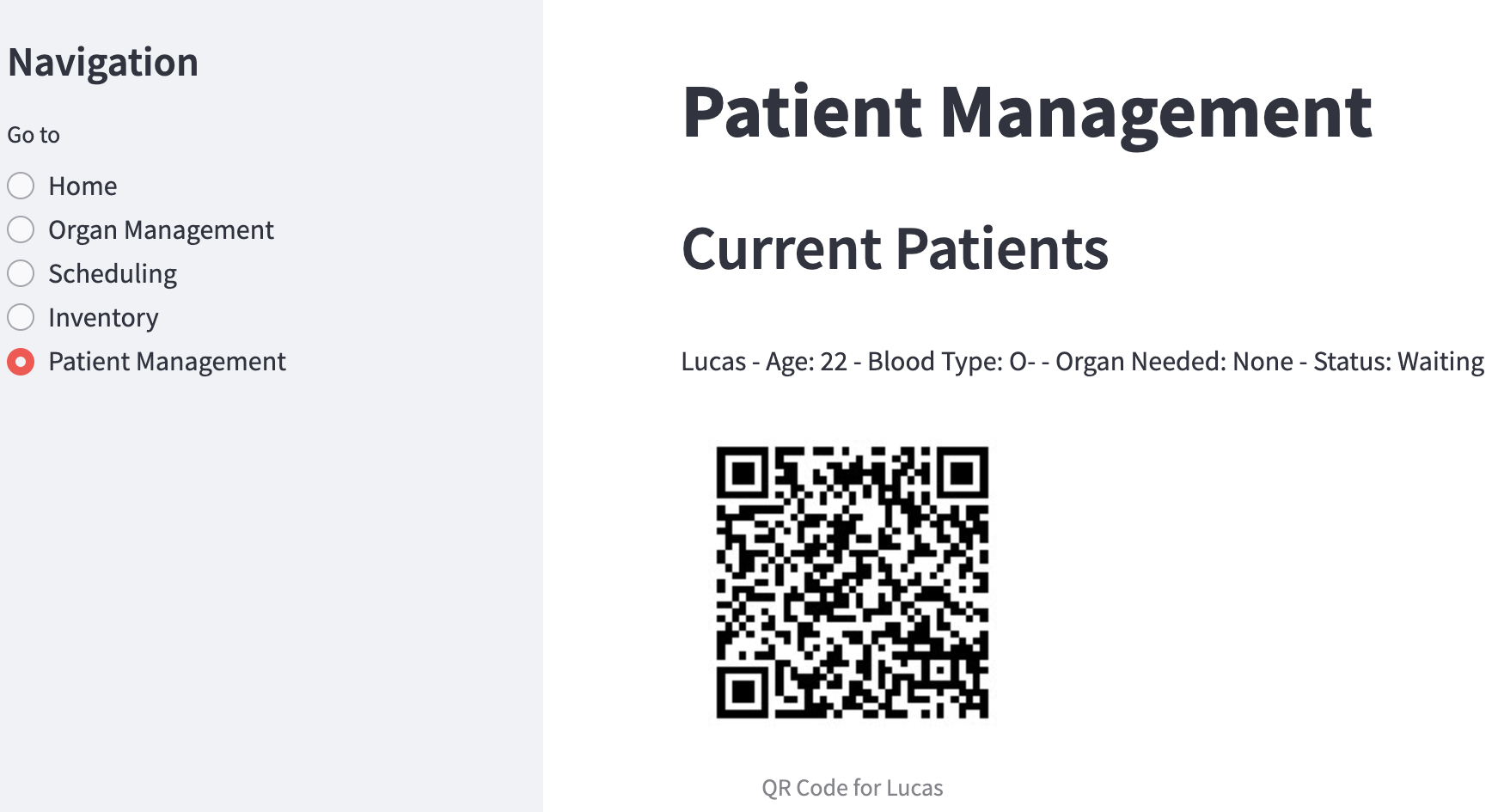
The Hospital Inventory Manager is a comprehensive platform designed to streamline various aspects of hospital resource management, including inventory tracking, scheduling, patient management, and organ matching. The system incorporates QR code functionality for quick access to vital information.
How we built it
- PostgreSQL: Utilized as the database to store all our data.
- Pandas: Employed for data manipulation and analysis.
- QR Code Generation Library: Used for creating QR codes for inventory items and patient identification.
- Git: Implemented for version control and collaborative development.
Challenges we ran into
We faced several challenges, including:
- Integrating multiple complex systems (inventory, scheduling, patient management) into a cohesive platform.
- Ensuring data privacy and security, particularly regarding sensitive patient information.
- Implementing an efficient organ matching algorithm.
- Creating a user-friendly interface capable of handling complex operations.
- Managing real-time updates across different sections of the application.
Accomplishments that we're proud of
We take pride in several achievements:
- Developing a fully functional prototype that addresses various aspects of hospital resource management.
- Implementing QR code functionality for quick access to information.
- Creating a system that can potentially save lives by enhancing organ donation and allocation efficiency.
- Building a scalable solution adaptable for various healthcare settings.
What we learned
Through this project, we gained valuable insights:
- The complexities of healthcare logistics and the critical need for efficient resource management in hospitals.
- The integration of multiple Python libraries and technologies to create a comprehensive web application.
- The significance of user experience design in healthcare applications.
- Techniques for securely handling sensitive data.
- The importance of iterative development and continuous testing in building robust software.
What's next for CareCost
Moving forward, we plan to:
- Implement advanced predictive analytics for inventory management.
- Enhance the organ matching algorithm using machine learning techniques.
- Develop a mobile application for on-the-go access.
- Integrate with existing hospital information systems for seamless data exchange.
- Conduct pilot tests in real hospital environments to gather feedback and refine the system.
- Explore the use of blockchain for secure and transparent organ donation tracking.
- Expand the platform to include features for blood bank management and vaccine distribution.
We believe that with further development and refinement, the Hospital Inventory Manager has the potential to significantly enhance healthcare resource management and improve patient outcomes.

Log in or sign up for Devpost to join the conversation.