- Inspiration
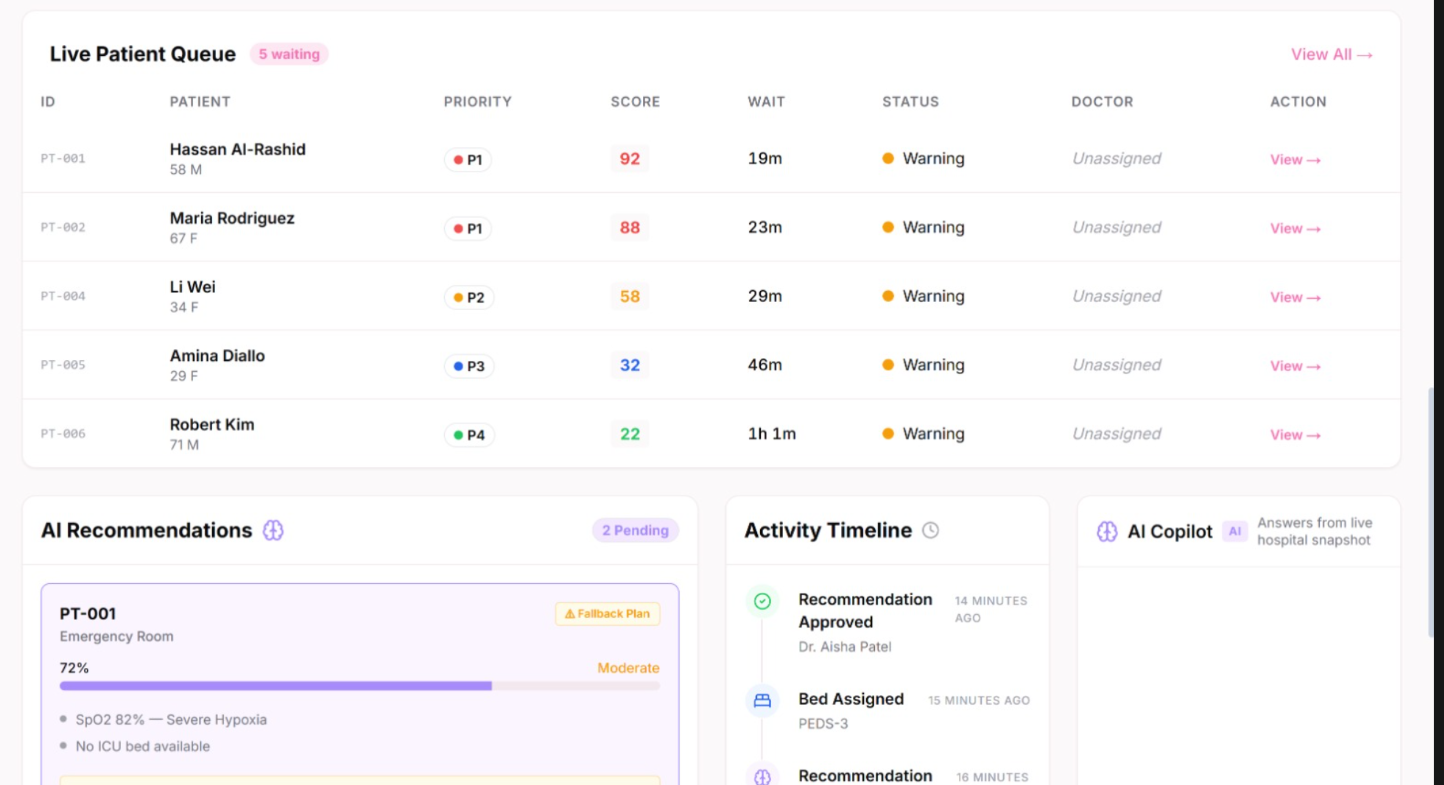
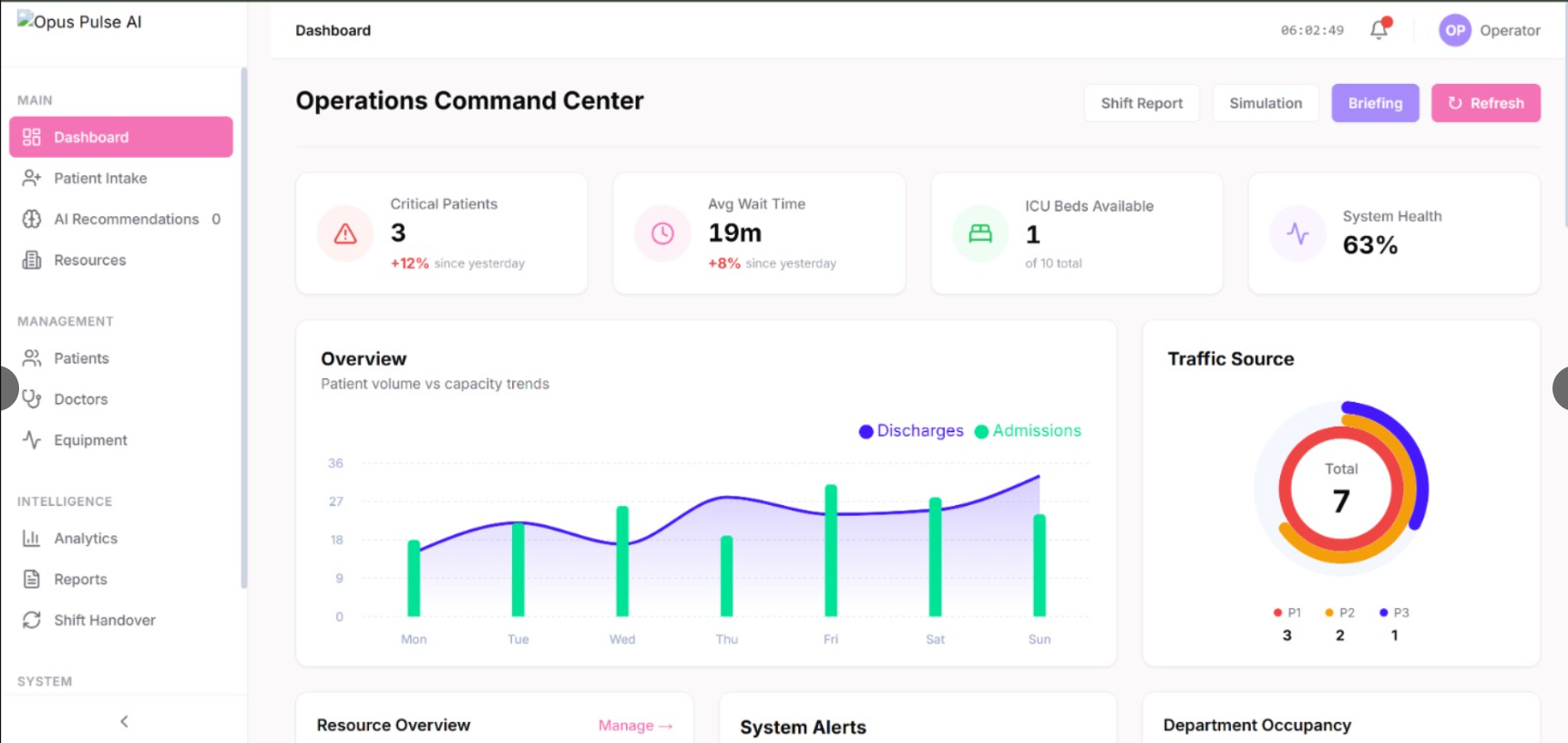
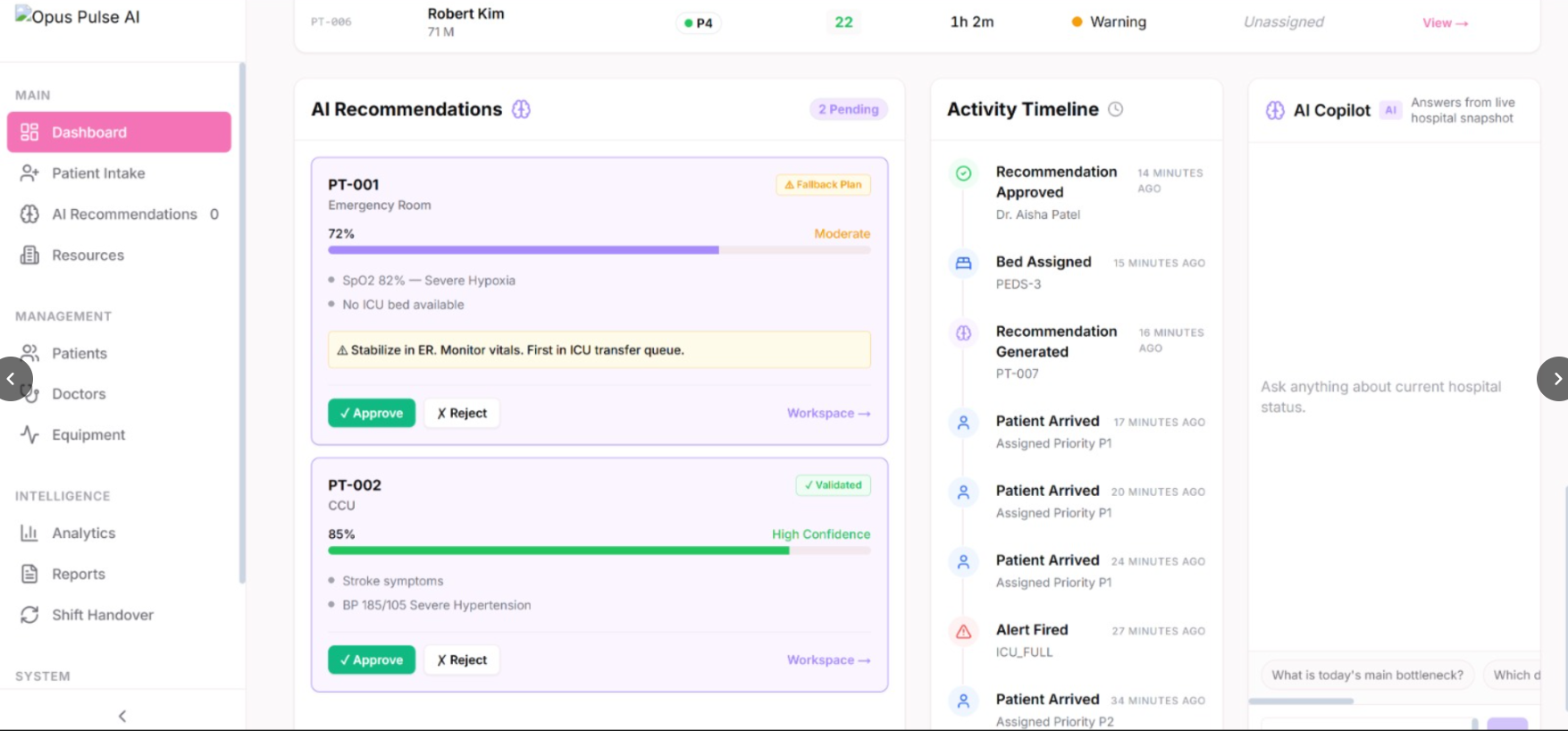
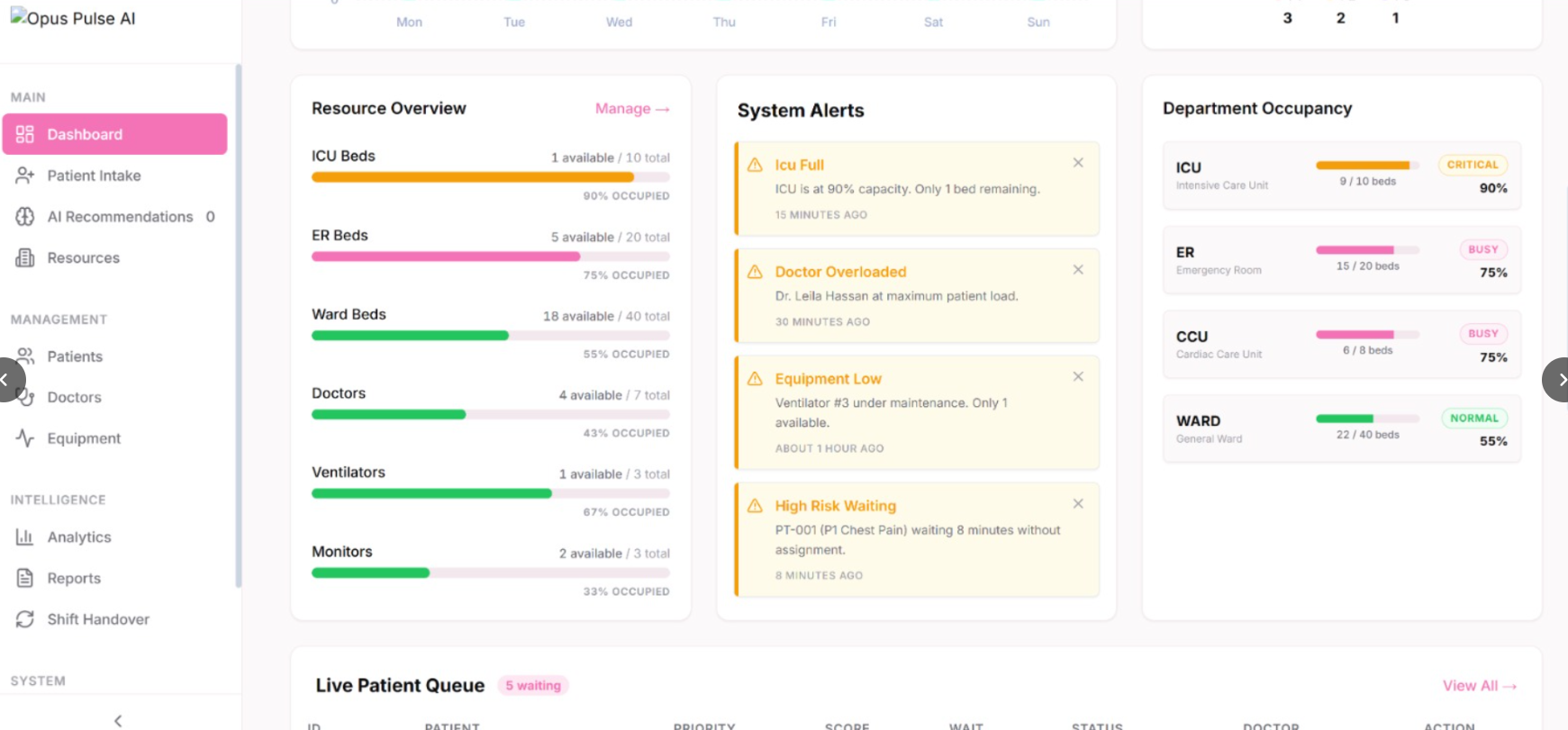
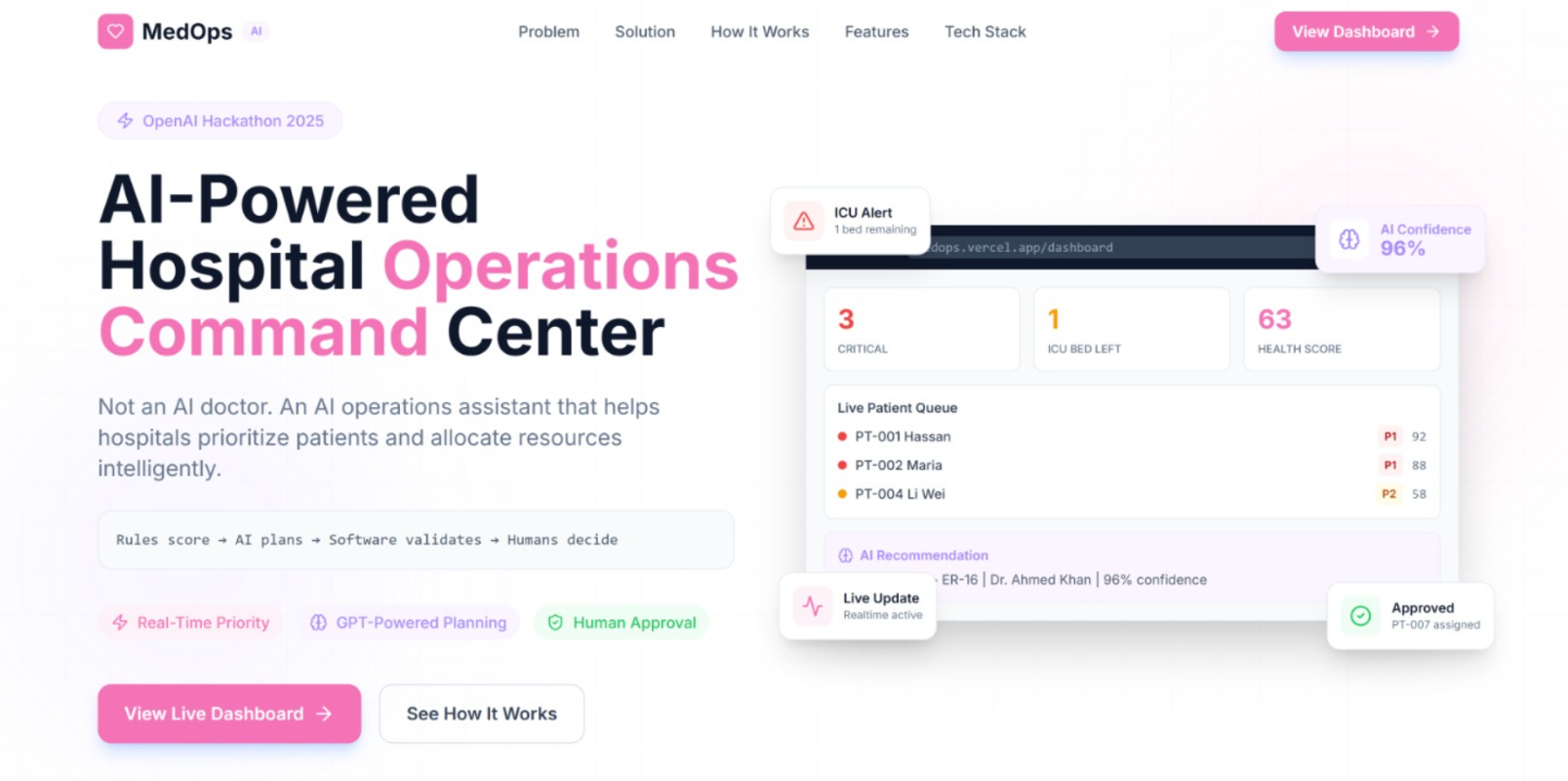
Emergency departments operate in fast-paced, high-pressure environments where delays in triage and resource allocation can directly impact patient outcomes. We built the Real-Time Hospital Intelligence Platform to help hospitals prioritize patients, optimize resource utilization, and support faster, data-driven clinical decisions using AI and real-time analytics.
- What We Learned
Keep only the strongest points: AI recommendations must be explainable to gain clinicians' trust. Real-time synchronization is essential in dynamic hospital environments. Security best practices matter—we learned to protect secrets using environment variables. Reliable systems require fallback logic when AI services are unavailable.
- How We Built It
Instead of long explanations, summarize: Backend: FastAPI + Python Frontend: React + Tailwind CSS Database: Supabase PostgreSQL + Realtime AI: OpenAI GPT-5.6 Deployment: Render + GitHub Then briefly explain the workflow: Patient data is submitted. Priority Engine calculates urgency. Resource Checker verifies availability. GPT generates operational recommendations. Validation Layer confirms recommendations. Dashboard updates instantly via Supabase Realtime.
- Priority Engine
The equation is good, but judges care more about implementation than formulas. Simply state: The Priority Engine assigns urgency scores (P1–P4) based on patient vitals such as oxygen saturation, blood pressure, heart rate, chest pain, temperature, age, and consciousness level.
- Challenges
Keep only technical challenges that demonstrate engineering ability: Challenge Solution GitHub secret exposure Migrated secrets to .env Merge conflicts Improved Git workflow Supabase connectivity Corrected configuration and schema Render deployment Fixed dependencies and startup commands API failures Implemented fallback recommendation engine
- What's Next
Reduce to 3 items: Mobile application for healthcare staff Predictive resource demand forecasting Integration with Electronic Medical Record (EMR) systems
- Team Section
Instead of a table, use bullets: Subhan Asif — Backend Development Zahra Khaliq — Backend Development Tayyab — AI/ML Engineering Moneeb Hussain — AI/ML Engineering Areeba — AI/ML Engineering Sami — Frontend Development
One important point: You mention GPT-5.6 throughout the document. If your application actually uses a different model (for example, GPT-5.5, GPT-4.1, GPT-4o, or another OpenAI model), you should replace it with the model you actually integrated. Hackathon judges may verify your implementation, so it's best to keep that detail accurate.
Overall, I'd rate this 8.5/10. With these changes, it would be closer to 9.5/10 because it becomes easier for judges to read quickly while still showcasing the technical depth.
Built With
- ai
- analytics
- api
- cloud
- dashboard
- data
- database
- decision-support
- emergency
- fastapi
- gpt-5.6
- hackathon
- healthcare
- hospital
- llm
- machine-learning
- medtech
- openai
- postgresql
- python
- react
- real-time
- resource-management
- supabase
- triage

Log in or sign up for Devpost to join the conversation.