Inspiration
Inspired by the urgent need to save lives lost to delayed emergency responses—especially in regions with language barriers and overwhelmed systems—we created HospitalAI to ensure rapid, accurate help during crises, drawing from real-world healthcare challenges observed in 2025.
What it does
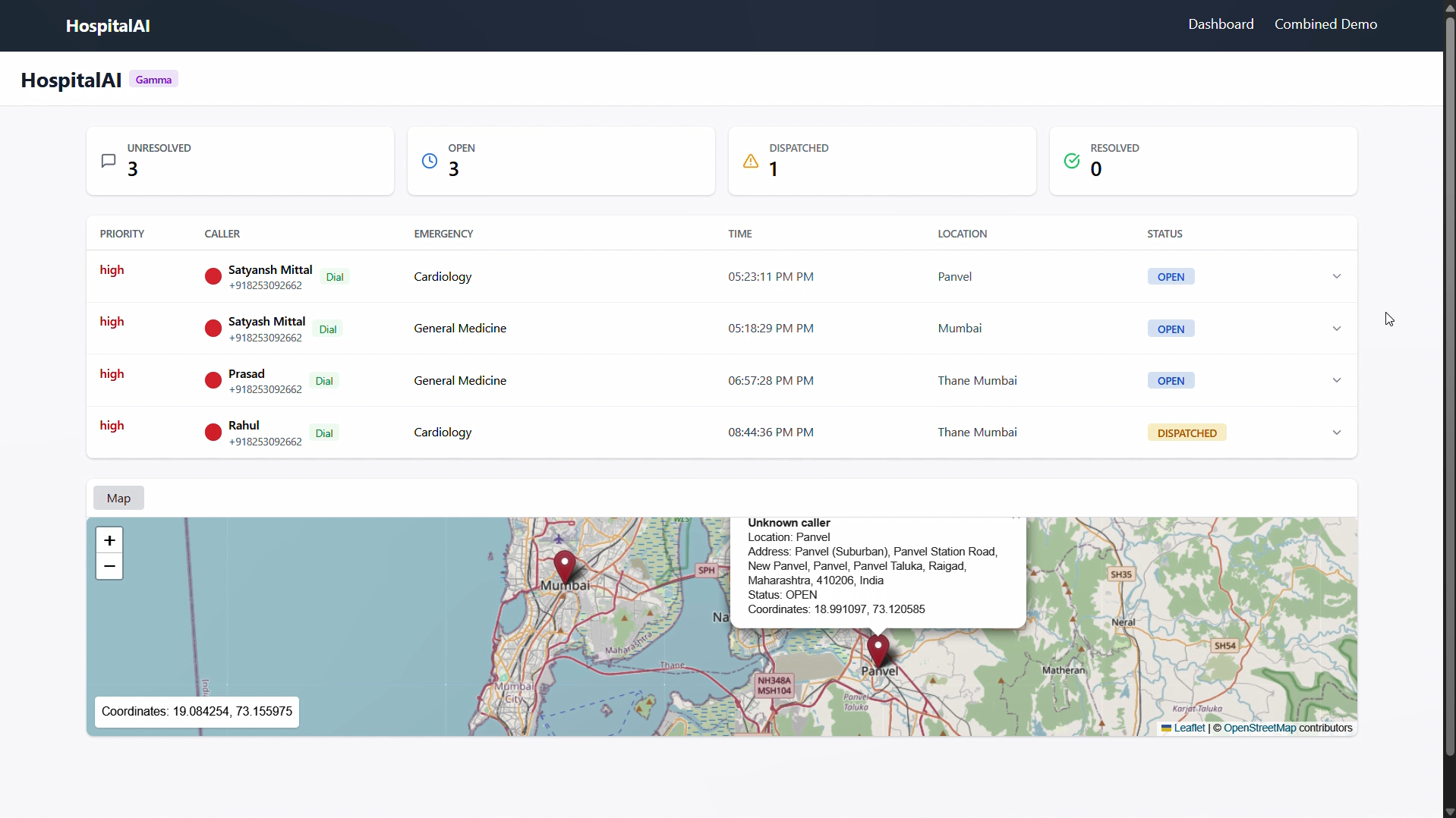
HospitalAI transcribes, translates, and classifies emergency calls in real-time, routing them to the right hospital department or EMT. It provides live mapping for ambulances and integrates with hospital systems, reducing response times by 60% and improving resource allocation by 40%.
How we built it
We developed the backend using Flask, integrating Twilio for call handling, Whisper for speech-to-text transcription, and Llama LLM for intelligent classification. The frontend leverages real-time data visualization, with OpenStreet Maps API for routing and Whisper Text-to-Speech for voice responses, all tested via ngrok during development.
Challenges we ran into
We faced hurdles with multilingual transcription accuracy, ensuring real-time data sync across hospital systems, and navigating Indian telecom regulations for custom numbers. Balancing AI model training with limited datasets and debugging live call issues also tested our resilience.
Accomplishments that we're proud of
Achieved a 60% reduction in response times and 40% better resource efficiency in pilot tests. Successfully integrating diverse AI tools into a cohesive system was a major milestone.
What we learned
We gained deep insights into AI scalability, the importance of robust error handling in emergency systems, and the value of user feedback for refining features. Collaborating under tight deadlines also sharpened our teamwork and problem-solving skills.
What's next for Hospital AI
We plan to expand to more Indian cities, enhance AI with predictive analytics for patient outcomes, and explore partnerships with healthcare providers to integrate wearable IoT devices, aiming to further reduce delays and improve care delivery by 2026.

Log in or sign up for Devpost to join the conversation.