-
-
-
AI Powered Medication Logger
Inspiration
The inspiration for Hospice Helper comes from my personal experience when my mother was in hospice care shortly before she passed. It was an incredibly stressful time, with our family coming together to support her 24/7. We were all dealing with a flood of emotions. We tried our best, but filling out forms, understanding medication, syncing schedules, and staying positive was hard to do.
That desire for a resource that could alleviate some of that emotional and logistical burden is what drove me to create this project. I wanted to build something that I feel would've helped my family and I.
Upon doing more research about hospice care, I also learned about the significant disparities in end-of-life care within the African American community. Black Americans are less likely to utilize hospice services compared to their white counterparts, despite the potential benefits. For many families, especially those new to the process, hospice can be overwhelming. This inspired me to create a solution that bridges that gap, one that empowers families to navigate hospice care with more confidence and less stress.
What it does
Hospice Helper is an AI-powered web application designed to support families during the challenging end-of-life care process. It serves three main functions:
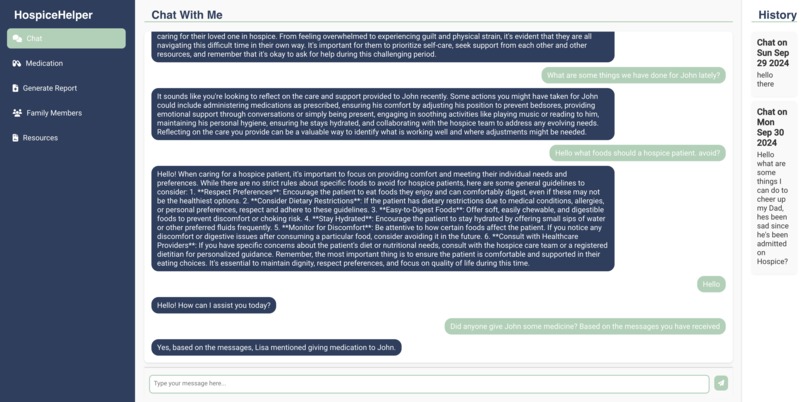
- AI Chatbot: Provides 24/7 emotional support and medical guidance to families, using shared context to give culturally informed and personalized advice.
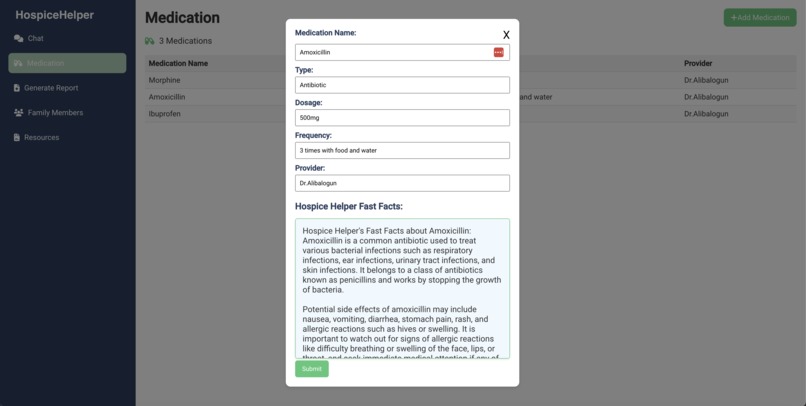
- Medication Logger: Allows families to keep track of their loved ones’ medication, complete with "Hospice Helper Fast Facts," ensuring they’re always informed about treatment plans.
- Report Generator: Enables families to create reports summarizing important conversations and concerns to present to healthcare providers, empowering them to advocate for the best care possible.
How we built it
The front end of Hospice Helper was built using React, while the back end is powered by Node.js with Mongoose for database management. I integrated the OpenAI API to handle the AI chatbot functionality, which processes family messages and provides emotional support and information. Mongoose models were used to store chat histories, medications, and generated reports, allowing for seamless interaction between the chatbot and family members.
Challenges we ran into
Time management was a significant challenge during this project. I initially had many more features planned, but I decided to scale back to ensure the quality of the MVP (Minimum Viable Product). I wanted to focus on delivering a polished, functional tool that could truly benefit families, even if it meant postponing additional features.
Accomplishments that we're proud of
I’m proud of getting a working prototype of Hospice Helper that successfully integrates with OpenAI’s API to provide real-time emotional support and guidance for families. The ability to create an MVP that’s not only functional but also impactful in such a critical area of care is something I’m very proud of.
What we learned
Through this process, I learned a great deal about balancing ambition with practicality. I also gained more experience working with AI integrations and creating a product that could offer both emotional support and tangible logistical help. I discovered the power of thoughtful design and user experience in creating something that people can truly rely on during difficult times.
What's next for Hospice Helper
Looking forward, the next steps for Hospice Helper include expanding the features and refining the chatbot’s ability to provide culturally specific advice. I also plan to improve the user interface, making it even more intuitive for families under stress. Additionally, I want to explore integrations with healthcare providers to make the tool even more powerful for family advocacy in end-of-life care.


Log in or sign up for Devpost to join the conversation.