-
-

This is our cute mascot
-
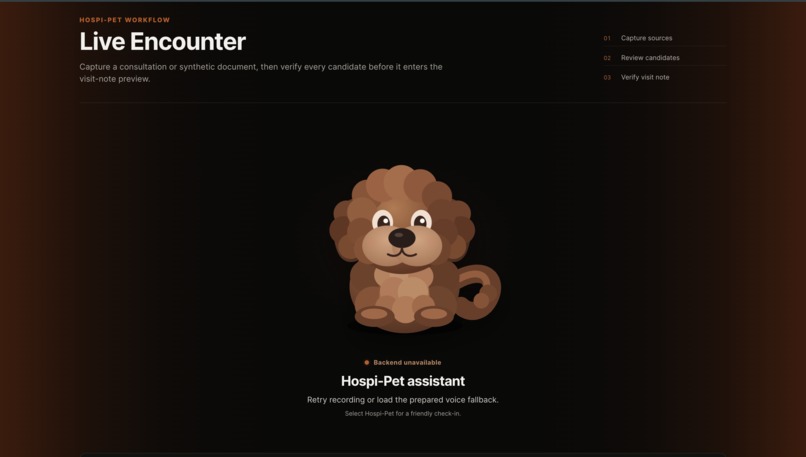
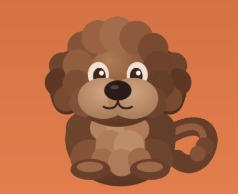
Hospi-Pet
Inspiration
When I was younger, I had to be rushed to the hospital after hitting my head on the edge of a swimming pool. I do not remember the accident clearly, but my mom remembers how scared I became once I realized I was in a hospital. I shut down, refused to speak, and did not feel comfortable explaining what I was experiencing.
That story inspired us to build Hospi-Pet, a friendly healthcare companion designed to help children feel safer, calmer, and more understood during medical visits. We also noticed that families can leave appointments confused about medications, tests, referrals, and follow-up steps. Hospi-Pet helps both children and their families understand what happened during the visit and what they need to do next.
What It Does
Hospi-Pet captures and organizes information from a medical consultation. It can process spoken conversations and uploaded administrative documents, then identify important details such as:
- Symptoms
- Medications
- Lab orders
- Referrals
- Follow-up instructions
- Patient questions
Every extracted detail begins as unverified. A clinician must accept or reject each item before it can be used. Hospi-Pet then analyzes the verified information to identify care gaps, contradictions, and possible clarification questions.
Using only clinician-approved information, the system creates:
- A structured clinician note
- A clear after-visit checklist
- English and Spanish patient plans
- Source tracing for important outputs
- A child-friendly explanation of what happens next
Hospi-Pet does not diagnose patients or replace medical professionals. Its purpose is to improve communication, organization, and patient comfort.
How We Built It
We built Hospi-Pet using Jac because the project required more than a standard chatbot. The system needed to remember how different pieces of information were connected and control how information moved through the workflow.
We created a connected care graph containing nodes for the patient, visit transcript, uploaded documents, candidate facts, verified facts, care gaps, questions, clinician notes, and patient plans.
Jac walkers move through this graph to perform each stage:
- Capture the visit conversation.
- Translate and organize transcript chunks.
- Extract candidate facts from speech and documents.
- Allow the clinician to accept or reject each fact.
- Store approved facts in the verified care graph.
- Detect missing steps and contradictions.
- Generate a clinician note and patient-friendly plan.
- Trace each output back to its original source.
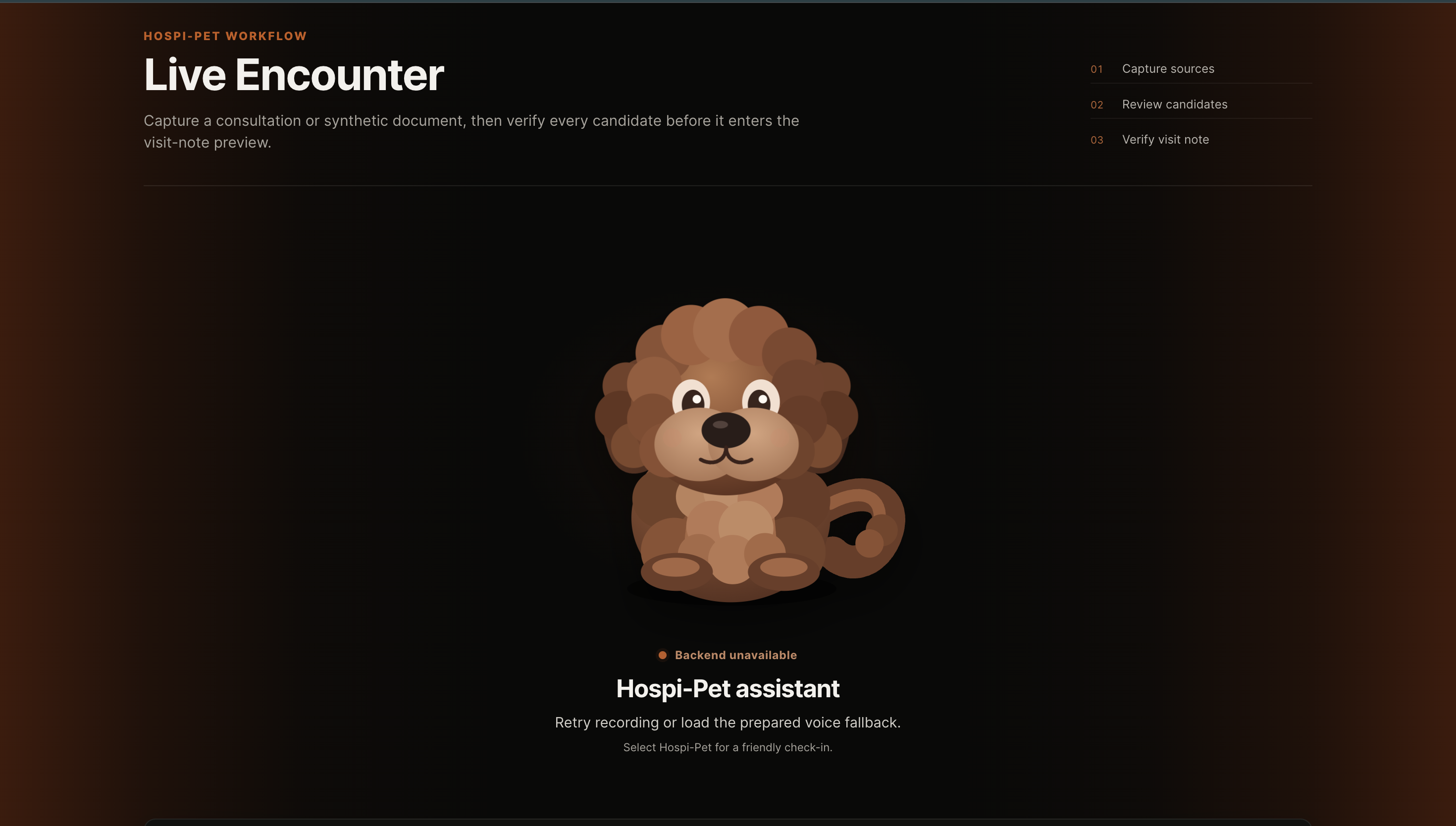
The frontend includes microphone recording, a live transcript, doctor and patient speaker labels, translation, camera capture, image upload, document extraction, fact verification, note editing, care-gap analysis, source tracing, and final review.
Challenges We Faced
One major challenge was preventing the system from presenting AI-generated information as confirmed medical information. Early designs made it too easy for extracted details to appear trustworthy immediately. We solved this by creating a strict verification process where every fact remains unverified until a clinician approves it.
Another challenge was connecting several different inputs and outputs. Voice recordings, translated transcripts, document images, extracted facts, clinician edits, and patient plans all needed to remain connected to their original sources. Jac’s graph structure helped us preserve these relationships.
We also had to handle real browser limitations. Microphone or camera access may be unsupported or denied, so we added clear permission errors, retry options, image uploads, and a visibly labeled prepared voice demonstration. We made sure the interface never claims that speech was transcribed unless actual transcript text was produced.
Finally, we had to simplify complex healthcare information without removing important details. We focused on short instructions, visible verification labels, clear sections, and a friendly dog mascot that makes the experience feel less intimidating for younger patients.
What We Learned
We learned that building responsible healthcare technology requires more than generating accurate-looking text. A safe system must clearly separate suggestions from verified information, keep humans involved in important decisions, and show where every result came from.
We also learned how graph-based programming can support complex workflows. Jac allowed us to represent the visit as connected information instead of disconnected API responses. This made verification, memory, source tracing, and care-gap detection much easier to manage.
Most importantly, we learned that good healthcare design must consider how patients feel. Even a technically advanced system can fail if a child feels too scared or confused to speak. Hospi-Pet combines structured technology with a friendly experience so children and families can feel more confident during and after medical care.
Built With
- and-javascript-?-frontend-design-and-interactions-browser-speech-recognition-api-?-microphone-input-and-live-transcription-mediadevices-api-?-camera-access-and-photo-capture-ai-language-models-?-translation
- and-source-tracing-python-?-backend-processing-and-ai-related-functionality-html
- care-gap-detection
- css
- fact-extraction
- github
- graph-based-memory
- jac-?-backend-logic
- notes
- summarization
- verification
- walkers
