-
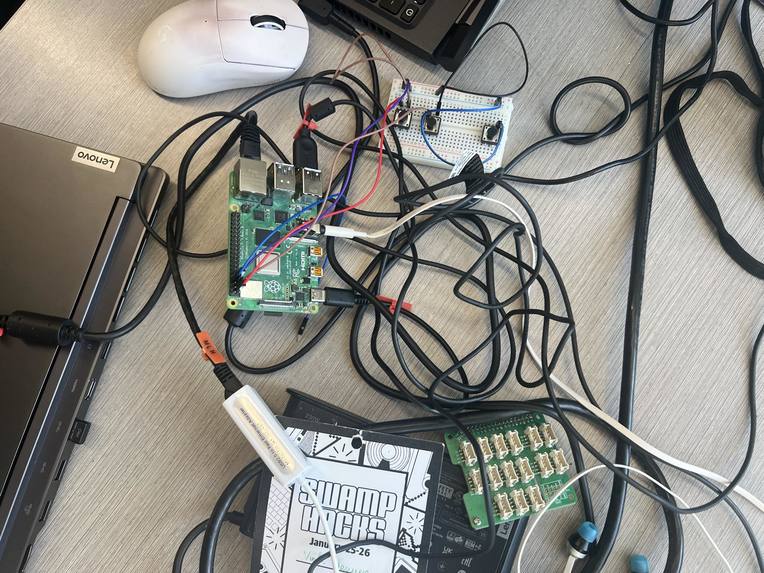
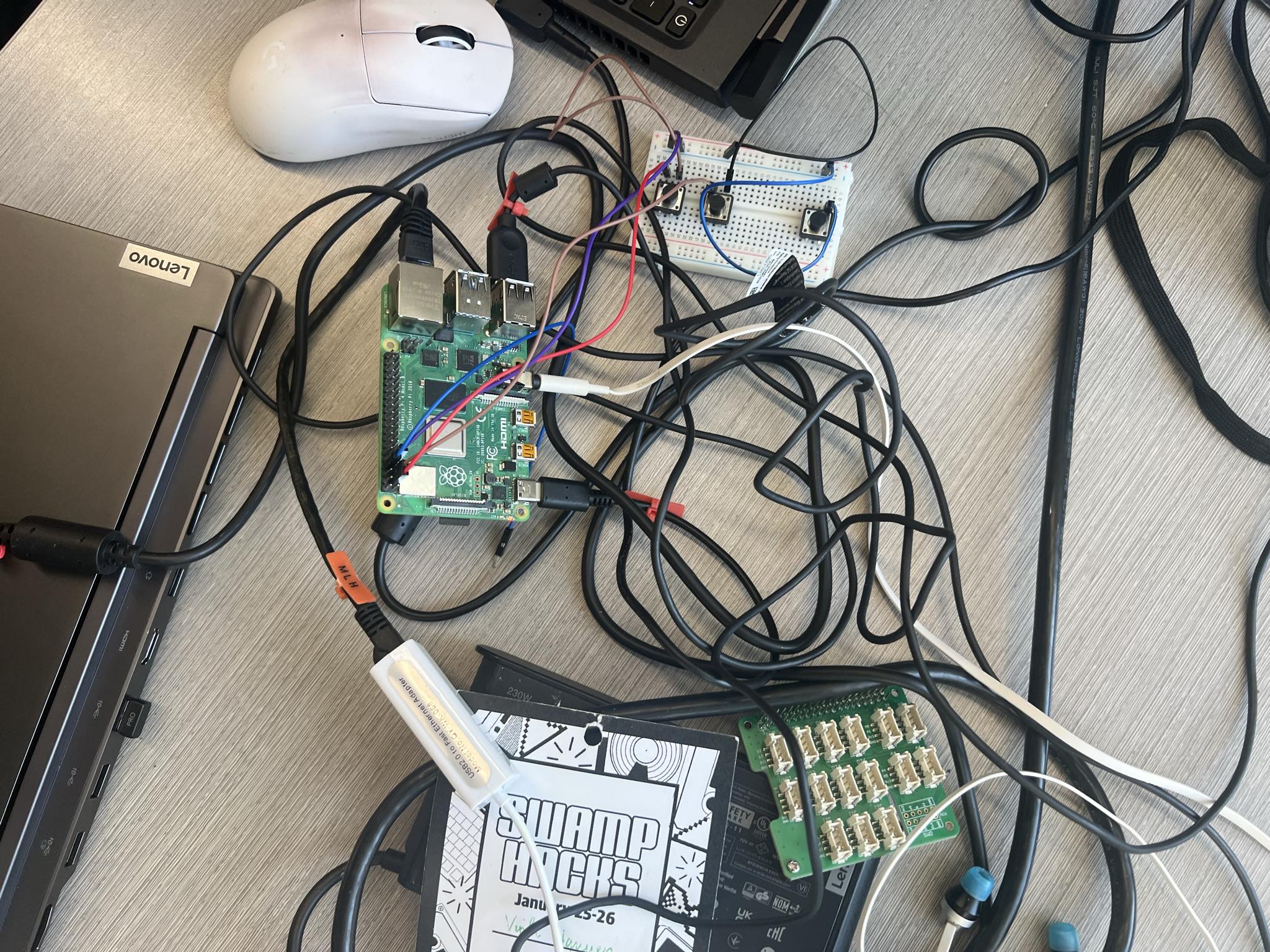
Our messy battle field
Inspiration
Horus was inspired by the need to create an accessible and intelligent navigation system that empowers visually impaired individuals and enhances autonomous navigation for various applications. Combining cutting-edge technologies like object detection, depth estimation, and text extraction, we aim to make environments safer and more navigable for all.
What it does
Horus is a smart navigation assistant powered by Raspberry Pi, YOLO, and MiDaS. It uses object detection and depth estimation to identify obstacles and their distances, providing real-time warnings and navigation guidance. Additionally, Horus extracts and processes textual information from the environment using PaddleOCR, offering an all-in-one solution for safer mobility and environmental awareness.
How we built it
- Hardware: Raspberry Pi serves as the compact and portable processing hub.
- Object Detection: YOLO detects objects in real time.
- Depth Estimation: MiDaS calculates the distance to objects for precise navigation.
- Text Extraction: PaddleOCR captures and interprets text from the surroundings.
- Cloud Infrastructure: Terraform was used to set up and manage AWS services, providing scalable processing and storage for video and navigation data.
- Speech Guidance: Using text-to-speech functionality, Horus communicates warnings and extracted text to users in real time.
Challenges we ran into
- Hardware Constraints: Optimizing computationally intensive models like YOLO and MiDaS to run efficiently on a Raspberry Pi while maintaining low latency.
- Cloud Integration: Setting up Terraform and AWS services to handle dynamic workloads was complex and required careful configuration.
- Model Integration: Ensuring seamless interaction between object detection, depth estimation, and text extraction modules was challenging due to differences in data formats and processing speeds.
- Real-Time Processing: Balancing accuracy and speed to deliver real-time feedback without overwhelming the user.
Accomplishments that we're proud of
- Successfully deploying advanced AI models like YOLO and MiDaS on resource-constrained hardware like the Raspberry Pi.
- Building a robust cloud infrastructure with Terraform and AWS to offload processing tasks when needed.
- Achieving seamless integration between object detection, depth estimation, and text extraction modules.
- Creating an intuitive and accessible interface for users, with real-time audio feedback that guides them through their surroundings.
What we learned
- Optimization: Techniques to optimize AI models for edge devices without compromising accuracy.
- Cloud Infrastructure: How to use Terraform to automate and manage AWS resources effectively.
- Model Integration: Overcoming challenges in combining multiple AI models for a unified application.
- User-Centered Design: Importance of tailoring solutions to the needs of the end-user, such as visually impaired individuals.
What's next for Horus
- Enhanced Hardware: Exploring more powerful edge devices to further improve performance.
- Improved Models: Fine-tuning AI models for specific environments to increase accuracy and reliability.
- Multilingual Support: Adding support for text extraction and guidance in multiple languages.
- Real-Time Updates: Incorporating live cloud updates for navigation data, such as traffic conditions or dynamic obstacles.
- Mobile Integration: Developing a companion mobile app to provide additional features and accessibility options.
- Open Source: Expanding Horus as an open-source project to encourage collaboration and innovation in assistive technology.
Built With
- amazon-web-services
- flask
- linux
- midas
- raspberry-pi
- ssh
- terraform
- transformer
- yolo

Log in or sign up for Devpost to join the conversation.