🎯 Inspiration
The idea for Horror Rules came from my fascination with how rules shape fear.
I wanted to build a game where every choice feels meaningful — and breaking the rules isn’t just allowed, it’s terrifying.
Inspired by Black Mirror: Bandersnatch and classic horror games, I explored how interactivity, sound, and motion could immerse players in a psychological horror experience.
👻 What it does
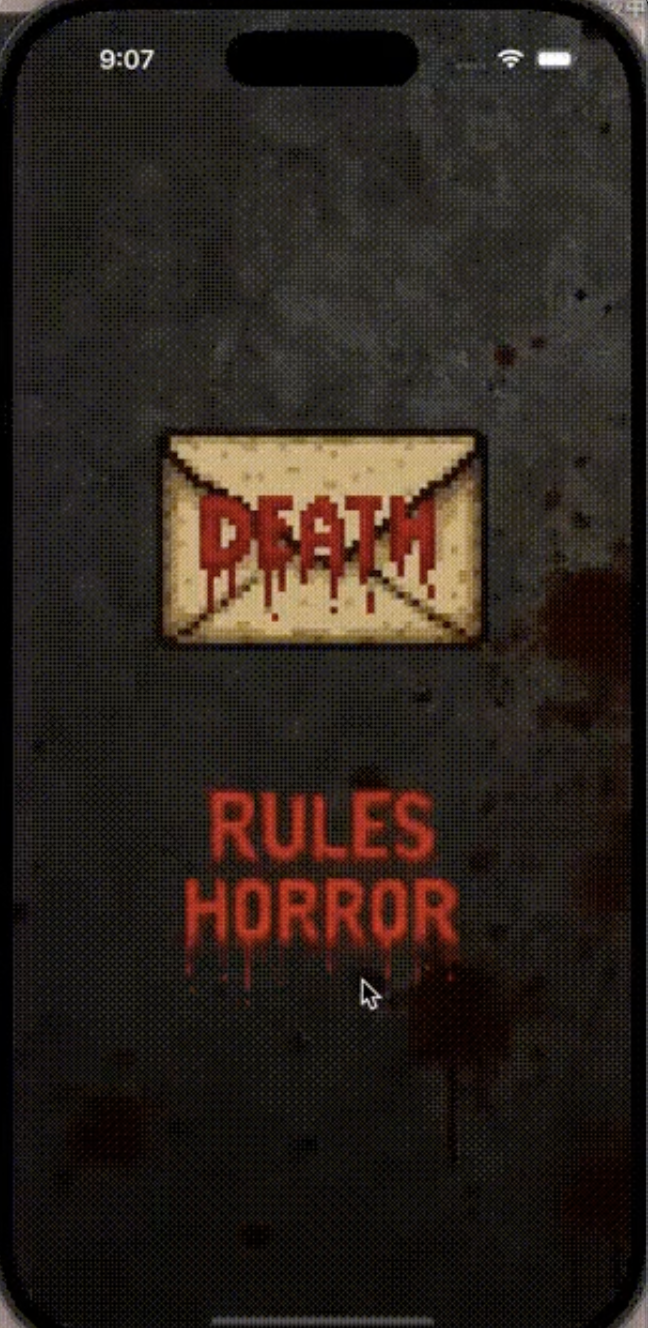
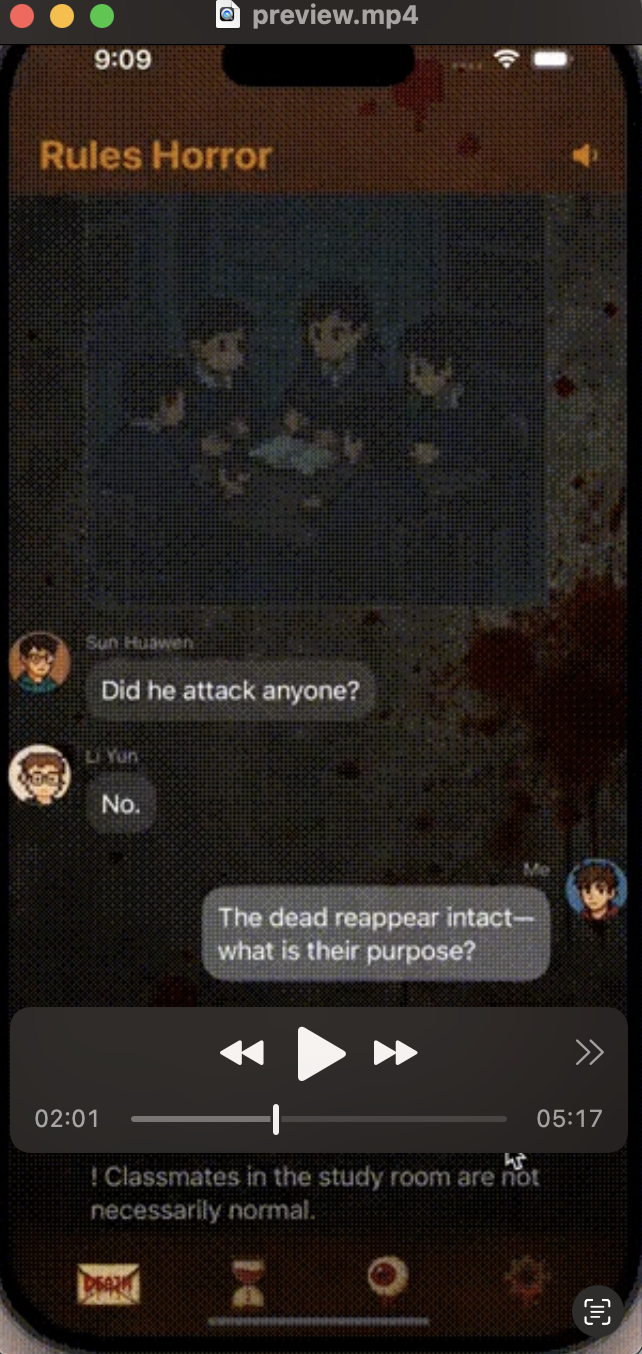
Horror Rules: An Interactive iOS Game is a touch-based horror experience where players must follow — or choose to break — a series of mysterious rules.
Each decision changes the story’s outcome, using device sensors (touch, tilt, motion) to react dynamically.
The game observes your actions and adapts, creating an unpredictable, personalized horror journey.
🏗️ How we built it
The game was built using Swift and Xcode, integrating:
- UIKit and SpriteKit for rendering interactive elements.
- CoreMotion for movement-based triggers (e.g., shaking, tilting).
- AVFoundation for ambient and reactive sound design.
- Custom logic structures for branching narratives and rule tracking.
A simple rule engine was designed as:
[
R_i = (A_i, C_i, P_i)
]
where each rule (R_i) consists of an Action, Consequence, and Player Choice that drives the dynamic storyline.
⚙️ Challenges we ran into
- Syncing motion sensors and sound timing for immersive effects.
- Avoiding repetition while maintaining narrative coherence.
- Debugging performance issues caused by rapid sensor input.
- Designing an intuitive UI that supports a tense, minimal horror aesthetic.
🏅 Accomplishments that we're proud of
- Successfully created a fully interactive iOS horror prototype in limited time.
- Built a dynamic rule-based system that adapts to player behavior.
- Designed custom soundscapes and visual effects to amplify tension.
- Received positive feedback for the originality of combining tech and horror psychology.
🧠 What we learned
- Deep understanding of motion-driven gameplay in iOS.
- How to balance narrative design and player agency in interactive fiction.
- Techniques to synchronize multi-sensory feedback (visual + sound + touch).
- Importance of playtesting to fine-tune emotional pacing and timing.
🚀 What's next for Horror Rules: An Interactive iOS Game
- Add voice and facial recognition for emotion-based responses.
- Implement ARKit to blend horror into the player’s real environment.
- Expand the storyline using AI-generated branching dialogues.
- Release a public demo on TestFlight and gather community feedback.
Built With
- apple
- coremotion
- developer
- json
- sprite-kit
- swift
- uikit
- xcode


Log in or sign up for Devpost to join the conversation.