-
-
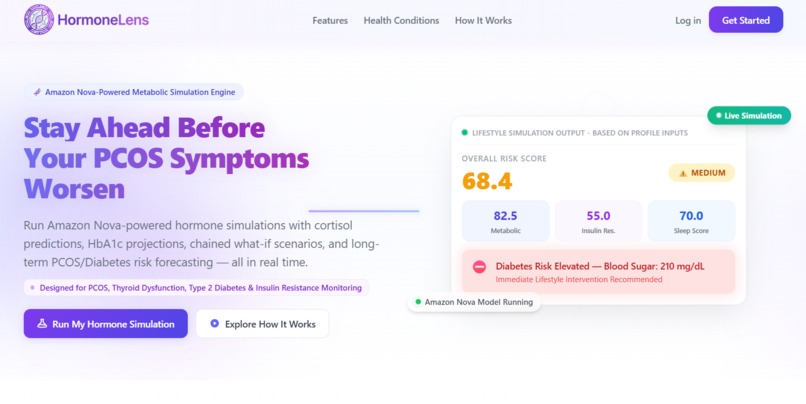
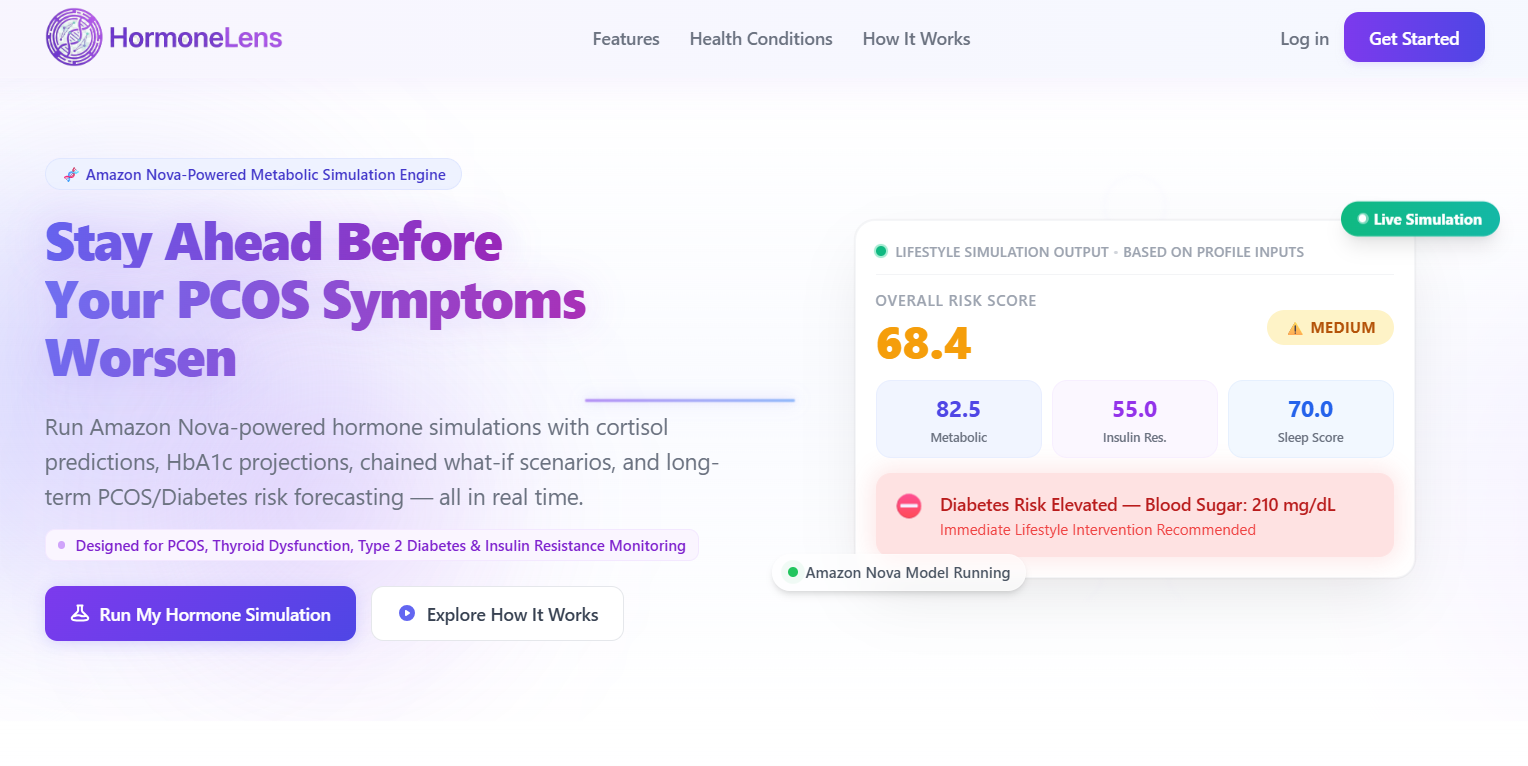
landing page
-
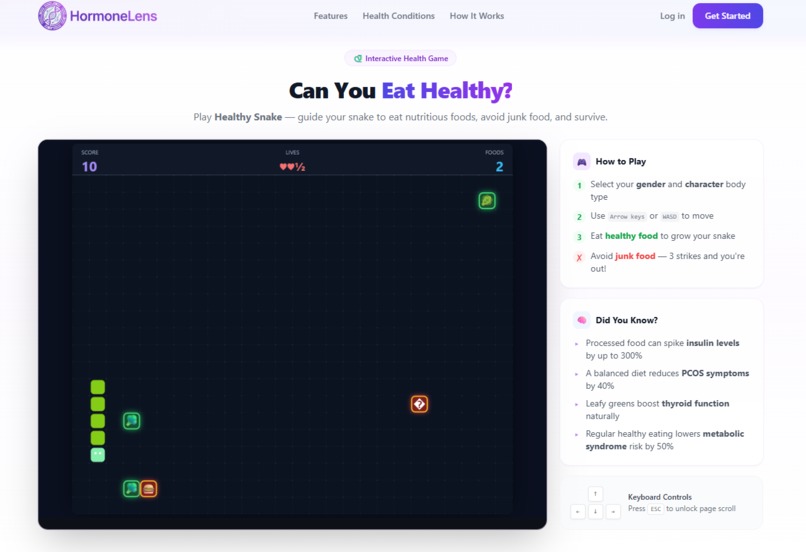
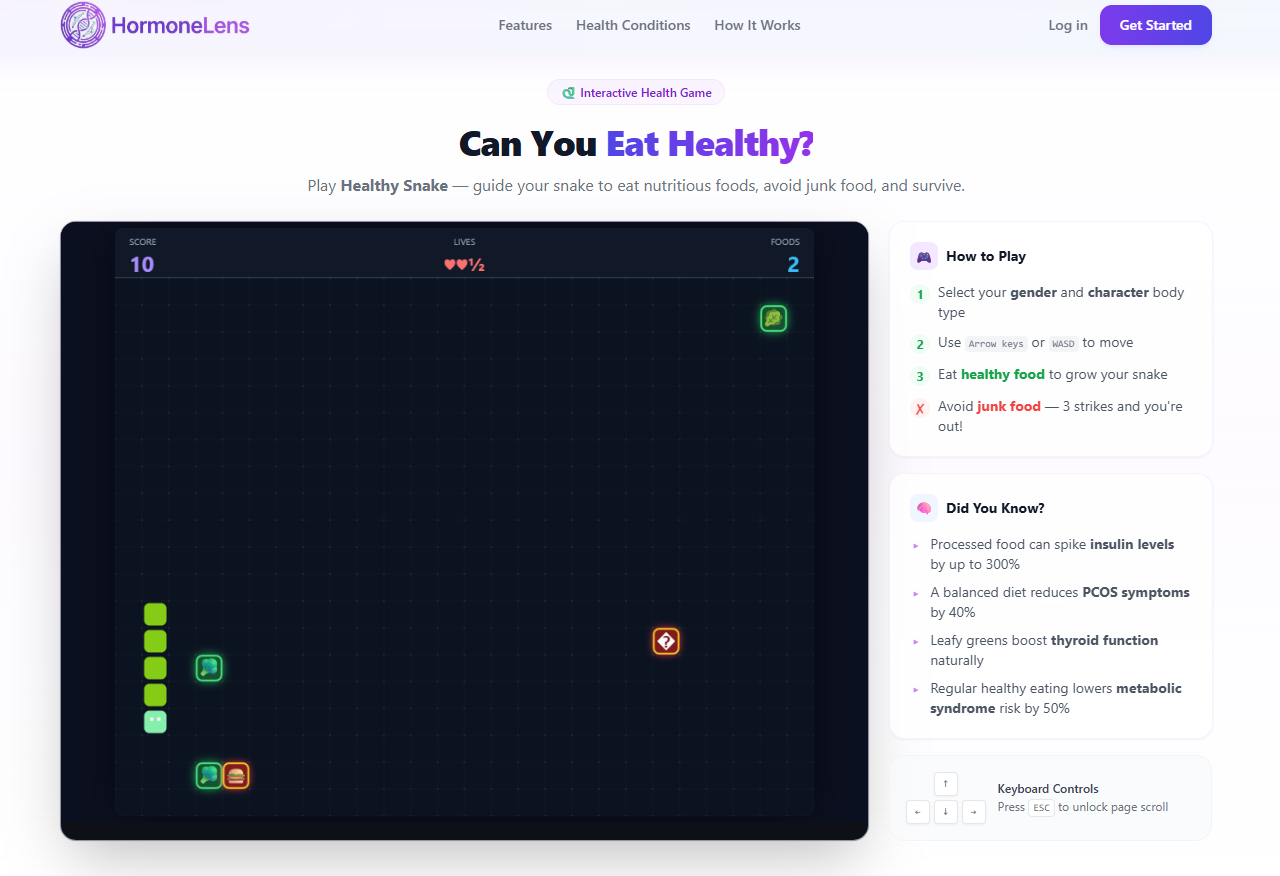
interactive game
-
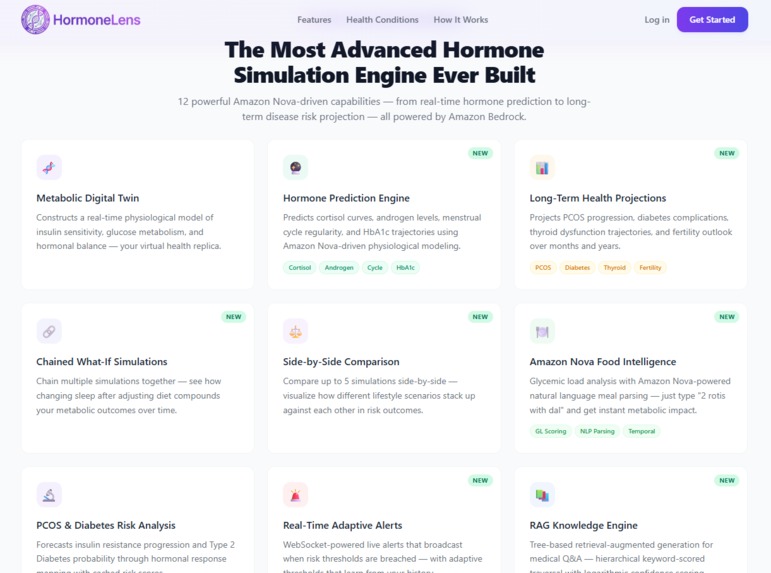
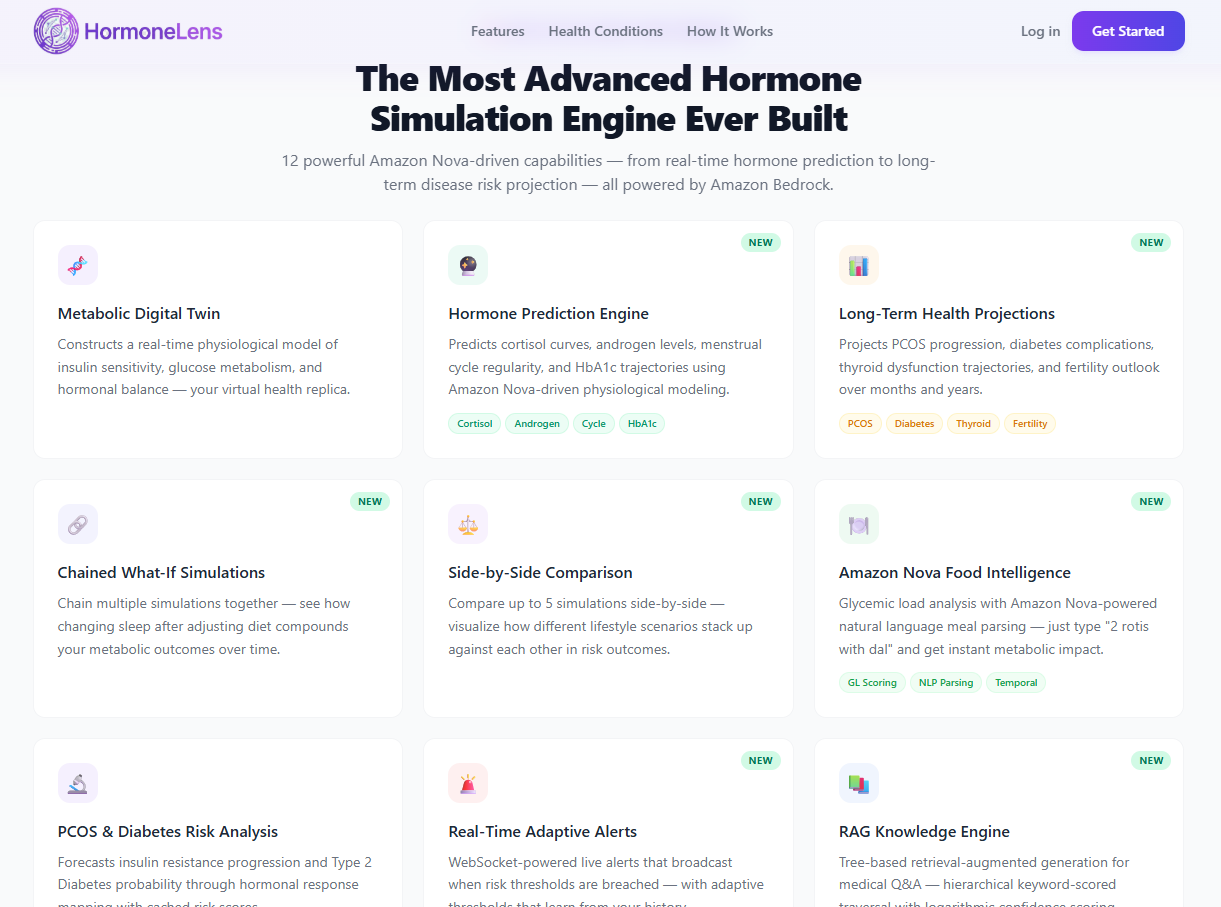
features
-
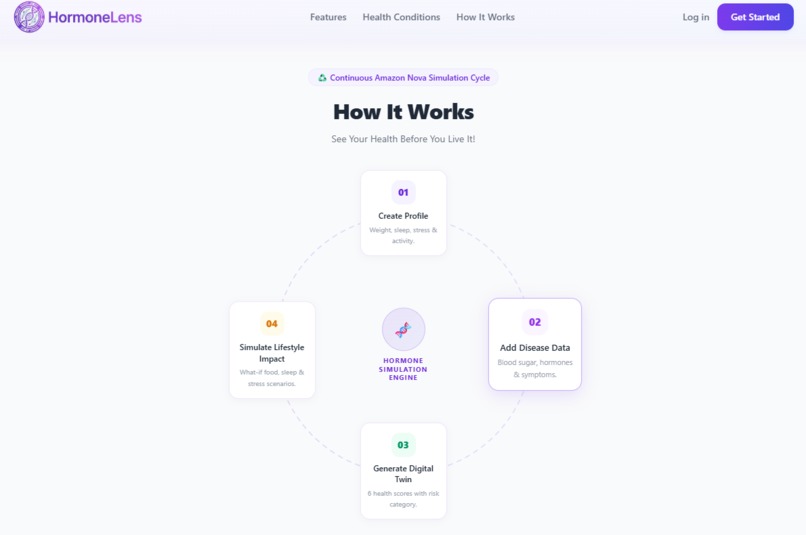
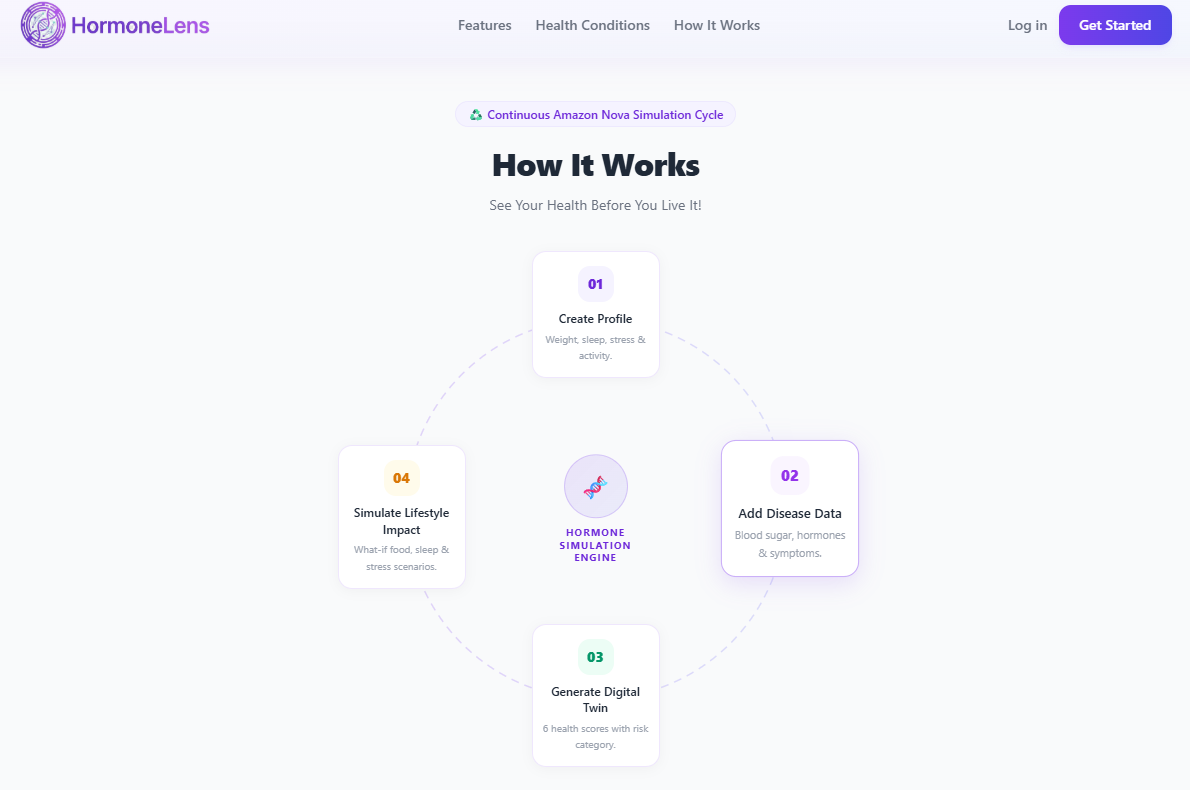
how it works
-
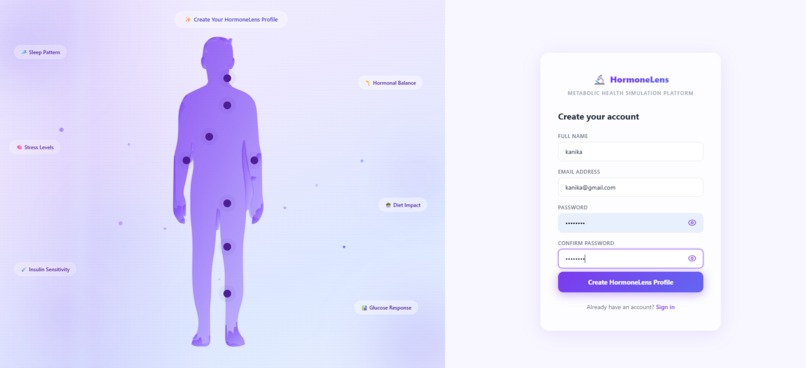
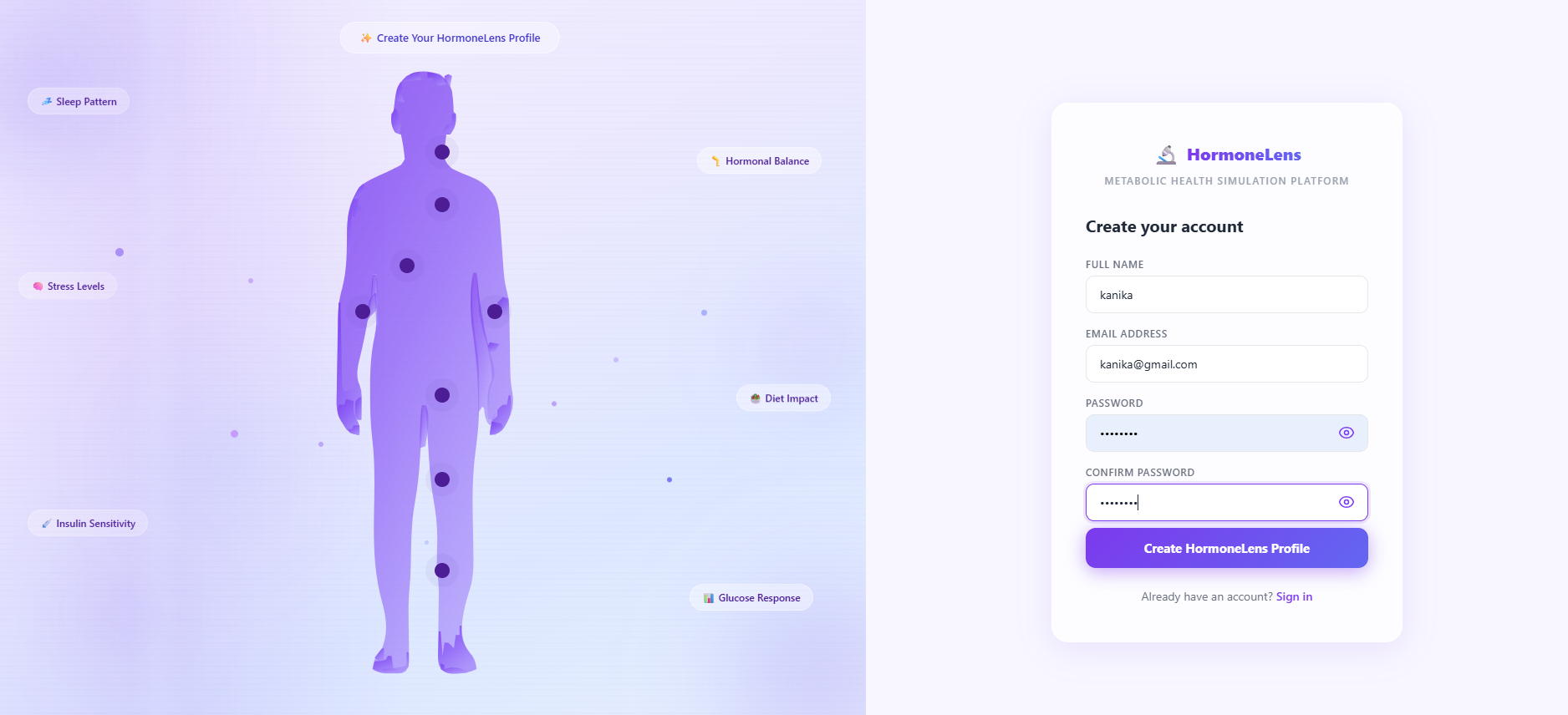
signup form
-
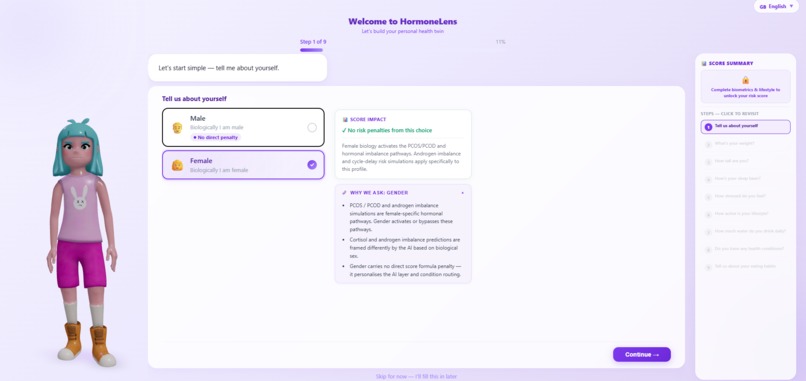
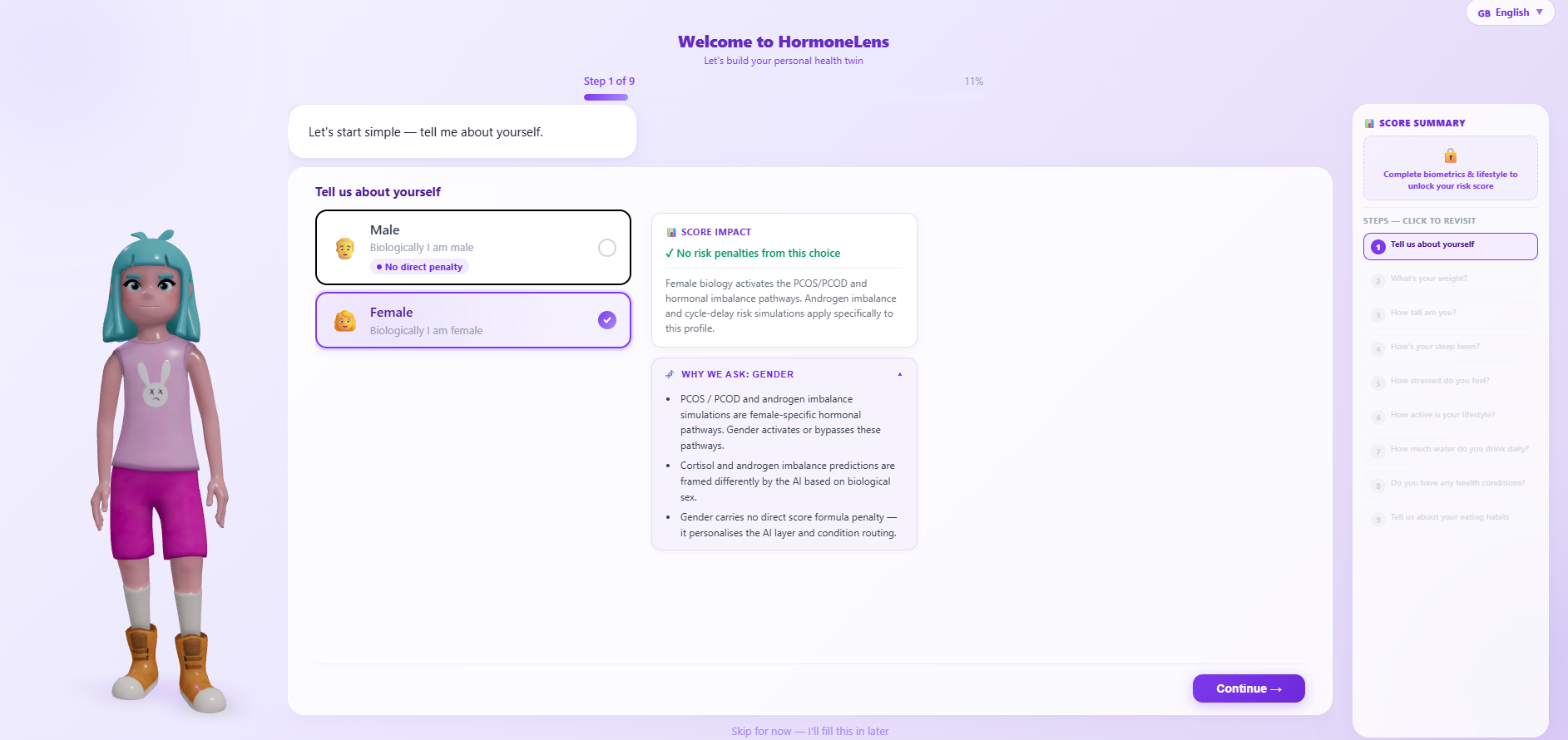
onboarding form
-
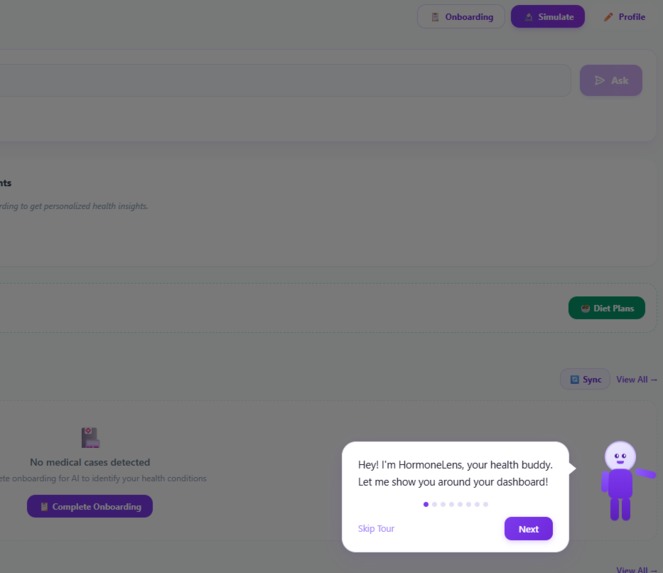
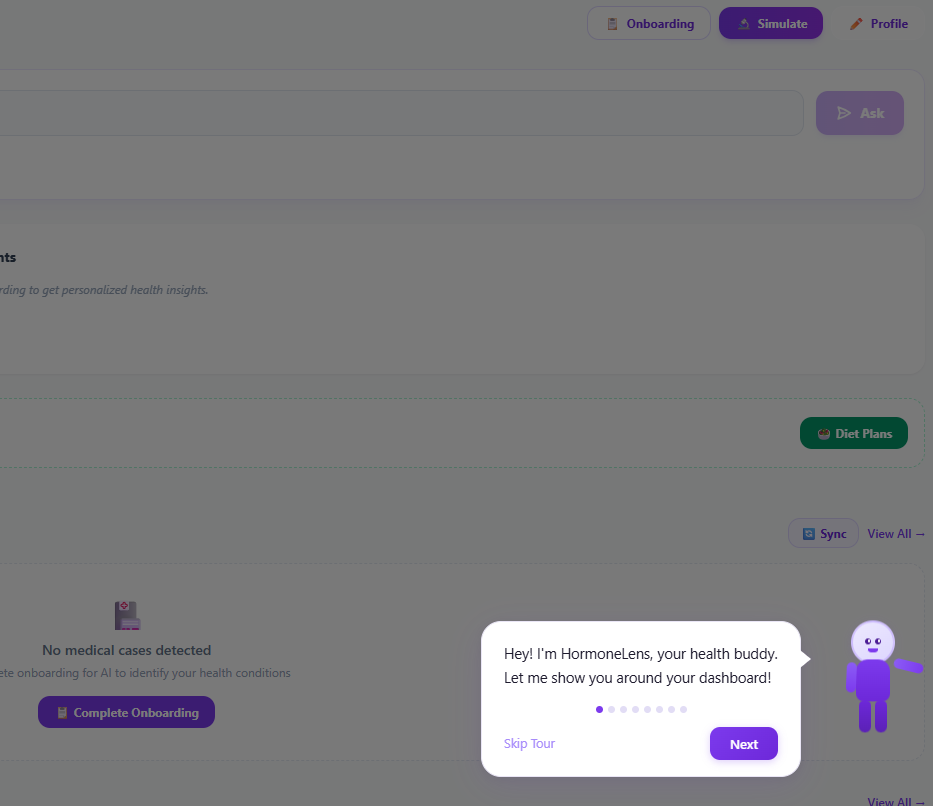
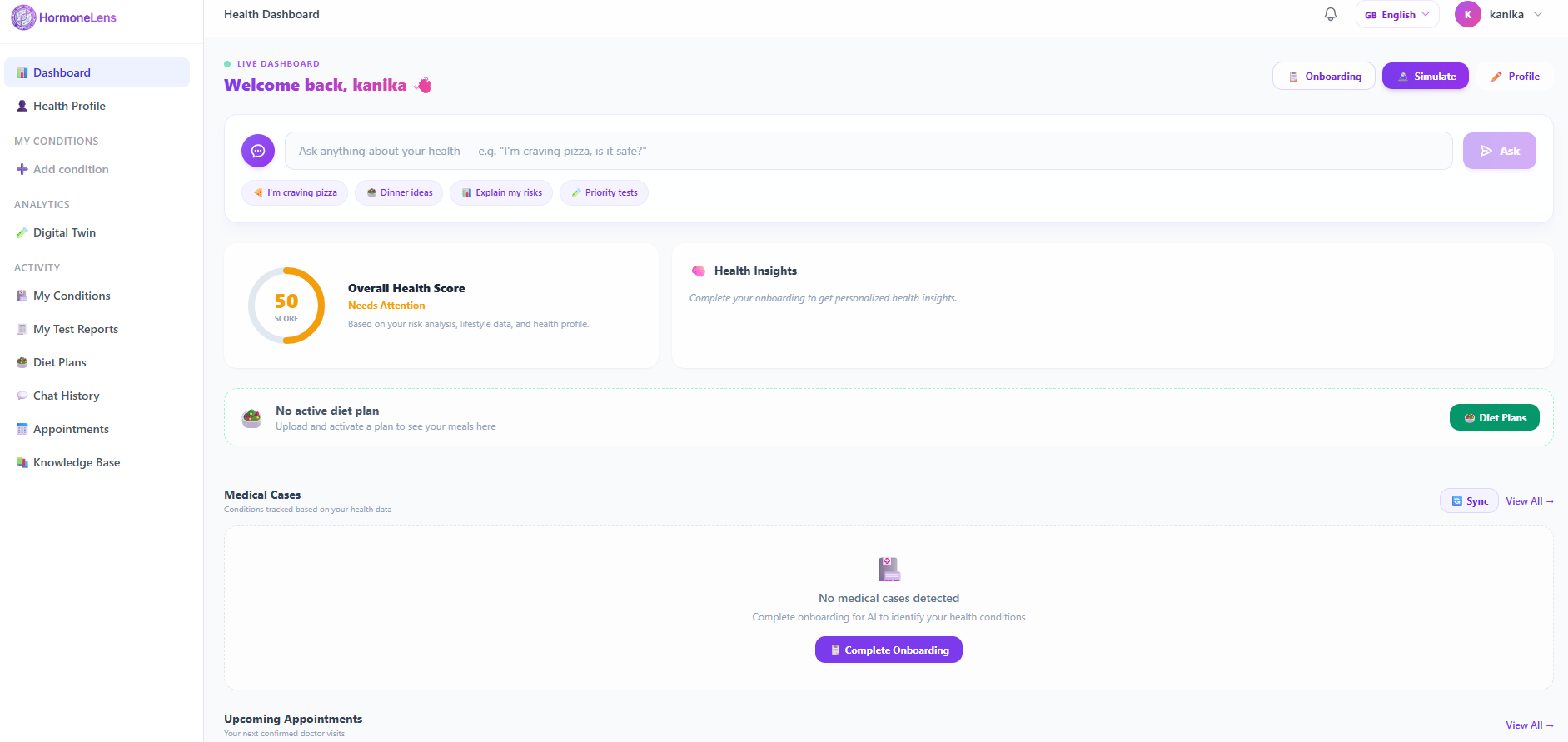
dashboard walkthrough
-
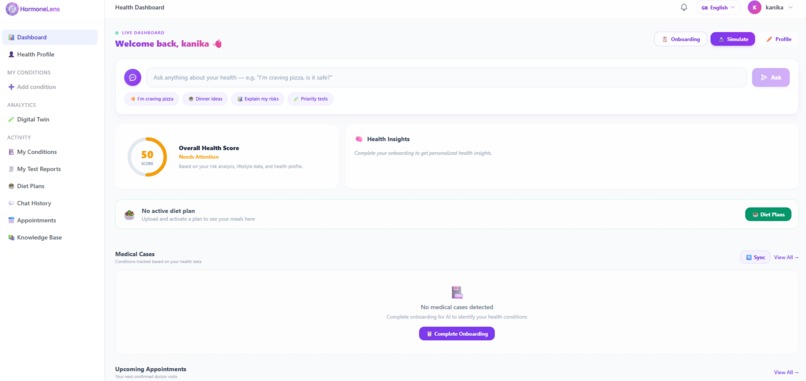
simulation center
-
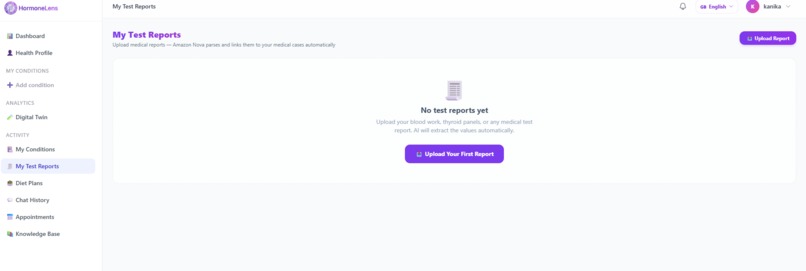
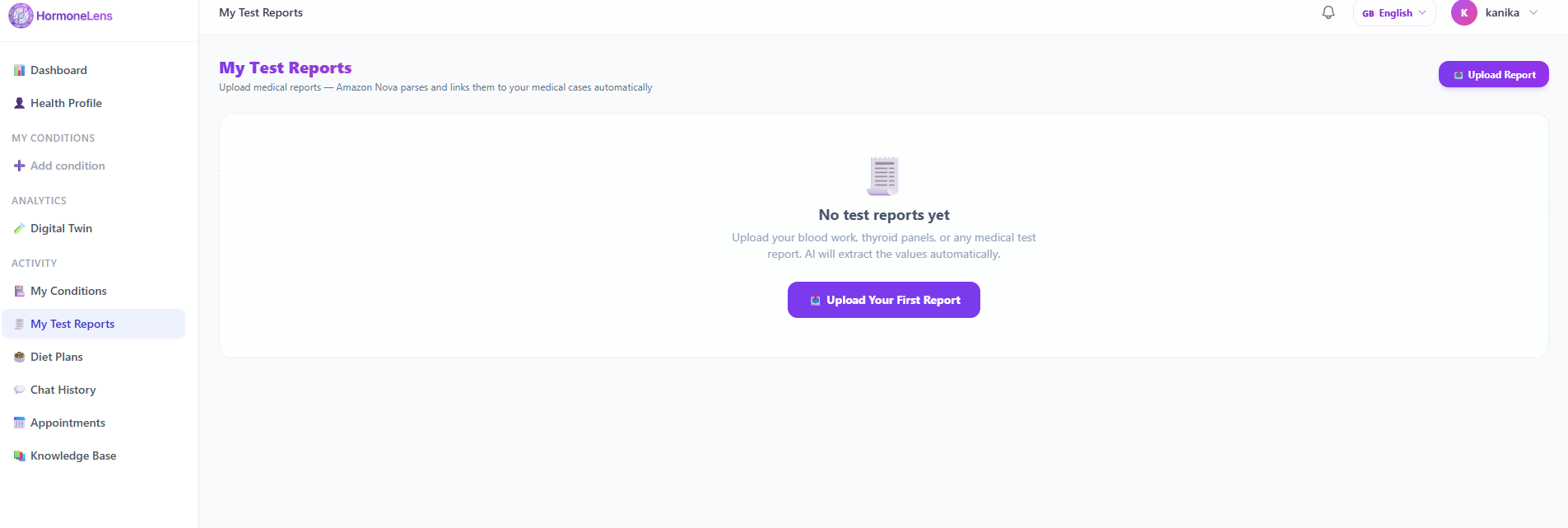
test report upload section
Inspiration
HormoneLens was inspired by a deeply personal experience. After being diagnosed with PCOD (Polycystic Ovarian Disease), I constantly struggled to understand how my daily lifestyle choices were affecting my hormonal health. Questions like what should I eat, how much exercise should I do, and how sleep or stress impact hormones were difficult to answer clearly.
While researching solutions, I realized that most health platforms provide generic recommendations, but hormonal health is extremely personal and dynamic. What works for one person may not work for another.
This challenge inspired the creation of HormoneLens, an AI-powered platform designed to help people understand how lifestyle decisions impact hormonal and metabolic health before symptoms worsen.
What it does
HormoneLens is an AI-powered digital twin simulation platform that helps users understand how their lifestyle choices may affect hormonal health.
Users can input lifestyle factors such as sleep, diet, activity level, and stress patterns. The system then analyzes this information and generates predictive metabolic and hormonal insights.
Instead of static health advice, HormoneLens allows users to simulate potential outcomes of their lifestyle decisions and understand long-term risks earlier.
How we built it
HormoneLens was built using modern web technologies combined with AI-powered health analysis.
The frontend was developed using React.js, JavaScript, HTML, and CSS to create an interactive dashboard.
The backend was built with Laravel and PHP to handle data processing and application logic.
For AI capabilities, the system integrates Amazon Nova Pro through AWS Bedrock, which processes lifestyle inputs and generates contextual health insights. The backend services run on AWS EC2, enabling scalable cloud deployment.
To visualize insights interactively, we used Three.js to support simulation-style visualizations.
Challenges we ran into
One of the main challenges was translating lifestyle data into meaningful health insights. Hormonal health is influenced by multiple factors, so designing a system that could interpret inputs accurately required careful prompt design and experimentation.
Another challenge was building a simulation experience that is both informative and easy for users to understand. Health data can be complex, so the interface needed to simplify insights without losing their meaning.
Integrating AI insights smoothly into the user experience also required several iterations to ensure the system felt responsive and intuitive.
Accomplishments that we're proud of
We are proud of building a working prototype that demonstrates how AI can be used for predictive health insights.
HormoneLens successfully combines AI-generated analysis with a simulation-style interface, allowing users to explore how their lifestyle choices might affect hormonal health.
Most importantly, the project transforms a personal health challenge into a solution that could potentially help many others facing similar hormonal health issues.
What we learned
Through this project we learned how powerful AI can be when combined with interactive simulations.
We also gained experience integrating foundation models like Amazon Nova through AWS Bedrock and designing AI prompts that generate structured insights.
Another key learning was the importance of user-centered design in healthcare technology. Health platforms must present insights clearly so users can make informed decisions.
What's next for HormoneLens
In the future, HormoneLens could evolve into a more advanced preventive healthcare platform.
Possible improvements include integrating wearable health device data, enabling continuous metabolic monitoring, and providing real-time AI-driven health recommendations.
The long-term vision is to help people understand their bodies better and move healthcare from reactive treatment to proactive health prediction using AI-powered simulations.

Log in or sign up for Devpost to join the conversation.