Inspiration
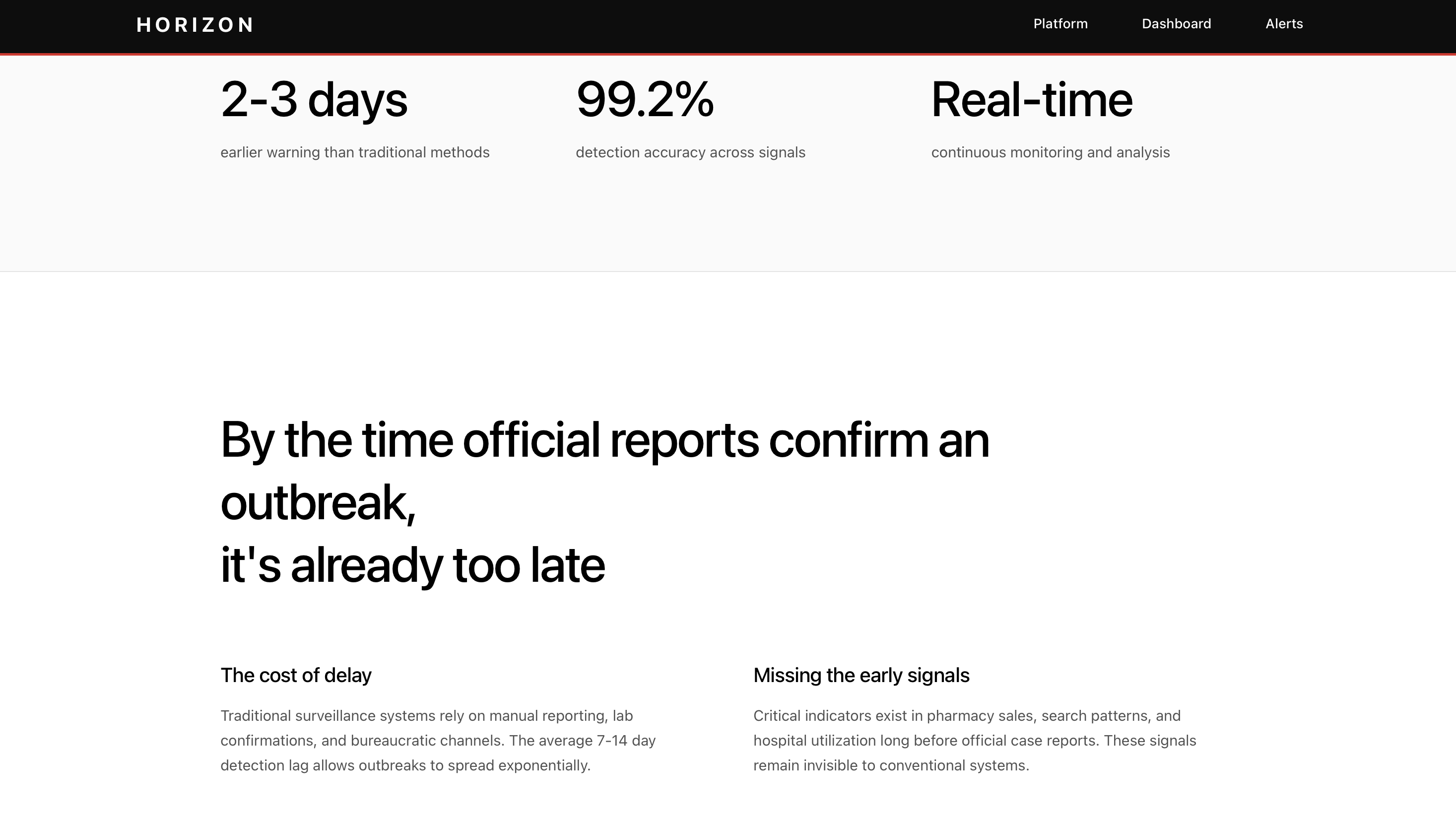
Horizon was inspired by a personal loss. In 2020, I lost my aunt to COVID-19 during the peak hospital overflow crisis. What made it worse was knowing that early warning signals existed — rising search trends, medication shortages, and hospital admissions — but no system connected these clues in time to save lives. We realized outbreaks aren’t invisible. The signals are already out there. But without intelligent systems to unify them, people, hospitals, and cities stay unprepared. Horizon was built to change that.
What it does
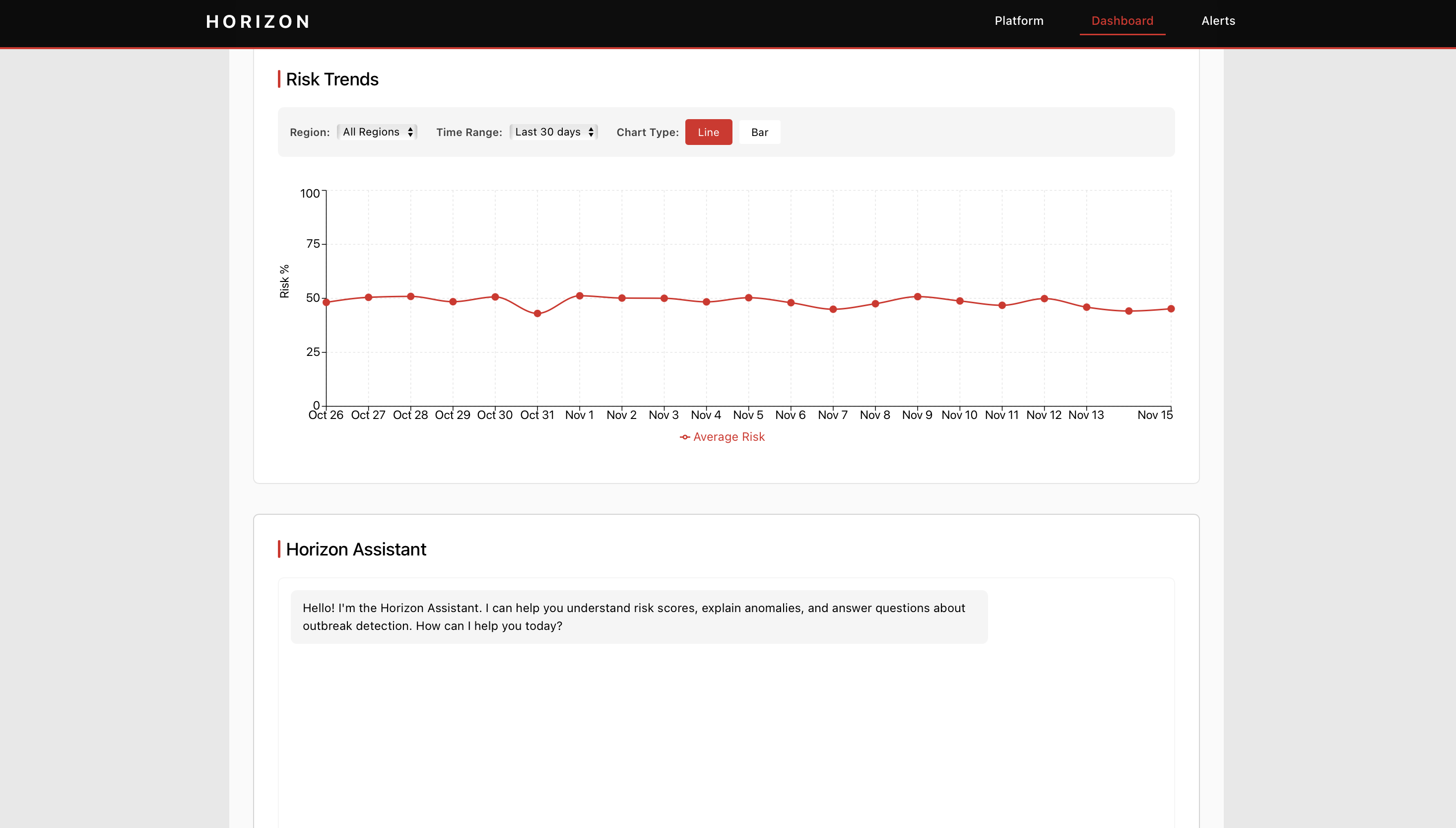
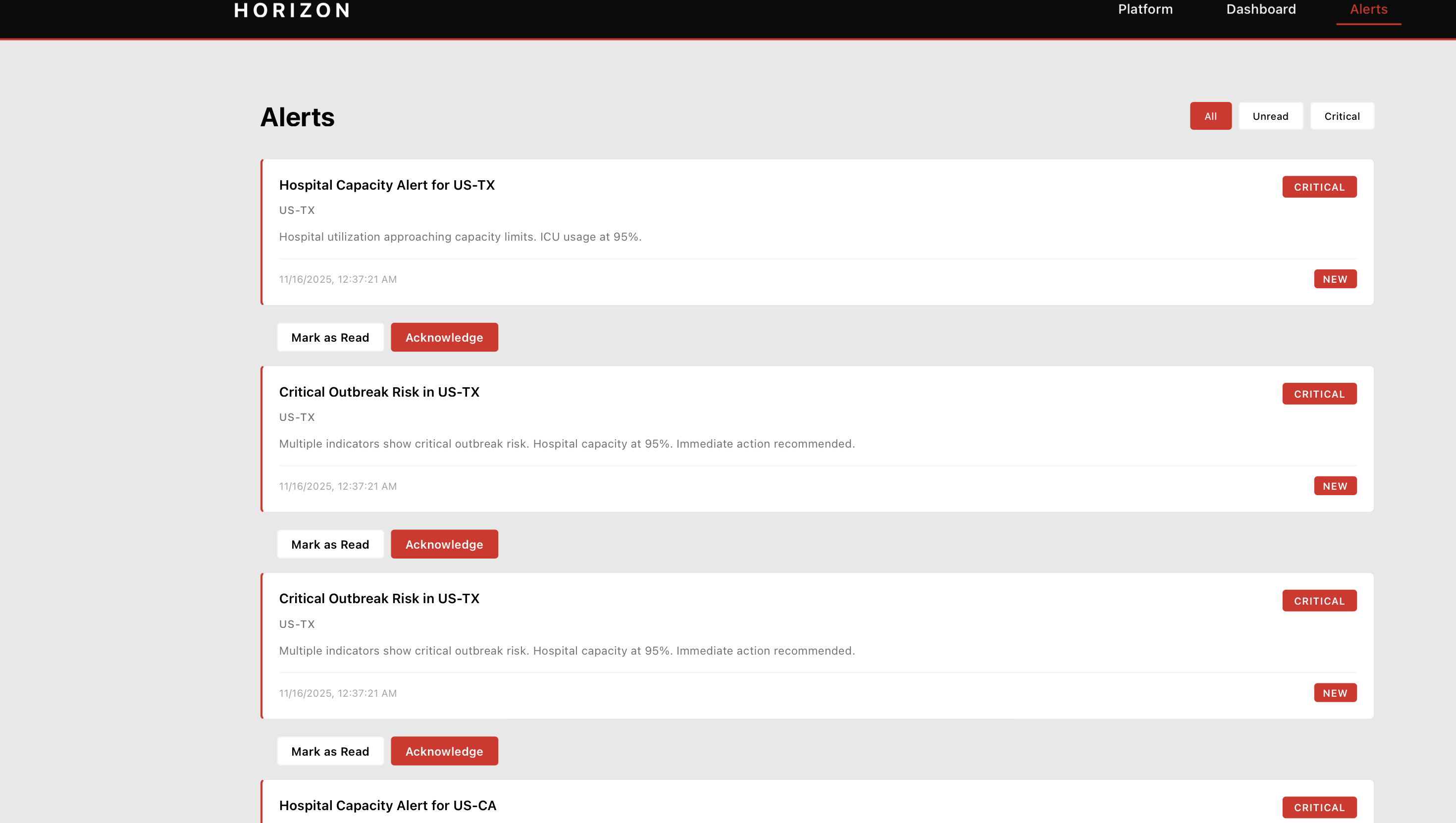
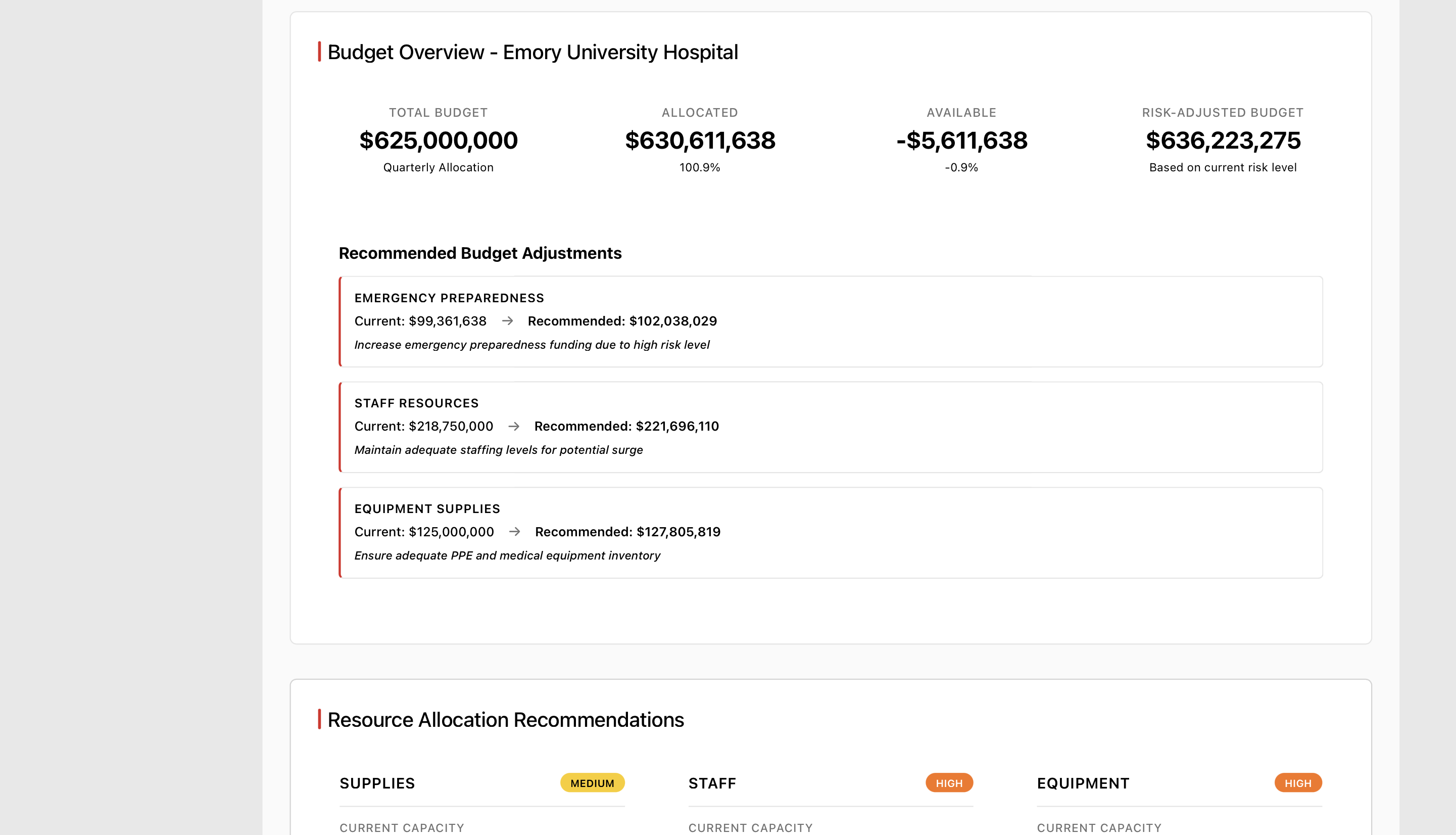
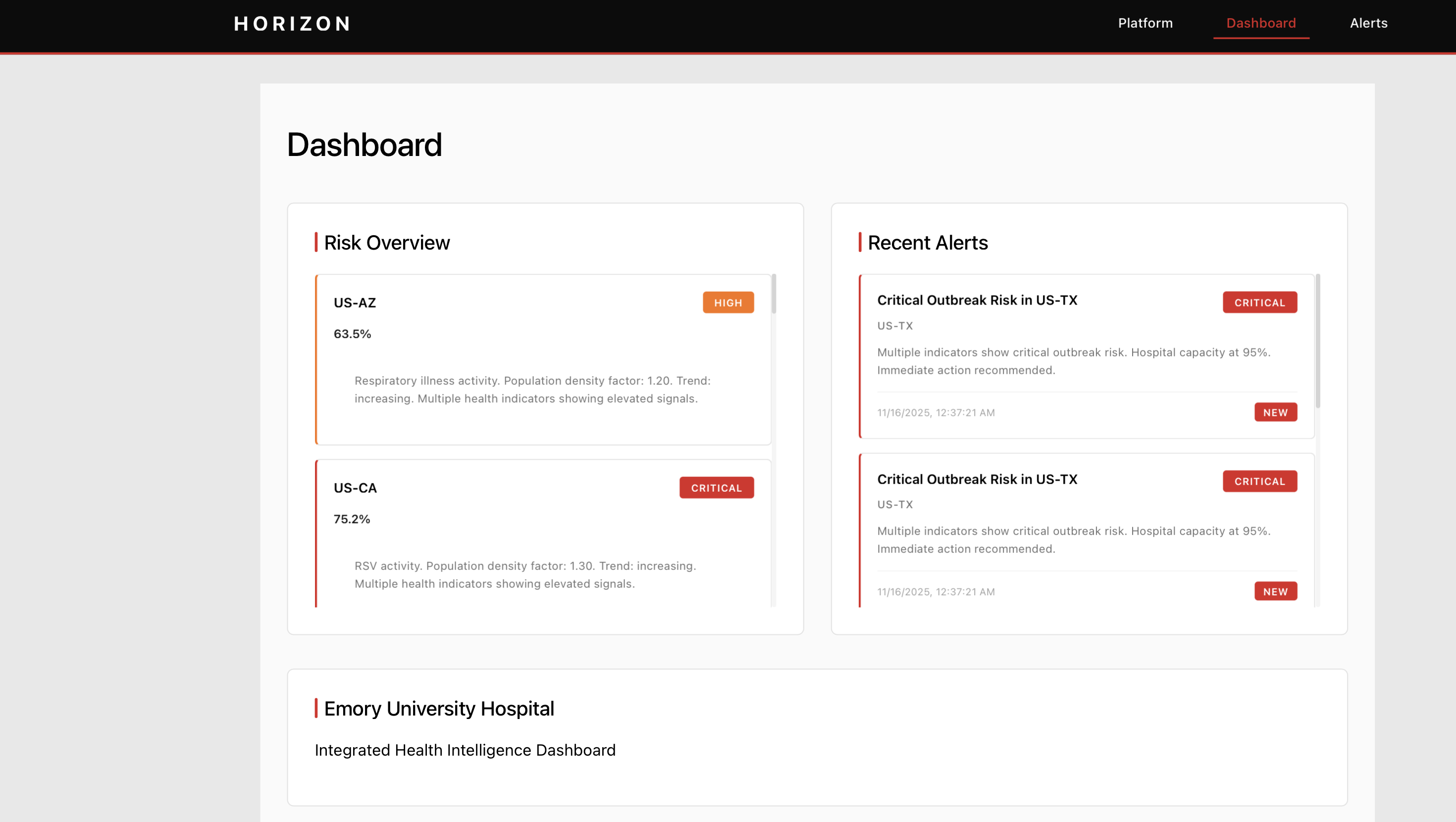
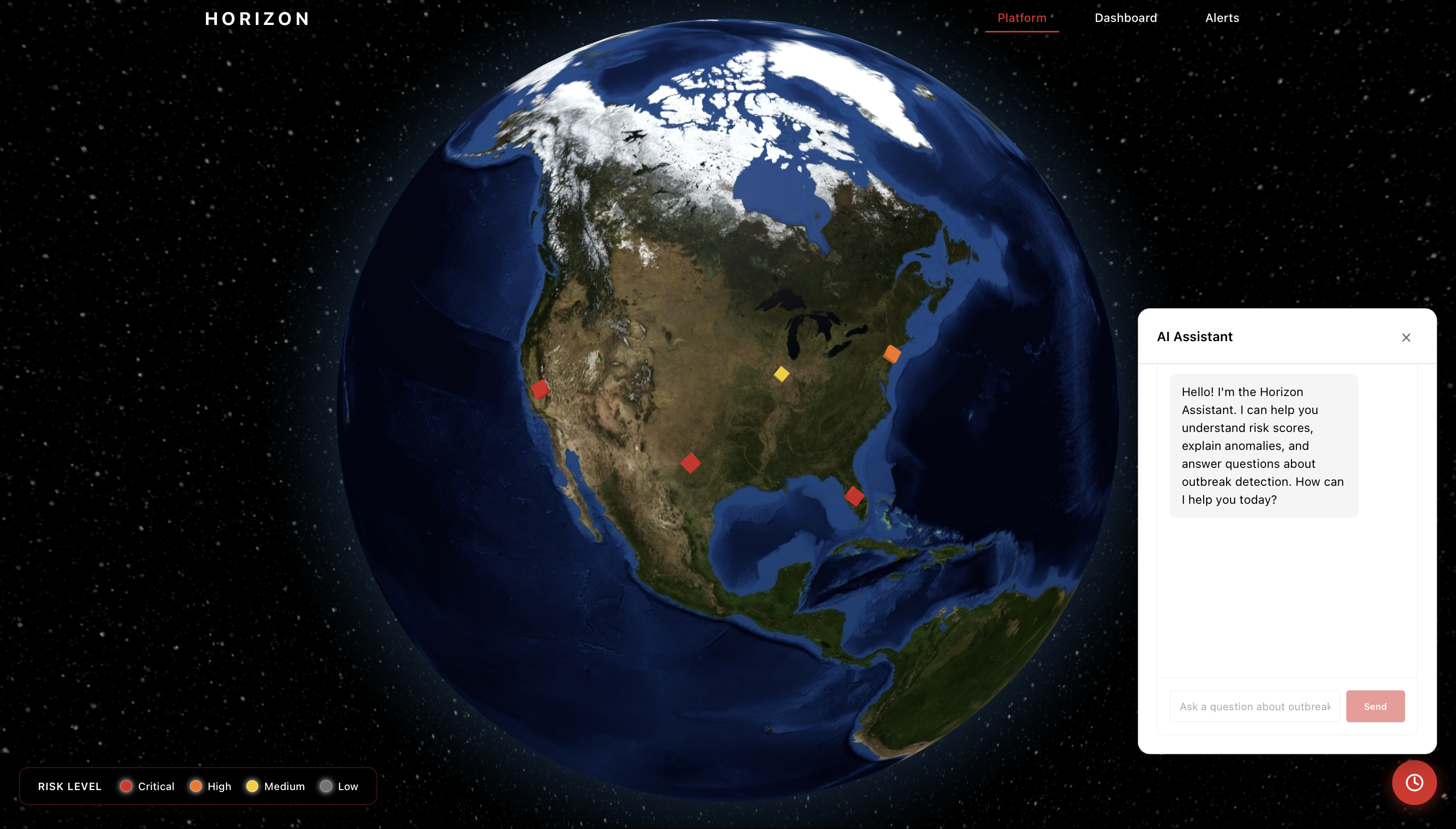
Horizon is an AI-powered outbreak early-warning platform that predicts emerging health threats before they happen. It brings together real-time indicators like: Search trends (fever, cough, chills) Symptom spikes Hospital capacity data Respiratory illness trends Population density Historical outbreak patterns Horizon then: Computes a risk score for each region Flags early outbreak warnings Issues critical alerts when thresholds are exceeded Recommends budget reallocations for emergency readiness Visualizes global hotspots on a 3D predictive risk map Uses an AI assistant to explain anomalies and trends in plain language Think of it as a real-time “weather radar” for infectious disease.
How we built it
Programming languages Python 3.11+ (backend, ML, ETL) TypeScript (frontend) JavaScript (frontend) Backend frameworks & libraries FastAPI 0.104.1 — REST API Uvicorn — ASGI server Pydantic 2.5.0 — data validation SQLAlchemy 2.0.23 — ORM Alembic 1.12.1 — migrations Frontend frameworks & libraries React 18.2.0 — UI React Router DOM 6.20.0 — routing TypeScript 5.2.2 — type safety Vite 5.0.8 — build tool Axios 1.6.2 — HTTP client Databases PostgreSQL 15+ — primary database TimescaleDB — time-series extension Snowflake (optional) — analytics warehouse Machine learning & AI NumPy 1.26.2 — numerical computing Pandas 2.1.3 — data manipulation Scikit-learn 1.3.2 — ML XGBoost 2.0.2 — gradient boosting PyOD 1.1.2 — anomaly detection MLflow 2.9.2 — experiment tracking LLM/AI services OpenRouter API — LLM access (GPT-4o-mini, etc.) Data visualization Recharts 2.10.3 — charts Mapbox GL 3.0.1 — maps React Map GL 7.1.7 — React map components React Globe.gl 2.37.0 — 3D globe Three.js 0.181.1 — 3D graphics ETL & data orchestration Prefect 2.14.11 — workflow orchestration PyTrends 4.9.2 — Google Trends PyArrow 14.0.1 — data formats HTTP & API clients HTTPX 0.25.2 — async HTTP Requests 2.31.0 — HTTP Database drivers psycopg2-binary 2.9.9 — PostgreSQL adapter asyncpg 0.29.0 — async PostgreSQL snowflake-connector-python 3.7.0 — Snowflake (optional) Authentication & security python-jose[cryptography] 3.3.0 — JWT passlib[bcrypt] 1.7.4 — password hashing python-multipart 0.0.6 — form data Infrastructure & DevOps Docker — containerization Docker Compose — orchestration Nginx — frontend web server (production) Cloud services (optional/integration) Snowflake — data warehouse OpenRouter — LLM API gateway Google Trends API — search trends Object storage (S3/GCS) — file storage Development tools ESLint — linting TypeScript ESLint — TS linting Python-dotenv 1.0.0 — environment variables Data sources & APIs Our World in Data (OWID) — COVID metrics Google Trends — search trends Hospital systems (FHIR, CSV/SFTP) Summary Backend: Python + FastAPI + PostgreSQL + TimescaleDB Frontend: React + TypeScript + Vite ML: Scikit-learn + XGBoost + PyOD LLM: OpenRouter ETL: Prefect Visualization: Recharts + Mapbox + Three.js Infrastructure: Docker The stack supports multi-tenant, near real-time outbreak detection with ML-powered risk scoring, anomaly detection, and AI-powered insights.
Challenges we ran into
API key management: coordinating multiple OpenRouter accounts while building collaboratively. Data limitations: no real hospital data due to HIPAA, requiring us to blend real public datasets with synthetic Emory-style hospital trends. Time constraints: building a full AI-driven platform with dashboards, an assistant, and a 3D predictive map in under 48 hours. Deployment issues: Render environment variables and backend routing initially caused deployment failures. UI integration: syncing real-time backend risk calculations with frontend components without breaking visual flows
Accomplishments that we're proud of
Built an end-to-end outbreak intelligence platform in one weekend Created a beautiful, clean dashboard UI that mirrors real hospital software Built a functional 3D global outbreak heatmap Designed a real AI-powered financial response engine that simulates hospital budget reallocation Implemented an AI assistant that explains risk and trends Combined technical, healthcare, and financial domains into one system Overcame multiple deployment failures under serious time pressure Turned a personal loss into a product that can help others
What we learned
How to collaborate effectively under a compressed timeline How to balance multiple API keys across team devices Predictive modeling using multi-signal data How healthcare surveillance systems actually work Why early outbreak detection fails in the real world How to build production-quality UI fast using Cursor and GitHub That FinTech + AI + healthcare = an incredibly powerful intersection The importance of story when pitching technical products
What's next for Horizon
Horizon doesn’t stop here. We plan to expand the platform with: Real CDC and HHS integrations Automated citywide alert networks EHR-compatible hospital integrations Predictive modeling for resource shortages (ICU beds, PPE) Insurance and emergency department partnerships A public API for outbreak intelligence Mobile push notifications for early warnings Our long-term vision: A global early-warning network that detects outbreaks before they become crises.


Log in or sign up for Devpost to join the conversation.