Inspiration
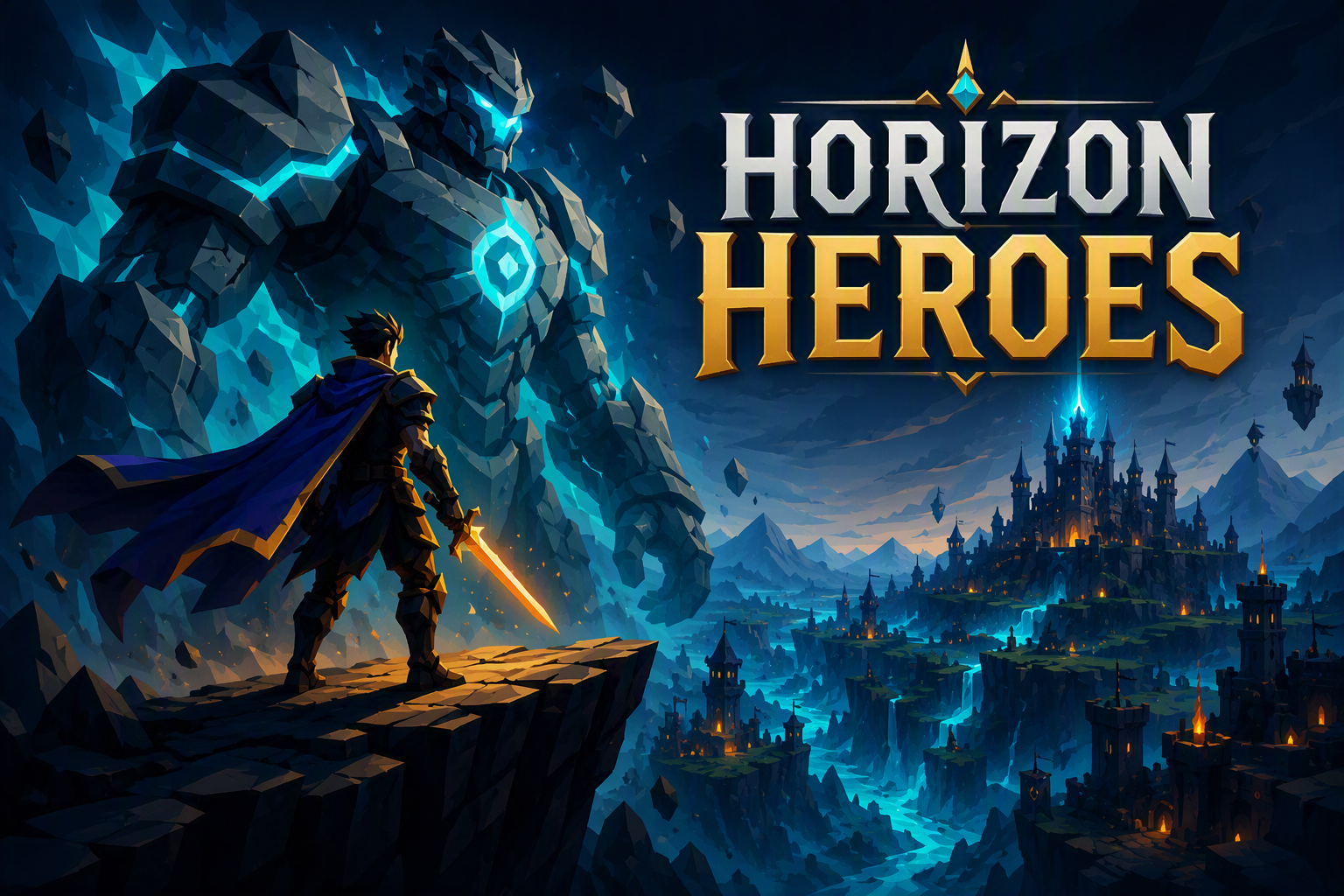
Horizon Heroes was born out of a deep admiration for Epic Games' Paragon, a title that defined high-intensity, third-person action MOBA combat. However, high-end MOBAs typically demand massive client downloads, high-end hardware rigs, and heavy bandwidth. The driving vision was to distill that exact depth, strategic tension, and fluid tactical combat into a frictionless, low-bandwidth, mobile-first experience accessible instantly via the web.
What it does
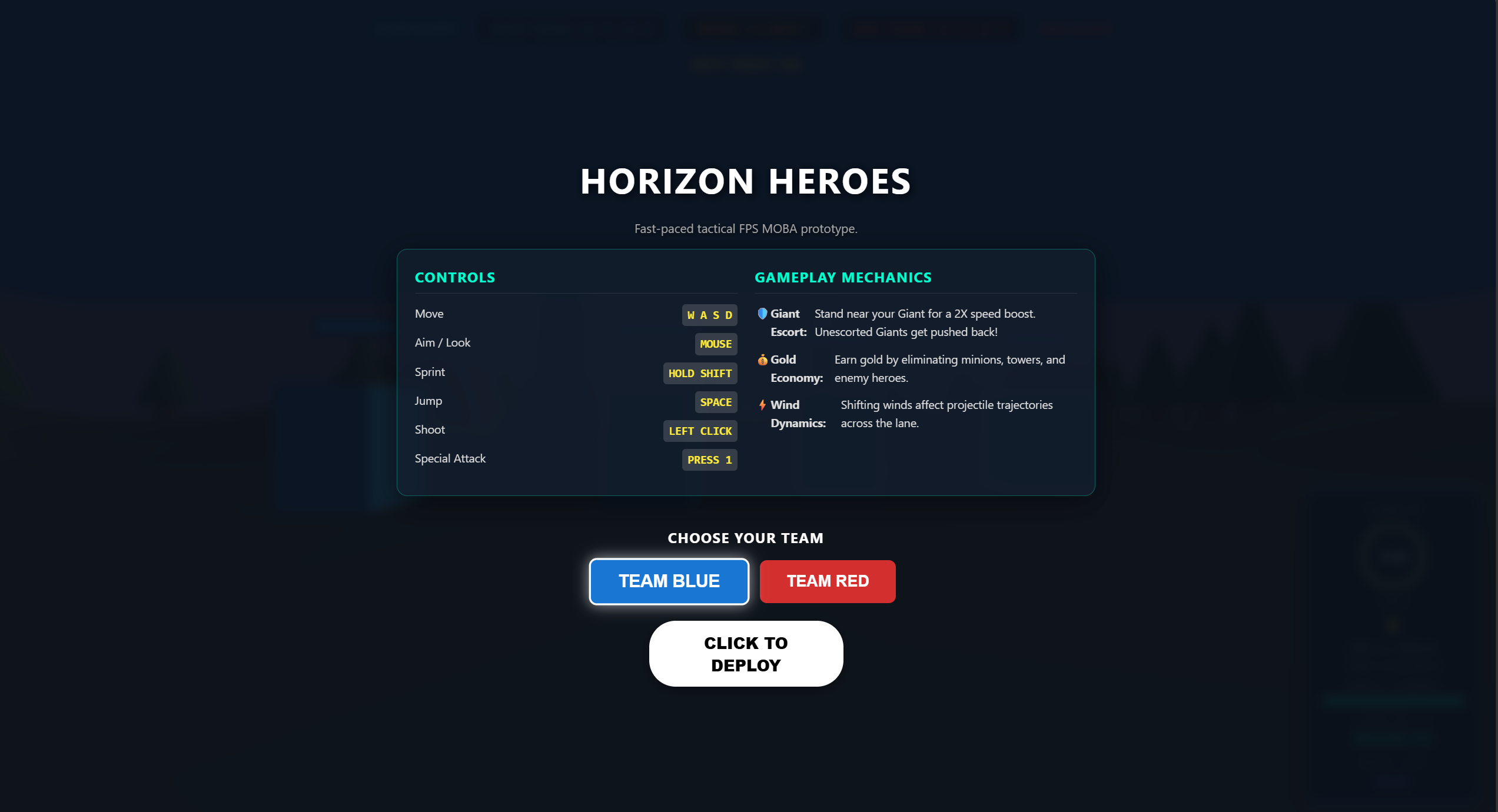
Horizon Heroes is a fast-paced single player action-strategy MOBA prototype built for competitive mobile and web play. Key mechanics include:
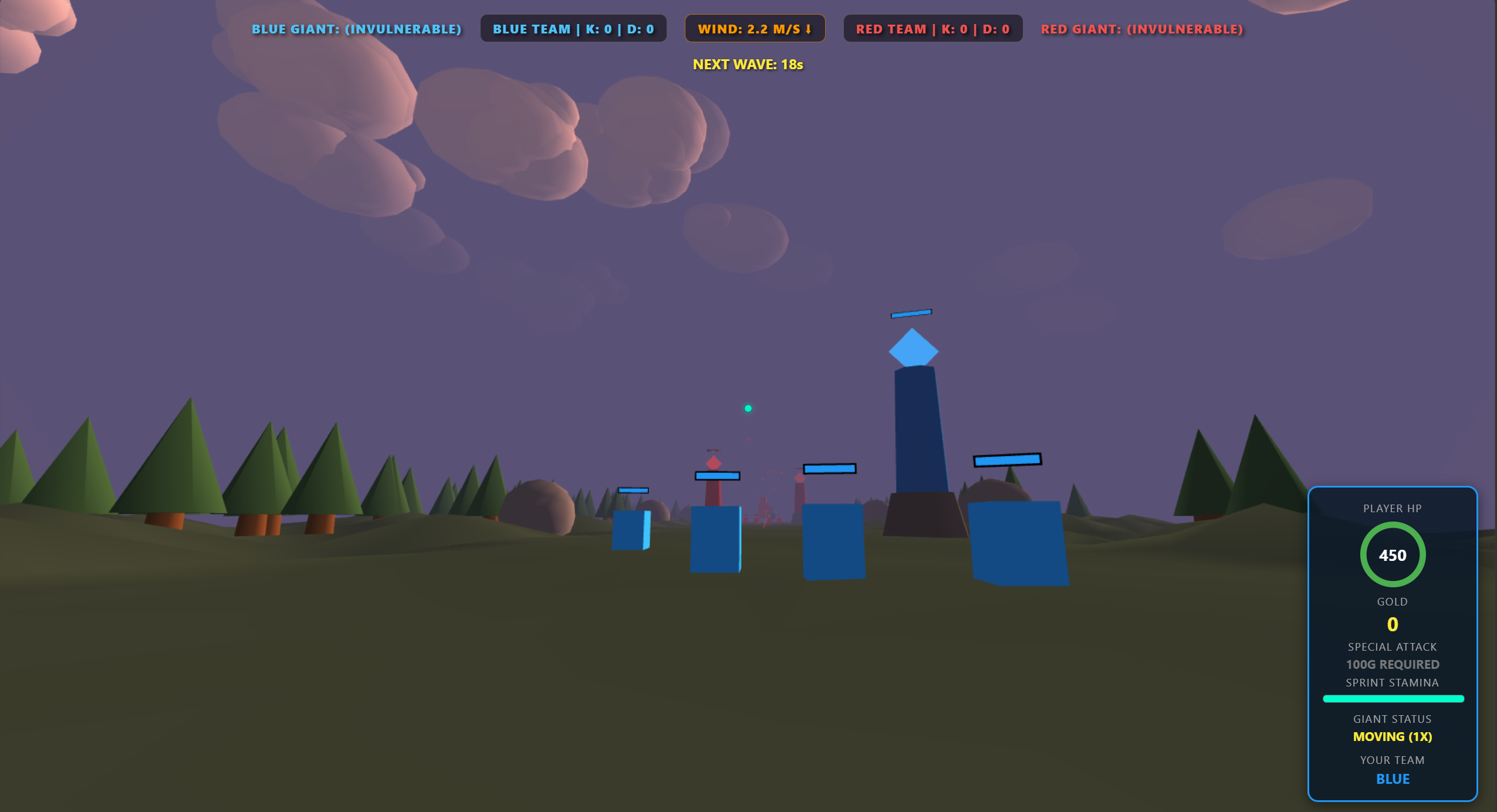
A single wide-lane map layout designed to compress spatial awareness and heighten engagement frequency.
A cooperative Critical Ball tower takedown system that replaces slow, passive lane farming with aggressive, team-based objective control.
Dynamic camera perspectives supporting both isometric and first-person tactical modes.
Intelligent AI enemy heroes and squadmates, alongside multi-phase lane boss encounters
How we built it
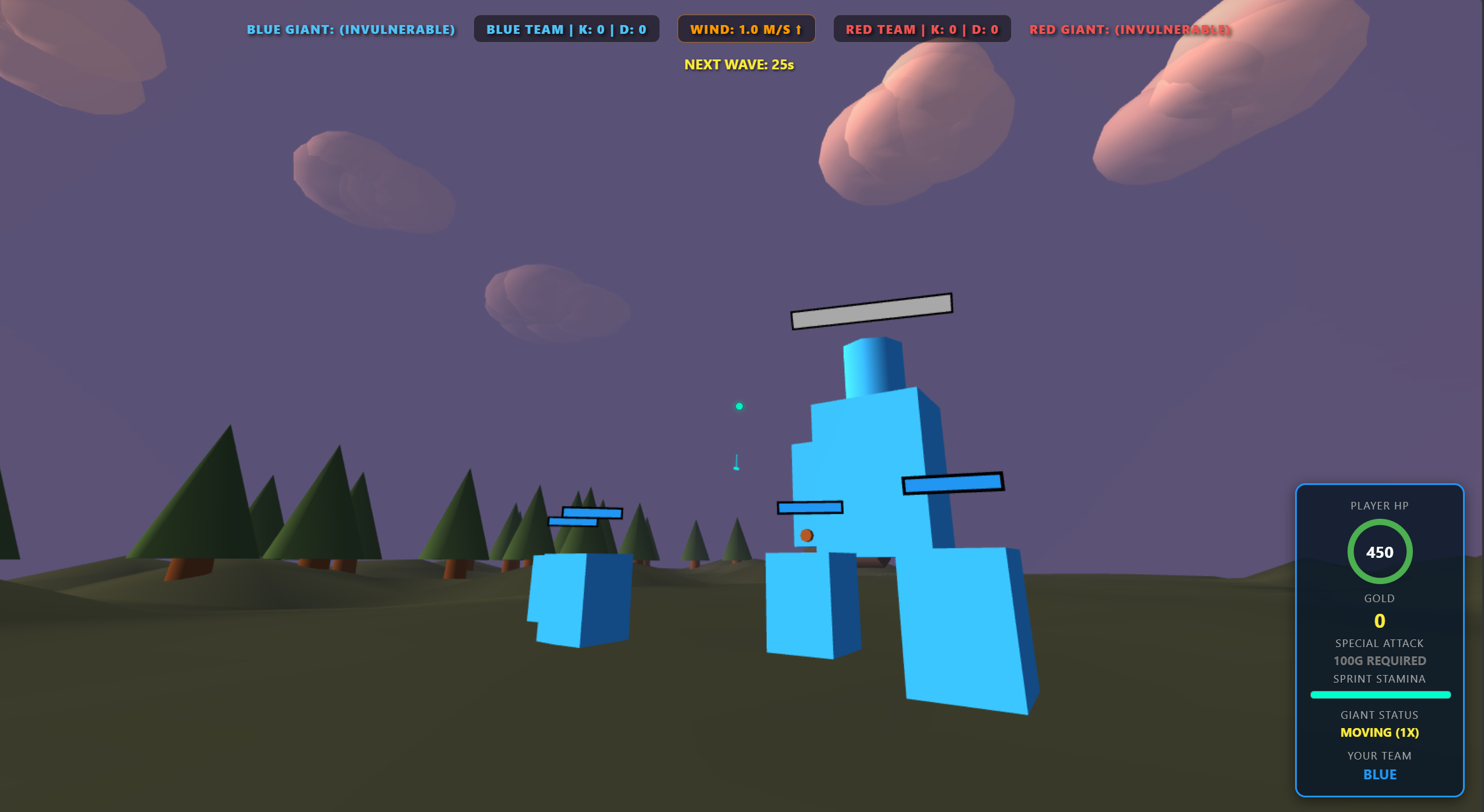
The project was built utilizing a high-performance Three.js WebGL stack tailored for mobile-first rendering efficiency:Environment & Optimization: Leveraged procedural terrain generation and distance-based Level of Detail (LOD) foliage algorithms to keep draw calls low. Programmed behavior trees and obstacle-avoidance pathfinding loops for non-player characters to maintain balanced solo and squad skirmishes. UI/UX Layer: Developed a lightweight, responsive HUD overlay tracking real-time health, sprint stamina depletion, and match objective telemetry.
Challenges we ran into
Mobile Performance Constraints: Maintaining a stable target frame rate on mobile web browsers while rendering particle-heavy ability casts, dynamic shadows, and boss animations required aggressive asset compression and shader optimization. Touch Control Ergonomics: Balancing multi-touch virtual joysticks with camera switching made it challenging to prevent accidental input fatigue during high-stress team fights.Bandwidth Budgets: Keeping initial asset payload sizes minimal to satisfy the low-bandwidth requirement without sacrificing visual fidelity or environmental atmosphere.
Accomplishments that we're proud of
Successfully packaging a fully realized MOBA framework into a responsive web browser prototype that loads instantly.
Proving that the cooperative Critical Ball mechanic completely eliminates slow, tedious lane grinding in favor of fast, high-stakes coordination.
Achieving responsive touch controls and smooth AI pathfinding within a compressed hackathon timeline.
What we learned
WebGL performance tuning relies heavily on early bottleneck identification—minimizing state switches and batching geometry is non-negotiable for mobile web games.
Designing tightly scoped, single-lane objectives creates a much more punchy, satisfying gameplay loop for short session lengths than sprawling multi-lane maps.
What's next for Horizon Heroes
Multiplayer Matchmaking: Integrating WebRTC server-authoritative state synchronization for real-time peer-to-peer or server-backed competitive matches.
Expanded Progression: Adding customizable hero classes, unlockable tactical loadouts, and cosmetic skins.
Spatial Cross-Play: Integrating WebXR capabilities to allow seamless cross-play between desktop browsers, mobile devices, and spatial VR headsets.
Built With
- gemini
- meta-ai

Log in or sign up for Devpost to join the conversation.