-
-
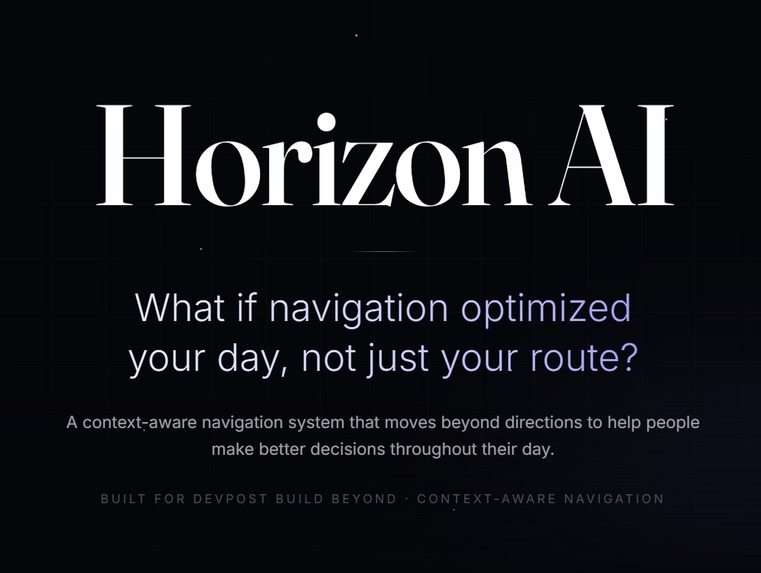
Landing page
-
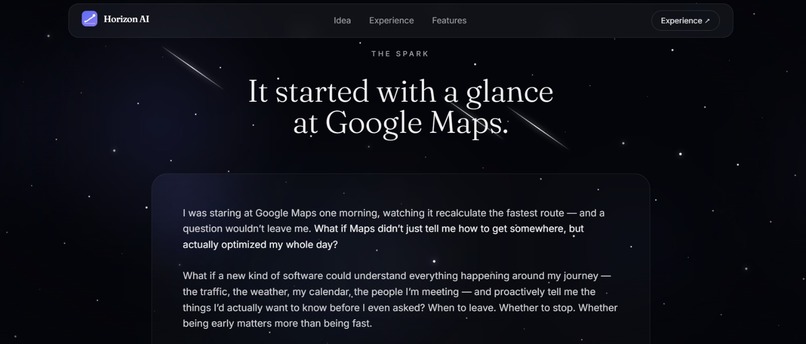
The thought
-
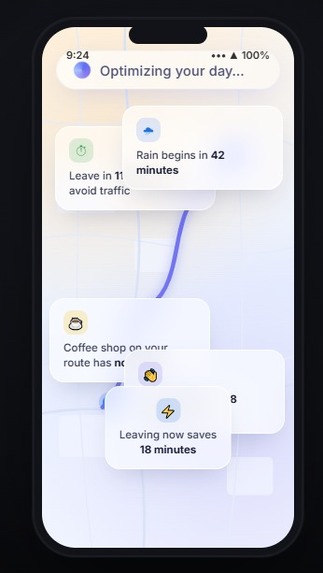
Actual Product
-
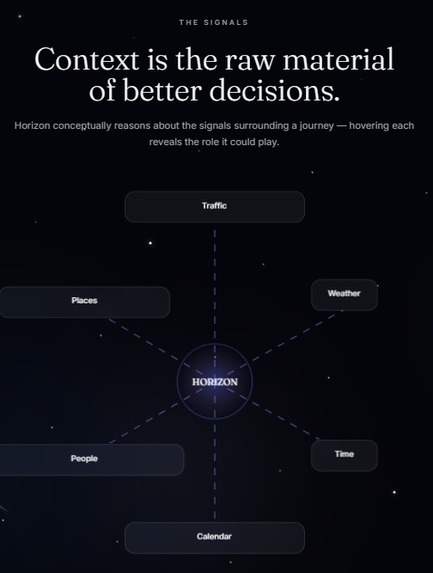
Factors/Features
-
Explanation
-
End
Inspiration
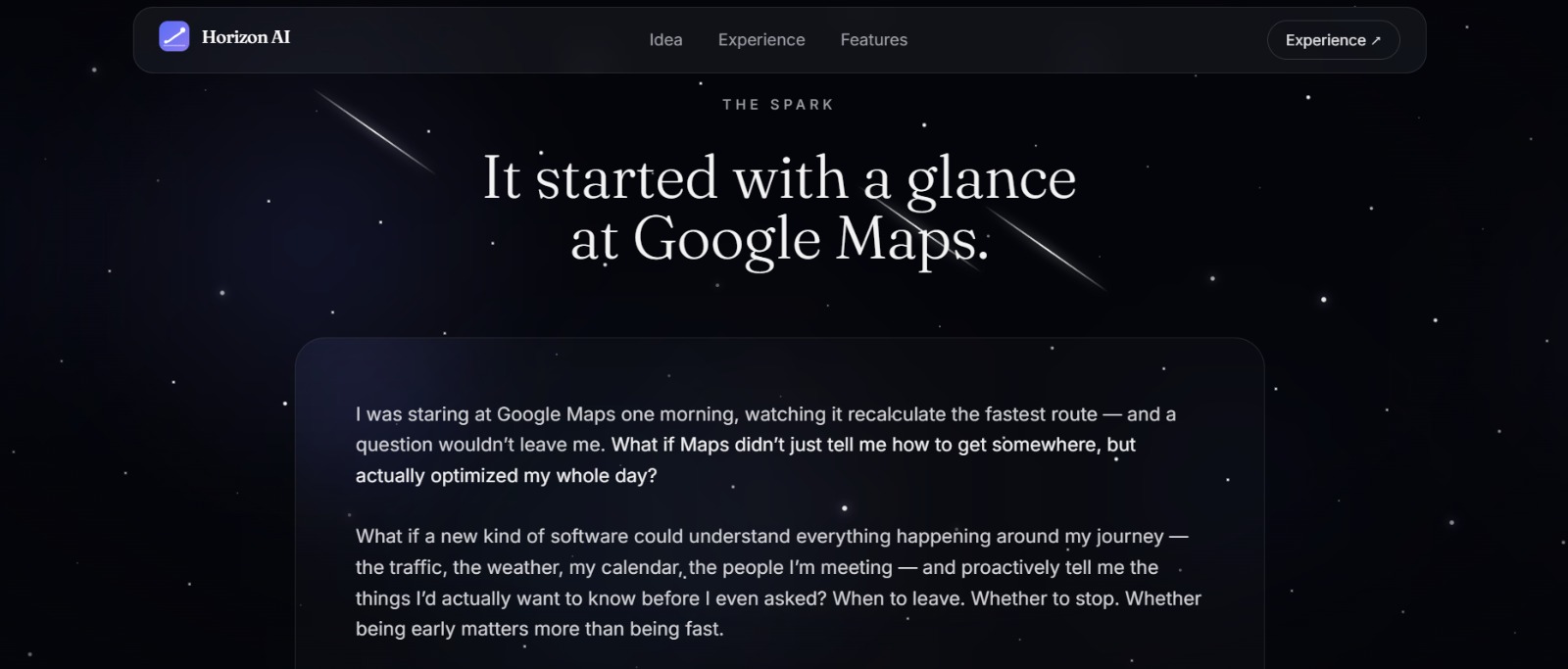
It started with a glance at Google Maps.
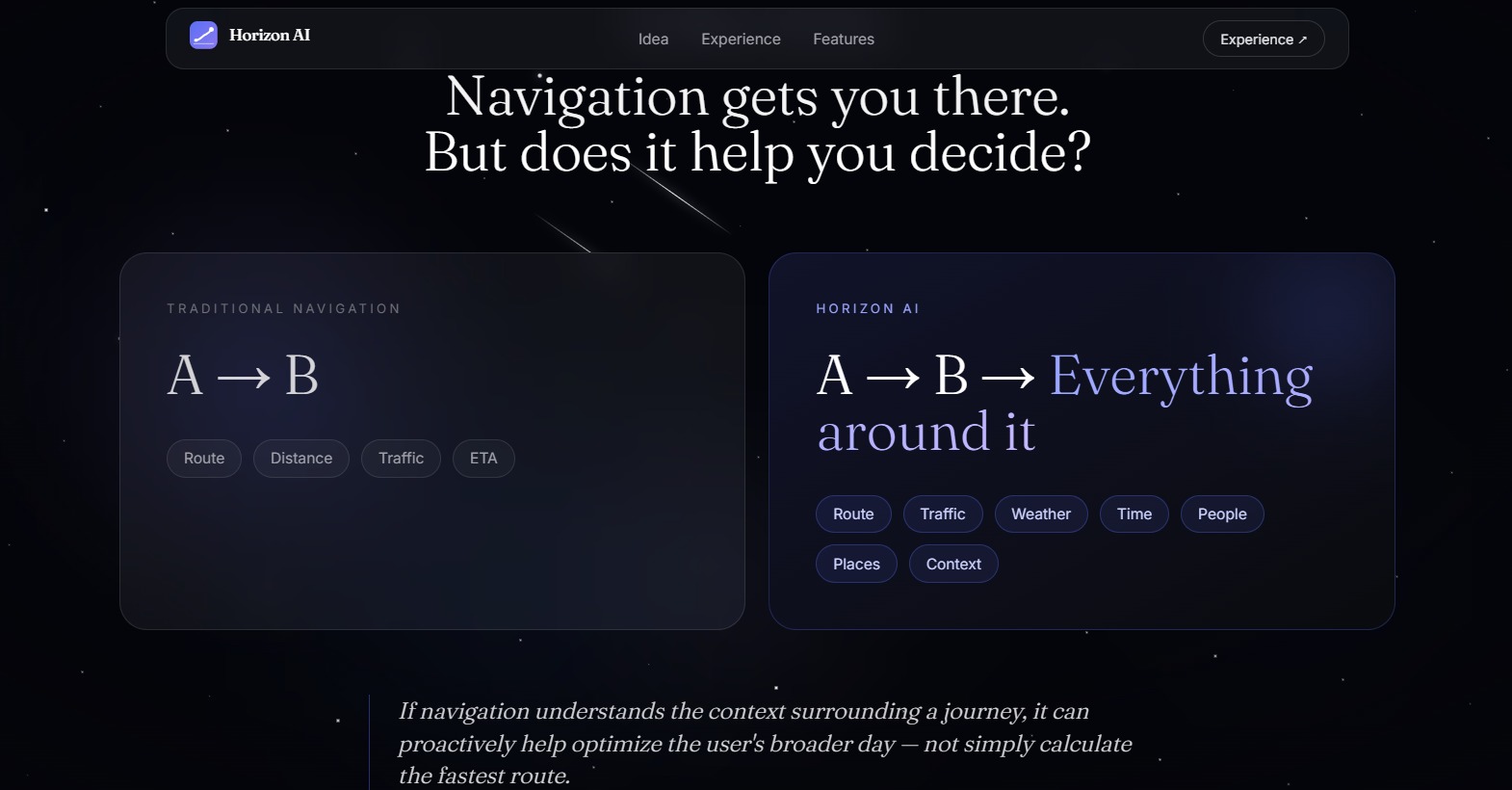
I was staring at Google Maps one morning, watching it recalculate the fastest route, and one question wouldn’t leave me:
What if Maps didn’t just tell me how to get somewhere, but helped me plan my whole journey?
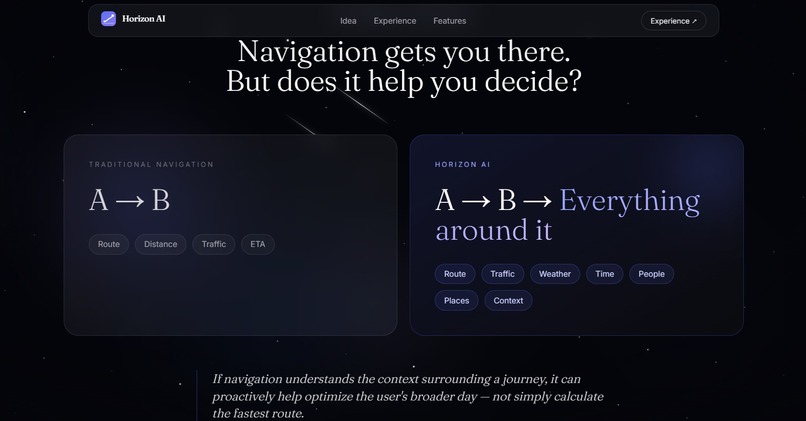
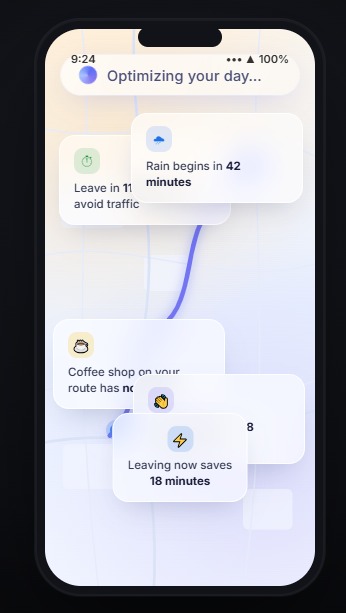
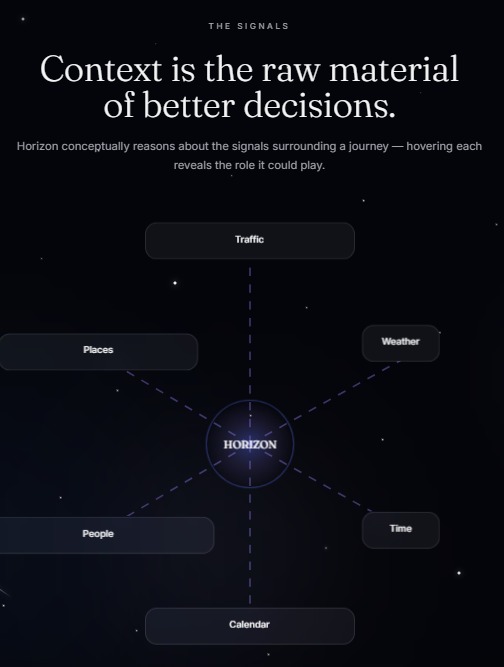
A route is only one part of getting somewhere. There’s traffic, weather, time, meetings, delays, and the simple question of whether I actually need to leave right now. I started thinking about what navigation would look like if it could connect those pieces and give useful suggestions before I even asked.
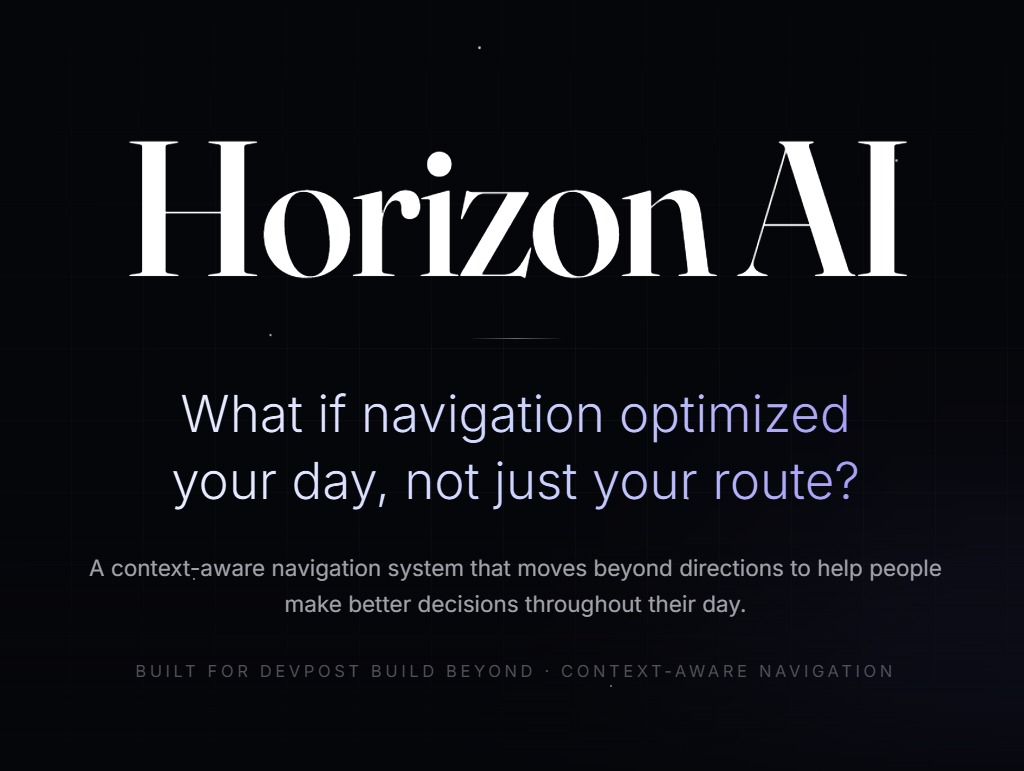
That idea became Horizon, A project I built for the Devpost Build Beyond hackathon to explore what navigation could become if it went beyond showing a route.
What it does
Horizon is designed as a context aware travel companion, rather than just another map.
Instead of only showing a route, the idea is to help answer questions that come up around a journey:
- When should I leave?
- Is the fastest route actually the best option?
- Should I stop somewhere on the way?
- Do I have enough time before my next commitment?
- What might affect my journey today?
- Which contact is nearby?
The goal is to bring small but useful details together so navigation feels more connected to real life.
How we built it
I started by focusing on the experience and concept rather than trying to build another map from scratch.
I used Claude for ideation and problem exploration, then built the interactive prototype with Base44. This helped me move quickly from rough ideas to a working model that I could actually interact with and use to visualize the concept.
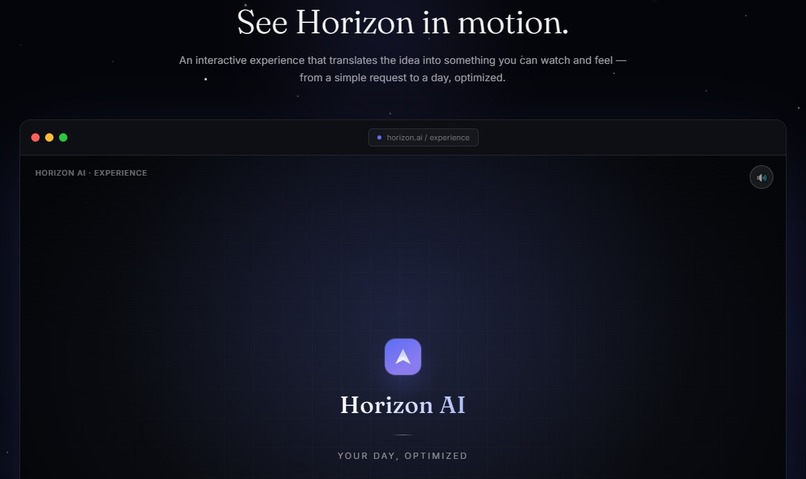
The prototype was mainly about exploring the product experience: how different pieces of context could come together and how Horizon could turn that information into useful suggestions.
Challenges we ran into
One of the biggest challenges was turning a broad idea into something concrete.
“Make Maps smarter” sounds simple until you start asking what smarter actually means. I had to narrow down the idea, decide which parts mattered most, and design an experience that could communicate the concept without becoming overwhelming.
Another challenge was balancing ambition with what I could realistically build during my first ever hackathon. I had a lot of ideas for what Horizon could eventually become, but I chose to focus on the core experience and interaction instead of trying to build a production ready navigation system in a limited time.
Accomplishments that we're proud of
The biggest accomplishment was taking an idea that started as a simple question and turning it into something I could actually interact with.
I’m also proud that the prototype helped me see the range and scalability of the concept. What started as “a better maps experience” could potentially become a much broader travel companion by connecting different parts of a person's journey.
Most importantly, I got to take an idea out of my head and actually build it during my first hackathon.
What we learned
The biggest thing I learned is that building a product isn't just about adding more features.
At first, my goal was to bring all my pieces of ideas together and make a working model to visualize my concept, then see its range of scalability. As I worked on the idea, I kept asking:
Would this actually make someone's journey easier?
That changed how I approached the prototype. Instead of trying to replace every feature of a maps app, I focused on the layer that could make navigation more useful and closer to our everyday lives: understanding context and helping people make better decisions, even through small details.
I also learned how much difference a prototype can make. An idea can sound great in your head, but once you see the experience on screen, you immediately notice what makes sense and what doesn't.
What's next for Horizon AI
The prototype is only the starting point.
The next step would be turning Horizon into an actual market-level product by connecting it with real world navigation, weather, maps, places, calendar, traffic and other APIs, then using AI to understand that information and make useful decisions around a person's journey.
Instead of simply giving users more information, Horizon could use that information to proactively suggest what matters, whether that's leaving earlier because of traffic, changing a route because of weather, finding a useful stop nearby, or adjusting a plan around a calendar event.
The long-term vision is simple:
Don't just show people the way. Help them understand the journey.
Built With
- base44
- claude
- css3
- googlefonts
- html5
- javascript
- react


Log in or sign up for Devpost to join the conversation.