Inspiration
A fellow music enthusiast may be in the room with you already. There's just no easy way to know. It's been shown that starting conversations is the hardest part of meeting new people. If there's a common ground you both know about, that makes it way easier.
What it does
Gravitate gives two people who already have similar music tastes some common ground to start interacting.
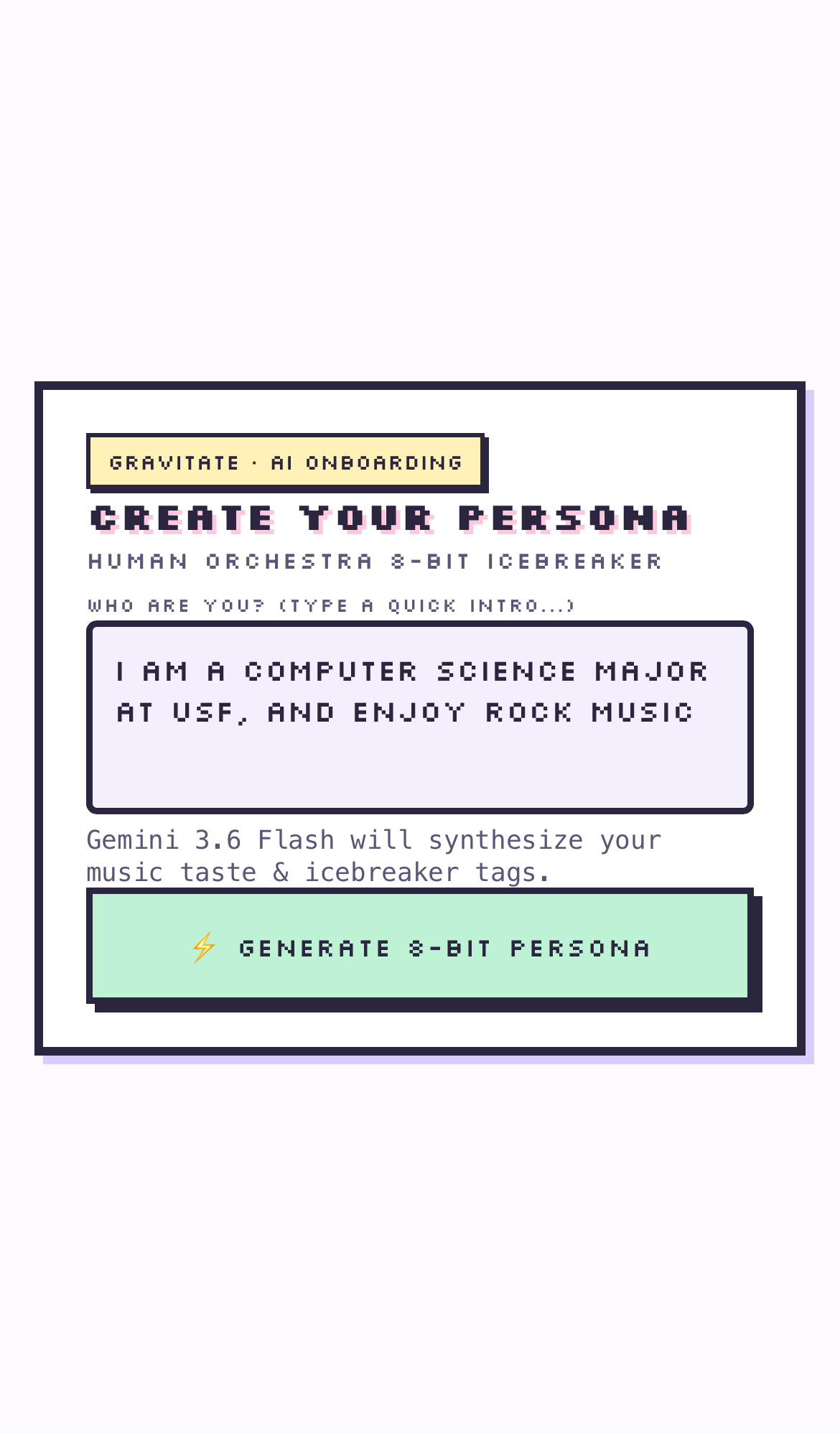
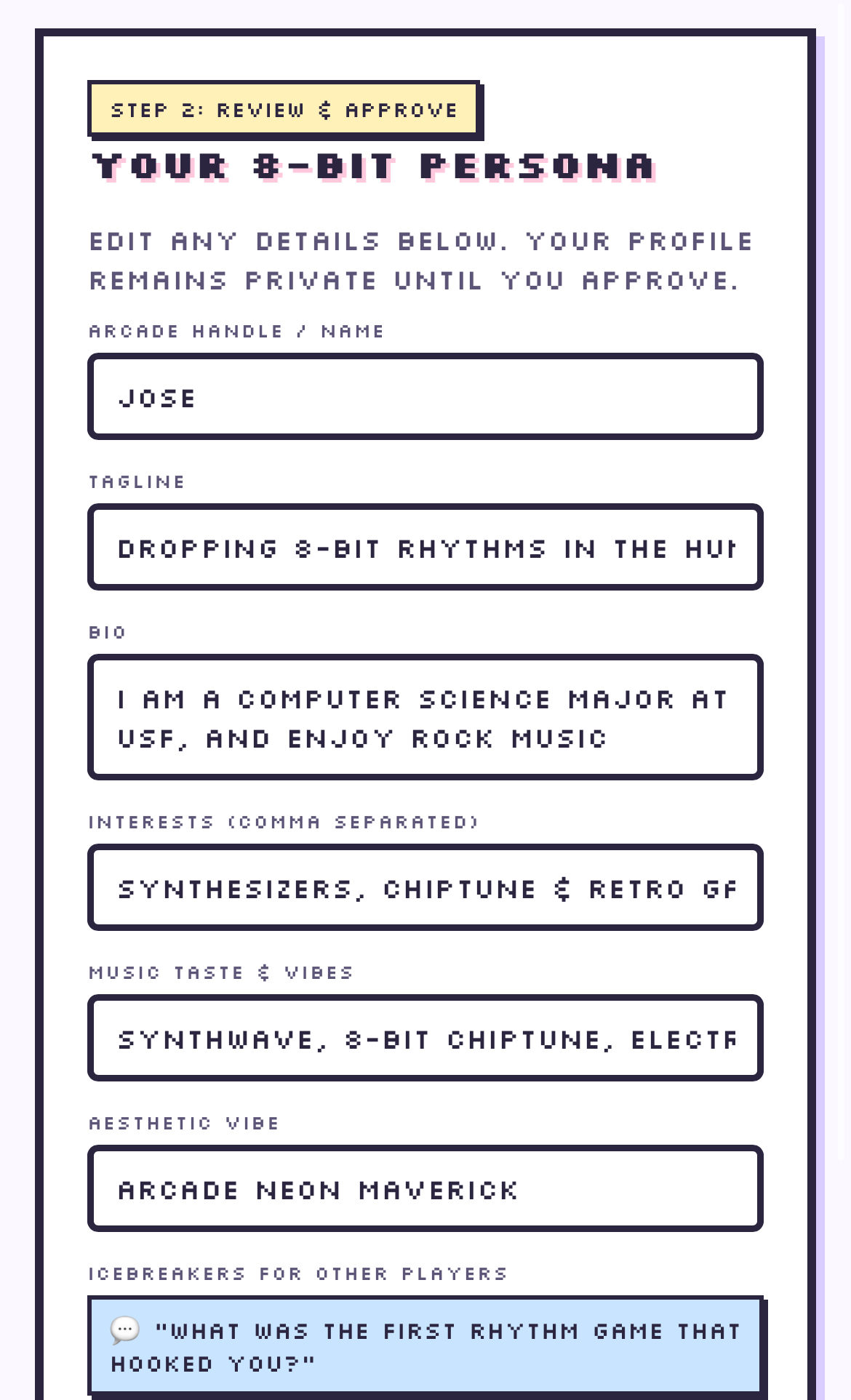
- Make a profile, by giving a short intro through voice or text, and then answering some follow up questions. You can edit everything before its approved.
- Find your overlap. Gravitate shows the genres of music you both share interest in, plus other complementary ones.
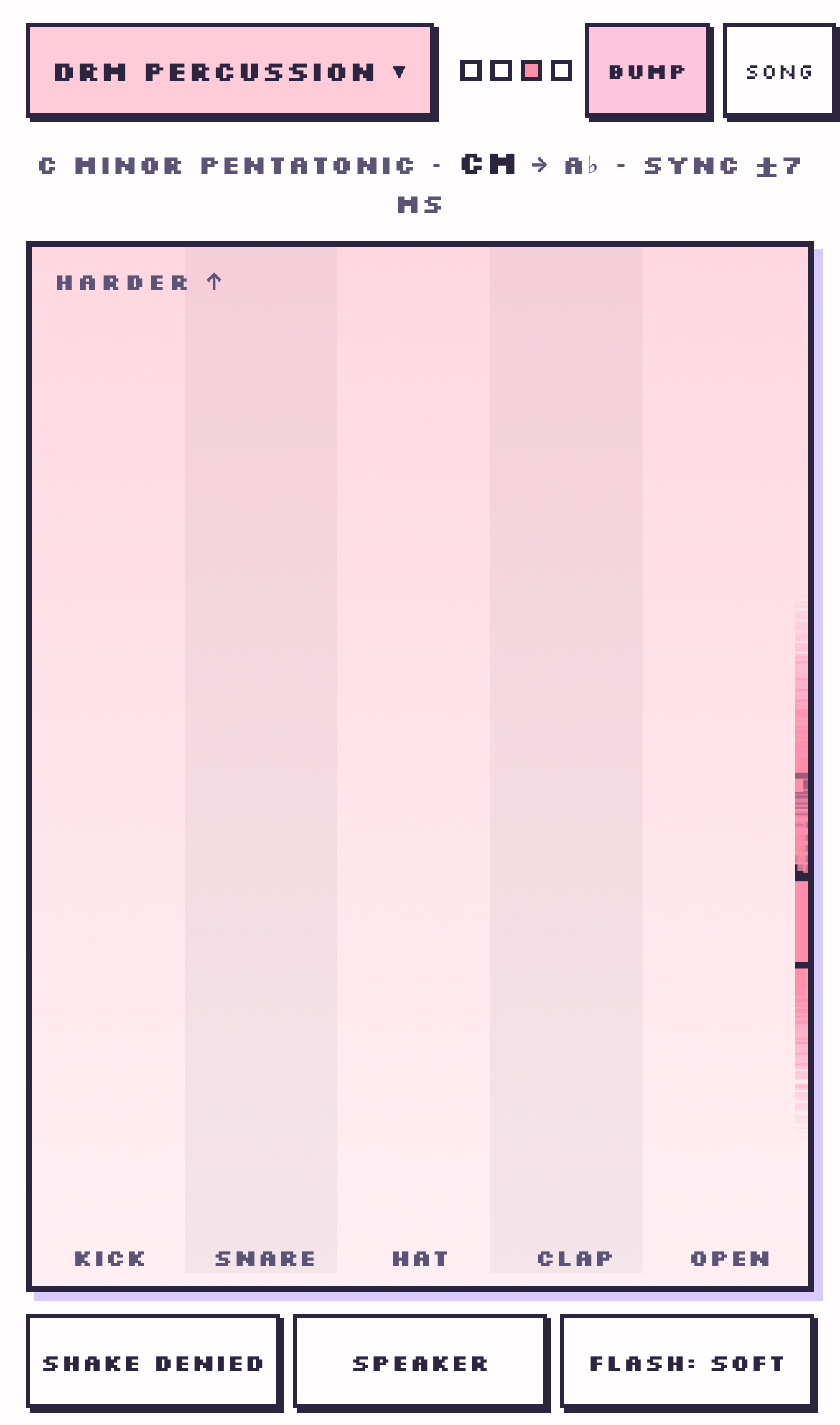
- Play together. Play some music games together with songs of your choosing.
How we built it
Frontend: Vanilla TypeScript and HTML5 to display the UI. Audio is done through the standard web audio API. No UI framework is being used to ensure that rendering and animation loops are deterministic.
Backend: Utilizes native Node.js and web socket servers. Optionally utilizes either postgresSQL or Neon DB to store custom recordings. AI is used to custom make each user's profile to highlight what's interesting about them, since people often don't know how to explain what is unique about them.
Challenges we ran into
Narrowing down the scope of the idea down to something more specialized. Figuring out how to find nearby devices while still sharing interests. Also figuring out how to integrate the two separates' "sides" of the app.
Accomplishments that we're proud of
We built a Progressive Web App that ties several hard engineering and social problems into one fluid gesture:
AI-powered identity generation that transforms a short text or voice intro into a structured, user-approved 8-bit persona using Gemini 3.6 Flash.
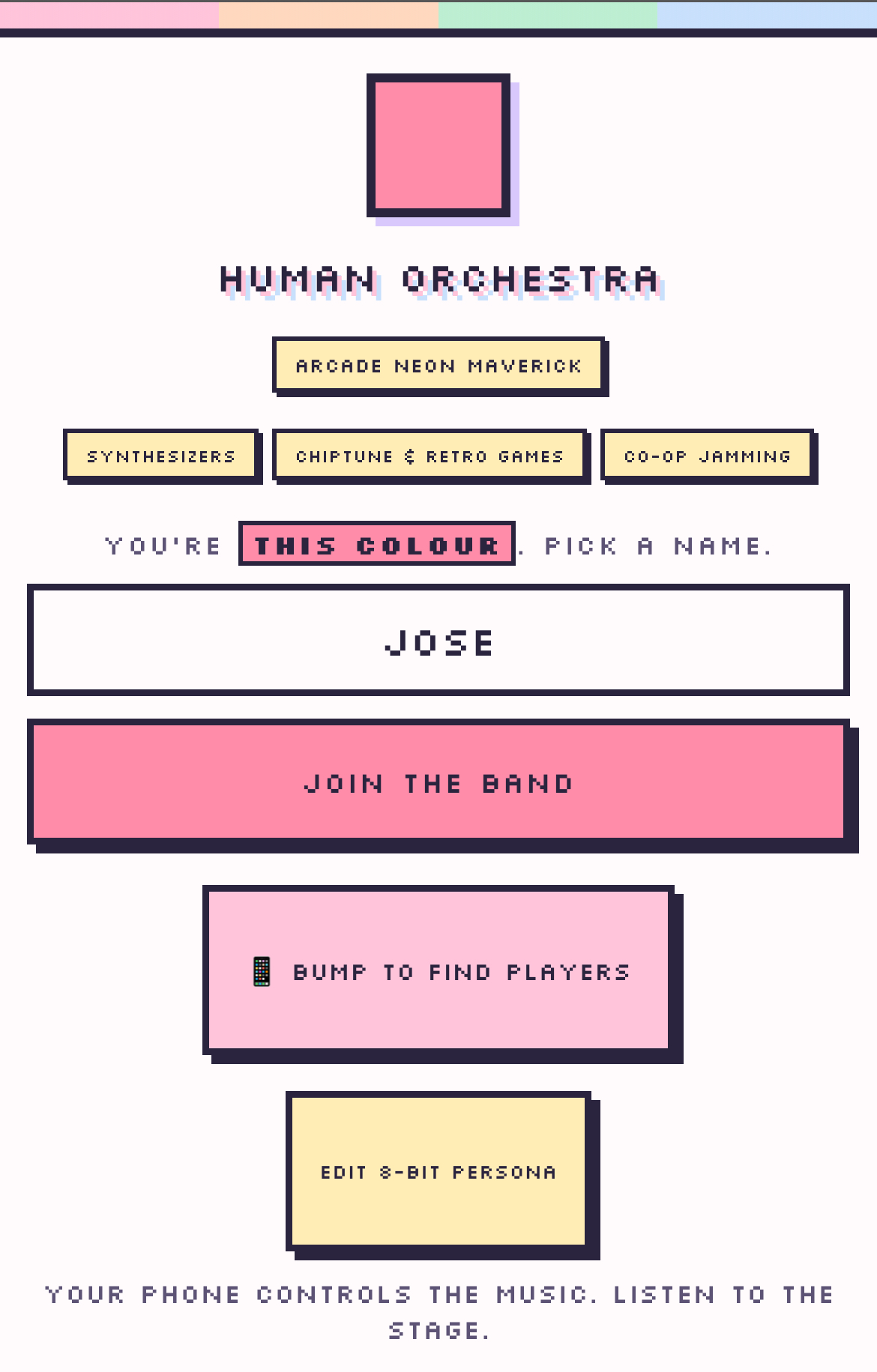
- Browser-based spatial-temporal pairing that fuses device accelerometer spike detection with WebSocket IP grouping to accurately match physical phone bumps without native hardware access.
Grounded AI matchmaking that analyzes overlapping interests to generate highly specific conversation starters and recommend the perfect MIDI track for the duo.
A seamless, zero-install handoff that transitions users from a social UI directly into a sub-millisecond synchronized web-audio rhythm game, turning their phones into live instruments.
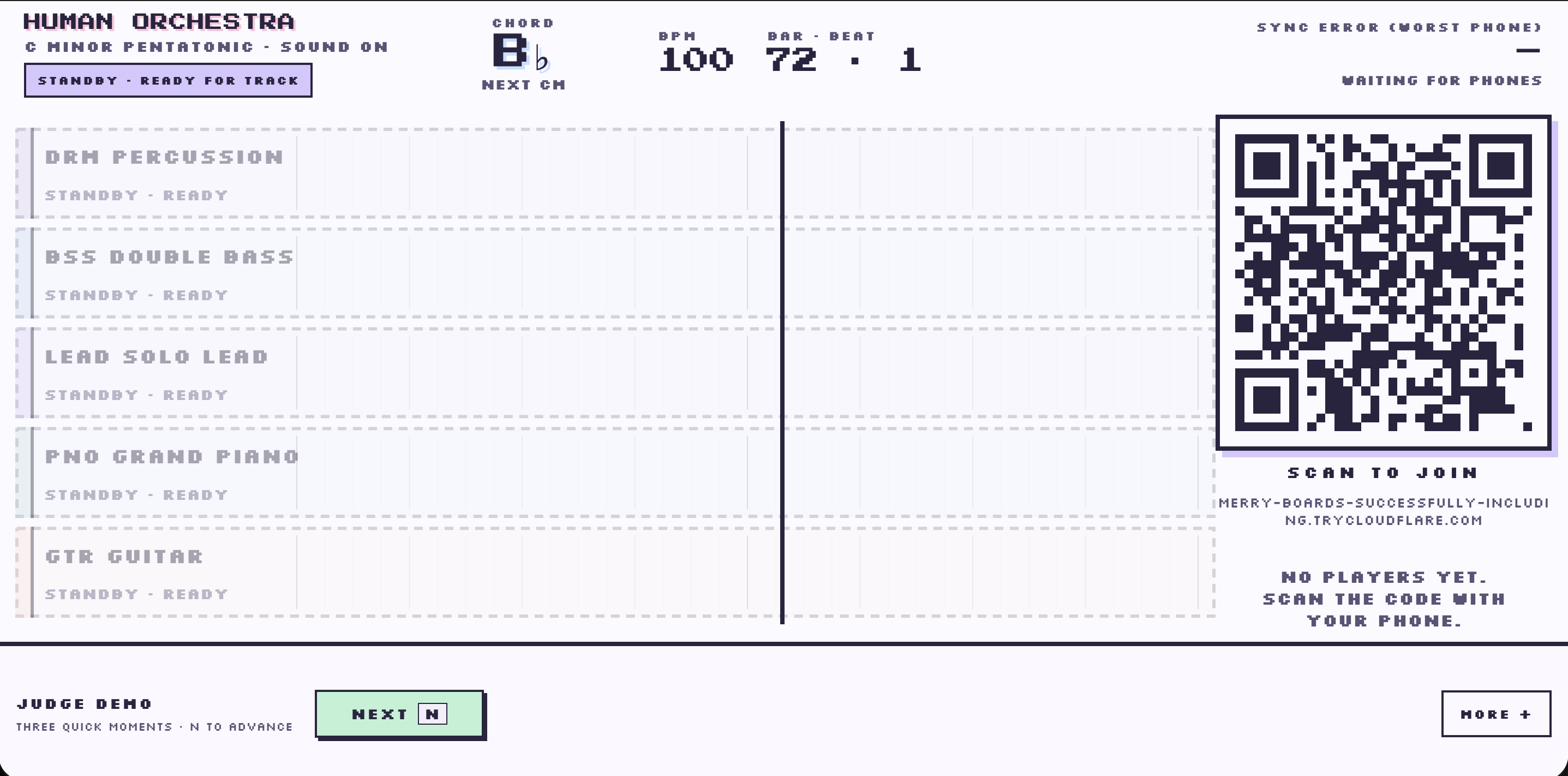
An immersive VR conductor platform that allows an orchestrator to step into the virtual environment, visually interact with the live rhythm game, and dynamically guide the players' performance.
The complexity stays underneath. You bump phones, confirm your new bandmate, discover your shared vibe, and instantly enter the stage together.
AI and spatial technology assist without taking over: users control their profiles, ambiguous pairings are rejected, and the tech quickly gets out of the way so the music can begin.
What we learned
Specificity beats generic similarity. "You both like music" is technically common ground, but it doesn't give anyone much to say. A specific shared vibe does. That's why we use Gemini to not only find a grounded, highly specific connection, but to immediately translate it into action by selecting the exact music track that fits their overlap. An improved way to break the ice.
Replicating physical touch on the web is an uncertainty problem. Browsers lack NFC and precise UWB ranging, meaning web APIs only give partial evidence of proximity. We learned that by fusing physical timing with network boundaries that we could achieve the same confidence without native hardware. A good web pairing system needs to know when these signals align perfectly to lock in a match, and when the data is too ambiguous to guess.
Here is a revised "What's next" section that perfectly captures your vision for gamification, leaderboards, and real-world concert recommendations, while keeping the emotional core of the original text.
What's next for Gravitate
Deepen the Gamification & Leaderboards: We want to expand the arcade ecosystem by adding more rhythm-based mini-games, unlockable 8-bit instruments, and global/venue-specific leaderboards to see which AI-matched duos hold the highest synchronization scores.
Real-World Concert Recommendations: By analyzing the music tastes in users' generated personas and their history of successful matches, we plan to use Gemini to recommend upcoming live concerts and local music events that perfectly align with a newly connected duo's shared vibe.
Massive Multiplayer Bumps: Test the spatial-temporal accelerometer engine in crowded, noisy rooms to support 3-way or 4-way simultaneous bumps, allowing groups of strangers to instantly form a full band.
Post-Gig Connections: Build a "band roster" feature that acts as a mutual check to connect again, allowing users to safely share their socials or export their AI-generated vibe match cards if both agree.
Most of all, we want to measure whether breaking the ice through shared rhythm and musical overlap actually leads to better, more authentic connections.
The goal isn't just to build another addictive screen to scroll. It's to turn a hesitant first hello into a memorable jam session.


Log in or sign up for Devpost to join the conversation.