-
-
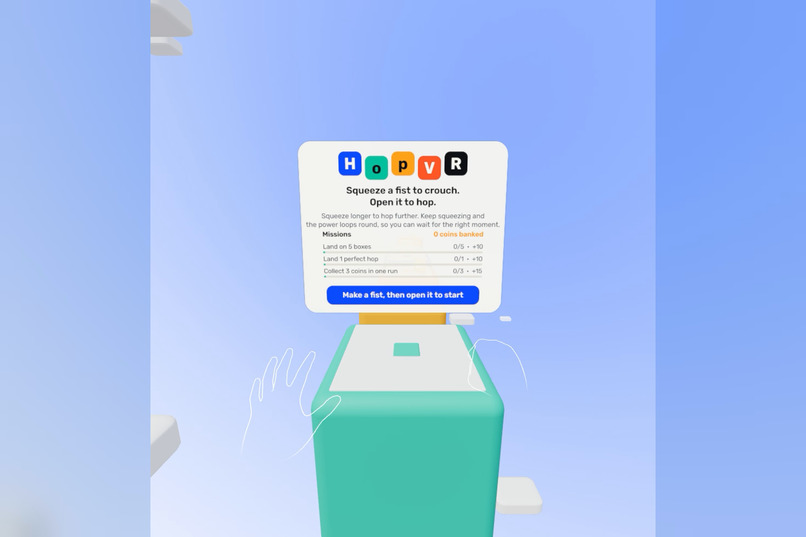
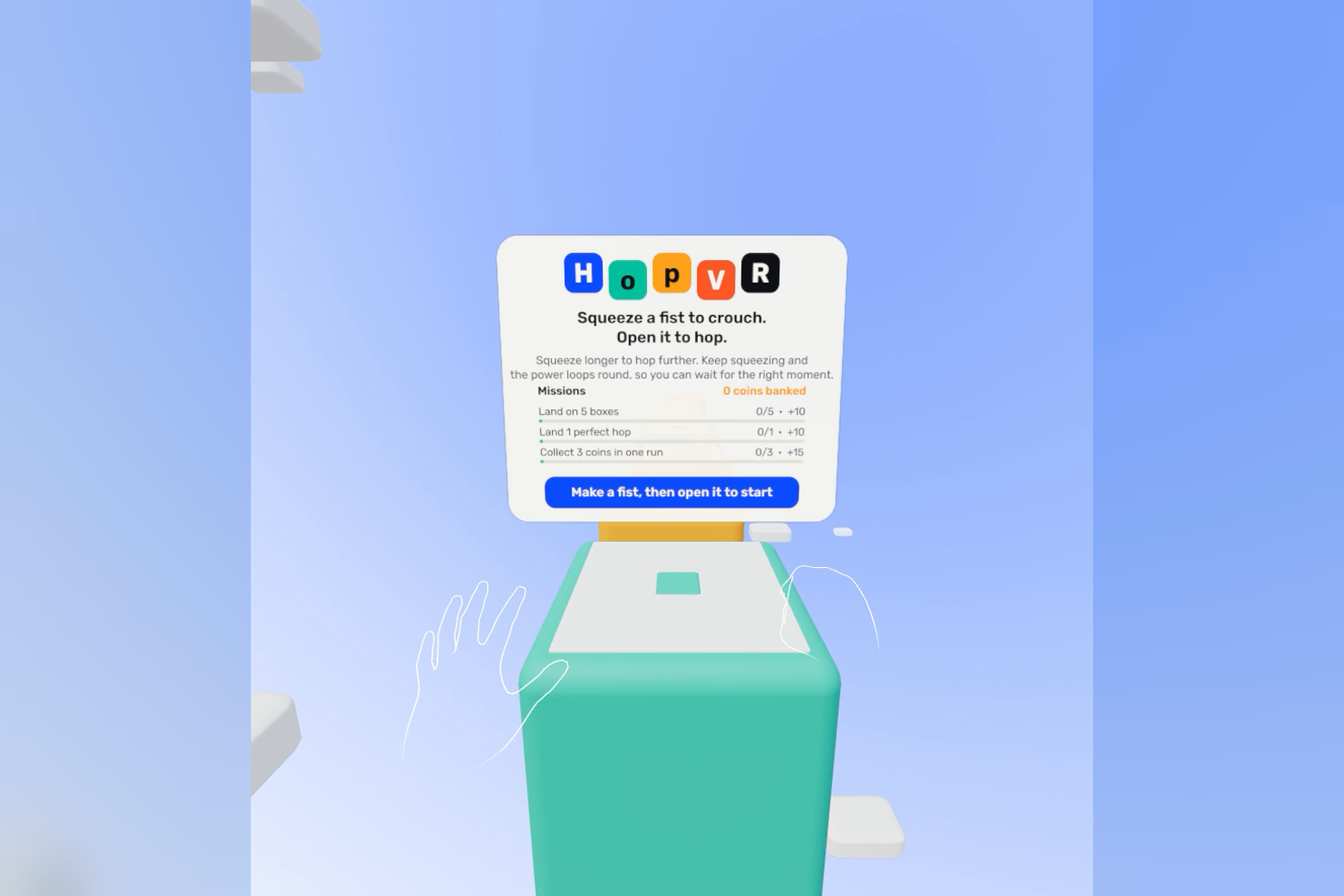
Start screen: one gesture, close a fist and open it, starts the run
-
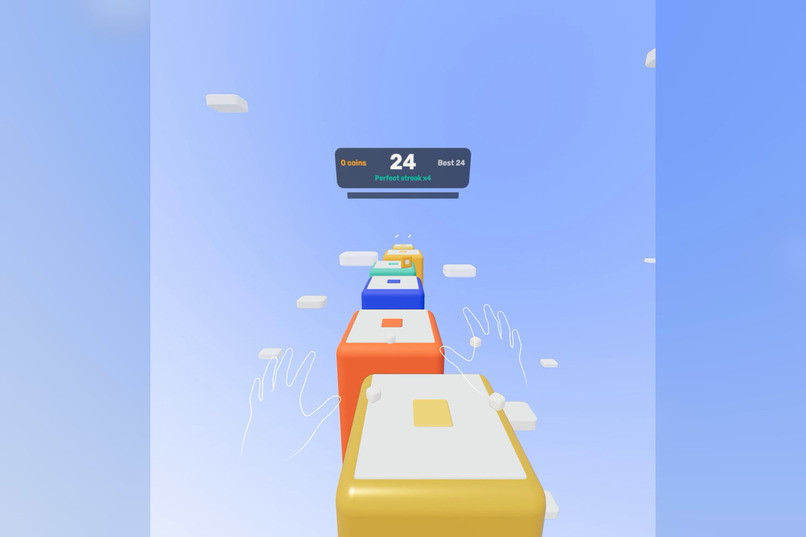
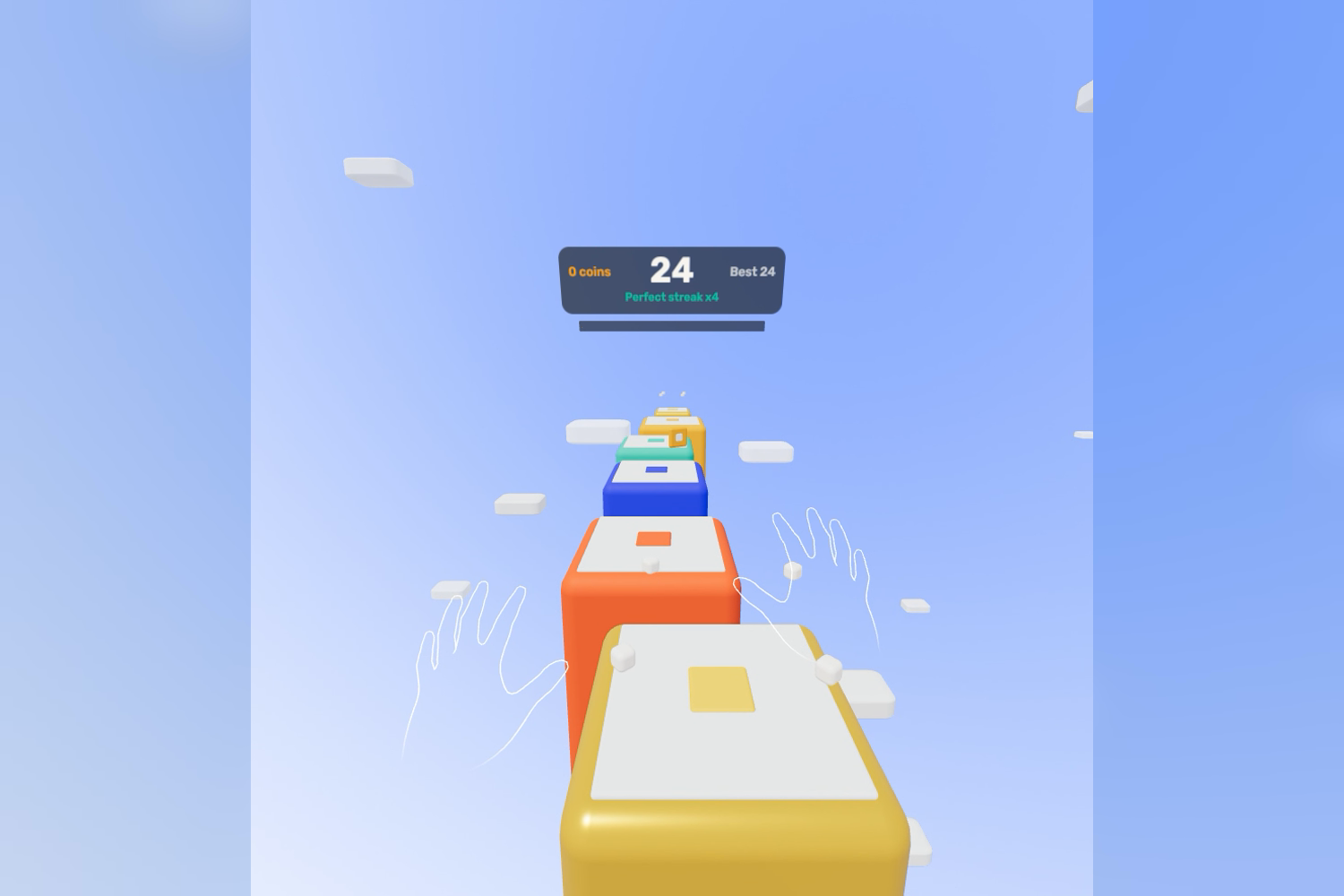
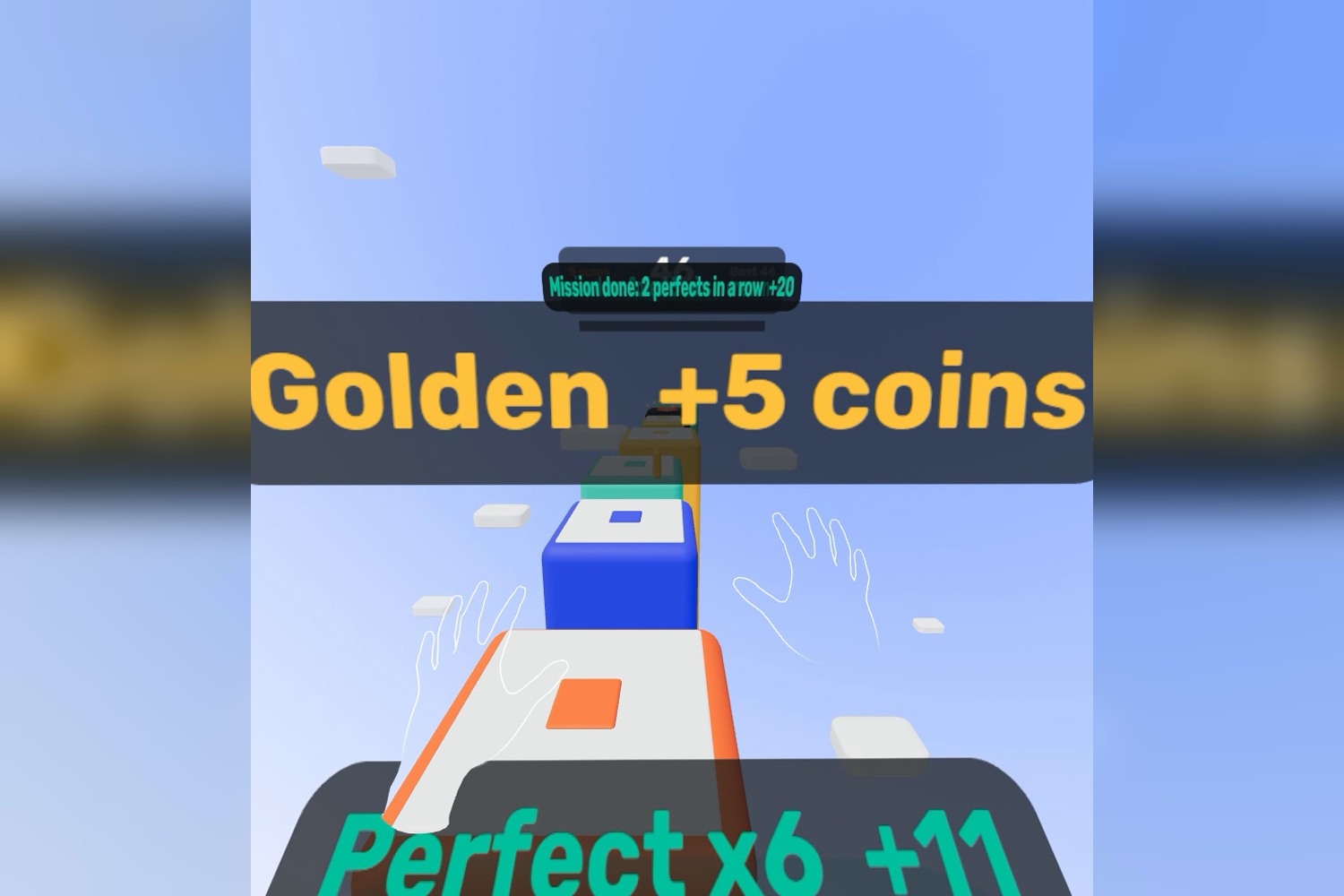
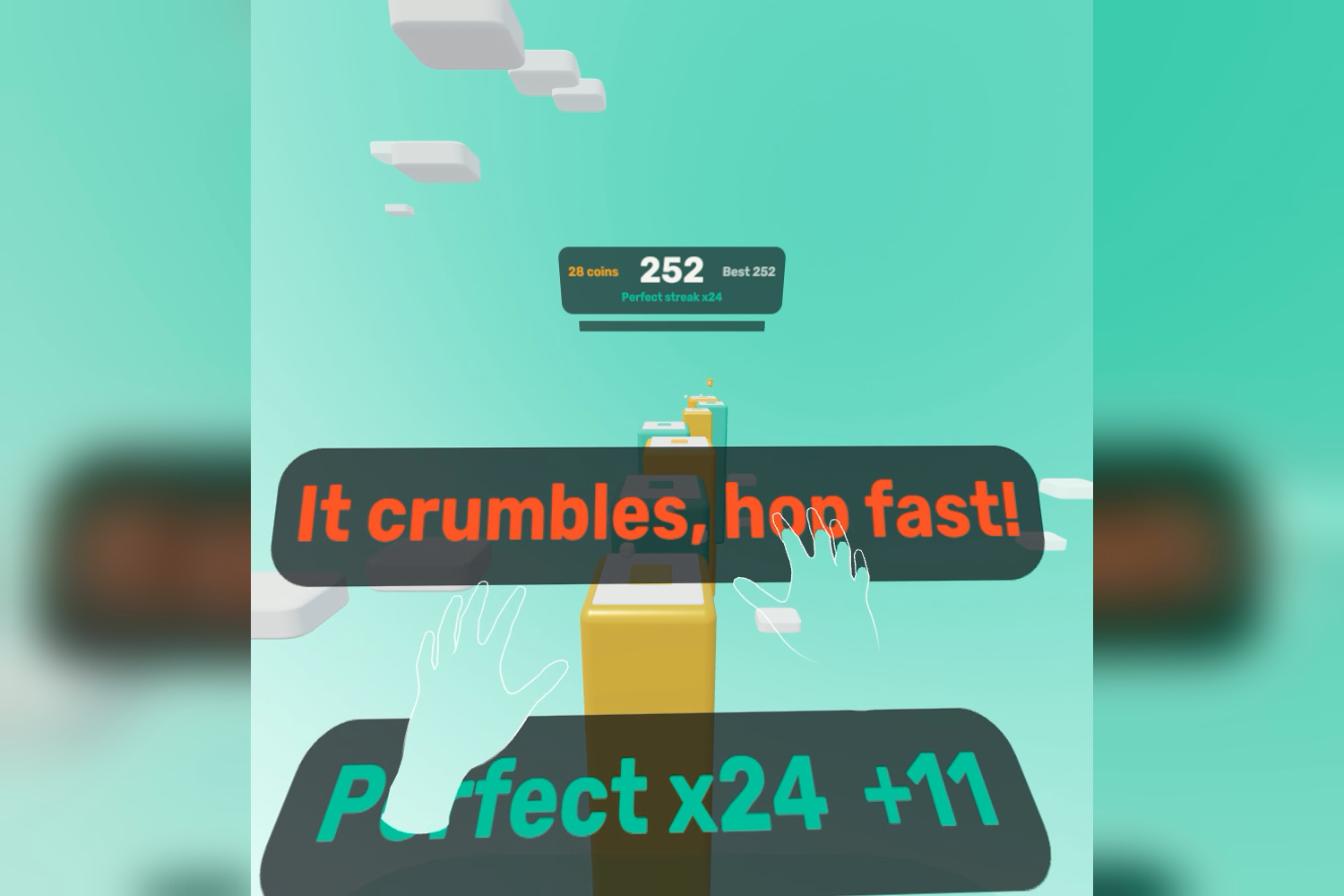
Seated view down the course; land on each box's soft centre square for a perfect
-
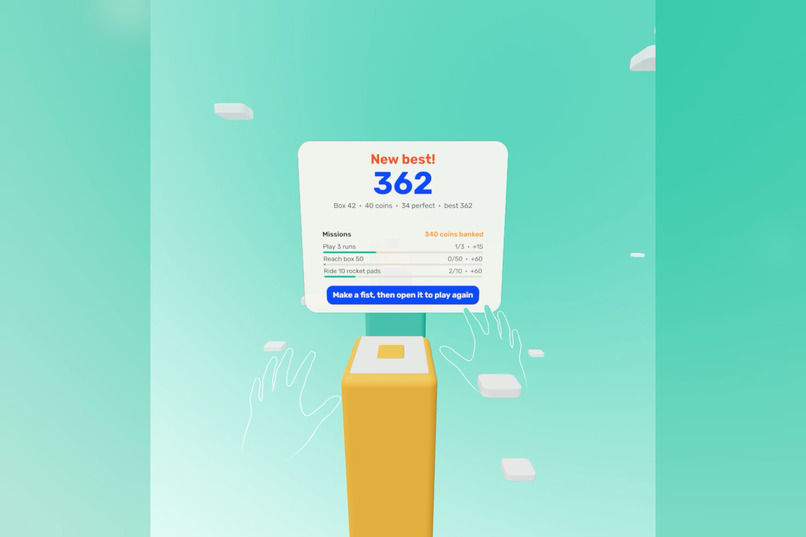
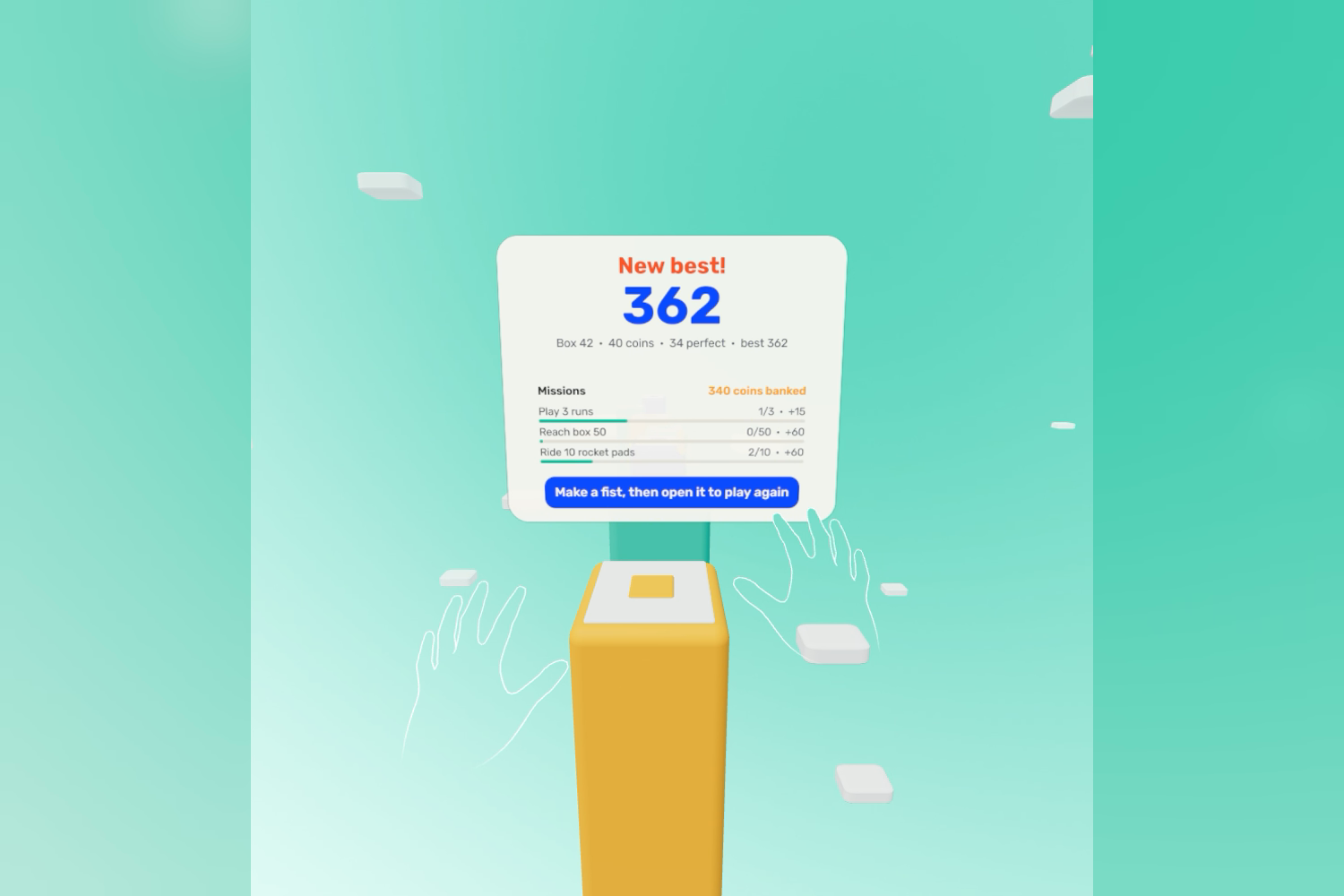
Results and missions: fist, then open, to play again
-
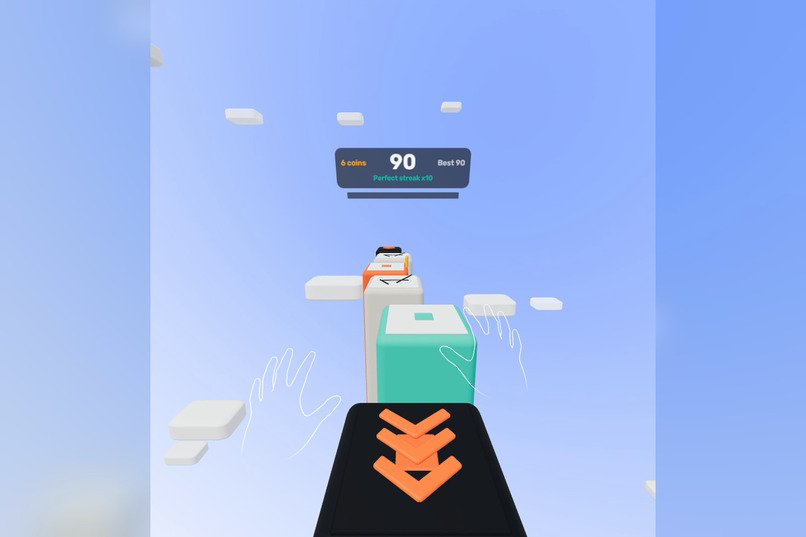
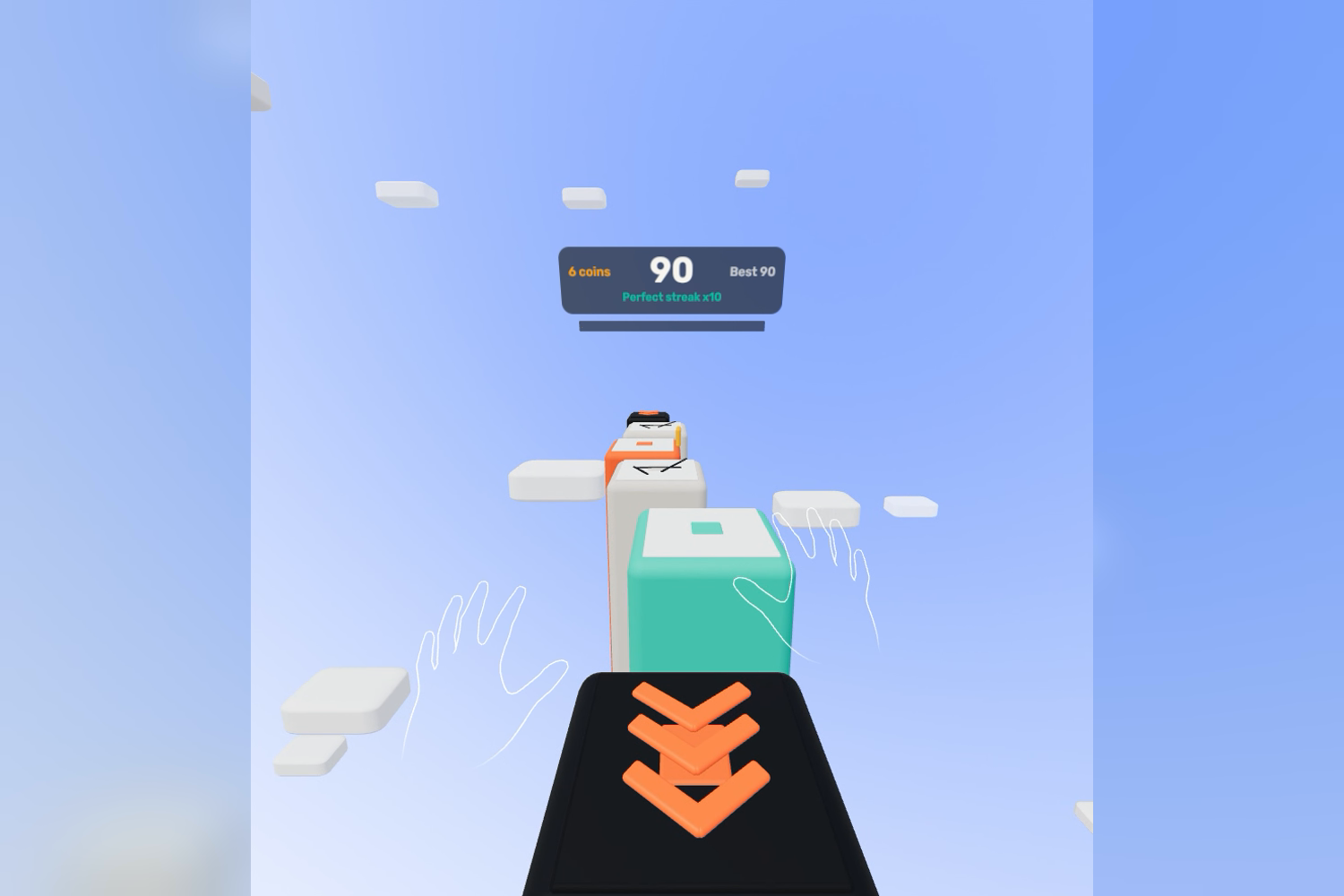
Rocket pads launch you over the next three boxes, collecting their coins
-
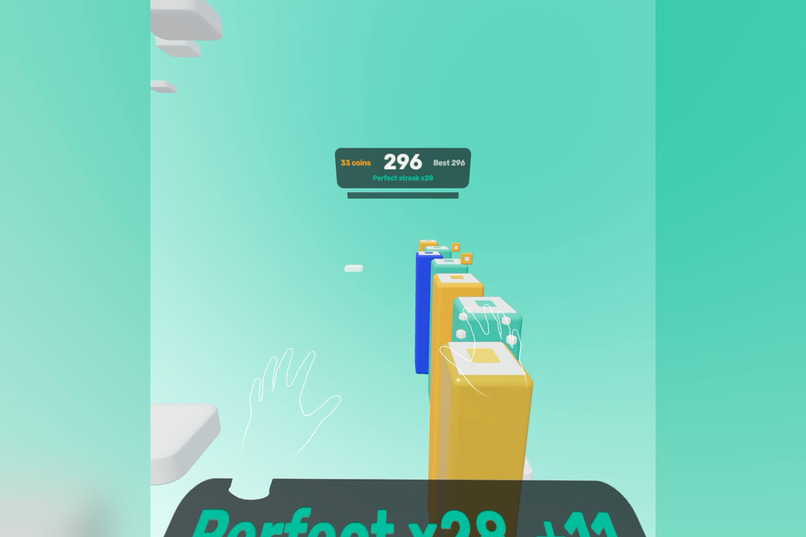
A new zone, sky and colour set every 25 boxes
-
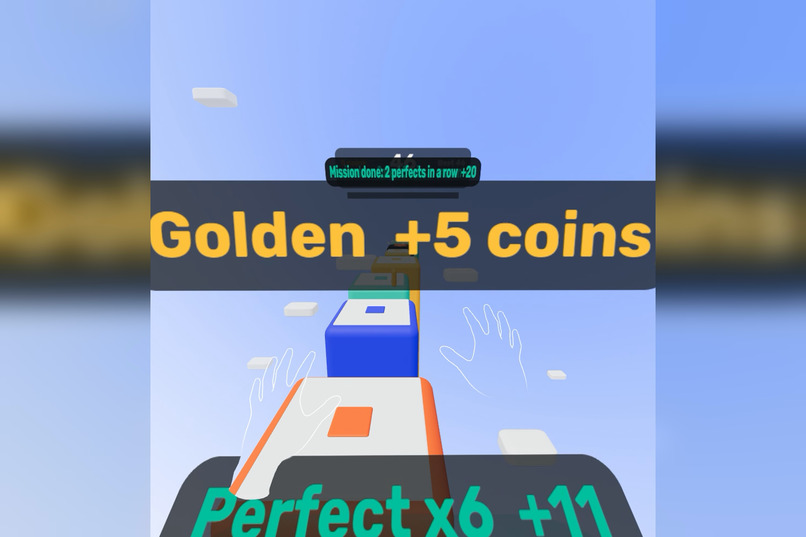
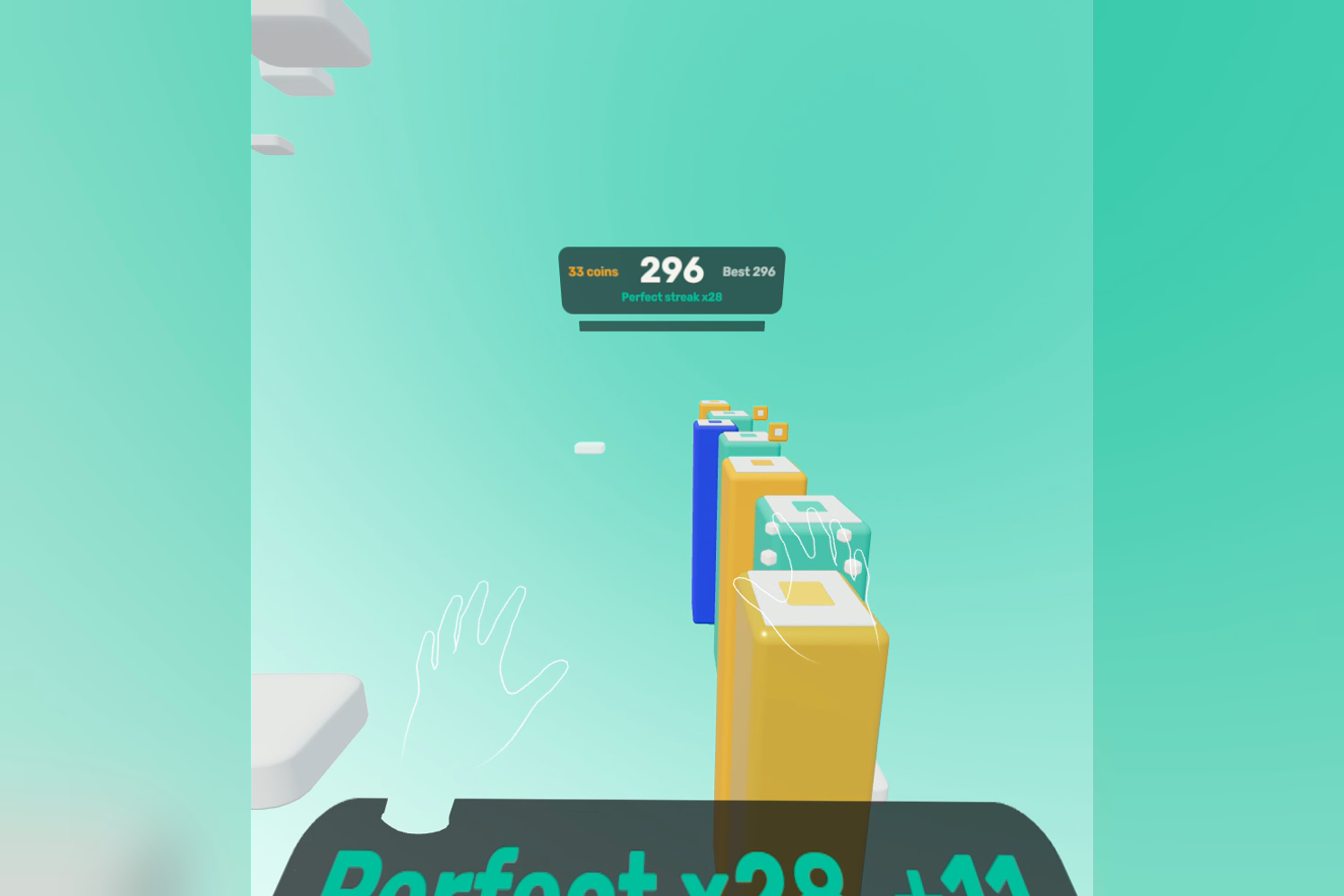
Golden boxes pay +5 coins for a perfect landing
-
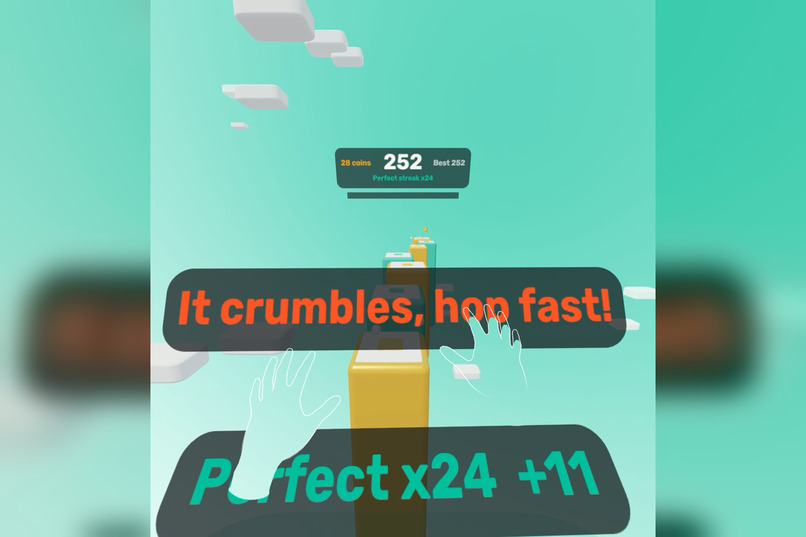
Crumbling boxes drop after a few seconds: hop off in time
Play it now: open https://hopvr.vercel.app in the Quest browser and tap Enter VR.
Inspiration
Hand tracking is at its best when the gesture is simple and the feedback is strong. We wanted a game you understand in one second, play with no controllers and no tutorial wall, and can finish a satisfying run of in a single bus stop. The classic "hold to charge, release to jump" game is perfect for that, but on a phone you only watch a little figure hop. In VR you can be the hopper.
What it does
Squeeze a fist with either hand and you crouch: the box squashes under you, a tone rises and the power meter fills. Open your hand and you hop. Land on the next box to score. Land on its soft centre square for a perfect, and perfects in a row build a streak bonus.
- One gesture runs everything: start, every hop, retry. No menus to aim at.
- The meter loops. Squeeze too long and it wraps back to empty, so you get another chance instead of a penalty.
- Your shadow shows where you will land while you are in the air; over a gap it vanishes.
- New boxes keep arriving: golden boxes for big perfects, rocket pads that launch you over three boxes, and crumbling boxes you must hop off before they drop.
- Missions and zones: three missions at a time from a pool of 16, coins, a best score, and a new sky and colour set every 25 boxes.
- Challenges:
?dailygives everyone the same course each day;?seed=yournamegives a fixed course to share with a friend.
How we built it
HopVR is built with Meta's Immersive Web SDK (IWSDK) on Three.js and runs in the Quest browser, with no install. Every model and sound is generated in code (procedural soft-square boxes, Web Audio synthesised effects), so the whole game is about 670 KB gzipped and cold-starts in seconds. The game rules live in plain TypeScript with no rendering code, which made them easy to unit test: the level generator, jump and landing rules, charge loop, missions, rockets and fist detection are all covered. We drove the running game in IWSDK's emulator (IWER) from scripts to play automated runs.
Challenges we ran into
- A fist nobody makes by accident. We measure how curled each finger is relative to the size of the hand, ignore the thumb, and close at a higher curl than we open at, so a fist held near the threshold never flickers. Quest's relaxed "microgesture" hand pose used to read as a fist; calibration against the emulator's measured poses fixed that, and tests keep it fixed.
- Moving the player's whole view comfortably. Hops are low and short (under a second), the view never rotates, and the edges of vision soften while you are airborne. Falls fade to dark before they get long.
- Seated reach. The course always runs straight ahead and the generator pulls it back to centre, so you never turn or lean.
Accomplishments that we're proud of
A complete, polished game loop driven by a single hand gesture that anyone gets on the first try, and that stays comfortable while the whole world moves.
What we learned
Hands-first design is about removing things: one reliable gesture, honest feedback (squash, tone, shadow), and forgiveness built into the rules.
What's next for HopVR
A cosmetic coin shop, ghost races against a friend's best run on the same seed (each hop is a few bytes), live 2 to 4 player races, weekly modifiers, and a pinch-to-charge mode for players who cannot make a fist.
Built With
- iwsdk
- three.js
- typescript
- vercel
- vite
- vitest
- web-audio-api
- webxr
