Inspiration
Imagine being stuck in the middle of a flood, trekking through the mountains, or facing an emergency where your phone shows zero network bars. You have a smartphone, but no way to communicate.
That's where the idea for HOPP, Every Hop Carries Hope, came from.
We wanted to rethink emergency communication and build something that helps people stay connected even when traditional networks fail. Because during an emergency, one message can make all the difference.
What it does
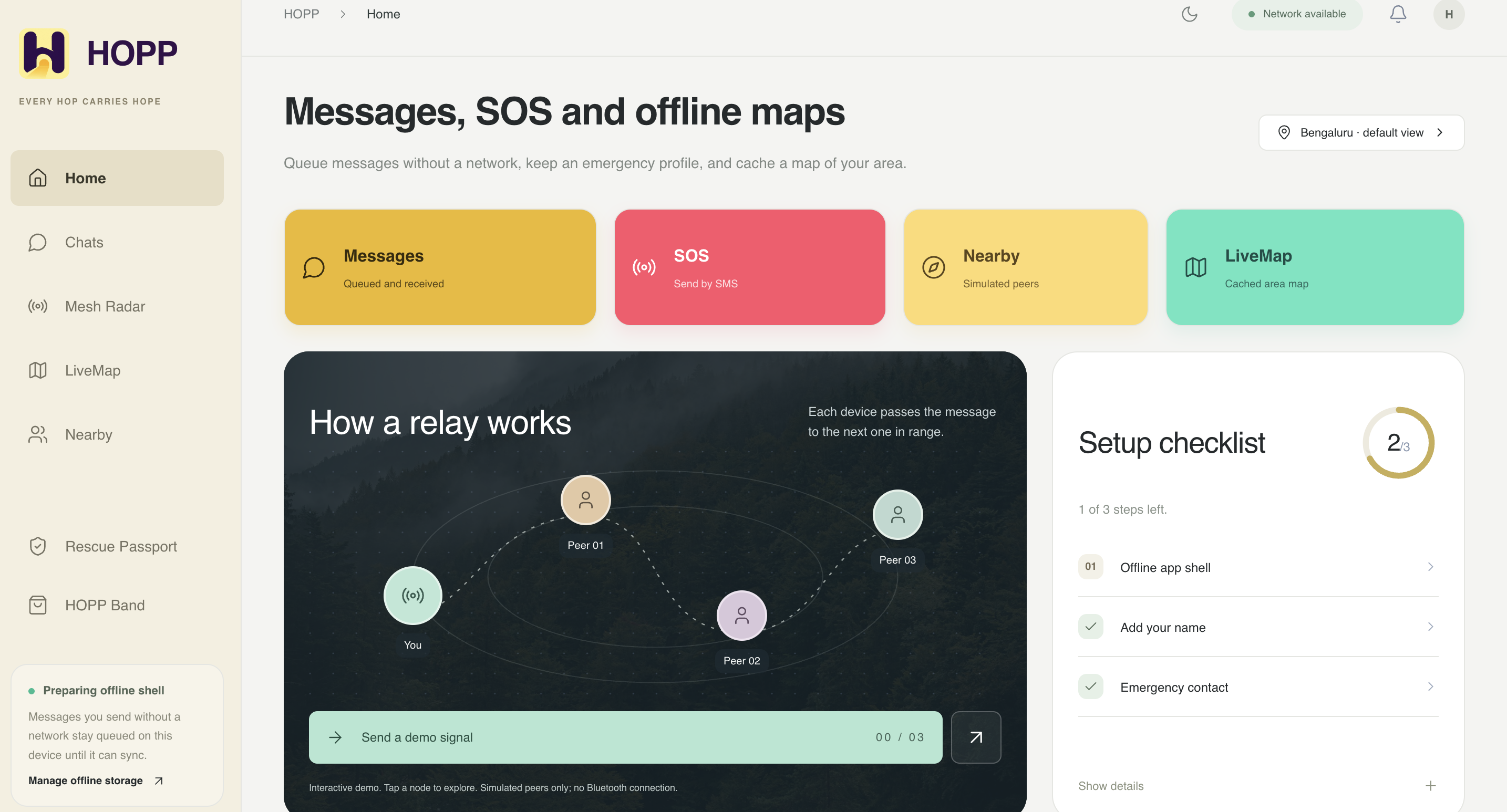
HOPP is an offline-first emergency communication platform designed to help people stay informed, connected, and safer during disasters or network outages.
It brings together several features:
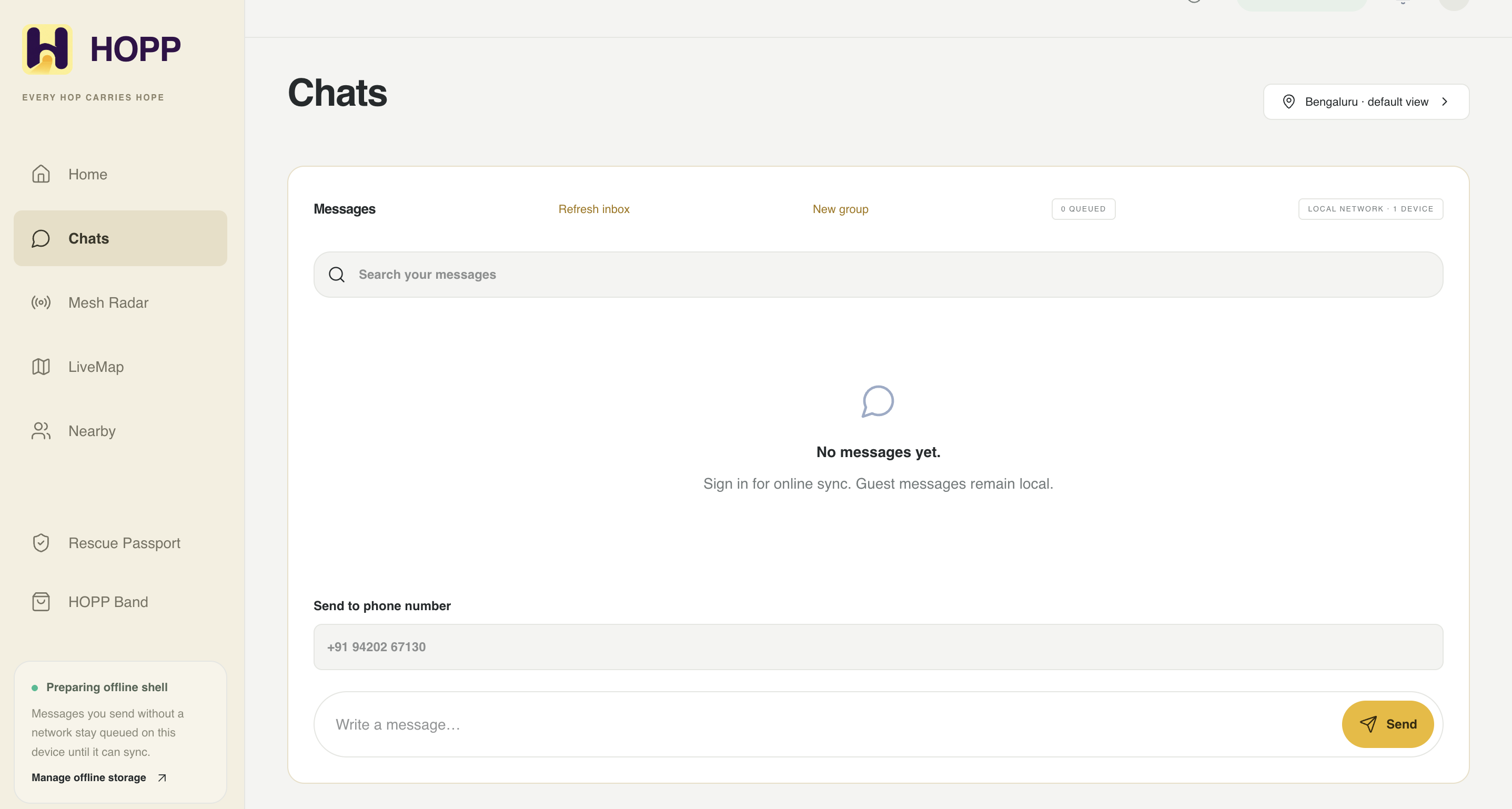
- Mesh Messaging: A device-to-device communication concept where messages can travel through nearby phones without relying on traditional cellular networks.
- SOS Alerts: Users can prepare emergency requests, attach their location, and track message status.
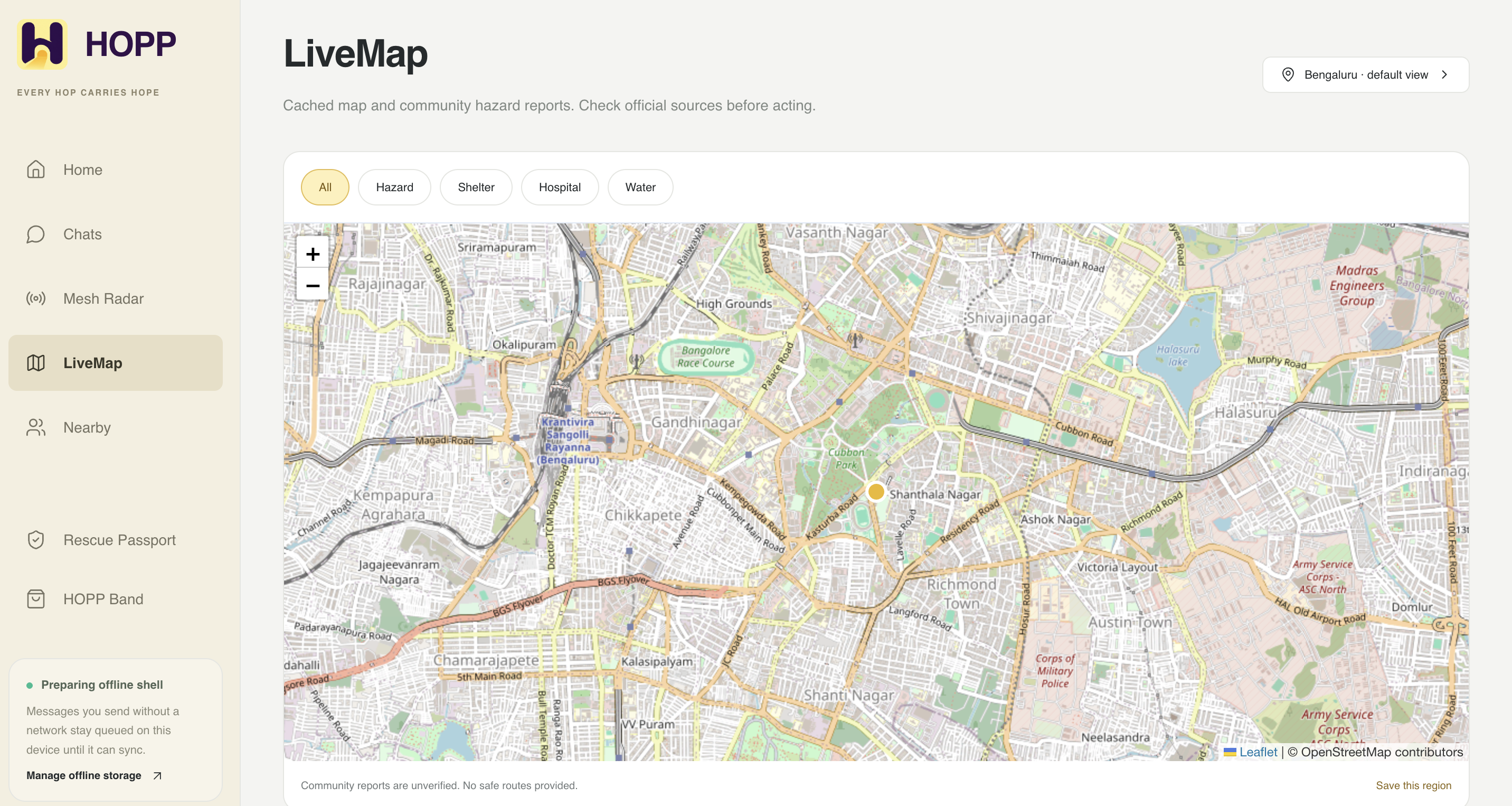
- HOPP LiveMap: An interactive map showing hazards, shelters, hospitals, and important resources, with support for cached offline information.
- Weather Intelligence: Weather forecasts, disaster warnings, and critical alerts from available verified sources.
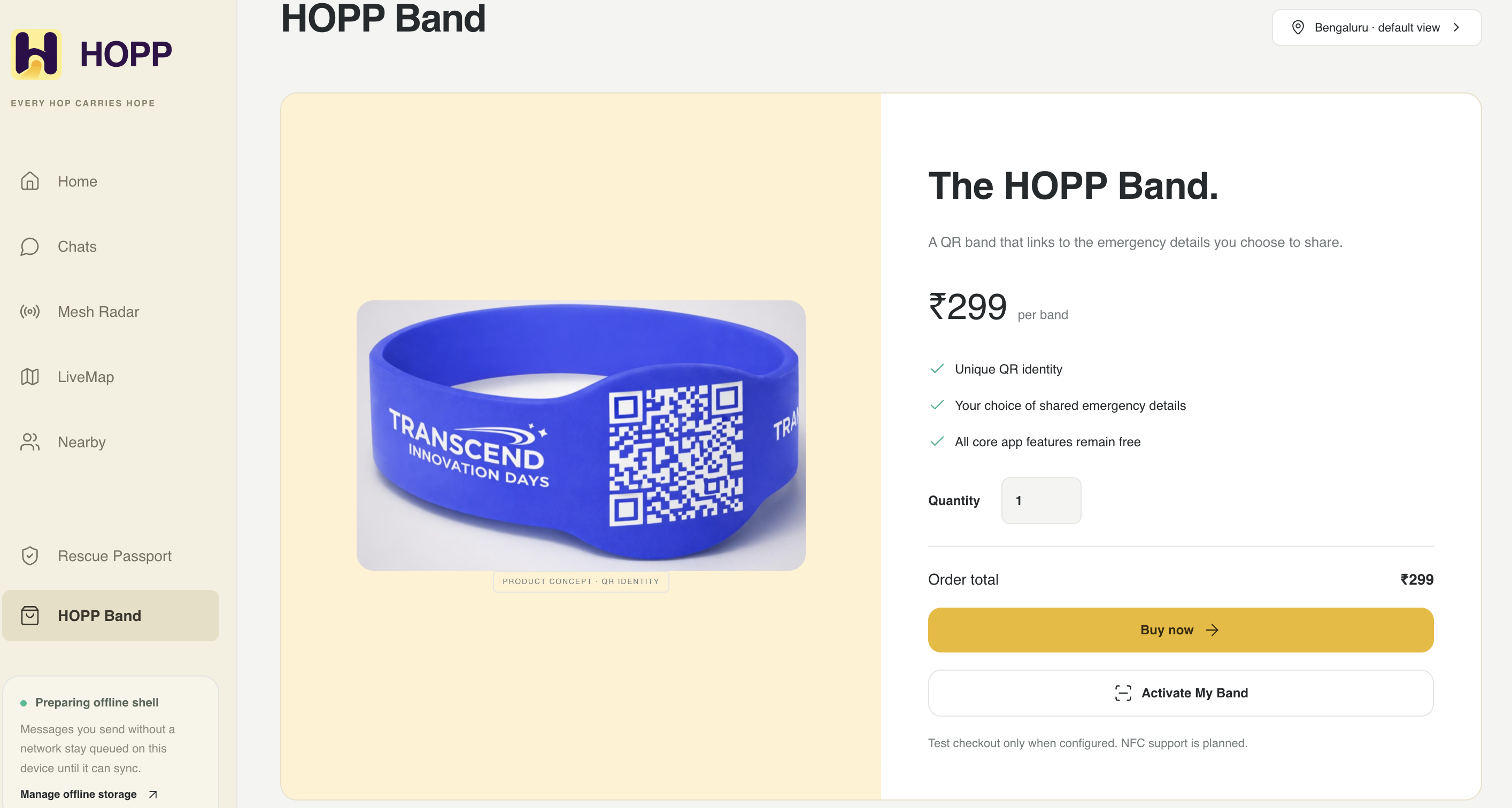
- HOPP Band: An affordable ₹299 emergency wristband concept featuring a scannable QR code linked to an emergency profile and SOS workflow.
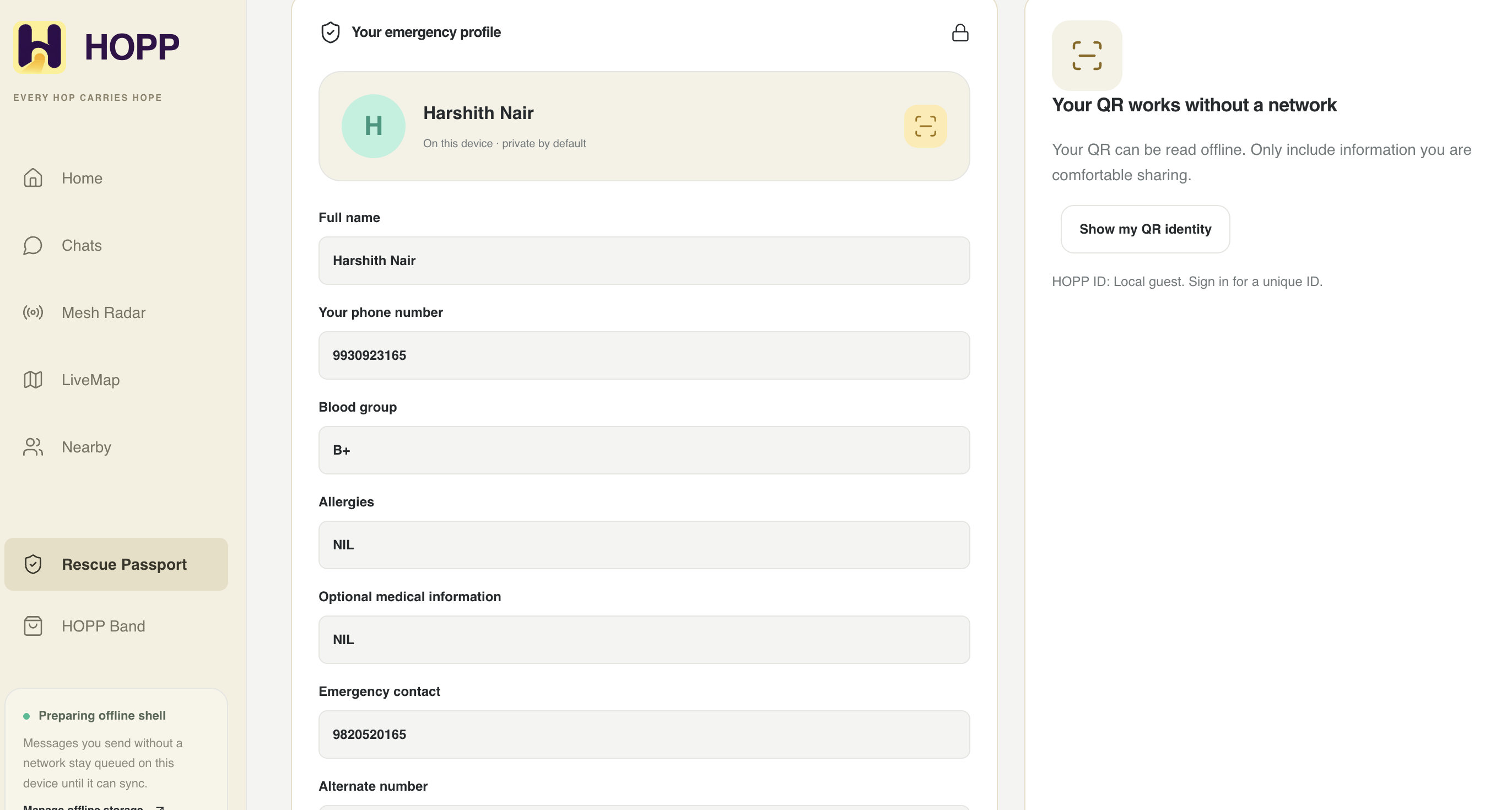
- Rescue Passport: Essential emergency details, including blood group, medical information, and emergency contacts.
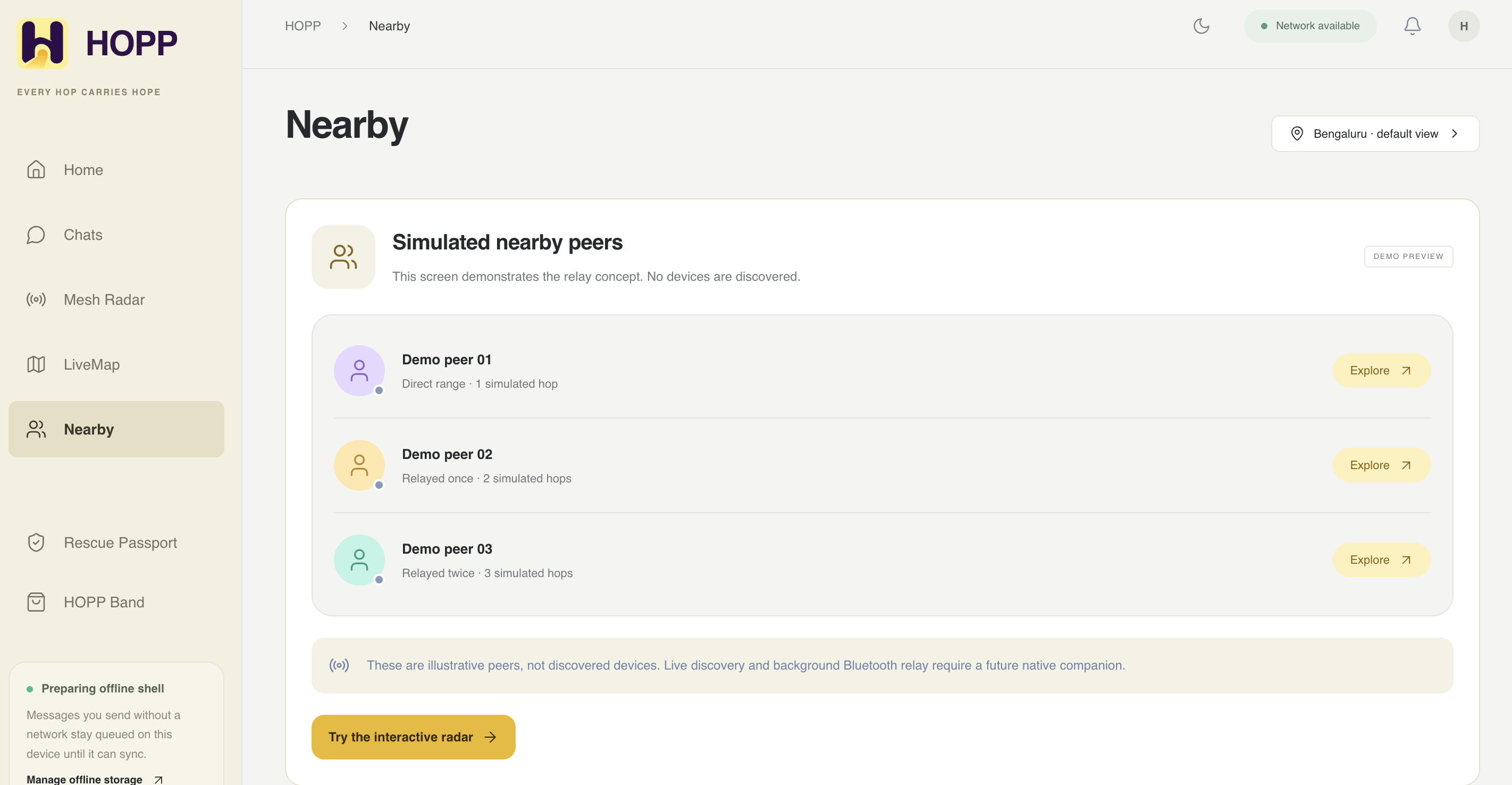
- Mesh Radar: A visual representation of nearby devices and potential communication routes.
The goal is to create one accessible platform that brings emergency communication, awareness, and personal safety together.
How we built it
We designed HOPP as a mobile-first Progressive Web App using modern web technologies.
Our planned technology stack includes Next.js, TypeScript, Tailwind CSS, Node.js, Express, Supabase, and IndexedDB for offline storage.
We focused heavily on creating a clean, intuitive interface inspired by modern mobile applications. Every feature was designed to be accessible with minimal interaction, especially during stressful situations.
For HOPP Band, we explored NFC technology but chose a QR-based prototype to make the concept affordable and easy to demonstrate.
We also designed a modular architecture for future native Bluetooth Low Energy communication. Since web browsers cannot reliably support cross-platform background Bluetooth mesh networking, we separated the mesh demonstration from functionality that can run directly in a browser.
Challenges we ran into
Our biggest challenge was figuring out how to build a communication platform intended to work when the internet itself is unavailable.
Bluetooth mesh networking is more complicated than simply connecting two devices. Message forwarding, device discovery, routing, and delivery confirmation all introduce technical challenges.
Another challenge was balancing functionality with simplicity. Emergency applications need powerful features, but they also need to remain understandable when users are under pressure.
We also explored how to deliver weather warnings, maintain offline maps, protect sensitive medical information, and make the HOPP Band affordable.
Each challenge pushed us to think beyond individual features and consider how the entire system would behave in a real emergency.
Accomplishments that we're proud of
One of our proudest achievements is turning a simple offline messaging idea into a broader emergency communication ecosystem.
We developed the HOPP concept around communication, disaster awareness, emergency identity, and accessible hardware.
We're particularly proud of the HOPP Band idea. It shows how something as simple as a QR-enabled wristband can become a useful entry point for emergency information and SOS workflows.
We're also proud of the product design. We wanted HOPP to feel modern, professional, and approachable rather than overwhelming or overly technical.
Most importantly, we kept the central mission clear throughout development: making critical information easier to access when conventional connectivity is limited.
What we learned
Building HOPP taught us that solving a real-world problem requires much more than writing code.
We learned about offline-first application design, Bluetooth Low Energy limitations, progressive web applications, local data storage, emergency workflows, and the importance of designing for unreliable connectivity.
We also learned how important it is to distinguish between a working feature, a simulated demonstration, and a future technical capability.
Above all, we realized that good technology is not always about adding more features. Sometimes, it's about making the most important action available at exactly the right moment.
What's next for HOPP
Our next major goal is to move beyond the web prototype and develop native Android and iOS applications with real Bluetooth-based device discovery and store-and-forward messaging.
We also want to improve offline maps, integrate verified disaster warning feeds, expand HOPP Band with NFC support, and explore partnerships with disaster response organizations, trekking communities, and educational institutions.
In the longer term, we envision HOPP becoming a community-powered emergency communication network that can remain useful even when conventional infrastructure becomes unavailable.
HOPP isn't just about sending a message. It's about giving that message another chance to reach someone.
Every Hop Carries Hope.
Built With
- express.js
- next.js
- node.js
- postgresql
- tailwind-css
- typescript
- vercel

Log in or sign up for Devpost to join the conversation.