-
-
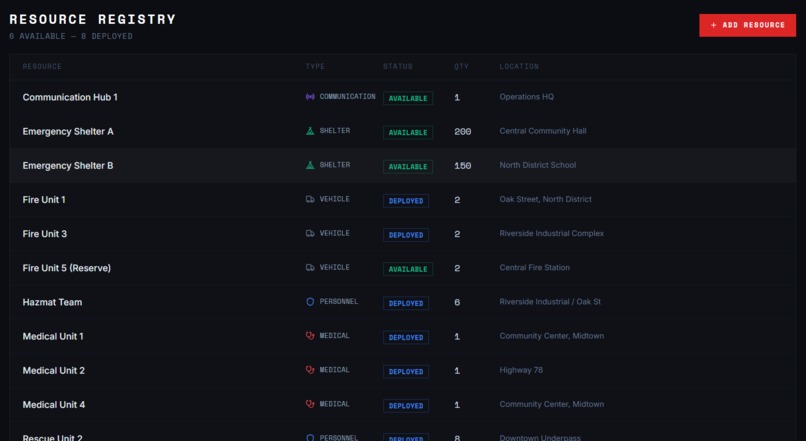
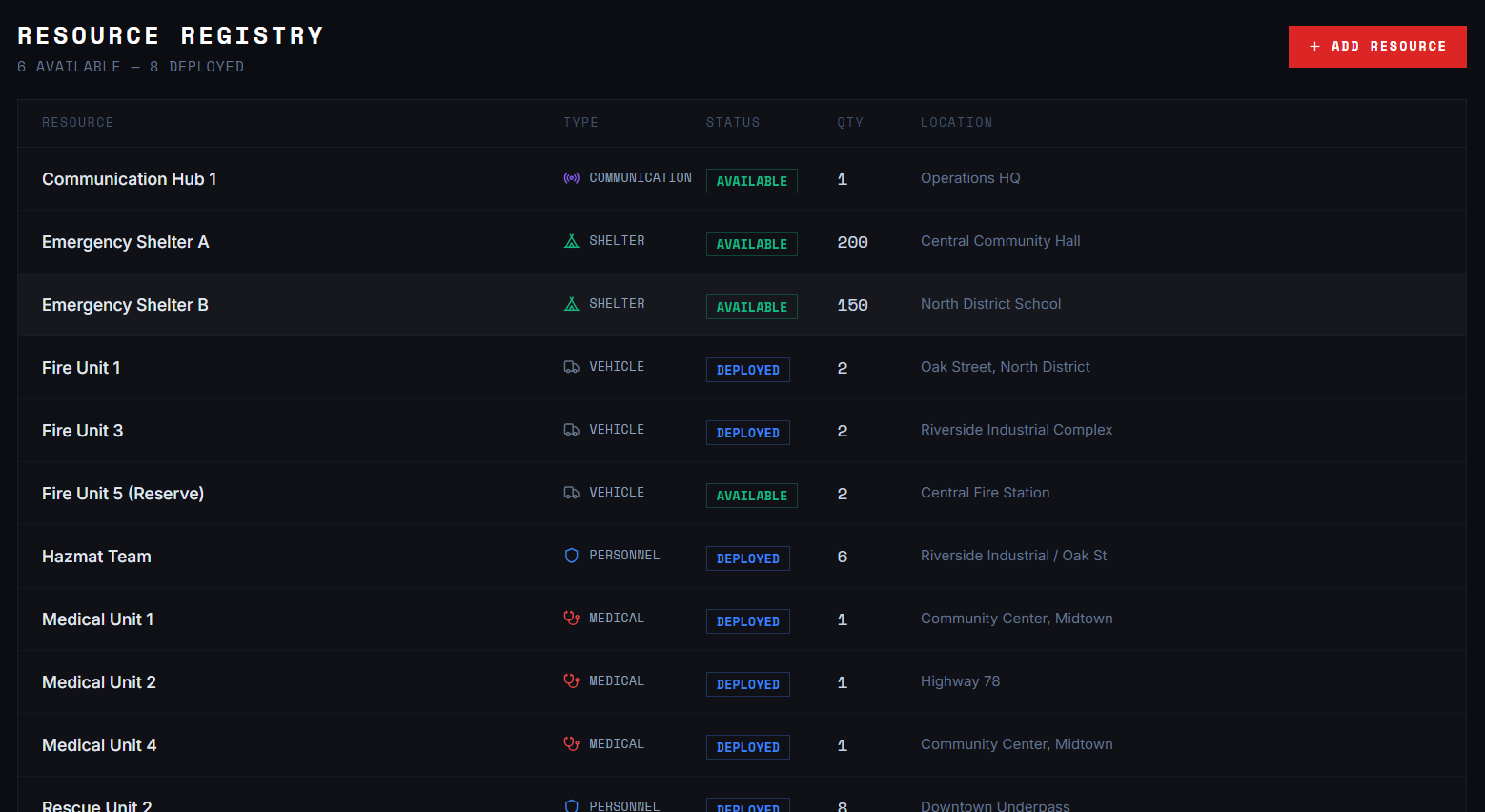
Resource Registry "From fire units to emergency shelters — every resource tracked, every deployment logged."
-
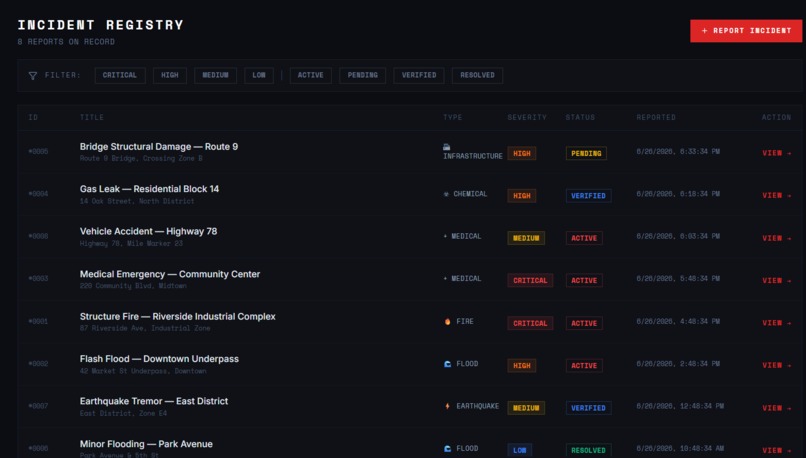
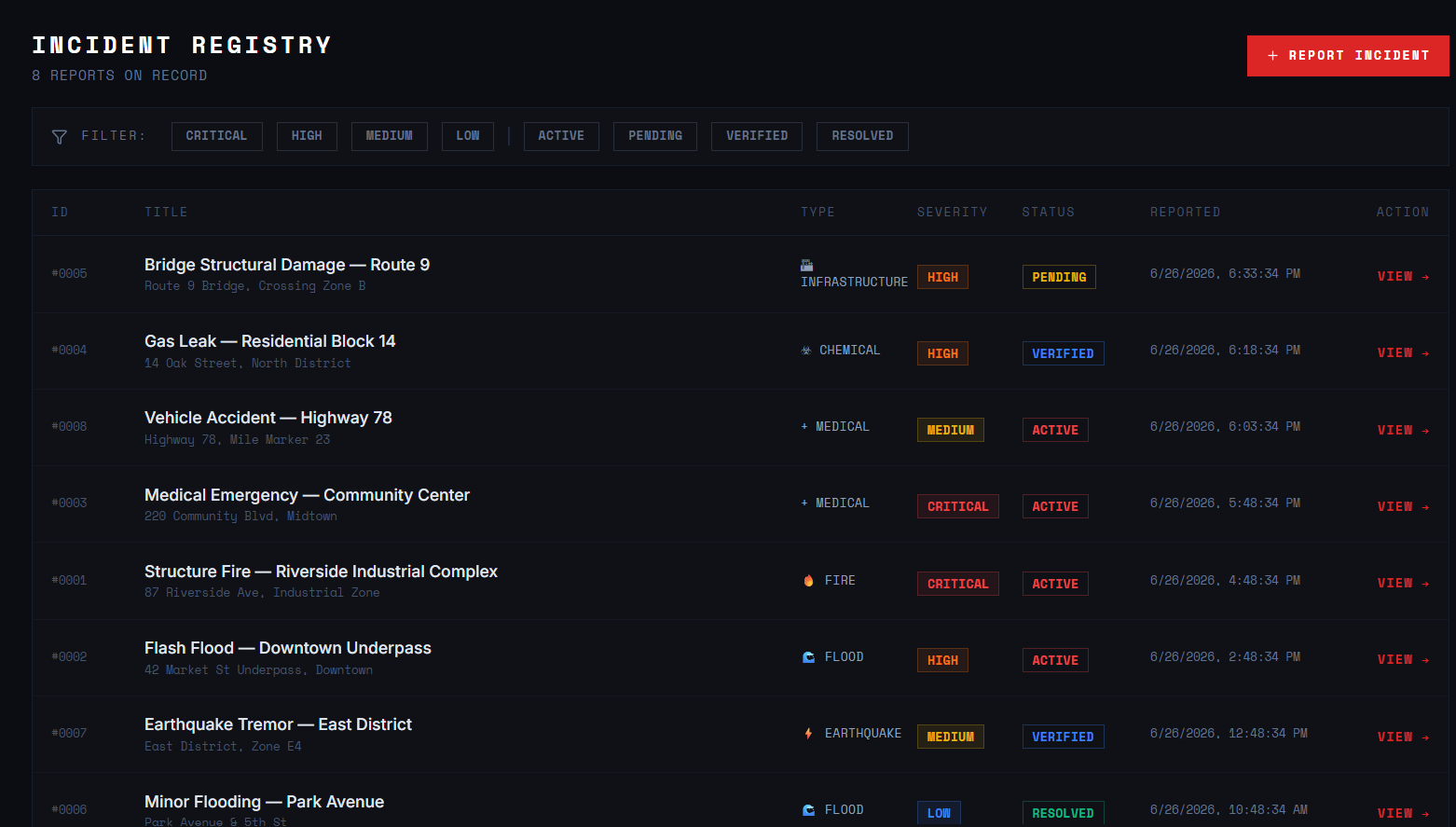
Incident Registry "Every report ranked by severity — from critical fires to minor flooding, nothing gets missed."
-
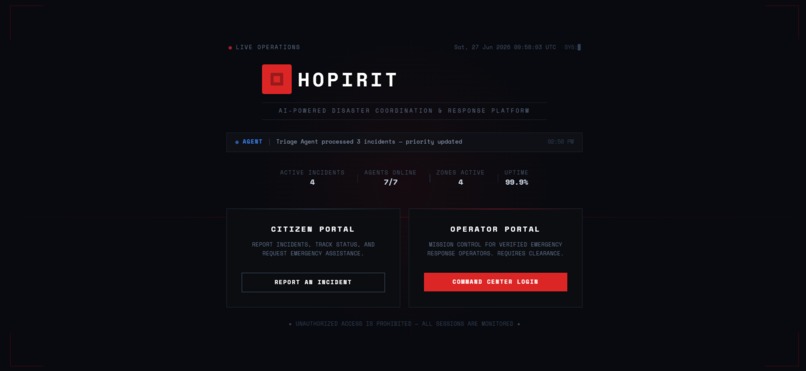
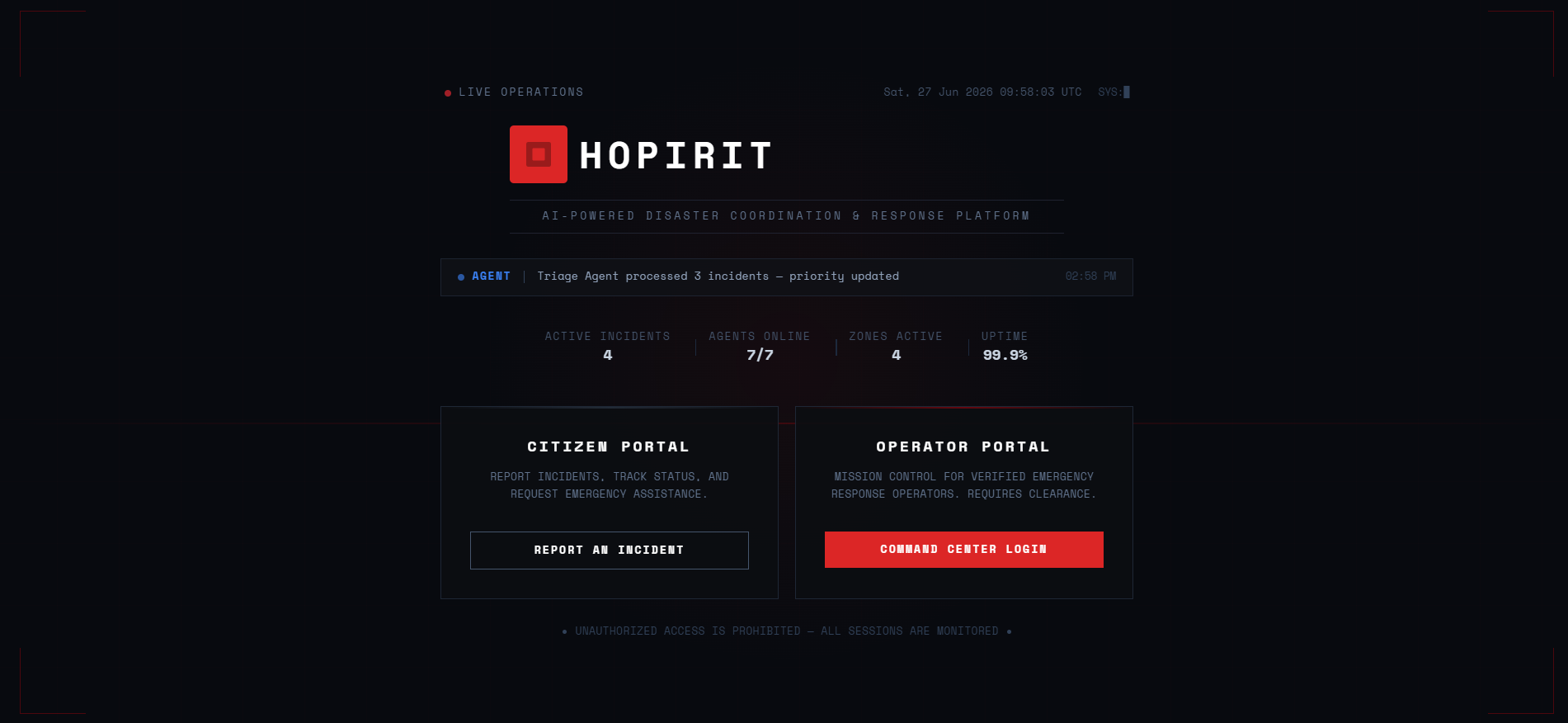
Landing Page "Two portals, one mission — citizens report, operators respond."
-
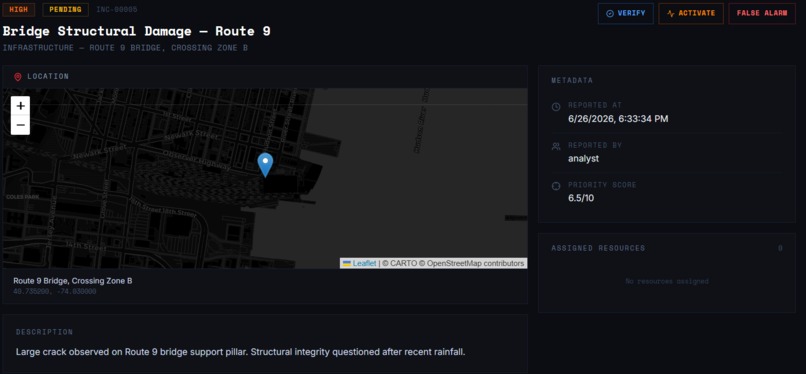
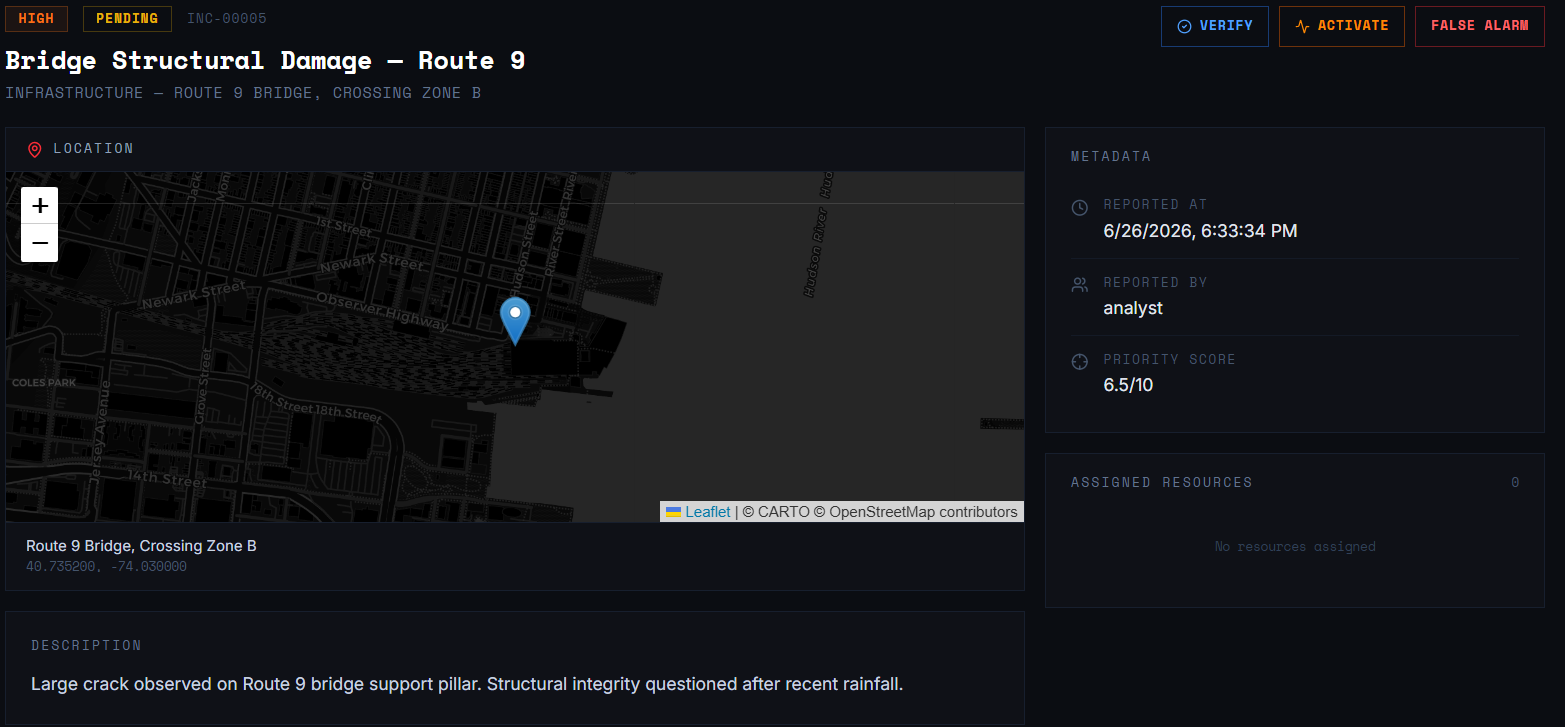
Incident Detail View "Pinpointed on the map, scored by AI, ready for operator action."
-
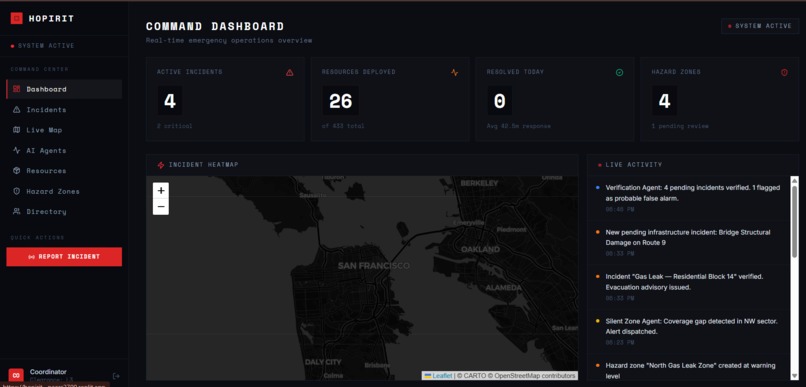
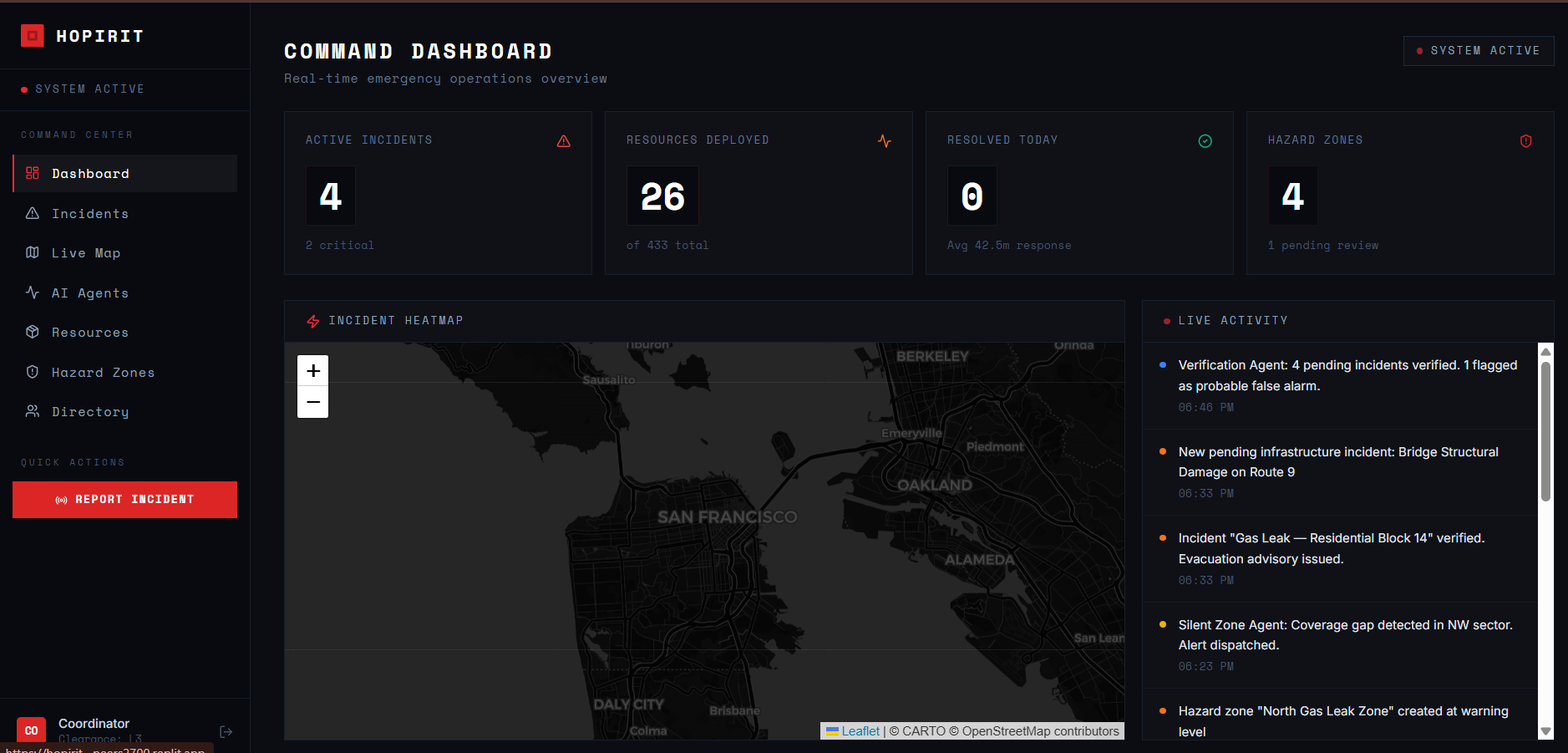
Command Dashboard "Every active incident, resource, and hazard zone — visible in one place, in real time."
-
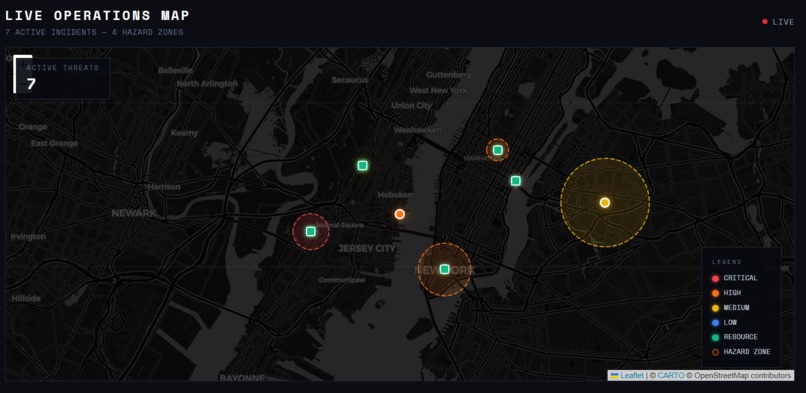
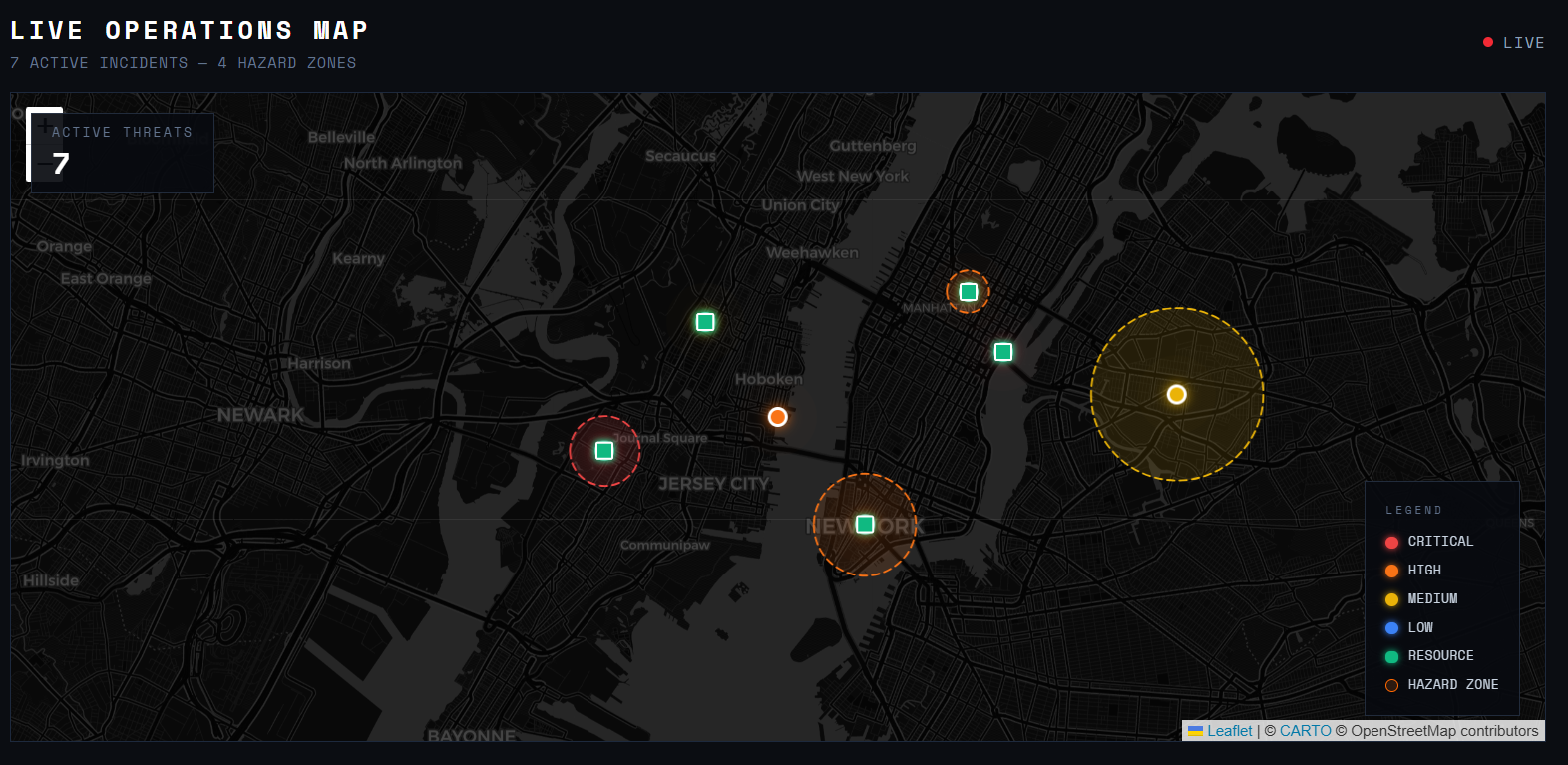
Live Operations Map "7 active threats, 4 hazard zones — the city's emergency situation at a glance."
Inspiration It started with a movie night. My father was watching Faster — a film where a disaster claims lives that could have been saved. I wasn't really watching, I was thinking about project ideas, discarding one after another because none of them felt meaningful enough. Then a scene caught my attention — chaos, no coordination, people dying not just because of the disaster itself, but because of the delay in response. That moment stuck with me. I started asking myself, what if there was a system that could warn people, guide responders, and cut through the chaos when every second matters? That question became HOPIRIT.
What it does HOPIRIT connects citizens and emergency operators through a unified real-time platform.
Citizens report disasters by submitting the incident type, affected location, and details—directly from wherever they are. AI analyzes each report instantly, estimates severity, assigns a priority score, and recommends appropriate emergency resources. Operators monitor everything through a centralized command center—verifying reports, visualizing incidents on interactive heatmaps, identifying high-risk H-zones, and coordinating response using AI-assisted recommendations.
The goal is not to replace human decision-making — it is to give emergency responders faster access to meaningful information when every second matters.
Response Effectiveness = (Information Quality × Speed) / Decision Delay
How I built it
HOPIRIT is a full-stack monorepo built with modern web technologies. The frontend is powered by React, Vite, and TypeScript, styled with Tailwind CSS and shadcn/ui, and uses React Query for data fetching and Leaflet for interactive maps. The backend runs on Node.js and Express, also written in TypeScript, with Drizzle ORM handling the database layer. The API contract is defined using an OpenAPI specification, from which Zod validators and React Query hooks are auto-generated via Orval — keeping the frontend and backend always in sync. The entire project is managed as a pnpm workspace monorepo, with shared internal libraries for the API client, type definitions, and database schema, keeping the codebase modular, clean, and scalable.
Challenges I ran into
Nothing about this was straightforward. The first major headache was connecting all the moving parts—especially the interactive map and the Command Center dashboard. Getting real-time incident data to render correctly on the heatmap while keeping the dashboard in sync took a lot of debugging and restructuring.
Once the application was working, I decided to deploy it. I chose Render for hosting, and that turned into a whole new battle. The monorepo setup caused file resolution errors that I could not shake no matter what I tried. I spent hours going through documentation, tweaking build commands, and testing different configurations.
After a lot of research — including help from YouTube and AI tools — I eventually found a deployment workflow using Replit that worked. It was frustrating, but getting past it felt like a real win. "The struggle you face today builds the skill you need tomorrow." In the end, HOPIRIT is live—and the journey to get it there made me a significantly better developer.
Accomplishments that I am proud of
The accomplishment I'm most proud of is turning a meaningful idea into a fully functional platform that addresses a real-world problem. HOPIRIT was built to improve disaster response by helping emergency teams make faster, better-informed decisions through AI-powered incident prioritization, resource recommendations, and real-time coordination. As a solo developer, I designed and built the complete application, including the frontend, backend, database, APIs, and deployment, overcoming numerous technical challenges along the way. One of the biggest achievements was ensuring that AI serves a genuine purpose within the platform by assisting responders instead of being added as a buzzword. Despite deployment setbacks and integration challenges, I continued refining the system until it became a live, working prototype. Seeing HOPIRIT evolve from an idea into a platform that people can actually use has been the most rewarding part of this journey.
What I learned
This project taught me more than I expected: How to build and structure a full-stack web application end-to-end UI/UX design for operational dashboards that need to be clear under pressure Structuring modular software architectures using monorepos and shared packages Integrating multiple services — frontend, backend, database, AI — into a unified platform Most importantly: thinking beyond algorithms to solve real-world humanitarian problems
What's next for HOPIRIT
HOPIRIT is currently a working prototype, but the vision goes far beyond what it is today. The next phase is about transforming it from a reporting and coordination tool into a full AI-powered disaster intelligence platform.
The most immediate priorities are bringing in real-time data from the physical world—IoT sensors for flood levels, seismic activity, and air quality, combined with GIS mapping and satellite imagery so operators aren't just reading reports but actually seeing the disaster as it unfolds.
From there, the focus shifts from reacting to predicting—using predictive analytics to forecast risks and resource demand before a situation escalates and an AI copilot that assists operators in real time by summarizing updates and recommending actions during a crisis.
On the access side, a mobile app with offline reporting will bring HOPIRIT to citizens and field responders who may not have reliable internet during a disaster. Multilingual support will open it up globally, and integration with official emergency broadcast systems will connect HOPIRIT directly to government and disaster management agencies.
Finally, the long-term goal is a multi-agency collaboration portal—one shared command center where police, firefighters, hospitals, NGOs, and government departments all coordinate together, supported by drone feeds, advanced analytics, and a volunteer coordination system that matches people with tasks on the ground. pi The goal is simple: no community should face a disaster without the tools to respond to it intelligently.
Built With
- cors
- drizzle-orm
- express-v5
- node.js
- openapi
- orval
- pino
- radix
- react
- recharts
- shadcn
- sonner
- typescript
- vite
- wouter

Log in or sign up for Devpost to join the conversation.