-
-
-
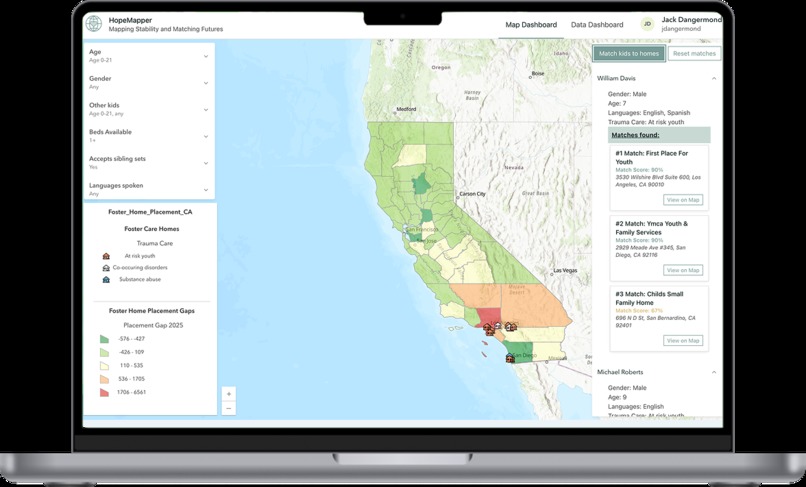
Map Dashboard
-
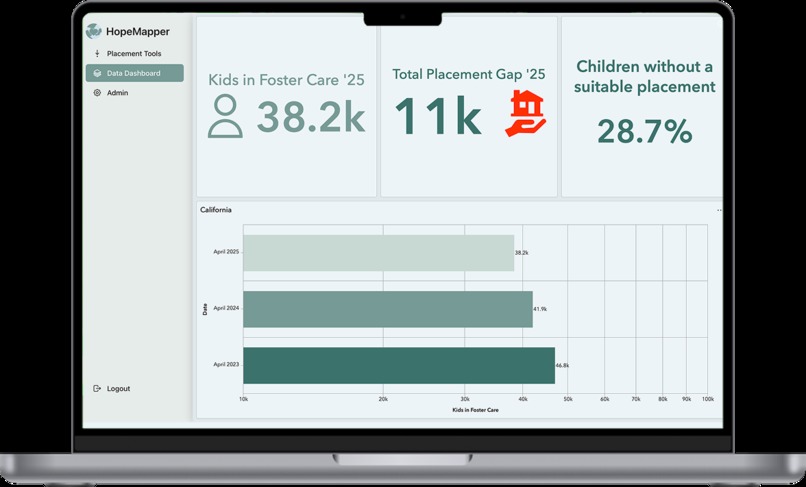
Data Dashboard
-
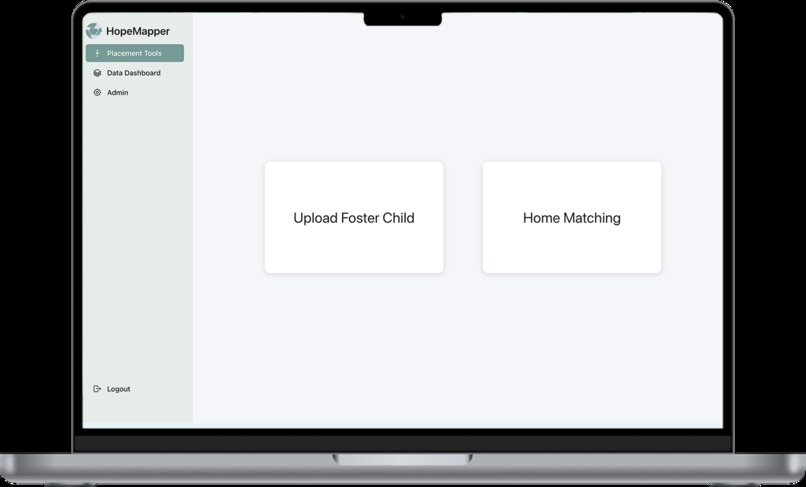
HomePage
-
Matched Home
💡 Inspiration
The inspiration of our Hackathon project, addressing foster care placement gaps, is rooted directly in what I (Steven) went through in the system myself. Seeing firsthand how tough it was to find good homes, and how kids often got sent far away from everything they knew, deeply motivated me. This personal connection then resonated profoundly with our entire team, unifying us in our commitment to this critical cause. With HopeMapper, we aim to use data like these placement gaps to seriously highlight how many local homes are desperately needed. Our big hope is to get people moving quickly to find nurturing places for kids right in their own neighborhoods, so they don't have to go through unnecessary moves.
🗺️ What it does
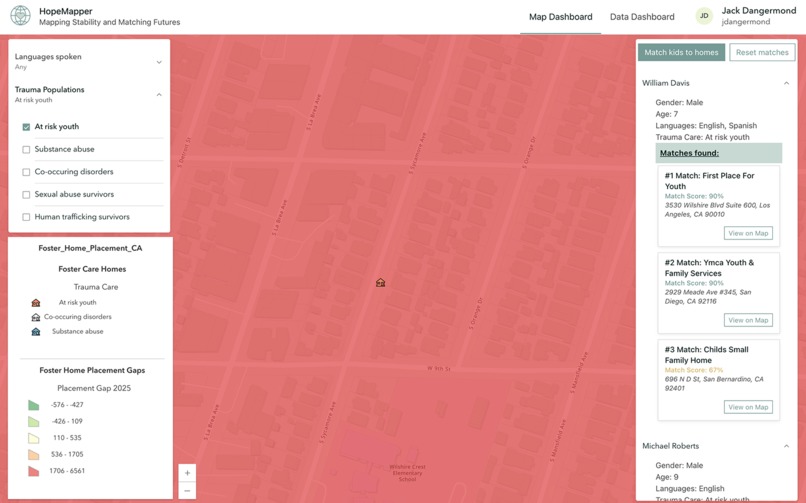
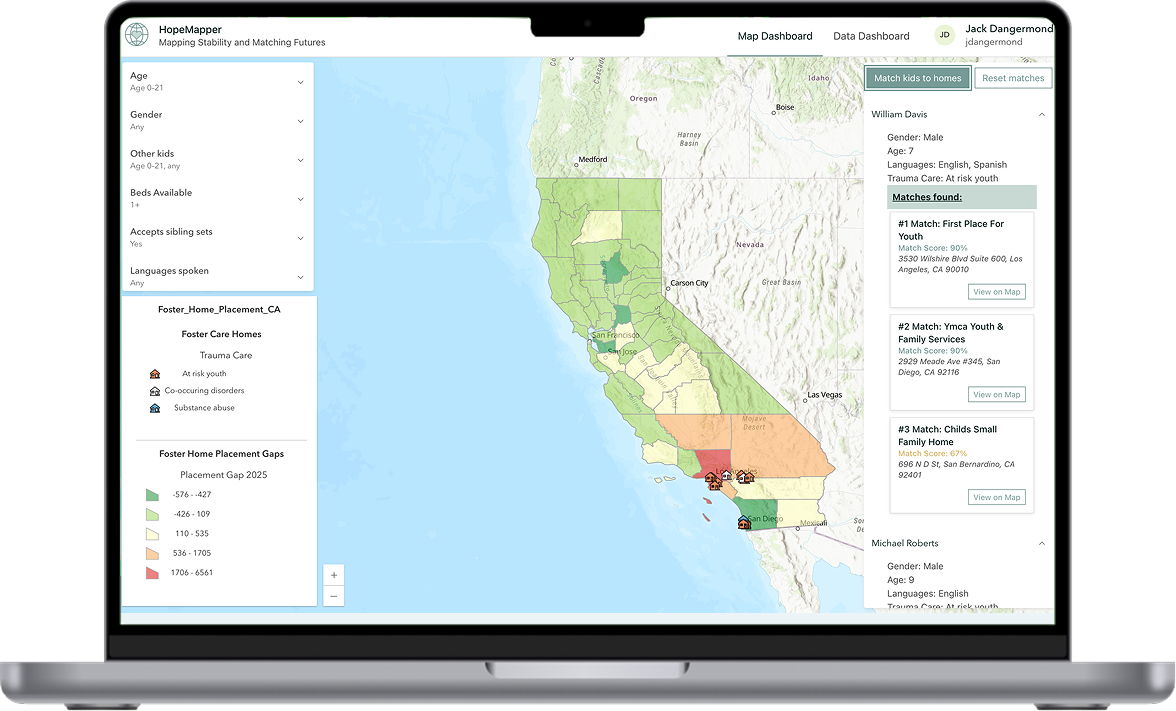
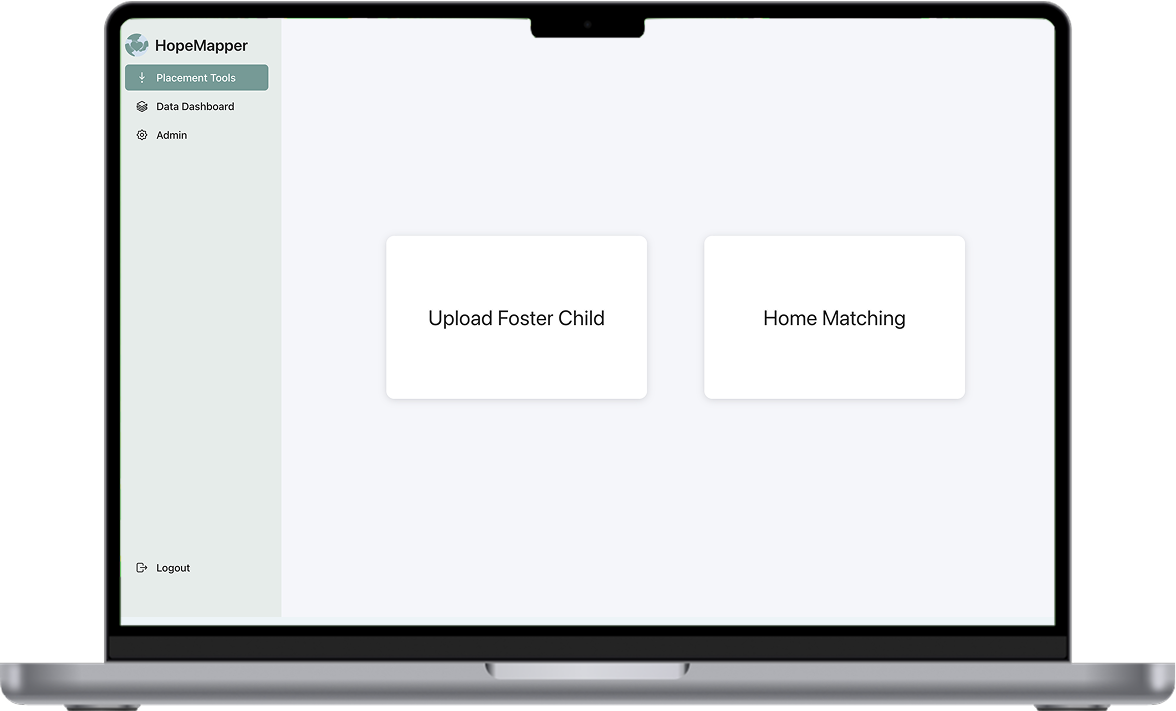
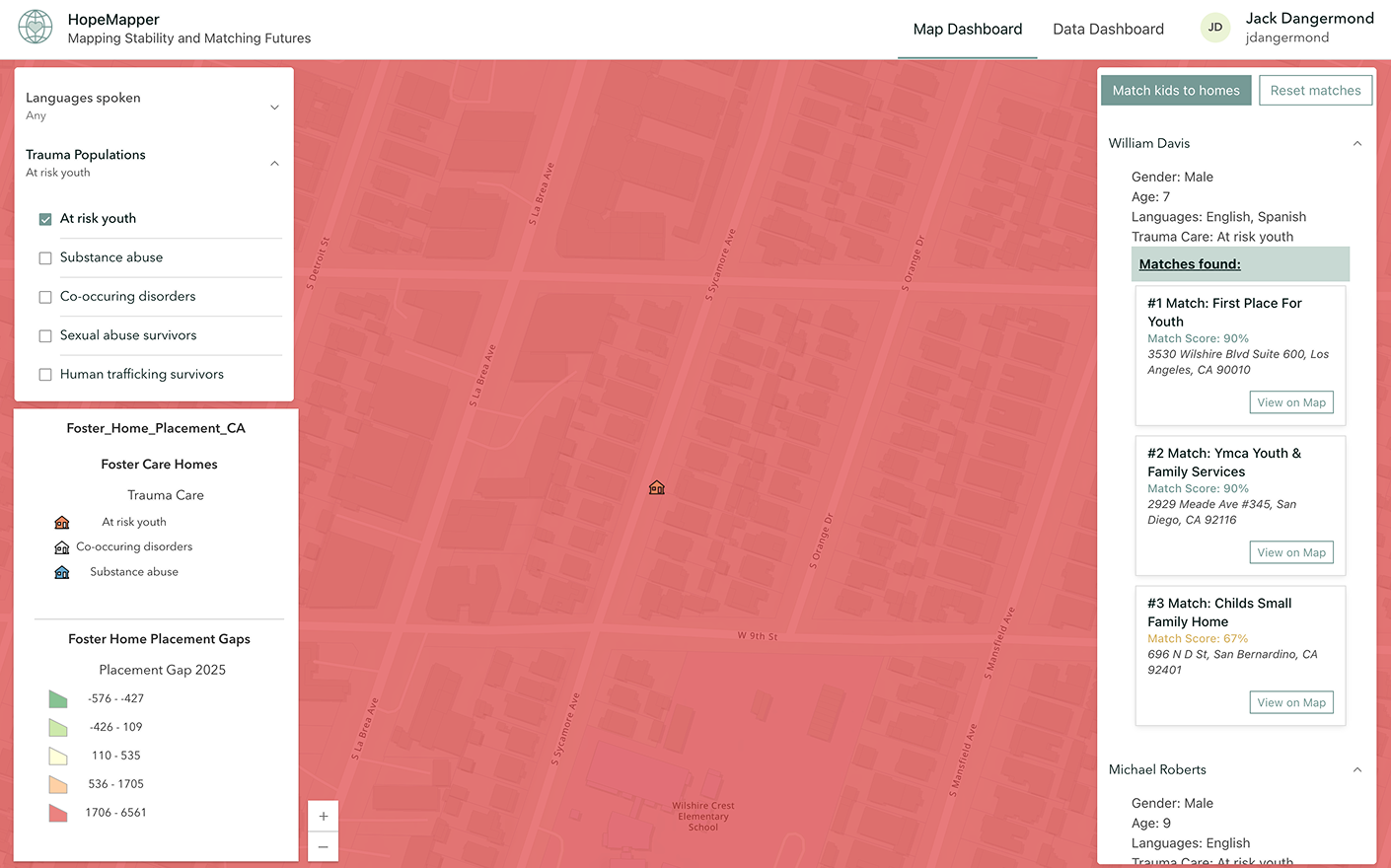
Through the power of GIS, HopeMapper redefines foster care placement by effectively matching children to homes. We incorporate dynamic filters and advanced scoring algorithms that consider a child's emotional well-being, their local area, and cultural background. This process equips caseworkers to identify the best possible fit, moving beyond simple availability to create more stable and supportive environments for children.
🛠️ How we built it
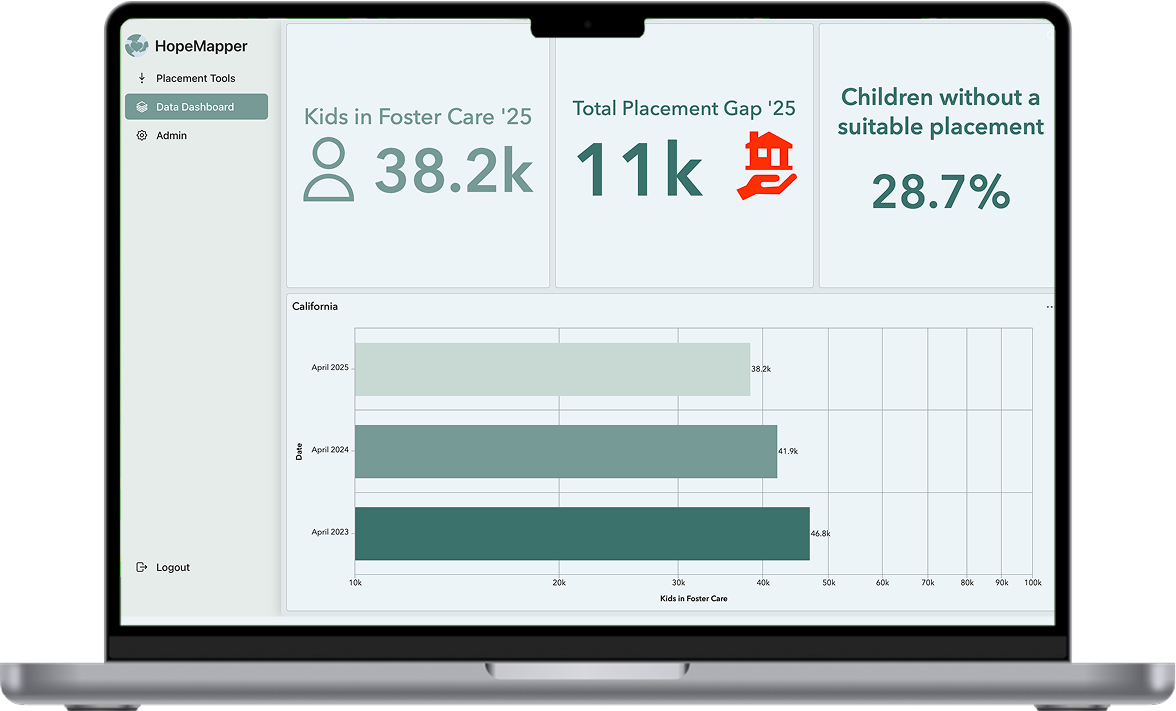
We developed a custom matching algorithm that considers children's and homes' ages, spoken languages, and trauma backgrounds. Using React, TypeScript, Tailwind CSS, and Esri's ArcGIS Maps SDK for JavaScript, we visualized the results on an interactive map. We also utilized ArcGIS Online, ArcGIS Pro, and ArcGIS Dashboards to support data management and analysis.
🧩 Challenges we ran into
Some challenges we ran into was increasing the amount of data parameters that was used in our matching algorithm. Additionally gathering data and finding a way to consistently format it was a challenge as well.
🏆 Accomplishments that we're proud of
We are very proud of the matching algorithm that we came up with and our filtering system. This allows the kids that are being matched with a home not just to get matched with one specific home but to be given a list of multiple homes with a score attached to each of how well the child matches with the house.
📝 What we learned
We learned how to work with the different ArcGIS API's and SDK for Javascript in order to complete this project. No one on our team had ever worked with these technologies before in a user scenario. Additionally this was everyone's first hackathon so we learned how to distribute data and keep a lot of momentum going through the working period.
🚀 What's next for HopeMapper
HopeMapper holds the potential to become something far greater than its current scope. This is merely our first step; we envision it evolving into a comprehensive platform that not only helps find homes but also connects foster youth with vital resources for schools, enriching after-school programs, and crucial support for those aging out of the system—including job training programs, transitional housing, and career preparedness. We also see its immense potential to empower foster parents by helping them easily find essential resources like therapy or counseling services for the children in their care. Our ambitious goal is to scale this tool across more counties and, eventually, the entire country, integrating additional public datasets such as school ratings, community safety metrics, and the density of support services to enable agencies to make even more informed and impactful placement decisions.
Built With
- arcgis-sdk-for-javascript
- esri
- node.js
- react.js
- tailwind
- typescript
- vite


Log in or sign up for Devpost to join the conversation.