-
-
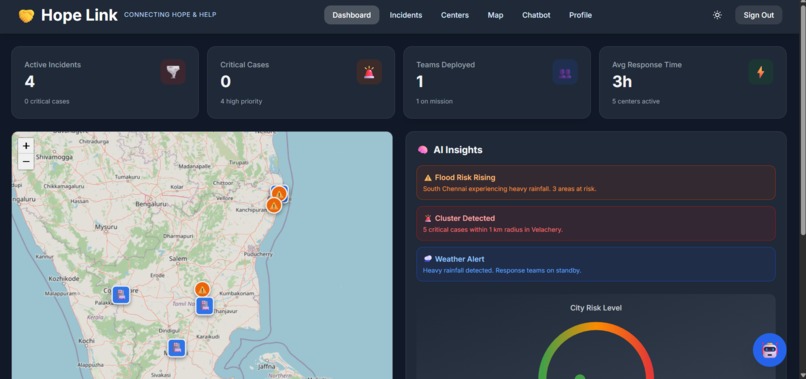
Dashboard
-
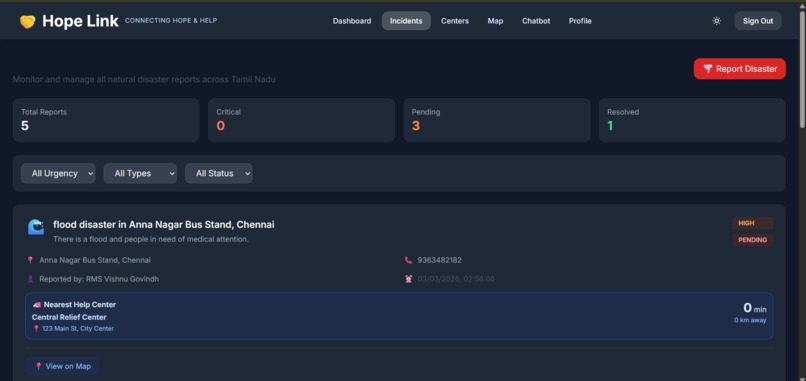
Incidents
-
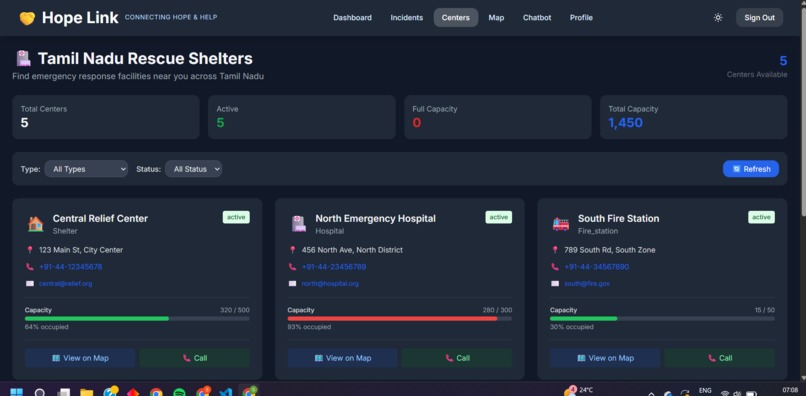
Centers
-
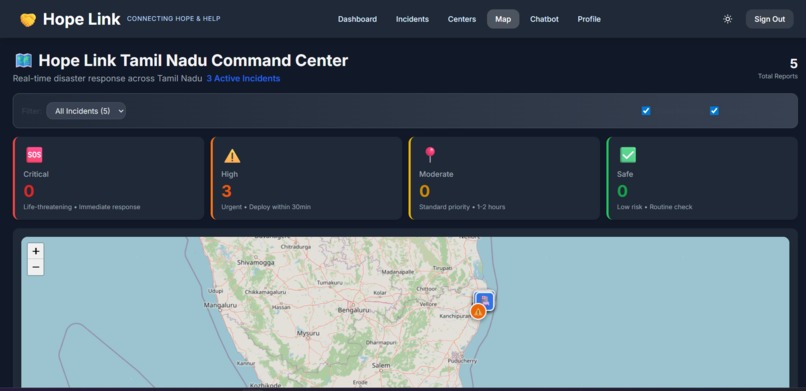
Map
-
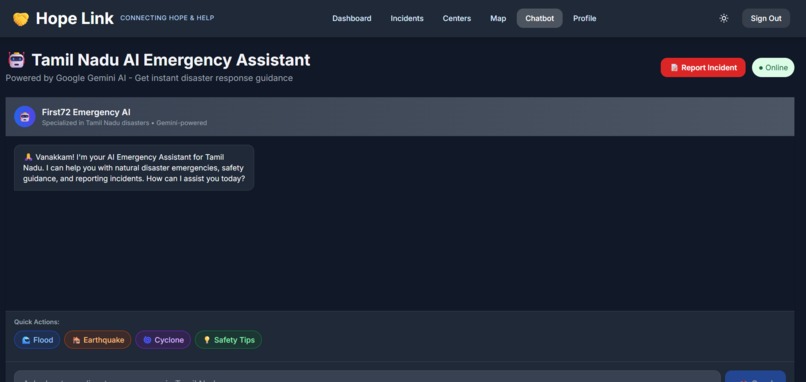
Chatbot
-
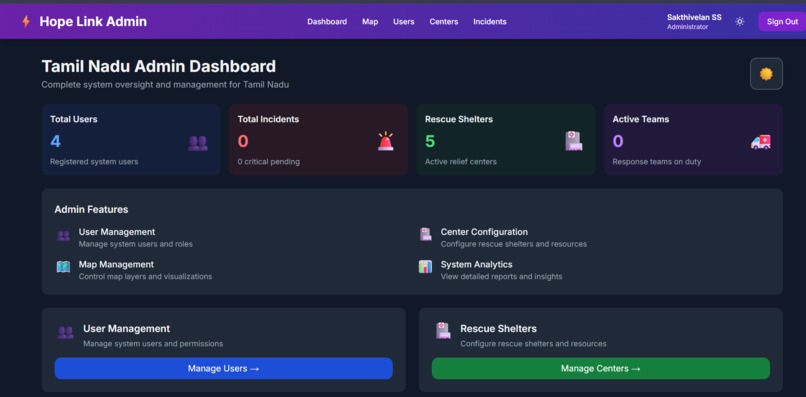
Admin dashboard
Inspiration
Chennai floods and Tamil Nadu cyclones highlighted critical delays in emergency response Fake reports waste 30% of emergency resources during crises Victims struggle to communicate clear information under stress Poor coordination between rescue centres leads to duplicate efforts or missed emergencies Hope Link was built to save lives by making disaster response faster, smarter, and more efficient.
What it does
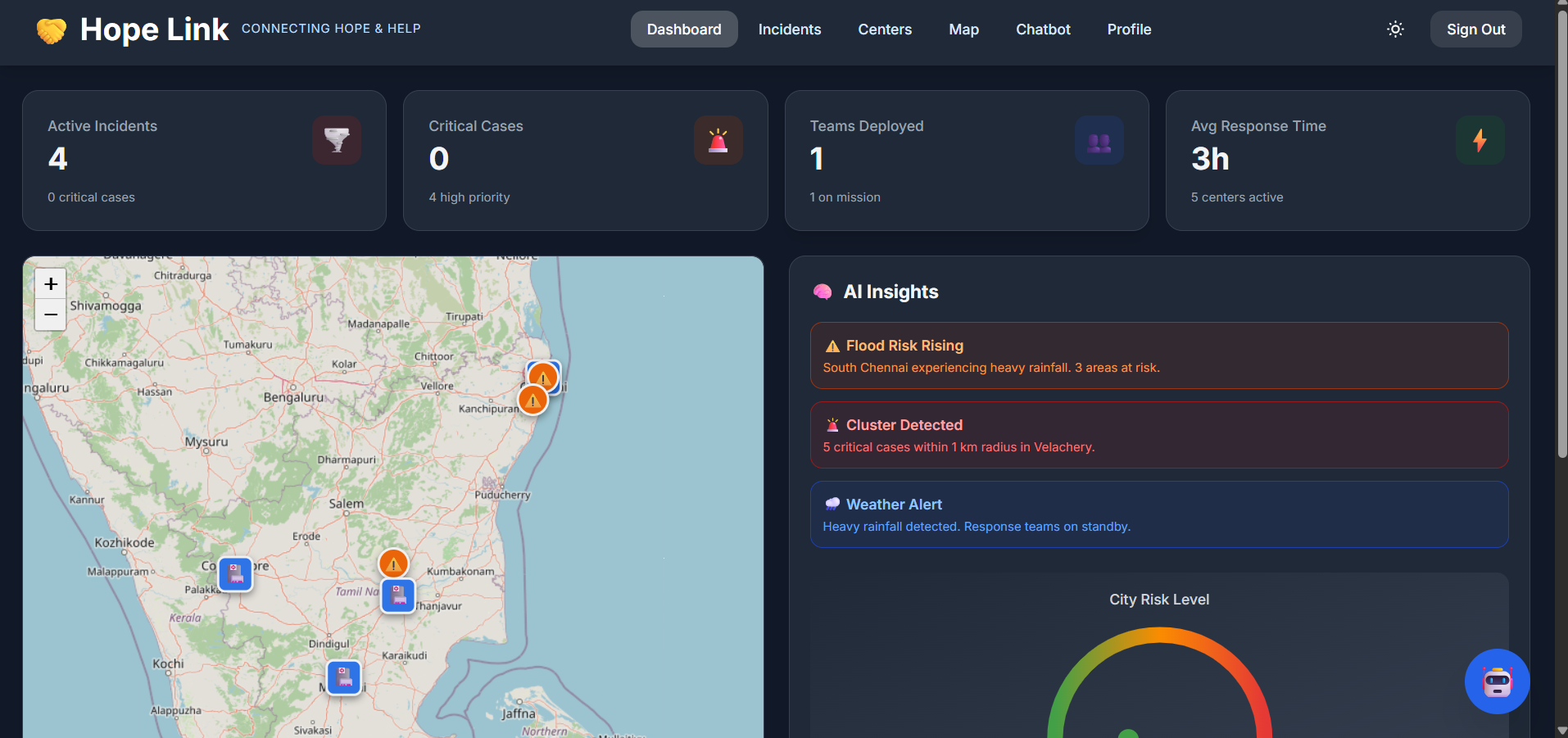
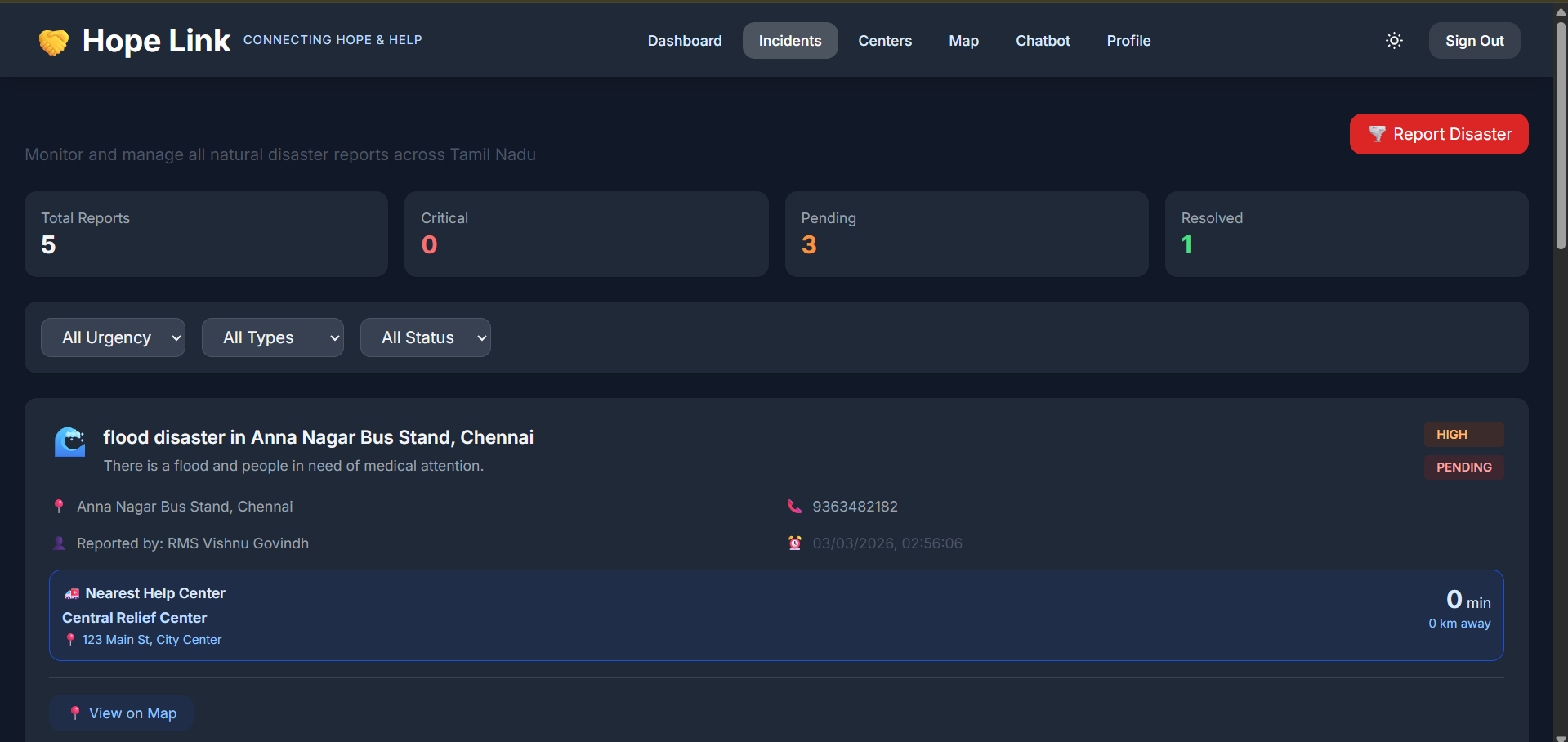
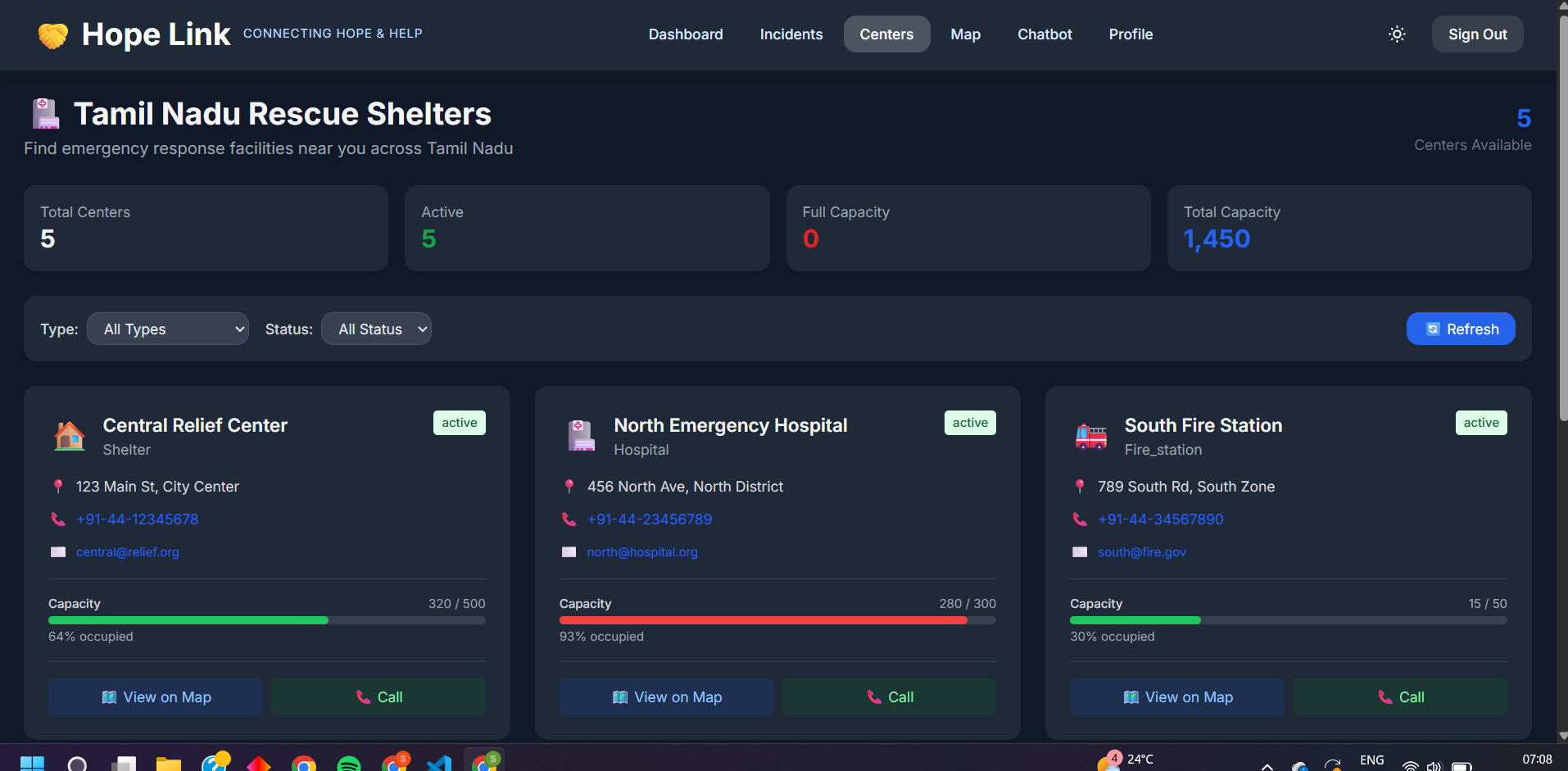
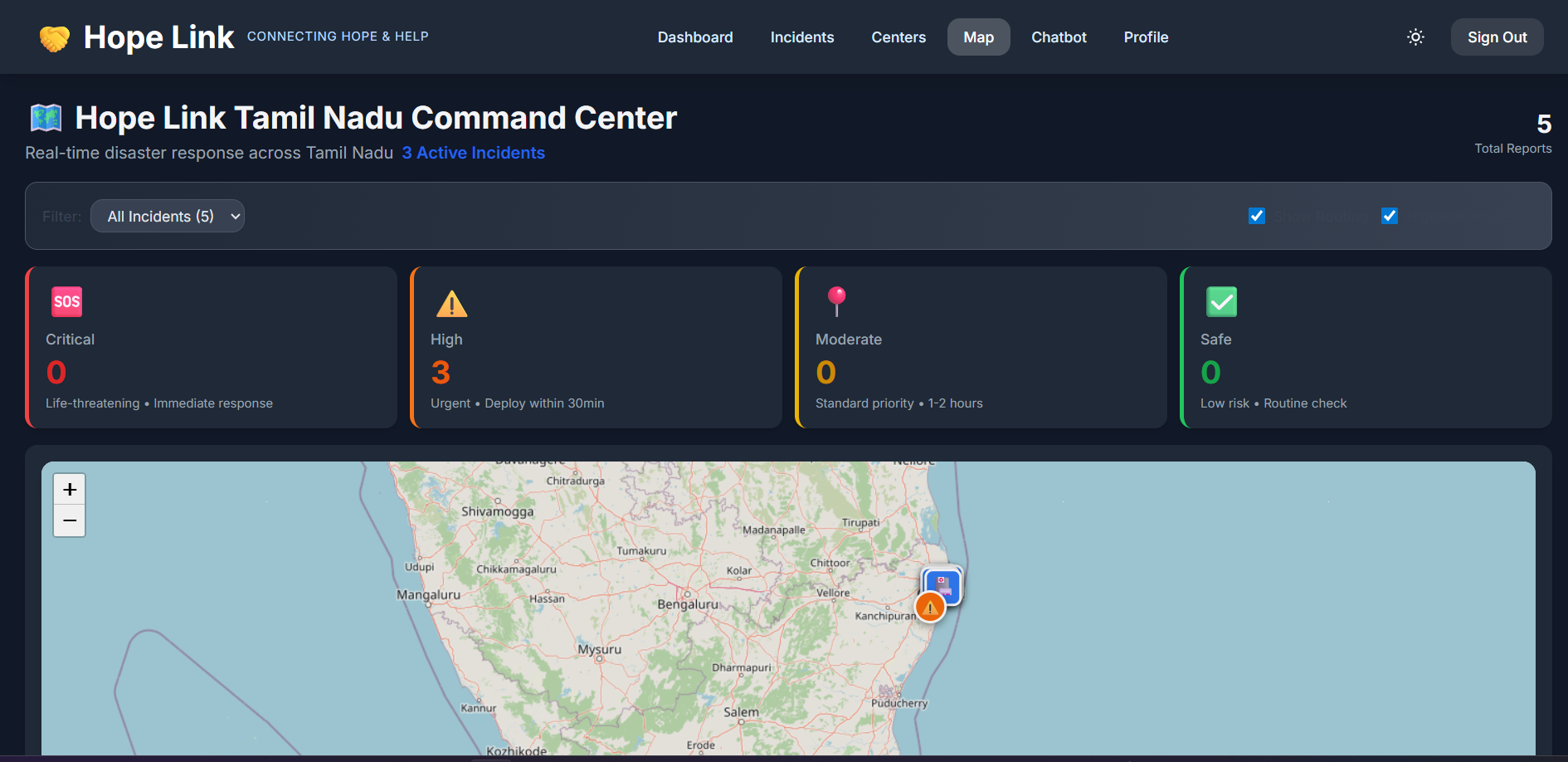
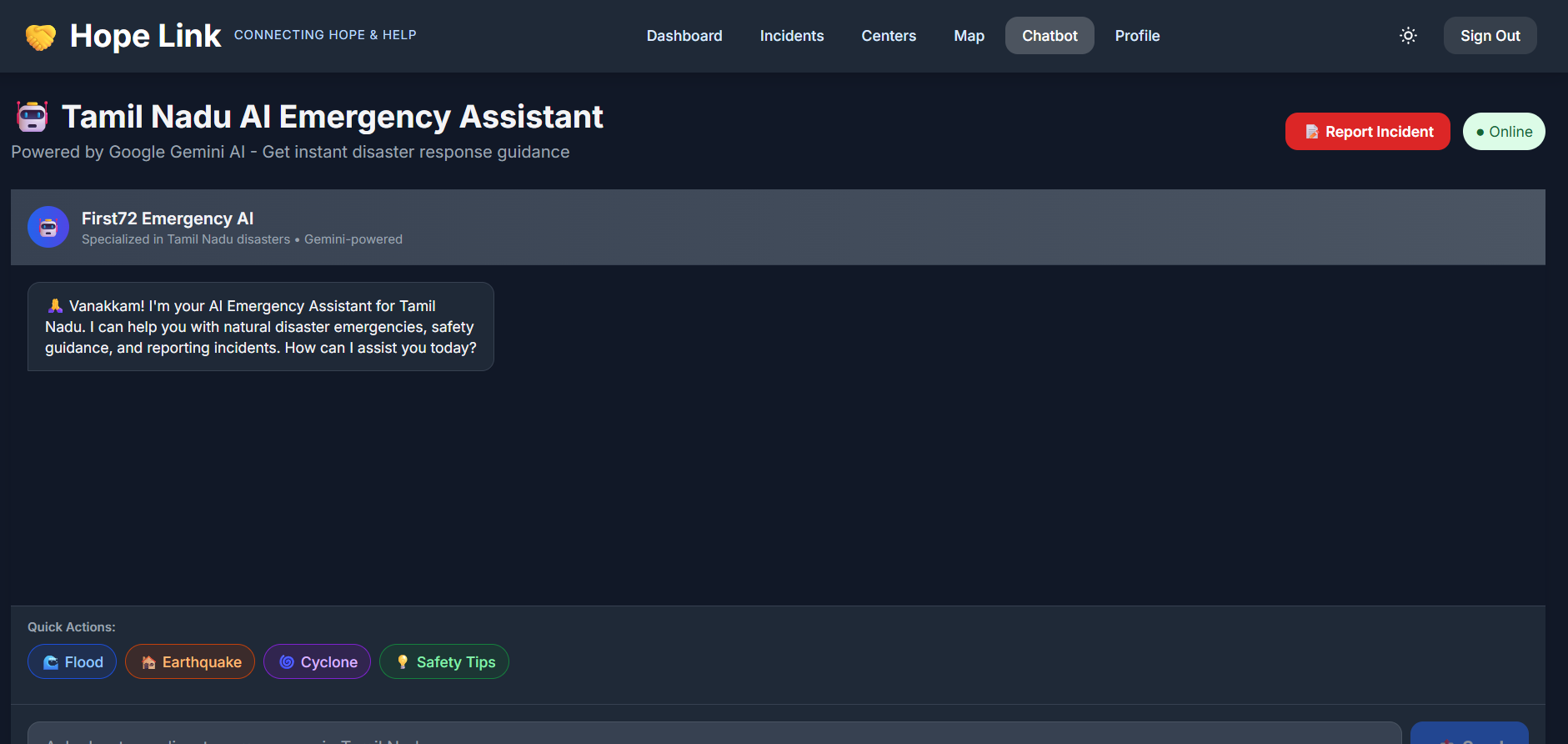
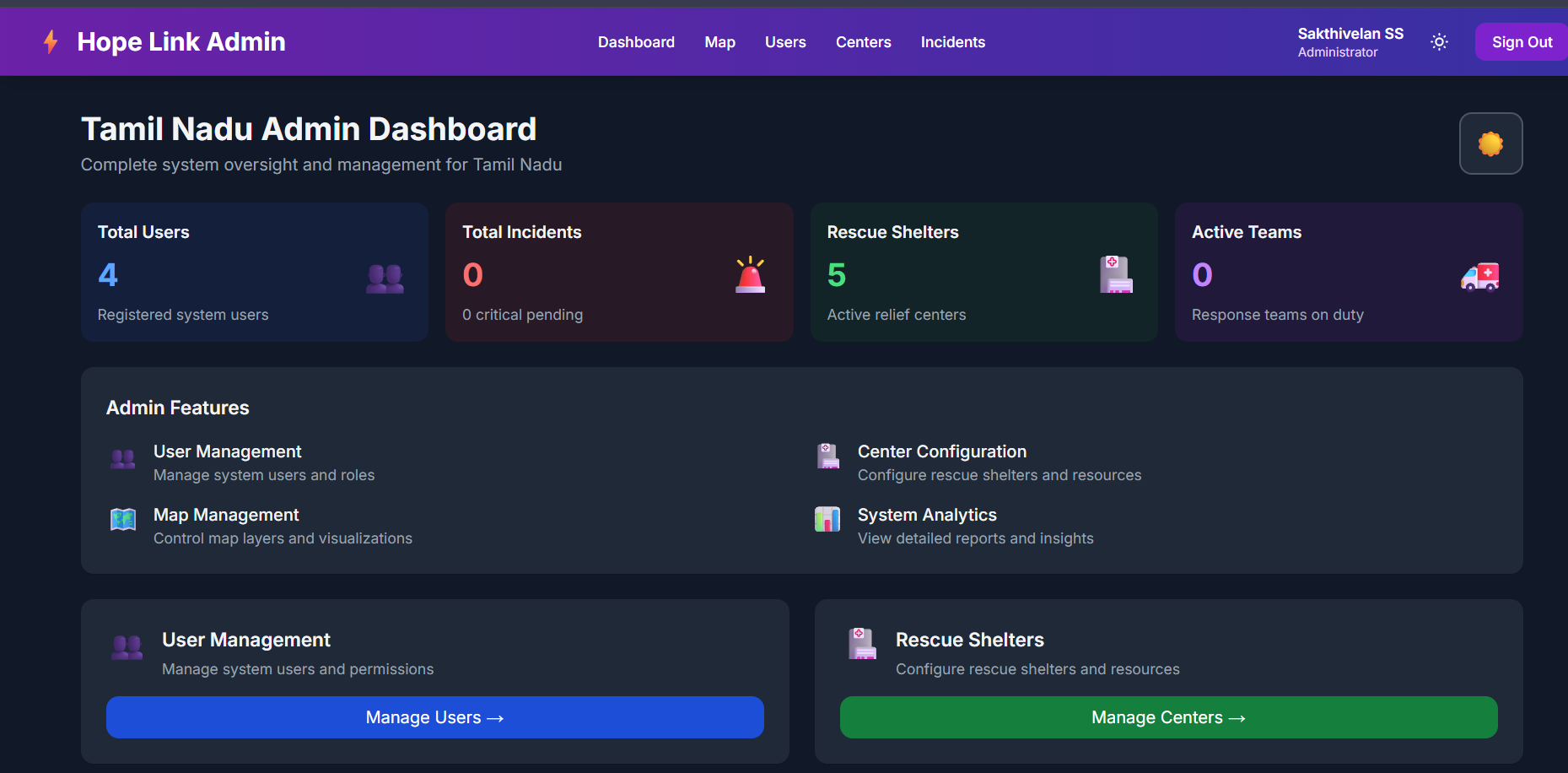
Smart Chatbot: Guides victims and provides real-time safety instructions Smart Dispatch: Routes to nearest rescue team with ETA prediction Spam Detection: Flags fake reports using weather verification Live Command Centre: Real-time maps, heatmaps, and tracking Role-Based Access: Separate dashboards for victims, teams, and admins
How we built it
Challenges we ran into
Preventing spam without blocking real cases Scaling real-time update Handling thousands of map markers smoothly
Accomplishments that we're proud of
Sub-2-second AI classification 95% spam detection accuracy faster response with smart dispatch Fully functional real-time command centre.
What we learned
Advanced AI prompt engineering Real-time system architecture Disaster response workflows Secure and scalable database design Team collaboration & full-stack deployment
What's next for Hope Link
SMS/Voice integration Multi-language support Mobile apps Government partnerships IoT & drone integration National & international expansion
Built With
- frontend:-next.js
- react-leaflet-backend:-next.js-apis-+-supabase-(postgresql-+-rls)-ai:-google-gemini-2.5-flash-+-nlp-+-weather-api-deployment:-vercel-edge-network-architecture:-3-tier-(frontend-?-api-?-database)
- real-time
- tailwind
- typescript

Log in or sign up for Devpost to join the conversation.