Inspiration:
In India, over 100,000 thalassemia patients depend on regular blood transfusions to survive. These patients face anxiety and danger due to **inconsistent donor availability and lack of real-time connections.
We were deeply moved by stories shared during a visit to a blood donation camp, where we saw firsthand the struggles of families trying to source blood for their children. This emotional experience inspired us to build HopeFlow — a smart, AI-powered platform that connects those who want to give with those who desperately need.
What it does:
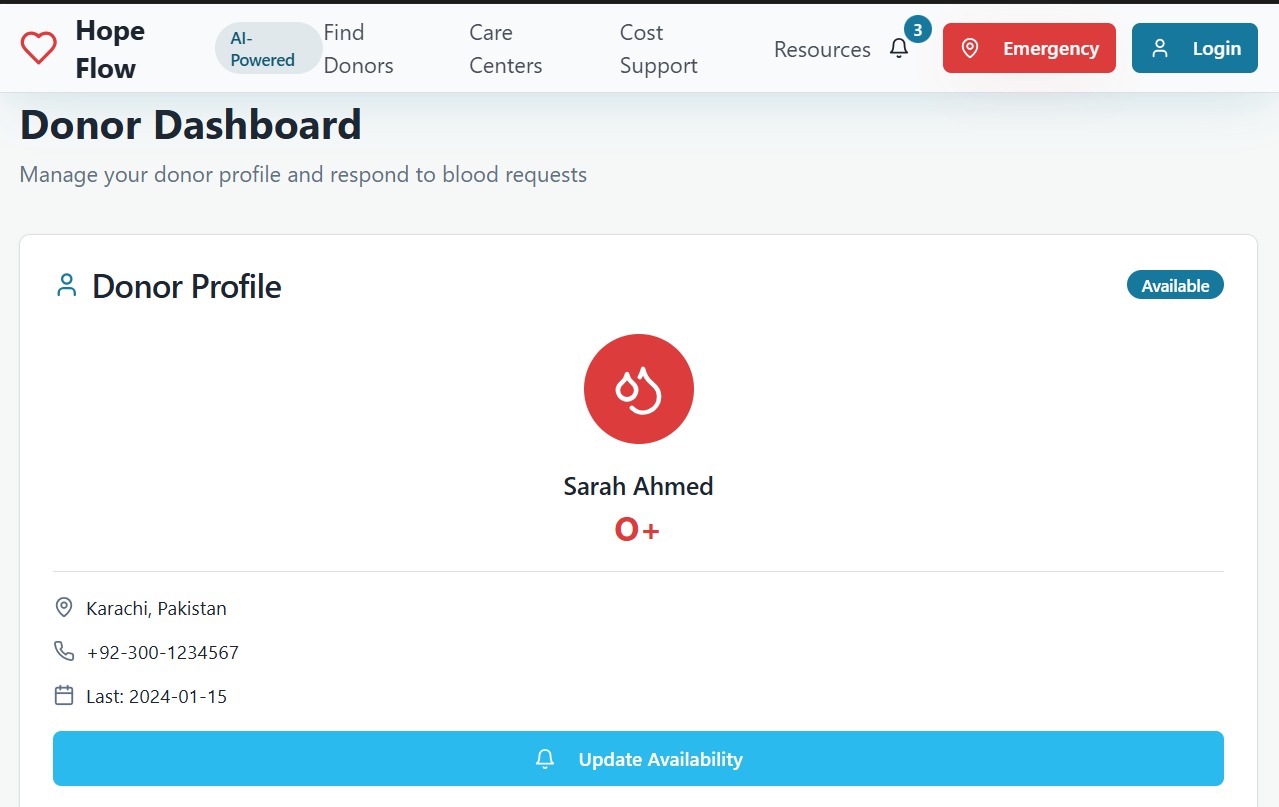
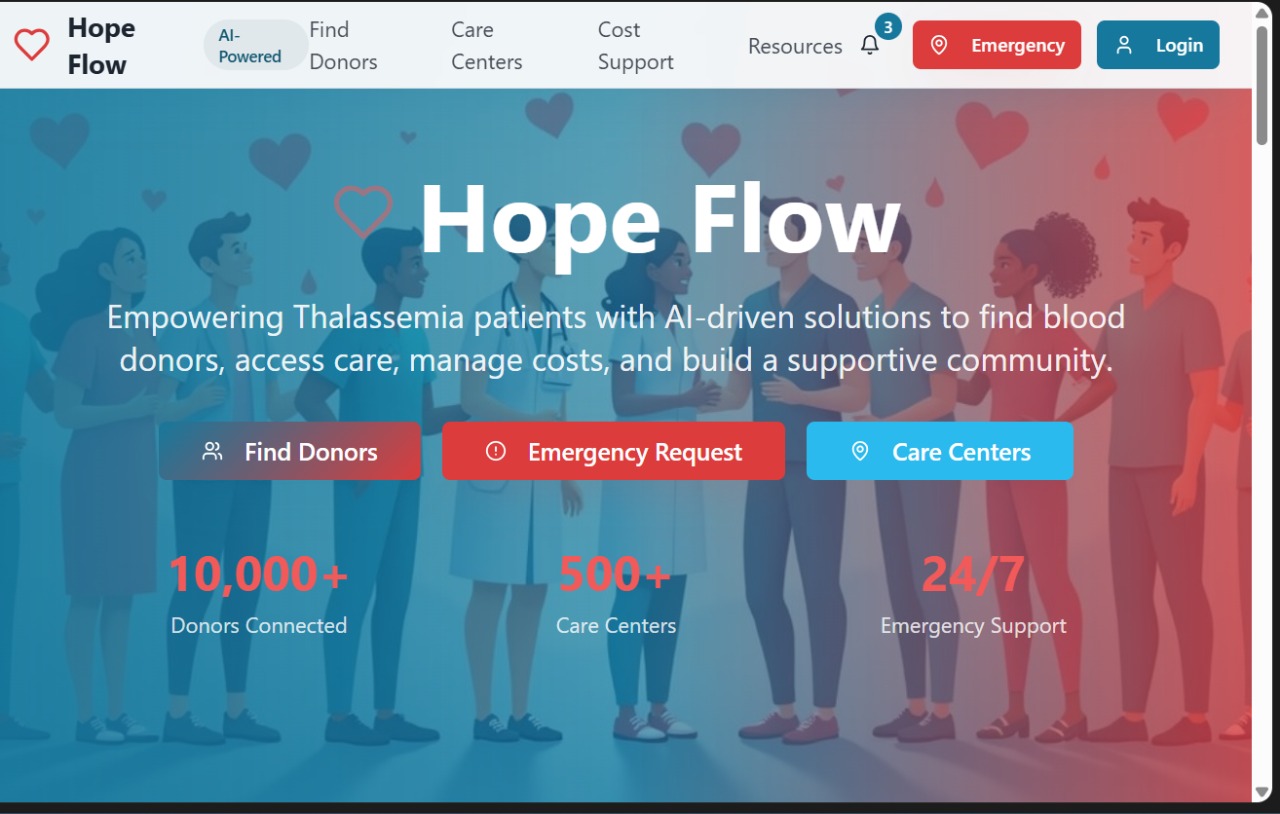
HopeFlow is an AI-enabled blood donation platform designed specifically for Thalassemia patients and frequent donors.
It provides:
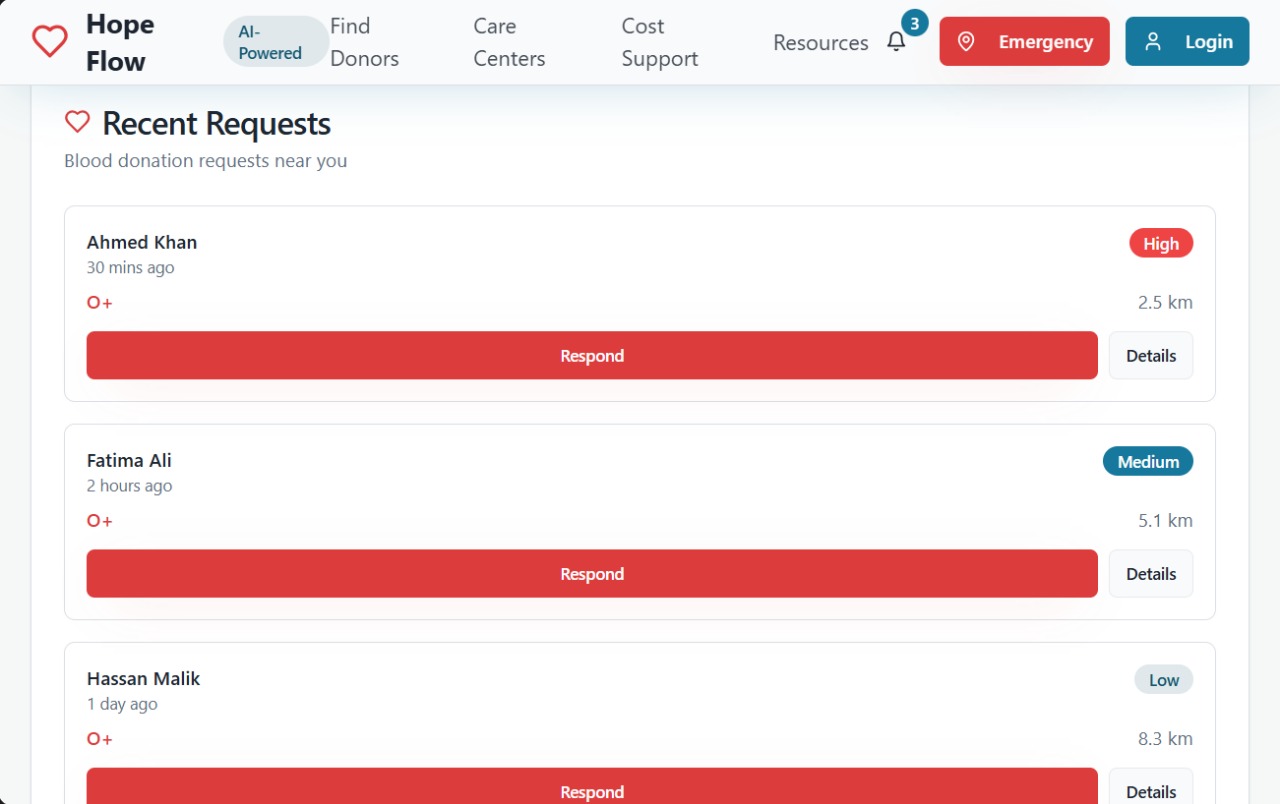
- Real-time donor-patient matching
- AI-based donor availability prediction
- Secure doctor-patient chat
- Multilingual education hub for awareness
- Alerts for donation requests
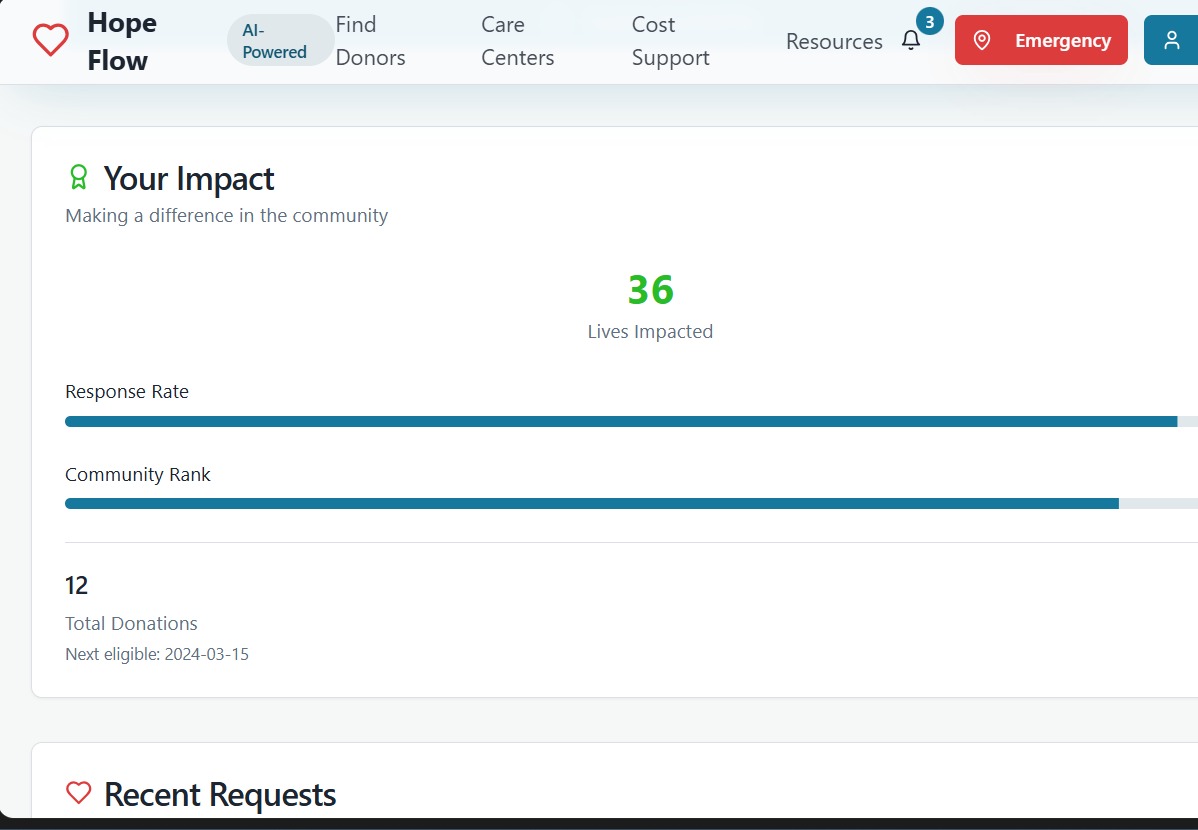
- Donor rewards & recognition system
- Integration with government blood banks (e-RaktKosh)
How we built it: Languages: -Python – for AI models and backend logic -JavaScript / TypeScript – for frontend development -Dart – for Flutter mobile app Frameworks & Libraries: -React.js – Web frontend -Flutter – Mobile app -Node.js + Express – Backend services -scikit-learn / TensorFlow – AI/ML prediction Databases: -MongoDB (with encryption) – Main data storage -Firebase Realtime DB – Notifications and user presence APIs Integrated: -e-RaktKosh API – For national blood donor registry -Twilio / WhatsApp API – Notifications and chat -Google Translate API – Multilingual support Cloud Services: -Google Cloud Platform (GCP) – Hosting, AI model deployment -Firebase – App backend and analytics Security: -JWT (JSON Web Tokens) – Authentication -AES Encryption – For sensitive data
Challenges we ran into: -Real-Time Blood Matching Designing a system that matches based on urgency, location, and availability was technically demanding. -Data Scarcity Thalassemia-specific datasets are rare. We simulated donor behaviors and extrapolated from small samples. -API Limitations Access to real-time health APIs like e-RaktKosh is restricted. We used sandbox versions during development. -User Trust Ensuring patients feel safe and donors feel valued required building a human-centric UX and reward system. -Multilingual Complexity Translating medical terms across 6+ Indian languages and ensuring cultural sensitivity took extra care.
Accomplishments that we're proud of: -We built a working app that helps patients find blood donors quickly. -We created a smart system that can guess which donors are most likely to help. -Our app works in different languages, so more people can use it easily. -We added a secure chat where patients can talk to doctors safely. -people we showed the app to liked it and found it helpful.
What we learned: -How to use AI to solve real-world health problems. -How to design an app that’s easy for patients and doctors to use. -The importance of making health tools in local languages. -How to connect with real-time APIs like e-RaktKosh and Twilio. -That teamwork, even under pressure, helps bring big ideas to life.
What's next for HopeFlow: Partner with NGOs and hospitals to get real donor-patient data.
- Improve ML models with continuous learning from user patterns.
- Expand language support to 10+ regional dialects.
- Launch a blood donor awareness campaign in collaboration with schools and colleges.
- Release the app on the Play Store with verified users.
- Work with health ministries for full e-RaktKosh API access

Log in or sign up for Devpost to join the conversation.