-
-
cover
-
Release order
-
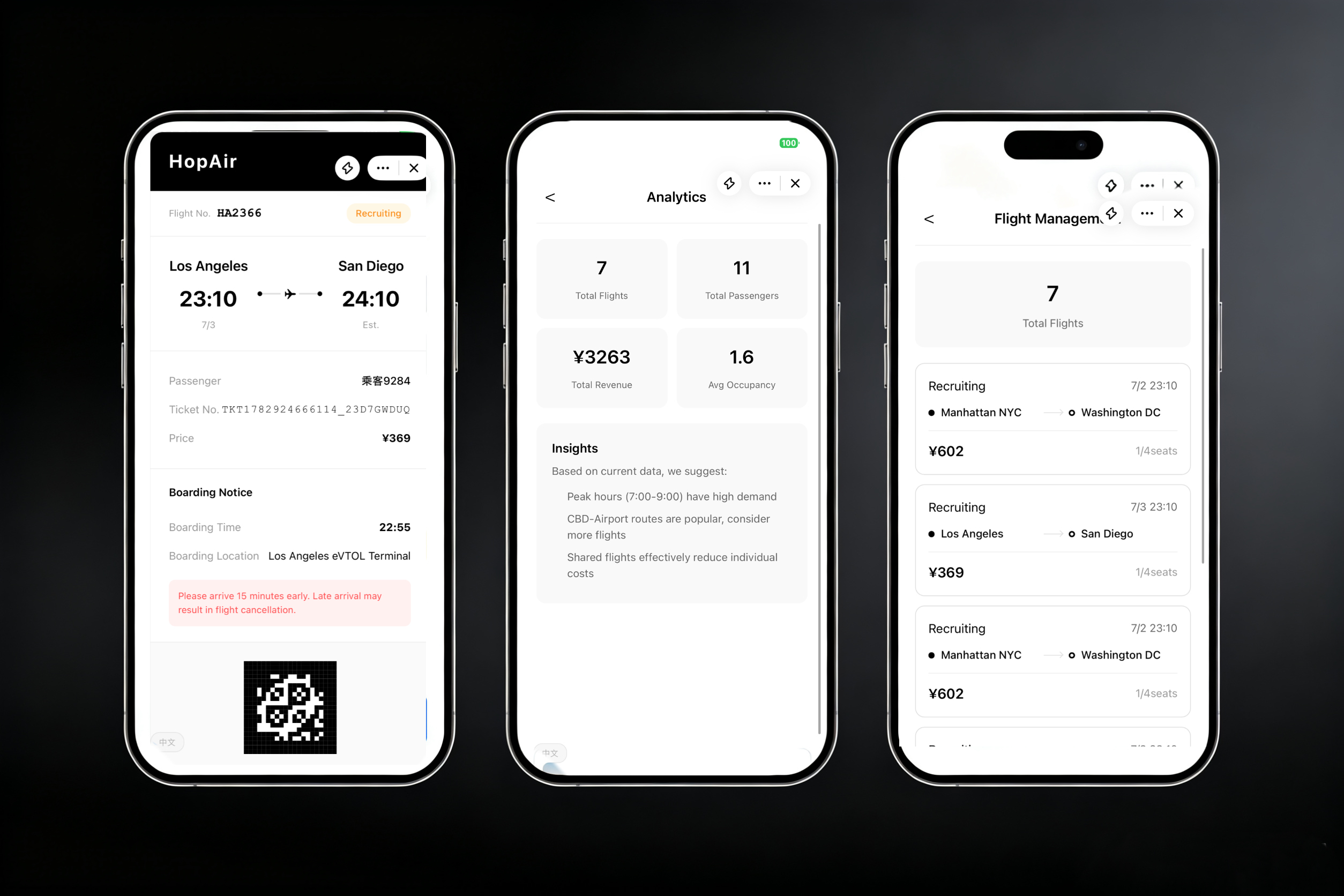
Ticket details
-

-
-
-
-

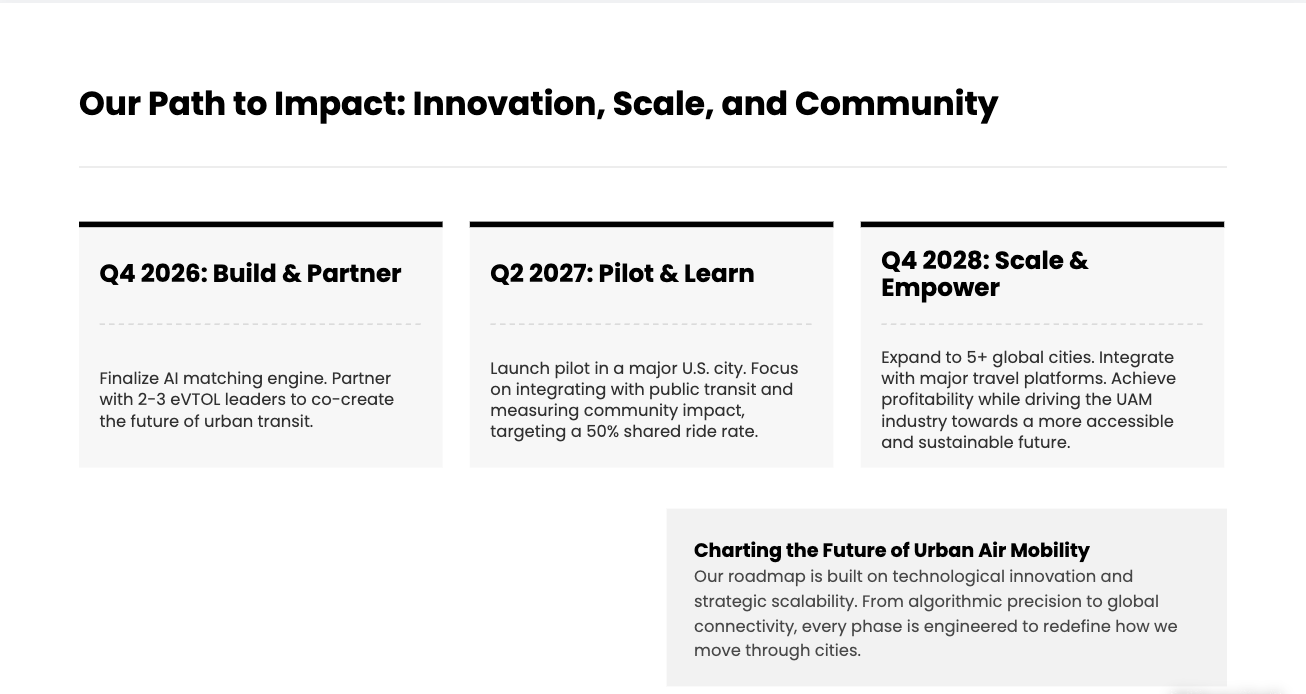
Inspiration# HopAir Project Story
Inspiration
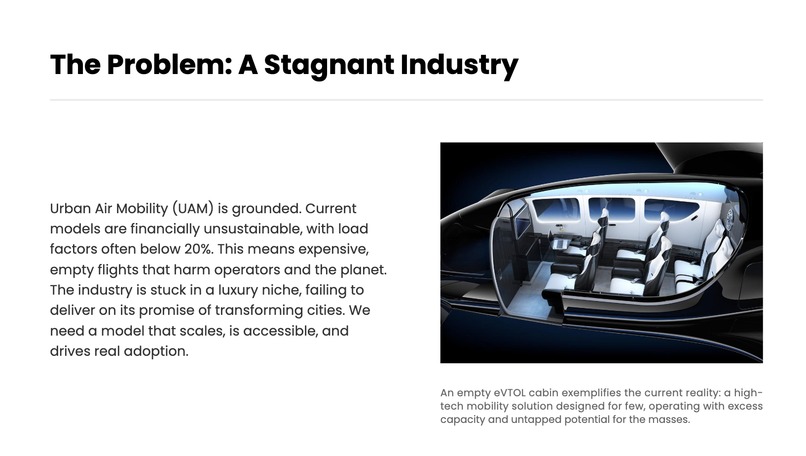
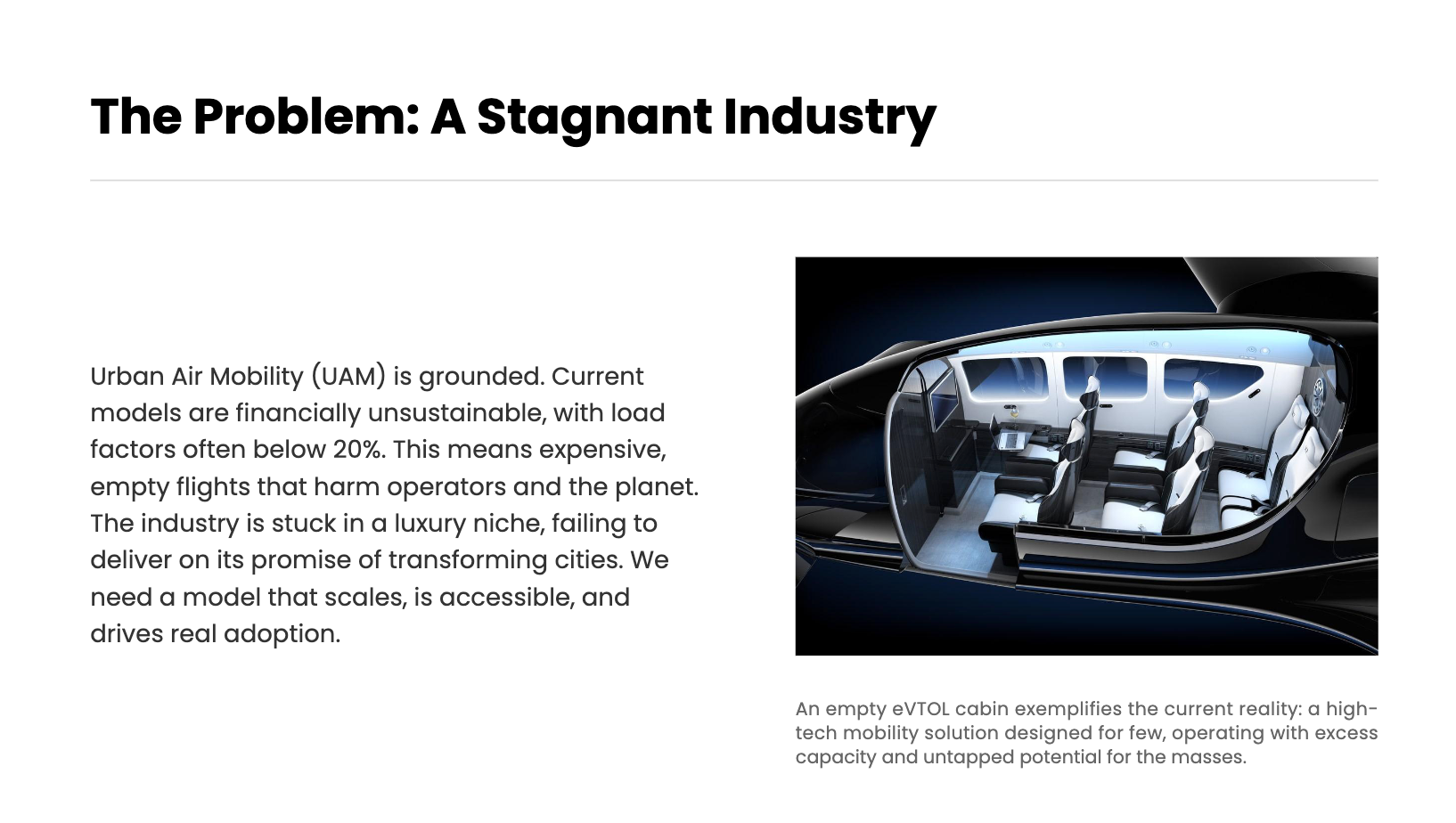
HopAir was inspired by a fundamental gap in the future of urban air mobility: while eVTOL aircraft are expected to revolutionize transportation, early-stage operations suffer from extremely high per-seat costs and low occupancy rates. This creates a structural inefficiency where flights are often underutilized and inaccessible to most users.
We realized the core bottleneck is not aviation technology itself, but matching efficiency—how to connect fragmented passenger demand into shared flights. Similar to how ride-sharing transformed urban ground transportation, we believe the same paradigm shift is required for air mobility.
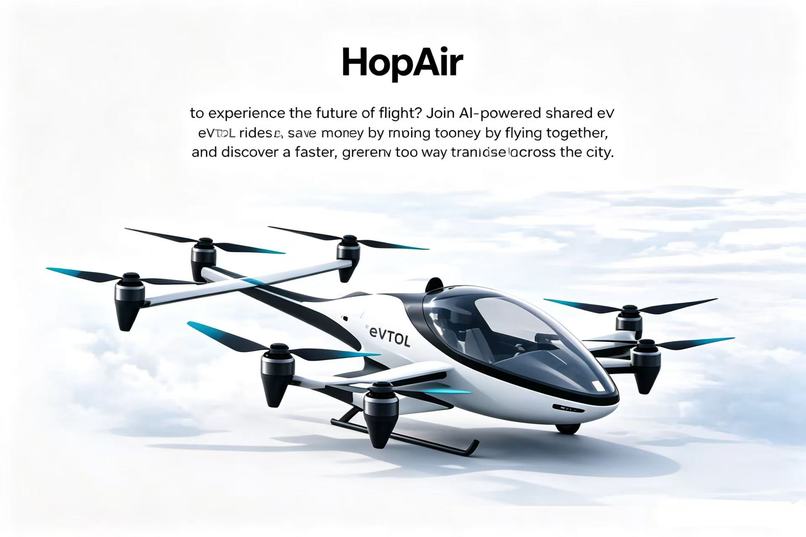
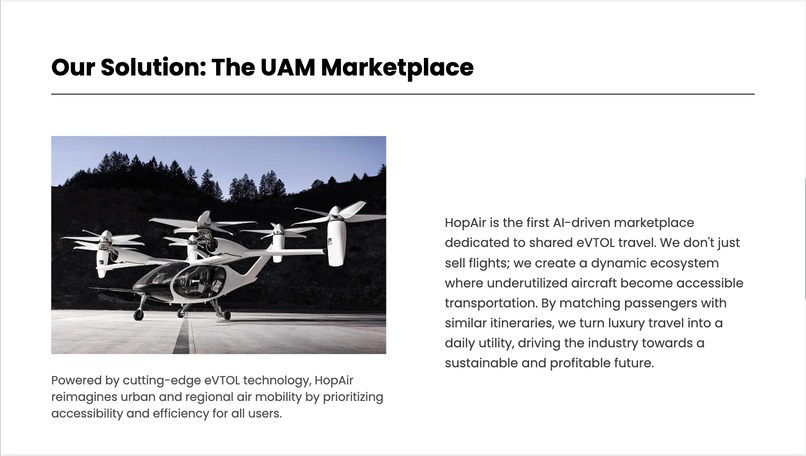
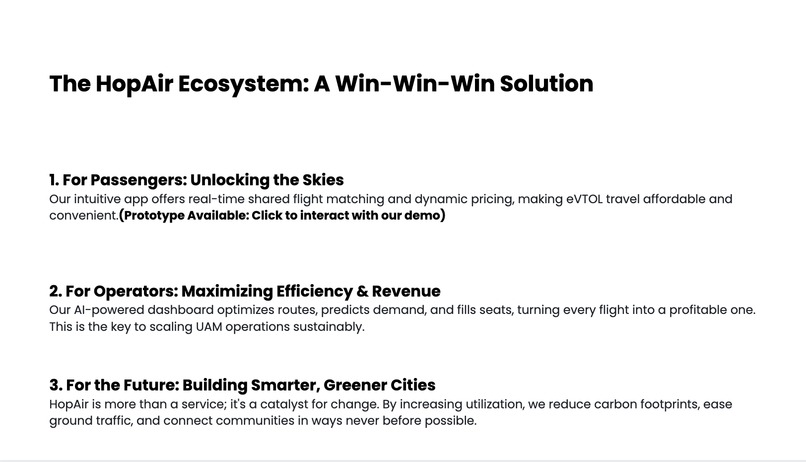
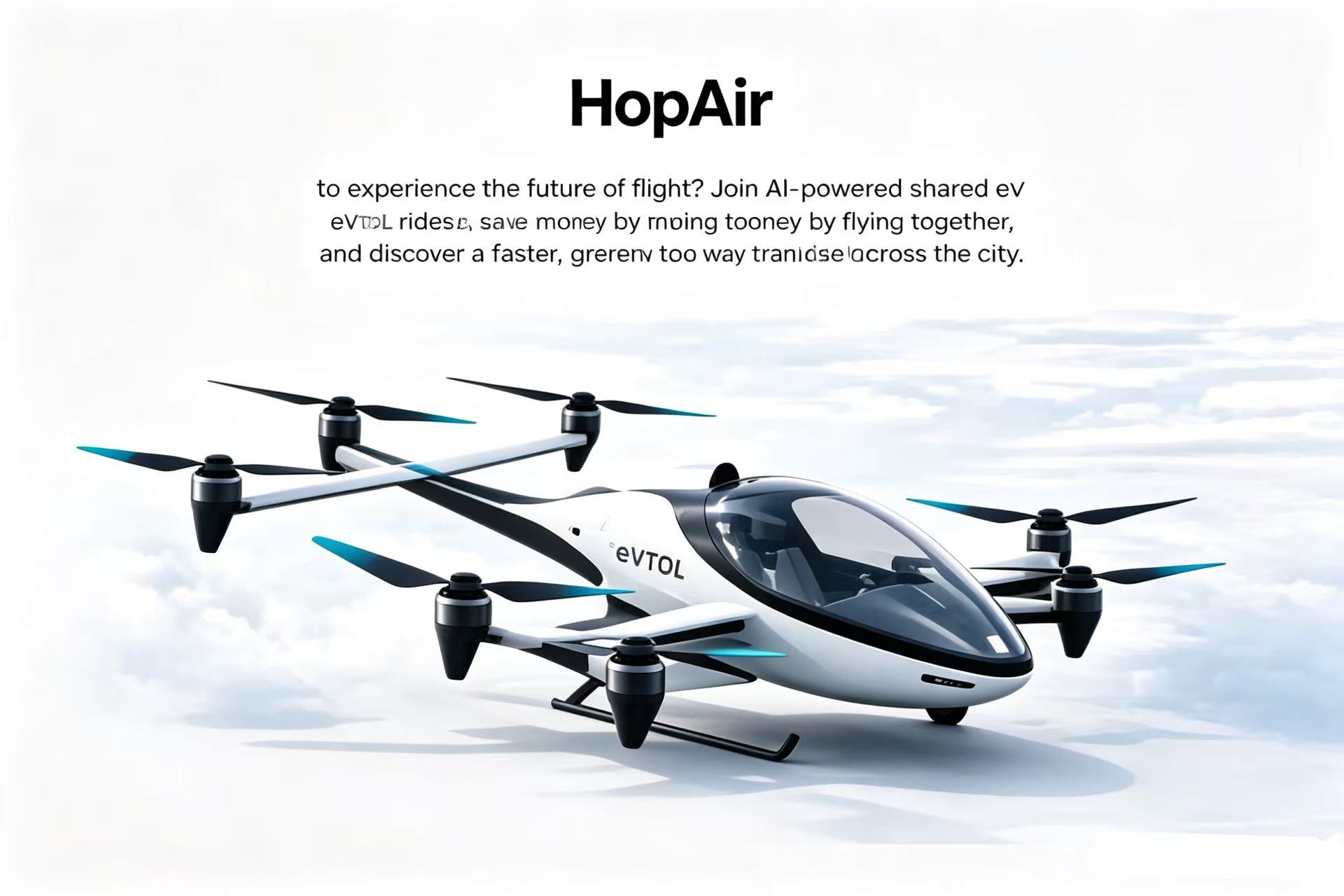
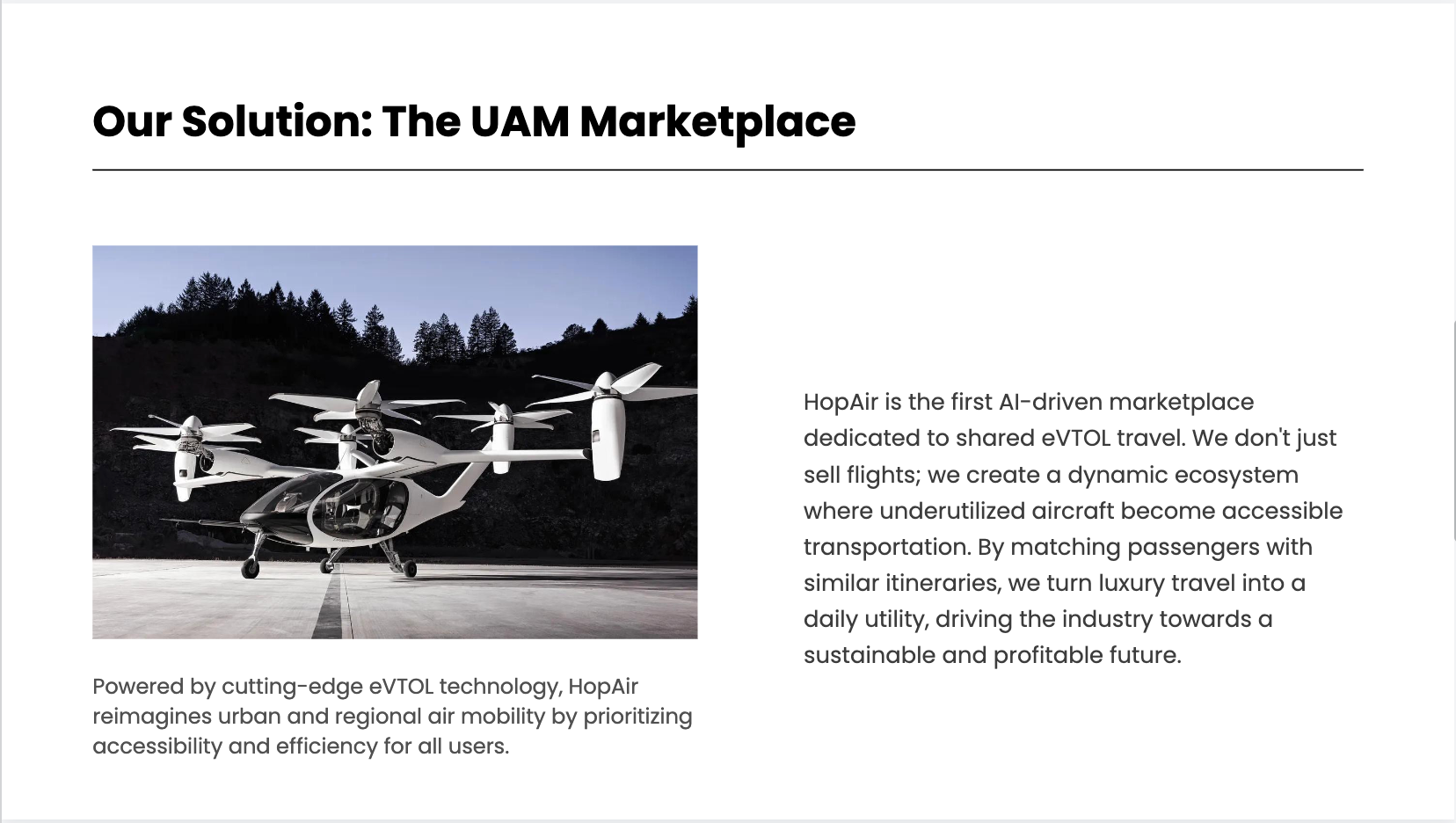
HopAir reimagines eVTOL transportation as a shared, AI-powered network that reduces cost per passenger while maximizing aircraft utilization.
What we learned
During this project, we gained key insights into Urban Air Mobility (UAM):
- The main limitation of eVTOL adoption is not engineering, but demand aggregation.
- Simple AI-driven matching can significantly improve seat utilization without complex models.
- Transportation systems evolve from single-user efficiency to network-level optimization.
- Shared mobility is the key to making early-stage aviation economically viable.
HopAir Project Story
Inspiration
HopAir was inspired by a fundamental gap in the future of urban air mobility: while eVTOL aircraft are expected to revolutionize transportation, early-stage operations suffer from extremely high per-seat costs and low occupancy rates. This creates a structural inefficiency where flights are often underutilized and inaccessible to most users.
We realized the core bottleneck is not aviation technology itself, but matching efficiency—how to connect fragmented passenger demand into shared flights. Similar to how ride-sharing transformed urban ground transportation, we believe the same paradigm shift is required for air mobility.
HopAir reimagines eVTOL transportation as a shared, AI-powered network that reduces cost per passenger while maximizing aircraft utilization.
What we learned
During this project, we gained key insights into Urban Air Mobility (UAM):
- The main limitation of eVTOL adoption is not engineering, but demand aggregation.
- Simple AI-driven matching can significantly improve seat utilization without complex models.
- Transportation systems evolve from single-user efficiency to network-level optimization.
- Shared mobility is the key to making early-stage aviation economically viable.
We also learned that in early-stage systems, simplicity in design often outperforms overly complex optimization.
How we built it
HopAir consists of three core components:
1. Passenger Platform
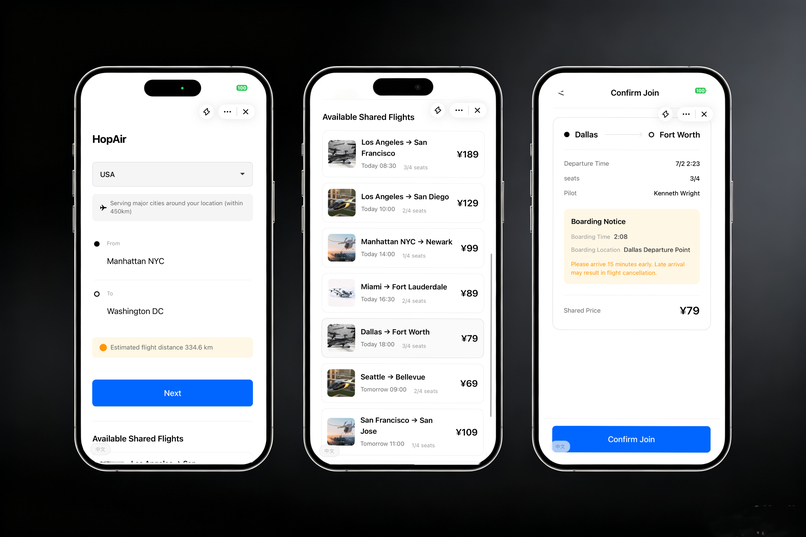
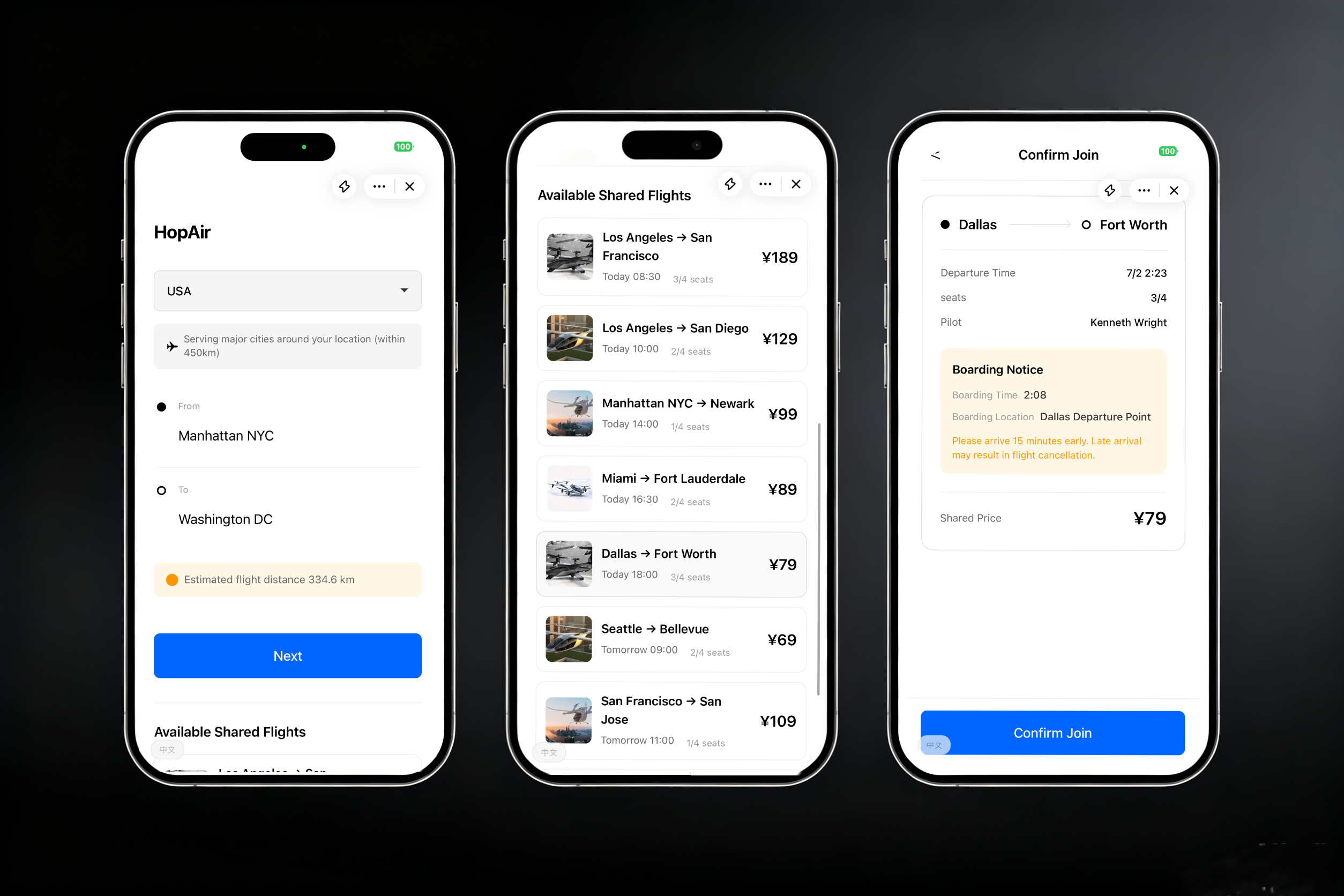
Users input origin, destination, time, and number of passengers. The system displays available eVTOL flights with real-time seat availability, estimated departure times, and dynamic pricing. Users can join existing flights or create new shared trips.
2. Matching & Pricing Engine
A rule-based AI system matches passengers based on route similarity, time proximity, and remaining capacity. As more users join a flight, the price per passenger decreases dynamically.
The pricing model is defined as:
$$ P_{seat} = \frac{P_{base}}{n} \cdot \alpha $$
where (n) is the number of passengers and (\alpha) represents operational efficiency factors.
3. Operator Dashboard
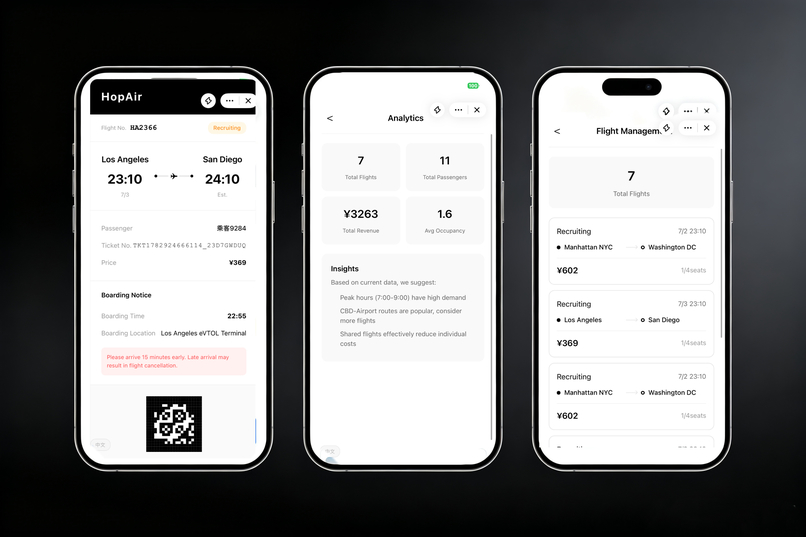
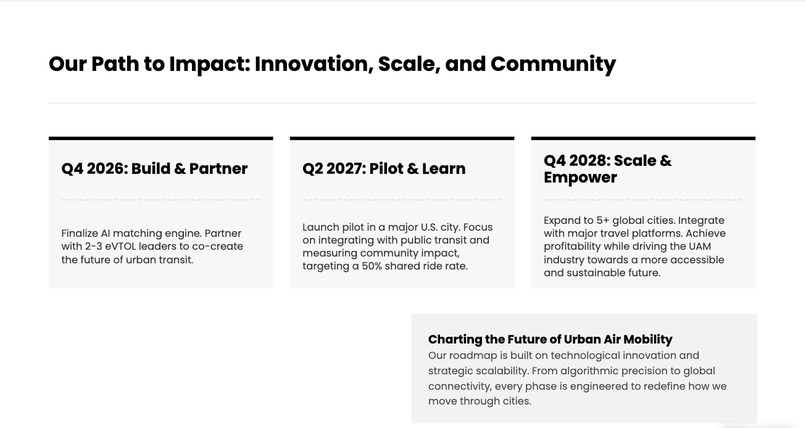
Operators can create flights, define routes, set capacity and pricing, and monitor real-time metrics including occupancy rate, revenue, demand distribution, and route performance.
Challenges
The biggest challenge was translating a complex future transportation system into a simple, understandable MVP.
We had to balance realism with simplicity:
- How to simulate dynamic pricing without overengineering
- How to define route similarity with lightweight logic
- How to design a system that feels realistic within limited development time
Another challenge was ensuring the product clearly communicates its value: transforming empty seats into shared, efficient mobility.
Built With
- Frontend: React, Next.js, Tailwind CSS
- Backend: Node.js, Express
- Database: Supabase / Firebase
- Matching Logic: Rule-based AI recommendation system
- Deployment: Vercel
- Design: Figma
Project Impact
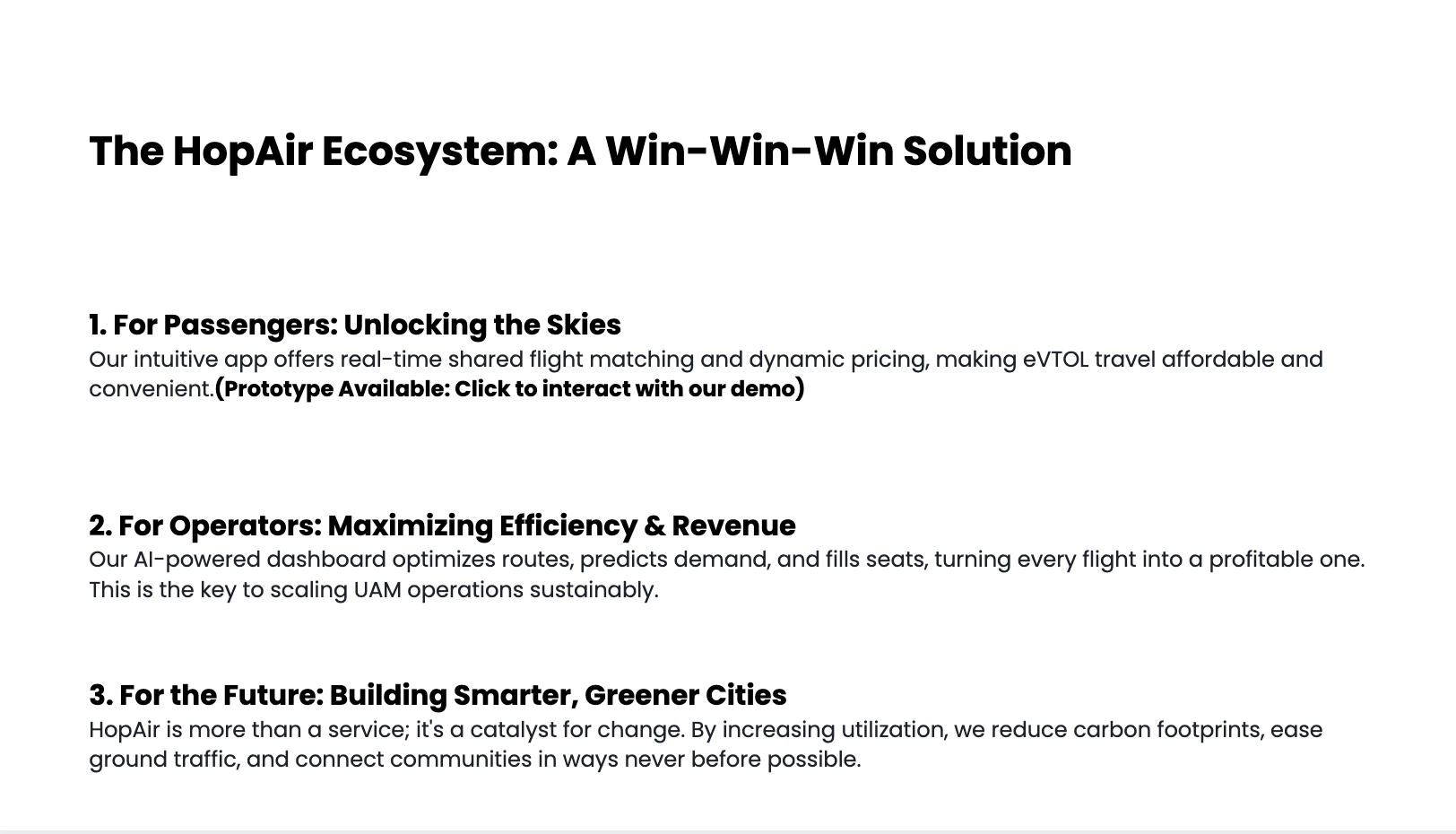
HopAir directly addresses three levels of impact:
For passengers:
- Reduces cost of eVTOL travel
- Makes urban air mobility more accessible
- Expands transportation options
For operators:
- Increases seat utilization
- Improves flight revenue
- Reduces empty-seat inefficiency
For the industry:
- Improves UAM operational efficiency
- Accelerates commercialization of eVTOL systems
- Reduces per-passenger energy consumption
Conclusion
HopAir transforms eVTOL transportation from individual flights into a shared intelligence-driven mobility network.
It is a step toward a future where flying is not a luxury, but a shared, efficient, and accessible form of urban transportation.
Built With
- https://github.com/arisliwind/hopair


Log in or sign up for Devpost to join the conversation.