-
-
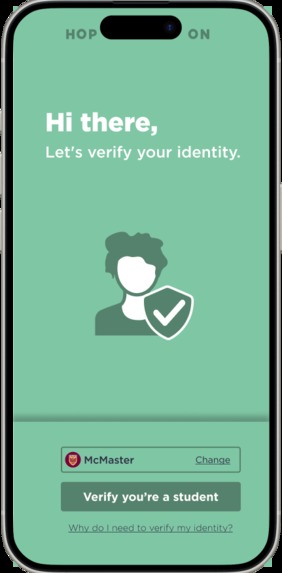
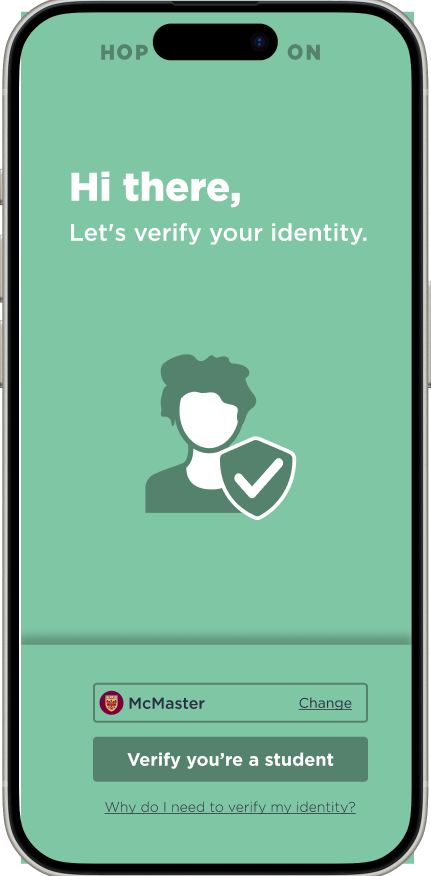
verification screen
-
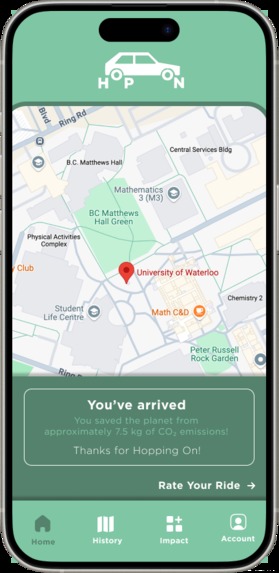
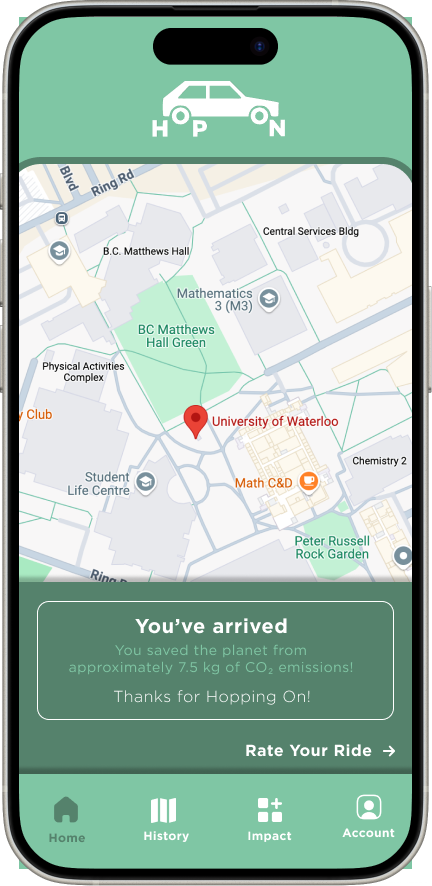
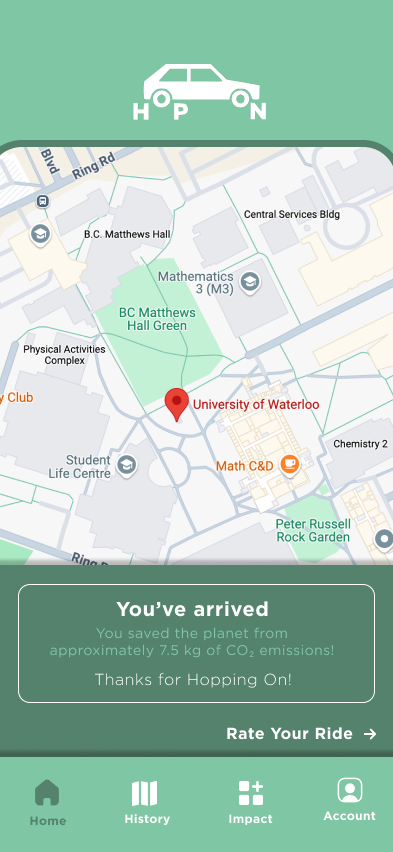
you've arrived + impact
-
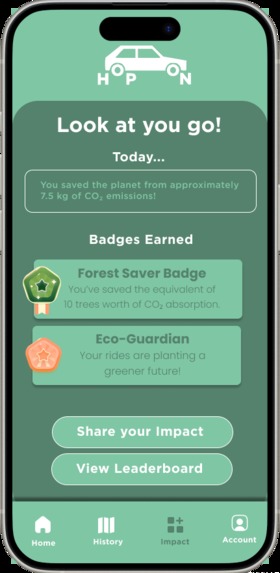
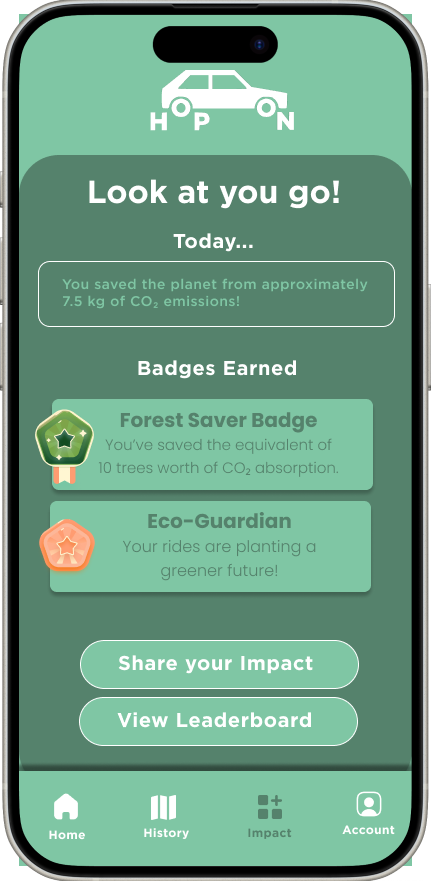
impact
-
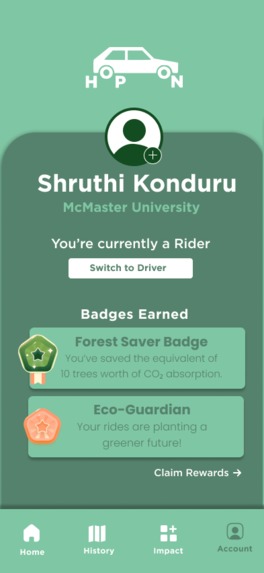
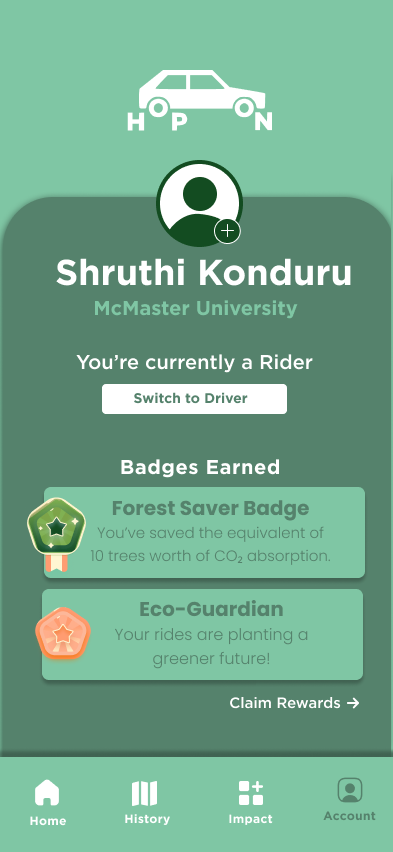
profile - rider
-
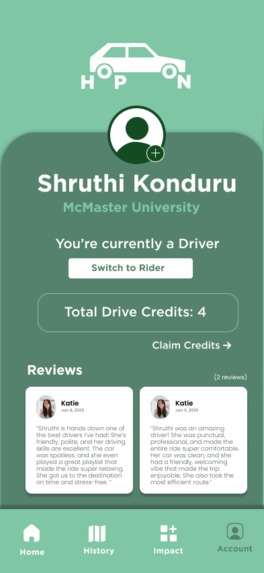
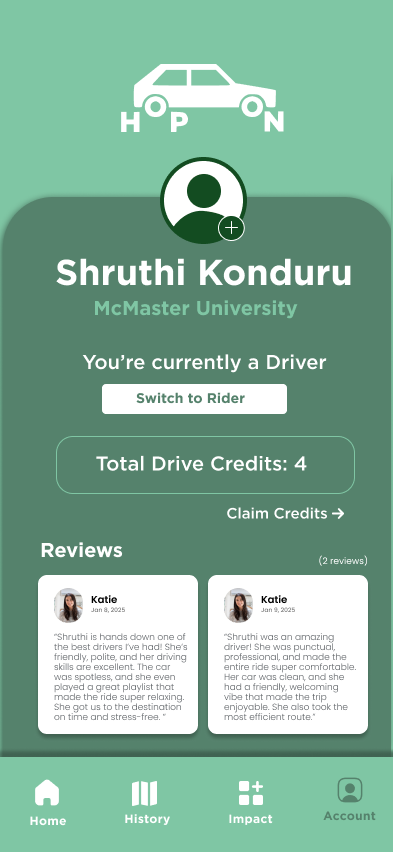
profile - driver
-
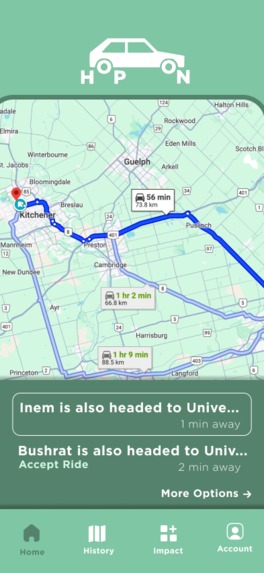
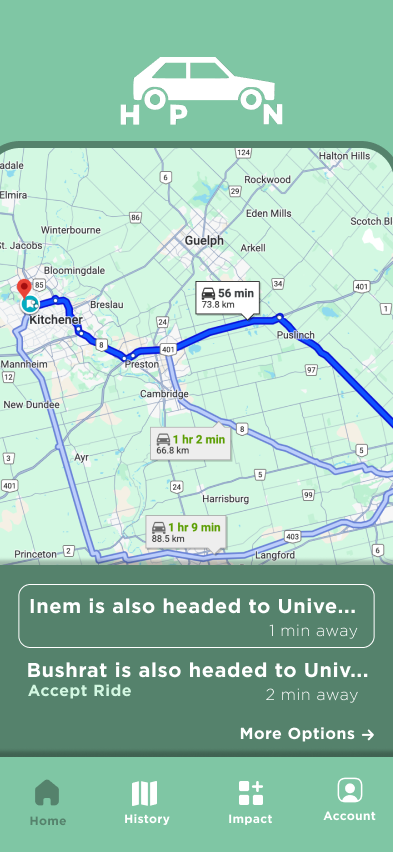
find driver
-
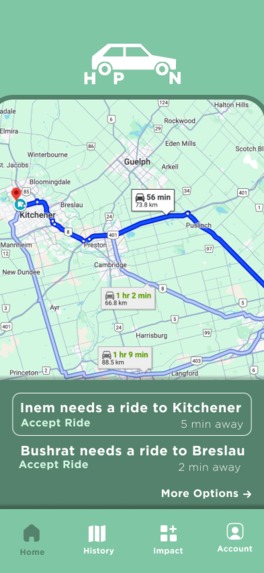
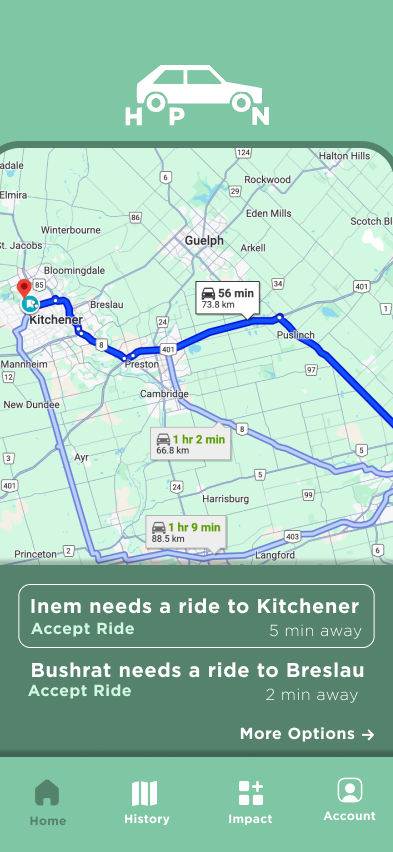
find rider
-
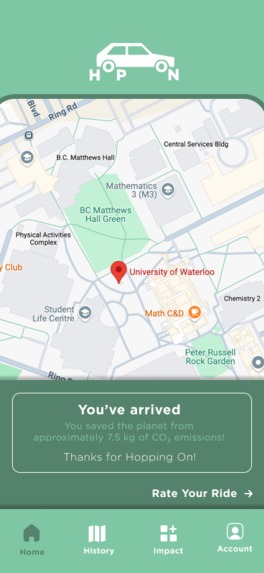
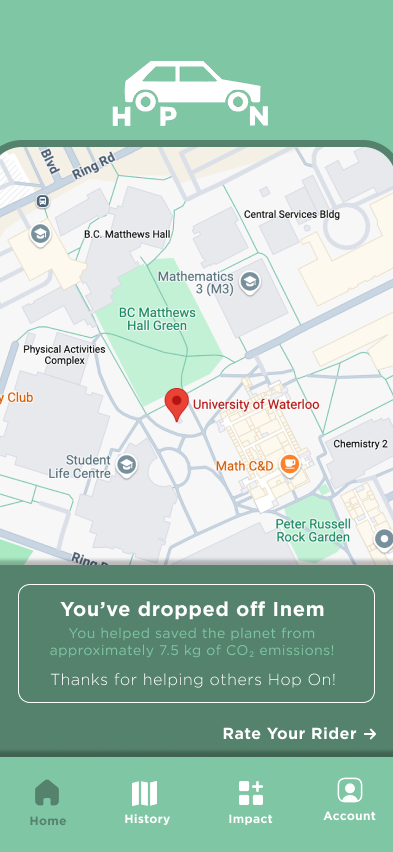
impact message
-
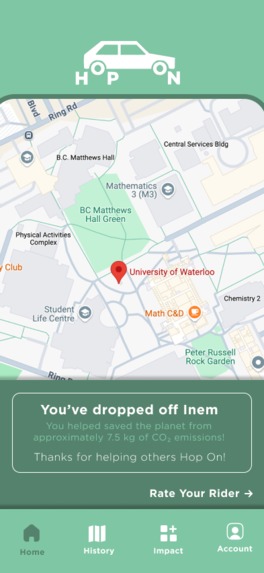
impact message
🌱 Inspiration
As students, the cost of traveling home using private transportation is often high. In addition to the financial burden, the frequent use of private vehicles negatively impacts the environment by contributing to climate change. Inspired by these two issues, we created HOP ON—an eco-conscious ride-sharing platform connecting students, building community and reducing carbon footprints - one ride at a time!
🌱 What it does
Hop On is an app that connects students seeking rides with other students heading in the same direction, offering a safe, secure, and eco-friendly carpooling experience. Unlike other ridesharing apps, Hop On prioritizes student safety by requiring sign-up through verified student accounts. The platform is intended to incentivize both the University to help students have access to jobs, become more environmentally conscious and build a closer community. By remaining exclusive to the student community, potential risks associated with the general public are eliminated. So, Hop On with us and share your journey!
🌱 How we built it
As beginners, we knew we needed to simplify the design process to ensure success. We built the frontend using React.js and Python (Flask) for the backend, the application provides essential functionalities like user authentication, ride booking, and driver management. This project served as a learning exercise in developing a full-stack application integrating modern web technologies. In addition, we turned to Figma to design a prototype for the app, bringing our vision to life with an intuitive user interface.
🌱 Challenges we ran into
Participating in our first hackathon presented significant challenges, especially as we were new to the experience and unfamiliar with some of the tools we chose. While Python was a familiar language for everyone in the group and made backend development relatively smooth, React.js was new to many of us. Learning its framework, managing state, and integrating it with Flask under tight time constraints proved challenging. Additionally, most of us had no prior experience with Figma, so designing an intuitive and visually appealing interface was initially intimidating. Despite these hurdles, we leaned on our existing skills, quickly adapted to new tools, and collaborated effectively to deliver a functional prototype.
🌱 Accomplishments that we're proud of
We are incredibly proud of our teamwork and what we achieved together. Meeting for the first time on the day of the hackathon didn’t stop us from collaborating effectively to create something tangible. We're also proud of the initiative we took. Instead of just attending workshops, we stepped out of our comfort zones and actively participated in the competition. We gave it our all, and it paid off!
🌱 What we learned
This experience taught us the importance of teamwork and effective communication, especially under tight deadlines. We learned how to divide tasks efficiently, support each other’s learning, and collaborate to overcome challenges. Additionally, we gained valuable insights into UI/UX design and the tools needed to create user-friendly interfaces, such as Figma. Working with React.js and Flask also deepened our understanding of full-stack development, enhancing our skills in building and integrating both frontend and backend systems.
🌱 What's next for Hop On
Our vision for Hop On is to partner with universities to integrate this service into their ecosystem. Students would pay a nominal fee included in their tuition to cover the service for an entire year (like annual university bus pass fees). Drivers, in turn, would receive a portion of these funds as compensation for offering rides and Universities can benefit from a small share of the fees as well as a tighter knit, more eco-conscious student body. This model not only enhances affordability but also encourages sustainable transportation — saving the planet, one ride at a time!


Log in or sign up for Devpost to join the conversation.