-
-
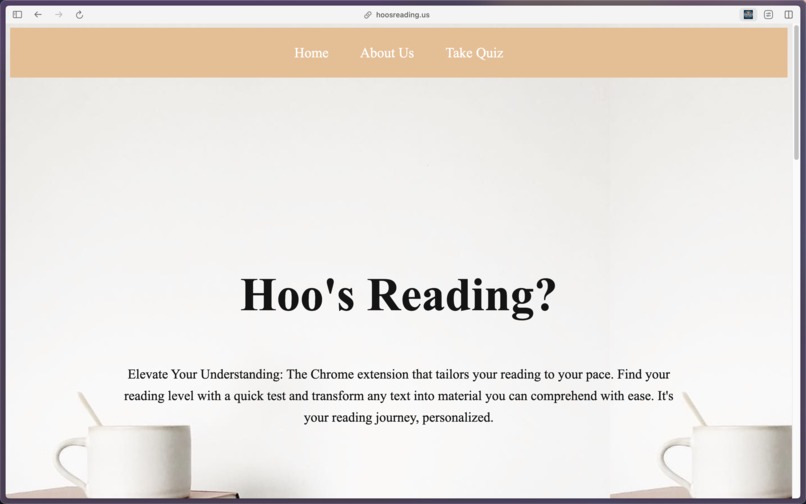
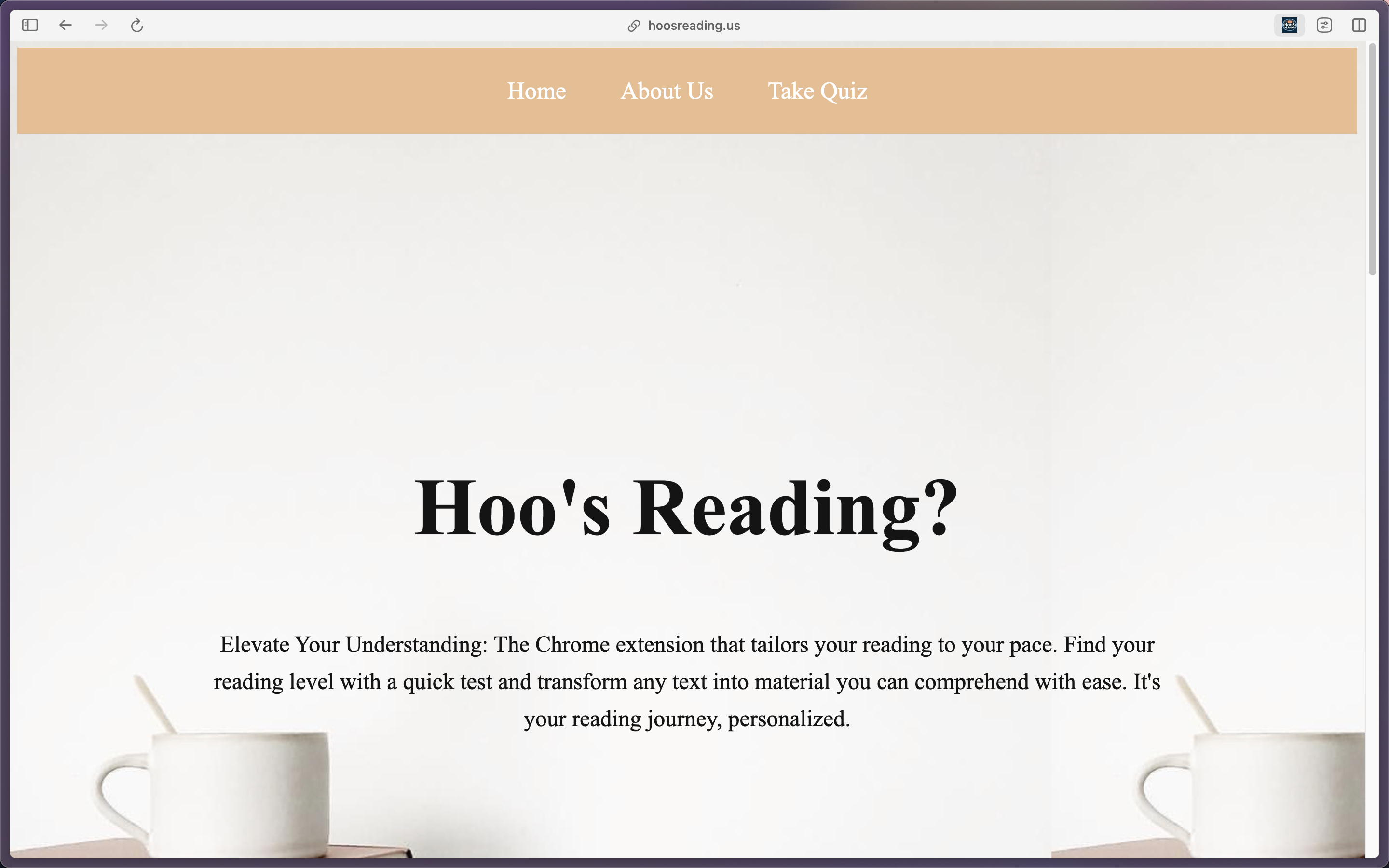
Our landing page, containing information about the extension and a link to the reading quizzes
-
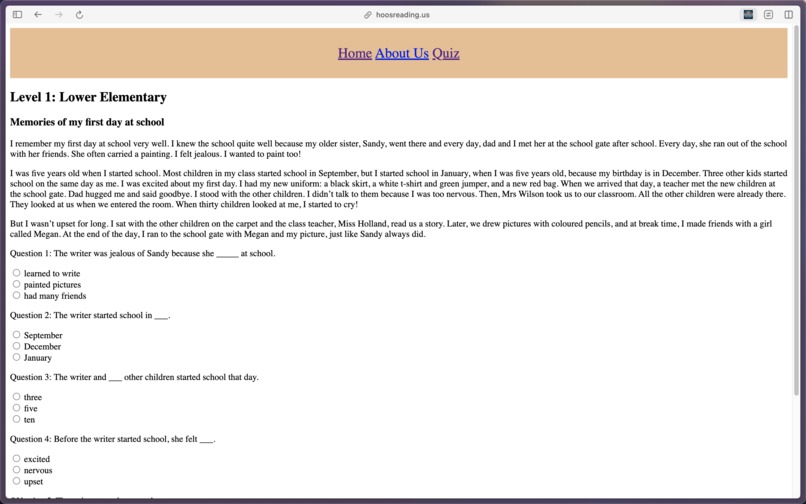
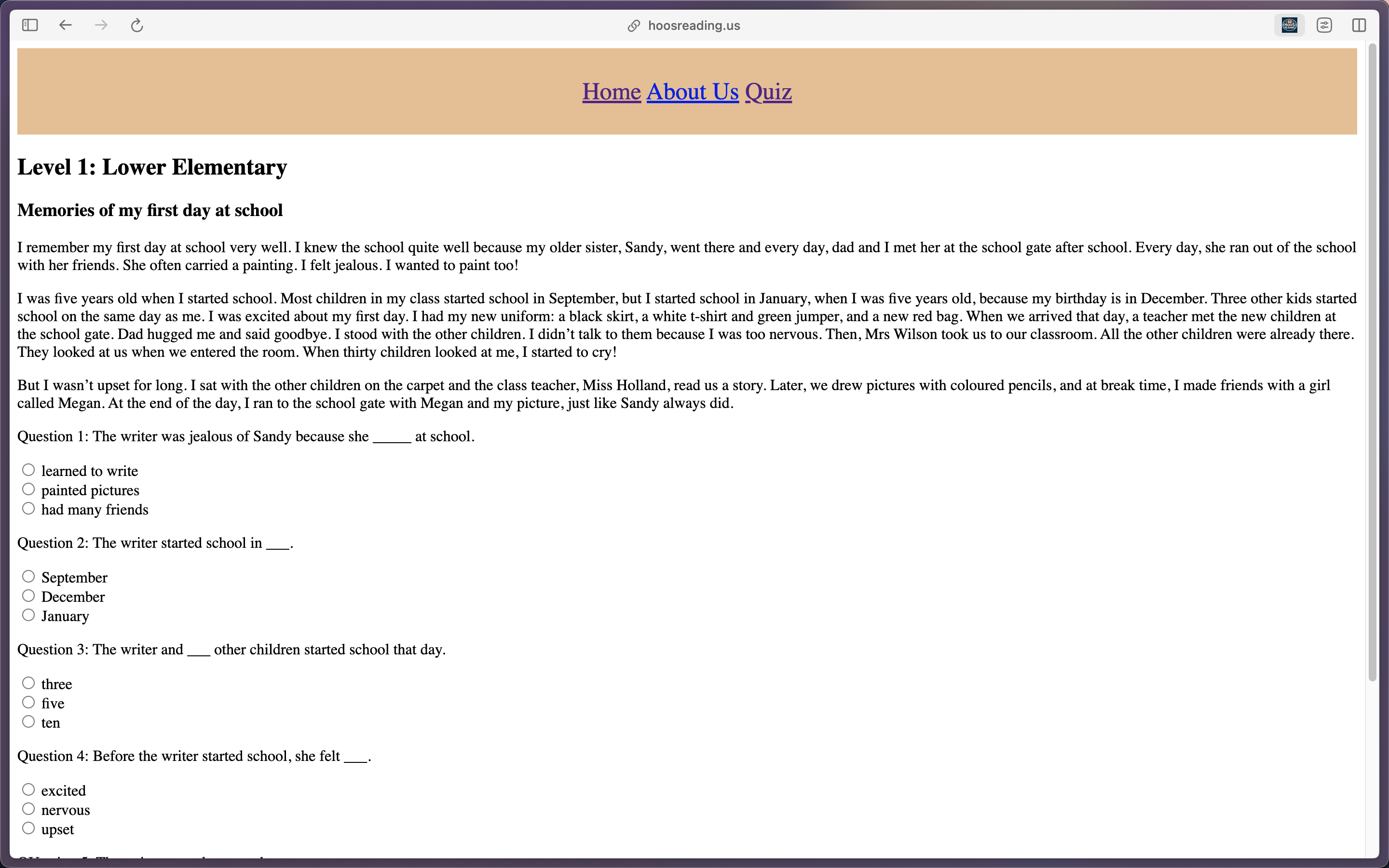
One of the reading comprehension quizzes
-
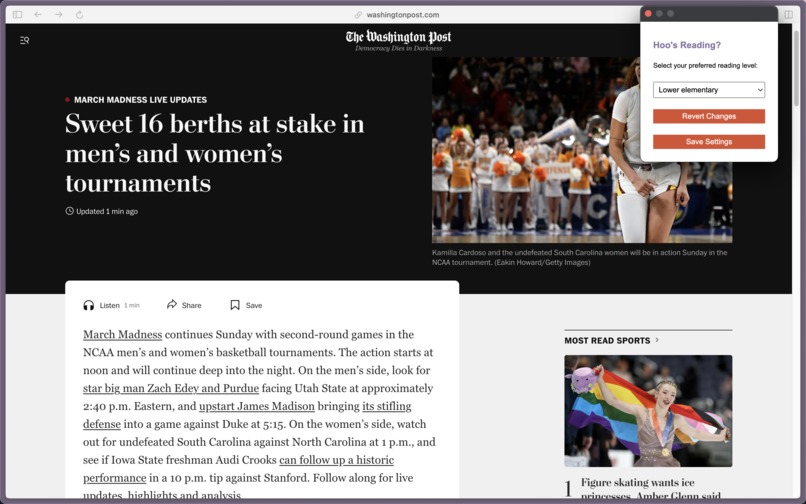
A view of an article (before extension toggled)
-
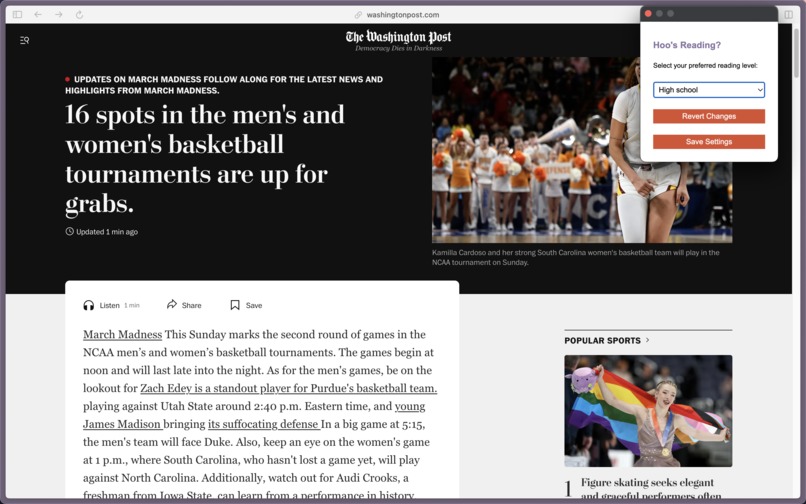
A view of an article (after extension toggled)
-
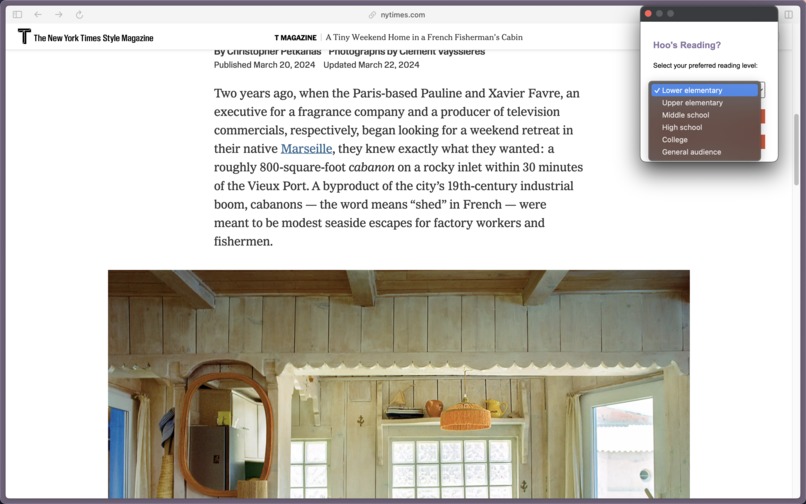
A view of another article (before extension toggled)
-
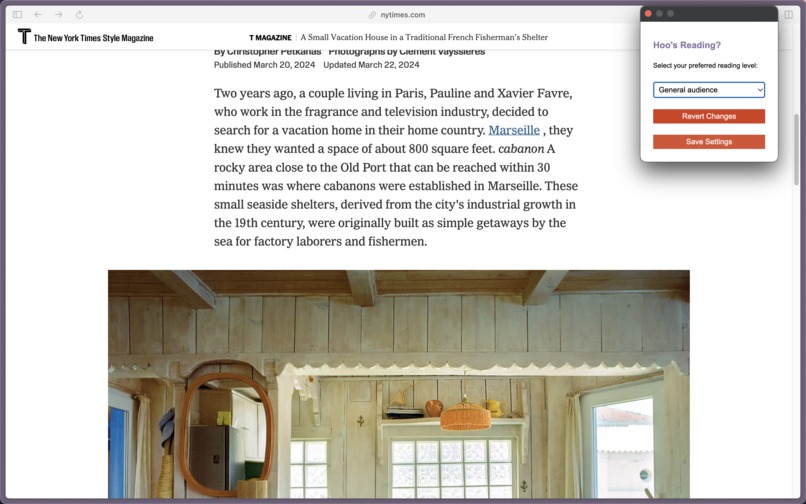
A view of another article (after extension toggled)
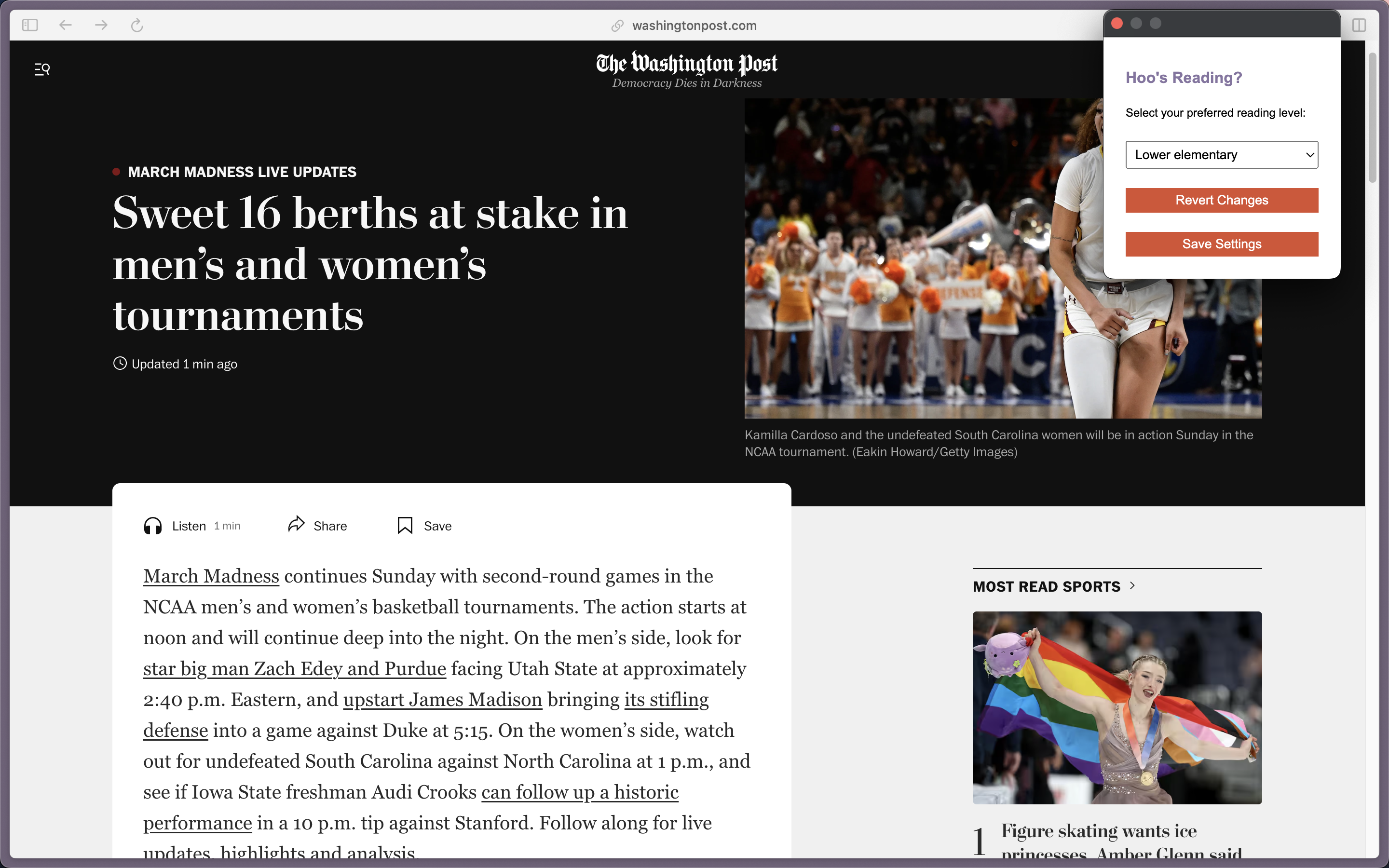
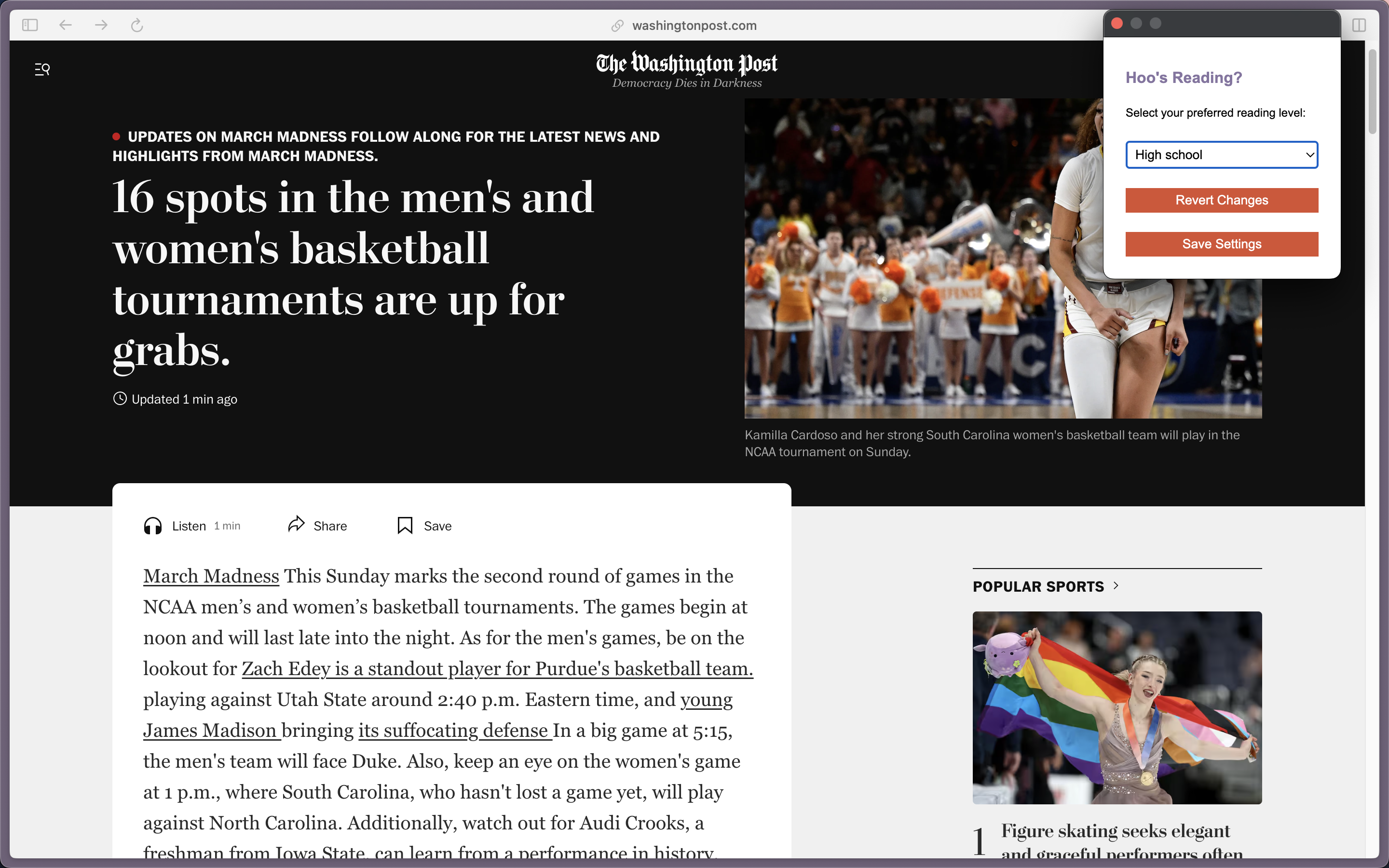
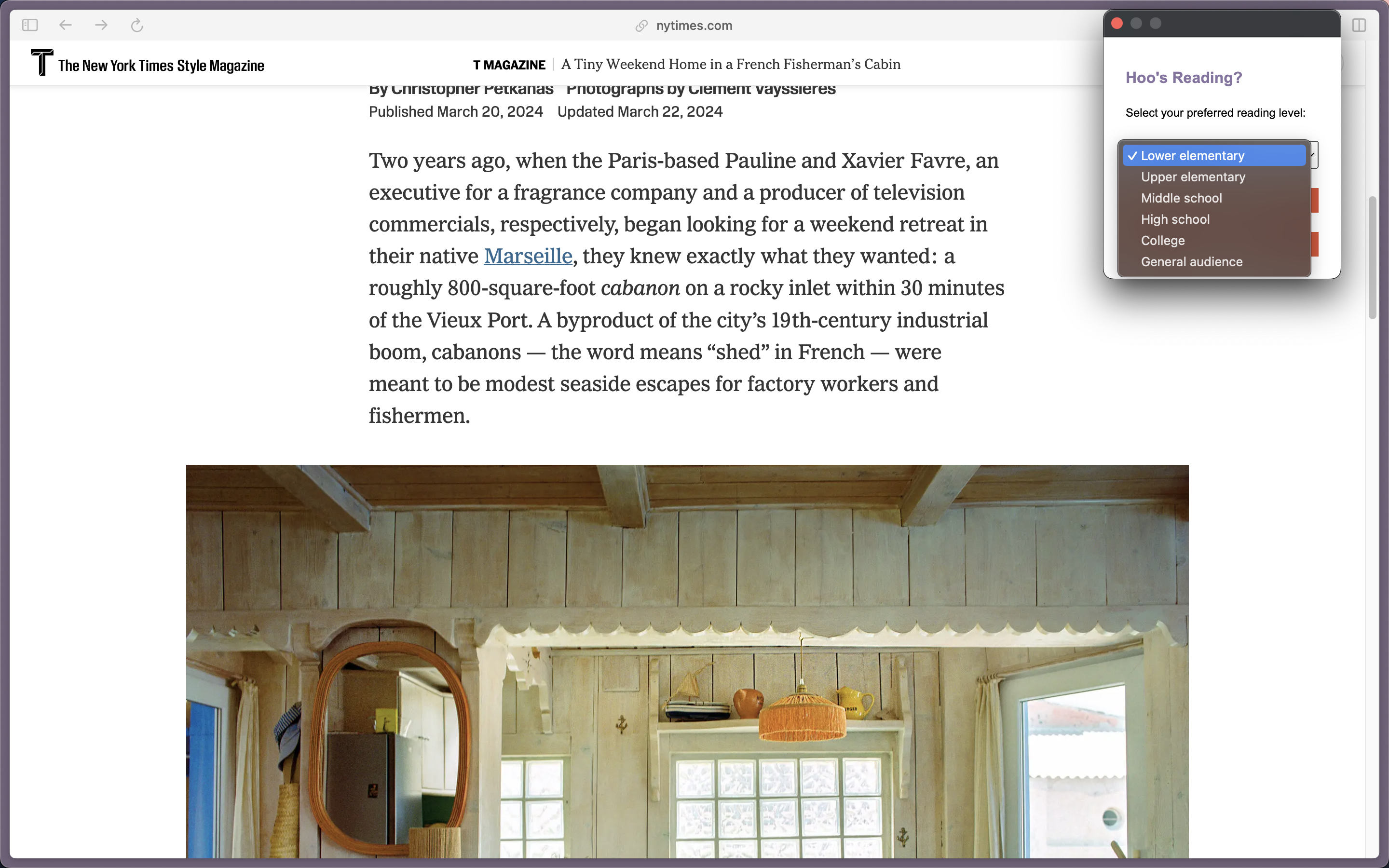
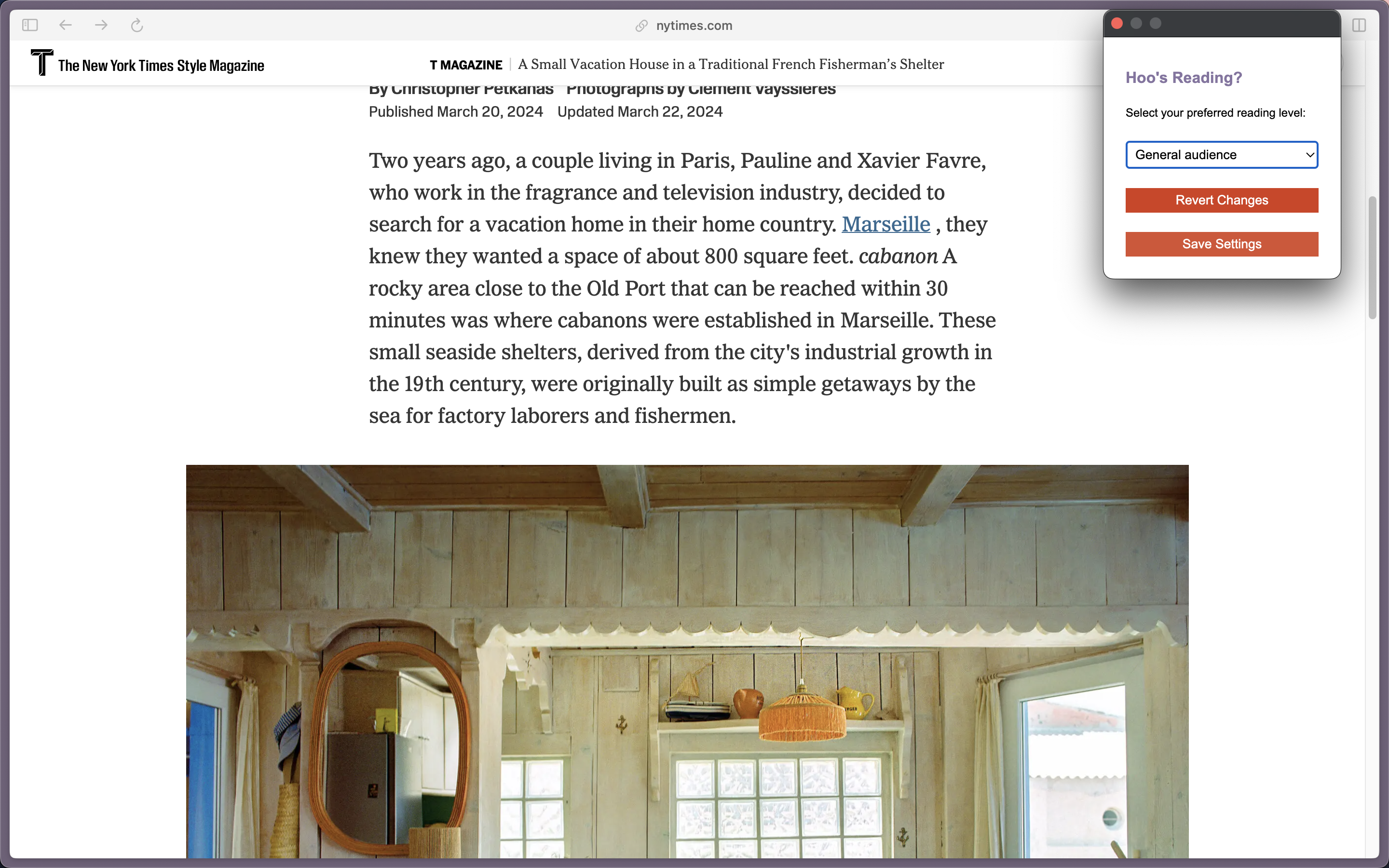
Inspiration
Navigating the internet and consuming information comfortably can be tough, especially for those learning English, younger readers, and individuals with learning conditions. With the ways that Generative AI can be tailored to adapt to diverse needs and preferences, it can be an especially powerful tool to assist those who face difficulties with reading comprehension. We wanted to leverage this technology to create a reading experience that is not only more accessible but also customized to the reader's comfort level. We hope this tool can help our immigrant parents, those with learning conditions, young and avid readers hoping to understand more complex topics, and students who are having difficulties goin through their assigned readings or research papers.
What it does
Hoo's Reading is a Chrome extension that personalizes the reading experience. It assesses a user’s comprehension level through a simple quiz and then adjusts the complexity of any text they encounter online to match their reading level. Like the Google Translate extension, it works nearly instantly and is easy to toggle between different reading levels.
How we built it
We used OpenAI's Developer API to leverage ChatGPT-3.5-Turbo with specific instructions that fit our goals of achieving varying levels of text simplification. To create the reading comprehension quizzes, we researched various questionnaires and assessments used in education and used them as inspiration. Our frontend was developed using HTML and CSS, and our Chrome extension was written entirely in Javascript.
Challenges we ran into
One of the biggest issues we ran into was finding the right model for our task. There were plenty of free and open source models out there that we wanted to try, but they were either difficult to work with or would have taken too long to do what we wanted. OpenAI's platform, although it isn't free, provided us with a very easy to use API that worked best for us with our limited time.
Another challenge was producing results that were as fast as possible. When we first started, making API calls for every piece of text and waiting for one to finish before starting the next took far too long. We wanted our tool to work as close to instantly as possible, so we spent a significant amount of time exploring ways to optimize our function calls and model choice to get the right balance of speed and performance. Lastly, it was challenging writing the frontend and piecing everything together, as our team had little overall experience with user interface design.
Accomplishments that we're proud of
We created a fully working tool that we think could be really useful in the real world. We're also really proud that we picked up technologies and tools that were completely new to us, like working with Figma, writing browser extensions, and making API calls. We are especially proud of how much we were able to finish in such little time, as we completed our extension, created reading comprehension quizzes, and made a working website.
What we learned
Throughout this journey, we've learned about the complexities of language simplification/alteration and the importance of accessibility in education. We've also gained insights into the technical challenges of developing adaptive learning tools that are both effective and intuitive to use.
What's next for Hoo's Reading
We are looking to add more features that make reading more accessible! One of our stretch goals was to create a visual slider to better accommodate those with dyslexia or color blindness. We also want to continue to make our extension faster and easier to use.
Built With
- css
- figma
- html
- javascript
- openai

Log in or sign up for Devpost to join the conversation.