💡 Inspiration
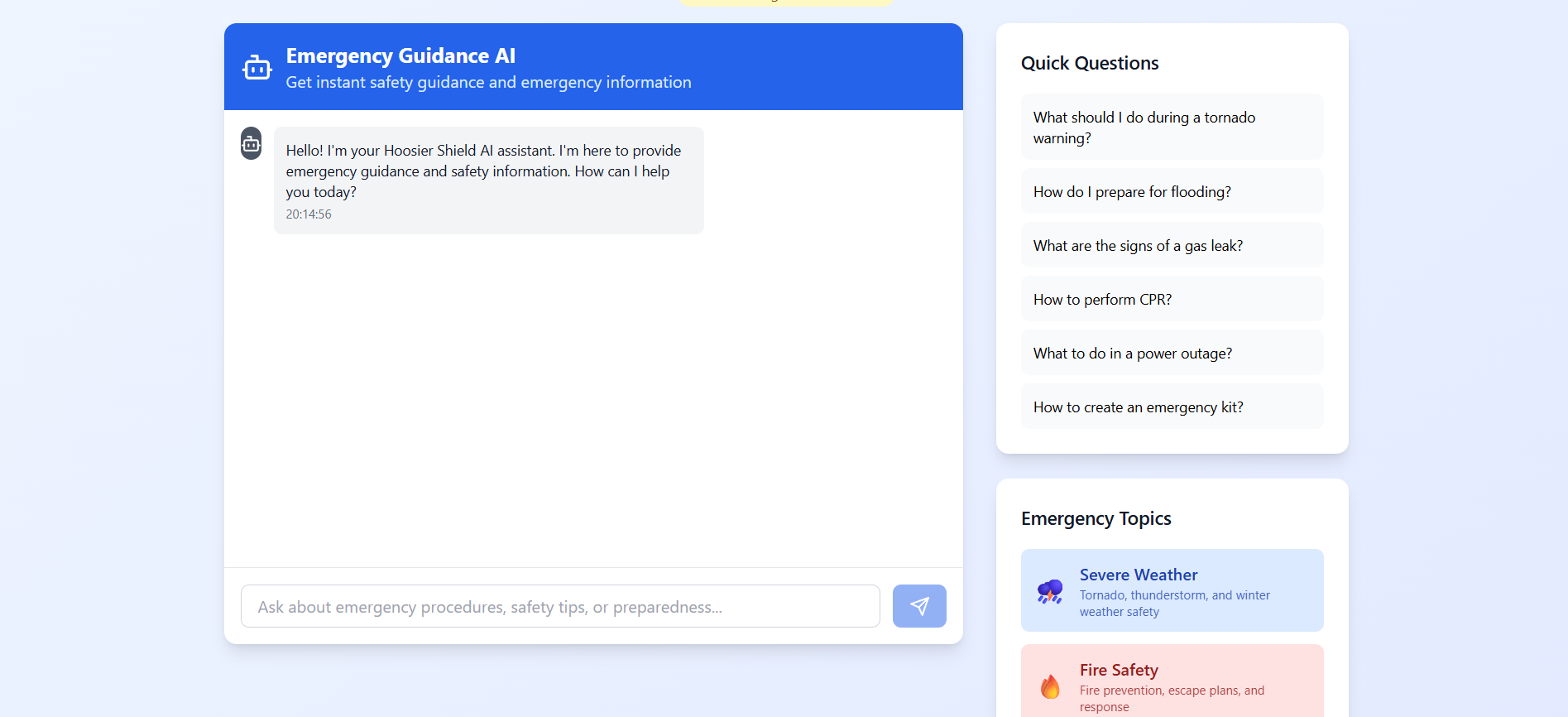
Public safety is a foundational right—but not everyone knows how to access or participate in it effectively. From delayed emergency responses during severe weather to underserved populations unable to access real-time alerts, there's a clear gap between communities and civic systems. Our inspiration came from real-world issues faced across Indiana—like the 2023 tornado in Sullivan, where many citizens were unaware of shelter locations or evacuation protocols. We asked: What if reporting hazards, receiving alerts, and even coordinating aid could all happen through a friendly chatbot interface—accessible anytime, anywhere?
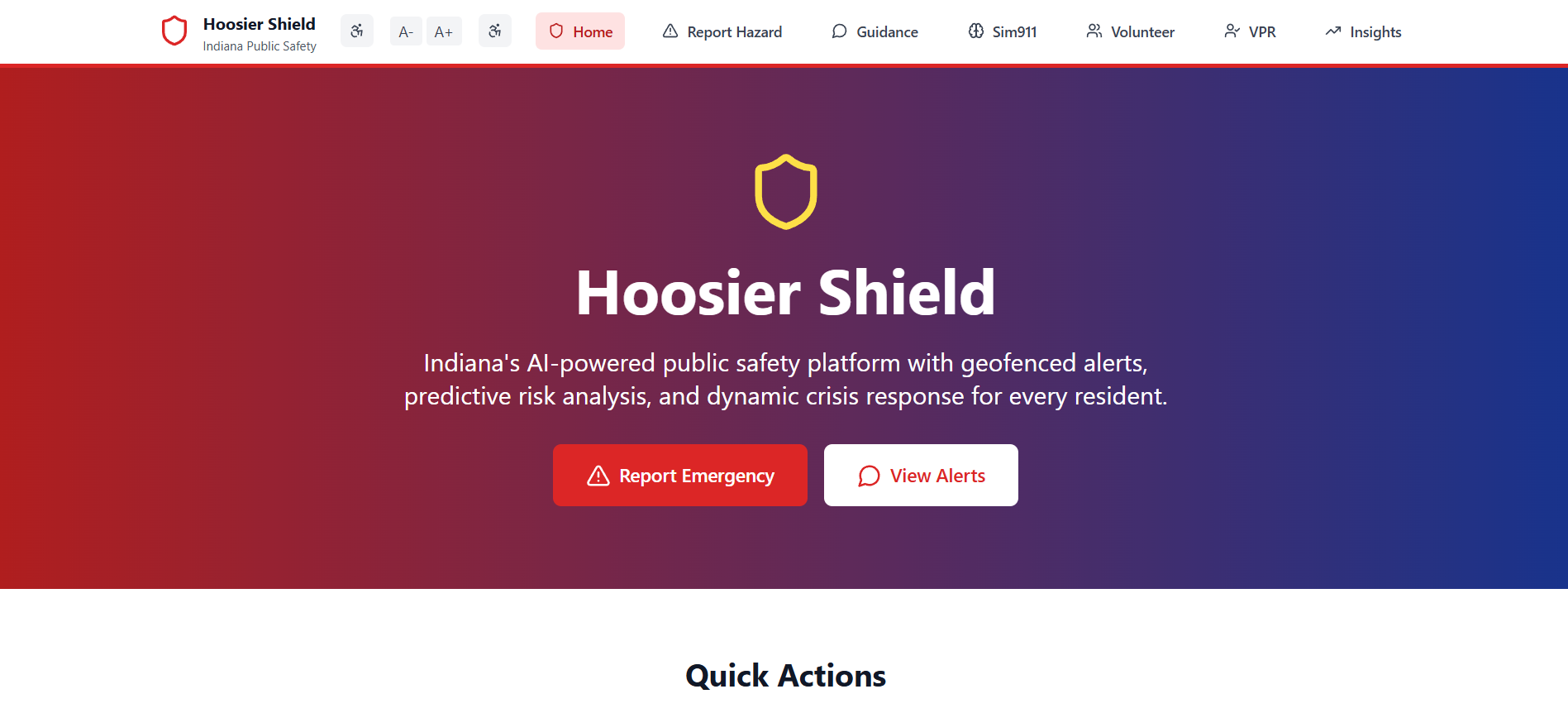
Thus, Hoosier Shield was born: a chatbot-powered public safety platform that transforms every smartphone into a 24/7 crisis assistant. It bridges the gap between citizens, emergency responders, and local agencies using the power of AI, geospatial awareness, and inclusive design.
⚙️ What It Does
Hoosier Shield is an intelligent, real-time public safety assistant that offers:
- Hazard Reporting: Citizens can report emergencies using text, images, or voice. The chatbot uses AI to identify the issue, tag it by severity, and automatically include geolocation.
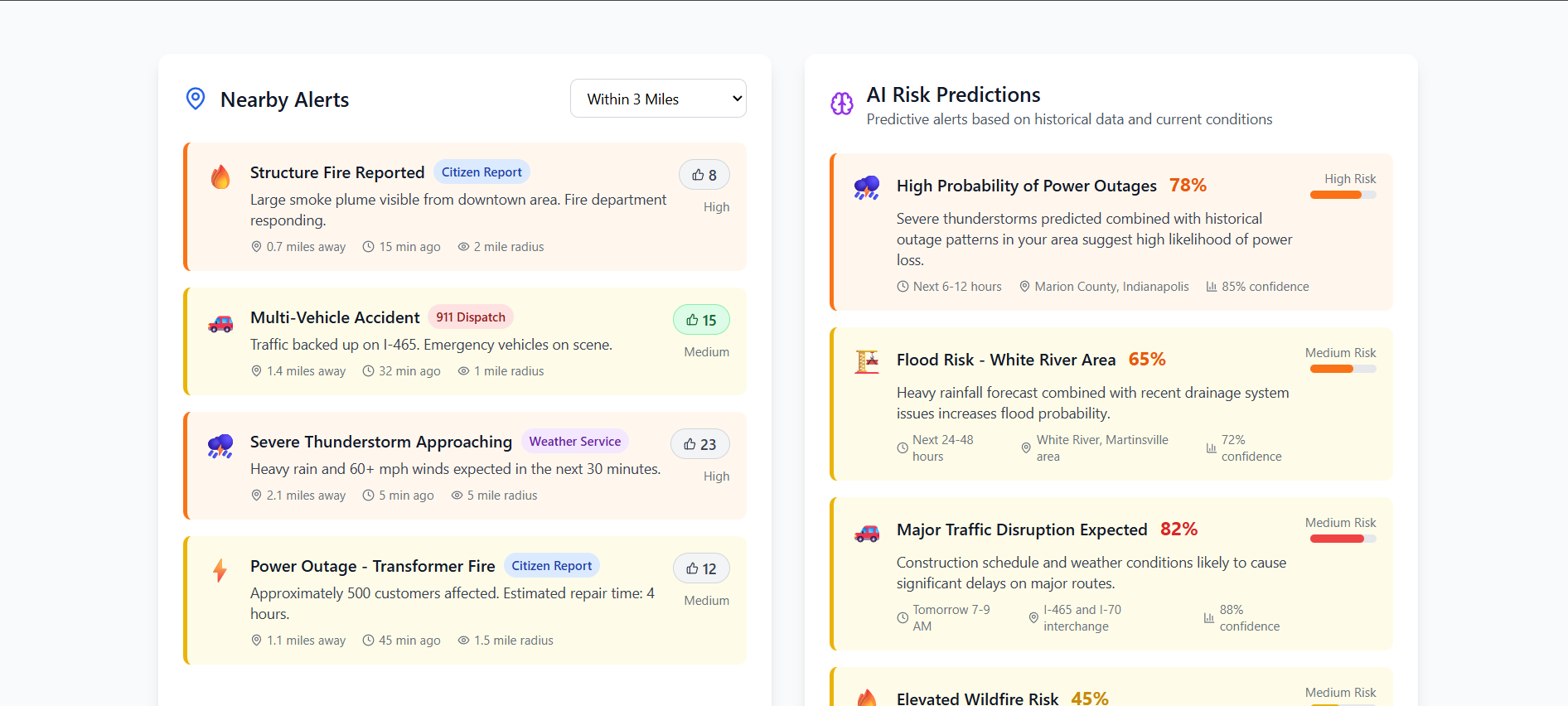
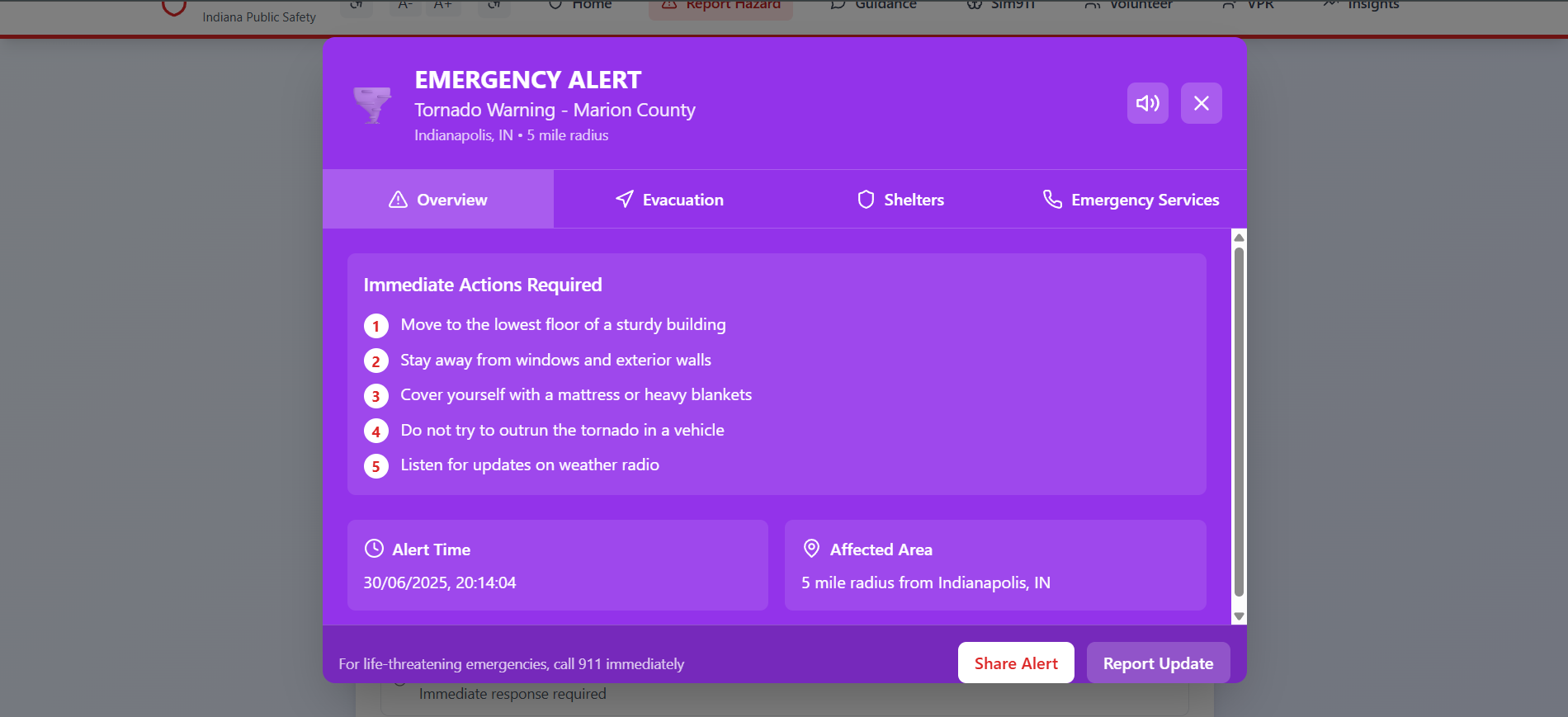
- Emergency Alerts: Nearby residents receive geofenced push notifications based on verified reports.
- Crisis Mode Activation: During an emergency (e.g., tornado, fire), the chatbot enters “Crisis Mode” with real-time guidance—such as safe routes, nearby shelters, and live updates.
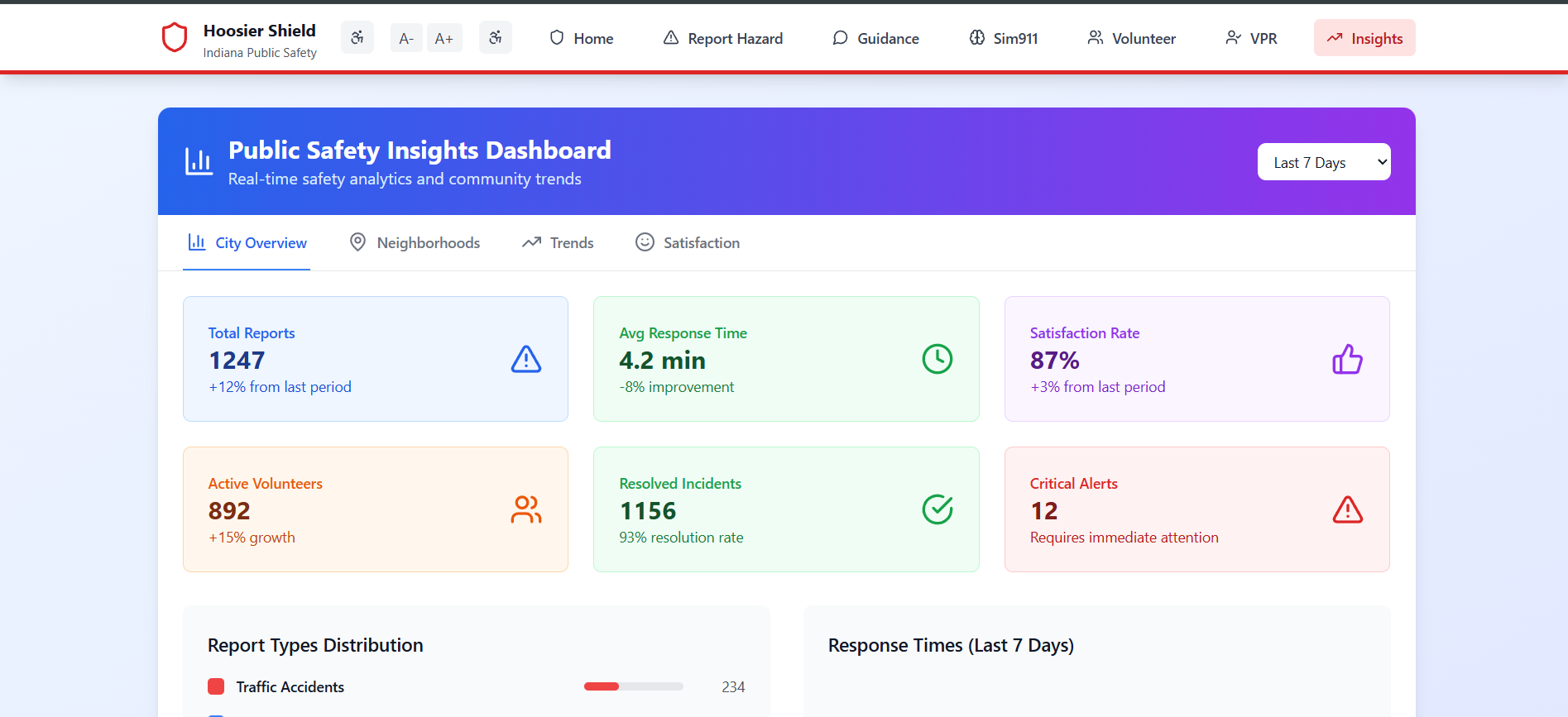
- Predictive Risk Analytics: Using past incident and weather data, it proactively warns citizens and responders of likely risks (e.g., flooding zones, outage-prone areas).
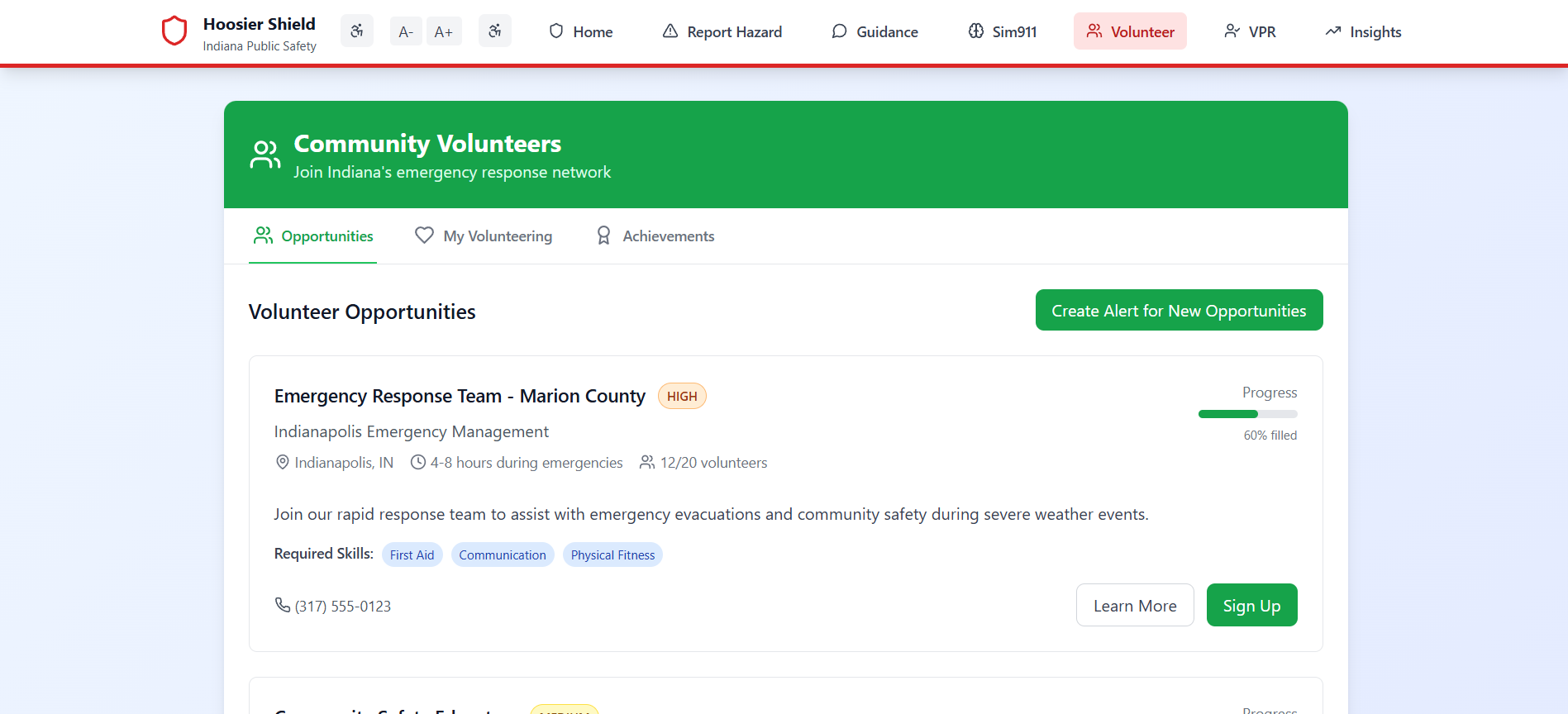
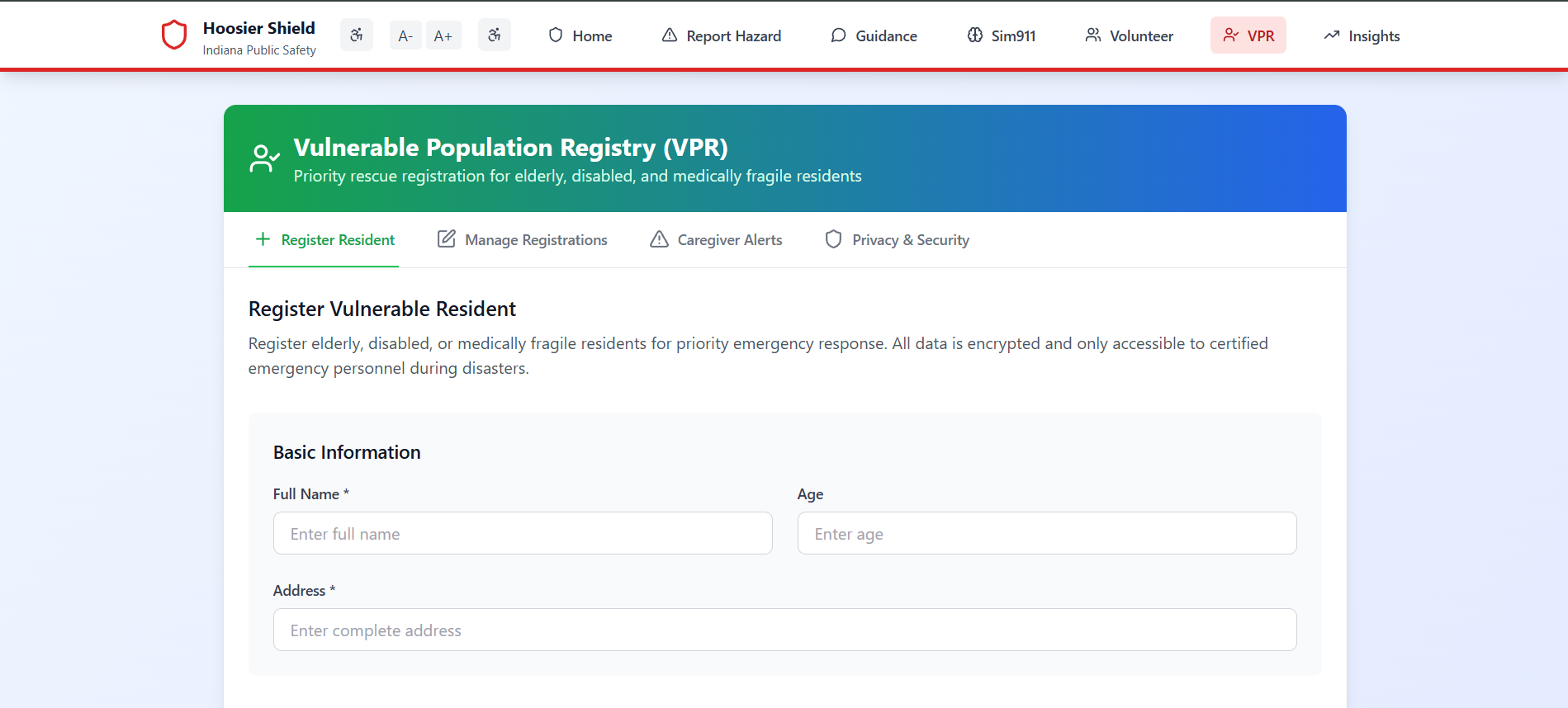
- Volunteer Coordination: Safe users are prompted to help—offering transportation, shelter, or aid. A “Mark Me Safe” option helps track vulnerable populations.
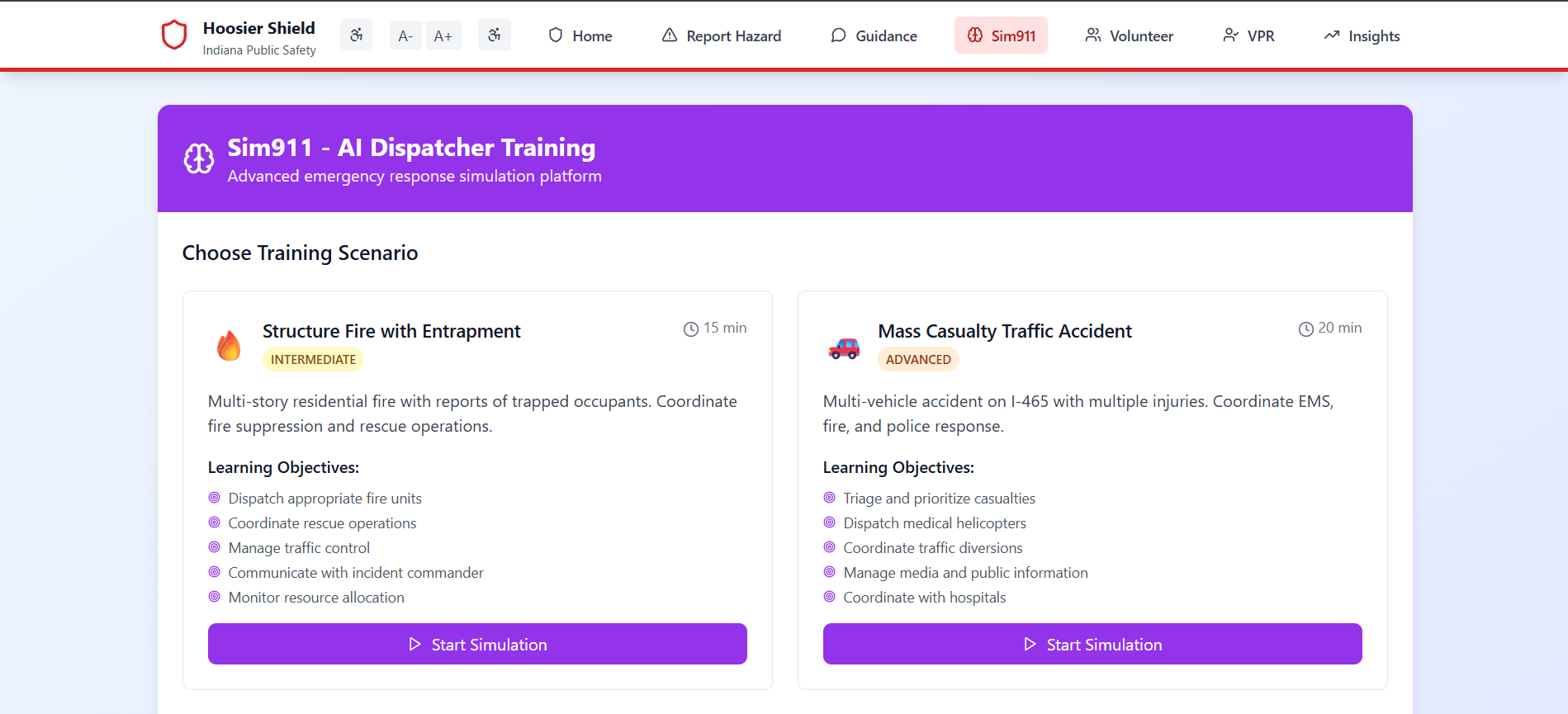
- Dispatcher Training Module: A simulated emergency responder training interface using AI-driven scenarios.
- Multilingual & Accessible Interface: Available via Web, SMS, and Voice with support for English and Spanish, including screen-reader compatibility and offline-first design.
💪 How We Built It
We developed Hoosier Shield using the MERN stack for flexibility and scalability:
- Frontend: React.js (with Tailwind CSS) for a responsive and clean web interface, also optimized for mobile browsers.
- Backend: Node.js with Express.js to manage API routes, webhook events, and chatbot endpoints.
- Database: MongoDB to store hazard reports, alert logs, registered users, and volunteer registry data securely and efficiently.
- LLM Integration: We fine-tuned the Mixtral-7B Instruct model to power natural conversation flow, intent recognition, and multilingual support.
AI Components:
- GeoAlert Engine: Built in Python, this uses scikit-learn and OpenStreetMap APIs to detect risk zones.
- Crisis Sim911: An LLM-powered dispatcher training tool that generates emergency call simulations and scores responders based on decision quality.
Deployment: Hosted on Render for frontend/backend with CDN support, Firebase Cloud Messaging for notifications, and Twilio for SMS delivery.
Security: Implemented OAuth 2.0, AES-256 data encryption, and admin moderation panel for report approval.
🧷 Challenges We Ran Into
- LLM Integration for Safety: Ensuring that our chatbot could answer critical queries responsibly and ethically required extensive prompt tuning and fallback mechanisms.
- Geolocation Accuracy: Mapping reports to the correct precinct or emergency district involved spatial triangulation and interpolation using fuzzy matching.
- Scalability of Alerts: Implementing geofenced push notifications that worked across web and SMS required balancing performance with user opt-in preferences.
- Crisis Simulation UX: Designing the dispatcher training module to feel real without overwhelming the user involved careful scenario generation and time-based scoring.
🏆 Accomplishments That We're Proud Of
- Seamlessly integrated Mixtral-7B to handle real-time user intent across two languages and various communication channels.
- Created a working Sim911 dispatcher training simulator—a first in this domain.
- Built a volunteer aid coordination module that visually maps needs vs. available help during emergencies.
- Achieved full accessibility compliance with support for screen readers, text-to-speech, and simple-mode UI for elders or differently abled users.
- Successfully demonstrated a working geofenced push alert system during a live test at the hackathon.
📖 What We Learned
- The importance of human-centered design in civic applications—especially when dealing with vulnerable populations.
- How to handle large language models safely in public-facing systems by designing with clear boundaries and human moderation pipelines.
- Working with real-time geospatial data taught us the tradeoffs between resolution, speed, and accuracy.
- Building emergency software requires a mindset that goes beyond uptime and features—it must prioritize resilience, accessibility, and empathy.
🔮 What's Next for Hoosier Shield
- Partnership with Local Governments
- Launch pilot programs in Indianapolis and Bloomington by integrating with city 311 and fire department APIs.
- Offline-first Mobile App
- Develop a progressive web app (PWA) with full offline support for rural and low-connectivity zones.
- Expanded LLM Capabilities
- Add dialect-sensitive support and fine-tuned modules for medical and psychological first aid Q&A.
- School & Campus Safety Mode
- Adapt for K–12 and college use with lockdown alert triggers, anonymous reporting, and drill automation.
- Public Launch with Open API
- Expose core reporting and alert features via secure APIs to integrate with other civic platforms and wearable devices.


Log in or sign up for Devpost to join the conversation.