About HoosAlert
HoosAlert was inspired by a simple question:
How can we help the UVA community stay informed without adding more noise during stressful situations?
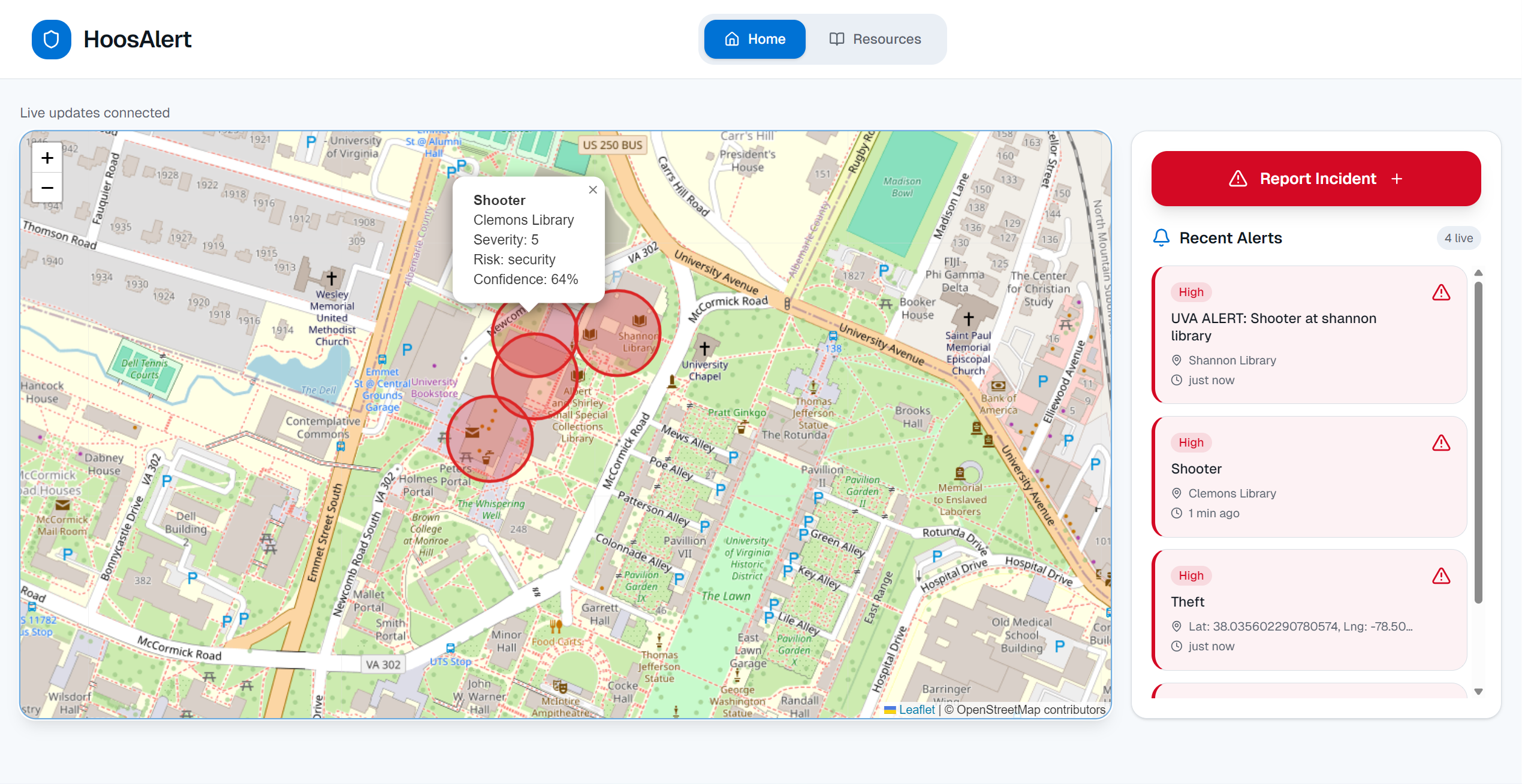
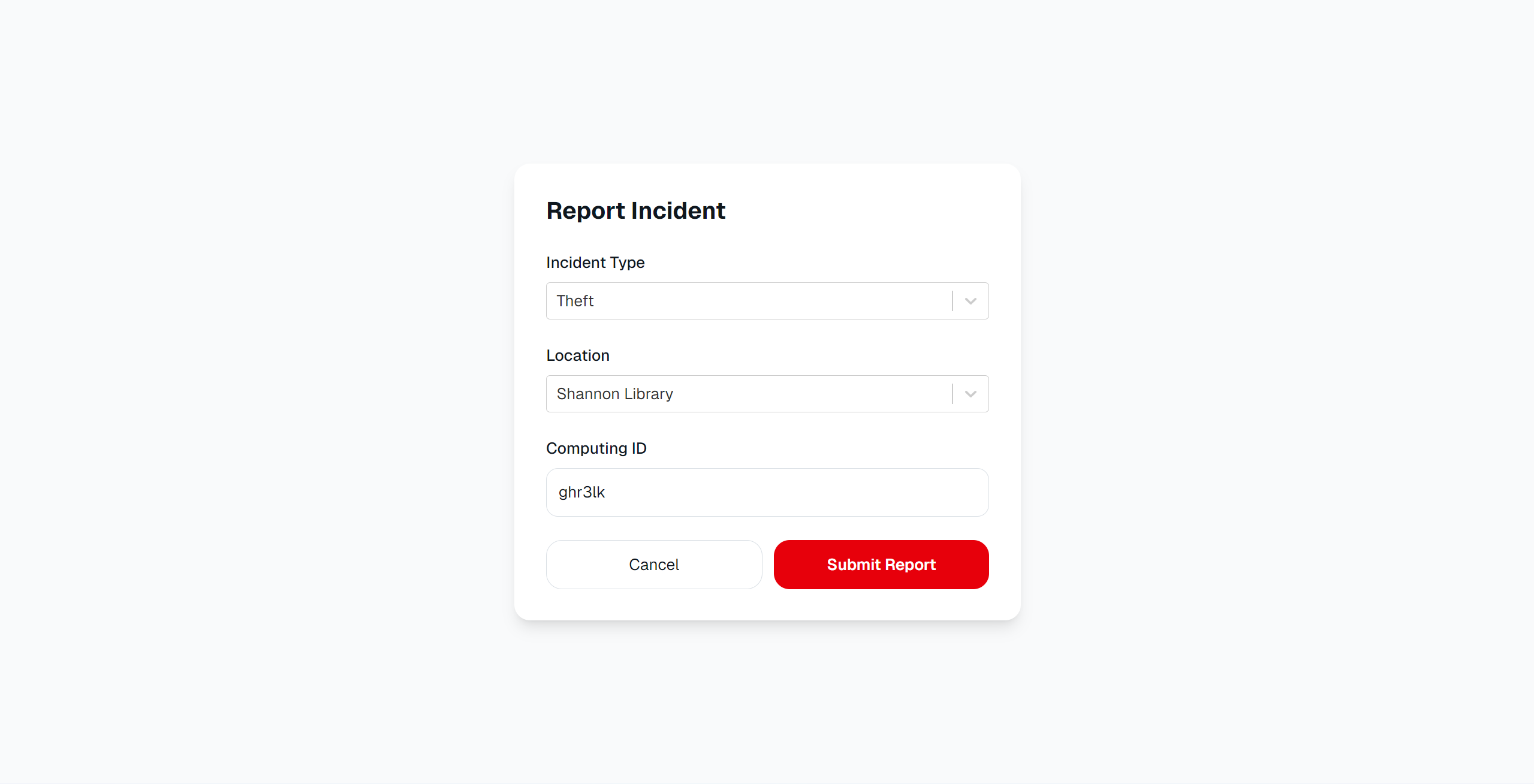
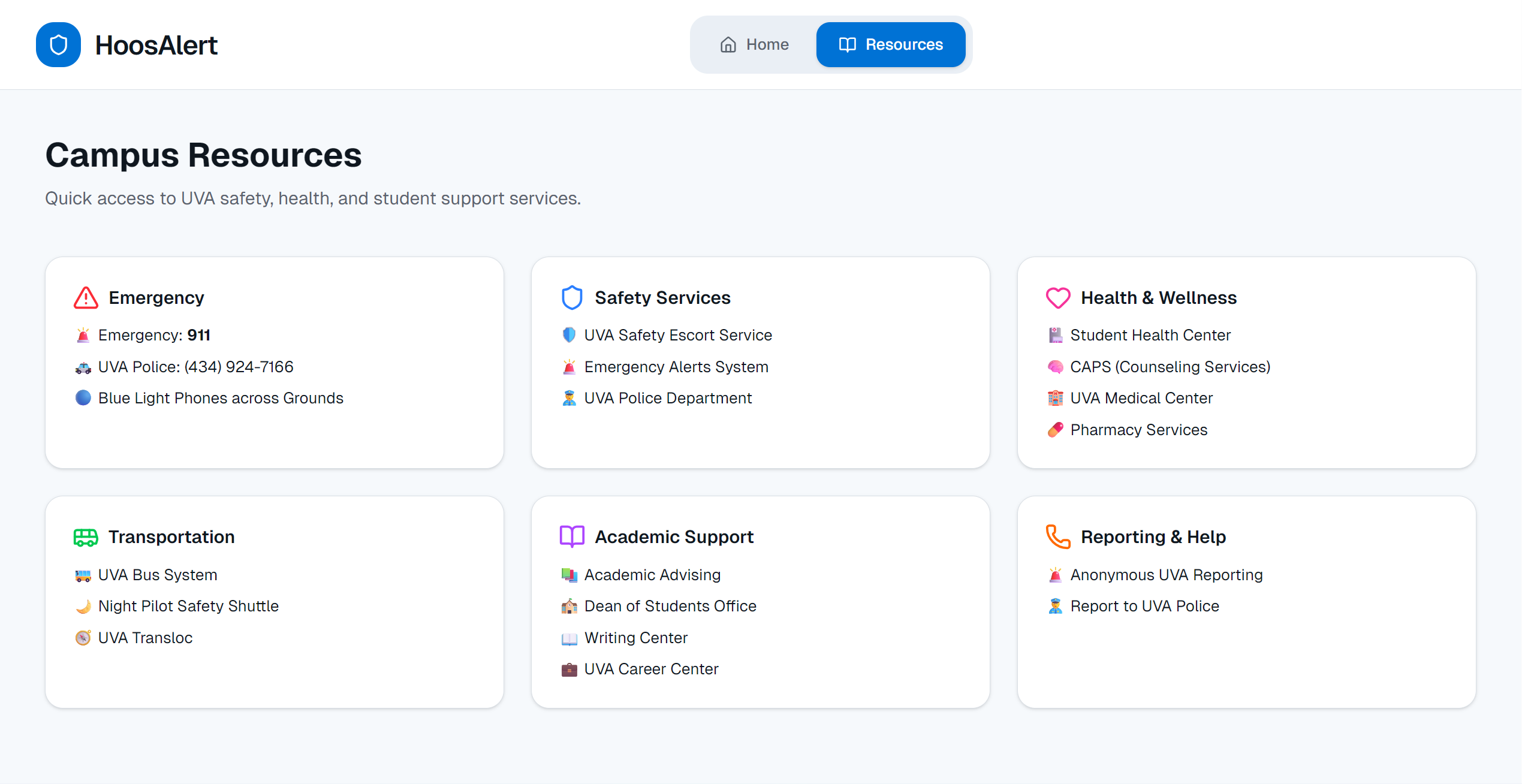
We wanted to build something that makes campus safety communication faster, clearer, and more community-driven. Instead of relying on scattered group chats or delayed word of mouth, HoosAlert gives students a single place to:
- Report incidents
- View what is happening nearby
- Follow updates in real time
- Access UVA resources for further support
Tech Stack & Architecture
HoosAlert is a full-stack web application designed for speed, clarity, and real-time interaction.
Frontend
- Next.js, React, Tailwind CSS → fast, responsive, mobile-friendly UI
- Leaflet + React Leaflet → interactive maps and location selection
Backend
- FastAPI → high-performance API layer
- MongoDB → flexible storage for incident data
- WebSockets → real-time updates pushed to users instantly
LLM-Assisted Prioritization
We experimented with an LLM-assisted scoring pipeline to help surface the most important incidents.
Conceptually, we modeled confidence as:
$$ confidence = f(distance, time, semanticSimilarity, features) $$
This allowed the system to:
- Weigh how serious a report is (severity)
- Account for uncertainty or reliability (confidence)
- Incorporate nearby or recent activity (context)
The goal was simple: highlight what matters most, when it matters most.
Challenges
One of the biggest challenges was integrating multiple moving parts into a seamless experience:
- Connecting frontend ↔ backend
- Managing environment variables across services
- Handling real-time updates with WebSockets
- Keeping the UI responsive while rendering maps and live data
Another key challenge was balancing speed vs. trust.
For a safety-focused tool, the system must feel:
- Intuitive
- Reliable
- Low-friction
—even as a prototype.
What We Learned
Technical
- Building real-time systems with WebSockets
- Designing clean, scalable APIs
- Working with geospatial interfaces
- Debugging across a full-stack environment
Product & Design
- Clarity is everything in high-stakes tools
- Interfaces should reduce confusion, not add to it
- Good software design directly impacts real-world usability
Takeaway
HoosAlert is more than just a project—it’s an exploration of how thoughtful, well-designed software can support real communities.
Building it showed us that:
The value of a system isn’t just in what it does, but in how clearly and reliably it delivers that information when people need it most.
Built With
- css
- fastapi
- gemini
- leaflet.js
- mongodb
- next.js
- node.js
- npm
- python
- react
- tailwind
- typescript
- websockets

Log in or sign up for Devpost to join the conversation.