-
-
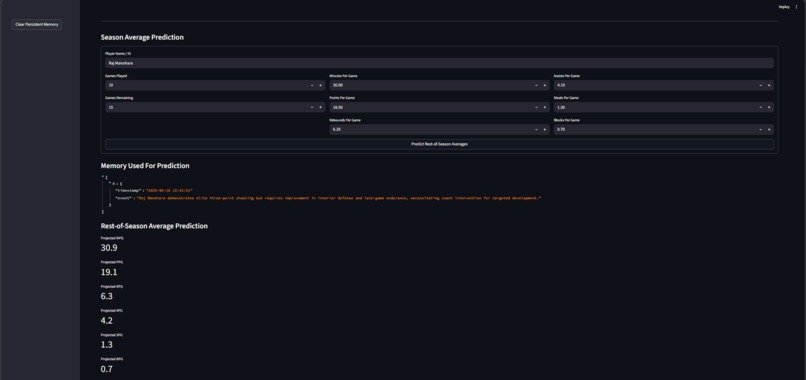
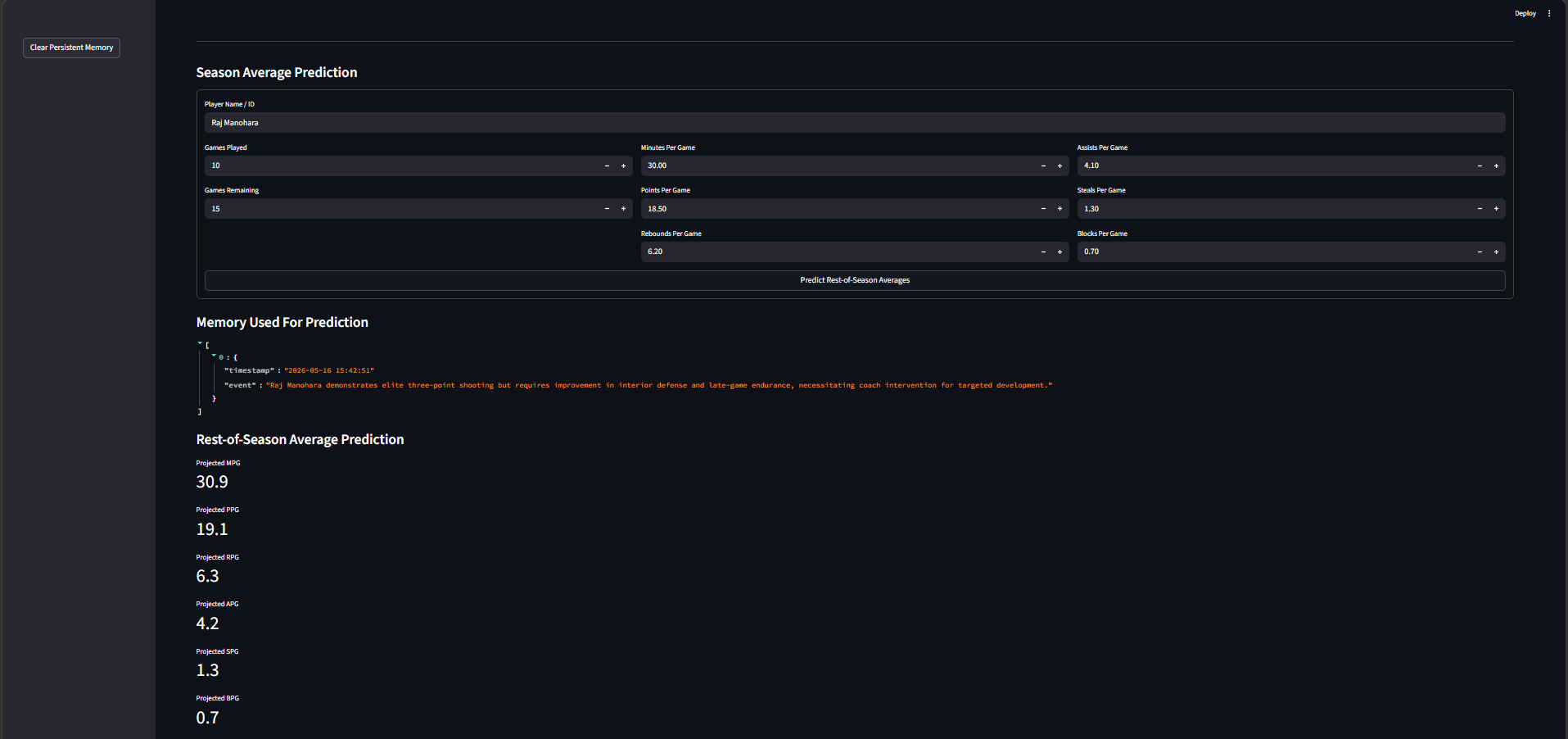
The stats prediction for a player based on their performance.
-
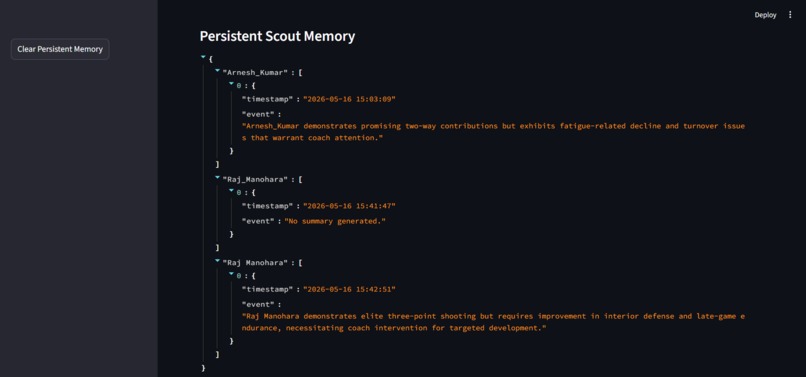
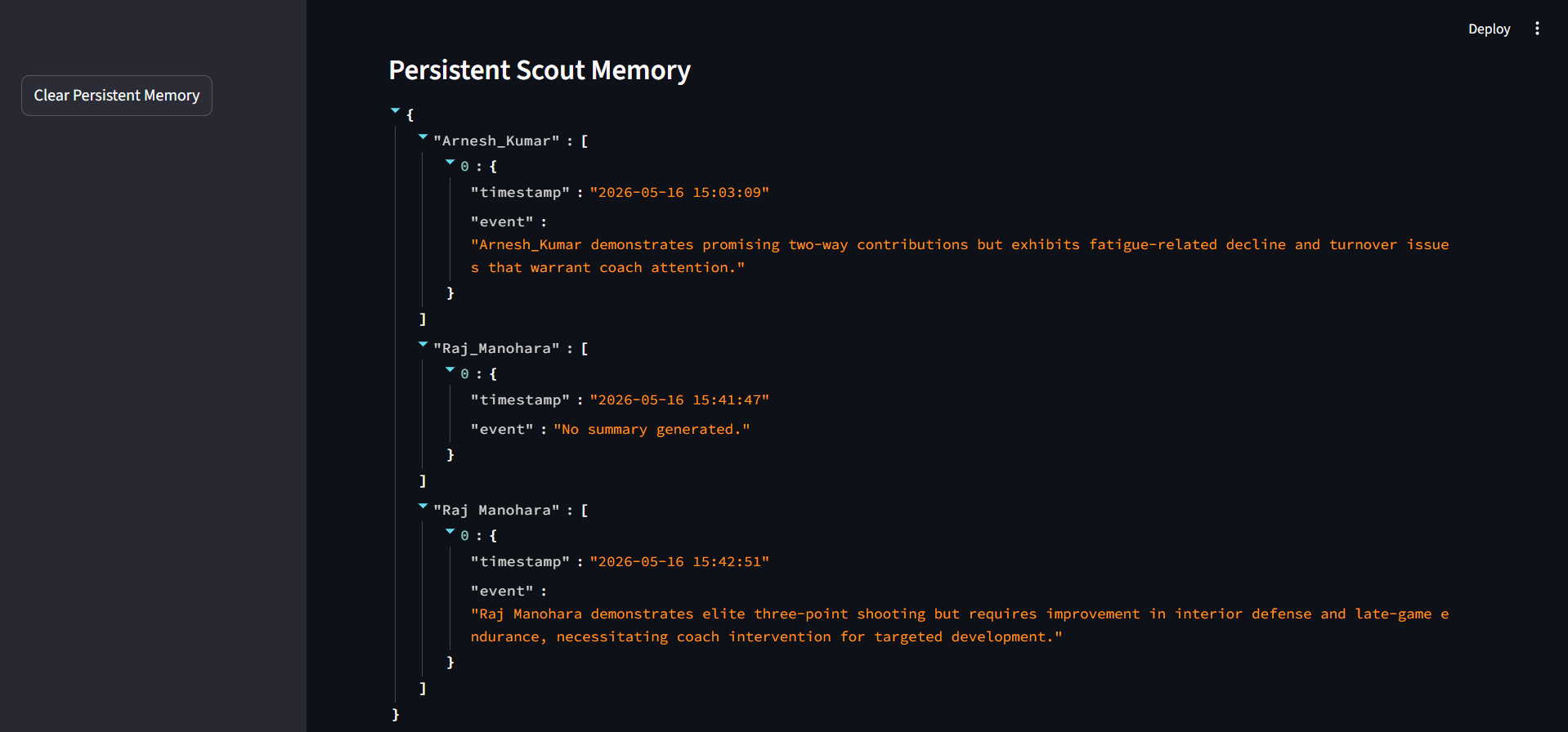
The scout logs for each player.
-
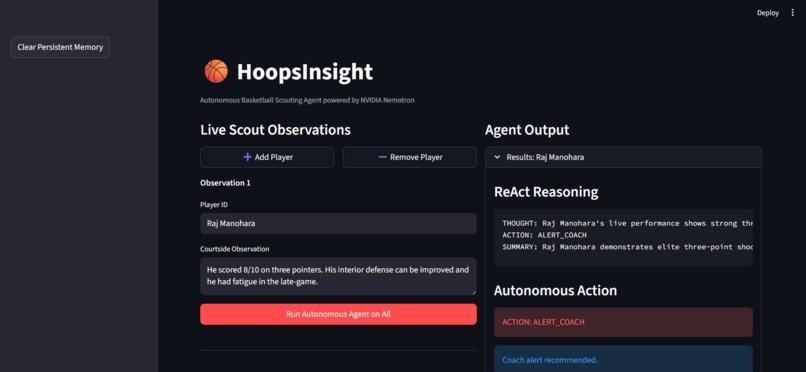
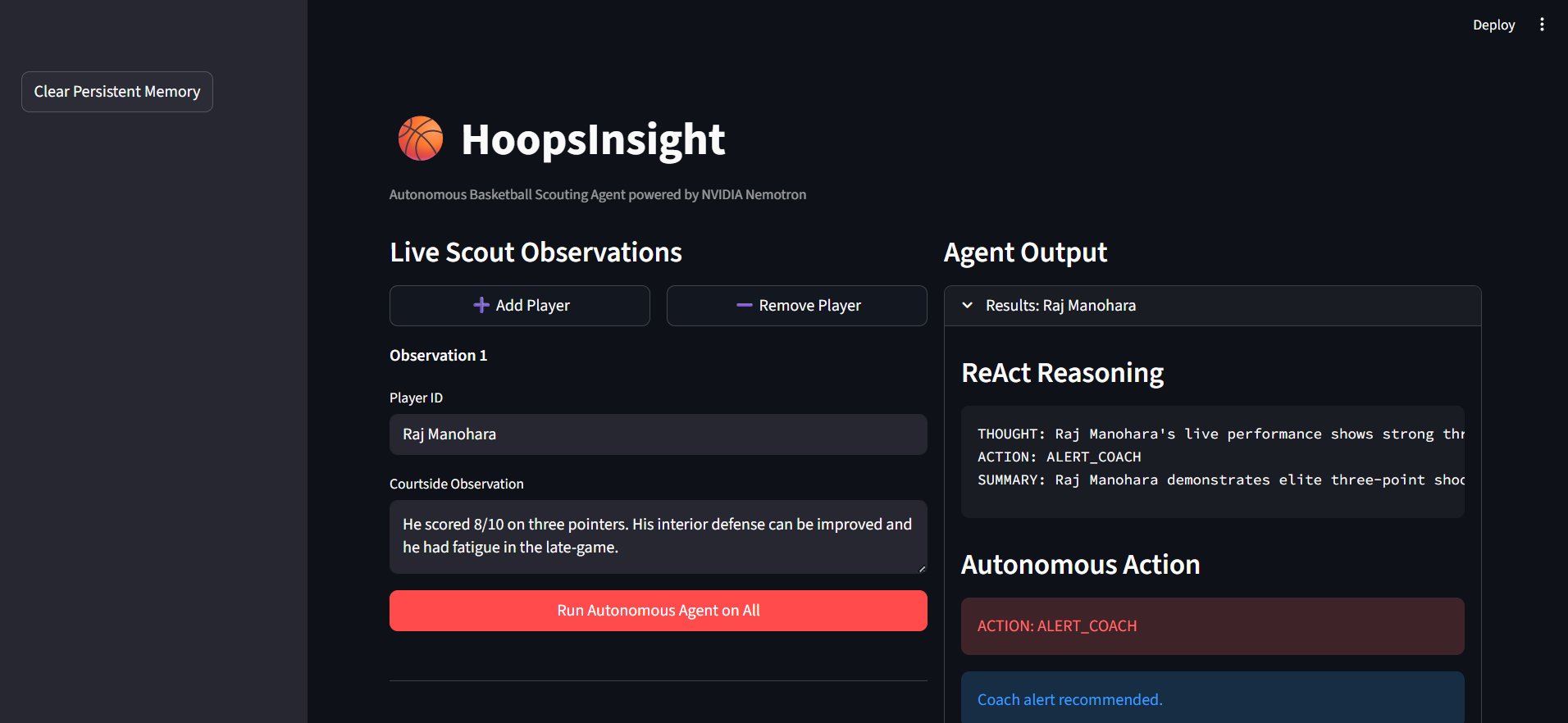
Enter player details and court observations.
-
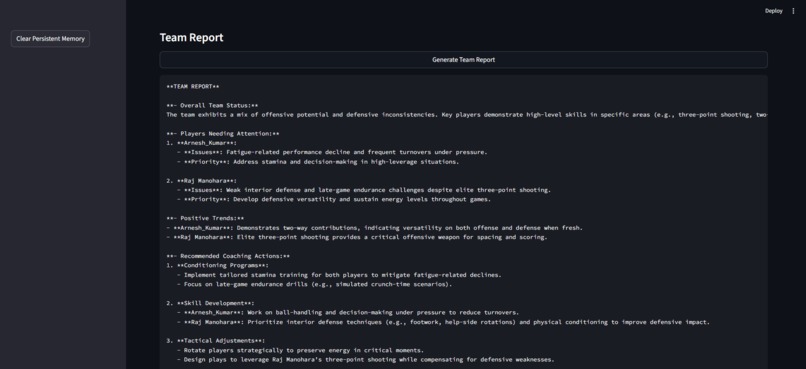
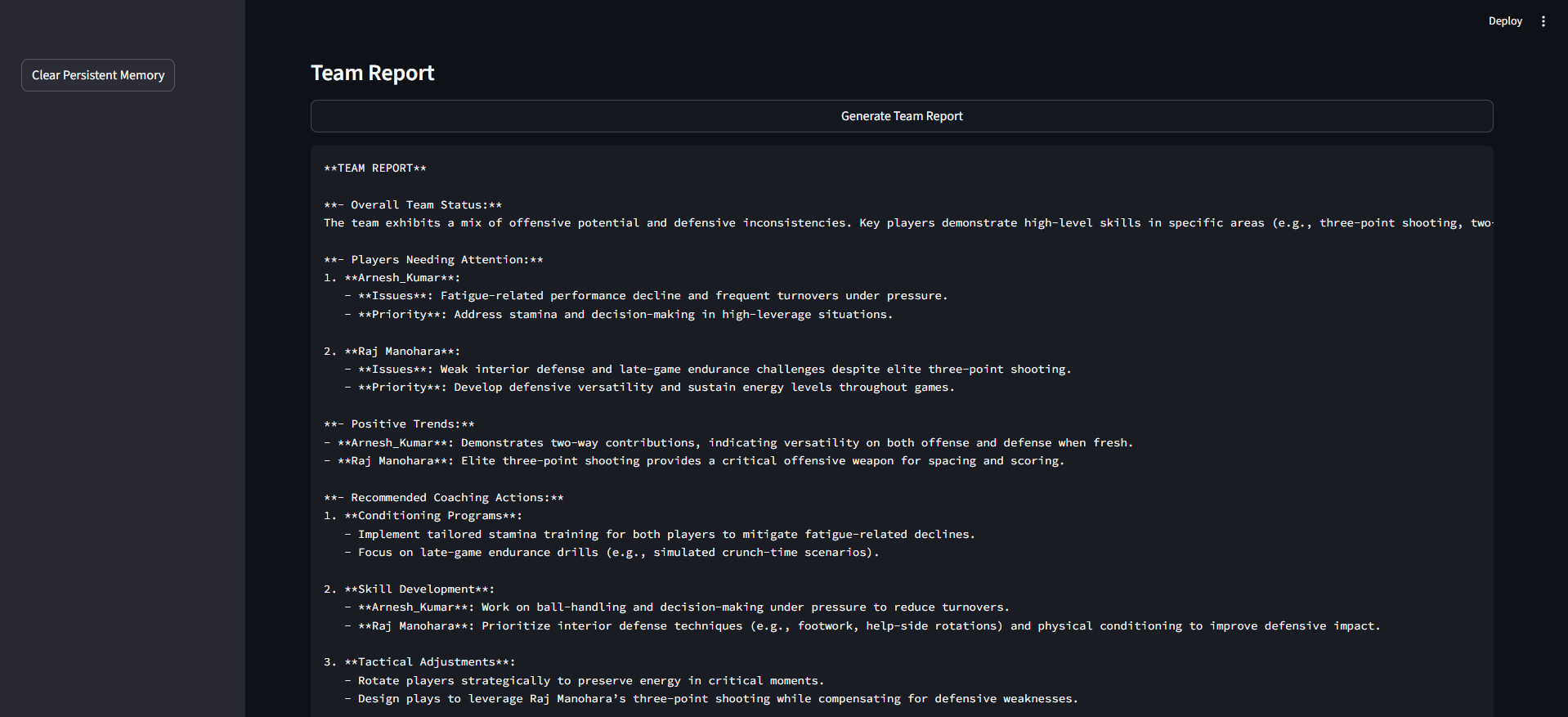
The team report giving coach advice on what to adjust.
Inspiration
Standard basketball box scores are trailing metrics. By the time you look at the stats, the game has already slipped away. Coaches need real-time, context-aware analysis of fatigue and form breakdown as it happens on the court. We built HoopsInsight to act as an autonomous assistant coach sitting on the bench.
What it does
HoopsInsight is an autonomous agent. A coach or scout inputs a quick live observation. The agent independently fetches the player's persistent historical data, starts a multi-step ReAct (Reason-Act) workflow using NVIDIA Nemotron, evaluates if the player's condition requires intervention, permanently logs the event to memory, gives a team-wide report, and a future stat predictor based on the current performance of a player.
How we built it
We used the llama-3.3-nemotron-super-49b-v1.5 model via NVIDIA's serverless API endpoints. We also integrated Native Python utilizing the OpenAI SDK for API routing, relying on strict system prompts to enforce ReAct formatting. Our format is structured as Local JSON storage for persistent player memory. In terms of UI/UX, we developed a rapid, single-file Streamlit application for the frontend dashboard.
Challenges we ran into
During testing, the free serverless API endpoints occasionally dropped concurrent requests due to heavy hackathon network loads. We engineered around this by writing a robust API wrapper with built-in retry logic and failsafes to ensure the agent's core heartbeat never stopped during a game.
Accomplishments that we're proud of
We are incredibly proud that we built a genuine, working agent rather than just a chatbot wrapped in a UI. Getting the Nemotron model to strictly adhere to the ReAct (Reason-Act) formatting without hallucinating extra text and breaking our Python parser took a lot of trial and error. We are also proud of our pivot. Halfway through the sprint, we realized a complex architecture was too fragile, so we aggressively scoped down to a single-file Streamlit application with local JSON memory.
What we learned
We learned that building autonomous agents is based around both writing the core logic and building guardrails for when the AI goes off script. Handling rate limits and server drops from the API taught us a lot about optimized programming. We also learned that in a time-crunch, a simple, localized data structure that works well is better than a complex database deployment that breaks right before judging.
What's next for HoopsInsight
Right now, HoopsInsight relies on manual text inputs from a scout and local JSON storage. The immediate next step is upgrading our persistent memory to a cloud database like Firebase Firestore, allowing us to track multi-game analytics across an entire season. From there, we plan to rebuild the frontend dashboard in React to give coaches a much more dynamic, user-friendly interface on the bench. Ultimately, the goal is to integrate computer vision models that can feed real-time data straight into the Nemotron agent, completely removing the need for manual data entry.

Log in or sign up for Devpost to join the conversation.