-
-

Logo
-
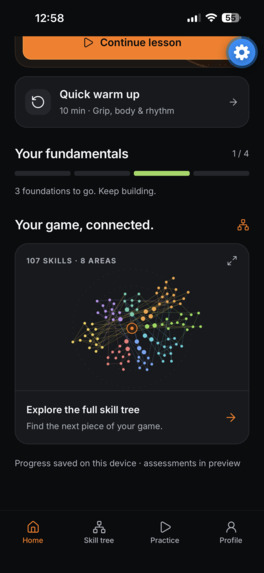
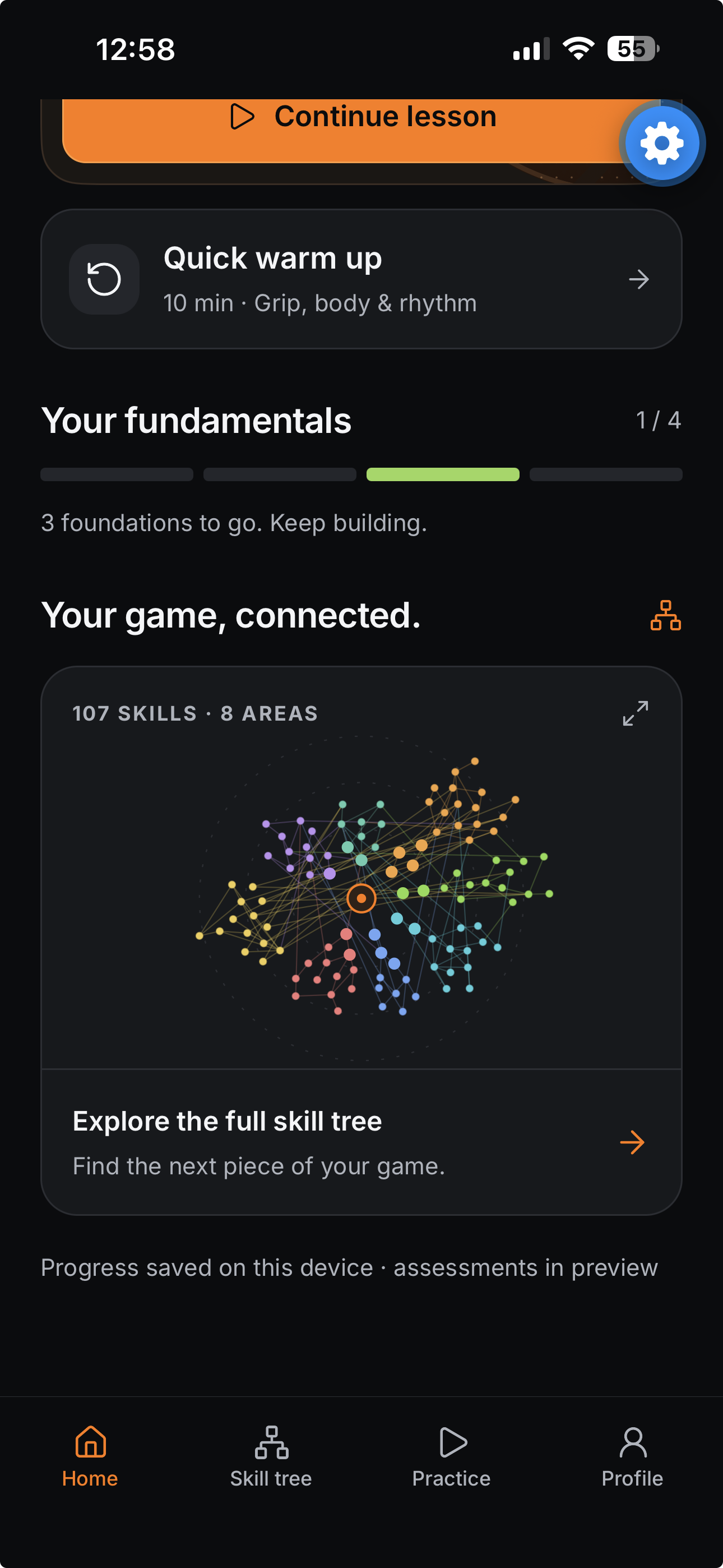
Home view of expanded skill graph
-
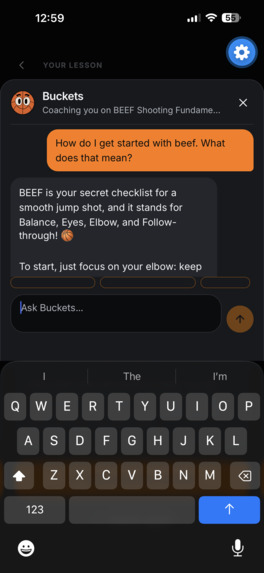
Chatting with Buckets AI within a lesson
-
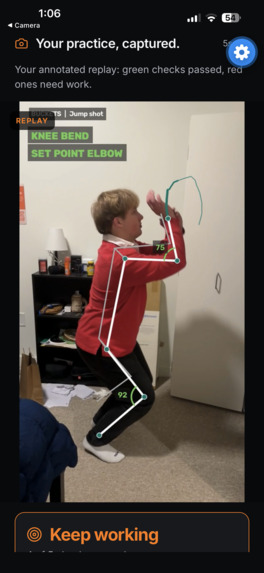
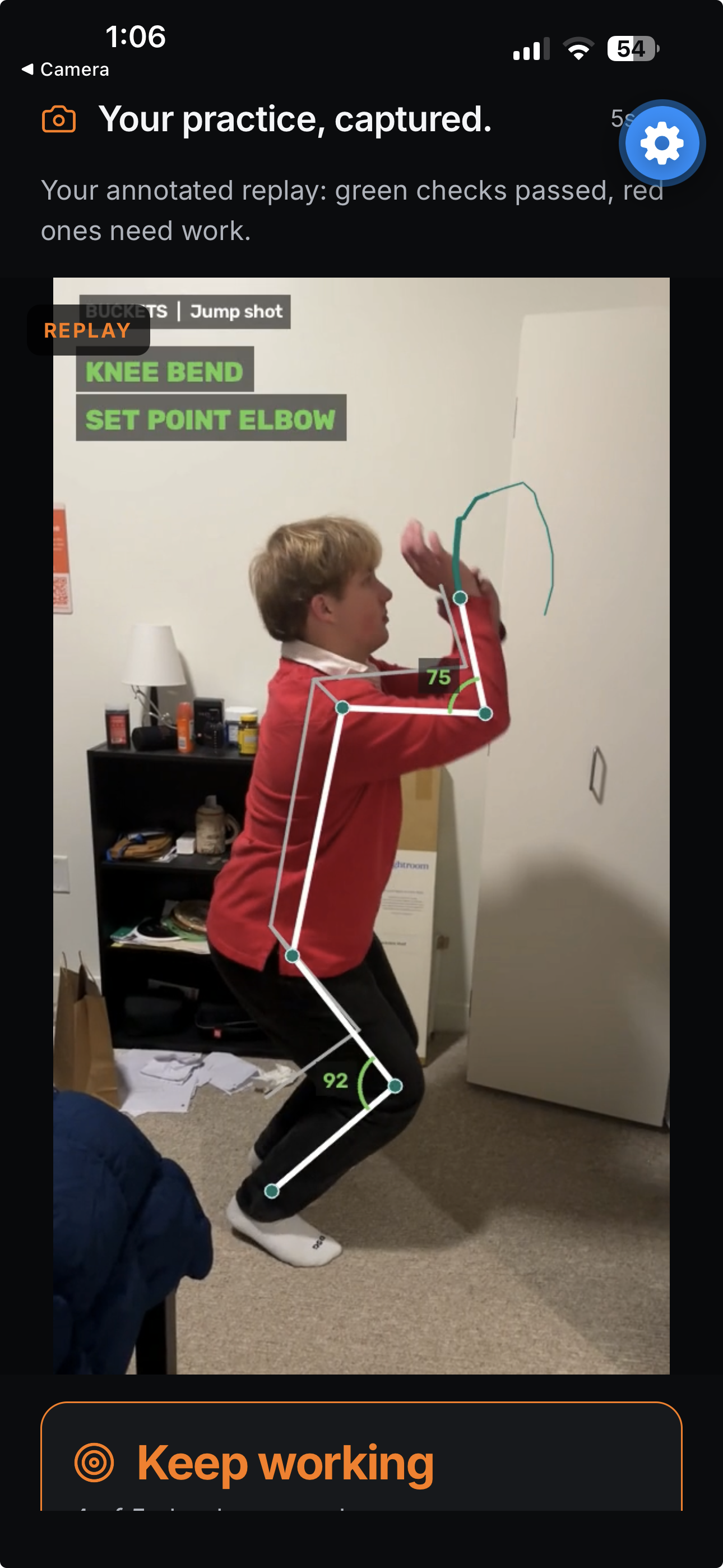
Screenshot of computer vision powered form review

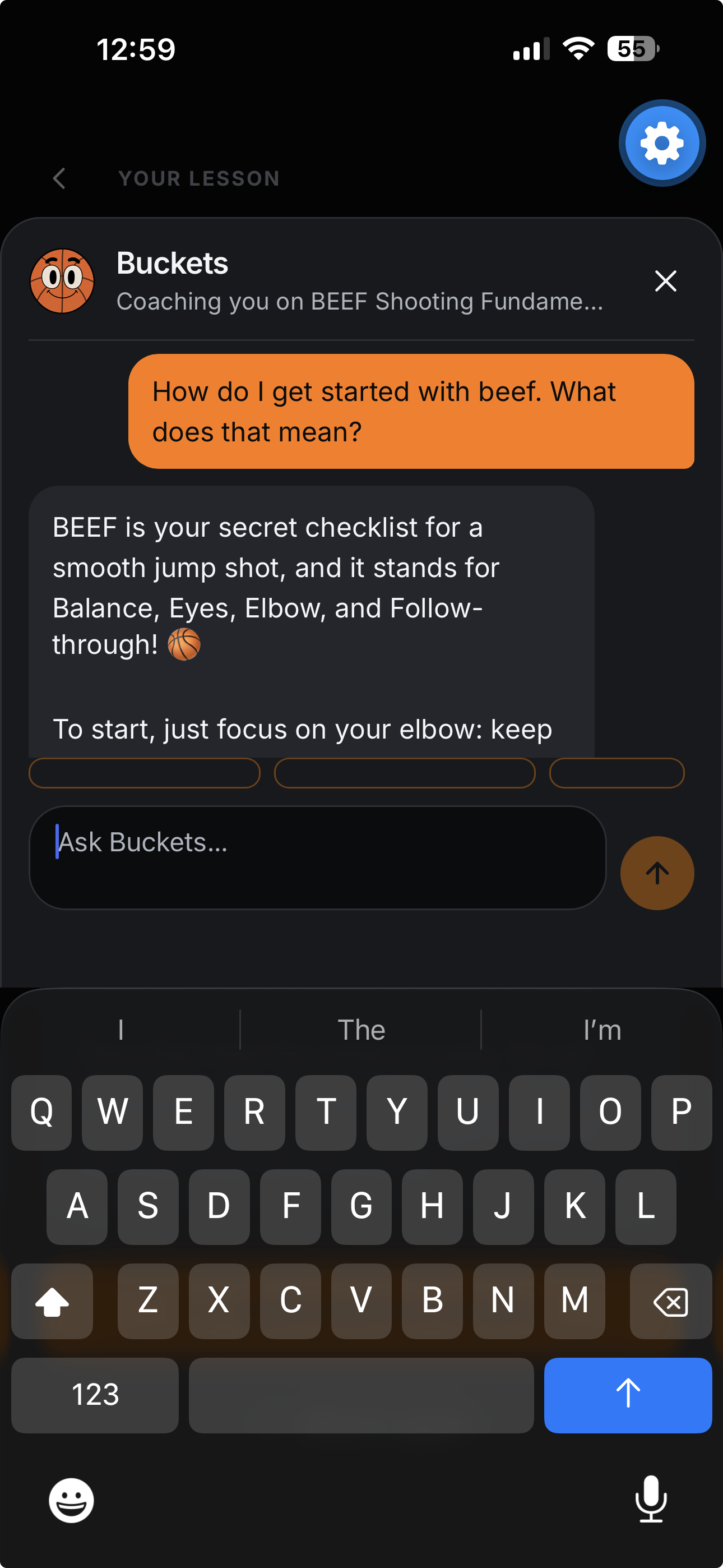
HoopQuest turns basketball training into a real-life RPG. It started as a hobby and goal-setting app, inspired by how video games make progress feel clear and rewarding. But tracking goals wasn’t enough. We wanted to help people answer three questions: Where do I start? What should I practice? What comes next? That led us to basketball, where countless tutorials exist but connecting them into a personal learning journey can be overwhelming.
Players explore 100+ interconnected skills, follow video lessons, and practice toward their next unlock. Our skill tree models basketball as a network of abilities with multiple prerequisites and connections across shooting, handling, footwork, defense, and game awareness. Personalized onboarding establishes a starting point, while each lesson moves through understanding the skill, seeing the technique, and trying it.
We built the mobile frontend with React Native, Expo, and TypeScript, using a reusable component system and a graph interface with panning, zooming, search, and focused views. A structured JSON curriculum separates lesson content from presentation and prerequisite logic. Camera capture includes permissions, a positioning countdown, recording, and playback. Our computer vision work aims to turn those recordings into technique assessments, with a typed integration contract connecting capture to analysis and feedback.
Our biggest challenges were making a dense graph readable on mobile, coordinating frontend and backend development, and translating basketball technique into measurable computer vision checks. We learned that recording an attempt and proving mastery are separate problems. Useful feedback needs reliable assessment criteria and practice requirements that fit the actual activity.


