-
-
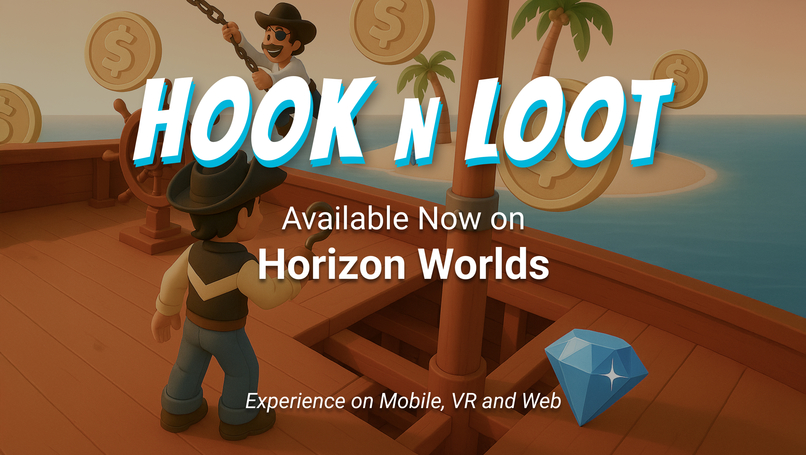
World Built for Mobile, Web, and VR
-
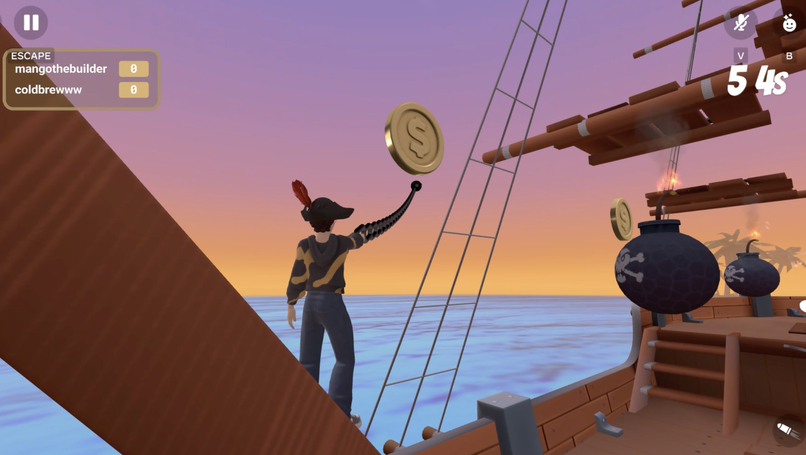
Collect Coins
-
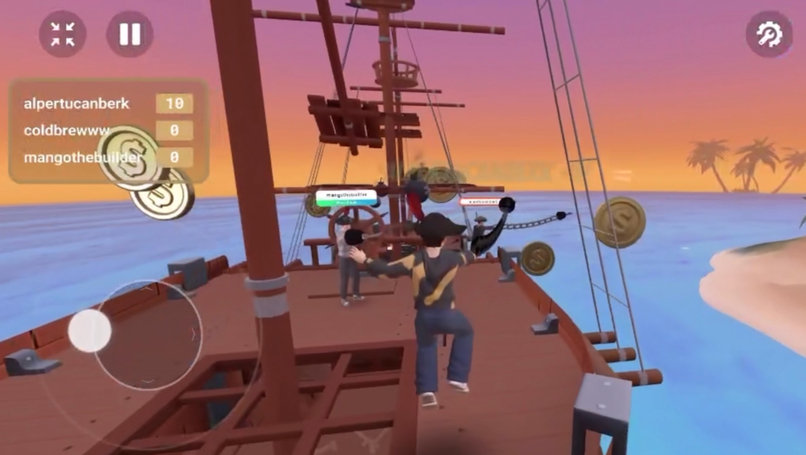
Hook
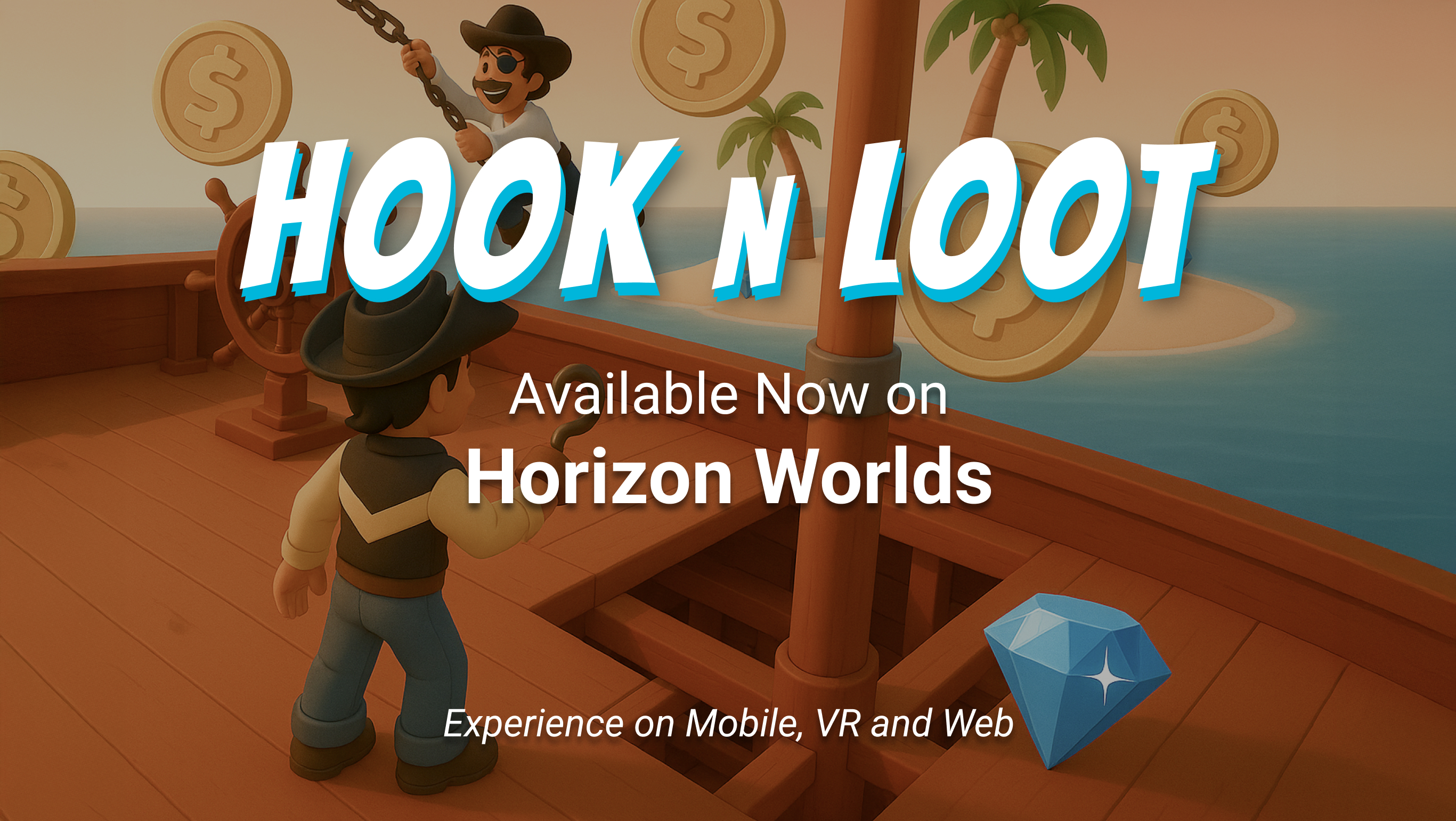
Inspiration
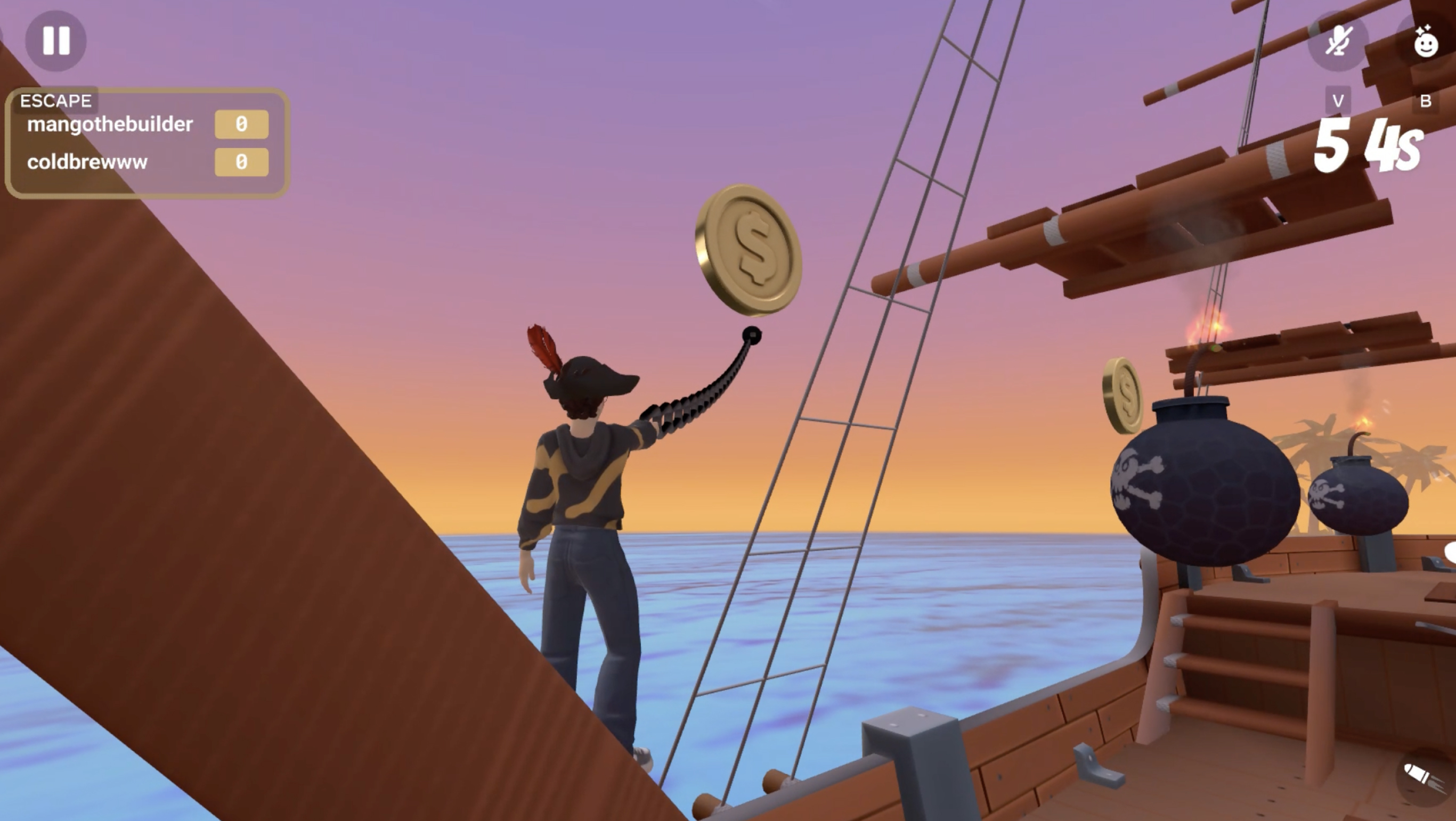
The initial spark for Hook n Loot came from a desire to carve out a unique gameplay niche within the Meta Horizon Worlds platform. Rather than following established patterns, we aimed to build an experience around a distinct, straightforward but juicy core mechanic on top of a simple round & point collecting system – while also leaving room for open-ended world exploration. This led to the central concept of hook throwing, a dynamic and versatile action that could form the basis for a variety of engaging interactions. Drawing inspiration from existing games, notably Dota's intricate hook mechanics, and Spider-Man, we spent a lot of time getting this single action to be perfect. We made sure that it could be leveraged in a multitude of ways and play tested a lot early on.
The holistic concept of Hook n Loot was then shaped around this satisfying and strategic use of this unique mechanic as we tested out different things. In a lot of ways, the inspiration from that point on was our own experience playing the game and learning the strengths of the Horizon World engine.
What it does
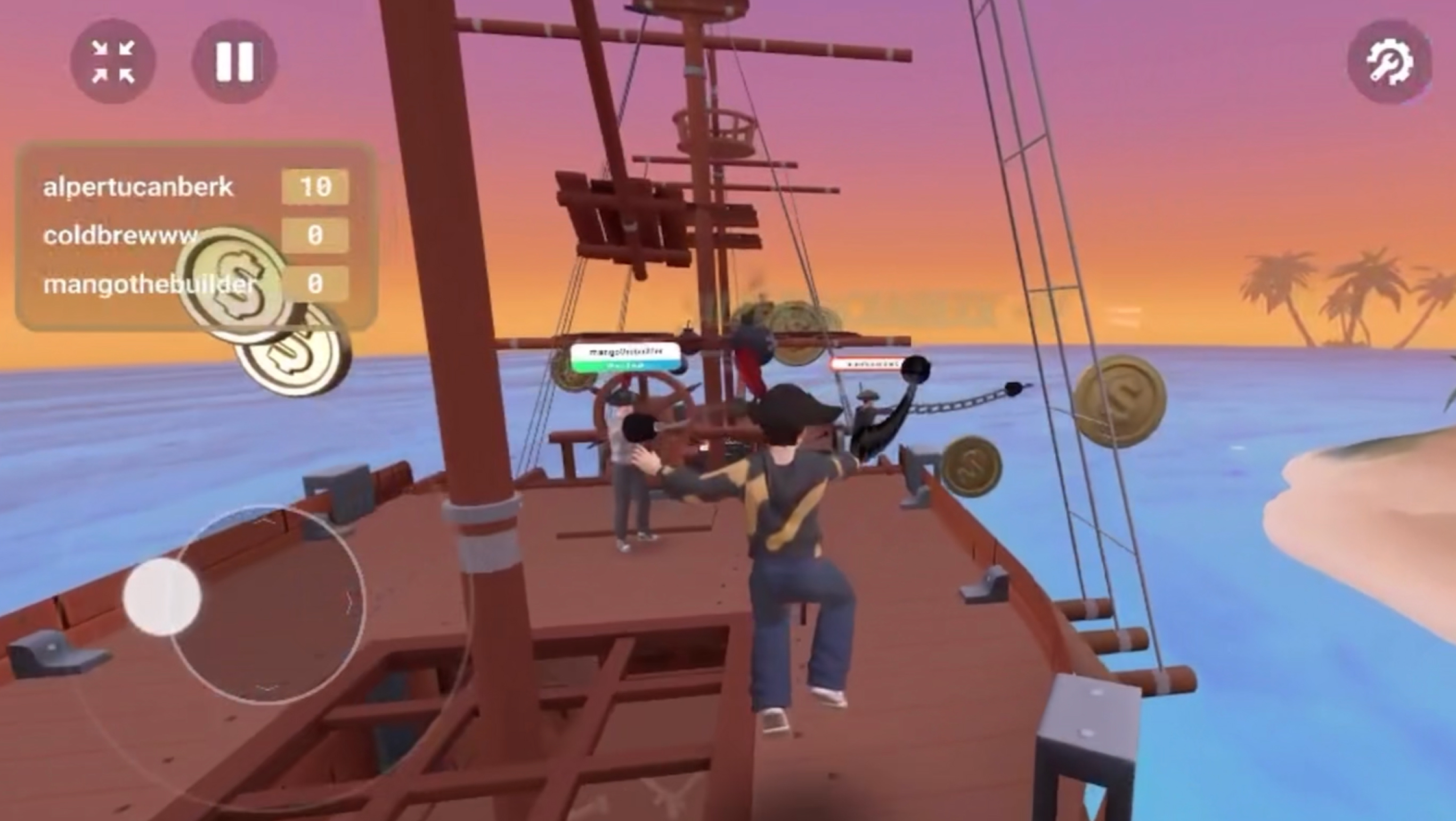
In Hook n Loot, the primary objective for players is to accumulate the highest score by skillfully using their grappling hooks to snatch valuable gold and diamonds scattered around the environment, all while strategically avoiding dangerous bombs. This core mechanic of hooking isn't just for collecting; it's also the key to navigating the multi-tiered pirate ship. Players can cleverly latch onto various parts of the vessel to reach otherwise inaccessible locations, adding a layer of verticality and exploration to the gameplay. Furthermore, the hook serves as an interactive tool between players, allowing them to knock opponents off the ship and into the surrounding waters.
The game is structured in short, fast-paced party rounds, where the player who amasses the most points within the time limit emerges victorious.
Beyond the competitive aspect, Hook n Loot encourages exploration. By creatively employing their hooks, players can discover hidden gems and navigate the ship in unexpected ways, such as climbing to the crow's nest or using a bomb's blast to launch themselves to the distant island.
How we built it
- Foundation: Began by learning the Horizon Worlds engine and mastering TypeScript, with an initial focus on perfecting the feel of the hook mechanic.
- Core Systems: Implemented the game loop and user interface, which were relatively straightforward.
- Leveraging Platform Tools: Utilized built-in Gizmos like trigger boxes and Leaderboards to simplify development.
- Unique Social Interactions: Added dynamic player-to-player hooking capabilities to enhance gameplay.
- Immersive Audio: Heavily relied on generative AI for creating unique and varied background music and sound effects for player and world interactions.
- AI-Assisted World Building: Used generative AI for 3D asset creation and incorporated VFX from the Public Asset library.
- Iterative Refinement: Dedicated significant time to playtesting and ensuring engaging gameplay with ample exploration opportunities within the ship's diverse areas (above the sail, observer towers, skeleton room, lower deck).
Challenges we ran into
- New Platform Learning Curve: Transitioning from Unity presented novel concepts and a whole different scripting paradigm.
- Multiplayer Complexity: Implementing multiplayer functionality introduced inherent challenges.
- Scripting Differences: Understanding the distinction between server-hosted (Default) and client-side scripts was a key learning.
- Collision Detection: Initially misunderstood the requirement for physics to be enabled for collision detection. Took a while to figure out the Trigger Box gizmo.
- Event Synchronization: Encountered issues with unsynchronized events (e.g., forceGrab), requiring workarounds like adding delays.
- Importing Custom Models: Requirement of hardcoded material & texture naming took us quite a few trial & error to figure out.
- Feature Limitations: Lack of UV scrolling/animated textures necessitated creative solutions (world rotation for water animation).
- Development Workflow: Initially found the absence of a player simulation mode challenging but later discovered NPC creation capabilities.
Accomplishments that we're proud of
- Unique Hooking Mechanic: Developed a satisfying and distinctive grappling experience reminiscent of Spider-Man or Pudge in Dota2, allowing players to swing, knock opponents into the water, and interact with coins and bombs.
- Engaging Sound Design: Created an upbeat and non-repetitive audio landscape that enhances the gameplay.
- Immersive Bomb Mechanic: Implemented a bomb collision system with impactful feedback for players.
- Risk-Reward Lower Deck: Designed a challenging area with valuable diamond rewards and dangerous bombs.
- Attention to Detail: Enriched the game world with subtle but impactful elements like water splashes, collision particle effects, and contextual sound effects.
- Atmospheric Touches: Added ambient details such as circling birds and a unique "vibe room" on the ship.
- Player Customization: Awarded pirate hats to all joining players for a touch of personalization.
- Onboarding: We designed and implemented a one page UI when the users first joined the world to teach them how to play the game.
- Cross-Platform Compatibility (Mobile, VR, Web): Successfully made the game playable on mobile, web, and VR platforms.
What we learned
- New Platform Proficiency: Gained experience developing on the previously unfamiliar Meta Horizon Worlds platform, completing our first game on it.
- Multiplayer Synchronization: Acquired knowledge and skills in building synchronized multiplayer experiences across clients.
What's next for Hook n Loot
- World Expansion: Focus on creating a larger and more diverse game world.
- New Game Mechanics: Introduce gameplay beyond item collection, such as varied challenges and quests.
- Ship Steering and Exploration: Implement the ability for players to control the ship and discover new islands.
Built With
- audacity
- blender
- horizon
- meta
- suno
- typescript


Log in or sign up for Devpost to join the conversation.