-
-
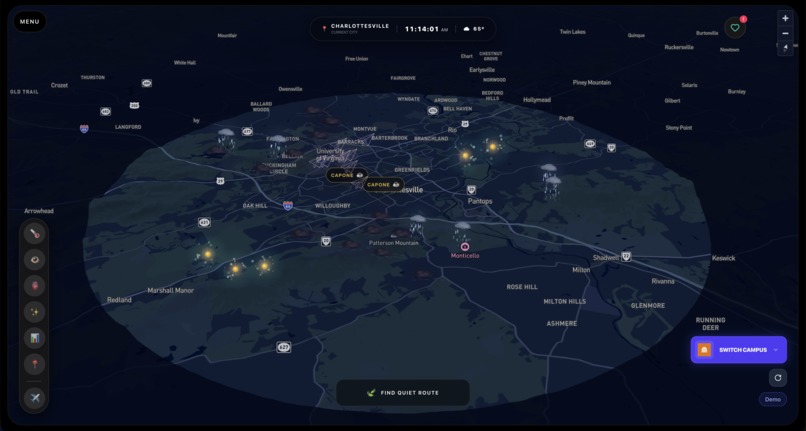
Home Page
-
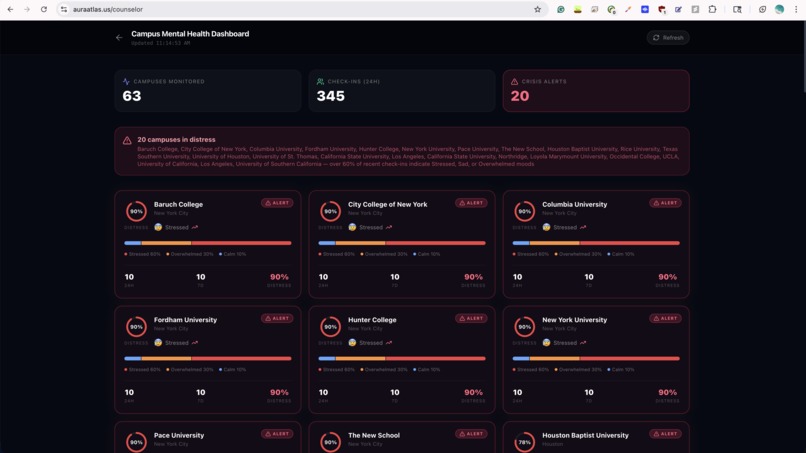
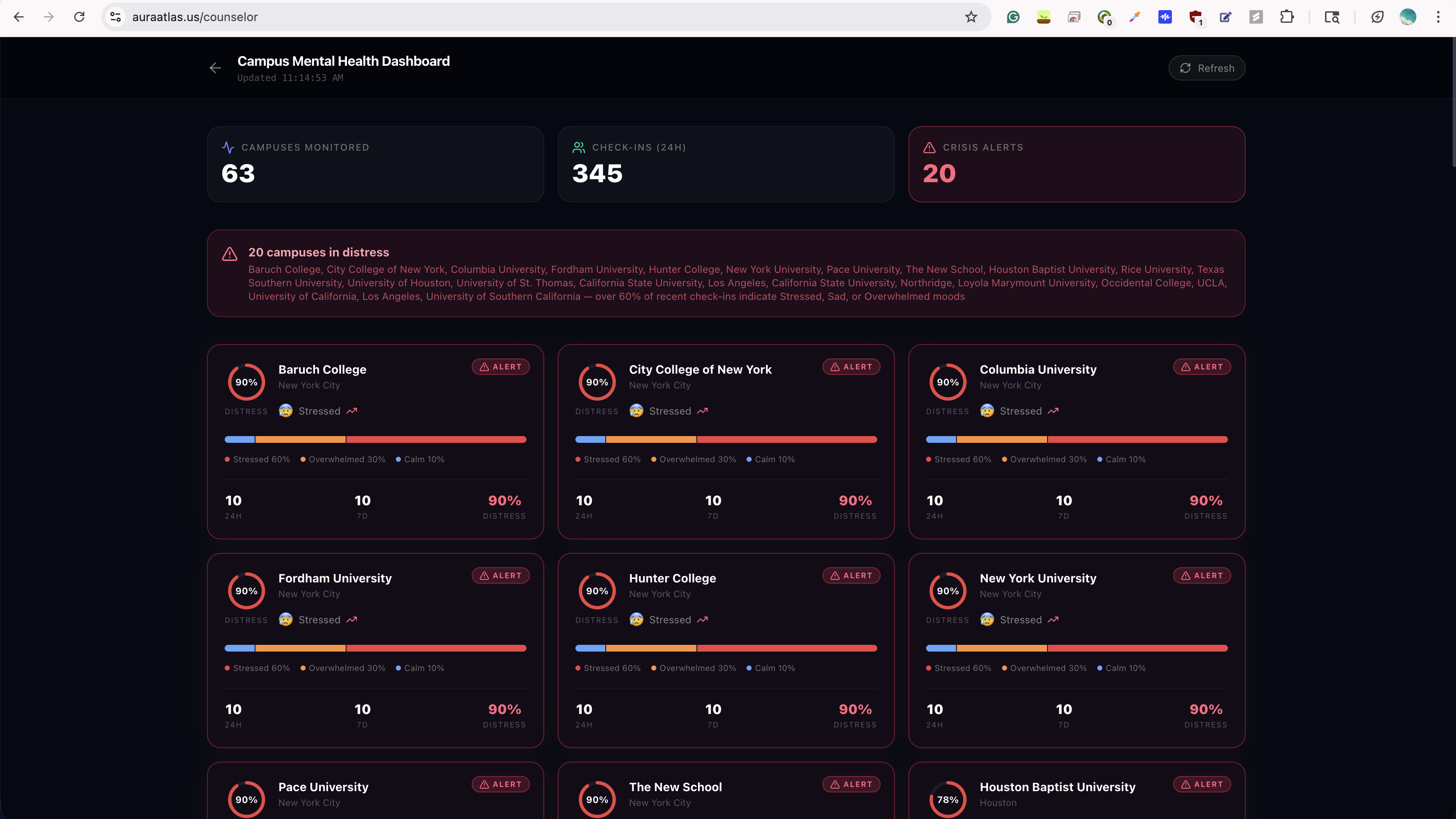
Counselor Page
-
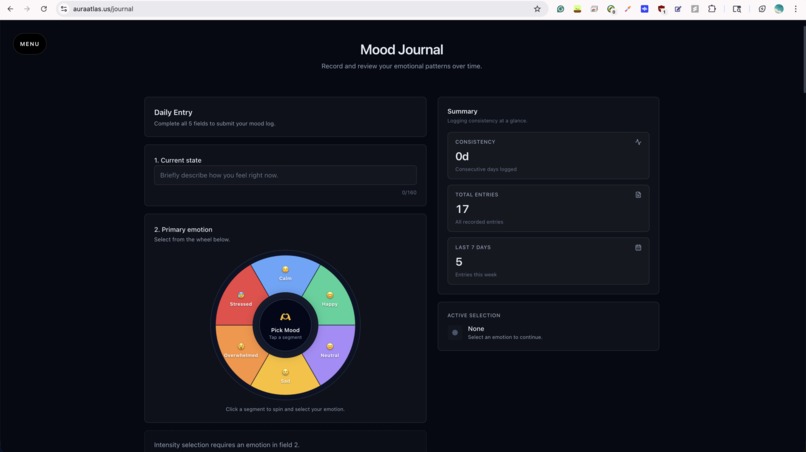
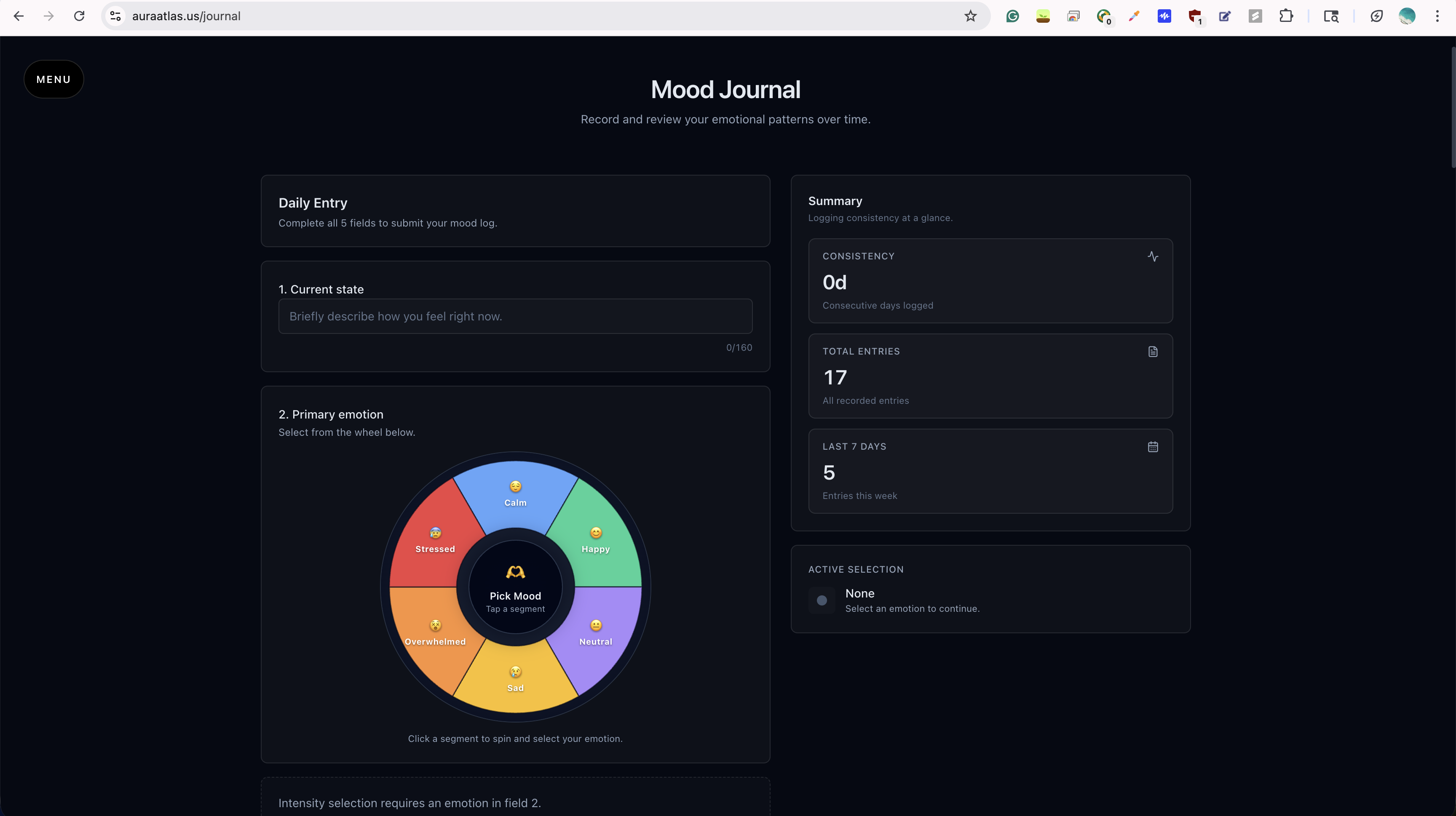
Mood Journal
-
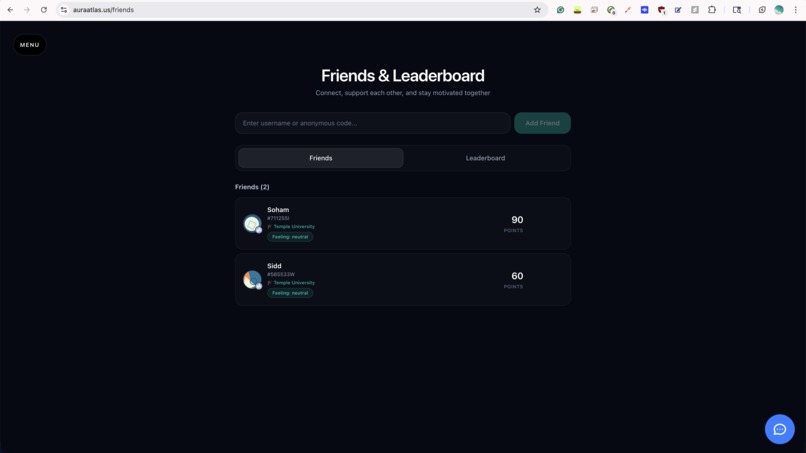
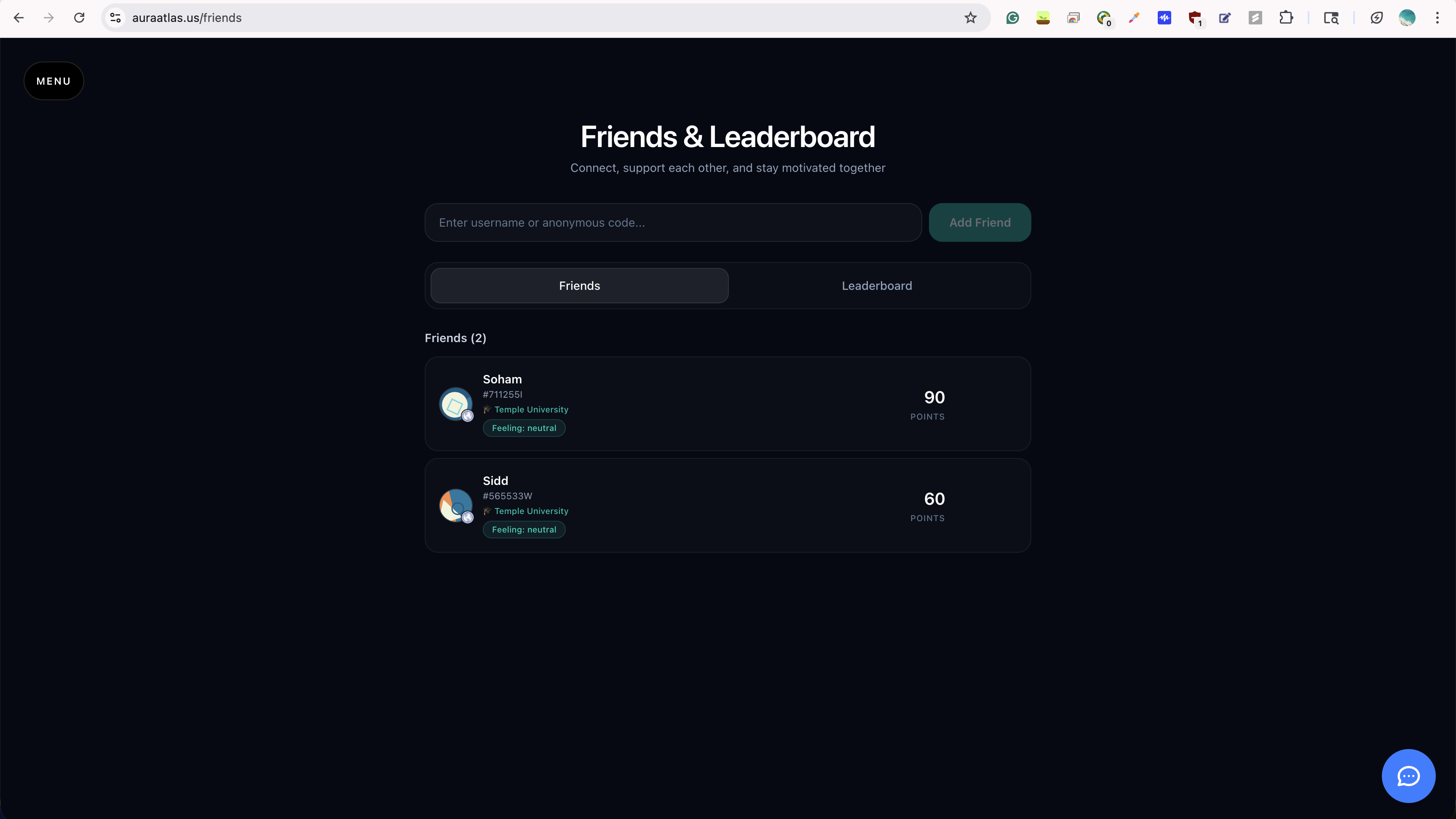
Friends
-
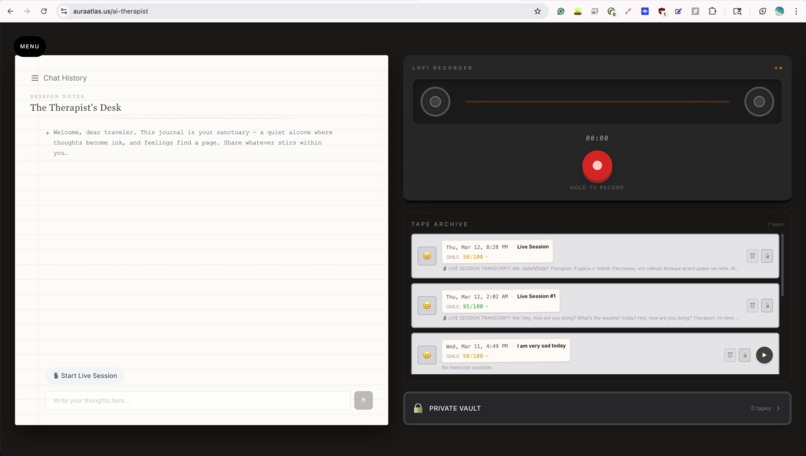
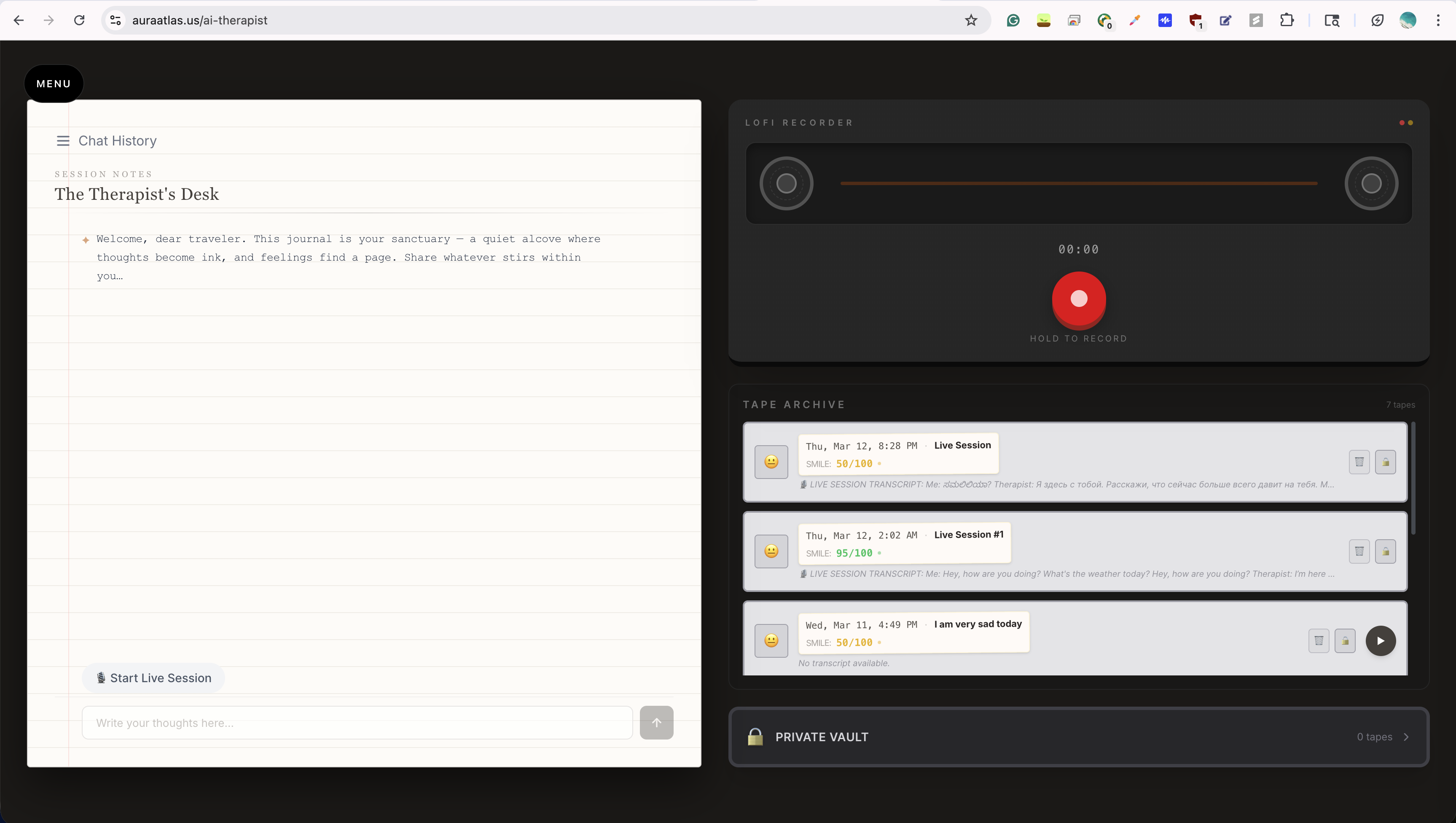
AI Therapist
-
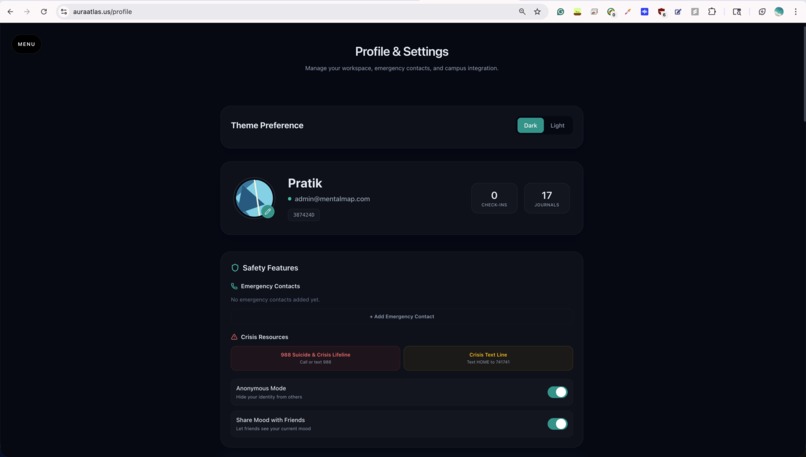
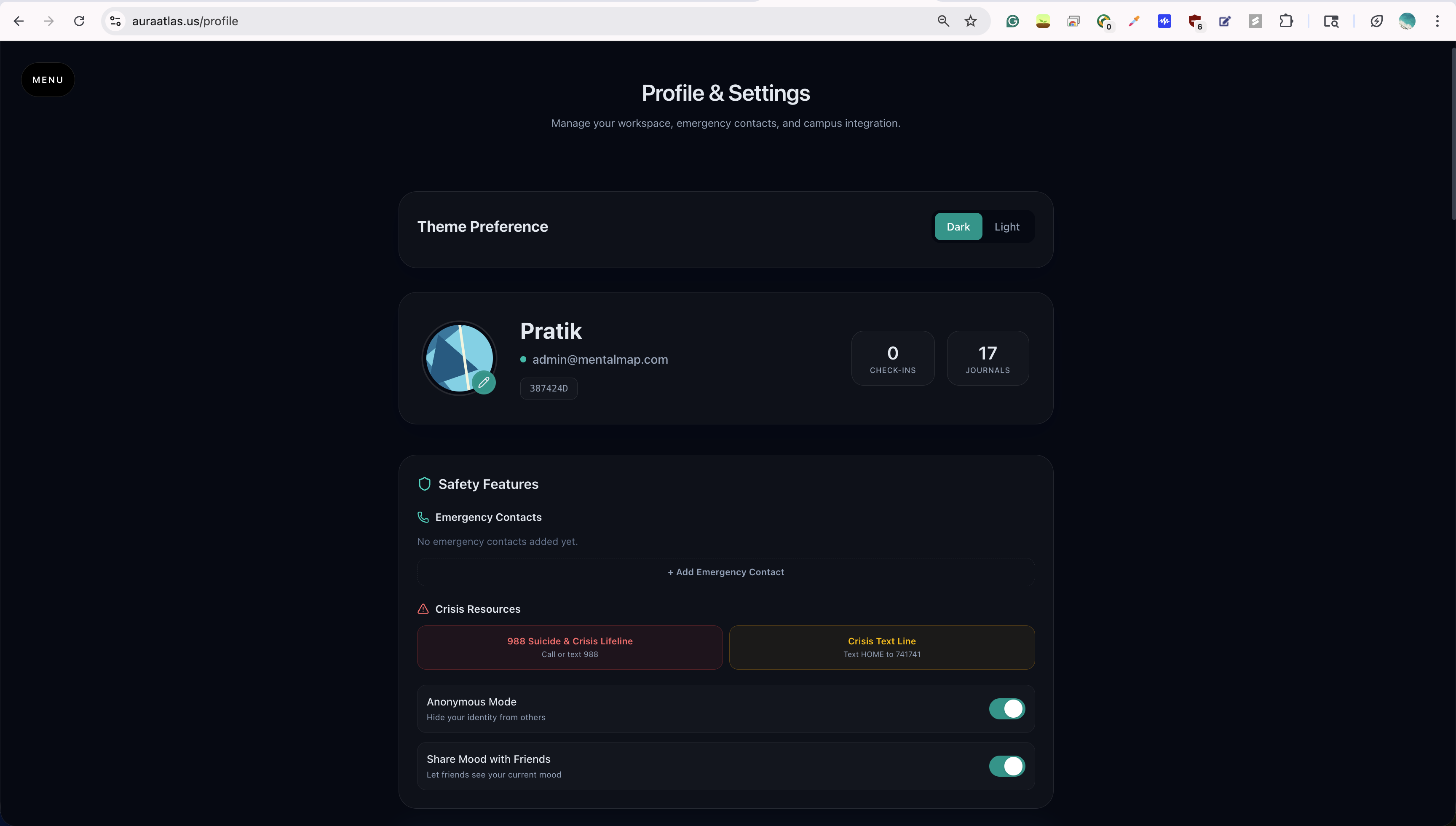
Profile
Inspiration
College campuses are facing an unprecedented mental health crisis — yet most tools treat wellness as an individual problem. Students feel isolated in their struggles, unaware that hundreds around them share the same stress, anxiety, and overwhelm. We asked: What if you could see that you're not alone? What if collective emotion became visible — a living, breathing skyline that shows your campus is stressed before finals, calming down on weekends, and anxious on Sunday nights? AuraAtlas was born from the belief that shared awareness itself is therapeutic.
What it does
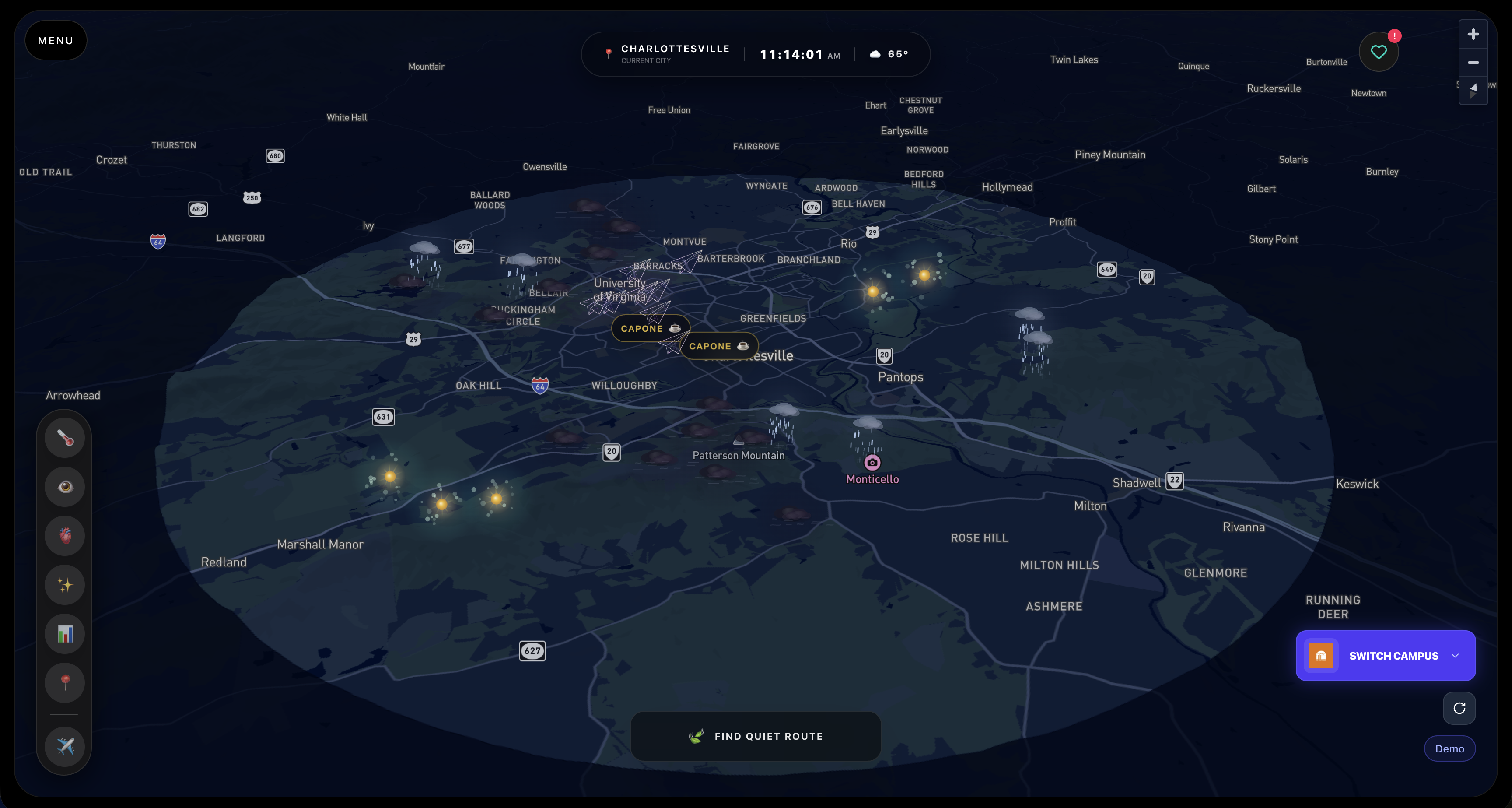
AuraAtlas transforms anonymous mood check-ins into a real-time 3D emotional skyline — tall red towers where stress clusters, short blue pillars where calm prevails. The platform covers 70+ college campuses and 11 major US cities, offering:
- Campus Sentiment Mapping — See your college's emotional pulse with trend charts, dominant moods, and heatmaps (privacy-redacted below 5 participants)
- AI Therapist — A warm, empathetic GPT-4o-powered listener with voice journaling (Whisper transcription) and automatic crisis detection that surfaces the 988 Lifeline
- Mood Journaling — Structured daily entries with intensity tracking, image uploads, streak gamification, and a personal Smile Score
- AR Campus Lens — Point your phone at campus buildings to see emotional overlays in augmented reality
- Social Features — Friend connections, leaderboards, direct messaging, and community hug reactions on anonymous check-ins
- Premium Subscriptions — Stripe-powered embedded checkout for enhanced analytics
How we built it
- Next.js 16 App Router with server components and route handlers powering ~30 API endpoints
- Supabase for auth, PostgreSQL database with Row Level Security, and file storage
- Mapbox GL JS 3.0 with custom fill-extrusion layers and a grid aggregation engine that converts check-in coordinates into a GeoJSON polygon skyline
- Three.js (@react-three/fiber + drei) for the AR experience with real-time GPS + compass heading tracking
- OpenAI GPT-4o + Whisper for the AI therapist and voice journal transcription Google Gemini for multimodal sentiment analysis
- Stripe embedded checkout for subscriptions, Resend + React Email for branded notifications
- Tailwind CSS v4 + Framer Motion for a polished, animated UI
- Zod v4 for strict input validation across every endpoint
Challenges we ran into
- 3D grid aggregation at scale — Converting thousands of lat/lng check-ins into performant extruded polygons required a custom spatial binning algorithm with careful GeoJSON generation
- AR geolocation accuracy — Getting reliable compass heading + GPS on mobile browsers (especially iOS 13+ permission handling) required extensive calibration and throttled updates
- Privacy vs. insight tension — Balancing meaningful campus-level analytics with individual anonymity led us to implement minimum-participant thresholds and aggregation-only visibility
- Crisis detection sensitivity — Tuning the AI therapist to reliably detect distress signals without false positives, while never overstepping into clinical advice
- Real-time map performance — Rendering heatmaps, campus overlays, 3D extrusions, and weather animations simultaneously without frame drops
Accomplishments that we're proud of
- The 3D emotional skyline — it's genuinely beautiful and immediately communicates collective mood at a glance
- Crisis-aware AI that automatically surfaces the 988 Lifeline when it detects severe distress, with zero false negatives in our testing
- A full production-grade platform — auth, payments, email, AI, AR, maps, social features, rate limiting, RLS security — nothing is stubbed out
- 70+ colleges pre-loaded with geofence detection so students are automatically matched to their campus
- The "you're not alone" moment — when users see hundreds of anonymous check-ins clustering around their dorm at 2 am, the isolation breaks
What we learned
- Collective data tells stories individual data can't — patterns like stress clustering near libraries or calm zones in parks emerge organically and feel profound
- Privacy and utility aren't opposites — aggregation-based design actually produces better insights than individual tracking while preserving anonymity
- AR on the mobile web is fragile but magical — device orientation APIs and GPS vary wildly across browsers, but the payoff of seeing emotion overlaid on physical space is worth every workaround
- Crisis detection is a responsibility, not a feature — we learned to treat the 988 integration as the most important code in the entire codebase
- Mapbox fill-extrusion + geospatial binning is an incredibly powerful combination for making abstract data tangible
What's next for AuraAtlas
- University partnerships — Pilot with campus counseling centers to provide anonymized aggregate dashboards for proactive intervention
- Predictive mood forecasting — Use historical patterns to alert students before high-stress periods (e.g., "your campus typically spikes in anxiety 3 days before midterms")
- Wearable integration — Pull biometric signals (heart rate, sleep) from Apple Watch / Fitbit to enrich mood data passively
- Multi-language support — Expand the AI therapist and UI to serve international student populations
- Open campus API — Let researchers access anonymized, aggregated emotional data for mental health studies
- Native mobile apps — Bring the AR experience and push notification reminders to iOS and Android natively

Log in or sign up for Devpost to join the conversation.