-
-
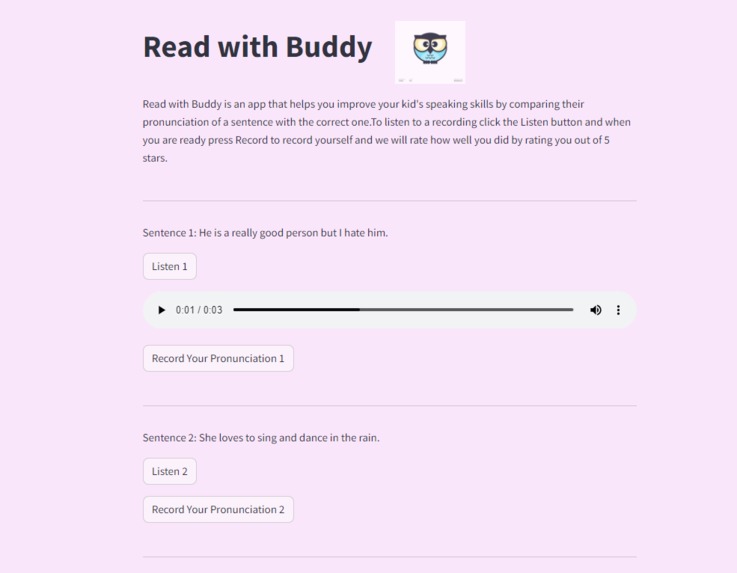
ReadWithBuddy in action
-
Inspiration
Elementary students who are homeschooled in the United States face a unique set of learning conditions that can significantly influence their educational development. With the rise of homeschooling as America's fastest-growing form of education, there are now an estimated 1.9 to 2.7 million homeschooled children in the country. This educational approach provides a tailored learning environment that can be particularly beneficial for young learners as they develop foundational language skills.
In a homeschool setting, elementary students often receive one-on-one attention, which can greatly enhance their ability to pronounce words and read effectively. This personalized approach allows for immediate correction and reinforcement, which is crucial for mastering the nuances of language. Moreover, the flexibility of homeschooling means that parents can integrate language learning into everyday activities, providing a form of immersion that can help solidify cognitive language skills.
Recognizing the unique advantages of homeschooling for elementary students, we aim to create a dynamic software solution specifically tailored to support their language learning journey. Our software will harness the power of AI technologies to engage young learners in fun and educational activities designed to enhance their pronunciation, vocabulary, and reading comprehension skills. By combining elements of gamification, personalized learning pathways, and immersive experiences, our platform will provide homeschooling families with a comprehensive tool to supplement their curriculum and foster a love for language learning.
Target Audience
The target audience of this initiative is children ages 0-6 whose parents have limited resources or have opted for homeschooling. The program seeks to provide these children with a safe and enriching environment where they can engage in learning and exploration at no cost. Recognizing the challenges faced by families with limited access to traditional educational resources and structural learning opportunities, this initiative aims to bridge the gap by offering a diverse range of online activities and resources tailored to the needs and interests of children. By providing free access to a variety of educational content, the program empowers children to pursue their interests, develop new skills, and connect with peers in a supportive online community. Through this initiative, children can embark on a journey of discovery and self-expression, regardless of their family circumstances or educational background, fostering a sense of curiosity, confidence, and belonging in the digital realm.
Our Solution
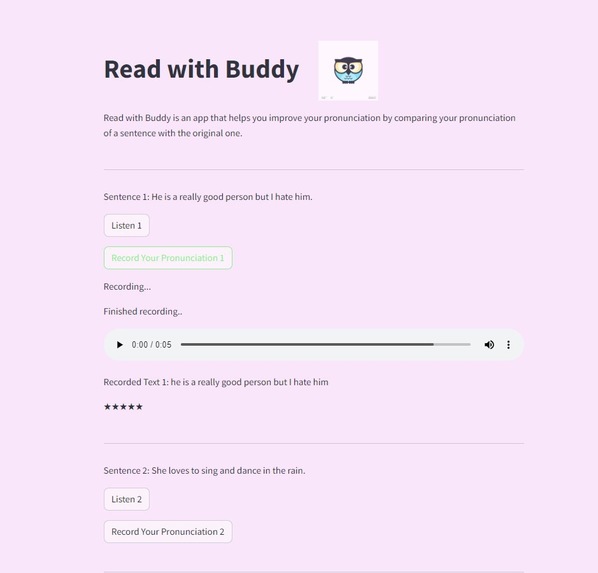
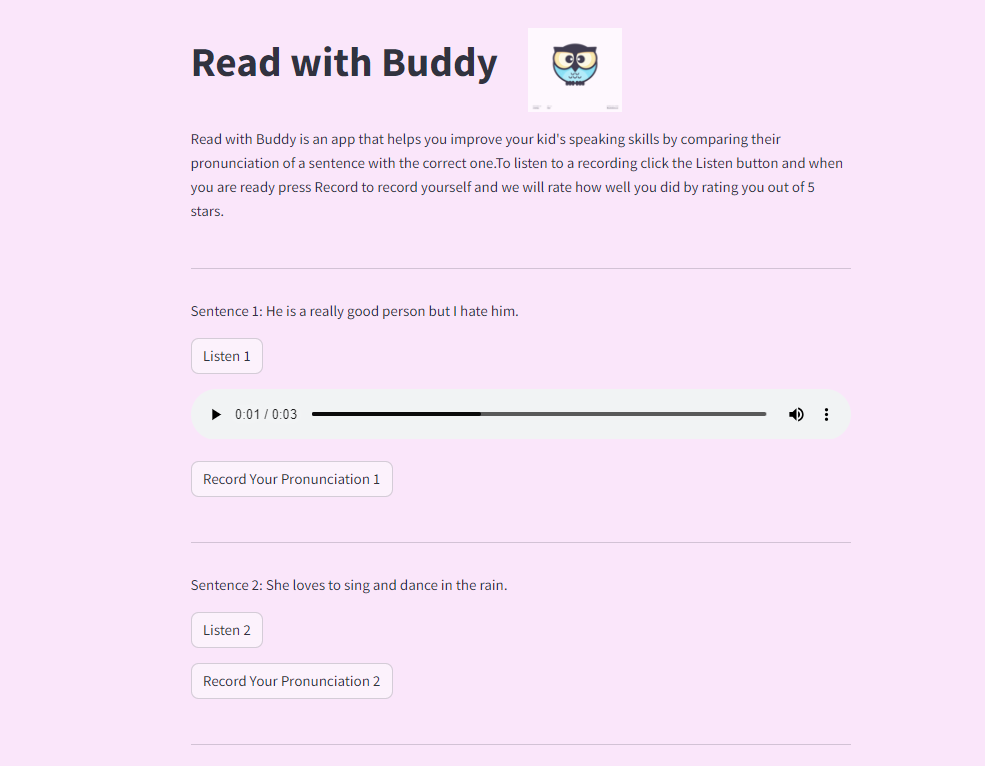
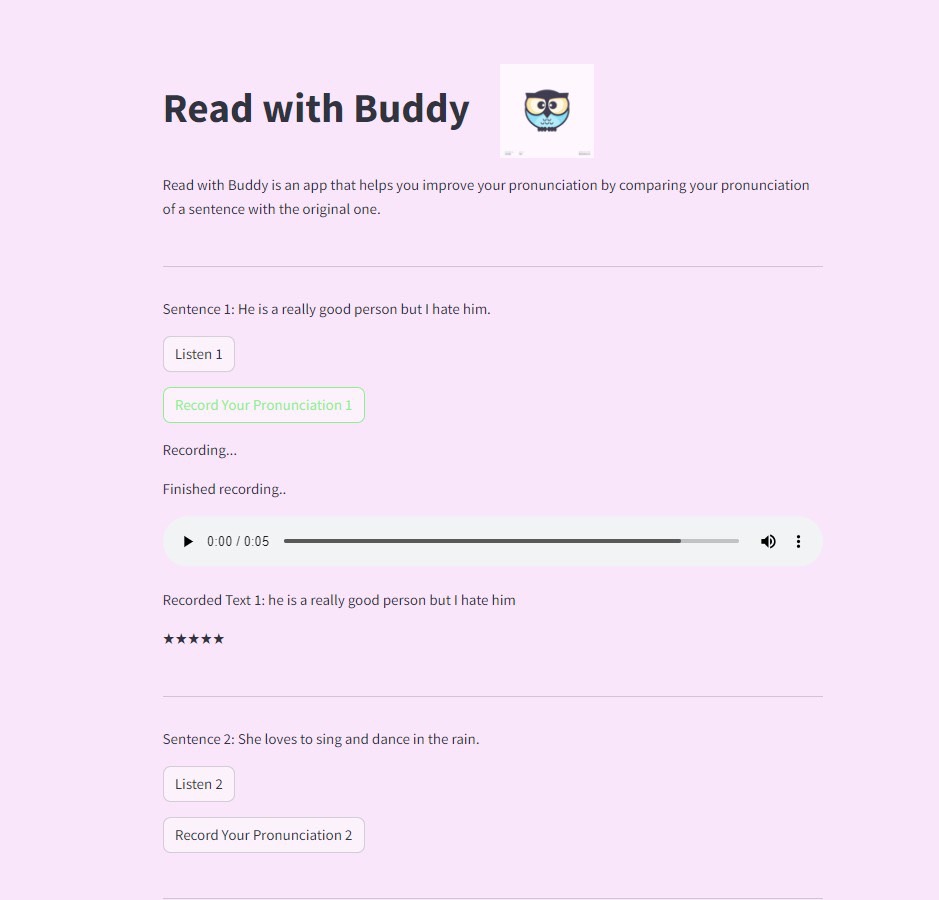
Our approach to overcoming the challenges faced by young language learners involves developing an AI-driven learning ally. Named ReadWithBuddy, this pioneering tool is designed to offer a "Customized Immersive Learning Journey," complete with support and enhancement tips. By harnessing the latest AI technology, we aim to furnish learners with a personalized and captivating route to language proficiency.
How we built it
1. Integration of Google Cloud Speech-to-Text API:
Utilized the Google Cloud Speech-to-Text API to convert spoken language into text data. Integrated the API's functionality into the Python environment to process audio inputs.
2. Implementation of pyttsx3 Library:
Incorporated the pyttsx3 library, a Python text-to-speech conversion tool. Employed pyttsx3 to generate audible output from the transcribed text data.
3. Utilization of Levenshtein Distance Metric:
Integrated the Levenshtein distance metric to assess the accuracy of pronunciation. Calculated the Levenshtein distance between the original text and the transcribed text to measure pronunciation fidelity.
4. Development of Streamlit Web Application:
Leveraged Streamlit, a Python library, to create interactive web applications directly from Python scripts. Designed the user interface to provide seamless interaction with the audio-to-text conversion functionalities.
Challenges we ran into
Initially, our challenge revolved around accurately comparing whether spoken words aligned with the teaching material. We explored various options including audio-to-audio and text-to-text comparison methods. Existing solutions such as Google Cloud Speech-to-Text API, Whisper API, and Sound Monitoring & Matching APIs were considered. However, a crucial factor is to create a comprehensive and accurate metric to measure similarity. We eventually decided to use text to text comparison for our task due to its ease of implementation and straightforward metric measurement.
We achieved a notable breakthrough by effectively integrating the Google Cloud Speech-To-Text API, ensuring smooth and comfortable speaking and recording interactions. This included addressing challenges like background noise interference affecting audio recognition and resolving issues such as temporary file overwrite pop-up interruptions, thereby enabling seamless voice recording for pronunciation assessment.
Accomplishments that we're proud of
In our demonstration of technical accomplishments, we've effectively integrated the Google Cloud Speech-To-Text API to transcribe children's speech into text format. Additionally, we've incorporated the Python text-to-speech library (pyttsx3) to audibly present the stories that we provided. We've employed the Levenshtein distance metric to evaluate pronunciation accuracy which has been giving pretty accurate results. Finally, we've utilized Streamlit to develop interactive web applications directly from Python scripts. This integration has facilitated a smooth user experience by combining audio-to-text conversion capabilities seamlessly.
What we learned
What we learned from working under intense time pressure was the ability to conceptualize and implement a viable product. Brainstorming solutions to address existing pain points proved to be both challenging and rewarding. Additionally, navigating the implementation of the Google Cloud API and handling audio data enhanced our technical competencies.
Application Feasibility
Market Potential and Growth:
Following the surge in Duolingo's stock prices, which saw a 20% increase after reporting strong earnings, there's a clear indication of the growing demand for language learning solutions. Additionally, the rise in elementary homeschooling, with statistics showing a significant increase of 10.1% between 2016-2021, highlights the need for educational tools tailored for young learners. Apps like ABCmouse.com have capitalized on this trend, becoming the No. 1 Kids Education app by revenue in the U.S. ReadWithBuddy aims to address this growing demand by offering a comprehensive language learning platform designed specifically for elementary school students.
Prospective Market Growth:
With the e-learning market projected to nearly double by 2026, there's immense growth potential for innovative educational platforms like ReadWithBuddy. The popularity of mobile language learning apps, as evidenced by the high level of awareness and usage reported in recent surveys, further underscores the demand for digital learning solutions. By leveraging the success of Chrome Extension business models and the proven effectiveness of subscription-based programs like ABCmouse.com, ReadWithBuddy aims to capture a significant share of this expanding market. Our platform will provide young learners with engaging and immersive language learning experiences, empowering them to succeed academically and linguistically.
Competitive Landscape and Unique Features:
While established players like Duolingo and Babbel dominate the online language learning market, ReadWithBuddy distinguishes itself by targeting a niche audience of elementary school students. Our platform offers a unique blend of interactive activities, personalized learning paths, and adaptive content, tailored specifically to the needs and abilities of young learners. By integrating gamification elements, progress tracking, and incentivized rewards, ReadWithBuddy provides a motivating and enjoyable learning experience for students. With a focus on improving communication and speech delivery skills, our platform fills a critical gap in the market and meets the evolving needs of homeschooling families and elementary school educators.
The success of Duolingo and the growth of elementary homeschooling emphasize the importance of demand for innovative educational solutions like ReadWithBuddy. As we continue to innovate and expand our offerings, we are poised to become a leading provider of language learning tools for elementary school students, empowering them to excel in their academic and linguistic pursuits.
The Future of ReadWithBuddy
Expansion of Content: As seen with the surge of Duolingo and its success in language learning, there's a growing demand for engaging educational platforms. However, there's a noticeable gap in the market when it comes to catering to elementary students who are just beginning their learning journey. ReadWithBuddy aims to fill this void by providing a dynamic and interactive platform tailored specifically for young learners. We're committed to expanding our content library to encompass not only language learning but also various subjects and learning areas. By offering a comprehensive homeschooling solution, we hope to pave the path for elementary learning through our app.
Community Engagement: In addition to our focus on student learning, ReadWithBuddy recognizes the importance of fostering a supportive community for parents. We plan to establish a dedicated blog section within the app, offering valuable resources, tips, and insights on homeschooling, language learning, and child development. Through curated articles, expert interviews, and user-generated content, we aim to provide parents with a platform to connect, share experiences, and exchange ideas. By nurturing this community, we seek to empower parents with the knowledge and support they need to facilitate their child's educational journey effectively.
Integration of AI: In line with the trend of personalized learning experiences facilitated by AI, ReadWithBuddy is exploring the integration of AI-driven personalized learning algorithms. This innovation will enable us to offer tailored and adaptive learning experiences that cater to the individual needs and progress of each student. One exciting feature we're working on is allowing students to read books within the app. Based on their reading level and comprehension, our AI algorithms will create a customized curriculum for them. This not only helps students track their progress but also ensures that they receive content that aligns with their abilities and interests.
Incentives and Rewards: To further incentivize student engagement, ReadWithBuddy will integrate a rewards system that students genuinely care about. Taking inspiration from popular gaming mechanics, such as unlocking levels and earning rewards, students will be motivated to earn stars by completing activities and achieving milestones. These stars can then be used to unlock additional books, characters, and customization options within the app. By incorporating incentives that resonate with young learners, we aim to foster a sense of accomplishment and motivation to continue learning.
Built With
- css
- google-web-speech-api
- python
- streamlit

Log in or sign up for Devpost to join the conversation.