-
-
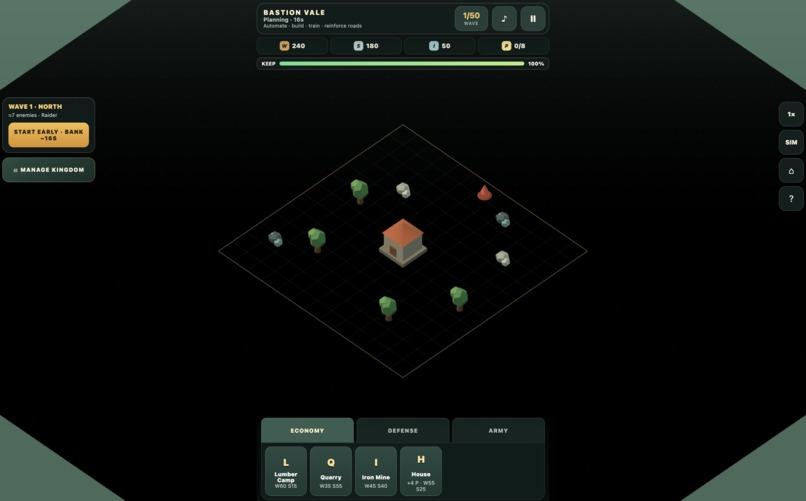
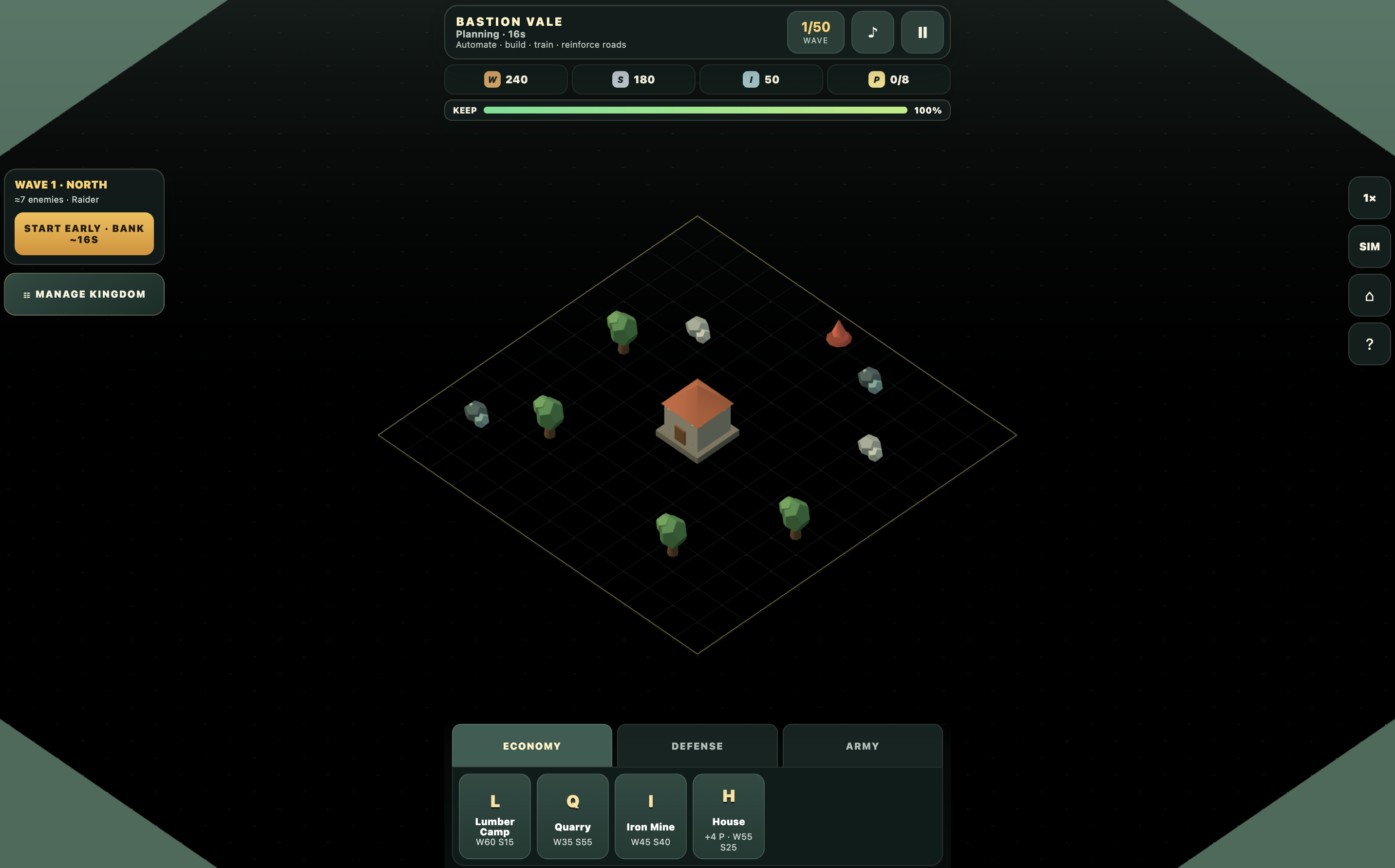
Start Small
-
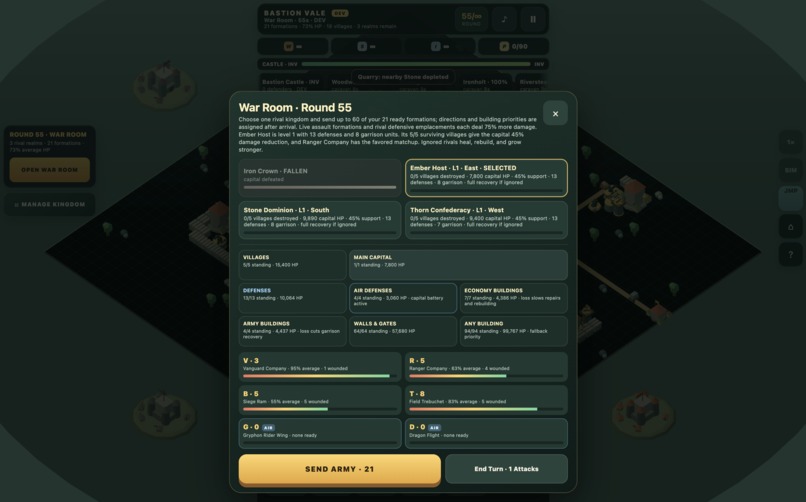
Plan your attacks
-
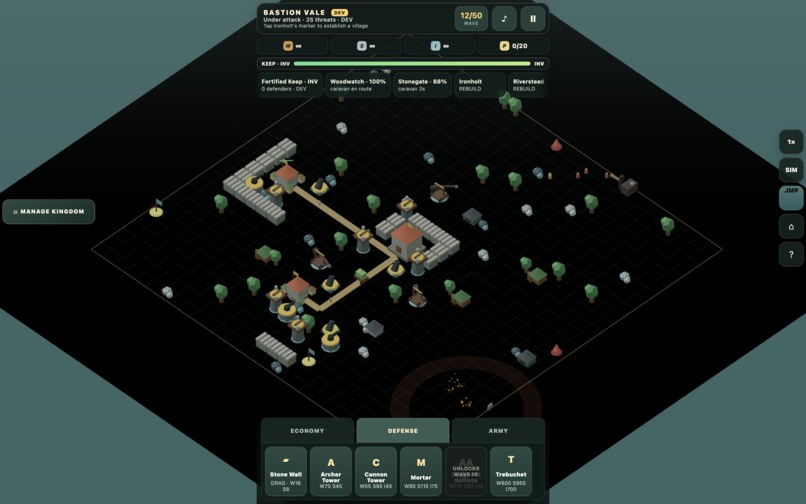
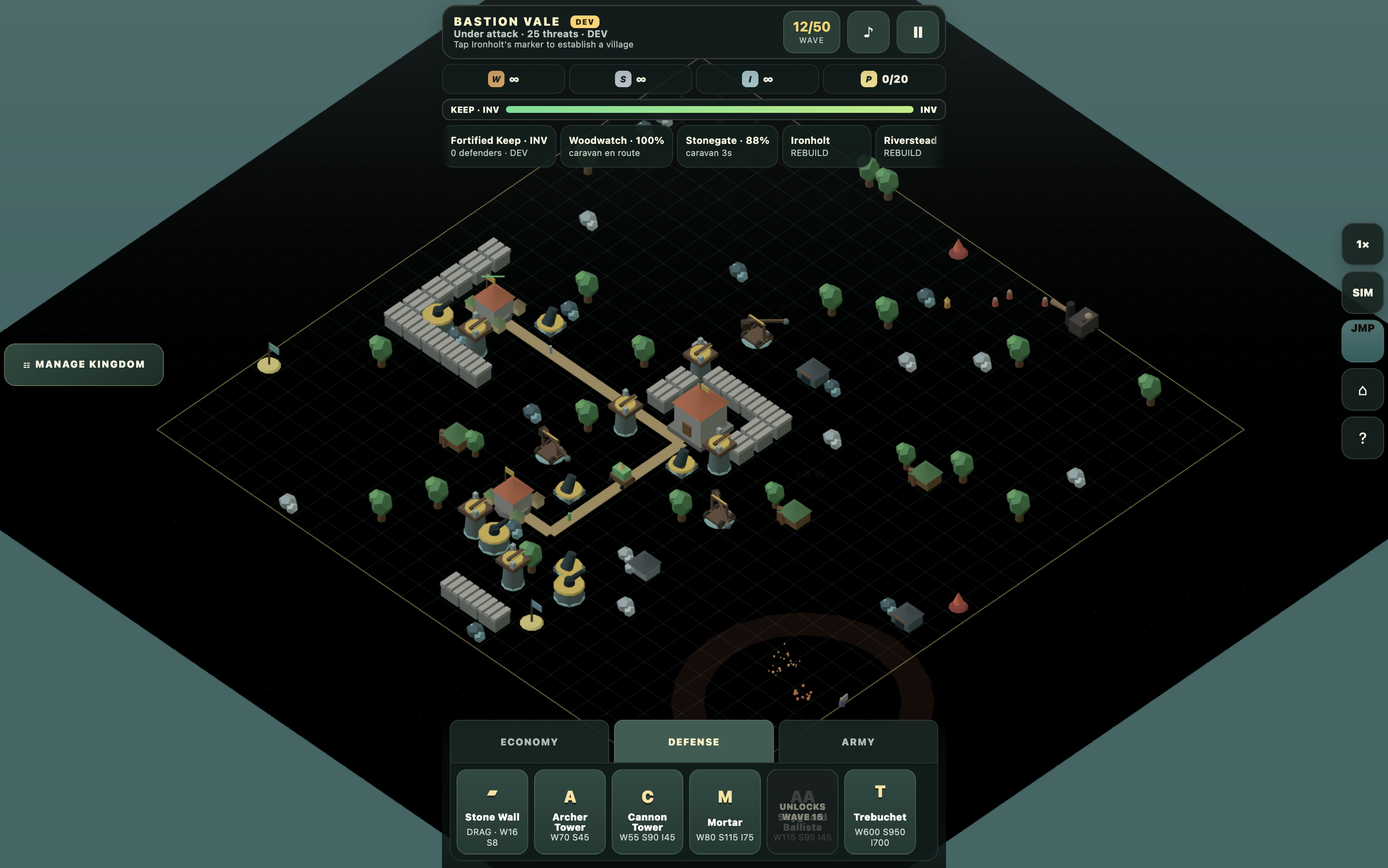
Build up your towers, villages and resources
-
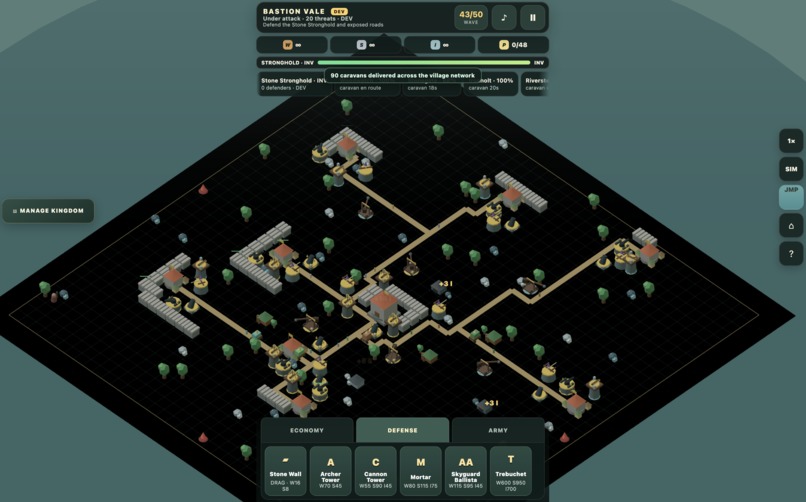
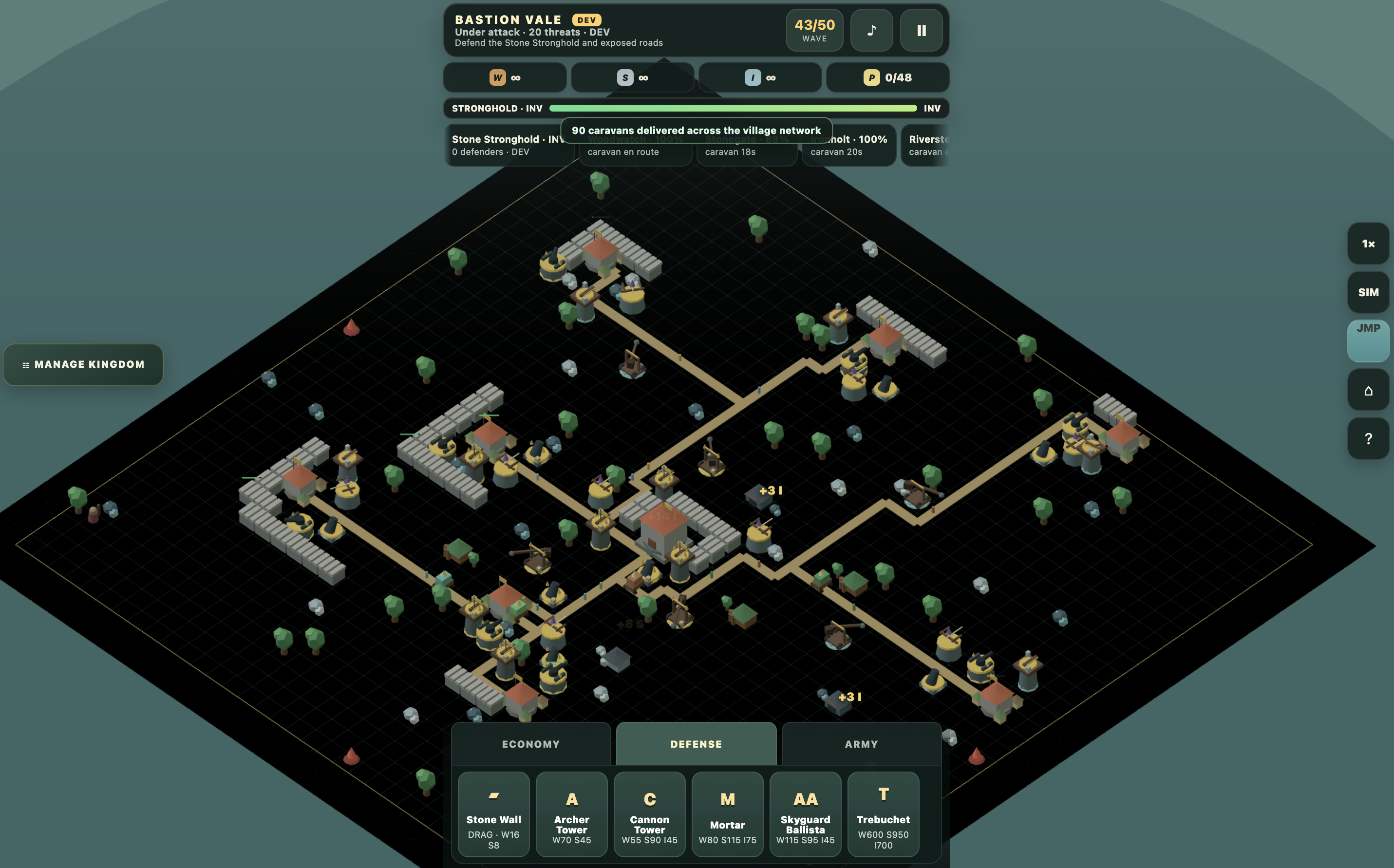
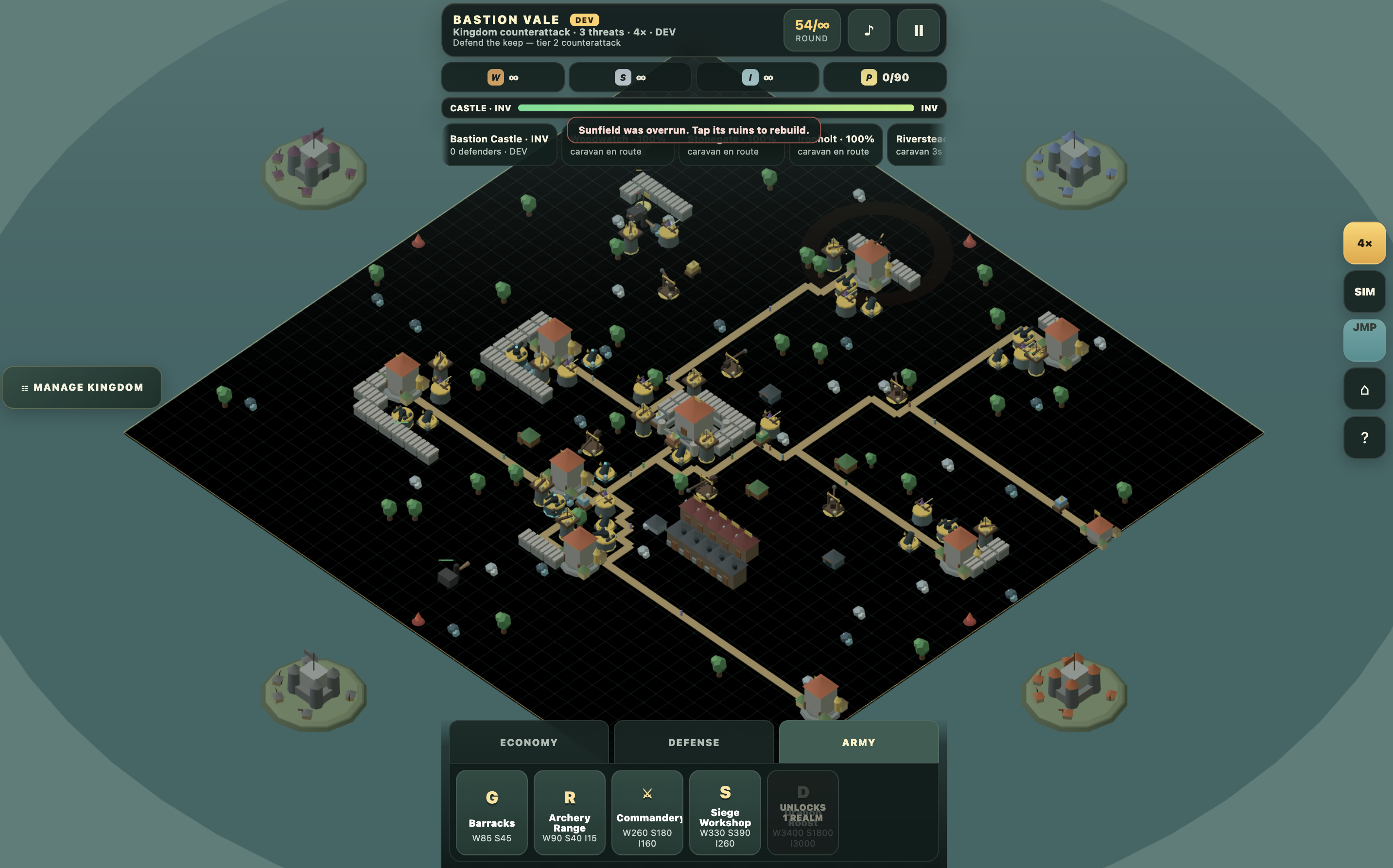
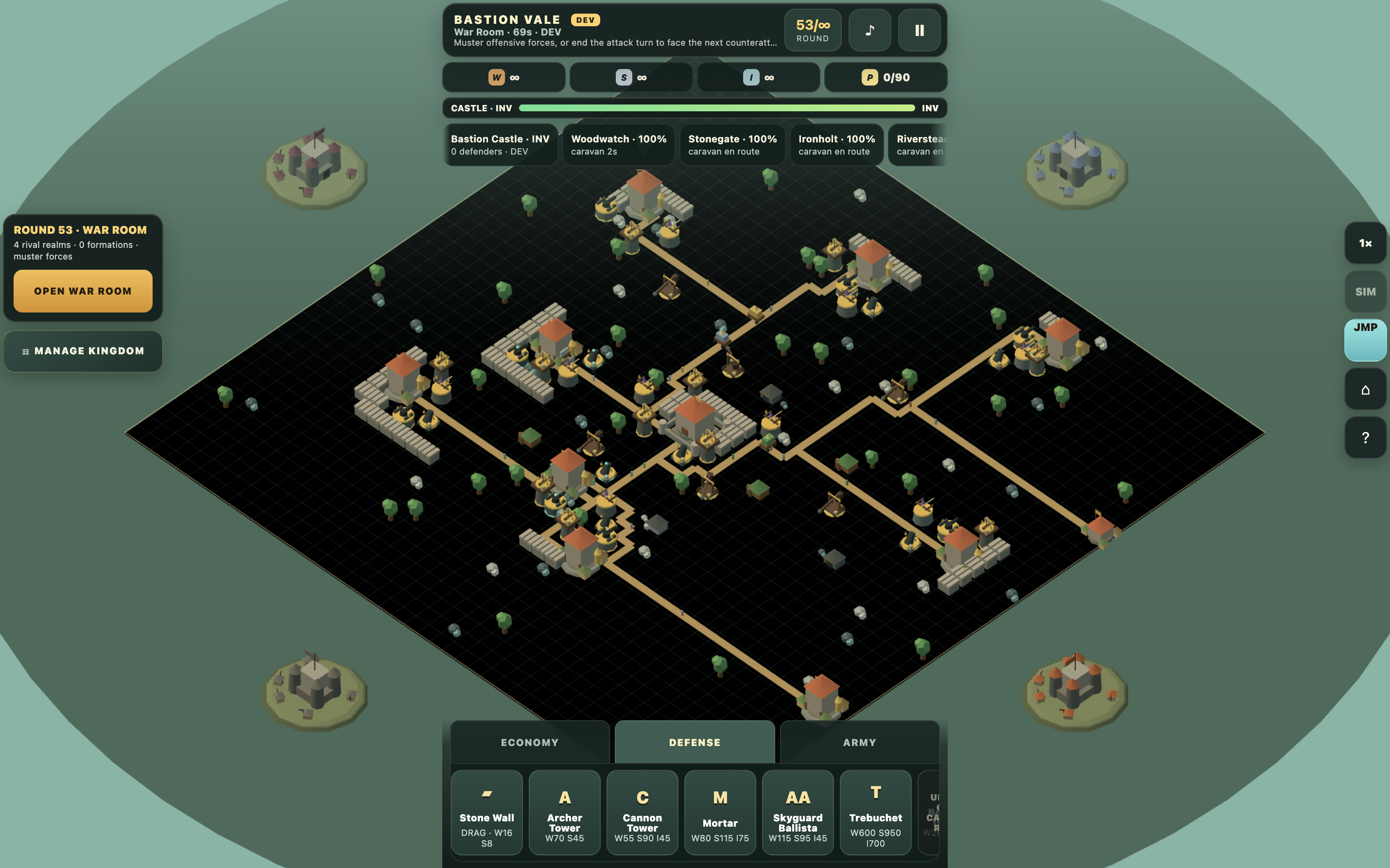
Create a large kingdom
-
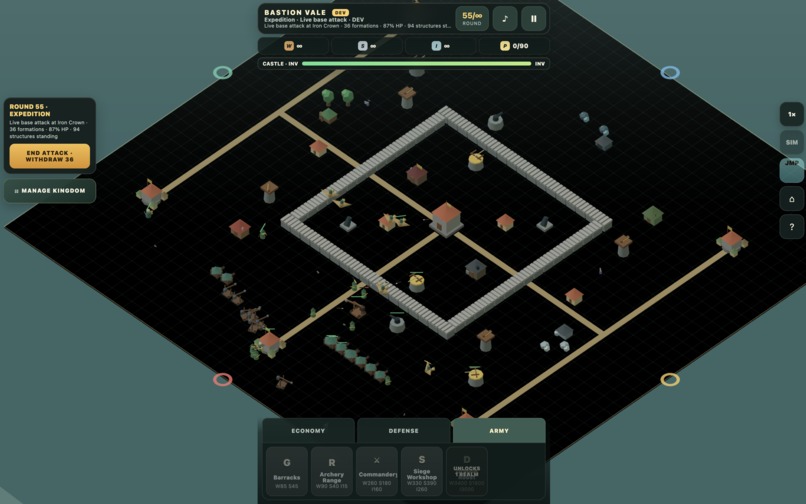
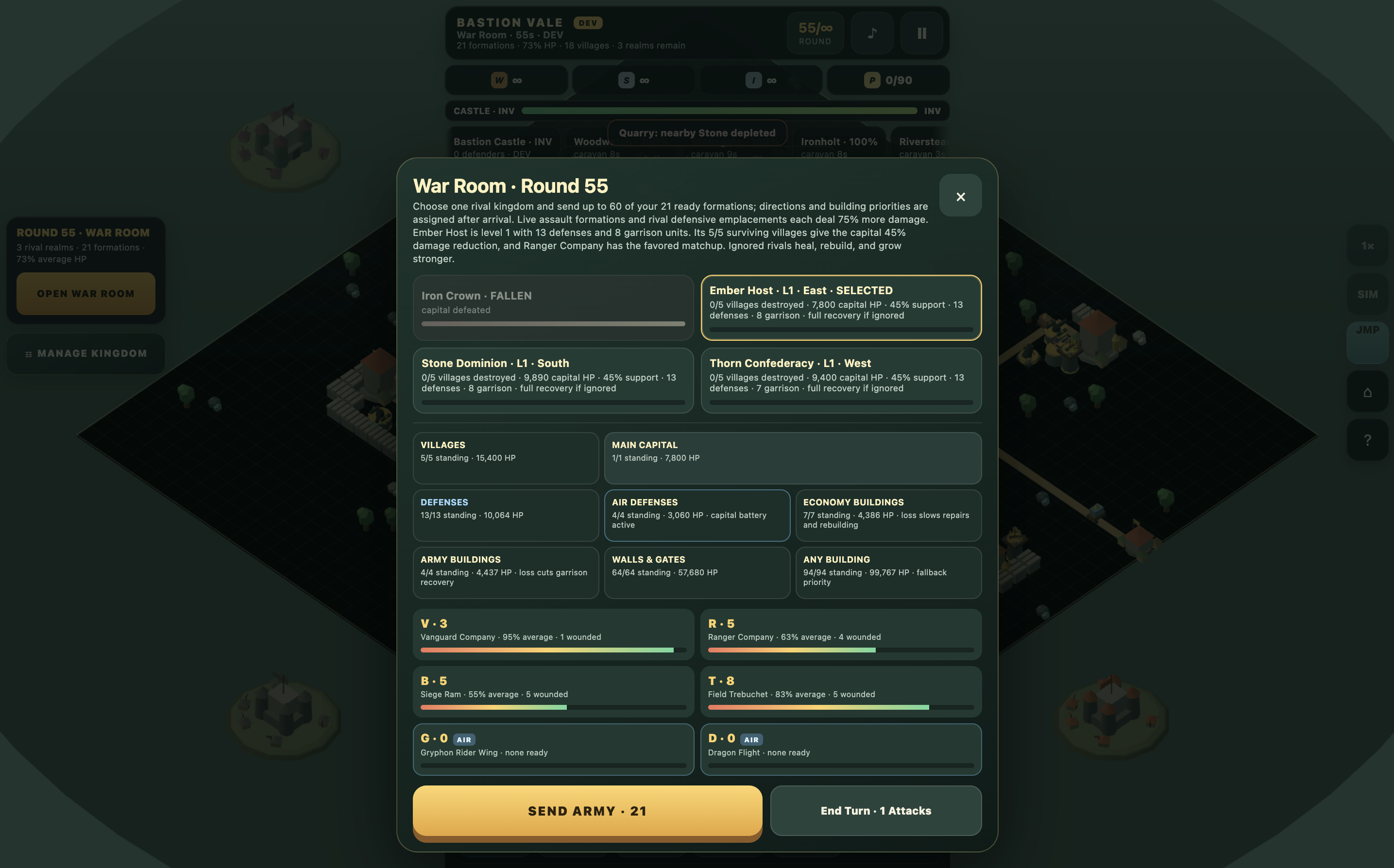
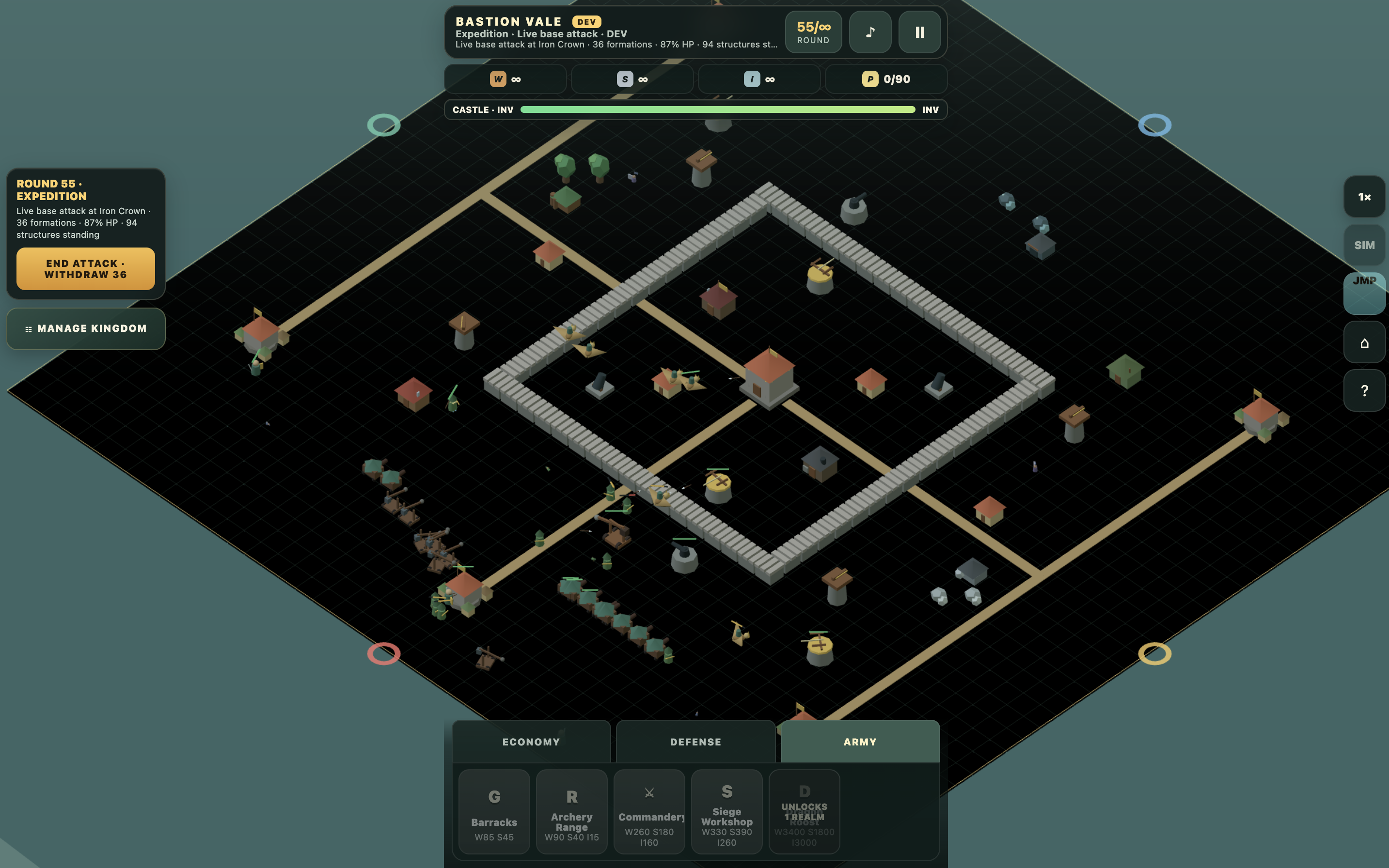
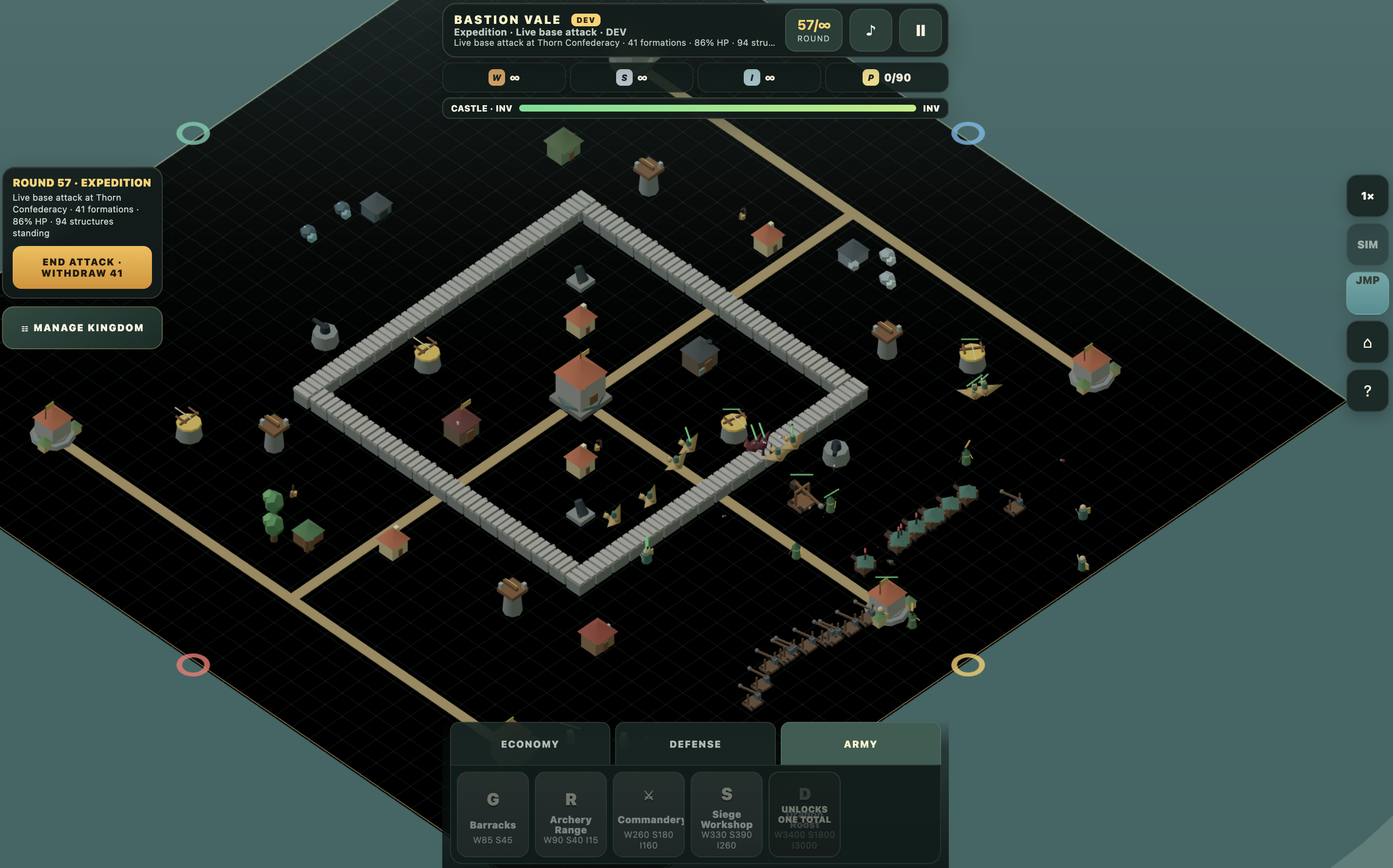
Attack the other kingdoms
-
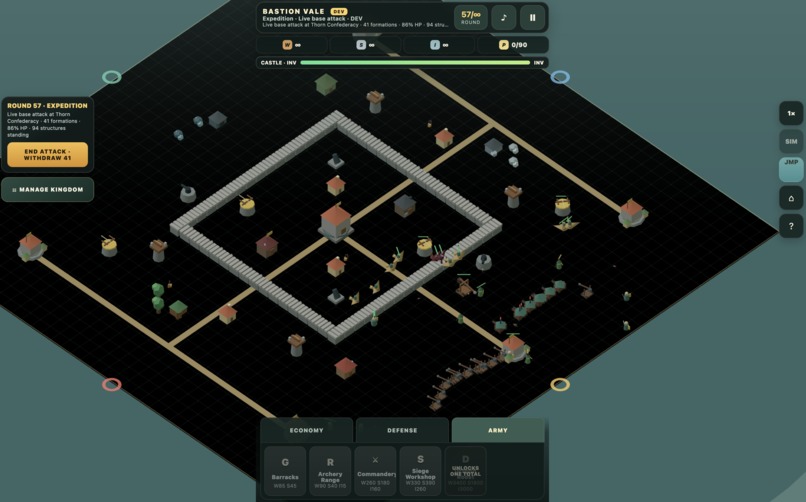
Destroy the other kingdoms to gain your victory
-
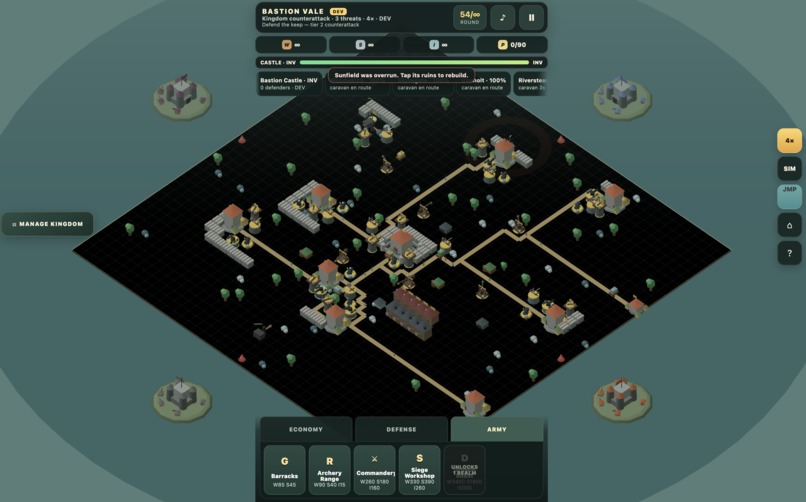
Finally see who you are defending your kingdom from
-
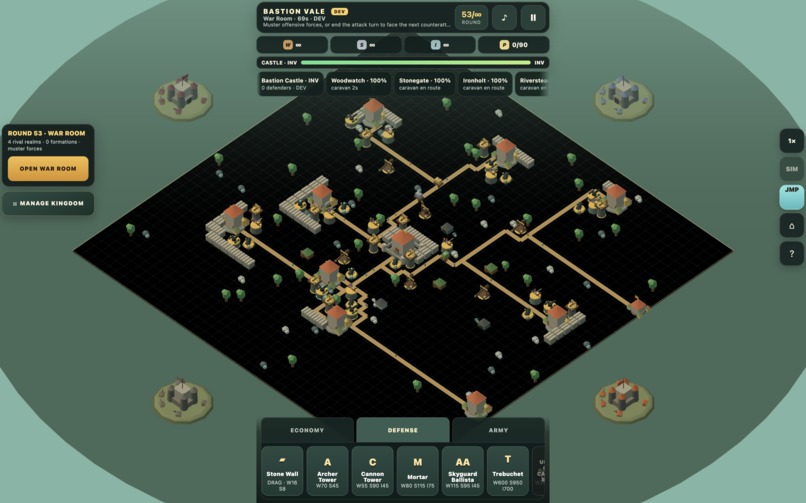
Defend your kingdom from invaders
Inspiration
I wanted to combine the satisfaction of building a thriving tower defense kingdom with the pressure of defending it, then let players turn that strength outward. The central design question became how to make growth feel both rewarding and dangerous. More settlements mean more resources, but they also mean longer supply routes and more territory to protect.
What it does
Clan Conquest is a browser tower defense strategy game where players build an economy, fortify their capital, train defenders, and survive fifty waves of increasingly dangerous enemies.
Resources move through the world in vulnerable caravans. Walls shape enemy movement, different defenses counter different threats, and expanding settlements create new strategic choices.
After wave fifty, the campaign opens into conquest. Players launch live assaults against four rival realms, choosing deployment directions and targeting priorities while continuing to defend their own capital. Destroyed enemy settlements stay destroyed, damaged economies recover more slowly, and surviving troops return with their remaining health.
Three campaigns give the experience distinct settings:
- Bastion Vale: Medieval castles, villages, and siege warfare.
- Frontline Command: A fictional wartime setting with armored formations and military defenses.
- Starfall Colony: An alien frontier with futuristic technology and extraterrestrial threats.
The game supports mobile and desktop browsers, with a self-contained download for offline play.
How we built it
I used Codex as a development partner to turn a detailed design specification into a playable game, iterating through implementation, testing, and refinement.
The project uses HTML, CSS, JavaScript, and Three.js. Procedural geometry creates the buildings, terrain, and battlefield objects, while campaign data defines each setting’s structures, enemies, units, and terminology.
A shared simulation controls combat, movement, production, and progression. Normal play and accelerated simulation follow the same rules. Local checkpoints preserve progress, and an interactive tutorial teaches the opening mechanics through a real battle.
Challenges we ran into
The hardest challenge was keeping interconnected systems consistent. Economy, upgrades, projectiles, troop movement, saves, and accelerated play all needed to agree about what was happening. Small discrepancies could create unintended healing, incorrect resource rewards, or units that failed to complete their retreat.
Another challenge was fitting a detailed strategy game onto a phone screen. Building placement, wall construction, army management, and battlefield visibility needed careful layout and interaction adjustments.
The browser testing environment also had WebGL disabled, which led to implementing a fallback renderer using the same scene geometry and game state.
Accomplishments that we're proud of
I’m especially proud of making defense and conquest meaningfully connected. The economy players build supports their armies, expansion creates vulnerabilities, and decisions in one battle affect later attacks.
The project also delivers three playable campaign settings, persistent rival bases, working tutorials, and local saves in a compact package. The submission archive, including documentation, is under 400 KB.
Validation included 54 passing engine checks and browser playtests covering tutorials, responsive controls, saved progress, and live assaults.
What we learned
This project reinforced how much strategic depth can come from interactions between understandable rules. A caravan becomes interesting because it connects production, distance, protection, and risk.
It also showed the value of teaching through action. Building a tower and surviving an actual attack makes the game’s systems easier to understand.
Working with AI reinforced the importance of precise specifications, focused iterations, and checking real behavior throughout development.
What's next for Clan Conquest
The next priority is full campaign playtesting to refine difficulty, resource pacing, and the transition into conquest. I also want to test performance on physical phones with WebGL enabled and improve battlefield feedback and accessibility.
Further expansion would focus on more distinctive enemy behaviors and tactical choices while preserving the game’s approachable controls and connected systems.

Log in or sign up for Devpost to join the conversation.