-
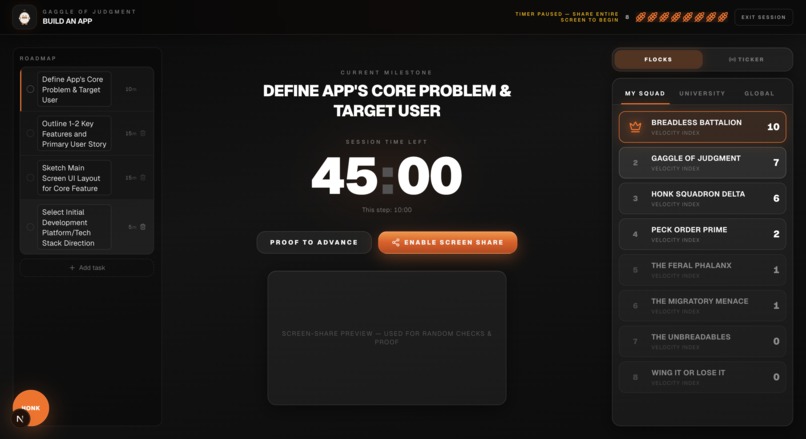
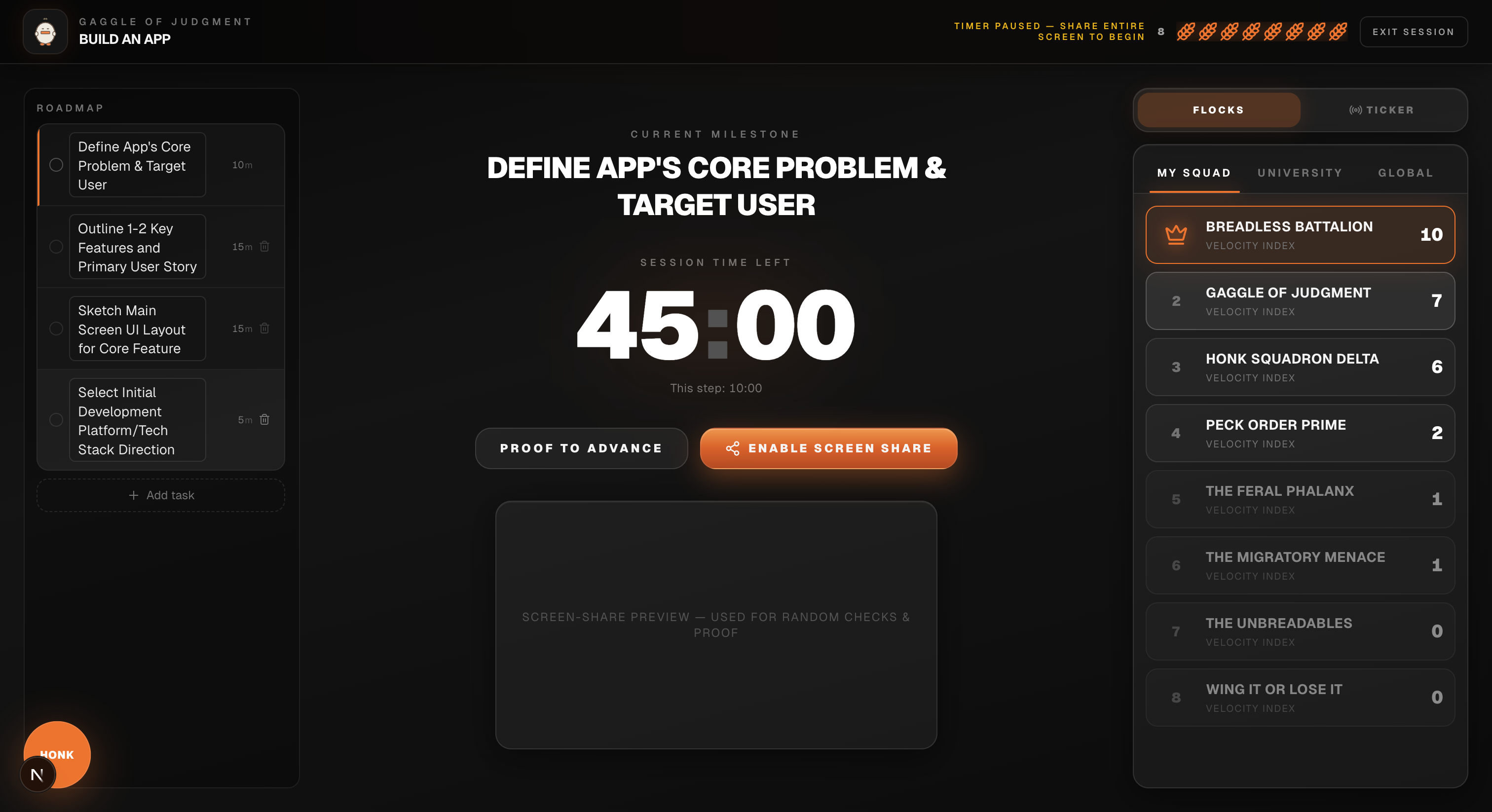
Main Session Page
-
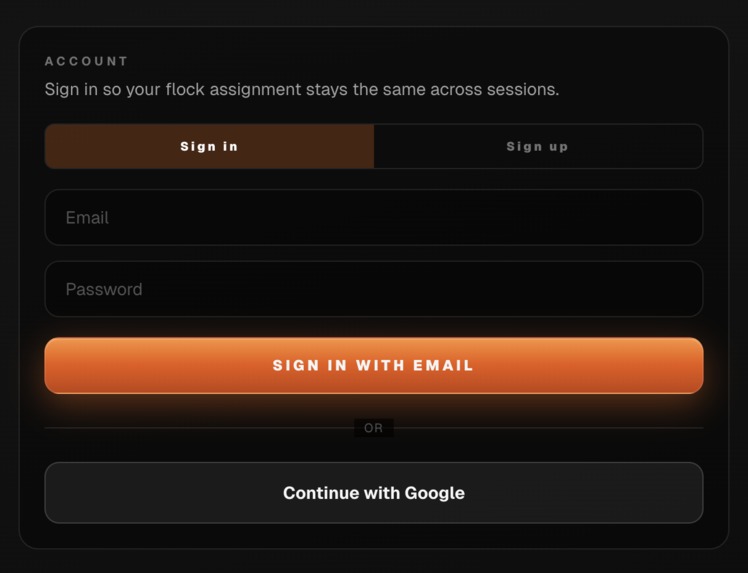
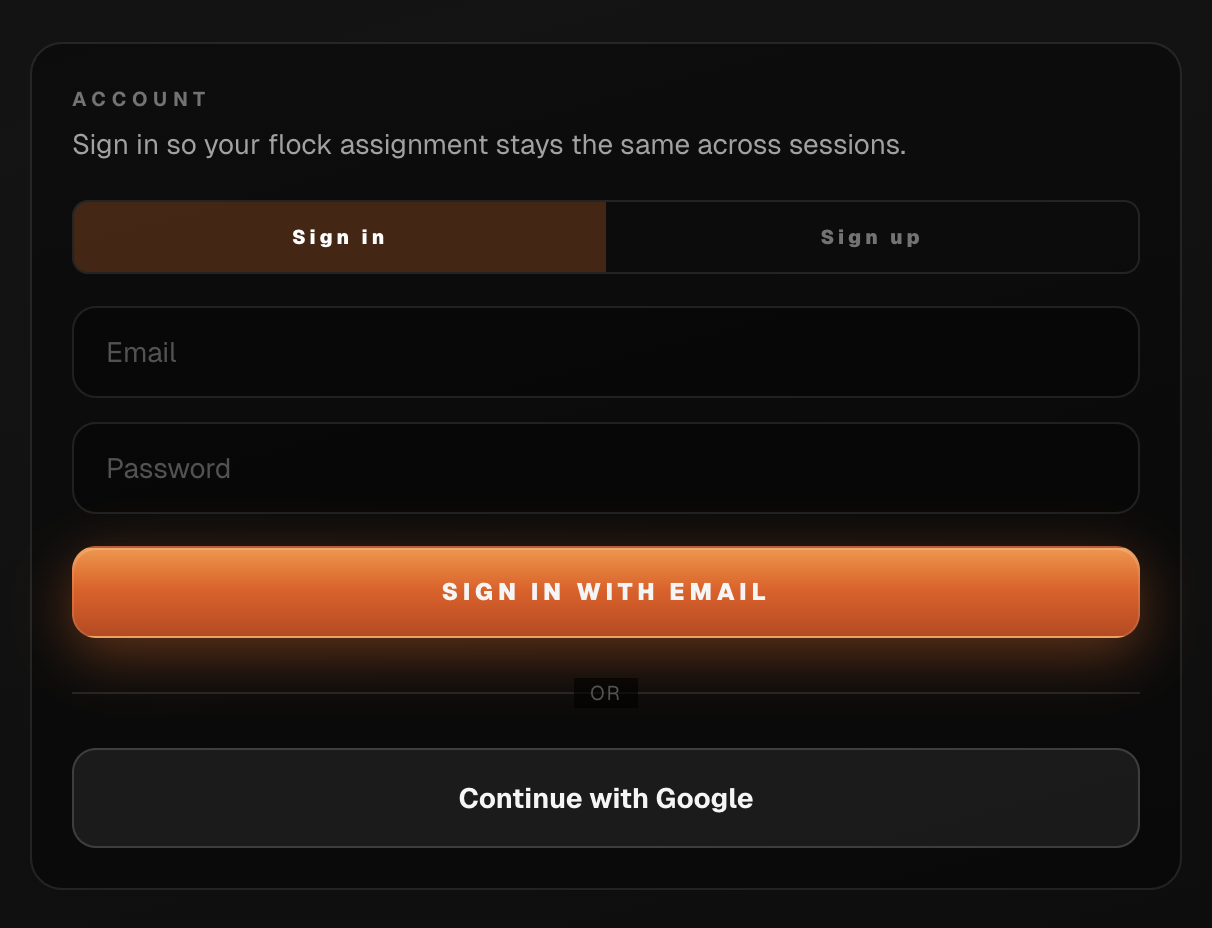
Sign-in Page
-
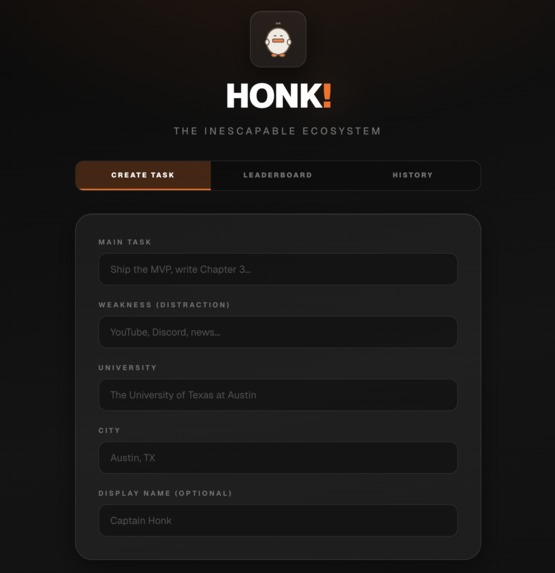
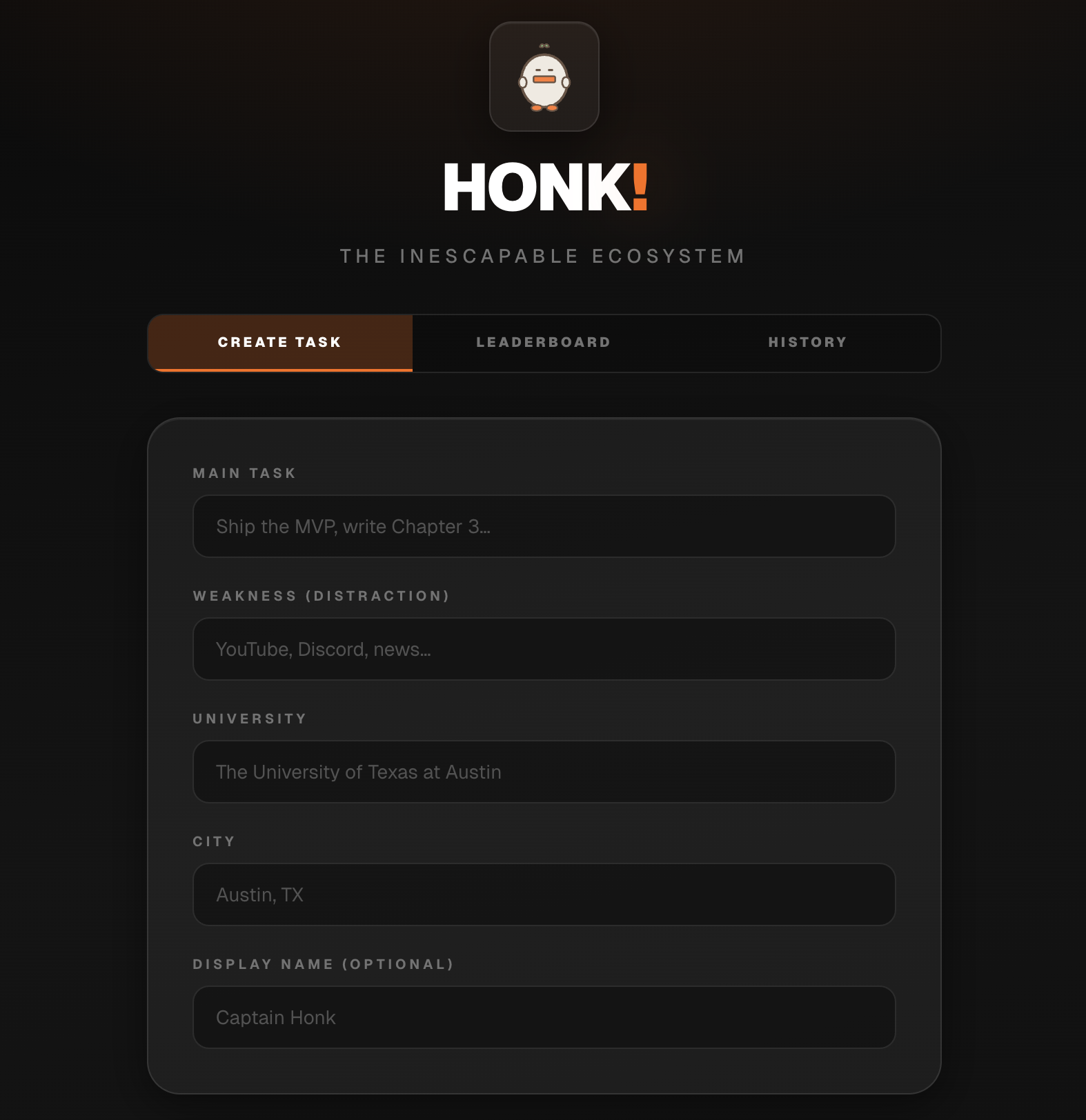
Task Creation
-
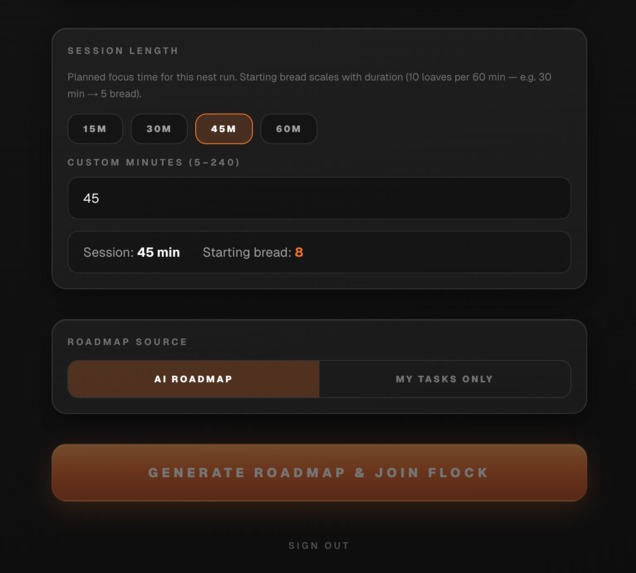
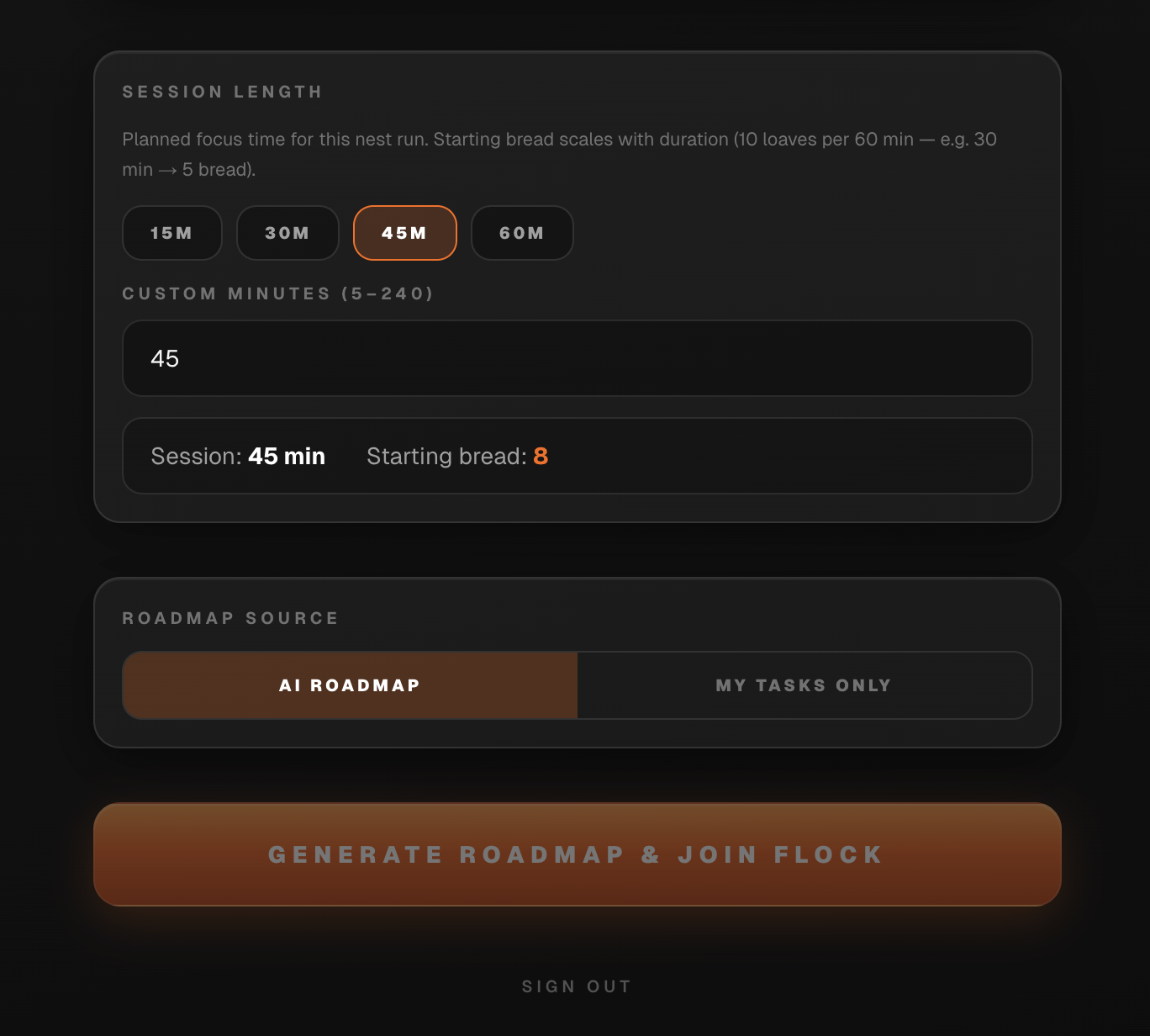
Custom time selection and Roadmap Creation
-
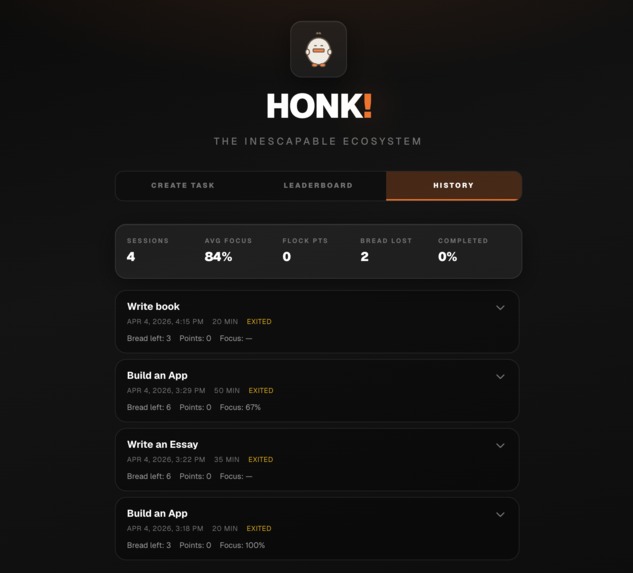
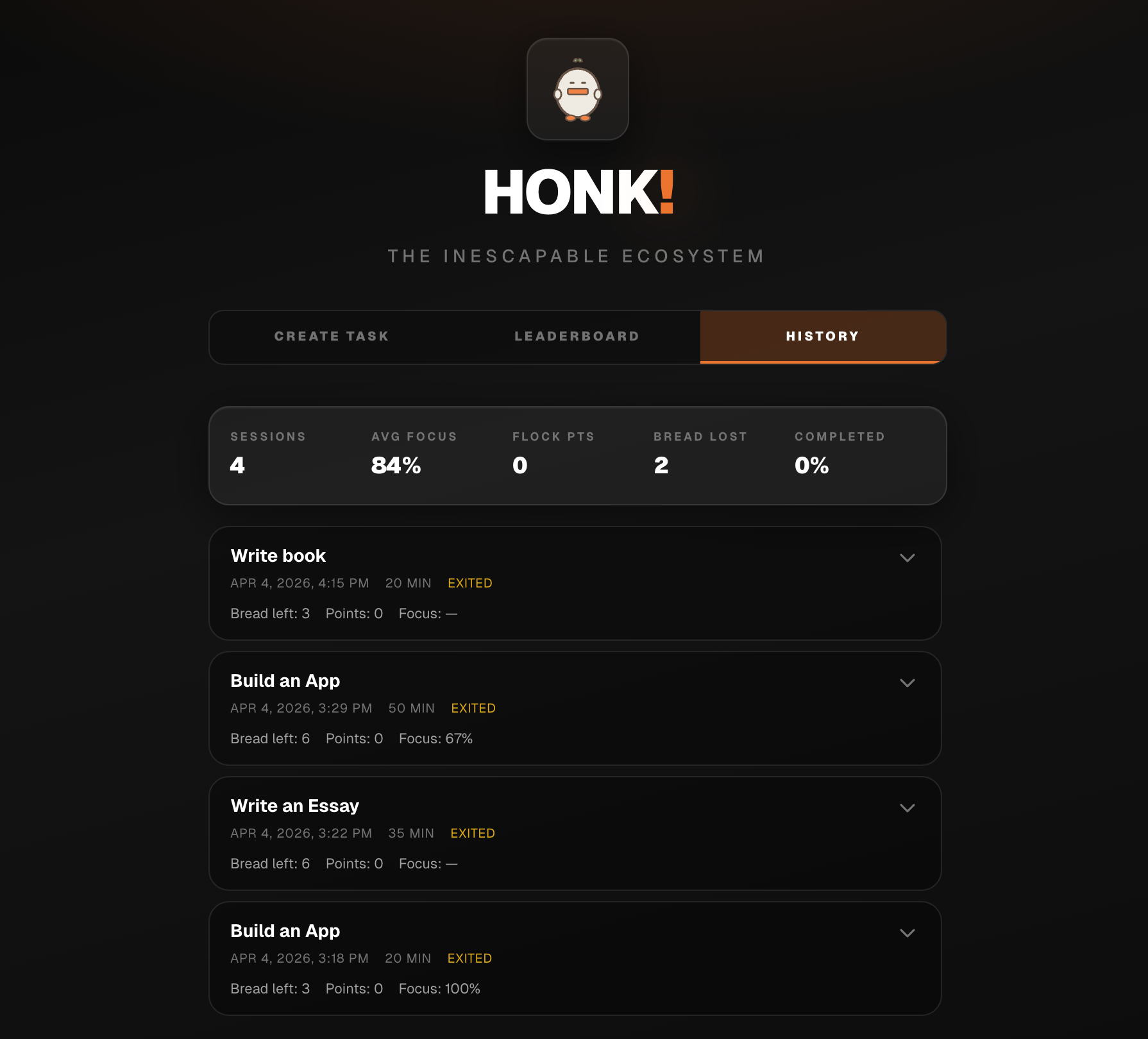
Previous Session and Feedback
-
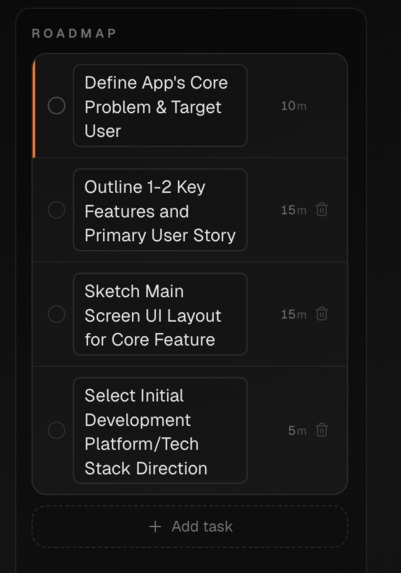
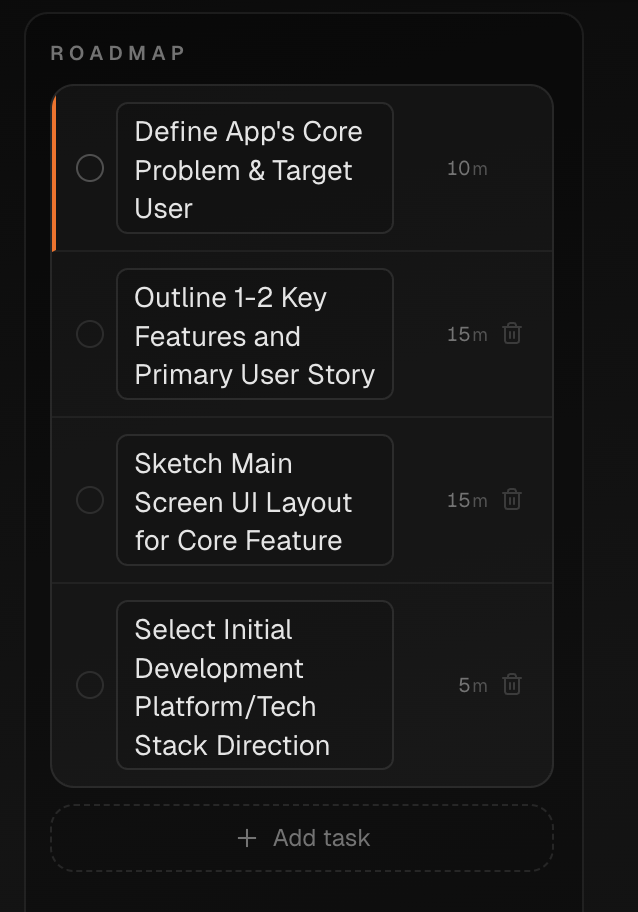
Custom roadmap / sub-tasks
-
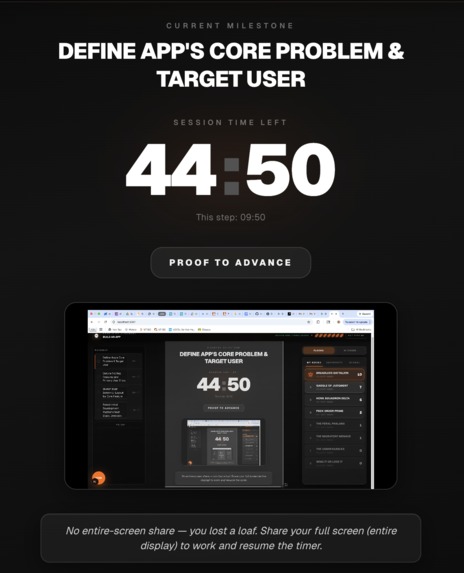
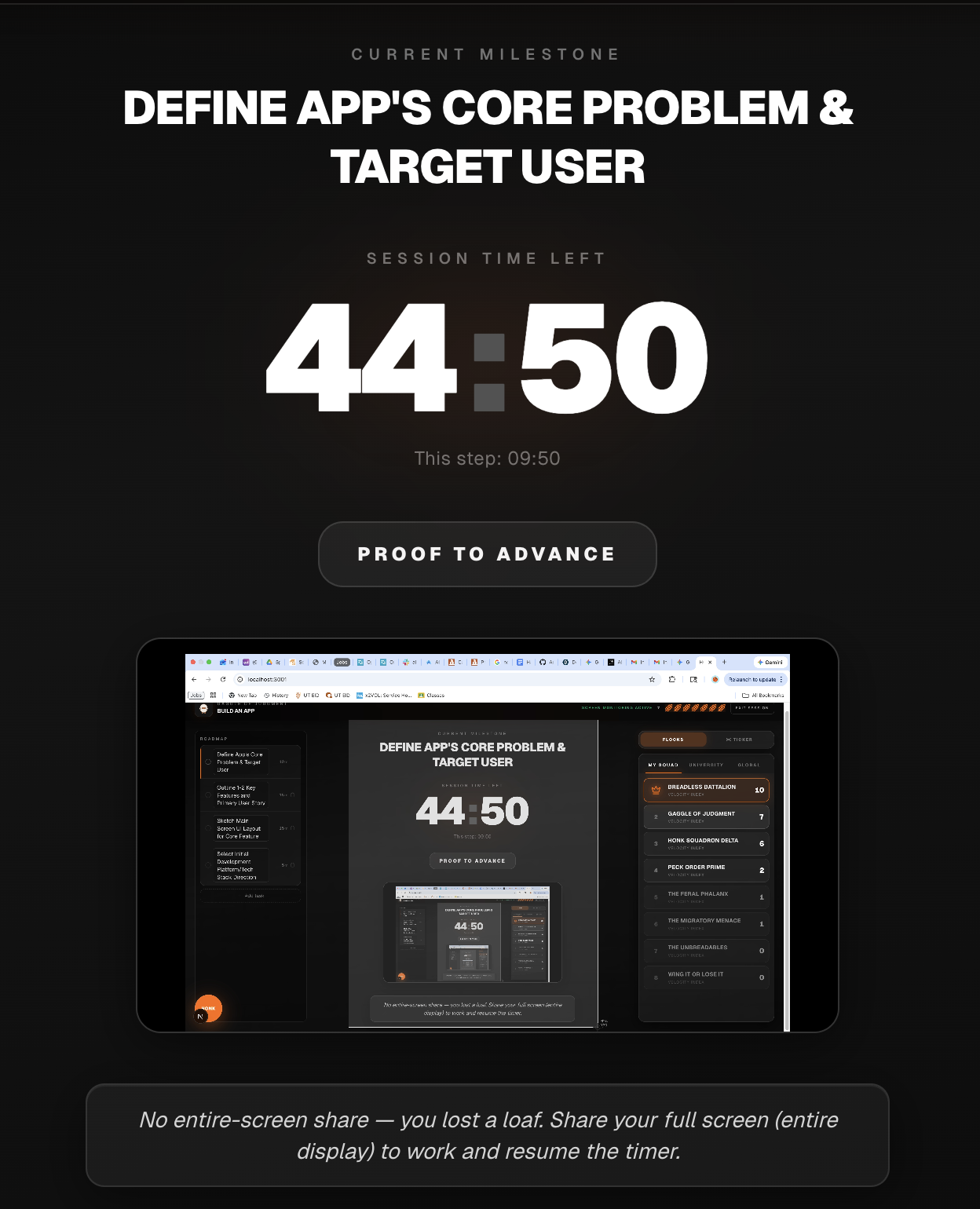
Session and Sub-Task timer
-
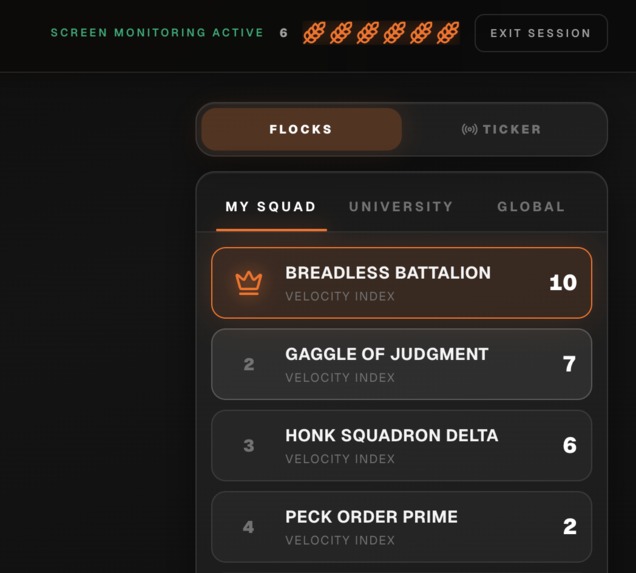
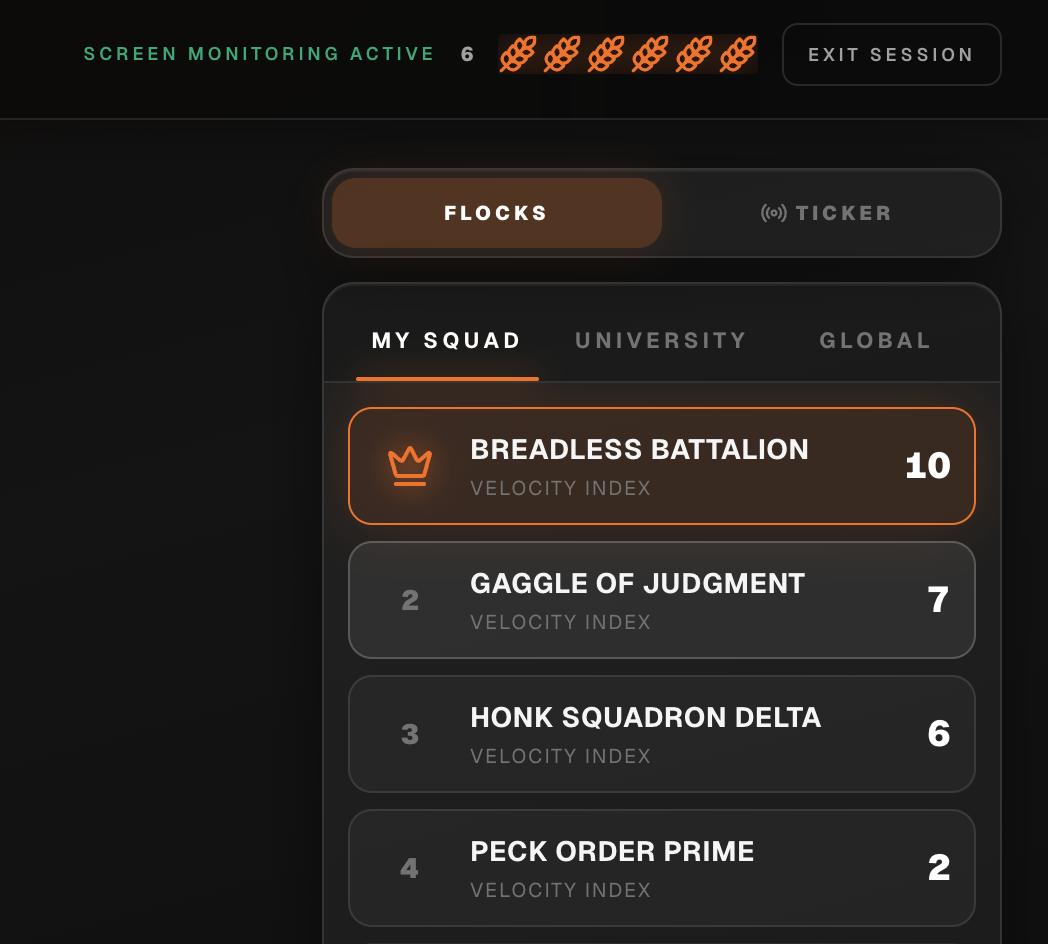
Your Flocks
-

Custom Feedback
-

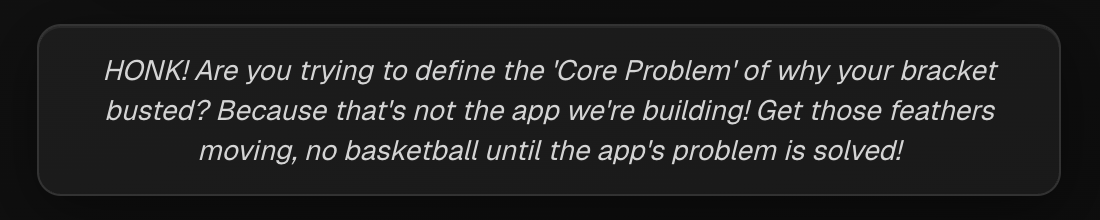
Custom Roasts
-
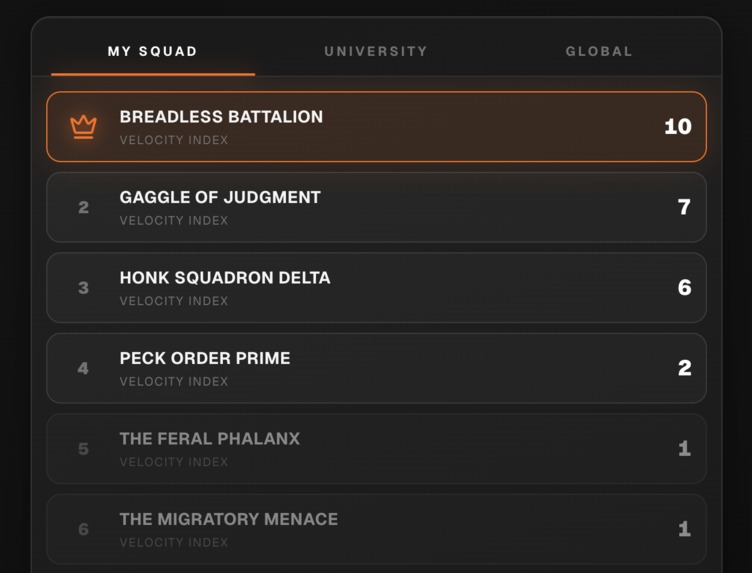
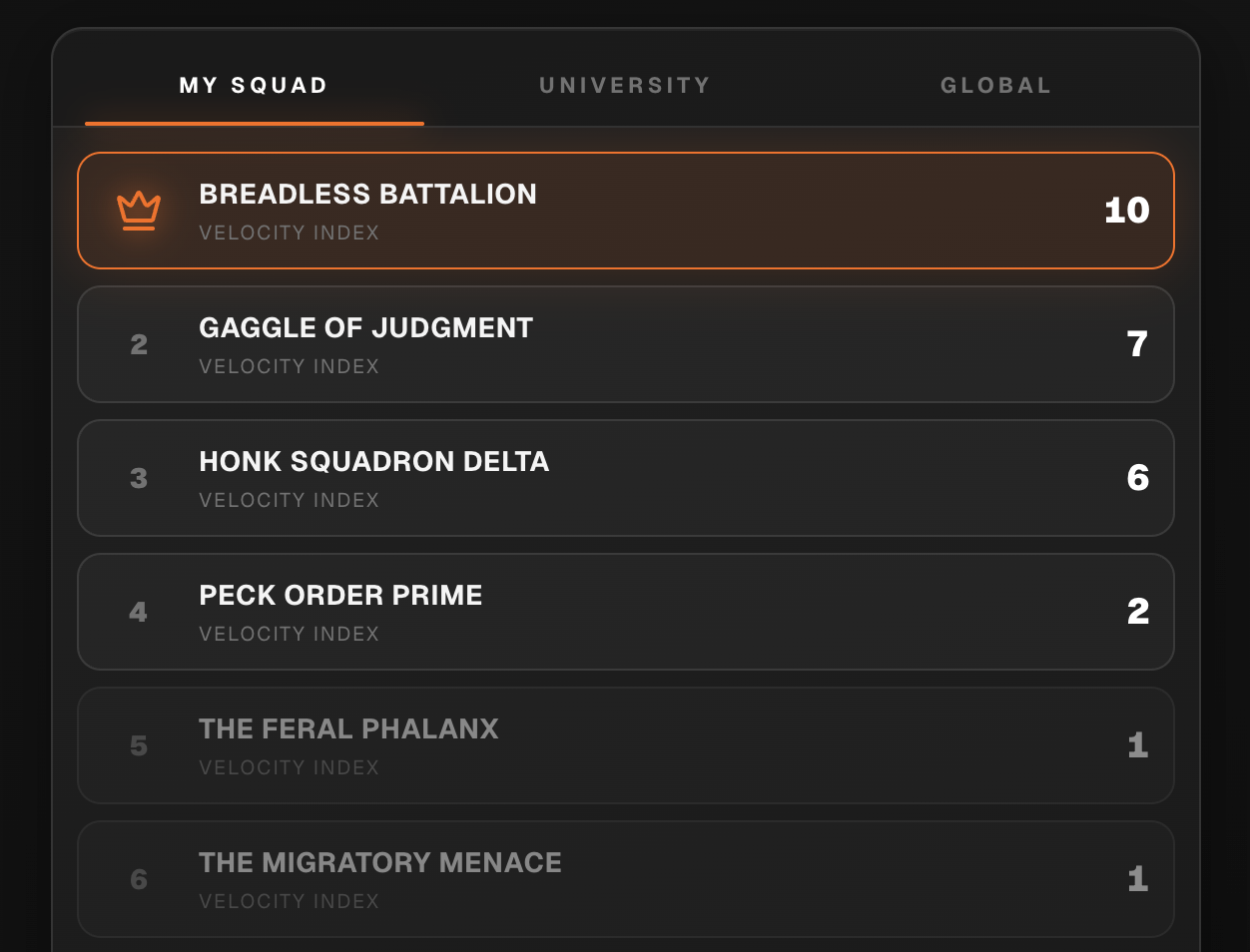
Leaderboard

Inspiration
Traditional productivity tools often rely on gentle reminders and passive tracking, but in practice, staying focused usually requires urgency and accountability. The idea for HONK came from this gap: instead of softly nudging users, what if an app actively checked your work and responded in real time? This led to the concept of a chaotic but effective “feral goose” that enforces focus through pressure, humor, and consequences.
What it does
HONK is an AI-powered accountability system that transforms productivity into an interactive experience. Users input a main task and their common distractions, and the system uses AI to break that task into a structured roadmap of subtasks. During a session, users share their screen, allowing HONK to monitor their activity using vision AI. At random intervals, the system takes screenshots of the shared screen and evaluates whether the user is actually working on their task.
If the user is productive, nothing happens. However, if the system detects distraction or off-task behavior, the user loses “bread,” which represents their lives, and receives a humorous but aggressive roast from the goose. At the end of each subtask, users must submit proof in the form of a screenshot, which is also analyzed by AI before allowing them to proceed. The number of bread remaining at the end of the session determines how many points are added to their team’s leaderboard.
How we built it
We built HONK using a modern full-stack architecture. The frontend is developed with Next.js (App Router), styled using Tailwind CSS, and enhanced with Framer Motion for smooth animations and interactions. On the backend, we used Firebase, specifically Firestore for data storage and Firebase Auth for user authentication and persistent accounts.
The core intelligence of the app comes from Google Gemini, which is used for multiple tasks: generating subtasks from a user’s main goal, analyzing screenshots for productivity using vision capabilities, and validating proof submissions. Screen monitoring is implemented using the browser’s getDisplayMedia() API, where screenshots are taken at random times and sent to the AI for evaluation. A randomized scheduling system ensures that checks are unpredictable, preventing users from gaming the system.
Challenges we ran into
One of the biggest challenges was working with Firebase, especially handling Firestore writes and ensuring data like leaderboard scores and session history persisted correctly. We also ran into frequent issues with the Gemini API, including inconsistent responses, formatting problems, and handling errors when parsing outputs.
Another major challenge was organizing the overall system. The app involves many moving parts, timers, screen sharing, AI calls, task state, and proof submission, and making all of these work together cleanly without bugs or conflicts required careful structuring and debugging.
Accomplishments that we're proud of
We are most proud of creating a system that goes beyond traditional productivity tools by actively integrating AI into the user’s workflow. HONK doesn’t just suggest what to do, it monitors, evaluates, and responds in real time. The integration of vision AI into a live productivity loop is a significant technical achievement, as is the gamified “bread” system that adds stakes and engagement.
We also built a persistent flock-based leaderboard system that encourages competition and accountability. Overall, the product feels unique, memorable, and highly demoable, combining humor with real utility in a way that stands out from typical productivity apps.
What we learned
Through this project, we learned that AI becomes far more powerful when it is embedded directly into user workflows rather than used passively. Vision-based feedback, while challenging to implement, adds a level of accountability that traditional tools cannot match. We also learned the importance of managing asynchronous systems carefully, especially when dealing with timers, real-time monitoring, and external API calls.
From a product perspective, we saw how simple game mechanics, like lives and penalties, can significantly increase user engagement. We also learned that strong feedback loops, both visual and behavioral, are essential for maintaining user focus and motivation.
What's next for HONK!
Looking forward, we plan to improve the accuracy and intelligence of the productivity evaluation system by refining how AI interprets context. We also want to introduce more personalization, such as customizable coaching styles and adaptive difficulty based on user behavior.
Expanding HONK into a mobile application is another key goal, allowing users to bring this level of accountability into more environments. We are also interested in adding team-based features, such as collaborative flocks and competitions, as well as deeper analytics to help users understand their focus patterns over time.
Ultimately, HONK aims to redefine productivity by making it something users actively experience rather than passively track.
Built With
- css
- express.js
- firebase
- firestore
- gemini
- javascript
- json
- next.js
- node.js
- npm
- react
- shell
- typescript
- vercel

Log in or sign up for Devpost to join the conversation.