-
-
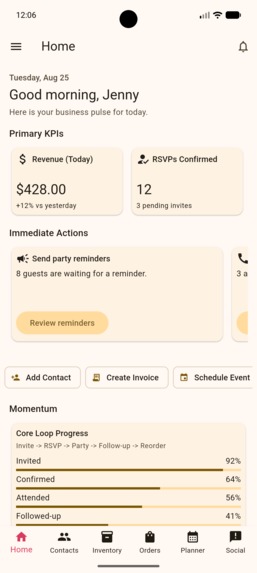
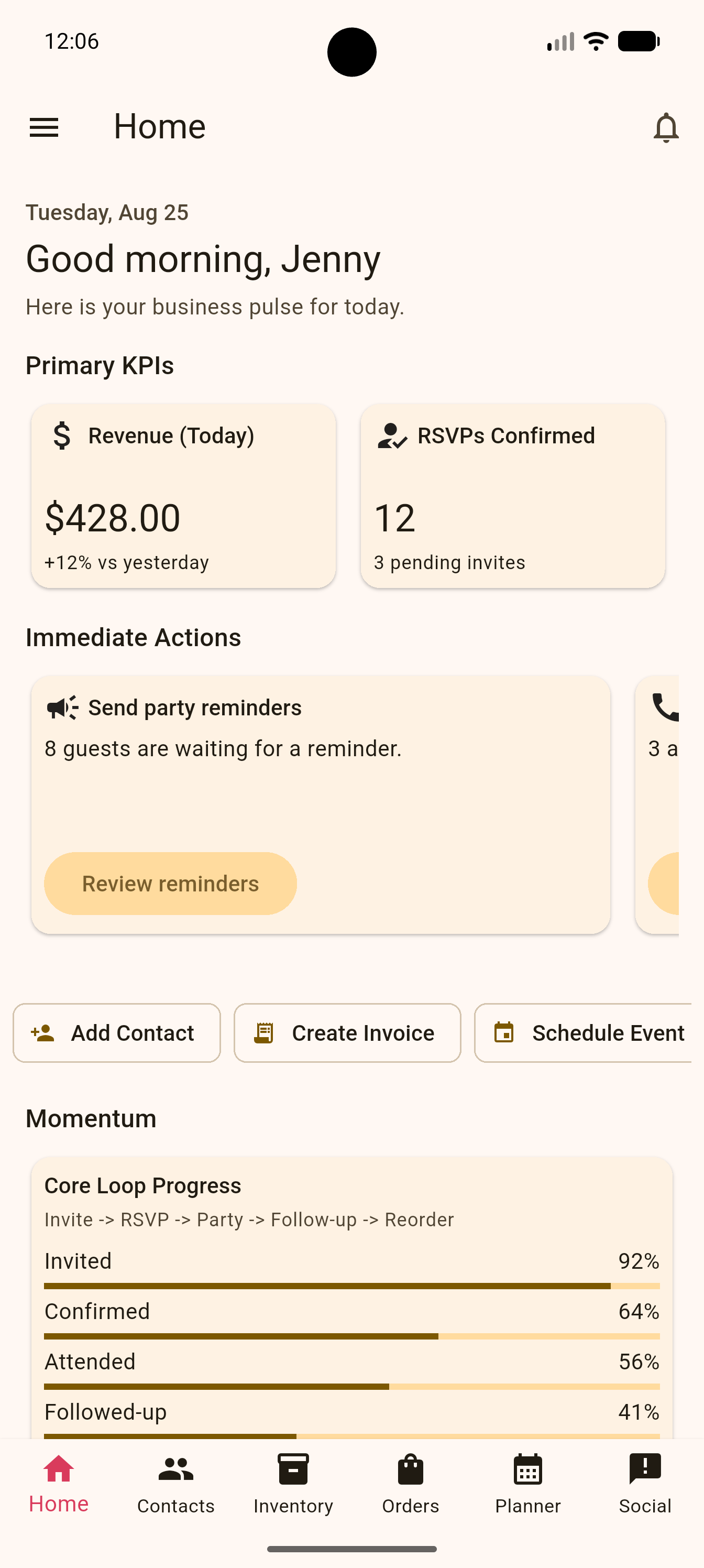
Landing Dashboard
-
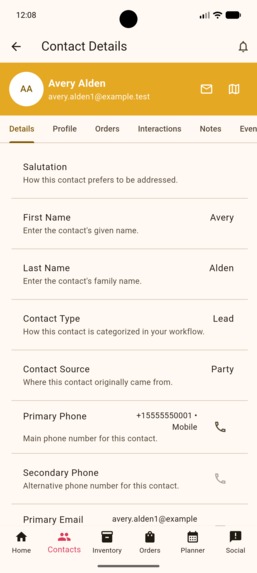
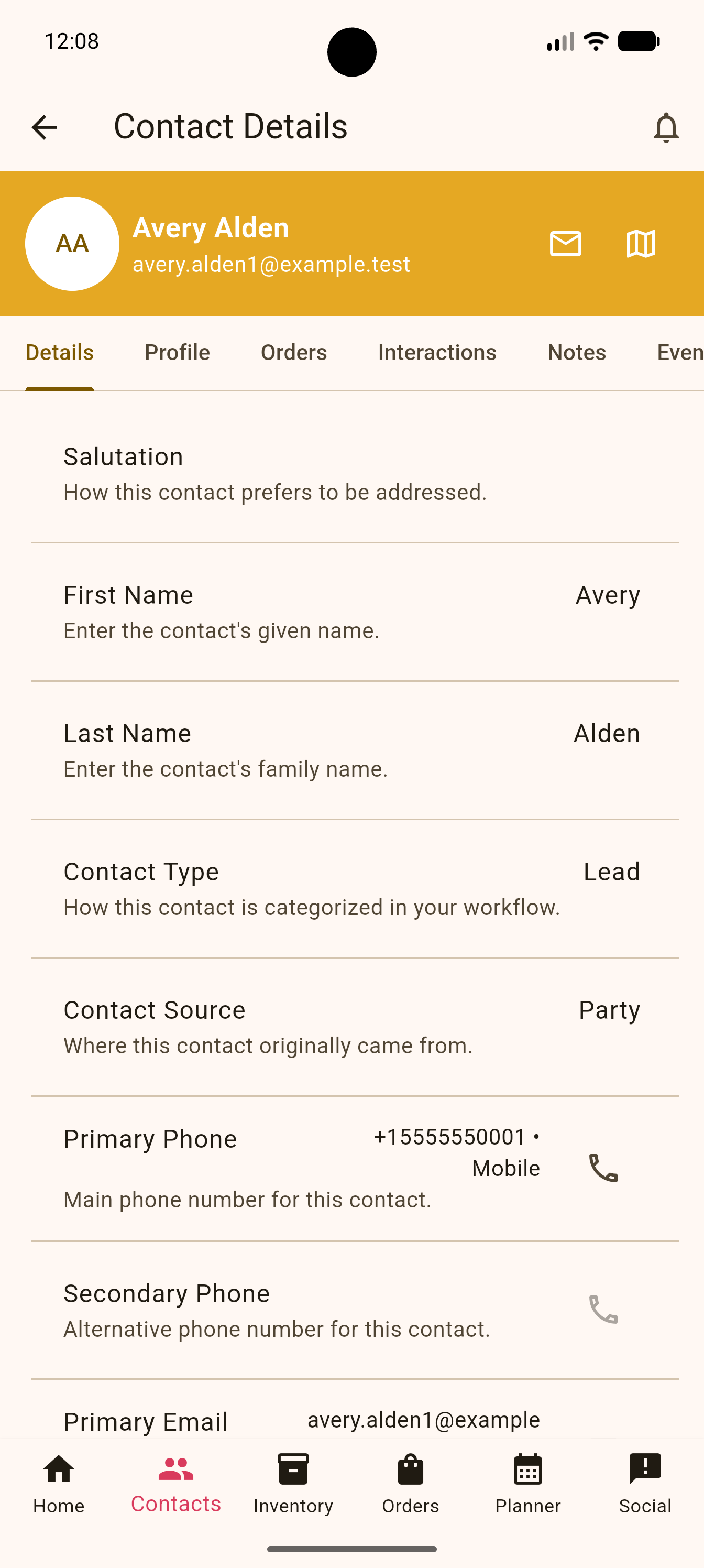
Contact Details
-


Inspiration
HoneyFlow started by watching my wife run her Mary Kay business.
She is an independent consultant running a real small business, but the tools available to her were fragmented across different systems. Customer information lived in one place; follow-ups, somewhere else; inventory had to be tracked; parties had to be managed; orders needed attention; marketing happened across multiple channels; and important details could easily end up in spreadsheets, notes, texts, or simply in her head.
The more we talked with other consultants, the clearer it became that this was not unique to her. Her peers were running into many of the same problems.
These are entrepreneurs who are great at building relationships and serving their customers. They should not have to spend so much time stitching together software just to operate and grow their businesses.
That created the urgency behind HoneyFlow.
We wanted to build a better way, not another generic CRM that consultants would have to adapt to their businesses, but a mobile-first vertical SaaS growth platform designed around the way they actually work.
What it does
HoneyFlow is a mobile-first vertical SaaS growth platform built for independent Mary Kay consultants.
It brings the day-to-day pieces of running and growing a consultant business into one connected platform.
HoneyFlow helps consultants manage customer relationships and history, leads, follow-ups, parties and hostesses, inventory, orders, communications, business activity, financial visibility, marketing, and other workflows that would otherwise be spread across multiple tools.
Because relationship building is at the center of this business, HoneyFlow is designed to help consultants understand who needs their attention and what they should do next. Instead of simply storing data, we want the platform to help turn that data into action.
We are also building tools that help consultants grow their presence outside of HoneyFlow. That includes social media scheduling and posting as well as public mini-sites where consultants can establish their personal brand, publish content, connect their unique Mary Kay shopping experience, use their own domain, and create a professional destination they can share with customers and prospects.
The goal is not to replace Mary Kay's commerce infrastructure. HoneyFlow complements it by providing the business growth layer around it.
Ultimately, HoneyFlow is about giving an independent consultant one place to understand her business, manage her relationships, stay organized, and grow.
How we built it
We approached HoneyFlow as a true multi-tenant SaaS product rather than a collection of disconnected business tools; however, speed was important.
The platform is mobile-first because consultants rarely run their businesses sitting behind a desk. They are meeting customers, hosting parties, checking inventory, following up with leads, delivering products, and managing their businesses throughout the day. The experience has to work wherever they are.
Underneath that experience is a multi-tenant architecture that keeps each consultant's business data isolated while allowing us to continuously improve and expand the platform for everyone.
We designed the product around business domains such as customers, leads, follow-ups, parties, inventory, orders, communications, financials, marketing, and publishing. Those domains can work together instead of becoming separate data silos.
RevenueCat gives us a clean foundation for managing subscriptions and product entitlements. We can define which capabilities a consultant has access to based on her subscription without tightly coupling billing logic to every feature we build.
We have also been deliberate about creating reusable platform capabilities. For example, our mini-site system uses the same tenant model while adding draft, preview, and publish workflows, public rendering, SEO, templates, and custom domain support.
The architecture can be sophisticated underneath, but the product cannot feel that way. Our north star is that HoneyFlow should feel natural to someone who simply wants to run and grow her business.
Challenges we ran into
One of our biggest challenges has been translating a surprisingly complex real-world business into software without making the software itself complicated.
A consultant may think, "I need to follow up with Sarah about her order."
Behind that simple action might be customer history, previous purchases, communications, tasks, inventory, an upcoming party, a sales opportunity, and eventually an order.
Traditional business software tends to separate those things into different modules. HoneyFlow needs to understand how they relate while still presenting a simple experience to the consultant.
Another challenge has been deciding where HoneyFlow ends. Mary Kay already provides commerce and corporate infrastructure. We do not need to recreate everything. We need to identify the gaps between those systems and the actual daily workflow of an independent consultant, then make those workflows dramatically better.
One of the bigger challenges was figuring out how to integrate into Mary Kay's proprietary APIs without any documentation. Agentic support has been crucial in quickly building out the API documentation for us.
Mobile-first design adds another constraint. Complex business applications naturally want to become dashboards filled with tables, filters, and forms. That does not translate well to someone checking her business between appointments on a phone.
We have had to continuously ask ourselves not just whether a feature works, but whether it makes sense in the context of how a consultant actually works.
Accomplishments that we're proud of
What we are most proud of is that HoneyFlow is becoming a cohesive product rather than a collection of features.
CRM, follow-ups, inventory, parties, ordering workflows, communications, financial visibility, marketing, and mini-sites could easily become separate applications.
HoneyFlow connects them around the consultant and her customers.
We are also proud that the product came from a real problem we could observe firsthand. We can sit beside an actual consultant, watch how she works, see where time is being lost, build a better workflow, and then validate that workflow against the experiences of other consultants.
That feedback loop has been incredibly valuable.
Technically, we are proud of building a foundation that lets HoneyFlow continue expanding without forcing us to rebuild the platform every time we introduce another capability. Multi-tenancy, subscriptions and entitlements, business domains, publishing, communications, and future AI capabilities can all evolve on top of the same foundation.
The reverse engineering of proprietary APIs allowing for a seamless experience for consultants is a game-changing feature that many other competitors in the space cannot match.
The best accomplishment, though, is when something that used to require several steps or multiple tools becomes one simple action inside HoneyFlow. We focus on one-tap UX, and early feedback shows this is going to be a huge success.
What we learned
The biggest thing we learned is that vertical SaaS is not just generic SaaS with industry terminology added to it.
To build something genuinely useful, you have to understand how the business actually operates.
That means understanding the relationships between customers, products, inventory, parties, leads, follow-ups, communications, sales, and the dozens of small actions a consultant performs every week.
We also learned how valuable proximity to the customer can be. HoneyFlow started because the problem was happening in my own home. We did not have to imagine the frustration. We could see it.
Talking with other consultants then helped us separate individual preferences from recurring problems that were worth solving at the platform level.
Most importantly, we learned that adding functionality is not necessarily the same thing as adding value.
Sometimes the best feature is not another screen or another dashboard. It is recognizing what the consultant is trying to accomplish and removing three steps from the process.
What's next for HoneyFlow
There is a lot more we want HoneyFlow to become.
Near term, we are continuing to deepen the core workflows consultants use every day while expanding the tools that help them grow their businesses.
That includes the HoneyFlow mini-site platform, text-blasting, additional marketing capabilities, better business analytics, smarter follow-up workflows, and deeper connections between customer activity and the actions a consultant should take next.
AI is also an important part of where we are going, but we do not want to add AI simply because it is popular.
We want AI to remove work.
That could mean helping a consultant understand which customers need attention, drafting personalized follow-ups, creating marketing content, identifying opportunities hidden in her business data, preparing for an upcoming party, or helping her understand what changed in her business this week.
Over time, we see HoneyFlow becoming an increasingly intelligent growth platform that does more than record what happened. It helps the consultant decide what to do next.
We are starting with Mary Kay because it gives us a focused community with a specific set of problems we understand deeply.
But the larger vision is broader. Millions of independent sellers and relationship-driven entrepreneurs face similar challenges.
If we can build HoneyFlow into something Mary Kay consultants genuinely love using to run and grow their businesses, we believe the same vertical SaaS approach can eventually help other direct-sales communities too.
Built With
- amazon-web-services
- cloudflare
- flutter
- nextjs
- supabase

Log in or sign up for Devpost to join the conversation.